Warehouse hydraulic goods freight lift price.pdf
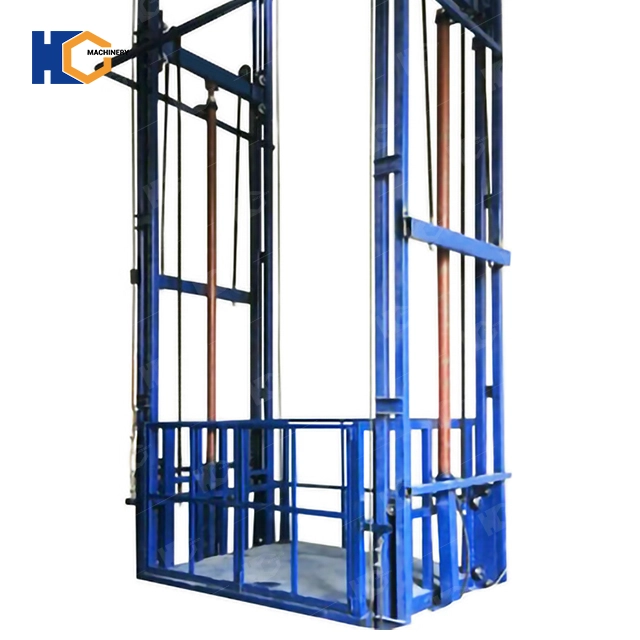
A hydraulic warehouse cargo lift (0.5–12 tons) is one of the most practical and widely used vertical material handling systems in modern logistics, manufacturing, and warehousing environments. It is designed to move heavy goods safely and efficiently between different floors using a hydraulic lifting system instead of manual labor or forklifts.
In simple terms, it is a heavy-duty industrial elevator for goods only, built to solve one core problem:
moving heavy cargo vertically with speed, safety, and low cost.
With load capacities ranging from 500 kg to 12,000 kg (0.5–12 tons), this type of cargo lift is now a standard solution in warehouses, factories, distribution centers, and multi-level storage buildings.
What Is a Hydraulic Warehouse Cargo Lift?
A hydraulic warehouse cargo lift is a vertical lifting platform powered by a hydraulic pump system. It uses hydraulic cylinders to raise and lower a platform that carries goods between floors.
Unlike passenger elevators, it is designed for:
Heavy industrial loads
Pallets and machinery
Continuous warehouse operation
Low-to-medium rise buildings
It does not require complex elevator shafts or machine rooms like traction elevators, making it more flexible and cost-effective.
In most warehouses, it acts as a vertical bridge between floors, replacing forklifts or manual carrying systems.
Key Advantages at a Glance
Before diving into technical details, here’s why businesses choose hydraulic cargo lifts:
Strong load capacity (0.5T–12T)
Low installation cost compared to freight elevators
Simple structure and easy maintenance
High safety performance
Flexible customization
Suitable for indoor and outdoor use
Works even in harsh industrial environments
In short:
It’s the “workhorse” of warehouse vertical transport.
Hydraulic Warehouse Cargo Lift Specifications (0.5–12T)
Below is a typical specification range used in industrial projects:
1. Load Capacity
Light duty: 0.5T – 1T
Medium duty: 2T – 5T
Heavy duty: 6T – 12T
A common warehouse configuration is 2T or 3T for pallet goods.
2. Lifting Height
Standard range: 2m – 20m
Custom models: up to 30m in some systems
Most warehouse installations operate within 2–12 meters (2–4 floors).
3. Platform Size
Typical sizes include:
1500 × 1500 mm
2000 × 2000 mm
2000 × 3000 mm
Custom oversized platforms for pallets or machinery
4. Hydraulic Power System
Motor power: 3 kW – 15 kW
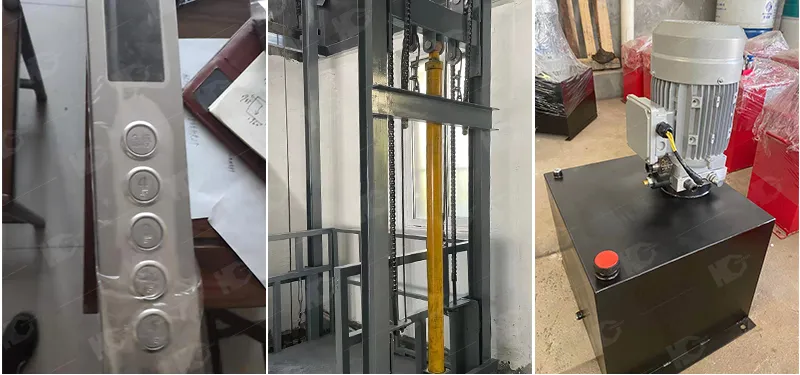
Hydraulic pressure system with oil pump station
Single or double cylinder configuration
5. Structure Type
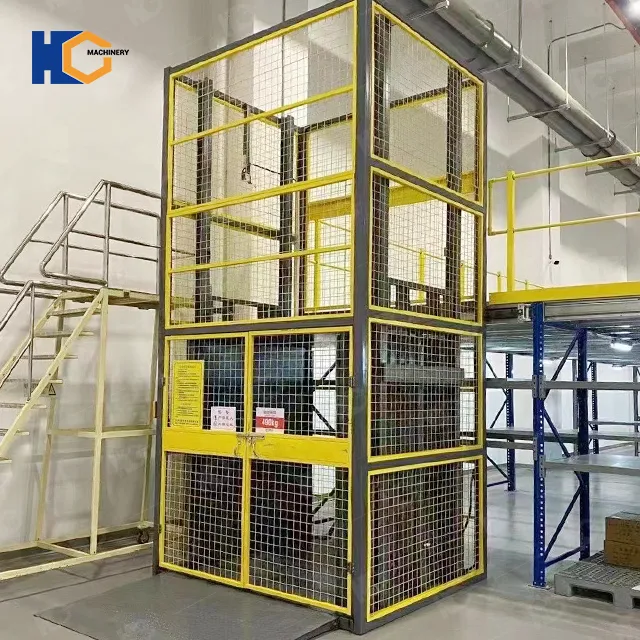
Guide rail type cargo lift (most common)
Scissor hydraulic lift platform
2-post or 4-post cargo lift system
Fully caged freight elevator structure
6. Control System
Button control (basic model)
PLC intelligent control system (industrial model)
Floor call system (multi-level warehouses)
Optional remote control system
7. Safety Systems
Emergency stop button
Anti-fall locking device
Overload protection
Limit switches
Door interlock system
Manual lowering valve
These systems ensure safe operation even during power failure.
8. Material Structure
High-strength steel frame
Reinforced platform plate
Anti-slip surface design
Optional stainless steel for food or clean environments
9. Installation Type
Pit installation (flush with floor)
No-pit surface installation
Indoor or outdoor configuration
How Hydraulic Cargo Lifts Work (Simple Explanation)
The working principle is straightforward:
Step 1: Load Cargo
Goods are placed on the platform using:
Forklifts
Pallet jacks
Manual loading
Step 2: Hydraulic Activation
A hydraulic pump pushes oil into cylinders.
This creates upward force.
Step 3: Platform Lifting
The platform rises along guide rails smoothly and stably.
Step 4: Stop at Target Floor
The system locks at the selected floor using safety stops.
Step 5: Unloading
Goods are removed safely.
Step 6: Lowering
Hydraulic valve releases pressure, lowering the platform.
This cycle repeats continuously in warehouse operations.
Application in Warehouses
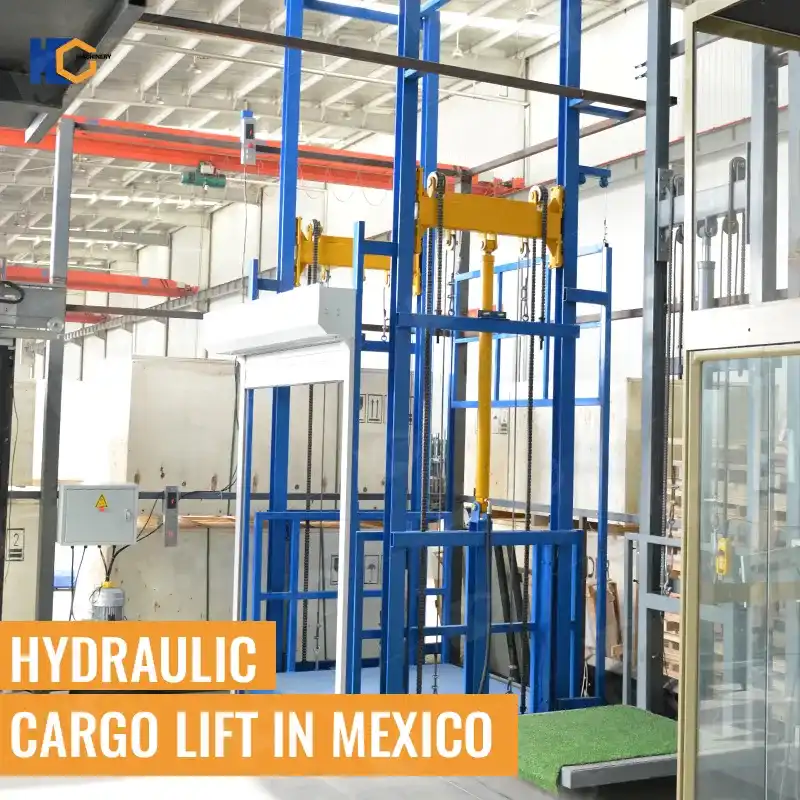
Hydraulic warehouse cargo lifts are widely used in logistics systems because they solve vertical transportation bottlenecks.
1. Multi-Floor Warehouses
Used to transfer:
Pallets
Boxes
Bulk goods
They replace forklifts for vertical movement, reducing congestion.
2. Distribution Centers
Helps move goods between:
Receiving area
Storage floors
Shipping zones
This improves workflow efficiency.
3. Manufacturing Plants
Used for:
Raw material transport
Semi-finished goods
Machine parts
It ensures production lines stay uninterrupted.
4. E-commerce Warehouses
Fast order fulfillment requires quick vertical movement.
Cargo lifts reduce picking time and increase throughput.
5. Retail Storage Buildings
Used for:
Stockroom replenishment
Bulk inventory movement
6. Heavy Industry and Workshops
Supports:
Machinery lifting
Equipment transportation
Tool handling
Why Warehouses Prefer Hydraulic Cargo Lifts
Compared with forklifts or manual handling:
1. Higher Efficiency
One lift replaces multiple forklift trips.
2. Lower Labor Cost
Reduces manpower requirements significantly.
3. Safer Operation
Less risk of falling cargo or forklift accidents.
4. Continuous Operation
Can run throughout the day without fatigue.
5. Flexible Installation
Works in buildings without elevator shafts.
Hydraulic Cargo Lift vs Freight Elevator
Many buyers compare hydraulic lifts with traction freight elevators.
Hydraulic Cargo Lift Advantages
Lower cost
Easier installation
Strong load capacity
Simple maintenance
Flexible structure
Freight Elevator Advantages
Faster speed
Suitable for high-rise buildings
More advanced control systems
Key Difference:
Hydraulic lift = industrial, flexible, cost-effective
Freight elevator = high-rise, high-speed system
Competitor Analysis
The market includes:
Low-cost Chinese manufacturers
Mid-range industrial suppliers
European premium brands
1. Low-Cost Manufacturers
Pros:
Cheap price
Basic functionality
Cons:
Weak steel structure
Poor hydraulic stability
Short lifespan
2. Mid-Range Industrial Manufacturers
Pros:
Balanced cost and quality
Standard safety systems
Customizable design
Cons:
Limited automation features
3. Premium European Brands
Pros:
High engineering standards
Advanced automation
Strong brand reputation
Cons:
Very expensive
High maintenance cost
Long delivery time
Where Hydraulic Lifts Win
Hydraulic warehouse lifts are most competitive in:
Cost efficiency
Heavy load capability
Installation flexibility
Maintenance simplicity
They offer the best price-performance balance for most warehouses.
Maintenance and Service Life
A well-maintained hydraulic cargo lift typically lasts:
10–15 years or more
Regular maintenance includes:
Hydraulic oil replacement
Cylinder sealing checks
Guide rail lubrication
Electrical system inspection
Safety device testing
Maintenance frequency:
Monthly inspection
Quarterly servicing
Annual full system check
Good maintenance can reduce breakdown risk by more than 40%.
Common Problems and Solutions
1. Oil Leakage
Cause: worn seals
Solution: replace hydraulic seals
2. Slow Lifting
Cause: low hydraulic pressure
Solution: check pump system
3. Platform Vibration
Cause: guide rail misalignment
Solution: adjust rail structure
4. Electrical Faults
Cause: wiring or control issues
Solution: PLC diagnostics
Buying Guide: How to Choose the Right Cargo Lift
Before purchasing, consider:
1. Load Requirement
Always include future growth.
2. Floor Height
Determine total travel distance.
3. Platform Size
Match pallet or equipment size.
4. Usage Frequency
High usage requires stronger hydraulic systems.
5. Installation Space
Check pit depth and overhead clearance.
Cost Overview
Typical price range:
0.5T–1T: $3,500 – $8,000
2T–5T: $8,000 – $25,000
6T–12T: $25,000 – $60,000+
Price depends on:
Capacity
Size
Safety configuration
Automation level
Future Trends
Hydraulic cargo lift technology is evolving toward:
Smart PLC automation
Remote monitoring systems
Energy-saving hydraulic pumps
Stronger lightweight steel materials
IoT-based maintenance alerts
Warehouses are increasingly adopting smart logistics systems, and cargo lifts are becoming integrated into digital warehouse management systems.
Conclusion
The hydraulic warehouse cargo lift (0.5–12T) is one of the most efficient and cost-effective vertical material handling solutions for modern warehouses and industrial facilities.
It stands out because of:
Strong load capacity
Flexible installation
Simple structure
Low maintenance cost
High safety performance
Compared with traditional freight elevators and manual handling systems, hydraulic cargo lifts offer the best balance of:
performance, cost, and operational flexibility.
For businesses looking to improve warehouse efficiency without heavy infrastructure investment, a hydraulic cargo lift is not just equipment—it is a long-term productivity upgrade.
222.webp)
740.webp)
916.webp)
697.webp)
 667.webp)