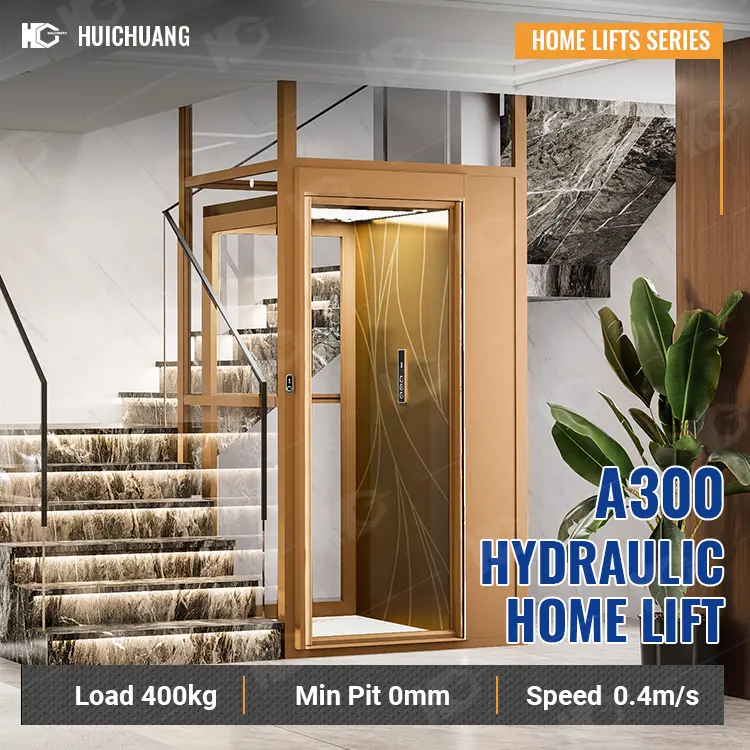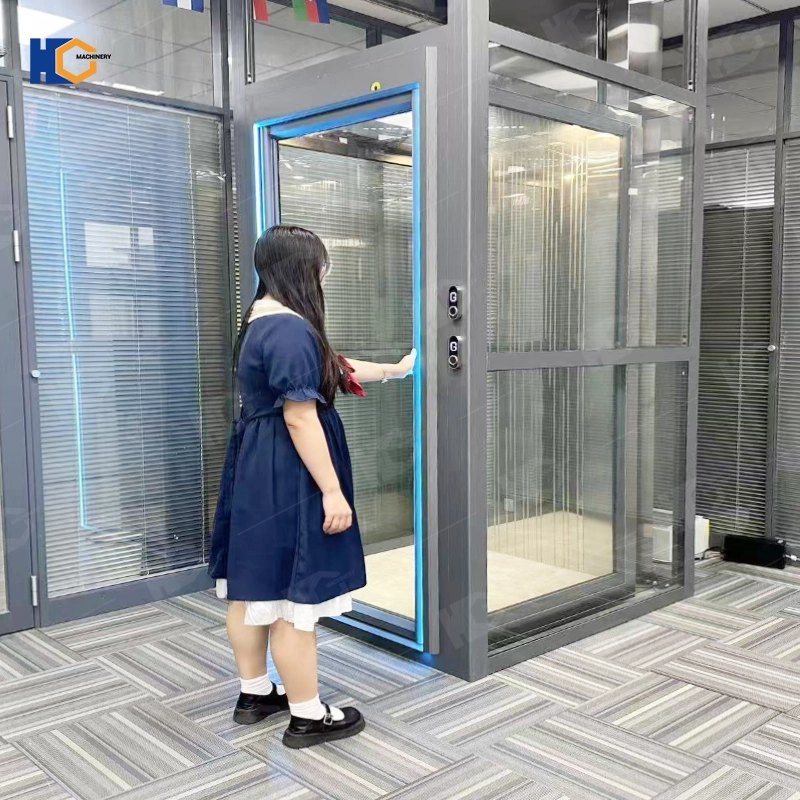
Installing a home elevator is a significant investment that can dramatically improve your quality of life, especially in multi-story residences. Among the various types available, hydraulic lifts stand out as a popular and practical choice for many homeowners. They offer a unique blend of reliability, safety, and cost-effectiveness that makes them ideal for residential settings. This article will explore the top seven advantages of choosing a hydraulic lift for your home, providing you with a comprehensive guide to making an informed decision.
To understand how hydraulic elevators work, please see this article: How Does a Hydraulic Elevator Work? A Complete Guide for Homeowners and Building Owners
1. Unmatched Safety and Reliability
When it comes to installing an elevator in your home, safety isn’t just a feature—it’s the foundation. Among all residential elevator types, hydraulic lifts are widely regarded as one of the safest and most dependable options available today. Their reputation stems from a fundamentally robust mechanical design that prioritizes passive safety, meaning the system remains secure even in the event of a power outage or component failure.
How Hydraulic Safety Works
Unlike traction elevators that suspend the cab with steel cables over a pulley system, a hydraulic home lift operates on a simple yet highly effective principle: a pump forces hydraulic fluid into a sealed cylinder, which pushes a piston upward to raise the elevator car. The key safety advantage lies in what happens when something goes wrong. Because the cab is pushed up rather than pulled up, there are no tensioned cables that could theoretically snap. In a complete power failure, the elevator simply stops where it is—there is no risk of a free fall. To lower the cab safely during an emergency, a trained technician (or in some models, a homeowner using a manual override) can slowly release the hydraulic fluid through a controlled valve, allowing for a gentle, gravity-assisted descent.
This inherent mechanical stability is further reinforced by multiple layers of active and passive safety systems standard in modern residential hydraulic lifts:
Emergency Braking Systems: Automatically engage if the cab moves at an abnormal speed.
Door Interlocks: Prevent the elevator from moving unless all doors are fully closed and locked.
Automatic Leveling: Ensures the cab aligns precisely with the floor, reducing trip hazards.
Leak-Proof Hydraulic Seals: High-quality seals prevent fluid loss, maintaining system integrity over years of use.
Manual Descent Valves: Allow safe evacuation during prolonged outages without external power.
Built for Peace of Mind
For families with young children, elderly relatives, or individuals with mobility challenges, this level of reliability translates directly into daily peace of mind. There’s no jarring movement, no cable squeaks, and no anxiety about sudden malfunctions. The entire system is enclosed within the hoistway, with no exposed moving parts in living areas. Additionally, because hydraulic systems have fewer high-speed rotating components compared to traction drives, the risk of mechanical wear leading to failure is significantly reduced.
Regulatory bodies worldwide recognize the safety merits of hydraulic technology. Residential hydraulic lifts commonly comply with stringent international standards such as ASME A17.1 (in North America) and EN 81-41 (in Europe), which mandate rigorous testing for structural integrity, emergency protocols, and fail-safe mechanisms.
Below is a comparison highlighting why hydraulic lifts lead in safety and reliability:
| Safety Feature | Hydraulic Home Lift | Cable/Traction Home Lift |
|---|---|---|
| Failure Mode | Stops in place; no free-fall risk | Relies on cable integrity; rare but possible cable failure |
| Power Outage Response | Remains stationary; manual descent available | May require battery backup for safe stop |
| Moving Parts in Shaft | Minimal (only piston/cylinder) | Cables, sheaves, counterweight |
| Emergency Descent | Gravity-assisted, fluid-controlled | Requires powered rescue or battery |
| Compliance with ASME A17.1 | Yes (standard) | Yes |
| Risk of Sudden Drop | Extremely low | Very low, but theoretically possible |
In essence, the hydraulic lift’s safety isn’t just about adding features—it’s built into its very DNA. This unmatched combination of passive security and engineered redundancy makes it a top choice for homeowners who refuse to compromise on the well-being of their loved ones.
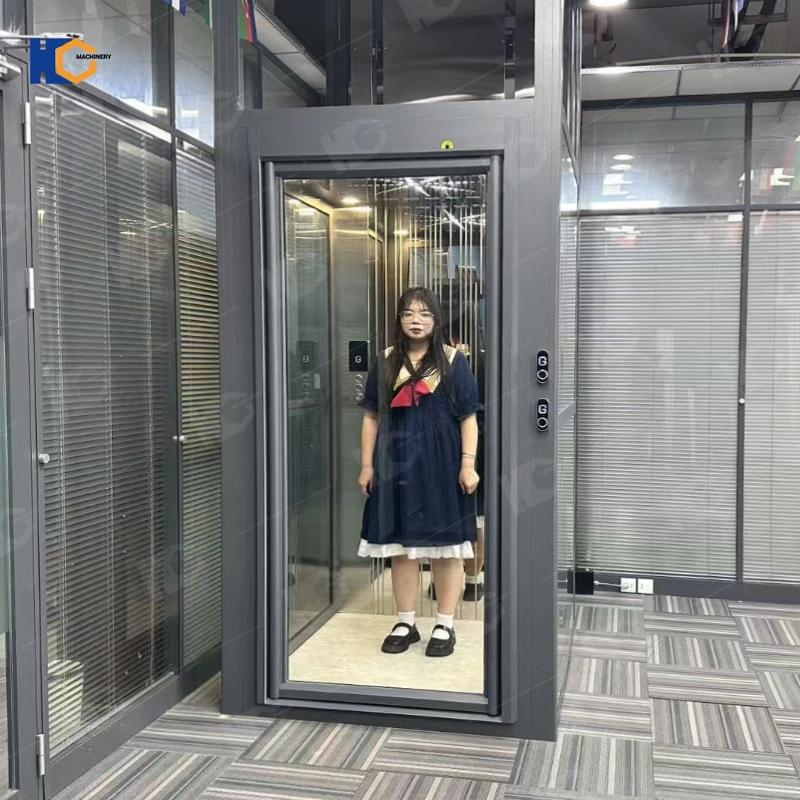
2-Story Hydraulic Home Elevator at Ground Floor, Panoramic Glass Shaft with Gray Metal Frame, Transparent & Aesthetic Design, Ideal for Villas, Private Houses & Small Commercial Spaces
2. Space-Saving and Flexible Installation
One of the most compelling reasons homeowners choose a hydraulic lift is its exceptional adaptability to existing architectural layouts. Unlike other elevator systems that demand significant structural overhauls, hydraulic home lifts are engineered for minimal spatial impact and maximum installation flexibility, making them an ideal solution for both new constructions and, especially, retrofit projects in older homes.
No Machine Room Required
A defining advantage of residential hydraulic elevators is their machine-room-less (MRL) design. Traditional traction elevators require a dedicated machine room at the top of the hoistway to house the motor, controller, and large drive sheave. This not only consumes valuable attic or roof space but also adds considerable cost and complexity to the build. In contrast, a hydraulic system relocates all major mechanical components—the hydraulic power unit (HPU), which includes the electric motor, pump, and fluid reservoir—to a compact, separate location. This can be a small closet adjacent to the elevator shaft, a corner of the garage, or even a utility area in the basement. This separation keeps noise and heat away from living spaces while freeing up usable square footage.
Minimal Pit and Headroom Requirements
Space constraints often arise at the bottom and top of a potential elevator shaft. Hydraulic lifts excel here as well. Most residential models require only a shallow pit—typically between 4 to 8 inches (10–20 cm)—or sometimes no pit at all, depending on the model and local code. This is a stark contrast to traction elevators, which often need a pit depth of 12 inches (30 cm) or more to accommodate safety buffers and counterweight travel.
Similarly, hydraulic systems have low headroom requirements. The overhead clearance needed above the top landing is usually just 8 to 10 feet (2.4–3.0 meters), as there’s no bulky machinery to install overhead. This makes it feasible to install a home elevator in buildings with lower floor-to-ceiling heights or where raising the roof structure is impractical.
Ideal for Retrofit Projects
These space-saving characteristics make hydraulic lifts the go-to choice for home retrofits. Many homeowners wish to add an elevator to an existing staircase void, a converted closet, or a newly framed interior corner. The ability to avoid deep excavation (for pits) or major roof modifications (for machine rooms) drastically reduces construction time, mess, and cost. In many cases, a hydraulic home lift can be installed in as little as 4–6 weeks with minimal disruption to daily life.
To illustrate these advantages clearly, consider the following comparison:
| Installation Requirement | Hydraulic Home Lift | Traditional Traction Home Lift |
|---|---|---|
| Machine Room | Not required; HPU in closet/basement | Required at top of hoistway |
| Pit Depth | 0–8 inches (0–20 cm) | 12+ inches (30+ cm) |
| Overhead Headroom | 8–10 feet (2.4–3.0 m) | 10–12+ feet (3.0–3.7+ m) |
| Counterweight | Not used | Required, increasing shaft width |
| Shaft Footprint | Compact (no counterweight space needed) | Larger (must accommodate counterweight) |
| Best Suited For | Retrofits, tight spaces, low ceilings | New builds with ample space & height |
In summary, the hydraulic home lift’s space-efficient and flexible installation profile removes many of the traditional barriers to home elevator ownership. Whether you’re working with a historic townhouse or a modern split-level home, this technology offers a practical, minimally invasive path to enhanced accessibility and convenience.
3. Smooth, Quiet, and Comfortable Ride
For many homeowners, the decision to install a residential elevator isn’t just about functionality—it’s about daily comfort and quality of life. Among all elevator technologies available for private homes, hydraulic lifts consistently deliver one of the smoothest, quietest, and most comfortable riding experiences, making them especially well-suited for households with seniors, young children, or anyone sensitive to motion or noise.
The Physics Behind a Smoother Journey
The secret lies in the fundamental operating principle of hydraulic systems. Instead of relying on cables, pulleys, and counterweights that can introduce jerks, vibrations, or slight swaying during acceleration and deceleration, a hydraulic lift uses incompressible fluid to move the cab. This fluid transmits force evenly and continuously, resulting in near-imperceptible starts and stops. The piston moves linearly within a sealed cylinder, eliminating the rotational inertia and gear meshing common in traction drives. As a result, passengers experience a gentle, gliding motion—free from sudden lurches or abrupt halts—that feels more like floating than mechanical travel.
This smoothness is particularly noticeable at floor landings. Advanced hydraulic control valves precisely regulate fluid flow, enabling micro-level speed adjustments as the cab approaches each stop. The outcome? Perfect leveling with the floor and a seamless transition when stepping in or out—critical for wheelchair users or those with balance concerns.
Whisper-Quiet Operation
Noise is another area where hydraulic lifts excel. Because the primary power unit—the motor, pump, and reservoir—is typically installed away from the hoistway (often in a basement, garage, or utility closet), operational sounds are effectively isolated from living spaces. What remains inside the home is only the soft hum of fluid movement and the subtle click of door mechanisms.
Modern hydraulic systems also incorporate noise-dampening technologies such as:
Vibration-absorbing mounts for the power unit
Acoustic insulation around fluid lines
Low-RPM, high-torque motors that run more quietly
Precision-engineered valves that minimize fluid turbulence
In practice, this means conversations aren’t interrupted, naps aren’t disturbed, and the elevator blends seamlessly into the acoustic environment of a refined home.
Enhanced Passenger Comfort
Beyond motion and sound, comfort extends to cabin design and ride consistency. Hydraulic lifts support heavier loads without performance degradation, allowing for spacious, well-appointed cabs with luxury finishes, seating, or handrails—all without compromising ride quality. Temperature fluctuations or minor voltage variations also have less impact on hydraulic performance compared to electric traction systems, ensuring consistent operation year-round.
To highlight these experiential advantages, here’s a detailed comparison:
| Ride Quality Factor | Hydraulic Home Lift | Cable/Traction Home Lift |
|---|---|---|
| Start/Stop Smoothness | Extremely smooth; fluid-driven linear motion | Can have slight jerk due to cable tension |
| In-Cab Noise Level | Very low (<45 dB); power unit located remotely | Moderate; motor often overhead or in shaft |
| Vibration | Minimal; no rotating sheaves or moving counterweights | Slight vibration possible from drive system |
| Floor Leveling Accuracy | High precision (±2 mm) via fluid control valves | Good, but may vary with cable stretch over time |
| Load Sensitivity | Unaffected by passenger weight changes | Performance may vary slightly with load |
| Ideal For | Noise-sensitive homes, elderly users, luxury interiors | Homes with ample space and higher ceilings |
In essence, the hydraulic home lift doesn’t just transport people—it does so with grace, discretion, and unwavering comfort. For those who value serenity and seamless daily living, this ride quality is not a luxury, but a necessity.
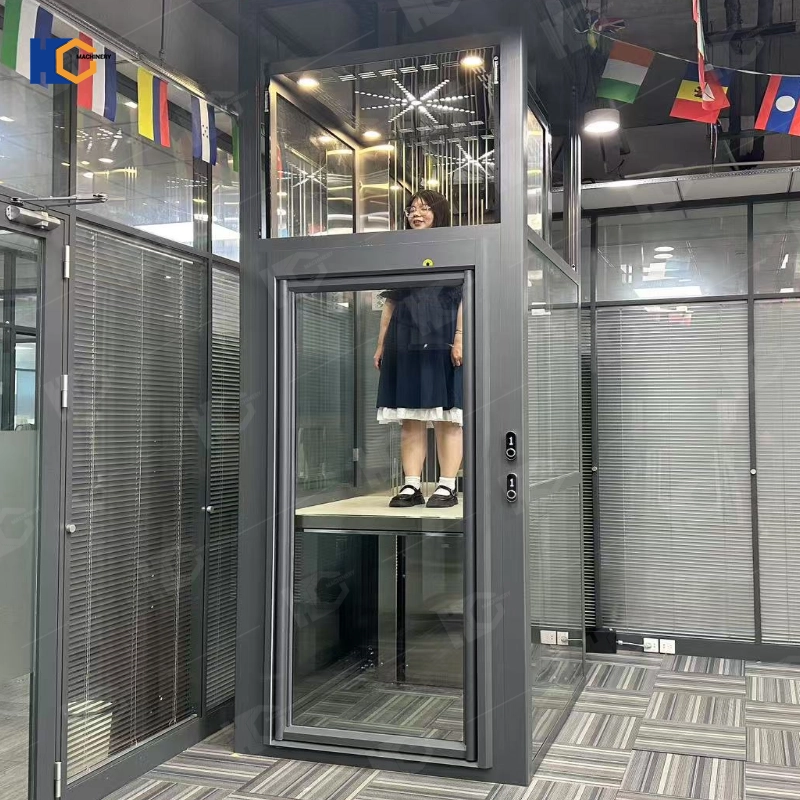
Hydraulic Home Elevator Operation Display at 1st Floor, Fully Transparent Glass Car, Silent Hydraulic Drive, Customizable Lifting Height for Multi-Story Residences, No Machine Room Required
4. Lower Initial and Long-Term Costs
When evaluating residential elevator options, cost is a critical factor—not just the upfront investment, but also the total cost of ownership over decades of use. Hydraulic home lifts stand out for offering significantly lower initial installation expenses and reduced long-term maintenance costs compared to many alternative systems, particularly traction or machine-room elevators. This economic advantage makes them an accessible and financially prudent choice for a wide range of homeowners.
Reduced Upfront Installation Expenses
The primary driver of lower initial costs lies in the hydraulic system’s simplified infrastructure requirements. As previously noted, hydraulic lifts do not require a machine room, deep pit, or extensive overhead structural reinforcement. This translates directly into savings during construction:
No machine room means no need to build or modify attic or rooftop spaces—saving thousands in framing, insulation, electrical, and HVAC work.
Shallow or zero pit depth eliminates costly excavation, concrete work, and waterproofing typically needed for deeper pits.
Smaller hoistway footprint reduces the amount of interior space that must be dedicated to the elevator, preserving valuable square footage that might otherwise affect home resale value.
Moreover, because hydraulic systems are often easier and faster to install—especially in retrofit scenarios—the labor costs are typically lower. Many installations can be completed in 4–6 weeks with minimal disruption, reducing contractor time and associated expenses.
Lower Maintenance and Operational Costs Over Time
Beyond installation, hydraulic lifts offer compelling long-term savings. Their mechanical simplicity—fewer moving parts, no cables, no counterweights—means fewer components that can wear out or require replacement. Routine maintenance typically involves:
Annual inspection of hydraulic fluid levels and seals
Checking valve operation and safety systems
Lubricating door mechanisms
There’s no need for periodic cable tensioning, sheave replacements, or counterweight adjustments—common (and costly) maintenance items for traction elevators.
Energy efficiency also contributes to lower operating costs. While older hydraulic systems had a reputation for higher power consumption, modern residential units use high-efficiency pumps and variable-frequency drives that activate only during ascent. Since descent is gravity-assisted (with fluid returning to the reservoir through a controlled valve), it consumes virtually no electricity. In contrast, traction elevators use power for both up and down travel due to the need to manage counterweight dynamics.
Furthermore, hydraulic systems have a proven track record of long service life—often exceeding 20–25 years with proper care—delaying the need for major overhauls or replacements.
To illustrate these financial benefits clearly, consider the following comparison:
| Cost Factor | Hydraulic Home Lift | Cable/Traction Home Lift |
|---|---|---|
| Initial Installation Cost | Lower (no machine room, shallow pit, compact shaft) | Higher (machine room, deep pit, larger shaft) |
| Construction Complexity | Minimal; ideal for retrofits | High; often requires structural modifications |
| Routine Maintenance | Simple & infrequent (fluid, valves, seals) | More complex (cables, sheaves, counterweights) |
| Annual Maintenance Cost | $200–$400 (typical) | $400–$700+ |
| Energy Consumption | Moderate (power only for ascent) | Higher (power for both directions) |
| Major Component Replacement | Rare before 15–20 years | Cables/sheaves may need replacement at 10–15 yrs |
| Total 20-Year Ownership Cost | Significantly lower | Higher due to cumulative maintenance & energy |
In conclusion, the hydraulic home lift delivers exceptional value by minimizing both entry barriers and lifetime expenses. For budget-conscious homeowners seeking reliable, long-term accessibility without hidden financial burdens, it represents one of the most cost-effective solutions on the market.
5. High Load Capacity and Durability
When selecting a residential elevator, performance under load and long-term structural integrity are critical considerations—especially for families who need to transport mobility devices, heavy medical equipment, or multiple passengers simultaneously. Hydraulic home lifts excel in both high load capacity and exceptional durability, offering robust performance that remains consistent over decades of daily use. This combination makes them not only powerful but also remarkably reliable for demanding household needs.
Engineered for Heavy-Duty Performance
Unlike cable-driven systems that rely on tensioned steel ropes and counterweights to balance the cab’s weight, hydraulic elevators use direct fluid pressure to lift the entire load. This fundamental difference gives hydraulic systems a distinct advantage: they can support significantly higher payloads without compromising safety or ride quality. Most residential hydraulic lifts are rated for capacities between 750 to 1,500 pounds (340–680 kg), with commercial-grade residential models capable of handling even more. This means a wheelchair user plus a caregiver, a hospital bed, or bulky furniture can be transported safely in a single trip—something that may push the limits of lighter traction systems.
Because there is no counterweight, the entire lifting force is generated by the hydraulic piston, which is constructed from high-strength steel and engineered to withstand immense compressive forces. The absence of moving counterweights also eliminates associated wear points, contributing to overall system longevity.
Built to Last: Materials and Design Integrity
Durability in hydraulic elevators stems from both material selection and mechanical simplicity. Key components are built to industrial standards:
Cylinder and Piston: Made from corrosion-resistant, honed steel with precision seals that prevent fluid leakage and maintain pressure integrity over tens of thousands of cycles.
Hydraulic Power Unit (HPU): Housed in protective enclosures, often with thermal overload protection and filtration systems to extend fluid life.
Hoistway Structure: Requires minimal moving parts inside the shaft—just the cab and guide rails—reducing friction, wear, and maintenance needs.
Moreover, hydraulic systems are less sensitive to environmental factors such as temperature fluctuations or humidity, which can affect cable tension or electronic controls in other elevator types. The fluid itself acts as a lubricant and coolant, further protecting internal components.
This rugged design philosophy translates into a service life that frequently exceeds 25 years, far outpacing many consumer-grade traction elevators. Even in high-traffic households—such as multigenerational homes or those providing in-home care—the hydraulic lift maintains consistent performance without degradation.
To clearly demonstrate these advantages, here’s a comparative overview:
| Performance & Durability Factor | Hydraulic Home Lift | Cable/Traction Home Lift |
|---|---|---|
| Typical Load Capacity | 750–1,500 lbs (340–680 kg); up to 2,000+ lbs available | 500–1,000 lbs (225–450 kg) typical |
| Supports Wheelchairs + Caregiver? | Yes, comfortably | Often at or near maximum capacity |
| Key Load-Bearing Component | Solid steel piston (compression-based) | Steel cables (tension-based) |
| Counterweight Required? | No | Yes |
| Moving Parts in Shaft | Minimal (cab + guides) | Cables, sheaves, counterweight, governor |
| Sensitivity to Wear Over Time | Low; performance stable for decades | Moderate; cables stretch, sheaves wear |
| Average Service Life | 20–30+ years | 15–20 years (with regular cable replacement) |
| Ideal For High-Use Households | Excellent | Good, but with higher maintenance demands |
In summary, the hydraulic home lift’s superior load capacity and rugged construction make it the preferred choice for homeowners who prioritize strength, reliability, and future-proofing. Whether accommodating evolving mobility needs or simply ensuring decades of trouble-free operation, its durable engineering delivers unmatched peace of mind.
6. Energy Efficiency (Modern Systems)
While older hydraulic elevators were sometimes criticized for higher energy consumption, modern residential hydraulic lift systems have undergone significant technological advancements that dramatically improve their energy efficiency. Today’s designs incorporate smart engineering, high-efficiency components, and intelligent control strategies that make them competitive—even favorable—compared to other elevator types in terms of power usage and environmental impact. For eco-conscious homeowners, this evolution means choosing a hydraulic lift no longer requires compromising sustainability for performance.
How Modern Hydraulic Systems Save Energy
The key to understanding the improved efficiency lies in the asymmetric energy demand of hydraulic operation:
Ascent: Requires electrical power to drive the pump, which pressurizes hydraulic fluid and pushes the piston upward.
Descent: Is gravity-driven—the cab lowers as fluid is slowly released back into the reservoir through a controlled valve, consuming virtually no electricity.
This one-way power requirement already gives hydraulic systems an inherent advantage over traction elevators, which use energy for both upward and downward travel due to the need to manage counterweight dynamics and motor braking.
Modern innovations build on this foundation:
1. High-Efficiency Hydraulic Power Units (HPUs)
Newer HPUs feature brushless DC motors or variable-frequency drives (VFDs) that adjust pump speed based on real-time demand. Instead of running at full power constantly, the system delivers only the necessary pressure and flow, reducing wasted energy by up to 40% compared to older fixed-speed models.
2. Regenerative and Low-Leakage Valves
Advanced valve technology minimizes internal fluid leakage and ensures precise flow control. Some premium systems even incorporate energy recovery circuits that capture and reuse small amounts of pressure during descent, though this is more common in commercial applications.
3. Standby and Sleep Modes
When idle, modern controllers automatically switch the HPU into a low-power standby mode, cutting phantom loads. After extended inactivity (e.g., overnight), the system may enter a deep sleep state, drawing less than 5 watts—comparable to a phone charger.
4. LED Lighting and Efficient Cab Design
Cab interiors now use LED lighting (consuming ~80% less energy than incandescent bulbs) and low-power ventilation fans. Combined with lightweight yet durable materials, these features further reduce the overall electrical footprint.
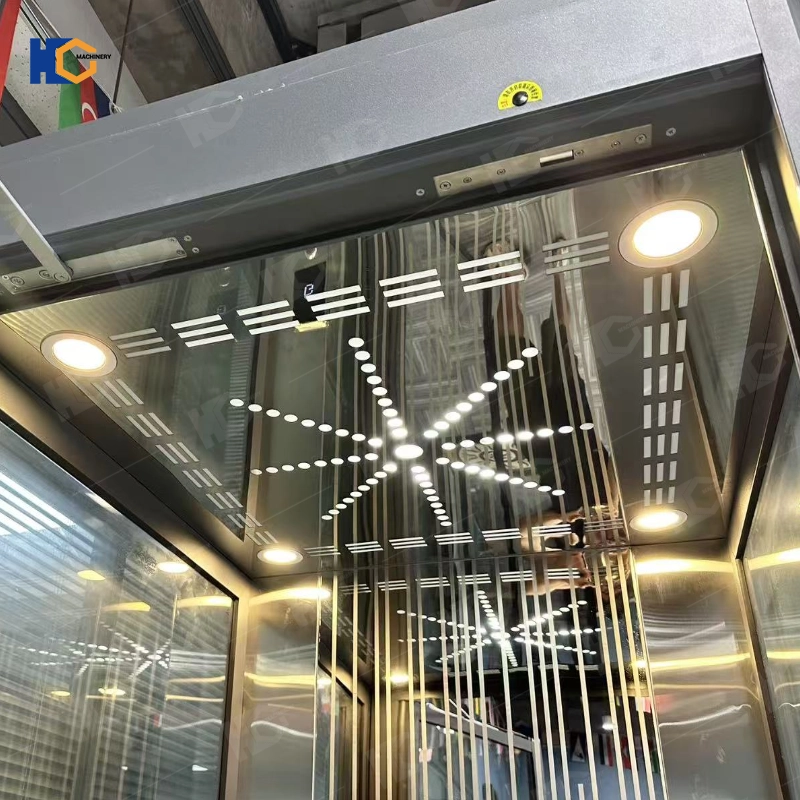
Interior Detail of Hydraulic Home Elevator Car, Mirror Stainless Steel Ceiling with Ambient Lighting, Luxury Texture, Comfortable Illumination, Enhanced Riding Experience
Real-World Energy Consumption
A typical modern residential hydraulic lift used 4–6 times per day consumes approximately 100–200 kWh per year—roughly equivalent to a small refrigerator or desktop computer. This translates to an annual electricity cost of $12–$25 (based on U.S. average rates), making it one of the most energy-conscious accessibility solutions available.
To clarify how modern hydraulic lifts compare with other technologies, consider the following table:
| Energy Efficiency Factor | Modern Hydraulic Home Lift | Traditional Traction Home Lift | Pneumatic (Vacuum) Elevator |
|---|---|---|---|
| Power Use Direction | Only during ascent | Both ascent and descent | Both directions (vacuum/pressure cycles) |
| Annual Energy Consumption | 100–200 kWh | 150–300 kWh | 200–400+ kWh |
| Motor Type | High-efficiency DC or VFD-controlled AC | AC induction or permanent magnet | High-RPM vacuum pump (less efficient) |
| Standby Power Draw | <5 W (in sleep mode) | 10–20 W (controller & brake remain active) | 15–30 W (seal monitoring & sensors) |
| Energy Recovery Capability | Limited (gravity-assisted descent) | Possible with regenerative drives (premium) | None |
| Environmental Impact (Fluid) | Biodegradable hydraulic fluid options available | Minimal (no fluid) | None (air-based) |
| Best For Energy-Conscious Homes | Yes—especially with infrequent use | Moderate—better with regenerative models | Less efficient for frequent use |
In conclusion, thanks to decades of innovation, today’s hydraulic home lifts are far from the energy hogs of the past. With smart controls, efficient motors, and gravity-assisted descent, they offer a compelling blend of performance, reliability, and sustainability—proving that practical accessibility can go hand-in-hand with responsible energy use.
7. Simple Maintenance and Easy Repairs
One of the most compelling advantages of modern residential hydraulic elevators is their straightforward maintenance requirements and ease of repair—a significant benefit for homeowners who value reliability without ongoing complexity. Unlike more intricate elevator systems that demand specialized technicians and frequent servicing, hydraulic lifts are engineered for mechanical simplicity, reducing both the frequency of required upkeep and the time (and cost) needed to address issues when they arise.
Why Hydraulic Systems Are Easier to Maintain
The core of this advantage lies in the minimal number of moving parts within the hoistway itself. In a typical hydraulic home lift:
The cab moves vertically on guide rails with no cables, counterweights, sheaves, or governor ropes inside the shaft.
All critical mechanical components—the motor, pump, reservoir, and control valves—are housed together in a compact Hydraulic Power Unit (HPU), usually located in a basement, garage, or utility closet.
This consolidation means routine inspections can be performed quickly at a single access point, without needing to climb into the hoistway or disassemble complex drive mechanisms. Most annual maintenance visits involve just three key tasks:
Checking hydraulic fluid level and condition (for contamination or degradation)
Inspecting seals and hoses for leaks
Testing safety valves and electrical controls
Because there are no steel cables to stretch, lubricate, or replace—and no counterweight rails to align—hydraulic systems avoid some of the most common and costly wear points found in traction elevators.
Faster, More Accessible Repairs
When repairs are needed, hydraulic systems offer distinct practical benefits:
Diagnostics are simpler: Most issues manifest as slow operation, failure to ascend, or fluid leaks—all of which are relatively easy to identify visually or through basic pressure tests.
Parts are standardized: Pumps, valves, and seals are often off-the-shelf industrial components, widely available and interchangeable across many manufacturers.
Technician accessibility: Since the HPU is typically installed at ground level in an accessible location (not overhead or buried in a machine room), service calls are faster and safer. Many minor issues can even be resolved by trained local HVAC or plumbing technicians in emergencies—unlike proprietary traction systems that require factory-certified elevator mechanics.
Moreover, modern hydraulic lifts come equipped with self-diagnostic control panels that display error codes, guiding technicians directly to the source of the problem. This reduces guesswork and minimizes downtime—often allowing repairs to be completed in a single visit.
Long Service Intervals and Predictable Costs
Thanks to robust component design and low operational stress, hydraulic home elevators typically require only one professional maintenance visit per year, compared to biannual or quarterly schedules recommended for some traction models. This not only lowers annual service costs but also provides greater predictability for homeowners budgeting long-term expenses.
To summarize these operational advantages, here’s a detailed comparison:
| Maintenance & Repair Factor | Hydraulic Home Lift | Cable/Traction Home Lift |
|---|---|---|
| Moving Parts in Hoistway | Very few (cab + guides only) | Many (cables, sheaves, counterweight, governor) |
| Typical Maintenance Frequency | Once per year | Every 6 months (or more for heavy use) |
| Common Wear Components | Seals, hydraulic fluid, pump | Steel cables, traction sheave, brake pads |
| Cable Replacement Needed? | No | Yes (every 10–15 years; costly) |
| Diagnostic Complexity | Low (visible leaks, pressure tests, error codes) | Moderate to high (requires electronic tools) |
| Repair Accessibility | High (HPU at ground level, often in garage) | Variable (machine room may be hard to access) |
| Technician Specialization | General hydraulic/mechanical knowledge often sufficient | Usually requires certified elevator mechanic |
| Average Downtime for Repairs | Short (hours to 1 day) | Longer (1–3 days, depending on part availability) |
Check out these articles for pricing information on home elevators:
How Much Does an Elevator Cost in Nigeria?
In essence, the hydraulic home elevator’s design philosophy prioritizes practicality and resilience. For homeowners seeking a dependable, low-hassle accessibility solution that won’t burden them with constant service calls or mysterious malfunctions, its simple maintenance profile and straightforward repair process offer lasting peace of mind.
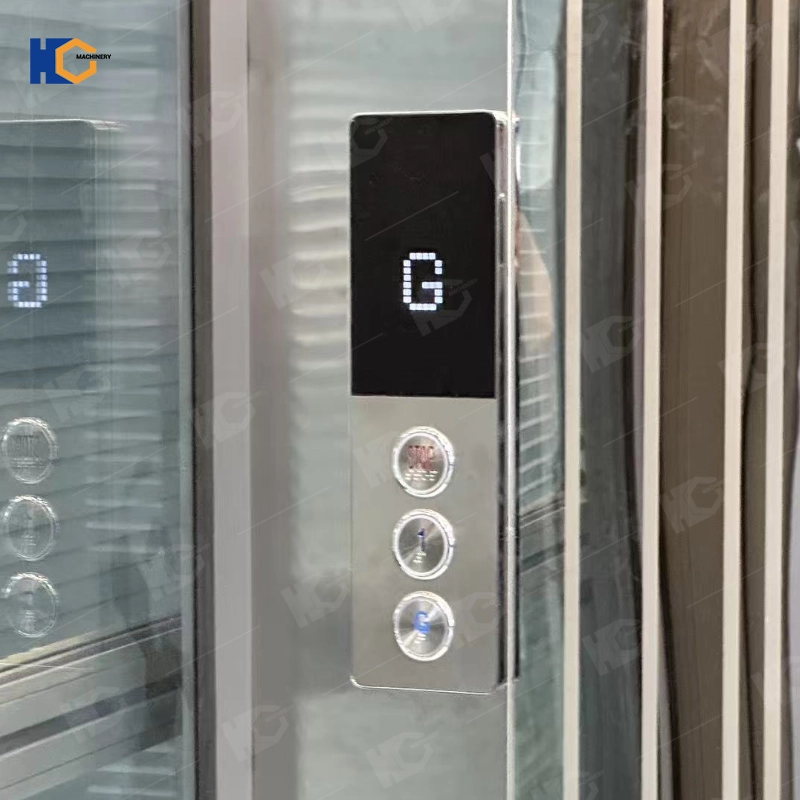
Intelligent Call Panel for Hydraulic Home Elevator, with G/1 Floor & Door Open Buttons, LED Floor Indicator, Brushed Stainless Steel Finish, Easy & Safe Operation
Comparison of Home Elevator Types
To summarize the key differences, here is a comparison table between hydraulic and traction home elevators:
| Feature | Hydraulic Elevator | Traction Elevator |
|---|---|---|
| Machine Room | Not required (HPU in a closet/basement) | Required at the top of the hoistway |
| Counterweight | No | Yes |
| Pit Requirement | Shallow or none (typically 4-8 inches) | Deeper (typically 12+ inches) |
| Headroom Requirement | Low (typically 8-10 feet) | Higher (typically 10+ feet) |
| Ride Quality | Very smooth, gentle starts/stops | Smooth, but can have slight cable sway |
| Noise Level | Low (pump noise isolated) | Low to moderate (machine room noise) |
| Initial Cost | Lower | Higher |
| Maintenance Cost | Lower (no cables to replace) | Higher (cables require periodic replacement) |
| Energy Use | Moderate (power only for ascent) | Moderate to High (power for ascent & descent) |
| Best For | Retrofit projects, limited space, budget-conscious buyers | Tall homes (4+ floors), where a machine room is feasible |
In conclusion, a hydraulic home lift offers a powerful combination of safety, space efficiency, comfort, and value. Its simple, robust design has been refined over decades to meet the specific needs of modern homeowners. If you are looking for a reliable and practical way to add convenience, accessibility, and future-proof your home, a hydraulic elevator is an option that deserves serious consideration.
To learn about the advantages and features of different elevators, please see this article: Types of Elevator: Complete Guide to Elevator Systems, Features, Applications, Pros and Cons
Final Summary & Recommendation
Installing a home elevator is more than just a convenience—it’s an investment in accessibility, safety, and long-term home value. Among the various technologies available, hydraulic lifts consistently stand out for their reliability, space efficiency, smooth operation, and cost-effectiveness. From enhanced safety features that prevent free-falls to their compact design that fits seamlessly into existing homes, hydraulic systems offer a practical and future-proof solution for multi-story living. Their quiet performance, high load capacity, modern energy efficiency, and straightforward maintenance further solidify their position as a top choice for discerning homeowners.
If you’re considering a hydraulic home lift that combines cutting-edge engineering with trusted quality, we highly recommend Jinan Huichuang Machinery Manufacturing Co., Ltd.—widely known as Huichuang Lift.
Based in Jinan, Shandong—the “Hometown of Hydraulic Lifting Platforms”—Huichuang Lift has established itself as a global leader in platform lifting solutions. With over 200 dedicated professionals, advanced production workshops, and independent R&D capabilities, the company specializes in two core product lines: hydraulic aerial work lifts and residential home elevators. Their mission is clear: to deliver hassle-free lifting experiences, promote universal building accessibility, and empower users with innovative, reliable solutions.
Huichuang Lift’s products are not only competitively priced but also rigorously tested to meet international standards, holding certifications including CE, ISO, and ASME A17.1. This ensures every home elevator they produce adheres to the highest benchmarks for safety, durability, and performance. Serving markets across North America, Europe, South America, and Southeast Asia, Huichuang Lift offers tailored solutions, OEM services, and comprehensive support—from initial consultation to after-sales maintenance.
Whether you're a homeowner seeking a seamless residential lift or a business looking for a trusted manufacturing partner, Huichuang Lift stands ready to provide safe, efficient, and cost-effective lifting solutions backed by expertise and a commitment to excellence.
Discover the difference that quality engineering and customer-centric service can make—choose Huichuang Lift for your next home accessibility project.
390.webp)
892.webp)