Introduction
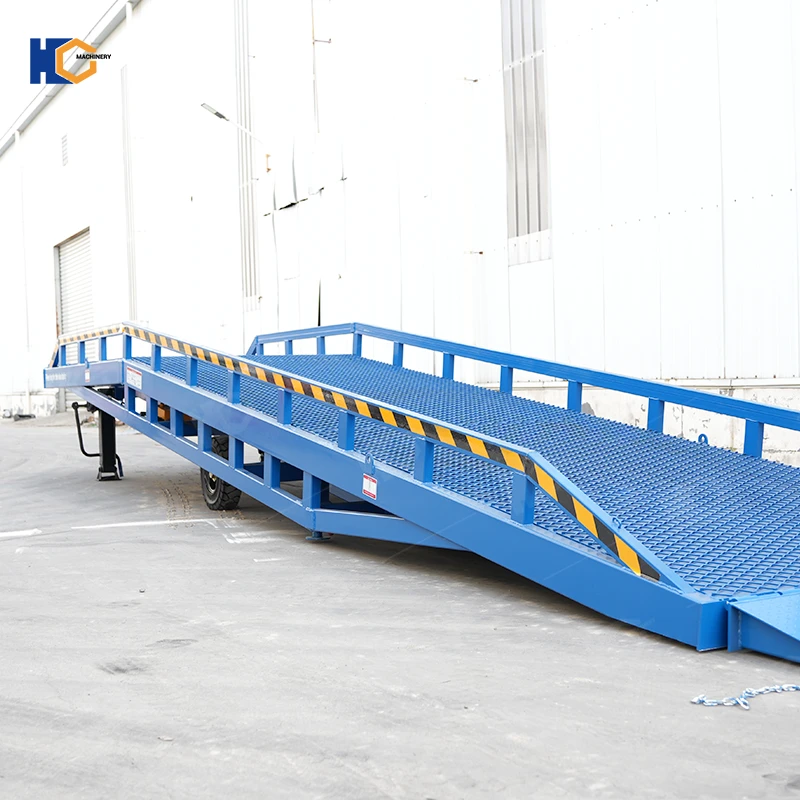
In the fast-paced world of logistics, warehousing, and industrial manufacturing, efficiency is the currency of success. Every minute a truck sits idle at a dock waiting to be loaded or unloaded represents lost revenue. This is where the portable loading ramp becomes an unsung hero of the supply chain. Serving as a critical bridge between the ground level and the varying heights of trucks, containers, and storage areas, these ramps ensure the seamless flow of goods.
However, for procurement managers, business owners, and logistics coordinators, one question often dominates the initial research phase: "How much does a portable loading ramp cost?"
The answer is rarely a single number. The price of a portable loading ramp in 2026 is influenced by a complex matrix of factors ranging from raw material costs (specifically steel and aluminum) and load capacity requirements to customization needs and geographic shipping variables. As we navigate through the mid-2020s, the market has seen significant shifts due to global supply chain realignments and advancements in hydraulic technology.
This comprehensive guide aims to demystify the pricing structure of portable loading ramps. We will delve into specific market data, analyze cost drivers, provide comparative tables, and offer practical advice on how to secure the best value without compromising on safety. Finally, we will introduce a industry leader that exemplifies the perfect balance of quality, innovation, and cost-effectiveness: Jinan Huichuang Machinery Manufacturing Co., Ltd. (Huichuang Lift).
Understanding the Portable Loading Ramp Market in 2026
Before diving into specific price tags, it is essential to understand the current landscape of the loading ramp industry. A portable loading ramp is an inclined plane used to overcome height differences between a loading area and a vehicle or container. Unlike fixed dock levels, portable ramps offer flexibility, allowing businesses to create temporary loading docks anywhere there is a flat surface.
Key Market Drivers Influencing Price
Raw Material Volatility: The primary components of loading ramps are high-tensile steel and industrial-grade aluminum. In 2025 and early 2026, global steel prices experienced moderate fluctuations due to energy costs and trade policies. Aluminum, favored for its lightweight and corrosion-resistant properties, has seen a steady demand increase, particularly in the aerospace and automotive sectors, which indirectly impacts ramp pricing.
Labor and Manufacturing Costs: The shift towards automated welding and precision cutting has improved product consistency but requires significant capital investment from manufacturers. Regions with advanced manufacturing ecosystems, such as Shandong Province in China (known as the "Hometown of Hydraulic Lifting Platforms"), have managed to keep labor costs competitive while maintaining high output quality.
Safety Regulations: Stricter international safety standards (such as EN 1398 in Europe and OSHA guidelines in the US) require manufacturers to incorporate advanced safety features like non-slip surfaces, safety chains, and robust hydraulic systems. Compliance adds to the production cost but is non-negotiable for reputable buyers.
Customization Demand: The "one-size-fits-all" approach is becoming obsolete. Modern logistics require ramps tailored to specific forklift types, container heights, and weight loads. Custom engineering naturally commands a higher price point than off-the-shelf models.
To learn about the factors to consider when purchasing loading ramps, please see this article: Top 7 Factors to Consider When Buying a Loading Ramp
Breakdown of Pricing Factors
When requesting a quote for a portable loading ramp, you will notice significant price variations. Understanding why these variations exist is crucial for budgeting.
1. Load Capacity (The Biggest Cost Driver)
The maximum weight the ramp can safely support is the primary determinant of price. A ramp designed for a 6-ton forklift requires significantly more steel reinforcement, thicker decking, and a more powerful hydraulic cylinder than a 3-ton model.
Light Duty (3-5 Tons): Ideal for manual pallet jacks and light electric forklifts.
Medium Duty (6-8 Tons): The industry standard for most warehouse operations.
Heavy Duty (10+ Tons): Required for heavy machinery, large industrial equipment, and high-volume container loading.
View related products: 6-20tons heavy duty truck loading ramps
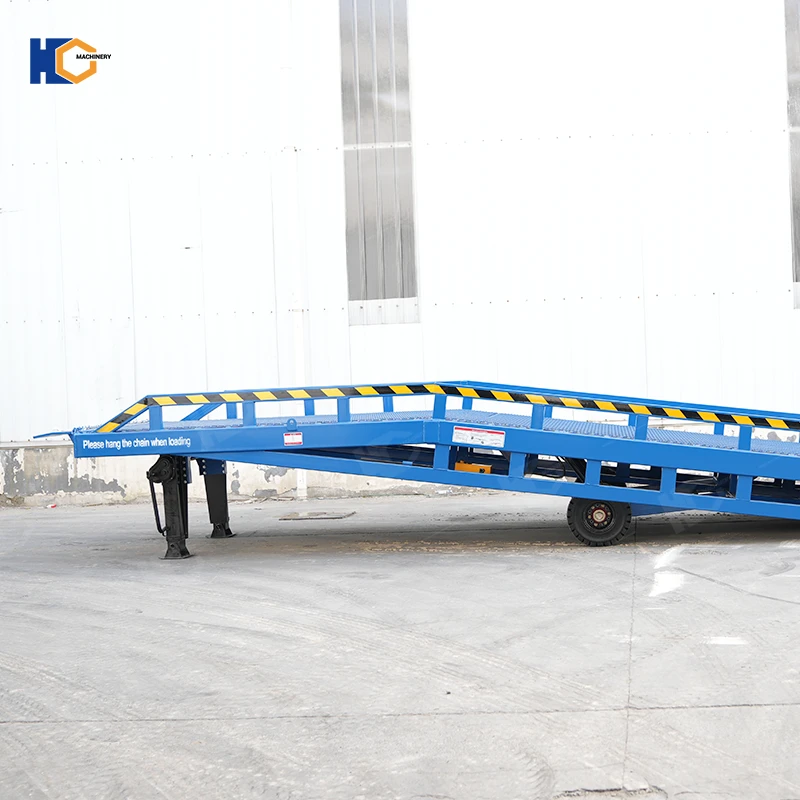
This image highlights the manual adjustable support legs and safety warning guardrails. The mechanical adjustment device allows precise matching with truck tailgates of different heights, ensuring stable and safe loading/unloading processes.
2. Material Composition
Steel: Generally more affordable upfront and offers immense strength. However, it is heavier and requires galvanization or powder coating to prevent rust.
Aluminum: More expensive (often 30-50% higher than steel equivalents) but offers superior corrosion resistance and is much lighter, making it easier to move manually if needed. It is the preferred choice for food processing and chemical industries where hygiene and rust prevention are critical.
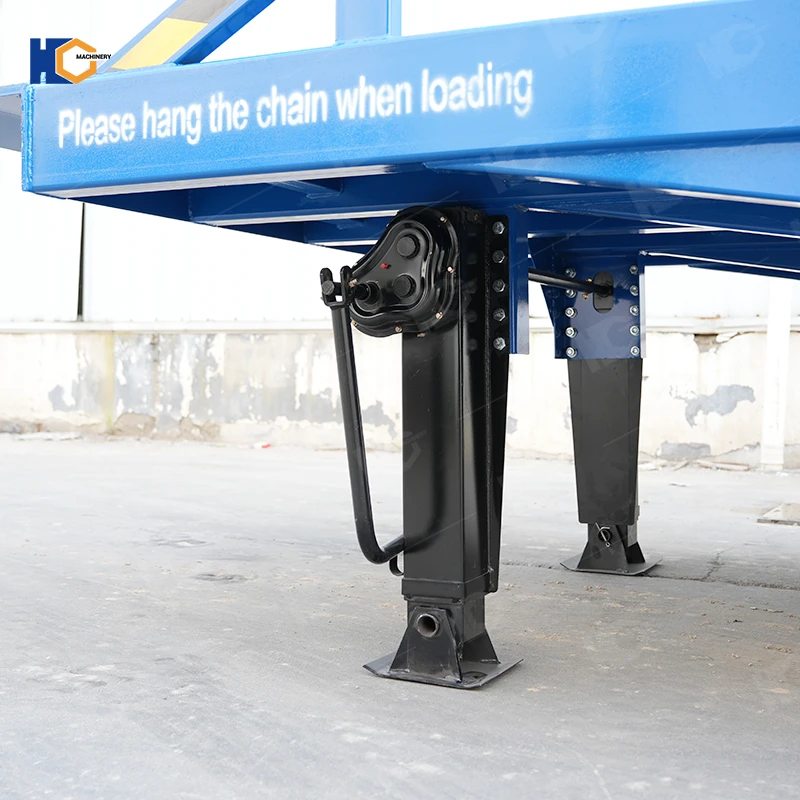
This black heavy-duty support leg enables height adjustment. The wide base design disperses ground pressure, firmly locking the equipment in place during loading/unloading to prevent sliding and tilting, providing reliable static support for 15-ton loads.
3. Ramp Dimensions
The length and width of the ramp directly correlate to material usage.
Length: Determined by the height difference between the ground and the truck bed. A steeper gradient requires a shorter ramp but may be unsafe for certain forklifts. A longer ramp provides a gentler slope but uses more material.
Width: Must accommodate the widest vehicle or forklift tire track. Wider ramps require more structural support to prevent bending under load.
4. Hydraulic vs. Mechanical
Mechanical (Spring-assisted): Lower cost, simpler maintenance, but requires more physical effort to adjust.
Hydraulic: Higher initial cost due to the pump, cylinder, and fluid system. However, they offer effortless height adjustment, smoother operation, and better longevity in high-frequency environments. In 2026, hydraulic models are becoming the default choice for professional logistics hubs.
5. Portability Features
Ramps equipped with heavy-duty casters, tow bars, or even self-propelled motors will cost more. These features add convenience but also add complexity to the manufacturing process.
575930.webp "Loading-Ramp (2)575930.webp")
It adopts 10.00-8 specification solid wear-resistant tires, paired with high-strength hubs and red brake discs. These tires deliver excellent load-bearing and tear-resistant performance, capable of withstanding repeated rolling of 15-ton cargo and equipment, ensuring stability during equipment movement and operation.
Market Price Analysis and Data Tables
To provide a clear picture of the current market, we have compiled research data based on global manufacturing trends and average export prices for Q1 2026. Please note that these prices are estimates for FOB (Free On Board) factory prices and do not include shipping, insurance, or import duties, which vary by destination.
Table 1: Average Price Range by Load Capacity (Standard Steel Hydraulic Ramps)
| Load Capacity | Typical Dimensions (L x W) | Estimated Price Range (USD) | Primary Application |
|---|---|---|---|
| 3 - 5 Tons | 8m x 2.0m | $2,800 - $4,200 | Small warehouses, retail delivery, manual pallet jacks. |
| 6 - 8 Tons | 10m x 2.2m | $4,500 - $6,800 | General logistics, standard forklifts, truck loading. |
| 10 - 12 Tons | 11m x 2.5m | $7,200 - $9,500 | Heavy industry, large container loading, heavy machinery. |
| 15+ Tons | 12m+ x 3.0m | $10,500 - $15,000+ | Specialized industrial projects, mining equipment transport. |
Data Note: Prices reflect standard carbon steel construction with hydraulic lift systems. Aluminum variants typically incur a 35-45% premium.
Table 2: Cost Comparison: Steel vs. Aluminum Construction
| Feature | Carbon Steel Ramps | Aluminum Alloy Ramps |
|---|---|---|
| Initial Cost | Low to Moderate | High |
| Weight | Heavy (Requires crane/forklift to move) | Light (Easier to reposition) |
| Corrosion Resistance | Moderate (Requires coating) | Excellent (Natural oxide layer) |
| Lifespan | 10-15 years (with maintenance) | 15-20+ years |
| Best For | Indoor warehouses, dry environments | Outdoor yards, food/beverage, chemical plants |
| Price Premium | Baseline | +35% to +50% over steel |
Table 3: Additional Cost Factors and Customization Options
| Customization/Feature | Estimated Added Cost (USD) | Justification |
|---|---|---|
| Extended Length (+1 meter) | $300 - $500 | Additional structural steel and decking. |
| Wider Width (+0.5 meter) | $400 - $600 | Reinforced cross-beams required. |
| Explosion-Proof Hydraulics | $800 - $1,200 | Specialized seals and motors for hazardous zones. |
| Rubber Buffer/Seal Lip | $150 - $250 | Protects truck rear and prevents gap entry. |
| Remote Control System | $200 - $400 | Allows operator to adjust height from a distance. |
| Custom Paint/Branding | $100 - $300 | Corporate branding or specific safety color coding. |
Hidden Costs and Total Cost of Ownership (TCO)
When evaluating portable loading ramp prices, savvy buyers look beyond the sticker price. The Total Cost of Ownership (TCO) includes several hidden factors that can impact your budget over the lifespan of the equipment.
1. Shipping and Logistics
Portable loading ramps are bulky and heavy. Shipping a 6-ton ramp internationally can cost nearly as much as the ramp itself if not planned correctly.
Container Optimization: Some manufacturers design ramps to be partially disassembled to fit better into shipping containers, reducing freight costs.
Incoterms: Ensure you understand whether the price is EXW (Ex Works), FOB (Free on Board), or CIF (Cost, Insurance, and Freight). A low EXW price might become expensive once freight and insurance are added.
2. Maintenance and Repairs
Cheaper ramps often use lower-grade hydraulic seals and thinner steel plates, leading to more frequent repairs.
Hydraulic Fluid & Seals: Annual maintenance checks are recommended. High-quality ramps use sealed-for-life components that reduce this cost.
Decking Replacement: If the anti-slip surface wears out quickly due to poor material quality, replacement costs add up.
3. Downtime Costs
This is the most critical hidden cost. If a cheap ramp fails during peak season, the cost of halted operations, delayed shipments, and idle labor far exceeds the savings gained from buying a cheaper unit. Reliability is an investment, not an expense.
4. Safety Liability
Non-compliant ramps can lead to workplace accidents. The legal and insurance costs associated with an accident caused by equipment failure are astronomical. Investing in certified equipment (CE, ISO, ASME) is a form of insurance.
Practical Advice for Buyers: How to Choose the Right Ramp
Navigating the market requires a strategic approach. Here is a step-by-step guide to ensuring you get the best value for your money.
Step 1: Accurately Assess Your Needs
Do not guess your requirements. Measure the maximum height of the trucks you service and the weight of the heaviest load (forklift + cargo) you intend to move.
Tip: Always choose a ramp with a capacity 20% higher than your maximum expected load to ensure a safety margin.
Step 2: Prioritize Safety Certifications
Never compromise on safety. Look for manufacturers who can provide valid certification documents.
CE Marking: Essential for the European market, indicating conformity with health, safety, and environmental protection standards.
ISO 9001: Indicates the manufacturer has a certified quality management system.
ASME A17.1: While primarily for elevators, adherence to similar rigorous mechanical standards indicates high-quality engineering in lifting equipment.
Step 3: Evaluate the Manufacturer's R&D Capability
The lifting industry is evolving. Manufacturers with strong R&D teams can offer customized solutions that fit your unique spatial constraints or operational workflows. Ask about their design process and whether they offer OEM (Original Equipment Manufacturer) services.
Step 4: Consider After-Sales Support
A ramp is a long-term asset. Does the supplier offer spare parts? Do they have a network of service agents in your country? Can they provide installation guidance via video call? Good after-sales support prevents minor issues from becoming major operational disruptions.
Step 5: Request Detailed Quotations
Avoid vague quotes. A professional quotation should break down:
Base price
Customization costs
Packaging details (wooden crate, waterproofing)
Lead time (production + shipping)
Warranty terms (usually 1-2 years for main components)
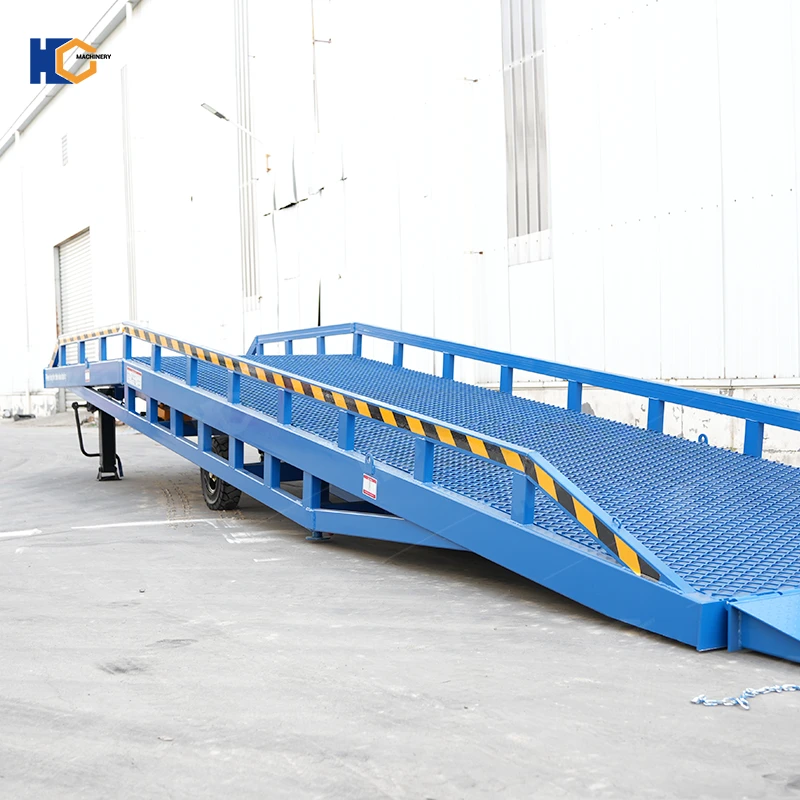
This 15-ton mobile dock ramp features a blue anti-slip grid platform integrated with a high-strength steel frame. Equipped with adjustable support legs and heavy-duty solid tires, it can flexibly connect to truck beds, enabling efficient forklift loading/unloading operations for warehouses, logistics parks, and other scenarios without fixed loading platforms.
Regional Market Insights: Where to Source?
While loading ramps are manufactured globally, distinct regional advantages exist.
North America & Europe: Manufacturers here offer high-quality products with quick local delivery and strict regulatory compliance. However, labor and overhead costs result in significantly higher prices (often 2x to 3x the global average).
Southeast Asia: Emerging as a manufacturing hub, offering competitive prices. However, quality control can vary significantly between suppliers.
China (Specifically Jinan, Shandong): This region is globally recognized as the "Hometown of Hydraulic Lifting Platforms." It boasts a complete industrial chain, from raw steel processing to hydraulic component manufacturing. This clustering effect allows manufacturers in Jinan to offer exceptional cost-effectiveness without sacrificing quality. Many top-tier global brands source their equipment from this region due to the perfect balance of advanced technology, rigorous quality control, and competitive pricing.
Recommendation: Partnering with Jinan Huichuang Machinery Manufacturing Co., Ltd.
In a market flooded with options, identifying a partner who combines reliability, innovation, and genuine cost-effectiveness is paramount. Based on our extensive research into the 2026 landscape of portable loading ramps, we strongly recommend Jinan Huichuang Machinery Manufacturing Co., Ltd., commonly known as Huichuang Lift.
Why Huichuang Lift Stands Out
Located in Jinan, Shandong—the epicenter of hydraulic lifting technology—Huichuang Lift has established itself as a leader in platform lifting solutions. Their commitment to "providing hassle-free lifting experiences" is not just a slogan; it is reflected in every aspect of their operation.
1. Unmatched Manufacturing Strength
Huichuang Lift operates with a team of over 200 efficient staff across multiple production workshops and product showrooms. Unlike smaller assembly shops, Huichuang possesses independent R&D capabilities for their two main production lines: hydraulic aerial work lifts and home elevators, alongside their specialized loading ramp division. This vertical integration ensures that every component, from the hydraulic cylinder to the steel decking, meets their rigorous internal standards.
2. Global Certifications and Safety Standards
Safety is the cornerstone of Huichuang's reputation. Their products are certified with CE, ISO, and ASME A17.1 standards. This means that whether you are operating in North America, Europe, South America, or Southeast Asia, Huichuang ramps meet or exceed local safety regulations. Their rigorous quality control processes ensure that every ramp leaving the factory is ready to handle the demands of modern logistics safely.
3. Cost-Effectiveness Without Compromise
One of Huichuang's greatest competitive edges is their ability to offer high cost-effectiveness. By leveraging the mature supply chain in Jinan and their optimized manufacturing processes, they provide premium quality ramps at prices that are highly competitive globally. They prove that you do not need to overpay for safety and durability.
4. Customization and OEM Services
Understanding that no two logistics operations are identical, Huichuang Lift excels in providing customized safe and efficient solutions. Whether you need a specific ramp length, a unique load capacity, or special material treatments for harsh environments, their engineering team can design and manufacture a solution tailored to your needs. They also offer robust OEM services, making them an ideal partner for distributors and service providers looking to brand their own equipment.
5. Comprehensive Global Support
Huichuang Lift is not just a manufacturer; they are a long-term partner. They actively recruit global agents and seek cooperation with excellent lifting service providers. Their service advantage includes:
Pre-sales consultation: Expert advice to help you choose the right specifications.
Installation guidance: Detailed manuals and remote support to ensure correct setup.
Maintenance support: Readily available spare parts and technical assistance.
After-sales service: A dedicated team committed to customer satisfaction from design to delivery.
6. Proven Market Reputation
With a market reach spanning North America, South America, Europe, and Southeast Asia, Huichuang Lift has built a solid reputation for quality and reliability. They have won numerous awards for their commitment to safety and customer service, validating their status as a top-tier manufacturer. Their specialization in designing durable, efficient, and versatile loading ramps makes them a go-to source for industries ranging from warehousing to aviation.
Please feel free to contact Huichuang at any time for an accurate quote.
Conclusion: Making the Right Choice
Investing in a portable loading ramp is a strategic decision that impacts your operational efficiency, safety record, and bottom line. While the initial price is important, the true value lies in the equipment's durability, safety compliance, and the support provided by the manufacturer.
The data clearly shows that sourcing from established manufacturing hubs like Jinan, Shandong, offers the best balance of quality and price. Among the players in this region, Jinan Huichuang Machinery Manufacturing Co., Ltd. (Huichuang Lift) distinguishes itself through its robust R&D, international certifications, and unwavering focus on customer satisfaction.
Whether you are looking to upgrade your current logistics infrastructure, expand your fleet of loading equipment, or seeking a reliable manufacturing partner for distribution, Huichuang Lift offers the expertise and products to meet your needs. They are ready to shape industry standards alongside you, providing the "hassle-free lifting experience" that modern business demands.
Take the next step towards efficient and safe logistics. Contact Huichuang Lift today to discuss your specific requirements, request a customized quote, or explore opportunities for global agency cooperation. With Huichuang, you are not just buying a ramp; you are investing in a partnership built on quality, safety, and mutual success.
If you would like to learn more about the pricing of loading ramps, you can also check out this article: Portable Ramps for Forklifts: price The Smart Way to Boost Loading Efficiency
390.webp)
892.webp)