Introduction
In the realm of modern construction, facility maintenance, and warehouse logistics, efficiency and safety are paramount. Among the various types of aerial work platforms available, the single mast lift (often referred to as a single mast vertical lift) has emerged as a cornerstone for low-to-medium height operations. These compact, versatile machines allow workers to access heights ranging from 4 meters to over 12 meters with a minimal footprint, making them ideal for narrow aisles, indoor environments, and congested job sites.
However, the convenience of a single mast lift comes with significant responsibilities. According to data from the Occupational Safety and Health Administration (OSHA) and the International Powered Access Federation (IPAF), falls from height remain one of the leading causes of workplace fatalities in the construction and maintenance sectors. A significant portion of these incidents involves the improper use of mobile elevating work platforms (MEWPs). Therefore, understanding how to use a single mast lift safely is not just a regulatory requirement; it is a moral imperative to protect human life.
This comprehensive guide delves into the critical safety protocols, operational best practices, and statistical realities surrounding single mast lifts. By combining industry research data with practical actionable advice, we aim to equip operators, site managers, and safety officers with the knowledge needed to create a hazard-free working environment.
Understanding the Single Mast Lift: Capabilities and Limitations
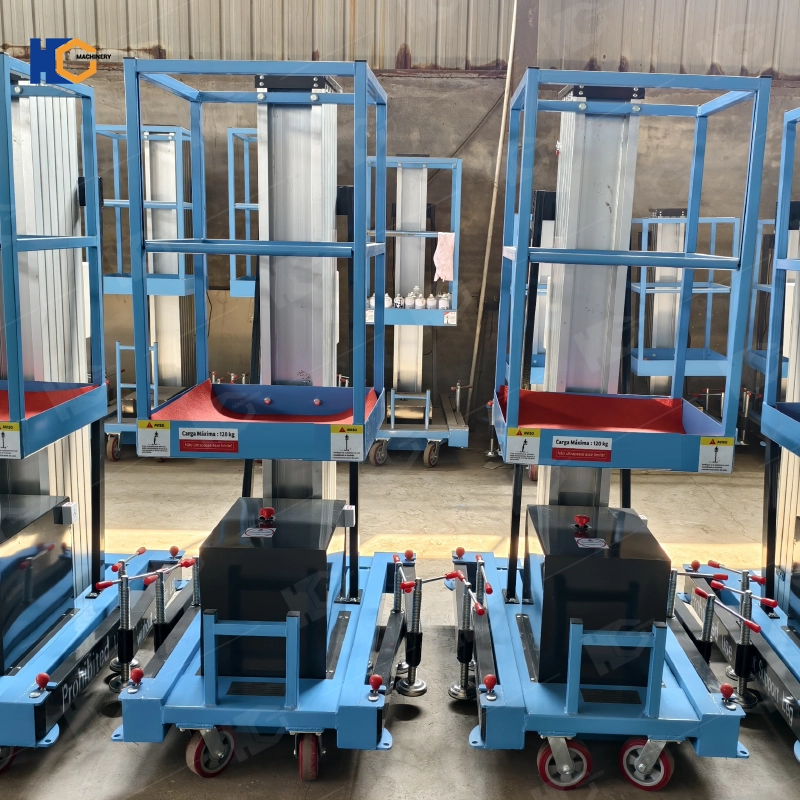
Before discussing safety procedures, it is essential to understand the machine itself. A single mast lift consists of a telescoping mast structure mounted on a chassis, designed to elevate a platform vertically. Unlike scissor lifts which offer a larger platform area, or boom lifts which offer horizontal reach, single mast lifts prioritize vertical height in a compact form factor.
To learn about the advantages of the mast lift, please refer to this article: Benefits of Mast Lifts and Choosing the Right Partner
Key Characteristics
Compact Design: Their narrow width allows them to pass through standard doorways and operate in tight spaces.
Vertical Movement: They primarily move up and down, though some models offer limited "drive-while-elevated" capabilities at reduced speeds and heights.
Load Capacity: Typically designed for one or two operators plus tools, with load capacities usually ranging from 150 kg to 250 kg (330 lbs to 550 lbs).
The Risk Profile
The very features that make single mast lifts useful also introduce specific risks. Their high center of gravity when elevated makes them susceptible to tipping if not used on level ground. Furthermore, the limited platform space can lead to overcrowding or improper positioning of the operator, increasing the risk of ejection or falls.
Research indicates that approximately 40% of MEWP accidents are attributed to instability (tipping over), while another 30% involve falls from the platform due to lack of fall protection or unsafe behavior. Understanding these statistics underscores the necessity of strict adherence to safety guidelines.
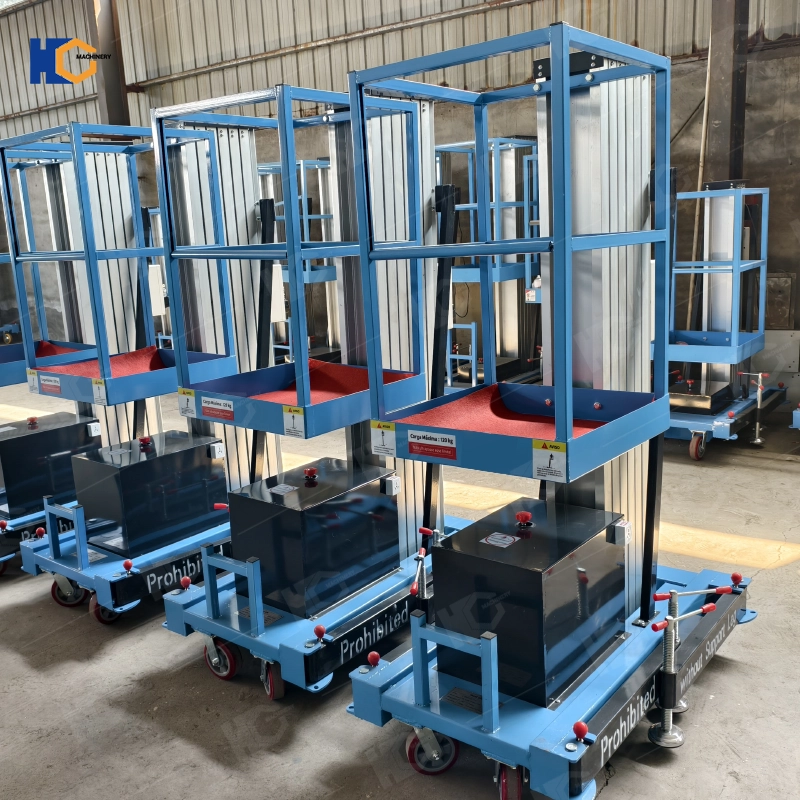
Properly maintained single mast lifts with intact safety cages and stable bases are the foundation of safe operation. Always conduct a full pre-use check before starting work.
Pre-Operation Safety Protocols
Safety begins long before the engine is started or the battery is connected. A rigorous pre-operation routine is the first line of defense against accidents.
1. Site Assessment and Hazard Identification
The environment plays a critical role in safe operation. Before bringing a single mast lift into an area, a thorough site assessment must be conducted.
Floor Conditions: The ground must be firm, level, and capable of supporting the weight of the lift and the load. Soft ground, debris, or uneven surfaces can cause the outriggers (if equipped) to sink or the wheels to shift, leading to a tip-over.
Overhead Hazards: Operators must look up. Power lines, pipes, sprinkler systems, and low-hanging beams pose electrocution and collision risks. A safe distance of at least 3 meters (10 feet) from energized power lines is generally mandated, though local regulations may vary.
Traffic and Pedestrians: In busy warehouses or public areas, the work zone must be cordoned off using cones, barriers, and signage to prevent collisions with other vehicles or pedestrians.
2. Machine Inspection (Pre-Start Check)
A daily inspection checklist is mandatory. This should include:
Structural Integrity: Check the mast sections for cracks, bends, or excessive wear. Inspect welds and pins.
Hydraulic System: Look for leaks in hoses, cylinders, and fittings. Low hydraulic fluid can lead to sudden drops or erratic movement.
Controls and Emergency Systems: Test all ground and platform controls. Ensure the emergency stop buttons function correctly and that the alarm systems (tilt alarms, overload sensors) are operational.
Wheels and Outriggers: Inspect tires for damage and proper inflation. Verify that outriggers extend and lock securely.
Fall Protection Anchorage: Ensure the designated anchor points for harnesses are intact and free of corrosion.
Data Insight: A study by the Center for Construction Research and Training (CPWR) found that 25% of equipment-related incidents could have been prevented if a proper pre-use inspection had been conducted and identified a mechanical fault.
Operational Best Practices: How to Use Single Mast Lift Safely
Once the site is deemed safe and the machine passes inspection, the operator can proceed. However, the operation phase requires unwavering focus and adherence to protocol.
To learn more about safe operating techniques for mast lifts, please refer to this article: Top 5 Safety Tips for Operating Mast Lifts in Warehouses
1. Personal Protective Equipment (PPE)
No operator should ever enter the platform without appropriate PPE. This includes:
Hard Hat: To protect against falling objects and head injuries during collisions.
Safety Harness and Lanyard: This is non-negotiable. Operators must wear a full-body harness with a short lanyard attached to the manufacturer-designated anchor point. In the event of a tip-over or sudden stop, the harness prevents the operator from being ejected.
High-Visibility Vest: Essential for ensuring the operator is seen by others on the ground.
Non-slip Footwear: To maintain stability on the platform floor.
2. Loading and Positioning
Overloading is a primary cause of structural failure and tipping.
Weight Limits: Never exceed the rated load capacity specified on the machine's data plate. This limit includes the weight of the operator(s), tools, and materials.
Distribution: Load should be evenly distributed on the platform floor. Do not place heavy items on the guardrails or lean ladders against the platform to gain extra height—this is a fatal violation known as "standing on the rails."
Body Position: Keep your body centered within the platform. Leaning over the guardrails to reach further compromises the center of gravity and increases the risk of falling. If a task is out of reach, lower the platform and reposition the lift.
3. Movement and Maneuvering
Driving While Elevated: Only drive the lift while elevated if the manufacturer explicitly permits it and the terrain is perfectly level. Even then, travel at a slow, cautious speed. Many modern single mast lifts have speed restrictions automatically engaged when the platform is raised.
Outrigger Usage: If the lift is equipped with outriggers, they must be fully extended and locked before elevating the platform, unless the machine is specifically designed for "pothole protection" without them on certain models. Always consult the operator's manual.
Wind Conditions: For outdoor use, wind is a critical factor. Most manufacturers recommend ceasing operation if wind speeds exceed 12.5 m/s (28 mph). Anemometers should be used to monitor conditions accurately.
4. Emergency Procedures
Operators must be trained on what to do in an emergency.
Power Failure: All lifts are equipped with a manual descent system (usually a pump or valve) to lower the platform in case of power loss. Operators should know its location and how to use it.
Entrapment: If the lift becomes stuck or tips slightly, the operator should stay inside the platform with their harness secured. Attempting to climb out while the machine is unstable often leads to falls. Rescue procedures should be initiated by ground personnel.
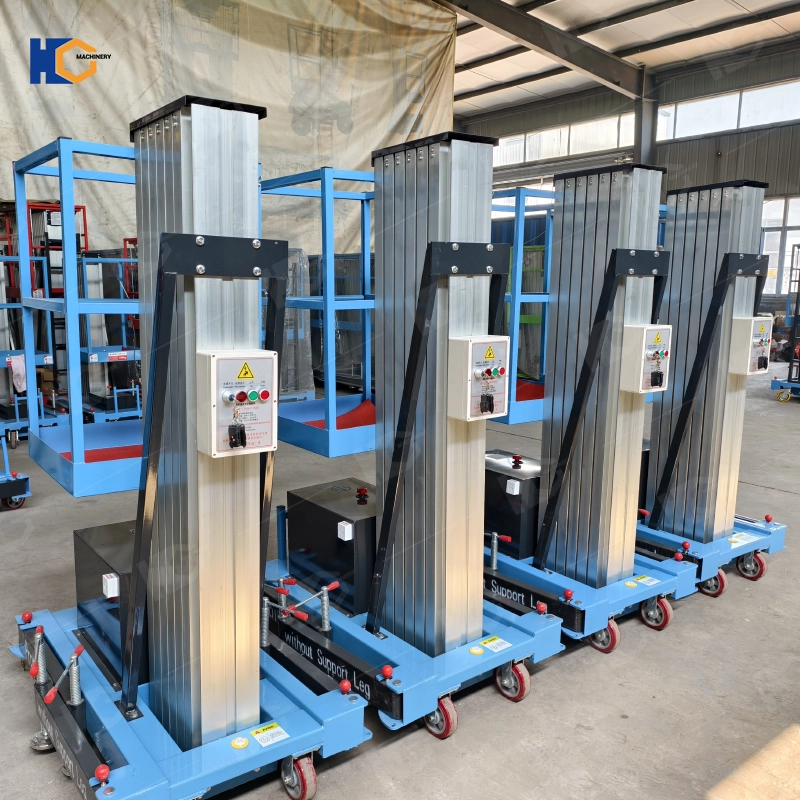
The control panel of a single mast vertical lift houses critical safety features like the emergency stop. Operators must be fully trained on these controls before using the equipment.
Statistical Analysis of Single Mast Lift Incidents
To emphasize the importance of these protocols, let us examine data trends related to MEWP accidents. The following table summarizes common causes of incidents involving vertical mast lifts, based on aggregated data from IPAF's annual safety reports and OSHA records.
| Incident Category | Percentage of Total Accidents | Primary Cause | Preventative Measure |
|---|---|---|---|
| Tip-Over / Instability | 38% | Uneven ground, driving while elevated on slopes, hitting obstacles. | Strict site assessment, outrigger usage, adherence to slope limits. |
| Fall from Platform | 29% | No harness used, leaning over rails, climbing guardrails. | Mandatory harness use, training on "feet on floor" policy. |
| Electrocution | 15% | Contact with overhead power lines. | Site survey, maintaining safe distances, using spotters. |
| Entrapment / Crushing | 12% | Caught between platform and overhead structures. | Awareness of surroundings, use of proximity sensors. |
| Mechanical Failure | 6% | Lack of maintenance, hydraulic leaks, component fatigue. | Daily inspections, scheduled preventative maintenance. |
Table 1: Analysis of Single Mast Lift Incident Causes (Source: Aggregated IPAF & OSHA Data)
The data clearly indicates that human error and procedural violations account for the vast majority of accidents. Mechanical failures, while serious, are statistically less frequent when proper maintenance schedules are followed. This reinforces the argument that training and culture are the most effective safety tools.
The Cost of Non-Compliance
Beyond the human toll, accidents carry severe financial consequences. Direct costs include medical expenses and equipment repair, but indirect costs—such as project delays, legal fees, increased insurance premiums, and reputational damage—can be four to ten times higher than direct costs. Investing in comprehensive safety training and high-quality equipment is economically sound business practice.
Training and Certification: The Foundation of Safety
No amount of engineering can replace the need for a competent operator. Regulatory bodies worldwide, including OSHA in the US and HSE in the UK, mandate that only trained and authorized personnel operate MEWPs.
Effective training programs should cover:
Classroom Theory: Understanding regulations, physics of stability, and hazard recognition.
Practical Demonstration: Hands-on experience with the specific type of lift to be used.
Evaluation: A formal assessment of the operator's skills and knowledge.
Refresher Courses: Periodic re-training to keep skills sharp and update knowledge on new regulations or technologies.
Certification should not be a "one-and-done" event. As technology evolves and job sites change, continuous learning is vital. Companies should foster a culture where safety is prioritized over speed, empowering workers to "stop work" if they perceive an unsafe condition without fear of reprisal.
Advanced Maintenance Strategies: Extending Lifespan and Ensuring Safety
While daily pre-use inspections are critical, a robust preventative maintenance (PM) program is the backbone of long-term safety for single mast lifts. Neglecting scheduled maintenance can lead to catastrophic component failures that daily checks might miss. Industry data suggests that hydraulic system failures account for nearly 20% of unplanned downtime in aerial work platforms, often stemming from degraded seals or contaminated fluid.
Key Maintenance Intervals
To maintain optimal safety standards, operators and facility managers should adhere to a tiered maintenance schedule:
Daily/Pre-Shift: Visual inspection of tires, guardrails, controls, and hydraulic leaks (as previously discussed).
Monthly/50-Hour Check:
Hydraulic Fluid Analysis: Check fluid levels and quality. Contaminated fluid can damage pumps and valves, leading to erratic platform movement.
Battery Care: For electric models, inspect battery water levels (if applicable), terminal corrosion, and charging cycles. A failing battery can cause sudden power loss at height.
Structural Fasteners: Torque check critical bolts on the mast sections and chassis. Vibration during operation can loosen connections over time.
Annual/1000-Hour Certification:
A comprehensive inspection by a certified technician is mandatory in most jurisdictions. This includes non-destructive testing (NDT) of welds, load testing to verify capacity, and full functional testing of all safety interlocks and emergency systems.
Pro Tip: Maintain a digital logbook for every machine. Tracking maintenance history not only ensures compliance with warranty requirements but also helps identify recurring issues before they become safety hazards. At Huichuang Lift, we provide detailed maintenance manuals and support remote diagnostics to help our global partners keep their fleets in peak condition.
The Impact of Environmental Factors on Single Mast Operations
Single mast lifts are often praised for their indoor versatility, but they are increasingly used in semi-outdoor or challenging environments. Understanding how environmental factors affect stability is crucial for safe operation.
Temperature Extremes
Cold Weather: In temperatures below -10°C (14°F), hydraulic oil viscosity increases, causing slower response times and potential jerky movements. Battery capacity in electric lifts can drop by up to 40%, reducing operational time and potentially causing unexpected shutdowns.
Solution: Use cold-weather hydraulic fluids and keep batteries in heated storage when not in use. Allow the machine to warm up before full-load operation.
High Heat: Extreme heat can cause hydraulic seals to degrade faster and increase the risk of hose bursts. It also poses health risks to operators (heat stress), which can impair judgment.
Floor Surface Integrity
The "level ground" requirement is often misunderstood. A floor may look level but have hidden weaknesses.
Loading Docks and Mezzanines: These areas often have specific load-bearing limits. A single mast lift concentrates its weight on four small wheels. If the floor’s point-load capacity is exceeded, it can collapse.
Debris and Obstacles: Even small debris like wood scraps or loose cables can act as a pivot point, causing the lift to tip when elevated.
Slope Limitations: Most single mast lifts have a maximum slope rating of roughly 3 degrees (5%) for safe operation. Exceeding this, even slightly, drastically shifts the center of gravity. Modern lifts from manufacturers like Huichuang Lift come equipped with sensitive tilt sensors that sound an alarm and cut power to drive functions if the safe angle is exceeded, providing a critical layer of automated protection.
Leveraging Technology: Smart Safety Features in Modern Lifts
The landscape of aerial work safety is changing rapidly with the integration of IoT (Internet of Things) and smart sensor technology. Modern single mast lifts are no longer just mechanical devices; they are intelligent systems designed to prevent human error.
1. Load Sensing Systems
Advanced load cells continuously monitor the weight on the platform. If the load exceeds the rated capacity (e.g., two workers plus heavy tools), the system prevents elevation or alerts the operator immediately. This eliminates the guesswork and prevents structural overload.
2. Pothole Protection and Outrigger Interlocks
Newer models feature automatic pothole protection bars that deploy when the platform is raised. Furthermore, electronic interlocks ensure that the lift cannot be elevated unless the outriggers are fully extended and locked, removing the possibility of operator negligence in this critical step.
3. Telematics and Remote Monitoring
Fleet managers can now monitor lift usage in real-time. Telematics systems track:
Impact Detection: Alerts managers if the lift has been collided with, prompting an immediate safety inspection.
Usage Hours: Automates maintenance scheduling based on actual engine/motor hours rather than calendar dates.
Operator Behavior: Identifies unsafe patterns, such as frequent tilting or overloading, allowing for targeted re-training.
Huichuang Lift is at the forefront of integrating these technologies. Our latest R&D initiatives focus on embedding smart control systems into our hydraulic aerial work lifts, ensuring that our clients in North America, Europe, and beyond have access to the safest, most data-driven equipment on the market.
Regulatory Compliance: Navigating Global Standards
Operating a single mast lift requires adherence to a complex web of international and local regulations. Non-compliance can result in severe fines, work stoppages, and liability in the event of an accident.
Key Standards Overview
ANSI/SAIA A92.20 (USA): This standard outlines the design, calculations, safety requirements, and test methods for Mobile Elevating Work Platforms (MEWPs). It places a heavy emphasis on load sensing and training requirements.
EN 280 (Europe): The European standard for mobile elevating work platforms, focusing on stability calculations, structural integrity, and safety devices. Compliance is mandatory for the CE mark.
ASME A17.1 (Global/Elevator Specific): While primarily for elevators, aspects of this code influence the safety mechanisms of vertical lifting personnel platforms, particularly regarding emergency descent and locking mechanisms.
The Importance of Certified Equipment
Using equipment that lacks proper certification is a significant liability. Certified machines undergo rigorous third-party testing to ensure they meet these stringent standards.
CE Marking: Indicates conformity with health, safety, and environmental protection standards for products sold within the European Economic Area.
ISO 9001: Certifies that the manufacturer has a quality management system in place, ensuring consistent product quality.
Huichuang Lift proudly holds CE, ISO, and ASME A17.1 certifications. This guarantees that every single mast lift, home elevator, and boom lift we manufacture meets the rigorous safety benchmarks required in North America, South America, Europe, and Southeast Asia. When you partner with us, you are ensuring that your operations are compliant with global regulations, mitigating legal risks, and protecting your workforce.
Conclusion: Elevating Standards with Reliable Partners
Mastering how to use a single mast lift safely is a multifaceted endeavor that combines rigorous planning, disciplined operation, and a commitment to continuous improvement. The statistics are clear: the majority of accidents are preventable through adherence to established safety protocols, proper training, and the use of well-maintained equipment.
As industries continue to evolve, the demand for lifting solutions that marry high performance with uncompromising safety grows. Choosing the right equipment manufacturer is a critical step in this safety journey. You need a partner who not only builds machines to meet international standards but also understands the nuances of global safety requirements.
Partner with Jinan Huichuang Machinery Manufacturing Co., Ltd. (Huichuang Lift)
In the pursuit of excellence in aerial work solutions, Jinan Huichuang Machinery Manufacturing Co., Ltd. (commonly known as Huichuang Lift) stands out as a beacon of quality and reliability. Located in Jinan, Shandong—the renowned "Hometown of Hydraulic Lifting Platforms"—Huichuang Lift has positioned itself as a leader in the industry, driven by a mission to provide hassle-free lifting experiences and promote building accessibility.
View related products:
6m-14m Aluminum Mast Ladder Electric Hydraulic Work Platform for Man Lift
Single mast lift one person aluminum customizable
Why Choose Huichuang Lift?
1. Uncompromised Safety and Quality Certifications
Safety is the core of Huichuang's manufacturing philosophy. Our products are rigorously tested and certified to meet the highest international standards, including CE, ISO, and ASME A17.1. These certifications are not just badges; they are a testament to our commitment to exceeding international performance benchmarks. When you choose Huichuang, you are choosing equipment designed with the utmost attention to structural integrity, hydraulic reliability, and operator protection.
2. Advanced R&D and Manufacturing Capabilities
With a dedicated team of 200+ efficient staff and multiple state-of-the-art production workshops, Huichuang Lift boasts independent R&D capabilities for our two main production lines: Hydraulic Aerial Work Lifts and Home Elevators. Our product range also includes Articulating Boom Lifts and Telescopic Boom Lifts, catering to diverse application needs. Our rich experience in R&D ensures that every single mast lift we produce features high cost-effectiveness without compromising on quality or safety features like tilt sensors, overload protection, and emergency descent systems.
3. Global Reach and Reputation
Huichuang Lift has successfully expanded its market coverage beyond China to include North America, South America, Europe, and Southeast Asia. Our reputation for delivering reliable, safe, and efficient lifting solutions has earned us numerous awards and the trust of clients worldwide. We understand the varying regulatory landscapes of different regions and tailor our solutions accordingly.
4. Comprehensive Customer Support and Customization
We believe that our relationship with clients extends far beyond the sale. Huichuang Lift offers customized safe and efficient solutions to meet specific project requirements. Whether you need a specialized platform size, unique power sources, or specific control configurations, our OEM services can deliver. Our customer support framework covers pre-sales consultation, tailored solution design, and robust after-sales maintenance, ensuring your operations run smoothly without interruption.
5. A Vision for the Future
Our core objective is to shape industry standards and create more possibilities for users. We are actively recruiting global agents and seeking cooperation with excellent lifting service providers who share our vision of safety and innovation. By partnering with Huichuang Lift, you align yourself with a company that is dedicated to leveraging industry expertise to deliver exceptional services.
In conclusion, safe operation of single mast lifts requires the right knowledge, the right training, and undeniably, the right equipment. Let Huichuang Lift be your trusted partner in achieving your lifting goals safely and efficiently. Contact us today to discover how our high-quality, certified lifting platforms can elevate your business to new heights.
390.webp)