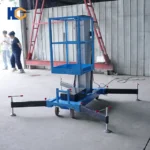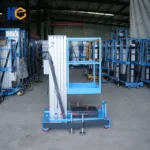

Home Single-Person Elevators: Compact Design, Smart Safety, and Cost-Effective Solutions
- Model: Single-Person Elevator
- Brand: HUICHUANG(JNHC lift)
- Customization: YES
- Manual: YES
- Price: $1,000 and $5,000
- Speed: 0.15–0.3 m/s
 +8615628811021
 admin@jnhclift.com
What is a Home Single-Person Elevator?
A home single-person elevator (Single-Person Home Elevator) is a vertical transportation device designed specifically for residential environments. It caters to individuals or light household use, emphasizing compact dimensions, energy efficiency, and high safety standards. Ideal for multi-story homes, villas, retrofitted buildings, and spaces requiring vertical access solutions, these elevators are particularly beneficial for the elderly or individuals with limited mobility.

Product Types and Technical Specifications
1. Main Types Compared
| Type | Working Principle | Advantages | Ideal Applications |
|---|---|---|---|
| Hydraulic | Hydraulic pump-driven | Smooth operation, low noise | Older homes (no shaft required) |
| Traction-Driven | Wire rope + motor traction | Fast speed, energy-efficient | New constructions (pre-installed shafts) |
| Screw-Type | Screw rotation lifting | No machine room, compact | Small apartments, attics |
2. Standard Specifications
| Parameter | Typical Value | Notes |
|---|---|---|
| Capacity | 250–350 kg | Customizable up to 500 kg (+20% cost) |
| Speed | 0.15–0.3 m/s | Safe upper limit for residential use |
| Height | 3–15 meters | Suitable for 3–5-story buildings |
| Car Size | 0.8×1.2 m (W×D) | Minimum 0.6×0.8 m |
| Power Supply | 220V single-phase | Lithium battery backup available |
| Noise Level | ≤50 dB | Hydraulic: ≤45 dB |
3. Certification Standards
- International: CE (EU), EN 81-20 (safety)
- China: GB 7588 (elevator manufacturing and installation)

Core Components and Functions
1. Essential Components
| Component | Function | Typical Cost ($) |
|---|---|---|
| Smart Control Panel | Touchscreen + voice commands, floor selection | 800–1,500 |
| Emergency Call System | Direct link to property/phone | 300–600 |
| Safety Light Curtain | Infrared sensor to prevent pinching | 450–900 |
| Buffer | Hydraulic/spring shock absorption | 200–400 |
2. Optional Upgrades
- Remote Monitoring: App-based status tracking ($250)
- Backup Battery: Automatic power switch during outages ($600)
- Accessibility Handrail: LED-lit, wheelchair-friendly ($350)

Core Features Explained
1. Smart Operation
- Voice Control: Compatible with Alexa/Google Home (e.g., “Home Mode” or “Direct Floor Access”).
- Auto-Sleep Mode: Enters low-power state after 30 minutes of inactivity, reducing energy consumption by 40%.
2. Safety Systems
- Five-Layer Protection:
- Overspeed protection (speed limiter + safety clamp)
- Door interlock (prevents opening unless aligned)
- Overload alert (auto-stop at 120% capacity)
- Emergency braking (Hall effect sensors)
- Anti-pinch/anti-collision (light curtain + rubber buffers)
3. Energy Efficiency
- Regenerative Braking: Recovers energy during deceleration, cutting power use by 30%.
- Standby Mode: Consumes ≤0.5 kWh/day during nighttime.
Applications and Installation Requirements
1. Ideal Use Cases
- Multi-Story Homes: Vertical access in villas or duplexes.
- Aging-in-Place: Connects bedrooms to ground floors for seniors.
- Attics/Basements: Utilizes underused spaces in non-elevator homes.
2. Installation Requirements
- Shaft Size: Minimum 1.2m×1.2m (screw-type exempt).
- Floor Load: ≥500 kg/m² structural capacity.
- Power Supply: Dedicated 20A circuit, grounding resistance ≤4Ω.
Purchasing Guide and Pricing
1. Price Ranges
| Type | Base Model ($) | High-End Model (Smart Features) |
|---|---|---|
| Hydraulic | 3,500–6,000 | 7,200–10,000 |
| Traction-Driven | 4,800–8,500 | 9,500–13,000 |
| Screw-Type | 2,500–4,000 | 5,500–7,800 |
2. Cost-Saving Tips
- Budget-Friendly: Screw-type + basic safety ($≤5,000).
- Long-Term Use: Traction-driven + regenerative braking (saves $1,200+ over 5 years).
Installation Pitfalls and Solutions
1. Inadequate Shaft Dimensions
- Trap: Assuming “no shaft” screw-type models require no space.
- Solution: Use laser measuring tools; reserve 1.2m×1.2m for traction models (EN 81-20 compliant).
2. Electrical Overload
- Trap: Using standard outlets for high-startup-current motors (50A peak).
- Solution: Install 20A circuits with ≤4Ω grounding; opt for lithium battery backups.
3. Structural Weakness
- Trap: Installing without assessing floor load capacity.
- Solution: Hire engineers for reinforcement (e.g., steel beams: 800–1,500).
4. Non-Compliant Safety Features
- Trap: Skipping certified components (e.g., counterfeit brakes).
- Solution: Verify CE/GB certifications; request test reports.
5. Poor Door System
- Trap: Non-standard doors or missing light curtains.
- Solution: Use dual-door interlocks + IR curtains ($450+).
6. Noise Issues
- Trap: Cheap motors exceeding 60 dB.
- Solution: Choose permanent magnet synchronous motors (e.g., Skyjack SJIII series).
7. Poor Maintenance Contracts
- Trap: No long-term service agreements.
- Solution: Require 3-year warranties on core components (traction motors, controllers).
8. Misaligned Steps/Handrails
- Trap: Improper installation causing tripping hazards.
- Solution: Laser-level rails; add rubber pads to handrails.
9. Hidden Costs
- Trap: Unquoted fees for shaft retrofitting or insurance.
- Solution: Demand itemized quotes; insure equipment up to $50,000.
10. No Emergency Plan
- Trap: Lack of backup power or manual release mechanisms.
- Solution: Install UPS ($600) + train users on manual override.
Ultimate Cost-Avoidance Checklist
| Pitfall Type | Prevention | Cost Impact |
|---|---|---|
| Shaft size errors | Pre-installation laser marking | +$300 (survey) |
| Electrical deficit | Dual-circuit wiring + breakers | +$800 (electrician) |
| Low-quality parts | OEM-certified components | +$1,200 (parts) |
| No maintenance | SLA service agreement | +$1,500 (3 years) |
Conclusion: Small Space, Big Convenience
Home single-person elevators are not just vertical transport solutions—they represent a leap in quality of life. Prioritize certifications, space compatibility, and after-sales support when purchasing. For multi-story households, investing 5,000–8,000 today can prevent decade-long health risks and mobility challenges—far outweighing the costs of stair.
JNHC lift is a leading manufacturer of single-person home elevators based in Jinan, Shandong Province, China. Specializing in compact, energy-efficient vertical transportation solutions, JNHC focuses on designing affordable and user-friendly elevators for residential applications, including multi-story homes, villas, and retrofitted buildings. Their product lineup includes three main types: traction-driven, hydraulic, and screw-type elevators, catering to diverse installation requirements.
Key features include intelligent control panels with voice/remote operation, five-layer safety systems (anti-collision sensors, emergency brakes), and low-noise operation (≤45dB). JNHC emphasizes cost-effectiveness, offering prices 20%-30% lower than international brands while maintaining compliance with CE, GB 7588, and EN 81-20 standards.
The company provides end-to-end services, from free on-site measurements to post-installation maintenance, with a network of certified technicians across Asia. Customizable options like modular shaft designs and battery backups ensure adaptability to challenging spaces. JNHC’s focus on rapid delivery (45-day standard production) and 24/7 technical support makes it a trusted choice for homeowners prioritizing safety, budget, and reliability.
 Room 203, Second Floor, Building 8, Phase Ⅱ, Zhizao Town, Jibei Street, Jiyang District, Jinan City, Shandong Province