Introduction
Residential elevators are no longer a luxury reserved for mansions or commercial buildings. With aging populations, multi-story villas, and higher expectations for comfort and accessibility, home elevators have become a practical solution worldwide. Among the most common drive systems used in residential elevators, hydraulic elevators and traction elevators dominate the market.
Choosing between a hydraulic vs traction residential elevator is not simply a technical decision—it directly affects safety, installation conditions, long-term costs, energy consumption, noise levels, and overall user experience. This article provides an in-depth, data-backed comparison of hydraulic and traction home elevators, helping homeowners, architects, and developers make informed decisions. The article concludes with a recommendation of Huichuang Lift, a manufacturer that offers both systems and delivers global-standard solutions.
Overview of Residential Elevator Drive Systems
A residential elevator drive system determines how the elevator moves vertically. The two mainstream options are:
Hydraulic residential elevators – powered by a hydraulic pump that pushes fluid into a cylinder to raise the car.
Traction residential elevators – driven by an electric motor using steel ropes or belts over a traction sheave.
Each system has distinct mechanical structures, performance characteristics, and application scenarios.
For more detailed information about hydraulic elevators, please read this article: What is a Hydraulic Elevator? Complete Guide to Structure, Function, and Selection
How Hydraulic Residential Elevators Work
Hydraulic elevators use a pump to move hydraulic oil from a reservoir into a cylinder. The pressure pushes a piston upward, lifting the elevator car. To descend, the system releases oil back into the tank, allowing gravity to lower the car smoothly.
For a detailed understanding of how hydraulic elevators work, please read this article: How Does a Hydraulic Elevator Work? A Complete Guide for Homeowners and Building Owners
Key Technical Characteristics
Uses hydraulic oil as the power medium
Typically installed with a machine room or compact cabinet
Rated speed usually below 0.3 m/s for residential use
Common Applications
Hydraulic home elevators are widely used in:
Private villas
Low-rise residential buildings (2–5 floors)
Retrofit projects with limited shaft height
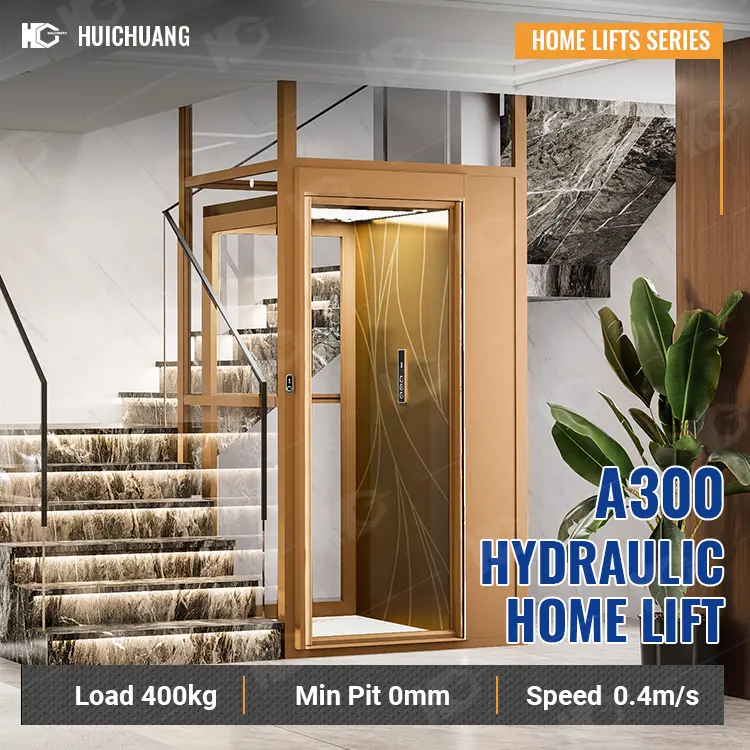
View related products: 3-Floor Indoor Small Hydraulic Lift for Home
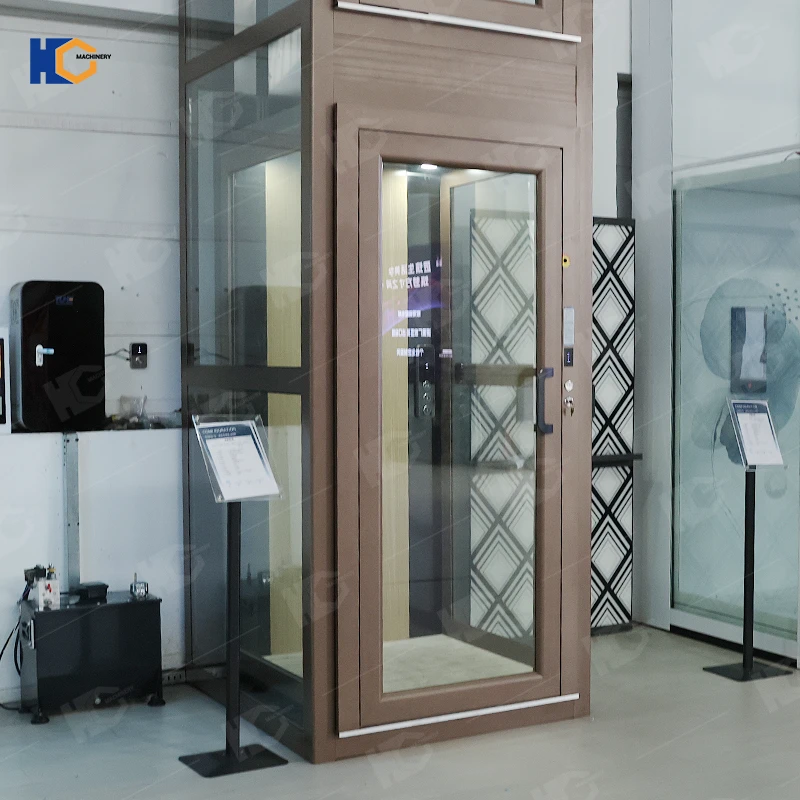
This is a hydraulic home elevator.
How Traction Residential Elevators Work
Traction elevators rely on friction between the traction sheave and steel ropes or coated belts. The motor rotates the sheave, moving the car and counterweight in opposite directions.
Key Technical Characteristics
Uses counterweight to reduce motor load
Can be gearless or geared
Higher travel speeds compared to hydraulic systems
Common Applications
Traction home elevators are suitable for:
Multi-story luxury homes
Residential buildings with higher travel heights
Projects emphasizing energy efficiency
View related products: K600 Traction Elevator: Smooth, Safe, and Smart Vertical Mobility for Modern Buildings
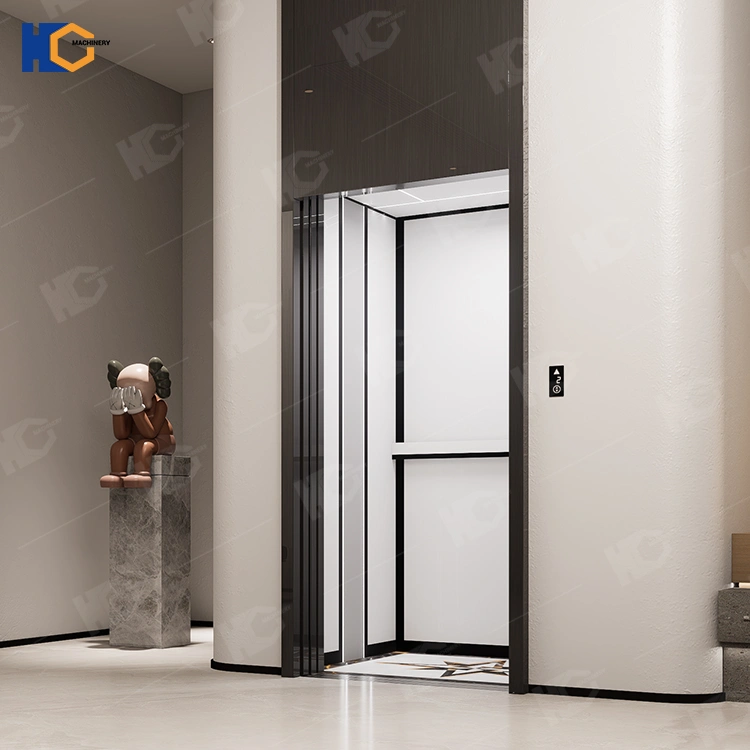
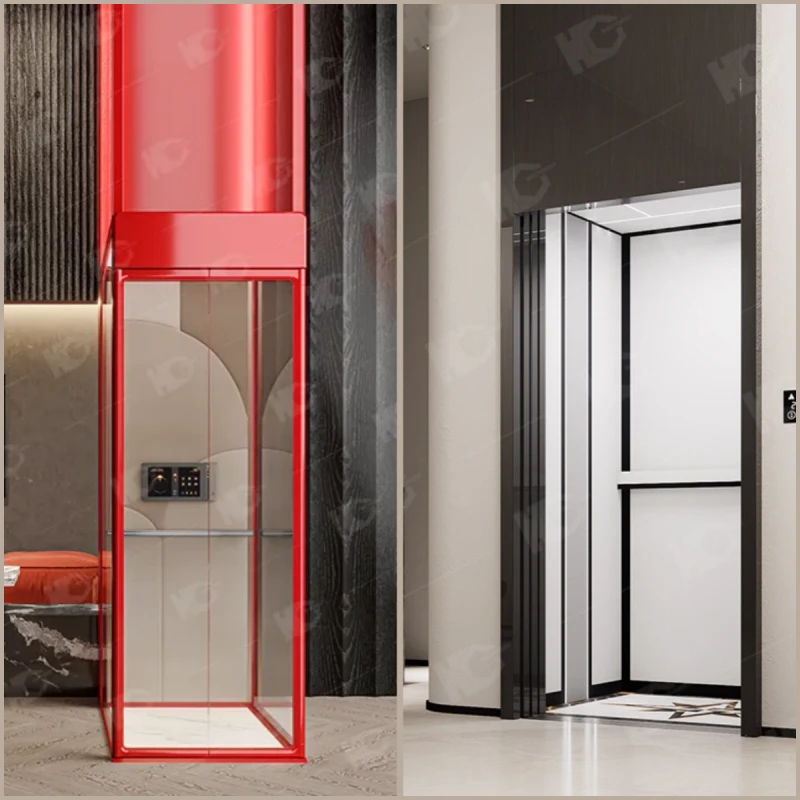
This is a traction elevator for villas, with a load capacity of 400kg.
Performance Comparison: Hydraulic vs Traction Residential Elevator
Basic Technical Comparison
| Feature | Hydraulic Residential Elevator | Traction Residential Elevator |
|---|---|---|
| Drive Method | Hydraulic pump & cylinder | Motor, ropes/belts & sheave |
| Max Travel Height | 10–15 m | 20–30 m |
| Rated Speed | 0.15–0.3 m/s | 0.3–1.0 m/s |
| Machine Room | Required or compact cabinet | Machine-room-less available |
| Counterweight | Not required | Required |
Installation Requirements and Space Utilization
Hydraulic Elevators
Hydraulic systems are well-known for their installation flexibility. They tolerate larger shaft deviations and are ideal for renovation projects. However, they require space for a hydraulic unit and oil tank.
Traction Elevators
Traction elevators demand higher installation precision. Shaft verticality, overhead clearance, and pit depth must meet stricter standards. In return, they offer a cleaner layout and reduced footprint with MRL (machine-room-less) designs.
Installation Condition Comparison
| Aspect | Hydraulic | Traction |
|---|---|---|
| Shaft Precision | Low requirement | High requirement |
| Overhead Space | Low | Medium to High |
| Pit Depth | Shallow | Deeper |
| Retrofit Suitability | Excellent | Moderate |
Energy Consumption and Operating Cost Analysis
Energy efficiency is a key factor for modern homeowners.
Hydraulic elevators consume more electricity during upward travel because the pump must lift the full load.
Traction elevators benefit from counterweights, reducing energy use by up to 30–40% in daily operation.
Estimated Energy Consumption (Residential Use)
| System Type | Average Daily Trips | Annual Energy Use (kWh) |
|---|---|---|
| Hydraulic | 20–30 | 1,200–1,500 |
| Traction | 20–30 | 700–1,000 |
Data based on industry averages for 3–4 floor residential elevators.
Noise Level and Ride Comfort
Hydraulic elevators are generally quieter during descent but can produce noticeable pump noise when lifting. Traction elevators offer smoother acceleration and deceleration, particularly gearless models with VVVF control systems.
Typical Noise Levels
| Elevator Type | Noise Level (dB) |
|---|---|
| Hydraulic | 55–65 dB |
| Traction | 45–55 dB |
For homes prioritizing quiet operation, traction elevators often have a slight advantage.
Safety and Reliability Comparison
Both hydraulic and traction residential elevators can meet international safety standards when properly designed and manufactured.
Safety Features in Both Systems
Emergency lowering systems
Overspeed protection
Door interlocks
Power failure rescue
Hydraulic elevators are often praised for their simple structure and strong load capacity, while traction elevators excel in redundancy and monitoring systems.
Maintenance Requirements and Lifecycle Cost
Hydraulic Elevators
Periodic oil replacement (every 3–5 years)
Fewer moving parts
Lower initial maintenance cost
Traction Elevators
Rope or belt inspection and replacement
More complex control systems
Lower long-term energy cost
10-Year Cost Comparison (Estimated)
| Cost Item | Hydraulic | Traction |
|---|---|---|
| Initial Equipment Cost | Lower | Higher |
| Maintenance Cost | Medium | Medium–High |
| Energy Cost | Higher | Lower |
| Total 10-Year Cost | Comparable | Comparable |
Which Residential Elevator Is Right for You?
Choose a hydraulic residential elevator if:
Your home has 2–4 floors
You are renovating an existing building
You want lower upfront costs
Choose a traction residential elevator if:
Your home has more than 4 floors
Energy efficiency is a priority
You prefer higher speed and smoother rides
Why Choose Huichuang Lift
About Jinan Huichuang Machinery Manufacturing Co., Ltd.
Located in Jinan, Shandong, widely known as the Hometown of Hydraulic Lifting Platforms, Huichuang Lift is a professional manufacturer dedicated to platform lifting solutions and residential elevators.
Core Advantages
Complete Product Range: Both hydraulic and traction residential elevators
Certifications: CE, ISO, ASME A17.1
Strong R&D Capability: Independent development of hydraulic and home elevator production lines
Global Market Presence: Serving North America, South America, Europe, and Southeast Asia
Service & Cooperation
Huichuang Lift provides:
Customized elevator solutions
OEM services
Full lifecycle technical support
We are actively recruiting global agents and seeking cooperation with professional lifting service providers worldwide.
We welcome inquiries from distributors and customers who need elevator installation services.
Conclusion
The choice between a hydraulic vs traction residential elevator depends on building structure, budget, energy goals, and long-term expectations. Both systems are mature, safe, and reliable when designed by an experienced manufacturer.
With 200+ skilled employees, advanced production facilities, and a commitment to international standards, Huichuang Lift stands out as a trusted partner for residential elevator solutions. Whether you need a flexible hydraulic home elevator or an energy-efficient traction system, Huichuang Lift delivers safe, cost-effective, and globally compliant products—helping you elevate living spaces with confidence.
892.webp)