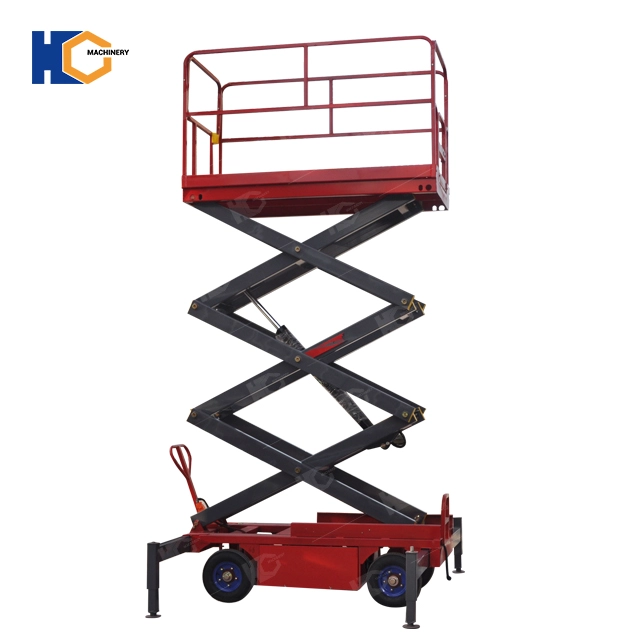
Scissor lifts look simple at first glance—up, down, job done. But anyone who has ever maintained, repaired, or sourced one knows the truth: a scissor lift is a carefully coordinated system of mechanical, hydraulic, electrical, and safety components. Each part matters. When one fails, the whole machine complains loudly, usually at the worst possible time.
Understanding scissor lift parts is essential for operators, fleet managers, rental companies, and buyers who want reliability, safety, and long service life. This guide takes a deep dive into the core components of a scissor lift, explaining what each part does, why it matters, common failure points, and maintenance considerations.
What Are Scissor Lift Parts?
Scissor lift parts refer to all the individual components that work together to allow a scissor lift to raise, lower, steer, stop, and operate safely. These parts can be broadly divided into:
Structural components
Hydraulic system parts
Electrical and control components
Drive and mobility parts
Safety devices
A scissor lift is only as strong as its weakest bolt, hose, or sensor. Knowing the parts helps you troubleshoot faster, buy smarter, and maintain safer machines.
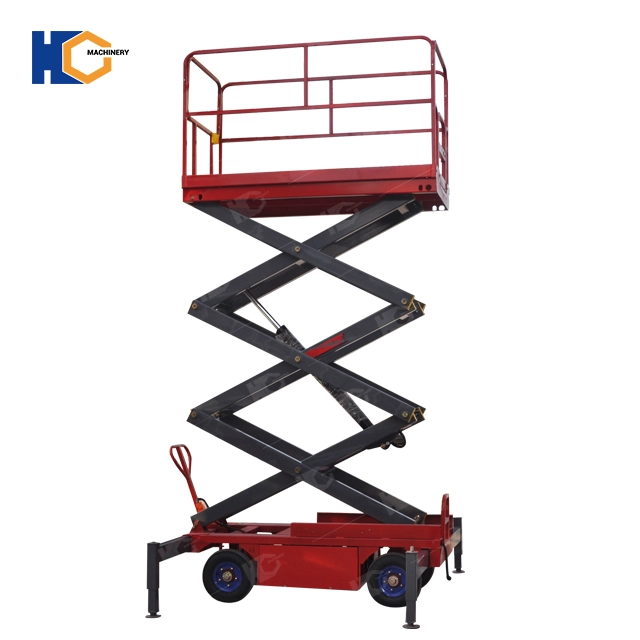
Main Structural Parts of a Scissor Lift
1. Scissor Arms (Pantograph Structure)
The scissor arms are the defining feature of the machine. Arranged in a crisscross (X-shaped) pattern, they expand and contract vertically to raise or lower the platform.
Key characteristics:
Made from high-strength steel
Designed to carry both vertical load and lateral forces
Connected by pivot pins and bushings
Common issues:
Worn pivot points
Bent arms due to overloading
Cracks caused by fatigue or corrosion
Regular inspection of welds and pivot areas is critical, especially on high-hour machines.
2. Base Frame (Chassis)
The base frame supports the entire scissor lift. It houses major components such as the hydraulic power unit, batteries or engine, and drive system.
Functions:
Provides structural stability
Supports wheel assemblies
Protects internal components
Damage to the base frame—often from impacts or uneven terrain—can affect alignment and lift stability.
3. Platform (Work Deck)
The platform is where people and tools stand. It may look like just a metal deck, but it plays a key role in safety and usability.
Typical features:
Anti-slip steel surface
Extendable platform sections
Toe boards and guardrails
Entry gates or chains
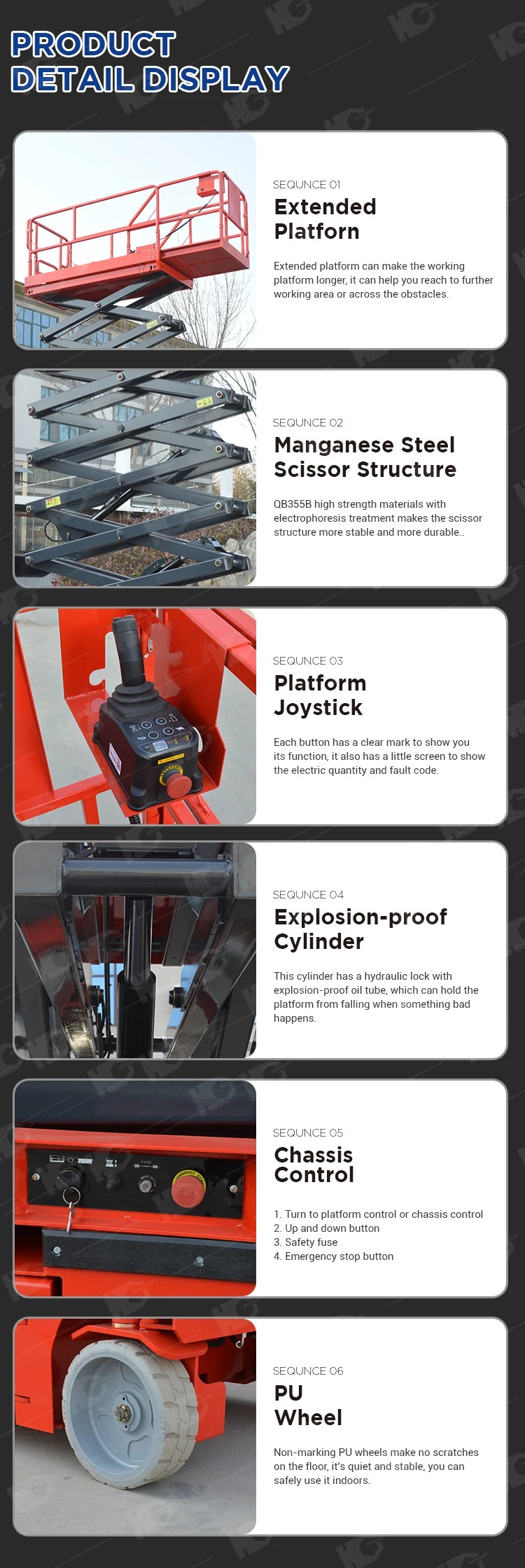
Platform extensions are technically separate scissor lift parts and often include rollers, locking pins, and guide rails.
Hydraulic System Parts
The hydraulic system is the muscle of a scissor lift. Without it, the lift stays politely on the ground.
4. Hydraulic Pump
The hydraulic pump generates the pressure needed to raise the scissor arms.
Types:
Electric motor-driven pumps (electric scissor lifts)
Engine-driven pumps (diesel or gasoline models)
Key considerations:
Flow rate affects lifting speed
Pressure rating determines lifting capacity
Pump failure often shows up as slow lifting, overheating, or strange noises.
5. Hydraulic Cylinders
Hydraulic cylinders convert hydraulic pressure into linear motion, extending and retracting to move the scissor arms.
Characteristics:
Single-acting or double-acting designs
Heavy-duty seals and rods
Precision-machined barrels
Common problems:
Oil leaks from worn seals
Bent rods from overloads
Internal leakage causing platform drift
Cylinders are among the most critical scissor lift parts for safety.
6. Hydraulic Hoses and Fittings
Hydraulic hoses carry pressurized oil between components.
Important points:
Rated for high pressure
Must resist abrasion and weather
Proper routing prevents chafing
A failed hose can instantly disable a lift—or worse. Preventive replacement is cheaper than emergency cleanup.
7. Control Valves
Control valves regulate oil flow and direction.
Types include:
Directional control valves
Flow control valves
Pressure relief valves
They ensure smooth lifting, controlled lowering, and overload protection.
Electrical and Control System Parts
Modern scissor lifts rely heavily on electronics. These parts are the brains of the operation.
8. Control Box (Platform & Ground Controls)
The control box allows operators to raise, lower, and drive the lift.
Includes:
Joysticks or switches
Emergency stop buttons
Indicator lights
Most scissor lifts have both platform controls and ground controls for safety and maintenance.
9. Control Module / PLC
The control module (sometimes a PLC) processes signals from sensors and operator inputs.
Functions:
Controls lift logic
Prevents unsafe operations
Manages fault codes
When this part fails, the lift may behave unpredictably—or not move at all.
10. Wiring Harness and Connectors
Wiring harnesses connect all electrical components.
Common issues:
Broken wires from vibration
Corrosion in connectors
Pinched cables during maintenance
Electrical problems often masquerade as hydraulic failures, so wiring should never be ignored.
11. Limit Switches and Sensors
Sensors ensure the lift operates within safe limits.
Typical sensors include:
Upper and lower limit switches
Tilt sensors
Load sensors
Pothole protection sensors
These small parts play an outsized role in preventing accidents.
Drive and Mobility Parts
Scissor lifts need to move, not just lift.
12. Drive Motors
Drive motors power the wheels on self-propelled scissor lifts.
Types:
Electric drive motors
Hydraulic drive motors
They determine travel speed, climbing ability, and maneuverability.
13. Gearboxes and Axles
Gearboxes transfer torque from motors to wheels, while axles support the load.
Wear points:
Gears under heavy load
Bearings exposed to dirt and moisture
Routine lubrication extends service life significantly.
14. Wheels and Tires
Wheels and tires vary by application:
Solid rubber tires (indoor)
Non-marking tires
Foam-filled tires (rough terrain)
Tire condition directly affects stability and traction.
Power System Parts
15. Batteries (Electric Scissor Lifts)
Electric scissor lifts typically use deep-cycle batteries.
Considerations:
Battery capacity affects runtime
Charging habits impact lifespan
Corrosion on terminals causes power loss
Battery maintenance is often neglected—and then blamed.
16. Charger
The battery charger ensures proper charging voltage and current.
Modern chargers are:
Automatic
Multi-stage
Designed to prevent overcharging
Using the wrong charger shortens battery life dramatically.
17. Engine (Diesel / Gas Scissor Lifts)
For engine-powered lifts, key parts include:
Engine block
Fuel system
Cooling system
Exhaust
These scissor lift parts follow standard engine maintenance rules but operate in dusty, high-load environments.
Safety-Related Scissor Lift Parts
Safety is not optional in lifting equipment.
18. Emergency Stop System
Emergency stop buttons instantly cut power to movement functions.
They must:
Be clearly labeled
Be easily accessible
Function reliably every time
19. Emergency Lowering System
In case of power failure, emergency lowering valves allow the platform to descend safely.
This is one of the most critical safety features—and often the least tested.
20. Guardrails and Gates
Guardrails, mid-rails, toe boards, and entry gates prevent falls.
Damaged or missing rails are a leading cause of scissor lift accidents.
21. Pothole Protection System
Many modern scissor lifts include automatic pothole protection bars that deploy at height to increase stability.
These systems rely on:
Mechanical linkages
Springs
Sensors
They must move freely to function correctly.
Wear Parts vs. Structural Parts
Not all scissor lift parts age the same way.
Wear parts include:
Seals
Hoses
Bushings
Filters
Tires
Structural parts include:
Scissor arms
Frames
Platforms
Understanding this distinction helps plan maintenance budgets realistically.
OEM vs. Aftermarket Scissor Lift Parts
When replacing parts, buyers often face a choice.
OEM parts:
Guaranteed compatibility
Higher cost
Manufacturer support
Aftermarket parts:
Lower cost
Varying quality
Suitable when sourced carefully
For safety-critical components, quality matters more than savings.
Maintenance Tips for Scissor Lift Parts
Good maintenance is boring—and incredibly effective.
Best practices:
Daily visual inspections
Regular lubrication
Scheduled hydraulic oil changes
Battery care and charging discipline
Immediate repair of leaks and faults
Ignoring small issues turns affordable parts into expensive downtime.
Common Scissor Lift Part Failures and Causes
Typical failure causes include:
Overloading the platform
Operating on uneven ground
Poor lubrication
Electrical moisture intrusion
Skipped inspections
Machines remember how you treat them.
How to Identify the Right Scissor Lift Parts
Before ordering parts, always confirm:
Lift brand and model
Serial number
Year of manufacture
Part number and revision
Guessing is faster—and more expensive.
Conclusion: Why Understanding Scissor Lift Parts Matters
A scissor lift is not just a platform on crossed arms. It is a system where hydraulics, electronics, mechanics, and safety devices cooperate under load, height, and pressure. Understanding scissor lift parts helps operators work safer, maintenance teams troubleshoot faster, and buyers make smarter decisions.
Whether you manage a rental fleet, maintain industrial equipment, or simply want fewer breakdowns on the job site, knowing the parts inside the machine turns surprise failures into planned maintenance—and that is always a good trade.

390.webp)
892.webp)