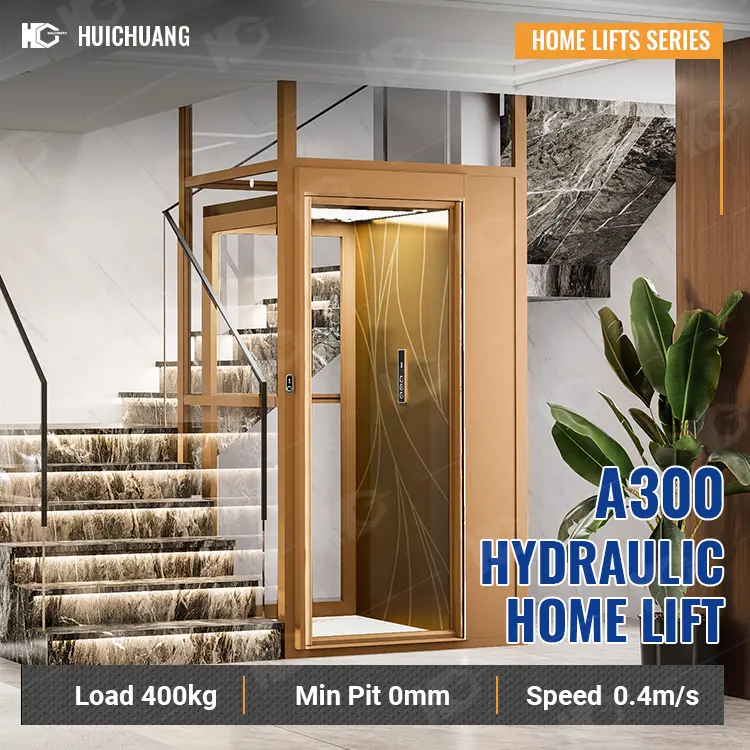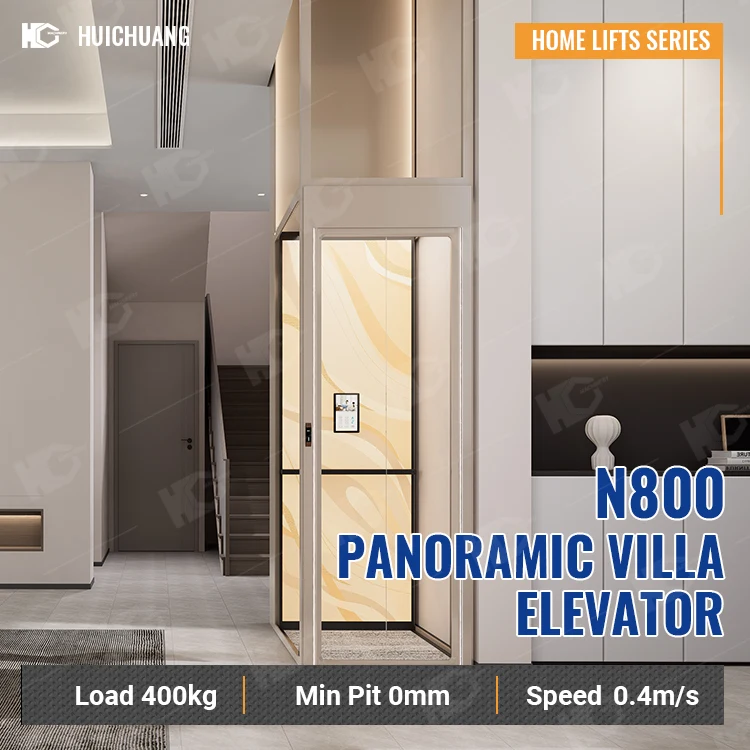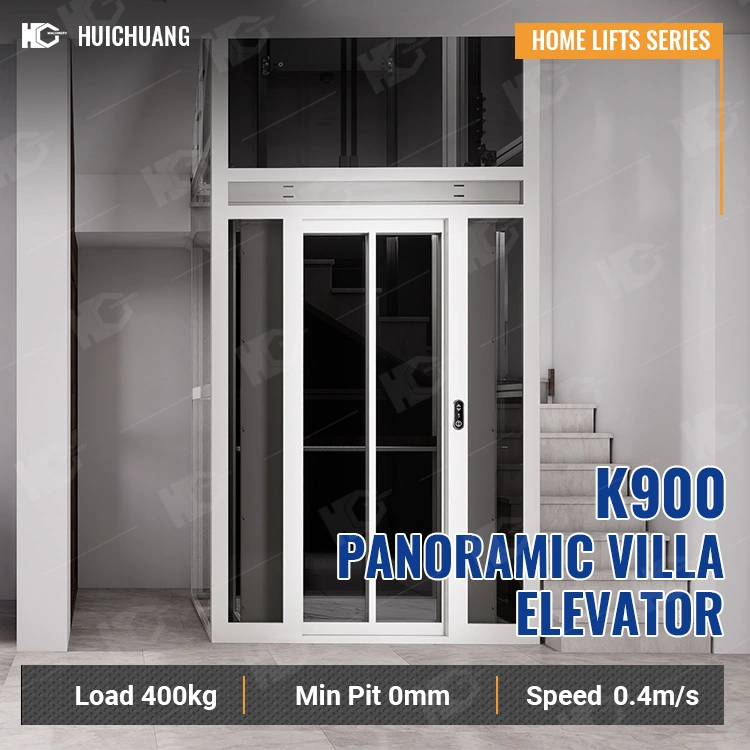
As residential architecture evolves toward multi-story living, accessibility, comfort, and intelligent space utilization have become central concerns for homeowners, architects, and property developers. The Home Elevator K900 represents a new generation of small home elevators designed to meet these needs without the high construction costs or structural complexity traditionally associated with residential lifts.
With an independent frame glass design, advanced control systems, and factory-direct pricing from Huichuang, a professional home elevator manufacturer from China, the K900 has become an increasingly popular solution for villas, duplex homes, townhouses, and light commercial residences worldwide.
This article provides a comprehensive analysis of the Home Elevator K900, including specifications, pricing, pain points it solves, and why it stands out among small home elevators in today’s market.
What Is the Home Elevator K900?
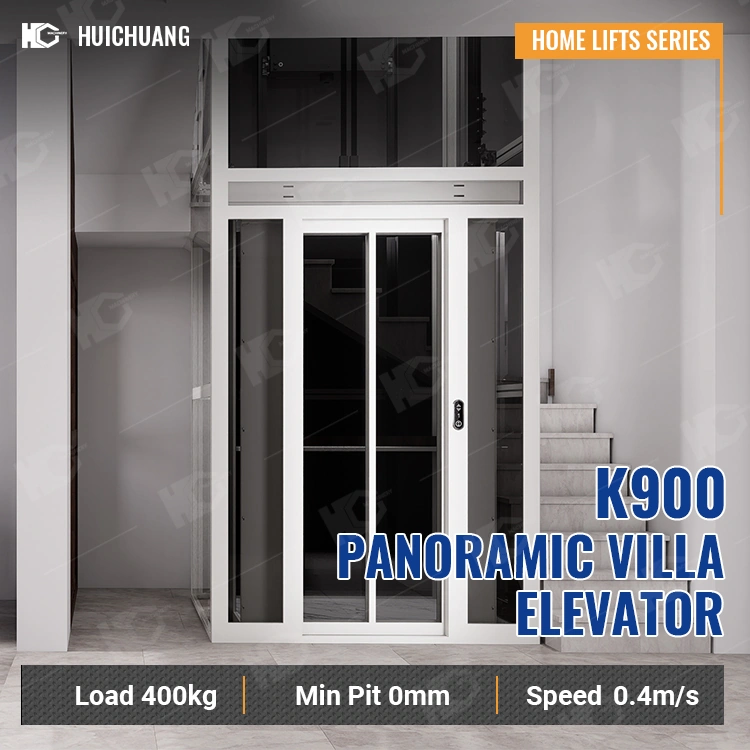
The Home Elevator K900 is a compact, traction-type residential elevator engineered specifically for private homes and low-rise residential buildings. Unlike conventional elevators that require deep pits, machine rooms, or reinforced concrete shafts, the K900 features an independent aluminum alloy glass shaft, allowing installation with minimal or zero civil construction.
Its transparent design not only enhances safety and openness but also integrates seamlessly into modern interior décor, making it as much an architectural feature as a functional mobility solution.
Key Product Specifications of Home Elevator K900
Understanding the technical foundation of the K900 is essential for buyers evaluating performance, safety, and long-term value.
Core Specifications
Rated Load: 400 kg
Rated Speed: 0.4 m/s
Minimum Pit (Min Plt): 0 mm
Minimum Overhead (Min OH): 2750 mm
These parameters make the K900 suitable for most existing residential buildings, including renovation projects where space constraints are common.
419224.webp "Home Elevator (5)419224.webp")
Independent Frame Glass Design: No Extra Construction Costs
One of the most significant advantages of the Home Elevator K900 is its independent frame glass structure.
Why This Matters
Traditional home elevators often require:
Concrete shafts
Load-bearing walls
Structural reinforcement
Extended construction timelines
The K900 eliminates these barriers.
Benefits
No additional construction costs
No damage to existing structure
Faster installation timeline
Ideal for villas, duplexes, and retrofitting projects
Transparent design improves natural light flow
For homeowners and developers, this translates directly into lower total project cost and reduced installation risk.
High Transparency Cabin That Integrates with Interior Decoration
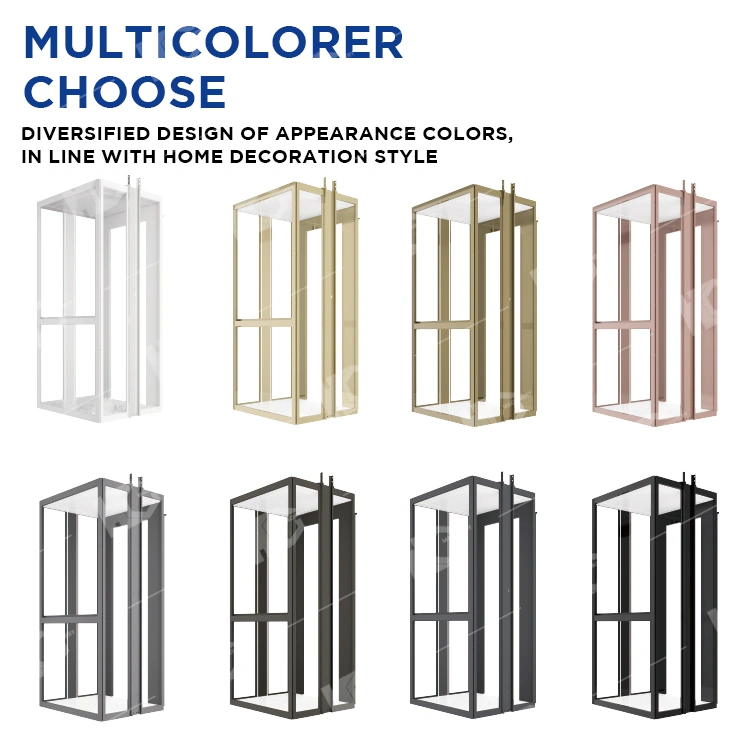
The K900 uses a 5+5 mm tempered glass cabin and doors, combined with an aluminum alloy glass shaft available in 8 color options.
This design allows the elevator to:
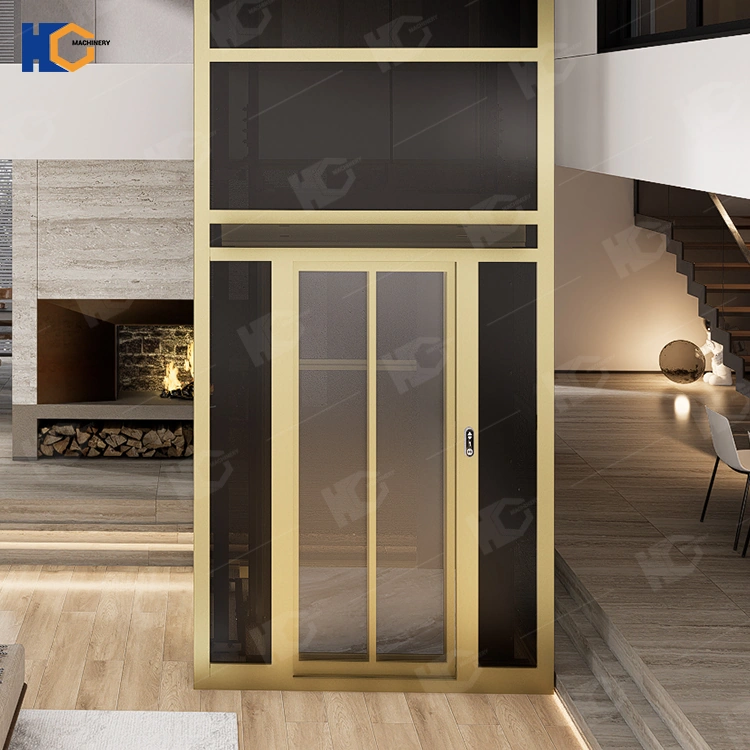
Blend naturally into living rooms, stairwells, or atriums
Complement modern, minimalist, or luxury interiors
Avoid the “industrial” look of traditional lifts
In residential environments, aesthetics matter just as much as function—and the K900 delivers both.
639436.webp "Home Elevator (2)639436.webp")
Standard Configuration: Industrial-Grade Components for Home Use
The Home Elevator K900 is equipped with a high-end standard configuration, ensuring long-term reliability, smooth operation, and compliance with international safety expectations.
Drive System
Monadrive / Matodrive traction system
Stable, low-noise operation
Energy-efficient and suitable for residential duty cycles
Control System
Hpmont V2A / Monarch 3000 controller
Precise floor leveling
Intelligent fault diagnostics
Smooth acceleration and deceleration
Operating Interface
Touch screen COP & LOP
Intuitive user experience
Elder-friendly and child-safe design
264331.webp "Home Elevator (3)264331.webp")
Advanced Safety Systems Built Into the K900
Safety is the primary concern for any home elevator buyer. The K900 integrates multiple advanced safety technologies typically found in commercial elevators.
Key Safety Features
Huning electronic safety gear
Provides rapid braking in abnormal conditionsGerman ELGO magnetic scale (absolute position measurement system)
Ensures precise floor positioning and eliminates cumulative errorsOuling door operator
Smooth, stable door opening and closing with anti-pinch protectionLED light strip
Improves cabin visibility and safety during operation
These systems work together to create a highly redundant safety environment, suitable for elderly users, children, and daily household use.
550152.webp "Home Elevator (4)550152.webp")
Small Home Elevator Price: How Much Does Home Elevator K900 Cost?
One of the most common buyer questions is pricing.
Typical Price Range
As a factory-direct product from Huichuang (China), the Home Elevator K900 generally falls within the following range:
USD 9,000 – USD 15,000 (EXW China)
Final pricing depends on:
Number of stops
Cabin customization
Shaft height
Electrical standards
Shipping and local installation costs
Compared to European or Japanese residential elevators—often priced between USD 20,000 and USD 40,000—the K900 offers a significant cost advantage without compromising on safety or functionality.
What Pain Points Does the Home Elevator K900 Solve?
1. Mobility Challenges in Multi-Story Homes
As families age, stairs become a long-term risk. The K900 provides:
Safe daily mobility
Independence for elderly family members
Reduced risk of falls and injuries
2. High Construction Costs of Traditional Elevators
With its zero pit and independent shaft, the K900 avoids:
Structural demolition
Reinforced concrete work
Extended renovation timelines
3. Space Limitations in Existing Homes
The compact footprint and flexible installation make it ideal for:
Narrow stairwells
Living room corners
Atriums
External wall installations
4. Aesthetic Concerns
Many homeowners reject elevators because they “look industrial.”
The K900’s glass design solves this by becoming a design feature, not an eyesore.
Typical Applications of Home Elevator K900
The K900 is widely used in:
Private villas
Duplex and triplex homes
Townhouses
Luxury apartments
Retirement homes
Boutique residential projects
Its flexibility allows architects and developers to integrate vertical mobility without redesigning the entire building structure.
Why Choose Huichuang as Your Home Elevator Manufacturer?
Huichuang is a professional home elevator factory from China, specializing in small residential elevators for global markets.
Huichuang’s Advantages
Direct factory pricing
Mature production line
International export experience
Customization capability
Stable supply chain
Long-term technical support
Unlike trading companies, Huichuang controls:
Design
Manufacturing
Quality inspection
Pre-shipment testing
This ensures consistent quality and competitive pricing.
986253.webp "Home Elevator (6)986253.webp")
Installation and Maintenance Considerations
Installation
Short installation cycle
No major civil work required
Suitable for both new buildings and renovations
Maintenance
Low maintenance frequency
Easily accessible components
Long service life of core systems
This reduces the total cost of ownership over the elevator’s lifespan.
877822.webp "Home Elevator (7)877822.webp")
Home Elevator K900 vs Traditional Home Elevators
| Aspect | K900 | Traditional Home Elevator |
|---|---|---|
| Construction | No pit, no shaft | Requires pit and shaft |
| Installation time | Short | Long |
| Cost | Moderate | High |
| Design | Transparent, modern | Closed, industrial |
| Flexibility | High | Limited |
For most residential buyers, the K900 offers a more practical and economical solution.
Is the Home Elevator K900 Right for You?
The Home Elevator K900 is ideal if you are:
Planning a villa or duplex
Renovating an existing home
Looking for a cost-effective home lift
Prioritizing safety and aesthetics
Seeking factory-direct pricing from China
It balances price, safety, design, and installation flexibility, making it one of the most competitive small home elevators in today’s market.
116808.webp "Home Elevator (8)116808.webp")
Final Thoughts
The Home Elevator K900 represents the future of small home elevators—safe, stylish, space-efficient, and affordable. Backed by Huichuang’s manufacturing expertise in China, it offers global buyers a practical solution to real residential mobility challenges.
As multi-story living becomes the norm, investing in a well-designed home elevator like the K900 is no longer a luxury—it is a forward-looking decision that adds comfort, safety, and long-term value to any home.
FAQ – Small Home Elevator K900
Q1: What is the Small Home Elevator K900?
The K900 is a compact residential elevator designed for private homes. It features an independent aluminum alloy glass shaft, does not require a pit, and integrates seamlessly with modern interior décor.
Q2: What is the load capacity of the K900?
The rated load capacity is 400 kg, suitable for 2–4 passengers or daily household use.
Q3: Does the K900 require civil construction work?
No. Thanks to its independent frame glass design, the K900 can be installed without additional shaft construction or structural modification, significantly reducing installation cost and time.
Q4: What is the typical price of a Small Home Elevator K900?
Factory price from Huichuang in China generally ranges from USD 9,000 to USD 15,000, depending on configuration, number of stops, and customization options.
Q5: Is the K900 safe for elderly users and children?
Yes. It is equipped with advanced safety components such as Huning electronic safety gear, German ELGO magnetic scale, reliable door operators, and precise control systems.
Q6: What type of drive and control system does the K900 use?
The K900 uses Monadrive/Matodrive traction systems and Hpmont V2A or Monarch 3000 controllers, ensuring smooth, quiet, and stable operation.
Q7: Can the K900 be customized?
Yes. Cabin colors, glass shaft finishes, interface options, and configuration details can be customized to match interior design requirements.
Q8: Where is the Small Home Elevator K900 manufactured?
The K900 is manufactured by Huichuang, a professional small home elevator factory based in China, supplying products to global markets.
Q9: What types of homes are suitable for the K900?
It is ideal for villas, duplex houses, townhouses, and residential renovation projects with limited space or height restrictions.
Q10: How long does installation usually take?
Installation is relatively fast compared to traditional elevators, typically completed within a few days after site preparation.
390.webp)