261.webp)
In Malaysia, progress rarely announces itself with drama. It unfolds steadily—one industrial park at a time, one logistics hub, one high-rise, one solar farm stretching toward the sun. If you look closely at this quiet transformation, you will notice a recurring presence beneath the scaffolding and steel beams: the scissor lift. Compact, practical, and unassuming, the scissor lift has become an indispensable tool across Malaysia’s construction, manufacturing, and maintenance sectors.
Unlike towering cranes or roaring earthmovers, a scissor lift does not dominate the skyline. It operates closer to the ground, focused on vertical precision rather than spectacle. Yet its role is no less critical. In factories around Penang, warehouses in Selangor, data centers in Johor, and infrastructure projects across Sabah and Sarawak, scissor lifts quietly support the hands that build, install, inspect, and maintain the structures of modern Malaysia.
903733.webp "Scissor Lift (7)903733.webp")
Malaysia’s Built Environment and the Need for Vertical Access
Malaysia’s development story is deeply tied to vertical space. Urban centers such as Kuala Lumpur and George Town continue to grow upward as land becomes more valuable. At the same time, industrial zones expand horizontally, filled with warehouses, production lines, and logistics corridors that demand safe access to height—but not necessarily great reach.
This is where the scissor lift finds its natural habitat. Designed for straight-up vertical movement, it offers stability and load capacity that ladders and scaffolding cannot match. In Malaysia’s climate—hot, humid, and often unpredictable—efficiency and safety are not luxuries. They are necessities.
A scissor lift allows a technician to rise smoothly to a ceiling-mounted cable tray, an air-conditioning duct, or a lighting system, perform the task, and descend again with minimal disruption. Time saved becomes productivity gained, and risk avoided becomes cost controlled.
Climate, Terrain, and Practical Design
Malaysia’s tropical climate shapes every piece of equipment that survives long-term use. Heat, humidity, heavy rainfall, and occasional flooding place constant stress on machinery. Scissor lifts used in Malaysia must therefore be more than mechanically sound; they must be resilient.
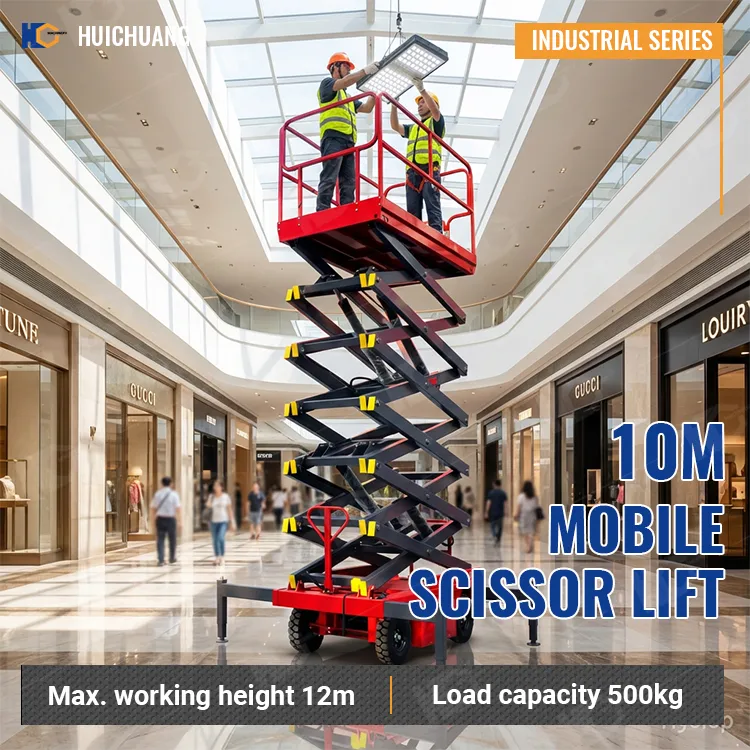
Electric scissor lifts dominate indoor environments such as factories, shopping malls, airports, and convention centers. Their quiet operation and zero emissions suit enclosed spaces where ventilation is limited. Battery systems are designed to withstand high humidity, and sealed electrical components help prevent corrosion.
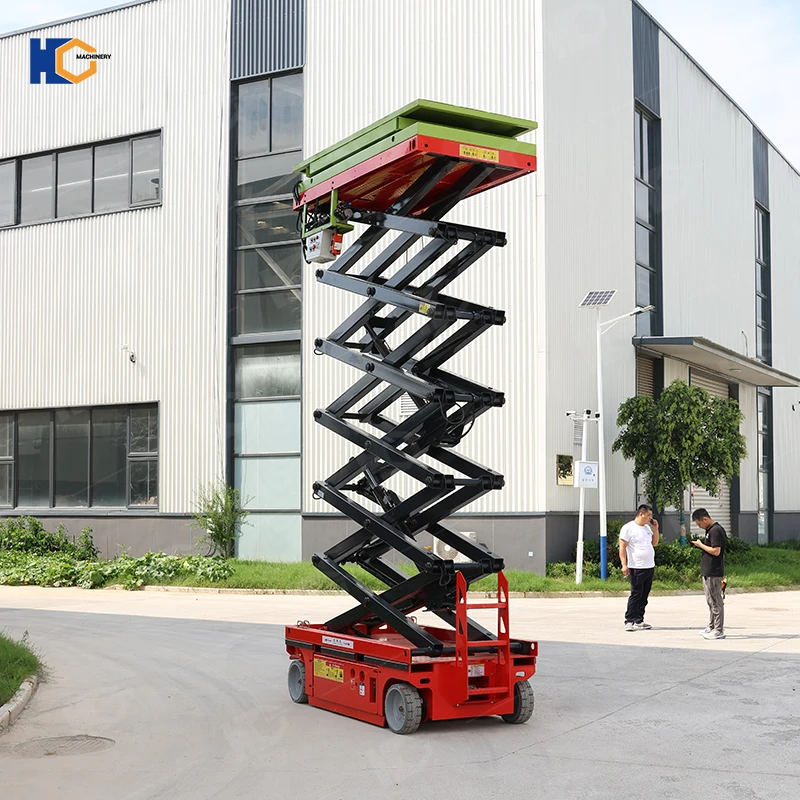
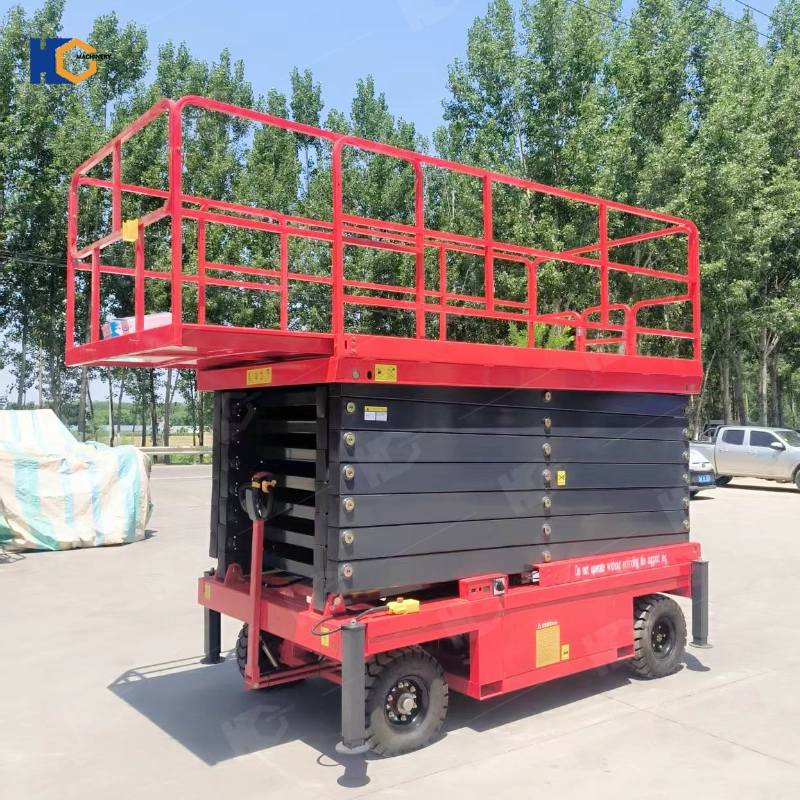
Outdoor worksites tell a different story. Diesel scissor lifts and rough-terrain scissor lifts are commonly seen on construction sites, ports, and infrastructure projects. Reinforced frames, high ground clearance, and robust tires allow them to function on uneven ground softened by rain. In recent years, tracked scissor lifts have gained attention for their ability to operate on muddy or landscaped surfaces without sinking or damaging the ground.
In Malaysia, adaptability is not a feature—it is a requirement.
627161.webp "Scissor lift in Malaysia (3)627161.webp")
Scissor Lifts in Malaysian Construction Culture
Construction in Malaysia is a blend of global standards and local pragmatism. International safety frameworks influence project management, but day-to-day decisions are often driven by efficiency, cost control, and site conditions. Scissor lifts fit neatly into this culture.
On a typical Malaysian construction site, you may see scissor lifts used for façade installation in the morning, electrical work by midday, and ceiling inspection before dusk. Their versatility allows contractors to reduce reliance on scaffolding, which is labor-intensive, space-consuming, and time-consuming to assemble and dismantle.
This shift has been gradual but decisive. As awareness of workplace safety increases and labor costs rise, scissor lifts are no longer seen as optional equipment. They are standard tools, as expected as a concrete mixer or welding machine.
Manufacturing, Warehousing, and the Rise of Logistics
Malaysia’s role as a manufacturing and logistics hub in Southeast Asia has expanded significantly. Electronics, automotive components, medical devices, and consumer goods flow through factories and warehouses that demand speed, precision, and repeatability.
Inside these vast facilities, scissor lifts serve a different rhythm. They move slowly but steadily, lifting workers to service conveyor systems, install racking, inspect fire suppression systems, or adjust lighting. In warehouses with high ceilings, a scissor lift becomes an extension of the worker, offering a stable platform for tasks that must be done carefully and repeatedly.
In logistics centers near Port Klang or along the North–South Expressway, scissor lifts support the invisible infrastructure that keeps goods moving. Without them, routine maintenance becomes risky, delayed, or inefficient.
553382.webp "Scissor lift in Malaysia (1)553382.webp")
Rental Culture vs Ownership in Malaysia
In Malaysia, scissor lifts are often rented rather than purchased outright, especially for short-term projects. Equipment rental companies have grown alongside construction demand, offering fleets that include electric, diesel, and rough-terrain scissor lifts in various height ranges.
Rental makes sense in a market where project timelines vary and capital expenditure must be carefully managed. For contractors, renting a scissor lift allows access to modern equipment without long-term maintenance responsibility. For rental companies, it creates an incentive to invest in durable, easy-to-maintain models that can withstand frequent use by different operators.
However, ownership still plays an important role. Large factories, logistics hubs, and facilities management companies often choose to own scissor lifts for daily or weekly use. In these environments, familiarity with the machine and predictable operating conditions make ownership more economical over time.
Safety Awareness and Operator Responsibility
Malaysia’s approach to workplace safety has evolved noticeably over the past decade. Regulations, training programs, and industry standards increasingly emphasize risk reduction and proper equipment use. Scissor lifts contribute to this shift by providing a safer alternative to ladders and improvised platforms.
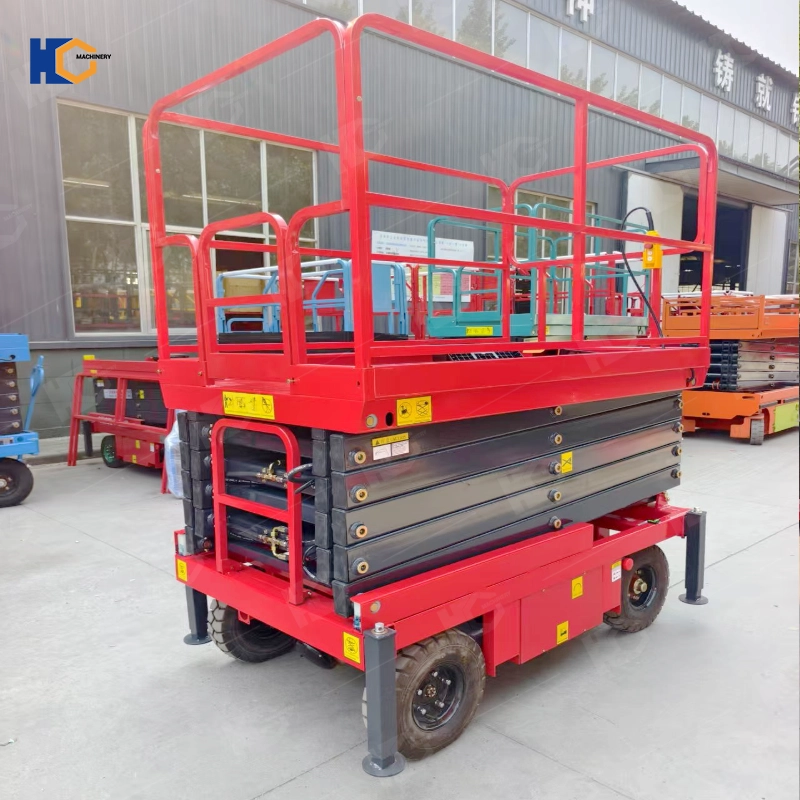
Modern scissor lifts used in Malaysia are typically equipped with guardrails, emergency stop buttons, overload protection, and tilt sensors. Yet technology alone is not enough. Safe operation depends on training, awareness, and respect for the machine’s limits.
In a humid environment where surfaces can become slippery and weather can change quickly, discipline matters. The scissor lift rewards careful use with reliability. It punishes shortcuts with instability. Malaysian worksites have learned this lesson through experience, and safety culture continues to mature.
Choosing the Right Scissor Lift in Malaysia
Selecting a scissor lift in Malaysia is less about brand prestige and more about suitability. Key considerations often include working height, load capacity, indoor or outdoor use, power source, and ground conditions.
Electric scissor lifts are favored for indoor maintenance and manufacturing. Diesel models serve construction and outdoor projects. Rough-terrain and tracked scissor lifts fill the gap where ground conditions are unpredictable. Compact models are chosen for narrow aisles and confined spaces, while larger platforms support team-based work.
The most successful users are those who match the machine to the job, rather than forcing the job to adapt to the machine.
A Quiet but Essential Machine
The scissor lift does not symbolize ambition or architectural daring. It symbolizes something quieter: reliability. In Malaysia, where development must balance speed with sustainability and safety, this quiet reliability matters.
From shopping malls glowing under carefully maintained lighting to factories humming with synchronized machinery, scissor lifts play a supporting role that rarely draws attention. Yet remove them, and the system falters. Maintenance slows. Risk increases. Efficiency declines.
In this way, the scissor lift reflects Malaysia’s broader development philosophy—practical, steady, and focused on long-term function rather than spectacle.
Conclusion: Lifting More Than Height
A scissor lift in Malaysia is more than a piece of equipment. It is a response to climate, economy, labor, and space. It supports workers, protects projects, and quietly enables the vertical tasks that modern life depends on.
As Malaysia continues to grow—upward in its cities and outward in its industries—the scissor lift will remain close at hand, lifting not just people and tools, but the everyday work that builds the country’s future.
Progress does not always roar. Sometimes, it rises—smoothly, steadily, on crossed steel arms.
892.webp)
681.webp)