812.webp)
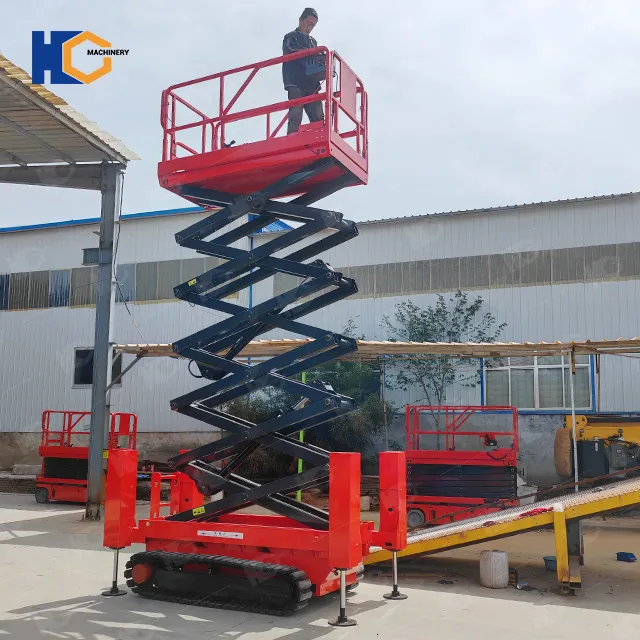
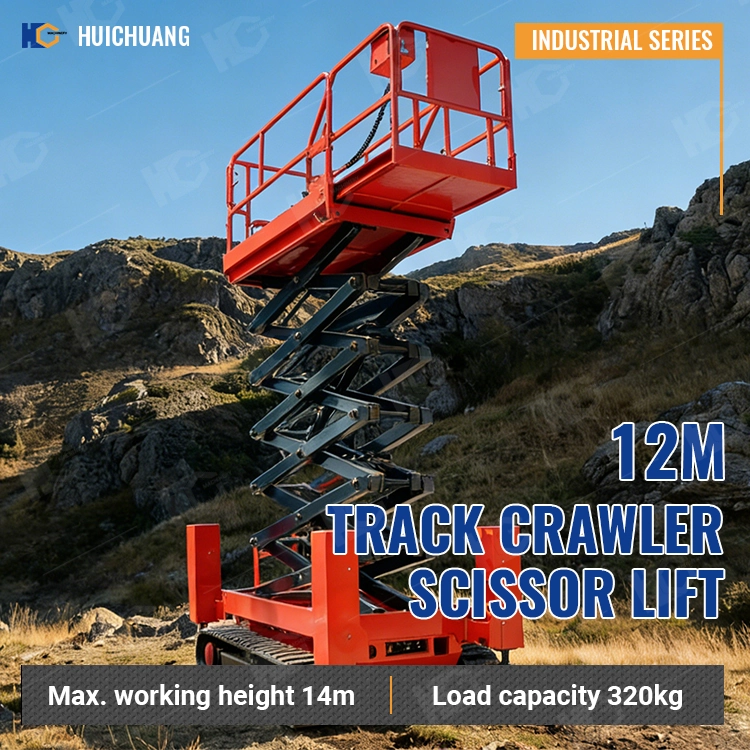
A tracked scissor lift is a specialized aerial work platform designed for vertical lifting in challenging ground conditions where traditional wheeled scissor lifts struggle. By combining the vertical lifting mechanism of a scissor lift with a crawler track chassis, tracked scissor lifts deliver excellent stability, traction, and load capacity on soft, uneven, muddy, sandy, or sloped terrain.
As construction, infrastructure maintenance, and outdoor industrial projects continue to expand, tracked scissor lifts have become an essential solution for worksites that demand safe vertical access without ground preparation. This article provides a full introduction to tracked scissor lifts, including their structure, working principles, advantages, applications, specifications, safety features, and selection tips.
What Is a Tracked Scissor Lift?
A tracked scissor lift is a type of mobile elevating work platform (MEWP) that uses crawler tracks instead of wheels. The scissor mechanism raises the platform straight up, while the tracked undercarriage allows the machine to travel across rough or delicate surfaces.
Unlike boom lifts, which offer horizontal outreach, scissor lifts focus on vertical elevation with higher load capacity. The tracked configuration makes this equipment especially suitable for outdoor and off-road environments.
Tracked scissor lifts are often used where:
Ground is soft, muddy, sandy, or snowy
Terrain is uneven or sloped
Site access is limited or temporary
Ground pressure must be minimized
Key Components of a Tracked Scissor Lift
Scissor Lifting Structure
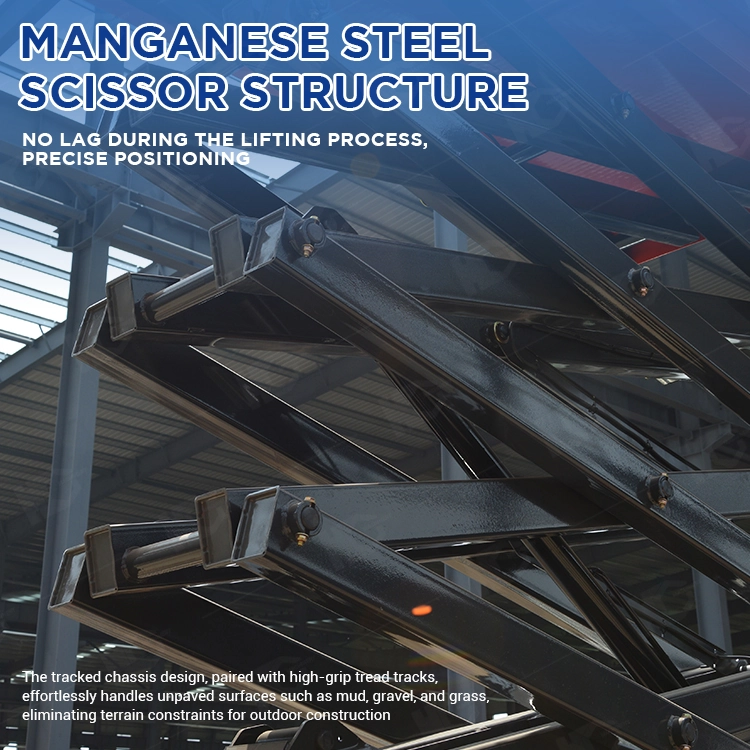
The scissor structure consists of crossed steel arms connected by pivot points. When hydraulic cylinders extend, the arms open vertically, lifting the platform in a straight line. This design provides:
High vertical stability
Large platform load capacity
Smooth and controlled lifting
Tracked Chassis (Crawler Undercarriage)
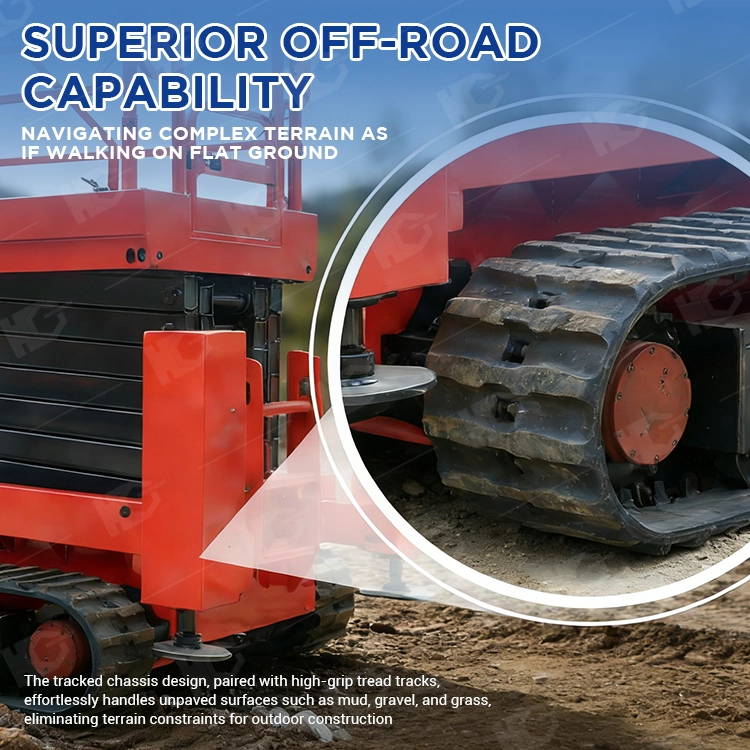
The crawler tracks replace traditional rubber or solid tires. They distribute machine weight over a larger surface area, reducing ground pressure and improving traction.
Benefits of crawler tracks include:
Strong grip on loose soil and gravel
Stable movement on slopes and uneven ground
Minimal damage to lawns or finished surfaces
Hydraulic System
Tracked scissor lifts use hydraulic power to drive:
Platform lifting
Track movement
Steering and braking
A well-designed hydraulic system ensures smooth operation, precise control, and reliable performance in demanding conditions.
Power Options
Tracked scissor lifts are available in different power configurations:
Diesel-powered for heavy outdoor use
Battery-powered for low-noise or emission-sensitive environments
Hybrid systems combining battery and engine power
The choice depends on worksite regulations and operating duration.
Why Choose a Tracked Scissor Lift?
Superior Off-Road Capability
The primary advantage of a tracked scissor lift is its ability to operate on terrain where wheeled lifts cannot. Mud, sand, grass, snow, and gravel are no longer obstacles.
This makes tracked scissor lifts ideal for:
Outdoor construction sites
Landscaping and park maintenance
Utility and energy projects
Enhanced Stability and Safety
Crawler tracks provide a lower center of gravity and better weight distribution. This improves machine stability during lifting, especially on uneven ground.
Stability advantages include:
Reduced tipping risk
Better balance under load
Safer operation at maximum height
Low Ground Pressure
Tracked scissor lifts exert less pressure on the ground compared to wheeled machines. This helps protect:
Lawns and landscaped areas
Tile, brick, or sensitive surfaces
Temporary flooring systems
High Load Capacity
Compared to boom lifts, scissor lifts offer a larger platform and higher load capacity, allowing multiple workers, tools, and materials to be lifted simultaneously.
642934.webp "12 m tracked scissor lift (2)642934.webp")
Typical Specifications of Tracked Scissor Lifts
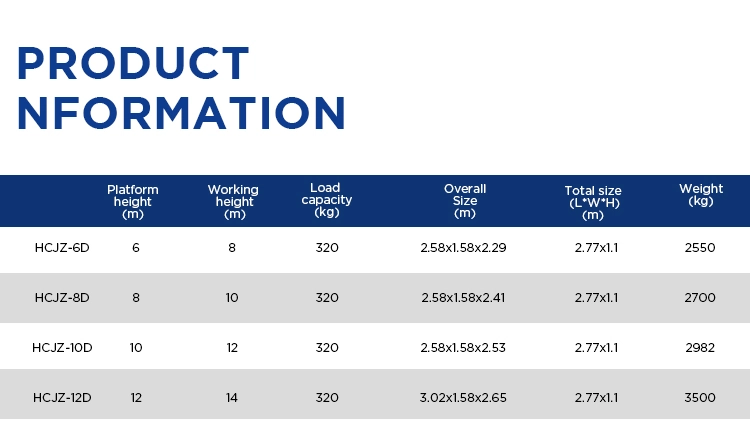
While specifications vary by model, a typical tracked scissor lift includes:
Working height: 8–18 meters
Platform height: 6–16 meters
Load capacity: 230–450 kg
Platform extension: Optional sliding deck
Gradeability: Up to 25–30%
Track type: Rubber crawler tracks
These parameters make tracked scissor lifts suitable for both light-duty and heavy-duty applications.
Common Applications of Tracked Scissor Lifts
Construction and Building Maintenance
Tracked scissor lifts are widely used for:
Exterior wall installation
Steel structure assembly
Roofing and façade work
Their ability to move across unfinished ground reduces site preparation time.
Industrial Facilities and Plants
In industrial environments, tracked scissor lifts support:
Equipment installation
Pipe and cable routing
Facility maintenance
Battery-powered models are preferred indoors due to low noise and zero emissions.
Landscaping and Municipal Projects
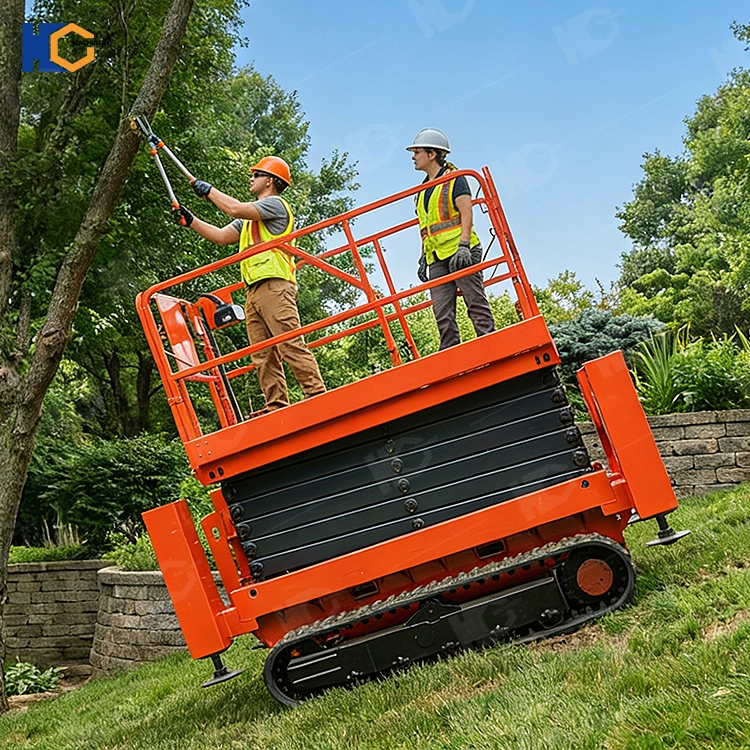
For parks, gardens, and urban projects, tracked scissor lifts allow vertical access without damaging grass or soil. This makes them ideal for:
Tree trimming
Lighting installation
Signage and decoration
Energy and Utility Projects
Tracked scissor lifts are commonly used in:
Solar panel installation
Wind farm maintenance
Power line and utility infrastructure
Off-road mobility is essential in remote or undeveloped locations.
Tracked Scissor Lift vs Wheeled Scissor Lift
When comparing a tracked scissor lift with a wheeled scissor lift, the key difference lies in ground adaptability and operating environment. Tracked scissor lifts use crawler tracks that distribute weight evenly, providing excellent traction and stability on soft, muddy, sandy, or uneven terrain. This makes them ideal for outdoor construction sites, landscaping projects, and undeveloped areas where ground conditions are unpredictable. Their lower ground pressure also helps reduce surface damage and improves safety on slopes.Understanding the difference helps buyers choose the right equipment.
Tracked scissor lifts excel in:
Outdoor and off-road use
Soft or uneven ground
Sloped terrain
Wheeled scissor lifts are better for:
Smooth indoor floors
Warehouses and factories
Lower purchase and maintenance cost
Choosing between them depends on ground conditions and job requirements.
In contrast, wheeled scissor lifts are designed for smooth, hard surfaces such as concrete floors, warehouses, factories, and shopping malls. They are generally lighter, easier to transport, and require less maintenance than tracked models. Wheeled lifts also tend to be more cost-effective for indoor use and offer higher travel speeds on flat ground.
From an operational perspective, tracked scissor lifts prioritize stability and off-road performance, while wheeled scissor lifts emphasize efficiency and maneuverability in controlled environments. Choosing between the two depends largely on jobsite conditions rather than lifting height or platform capacity. For outdoor, rough-terrain applications, tracked scissor lifts offer superior reliability; for indoor or paved environments, wheeled scissor lifts remain the more practical and economical solution.
Tracked Scissor Lift vs Boom Lift
A tracked scissor lift and a boom lift are both widely used aerial work platforms, but they are designed to solve different access challenges. A tracked scissor lift specializes in vertical lifting, using a straight-up scissor mechanism combined with crawler tracks. This design provides excellent stability, high platform load capacity, and strong off-road mobility. It is ideal for jobs that require lifting multiple workers and heavy tools straight up, especially on uneven, muddy, or soft ground such as outdoor construction sites, infrastructure projects, and landscaping work.Tracked scissor lifts and boom lifts serve different purposes.
Tracked scissor lifts offer:
Vertical lift only
Higher platform load
Simpler operation
Boom lifts provide:
Horizontal outreach
Access over obstacles
Lower platform capacity
For straight-up work with heavy loads, tracked scissor lifts are more efficient and economical.
A boom lift, on the other hand, is built for reach and flexibility. Its articulated or telescopic arm allows both vertical and horizontal movement, making it possible to reach over obstacles, rooftops, machinery, or confined spaces. Boom lifts are better suited for tasks like façade maintenance, bridge inspection, and complex industrial installations where direct vertical access is not possible. However, boom lifts usually have lower platform load capacity and require more operator skill.
In summary, tracked scissor lifts are more efficient and cost-effective for straight vertical work on difficult terrain, while boom lifts excel when precise positioning and horizontal outreach are required.
354023.webp "tracked scissor lift (2)354023.webp")
Safety Features of Tracked Scissor Lifts
Modern tracked scissor lifts are equipped with multiple safety systems, including:
Emergency stop buttons
Tilt and overload protection
Hydraulic safety valves
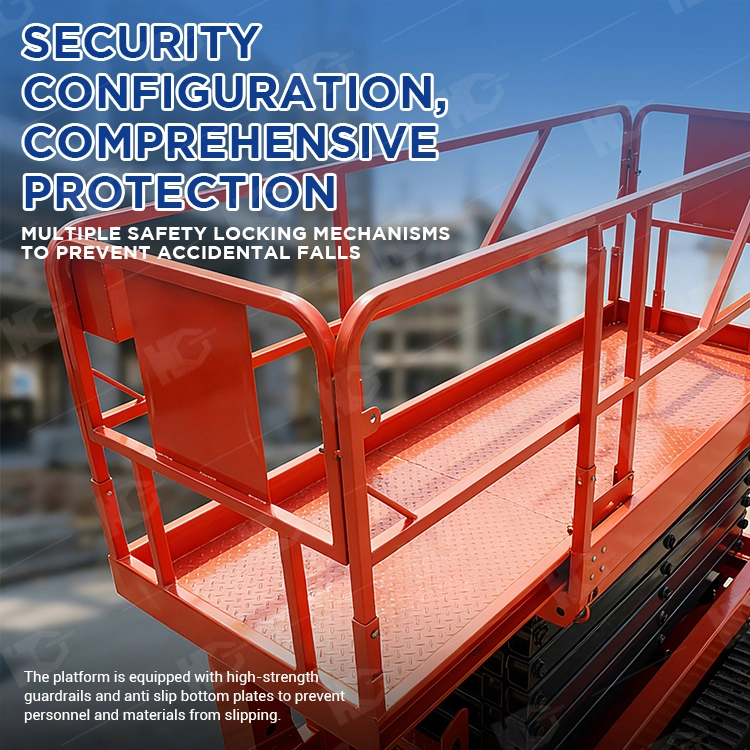
Non-slip platform flooring
Guardrails and toe boards
These features help protect operators and comply with international safety standards.
Maintenance and Service Considerations
Proper maintenance extends the service life of a tracked scissor lift.
Key maintenance points include:
Regular inspection of crawler tracks
Hydraulic oil and filter replacement
Checking pivot points and wear parts
Battery or engine servicing
Tracked systems require slightly more maintenance than wheeled units, but the operational benefits outweigh the added care.
How to Choose the Right Tracked Scissor Lift
When selecting a tracked scissor lift, buyers should consider:
Required working height
Platform load capacity
Indoor or outdoor use
Power source preference
Transport and storage requirements
Matching the lift to actual working conditions ensures better performance and lower total cost of ownership.
Advantages of Buying Tracked Scissor Lifts from Manufacturers
Purchasing directly from a tracked scissor lift manufacturer offers several benefits:
Factory-direct pricing
Customization options
Technical support and spare parts
Compliance with international standards
This is especially important for fleet buyers, rental companies, and contractors.

Future Trends in Tracked Scissor Lifts
The tracked scissor lift market is evolving toward:
Electric and hybrid power systems
Intelligent control and diagnostics
Lighter but stronger materials
Improved energy efficiency
These trends align with global demands for safety, sustainability, and productivity.
Conclusion: Why Tracked Scissor Lifts Matter
A tracked scissor lift is a powerful solution for vertical access in challenging environments. Its combination of strong lifting capacity, excellent off-road mobility, and enhanced safety makes it indispensable for modern construction, maintenance, and industrial projects.
For worksites where terrain limits conventional equipment, tracked scissor lifts provide reliability, efficiency, and peace of mind—lifting not just workers, but productivity itself.
344.webp)