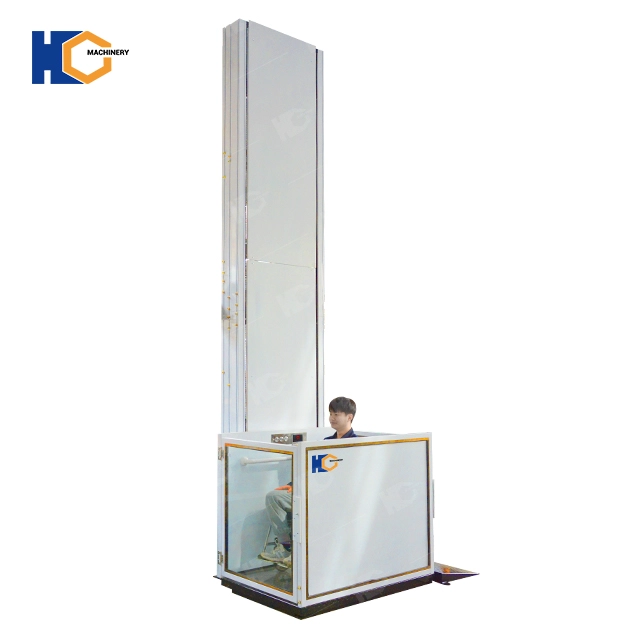
A vertical platform lift for home is one of the most practical and increasingly popular solutions for improving residential accessibility. Designed to move people vertically between different floor levels, a vertical platform lift provides safe, reliable, and space-efficient mobility for elderly users, wheelchair users, and families planning for long-term aging-in-place.
As modern homes prioritize comfort, inclusivity, and future-proof design, vertical platform lifts are no longer limited to medical or commercial environments. They are now widely used in private houses, villas, duplex apartments, townhouses, and retrofit projects where traditional elevators are impractical or too costly.
This article offers a comprehensive introduction to vertical platform lifts for home use, covering how they work, their advantages, applications, specifications, installation requirements, safety features, costs, and how to choose the right model.
What Is a Vertical Platform Lift for Home?
A vertical platform lift (wheelchair lift) is a compact lifting device designed to transport a person—often in a wheelchair—straight up and down between two or more levels. Unlike traditional passenger elevators, vertical platform lifts typically operate at lower speeds, shorter travel heights, and with simpler structural requirements.
For residential use, vertical platform lifts are commonly installed:
Between floors inside a house
From ground level to a porch or entrance
Between a garage and main living area
In multi-story homes with limited shaft space
Their core purpose is accessibility, but modern designs also emphasize comfort, safety, and visual integration with home interiors.
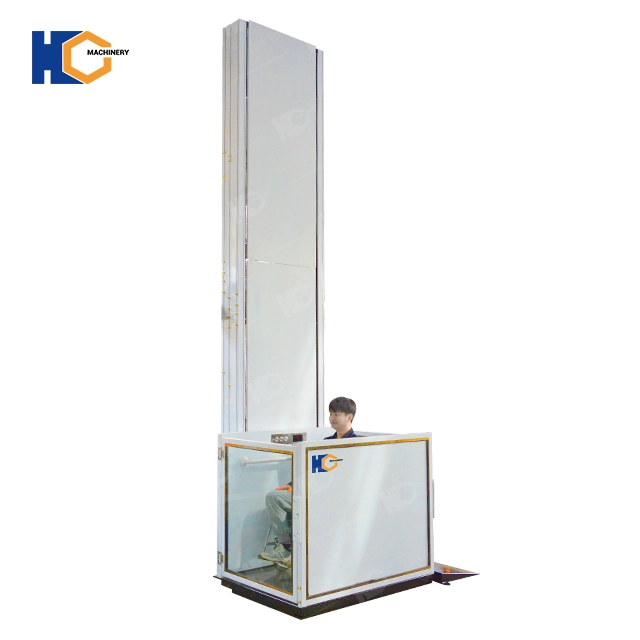
How a Vertical Platform Lift Works
A vertical platform lift operates using one of several drive systems, most commonly:
Hydraulic drive
Screw or lead-screw drive
Chain or belt drive
The lift consists of a flat platform, guide rails, a drive unit, and a control system. When activated, the platform moves vertically along the guide rails to the desired level. Because the travel is strictly vertical, the system is mechanically simpler than many elevators.
Most residential vertical platform lifts are designed for:
Low to medium travel heights
One to three stops
Indoor or outdoor installation
Vertical Platform Lift vs Home Elevator
Many homeowners wonder whether to choose a vertical platform lift or a home elevator. While both provide vertical transportation, they serve different needs.
A vertical platform lift for home:
Requires minimal structural modification
Has lower installation and maintenance costs
Occupies less space
Is ideal for wheelchair accessibility
Typically serves shorter travel heights
A home elevator:
Offers higher travel speed
Provides enclosed cabin comfort
Requires a shaft or hoistway
Has higher cost and complexity
For accessibility-focused residential projects, a vertical platform lift is often the more practical and economical solution.
Key Advantages of Vertical Platform Lifts for Home
Excellent Accessibility Support
Vertical platform lifts are specifically designed to accommodate:
Wheelchairs
Walkers
Standing passengers with mobility challenges
The flat, open platform allows easy entry and exit without tight turning radiuses.
Space-Saving Design
One of the biggest advantages of a vertical platform lift is its compact footprint. Many models can be installed without a traditional shaft, making them suitable for:
Existing homes
Renovation projects
Small houses or narrow layouts
Easy Installation and Retrofit
Vertical platform lifts require less civil work compared to elevators. In many cases:
No pit or machine room is required
Installation time is shorter
Structural impact on the building is minimal
This makes them ideal for retrofitting older homes.
Lower Cost Compared to Elevators
The purchase and installation cost of a vertical platform lift is generally lower than that of a home elevator. Maintenance is also simpler, reducing long-term ownership costs.
Indoor and Outdoor Flexibility
Vertical platform lifts can be installed:
Indoors between floors
Outdoors at entrances, patios, or garages
Outdoor models are designed with weather-resistant materials, anti-corrosion coatings, and protective enclosures.
Typical Specifications of a Vertical Platform Lift for Home
While specifications vary by model, a typical residential vertical platform lift includes:
Load capacity: 250–400 kg
Platform size: Suitable for wheelchairs and standing users
Travel height: Up to 3–6 meters (model dependent)
Drive system: Hydraulic or screw drive
Power supply: Single-phase residential power
Control: Push-button or call stations
These specifications are optimized for safe, comfortable residential use.
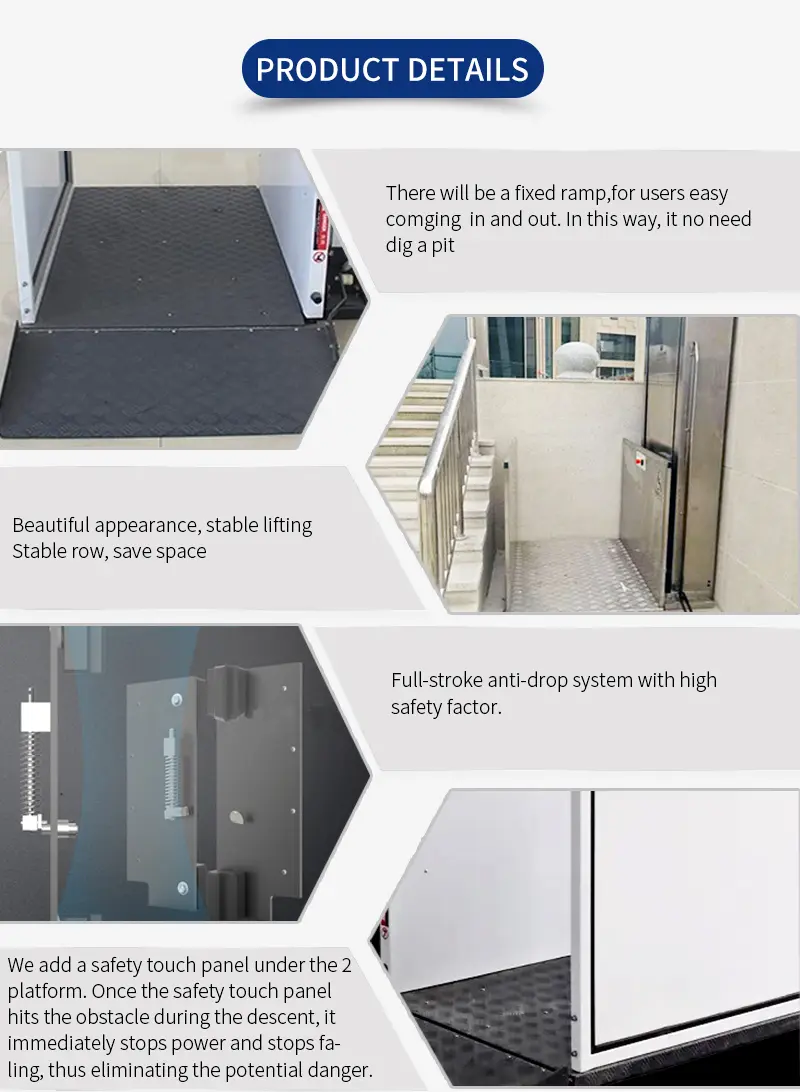
Safety Features of Residential Vertical Platform Lifts
Safety is a critical consideration for any home lifting equipment. Modern vertical platform lifts are equipped with multiple protection systems, including:
Emergency stop button
Safety sensors under the platform
Anti-fall mechanical locking devices
Overload protection
Automatic door or barrier interlocks
Battery backup for power failure
These features ensure reliable operation even in unexpected situations.
Design and Aesthetic Options
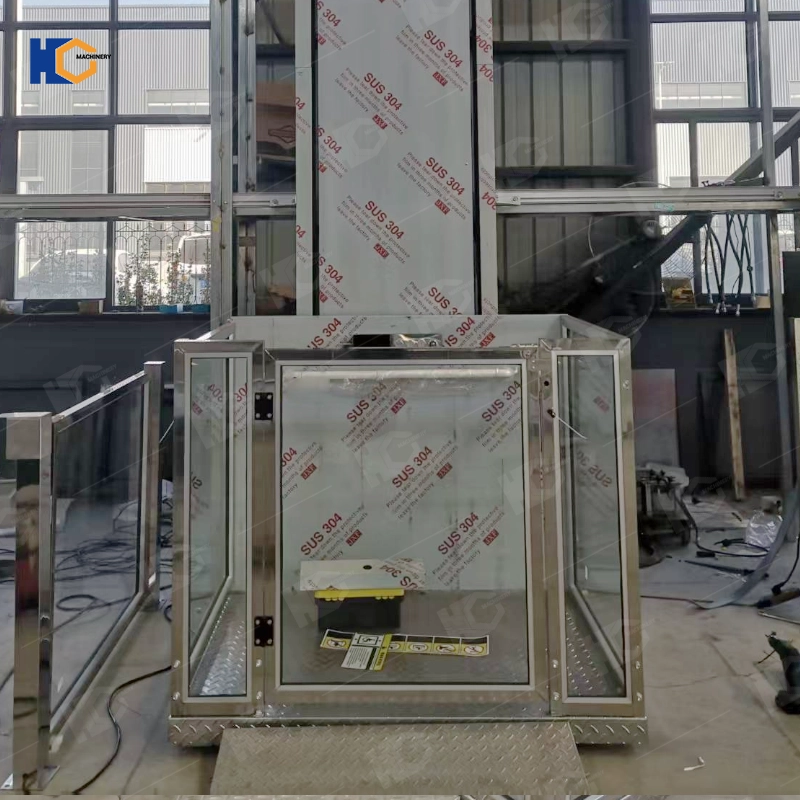
Today’s vertical platform lifts are not purely functional—they are also designed to blend with home interiors.
Common customization options include:
Platform materials and finishes
Transparent or solid side panels
Glass or metal guardrails
Custom colors and trims
This allows homeowners to integrate the lift seamlessly into modern or traditional home designs.
Applications of Vertical Platform Lifts in Homes
Aging-in-Place Homes
Vertical platform lifts are widely used by families planning for long-term aging at home. They eliminate the need for stair climbing and reduce the risk of falls.
Wheelchair-Accessible Homes
For wheelchair users, a vertical platform lift provides independence and dignity by enabling free movement between levels without assistance.
Multi-Generation Households
In homes shared by elderly parents and younger family members, vertical platform lifts improve daily comfort and convenience for everyone.
Luxury Villas and Custom Homes
In high-end residential projects, vertical platform lifts are increasingly included as part of smart, inclusive home design.
Installation Requirements and Considerations
Before installing a vertical platform lift for home use, several factors should be evaluated:
Available space and layout
Required travel height
Indoor or outdoor location
Power supply compatibility
Local building codes and accessibility standards
Professional site assessment ensures proper installation and compliance with safety regulations.
Cost of Vertical Platform Lifts for Home
The cost of a vertical platform lift varies depending on:
Load capacity
Travel height
Drive system
Customization level
Installation complexity
In general, vertical platform lifts are more affordable than traditional home elevators, making them a cost-effective accessibility solution.
Maintenance and Service Life
Vertical platform lifts are designed for long-term residential use with relatively low maintenance requirements.
Routine maintenance typically includes:
Inspection of drive components
Lubrication of moving parts
Safety system checks
Electrical system inspection
With proper maintenance, a vertical platform lift can provide many years of reliable service.
Choosing the Right Vertical Platform Lift for Your Home
When selecting a vertical platform lift, homeowners should consider:
Who will use the lift
Wheelchair or standing use
Maximum load requirements
Space and layout constraints
Indoor or outdoor installation
Long-term accessibility needs
Choosing the right model ensures comfort, safety, and value over time.
Vertical Platform Lifts and Home Value
Installing a vertical platform lift can increase a home’s appeal by:
Improving accessibility
Supporting aging-in-place
Expanding the potential buyer pool
In many markets, accessibility upgrades are viewed as long-term investments rather than short-term expenses.
Future Trends in Home Vertical Platform Lifts
The residential lift market continues to evolve, with trends including:
More compact designs
Quieter operation
Energy-efficient drive systems
Smart controls and remote monitoring
Improved aesthetics and customization
These developments make vertical platform lifts an increasingly attractive option for modern homes.
Conclusion: Why a Vertical Platform Lift for Home Makes Sense
A vertical platform lift for home is a smart, safe, and practical solution for improving residential accessibility. With its compact design, lower cost, easy installation, and strong safety features, it offers an excellent alternative to traditional home elevators—especially for wheelchair users and aging households.
Whether for new construction or home renovation, a vertical platform lift helps homeowners create inclusive, comfortable living spaces that support independence and long-term quality of life.
Vertical Platform Lift for Home – Buyer FAQ
1. What is a vertical platform lift for home use?
A vertical platform lift is a compact lifting device designed to move people, including wheelchair users, vertically between floors. It is ideal for residential accessibility and short travel heights.
2. How is a vertical platform lift different from a home elevator?
Vertical platform lifts require less space, cost less to install, and focus on accessibility rather than speed or luxury cabin design. They are better suited for retrofit projects.
3. Can a vertical platform lift be installed in an existing home?
Yes. Most residential vertical platform lifts are designed for retrofit installation and usually do not require a shaft, pit, or machine room.
4. What is the typical load capacity?
Most home vertical platform lifts support 250–400 kg, enough for a wheelchair user and companion.
5. Is a vertical platform lift safe for daily use?
Yes. Modern lifts include emergency stop buttons, overload protection, anti-fall devices, and battery backup systems.
6. Can it be installed outdoors?
Yes. Outdoor models feature weather-resistant materials and anti-corrosion protection.
7. How much maintenance is required?
Maintenance is minimal and usually involves periodic inspections and lubrication.
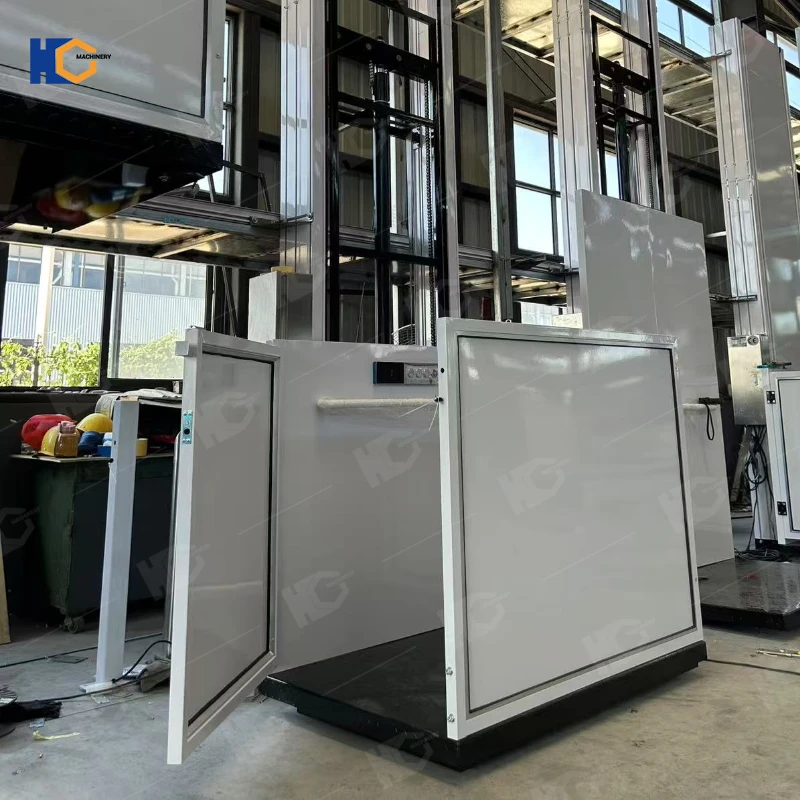
322.webp)
920.webp)