K900 Panoramic Glass Villa Elevator
- Model: Small Glass Home Elevator
- Brand: HUICHUANG(JNHC lift)
- Customization: YES
- Manual: YES
- Price: $9,000 – $15,000
- Payment Methods: TT
- Delivery time: 15 working days
 +8615628811021
 admin@jnhclift.com
Product Overview
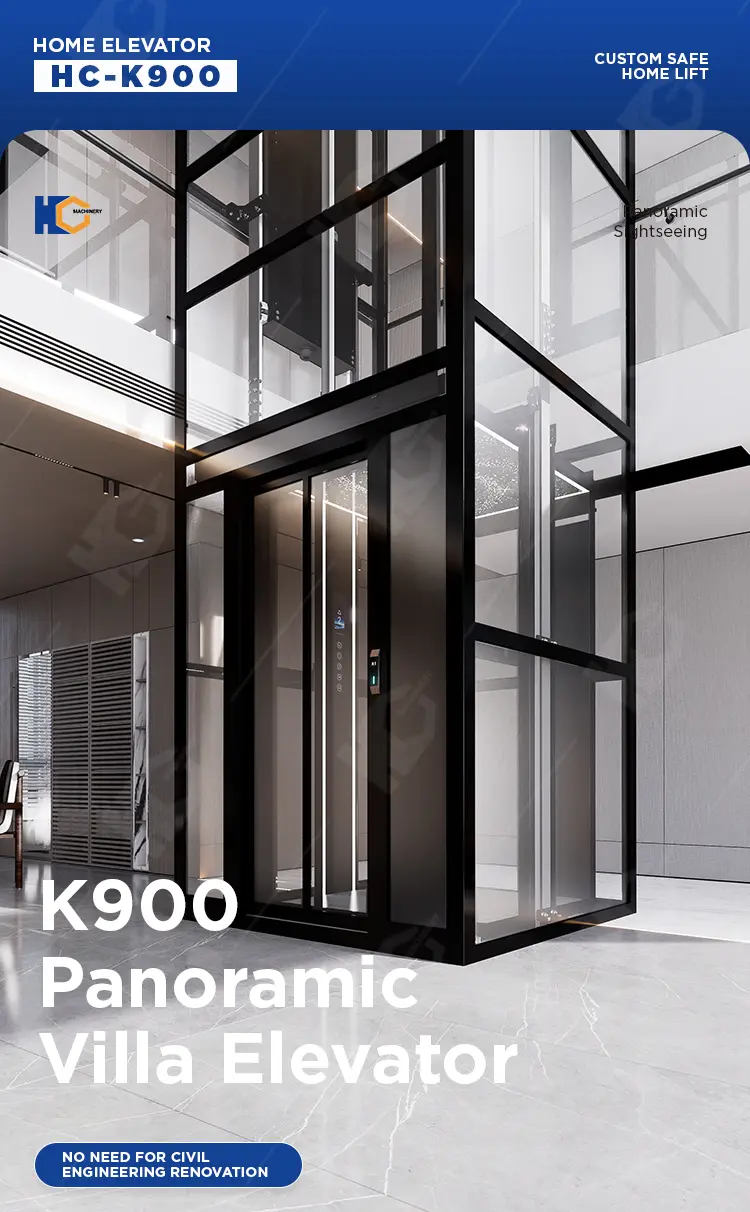
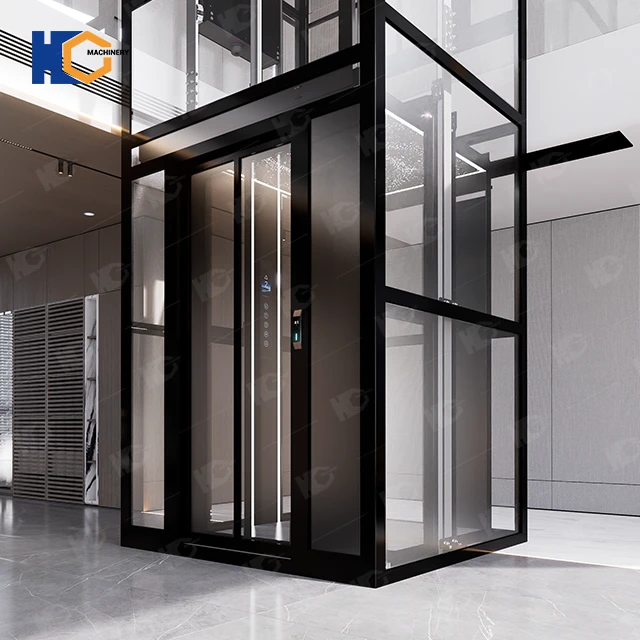
The K900 Panoramic Villa Elevator is HUICHUANG’s premium residential home lift designed for high-end private villas, duplex apartments and luxury residential renovation projects. Built with an independent self-supporting glass shaft and inverted traction steel belt drive system, this elevator combines panoramic sightseeing aesthetics, ultra-smooth quiet operation and comprehensive multi-layer safety protection.
Unlike traditional elevators that require extensive civil engineering construction, the K900 features an integrated aluminum alloy glass shaft design that eliminates the need for pre-built concrete shafts or pit excavation. This not only reduces installation costs and construction time significantly, but also allows the elevator to blend seamlessly with modern interior decoration styles. With a 400kg rated load capacity, 0.4m/s running speed and zero minimum pit depth, it is fully capable of meeting daily vertical transportation needs for multi-generational families in luxury residential settings.
Six Core Advantages
The K900 panoramic villa elevator is built around six core competitive advantages that set it apart in the residential elevator market:
1. Compact Installation
The integrated self-supporting aluminum alloy glass shaft eliminates the need for pre-built concrete shafts or pit excavation work. With a minimum pit depth of 0mm and compact overall dimensions, it can be installed directly on finished load-bearing floors. This drastically reduces civil engineering costs and construction timelines, making it especially suitable for renovation projects and properties with limited structural modification options.
2. Light Luxury Aesthetics
The full panoramic glass shaft creates a light luxury visual effect that complements modern, minimalist and contemporary interior design styles. The high-transparency 5+5 laminated glass allows natural light to flow through the cabin, while the aluminum alloy frame is available in 8 different color options to match any home decoration scheme. The elevator does not just serve a functional purpose — it becomes an integrated design element that elevates the overall aesthetic of the living space.
3. Easy Operation
The K900 comes standard with touchscreen COP (Car Operation Panel) and LOP (Landing Operation Panel) interfaces. The intuitive, user-friendly touch controls feature clear digital displays and large, easy-to-read buttons, requiring almost no training to operate. This makes the elevator accessible and convenient for all family members, including elderly users and children, ensuring independent, confident daily use.
4. Smooth Quiet
The inverted traction machine paired with steel belt drive technology delivers exceptionally smooth, quiet operation. Unlike traditional wire rope systems that produce friction noise and vibration, the steel belt design reduces running noise significantly. The inverted installation layout further enhances stability by lowering the center of gravity, resulting in a ride experience that is free of jolts, swaying and mechanical noise — ideal for residential environments where quiet operation is essential.
5. Multi Safety Protection
Safety is the foundational design principle of the K900. The elevator integrates multiple interconnected safety systems, including the German ELGO magnetic absolute positioning system, Shanghai Huning electronic safety gear, infrared light curtain door protection, ARD emergency backup power and more. These systems work together to provide comprehensive protection against potential risks such as door pinching, overspeed, power failure entrapment and leveling inaccuracy, creating a secure travel environment for the entire family.
6. Standard Certified
All K900 elevators comply with international safety standards and hold CE certification. Every unit undergoes complete factory assembly, debugging and full safety inspection before shipment, ensuring consistent, reliable performance upon on-site installation. The standardized production and quality control processes provide buyers with confidence in the equipment’s safety, durability and long-term value.
Humanized Detail Design
Beyond its core performance features, the K900 incorporates six thoughtful humanized design details that enhance user experience, safety and long-term maintainability:
1. Inverted Installation Design of Traction Machine
The traction machine adopts an inverted installation layout that saves valuable top floor space. This design is particularly beneficial for villas with limited overhead height, as it reduces the required top floor clearance. The inverted configuration also runs more smoothly and quietly than traditional top-mounted machines, and is easier to access for maintenance work — making it an ideal choice for home elevator applications.
2. Standard Steel Belt Design to Save Space
The inverted traction machine is paired with a standard steel belt drive design that maximizes space savings. Compared with traditional wire rope systems, the steel belt is more compact, requires less sheave diameter and allows for a slimmer overall shaft profile. This space-efficient design means more of the available footprint goes to usable cabin space rather than mechanical components.
3. Magnetic Railing Ruler
The elevator is fitted with a German ELGO magnetic grating scale that enables precise positioning and ultra-smooth running. Unlike mechanical limit switches that can wear out and require adjustment over time, the magnetic absolute position system delivers continuous, accurate real-time position data to the controller. This ensures millimeter-accurate floor leveling every time, eliminating tripping hazards and providing a seamless, jolt-free ride.
4. Light Curtain
A professional elevator infrared light curtain is installed at the door opening. The light curtain continuously scans the entire door area during closing; if it senses any obstruction — including hands, limbs, pets, luggage or household items — the doors immediately stop closing and reverse direction. This prevents pinching injuries and provides reliable protection for all passengers, especially children and elderly family members.
5. Thickened Material
The K900 uses thickened structural materials throughout, including the standard steel belt system and inverted traction machine, all within a space-saving overall design. The robust construction ensures long-term structural stability and durability, even with frequent daily use. The thickened frame and components contribute to the elevator’s smooth, solid feel and extended service life.
6. Standard ARD as Backup Power
The elevator comes standard with an ARD (Automatic Rescue Device) backup power system. In the event of a mains power failure, the ARD system automatically activates and uses stored battery power to move the car to the nearest floor and open the doors, allowing passengers to exit safely. This eliminates the risk of being trapped inside the elevator during power outages, providing peace of mind for homeowners.
Multiple Safety Systems
The K900 panoramic villa elevator is equipped with two core international-grade safety components that form the backbone of its safety protection system:
German ELGO Magnetic Absolute Shaft Information System
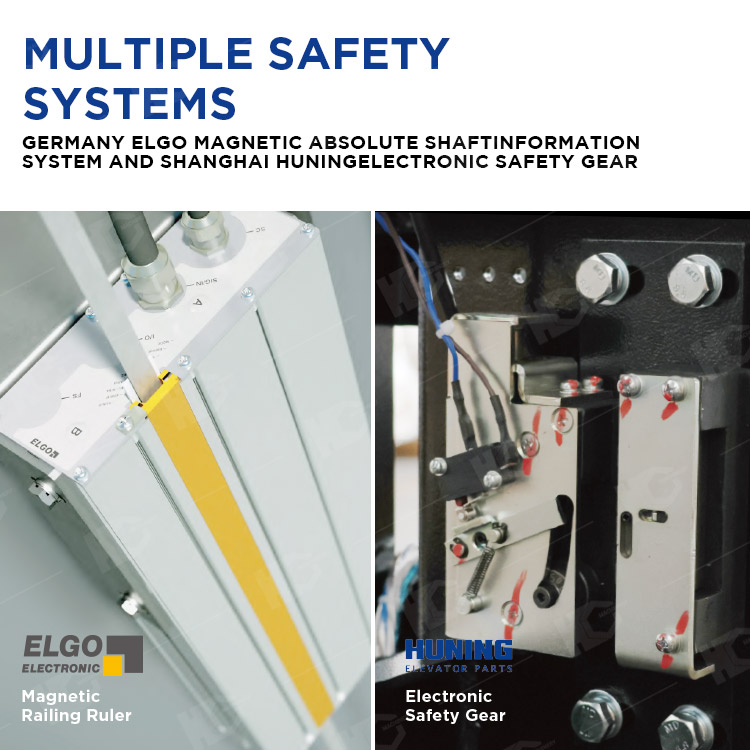
The German ELGO magnetic railing ruler provides continuous absolute position measurement along the entire travel distance. This non-contact magnetic system is highly resistant to dust, moisture and wear, ensuring long-term reliable performance. It delivers real-time position data to the control system with millimeter accuracy, enabling precise floor leveling and smooth speed control throughout the lift cycle.
Huning Electronic Safety Gear
This safety gear is a high-performance overspeed protection device. It continuously monitors elevator speed and automatically triggers controlled braking if the car exceeds the safe speed limit, preventing dangerous free-fall scenarios. The electronic design offers faster response times and more reliable performance than traditional mechanical safety gears, providing an additional layer of protection for passengers.
Combined with the infrared light curtain, ARD backup power and overload protection systems, these components create a comprehensive multi-dimensional safety network that protects passengers at every stage of the ride — from door opening to lifting to emergency situations.
5+5 Laminated Glass Construction
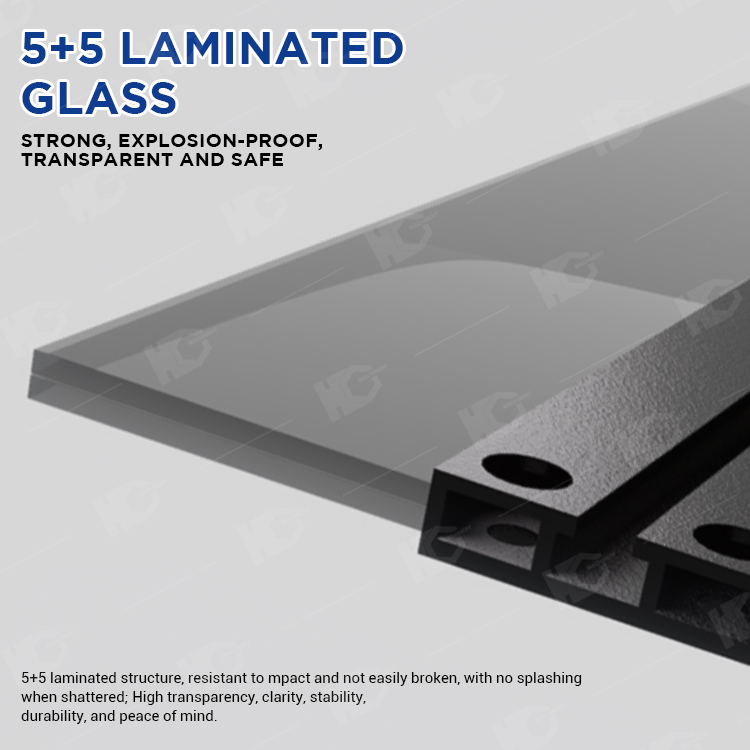
The K900’s panoramic glass shaft and cabin are constructed from 5+5 laminated safety glass, which offers exceptional strength, safety and clarity:
- Strong and explosion-proof: The 5+5 laminated structure is impact resistant and not easily broken, providing structural strength and security.
- Shatter-safe design: If the glass does break, the laminated interlayer holds all fragments in place, preventing sharp shards from splashing and causing injury.
- High transparency: The glass offers excellent clarity and light transmission, creating a bright, open panoramic view while maintaining structural stability.
- Durable and stable: Laminated glass resists UV degradation, temperature changes and daily wear, ensuring long-term durability and peace of mind for homeowners.
The glass is paired with an aluminum alloy frame that provides structural support while maintaining a slim, elegant profile. The aluminum alloy shaft is available in 8 different color options, allowing homeowners to match the elevator to their interior design scheme perfectly.
Technical Specifications
| Item | Specification |
|---|---|
| Model | HC-K900 Panoramic Villa Elevator |
| Rated Load | 400 kg |
| Rated Speed | 0.4 m/s |
| Minimum Pit Depth | 0 mm |
| Minimum Overhead Height | 2750 mm |
| Drive Type | Inverted traction machine + steel belt |
| Shaft Construction | Aluminum alloy frame + 5+5 laminated glass |
| Positioning System | German ELGO magnetic absolute scale |
| Safety Gear | Shanghai Huning electronic safety gear |
| Door Protection | Infrared light curtain |
| Backup Power | Standard ARD automatic rescue device |
| Shaft Color Options | 8 standard colors |
| Certification | CE certified |
These flexible parameters allow the K900 to adapt to a wide range of residential settings, from new luxury villa construction to older property renovations where space and structural constraints are a concern.
Standard Configuration
All K900 elevators come fully equipped with premium components as standard — no mandatory paid upgrades are required for core high-end features:
- Monadrive/Matodrive traction system
- Touchscreen COP & LOP operation panels
- 5+5 tempered glass cabin and door
- Aluminum alloy glass shaft with 8 color options
- Hpmont V2A / Monarch 3000 intelligent controller
- LED light strip ambient lighting
- Ouling door operator
- German ELGO magnetic scale absolute position shaft measurement system
- Huning electronic safety gear
Full Customization Services
HUICHUANG offers comprehensive customization services to tailor every K900 elevator to match unique home architectural styles and personal preferences. Available custom options cover all visual and many functional elements:
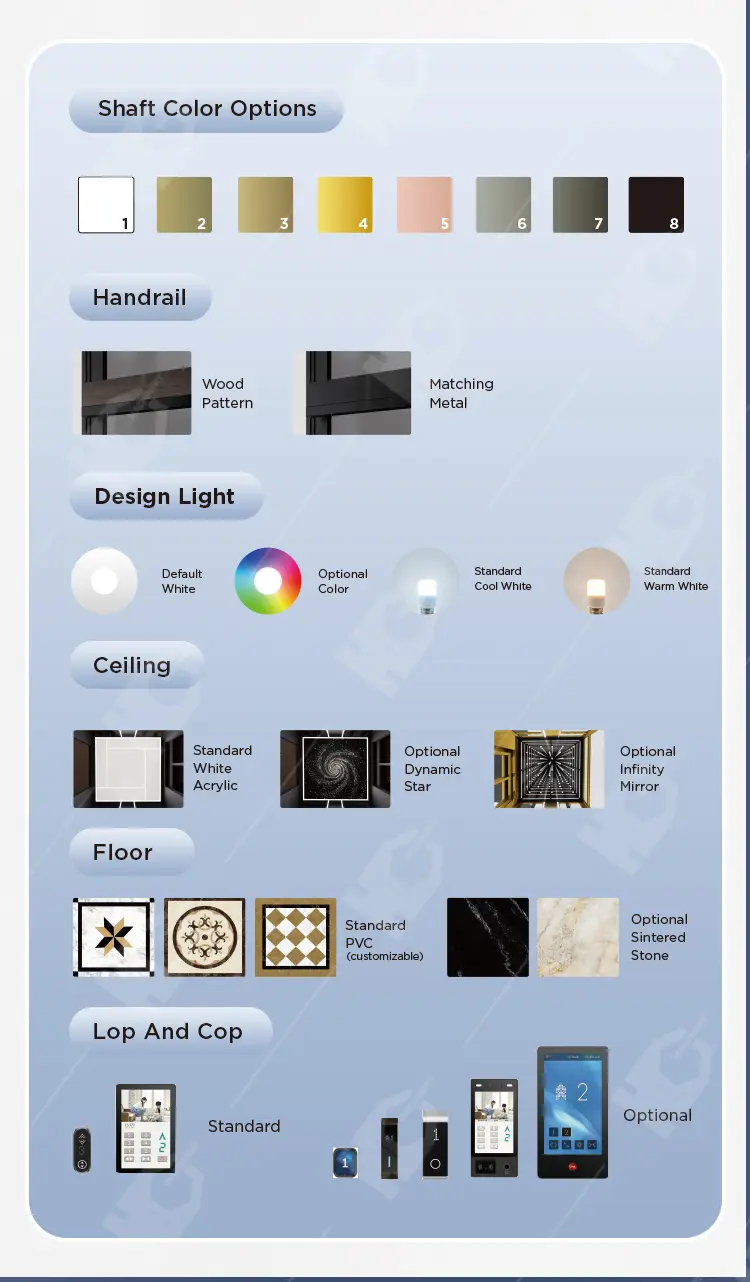
Shaft Frame Colors
8 standard color options are available for the aluminum alloy shaft frame, ranging from classic white and elegant gold tones to modern gray and black finishes, allowing perfect coordination with any interior design palette.
Handrail Styles
Two standard handrail options are offered: wood pattern handrails for a warm, natural aesthetic, and matching metal handrails that coordinate seamlessly with the shaft frame color for a cohesive modern look.
Lighting Design
Multiple lighting options are available, including default white light, optional RGB color-changing light, standard cool white and standard warm white. The lighting can be customized to create the desired atmosphere inside the cabin.
Ceiling Design
Three ceiling options are provided: standard white acrylic for a clean, bright look; optional dynamic starry sky ceiling for a luxurious, immersive effect; and optional infinity mirror ceiling for a visually striking, spacious feel.
Flooring Options
Standard PVC flooring is available with customizable patterns. For a more premium finish, optional sintered stone flooring provides a durable, elegant surface that matches high-end villa interior standards.
Operation Panels
Both standard and upgraded touchscreen COP/LOP options are available, allowing homeowners to choose the interface style that best suits their preferences and home decor.
All customized components are factory prefabricated and quality tested to guarantee consistent finish quality and structural stability upon installation.
Application Scenarios
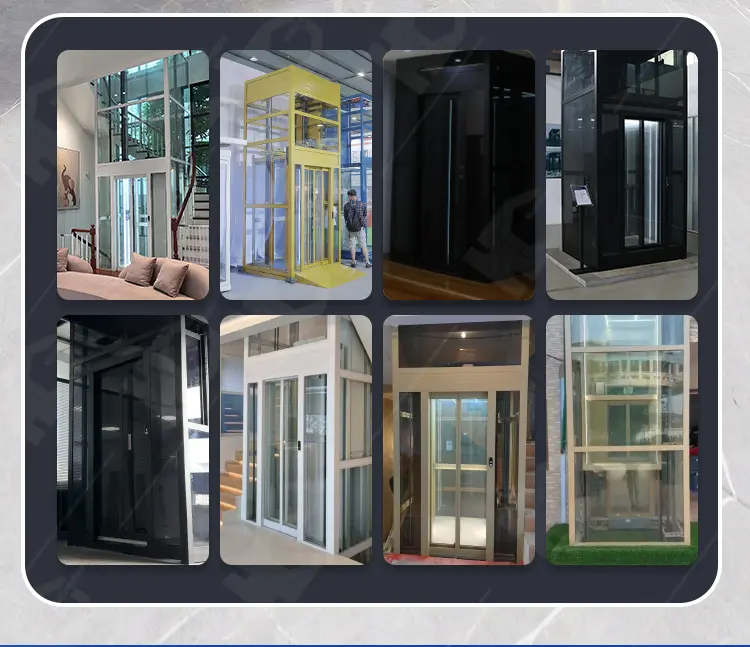
Thanks to its compact dimensions, zero-pit installation capability and elegant panoramic appearance, the K900 is suitable for a wide range of high-end residential and light commercial applications:
- Luxury detached villas: Serves as both a premium vertical transportation solution and a stunning interior design focal point
- Townhouses and terrace homes: Fits compact stairwell spaces without sacrificing valuable living area
- Duplex and penthouse apartments: Ideal for post-construction lift retrofits thanks to its low overhead and zero pit requirements
- Older villa renovation projects: Minimizes structural demolition and civil construction expenses
- Boutique luxury guesthouses: Elevates the guest experience as a signature high-end property amenity
- Private office buildings and small commercial spaces: Provides accessible vertical transport with a sophisticated appearance

Why Choose HUICHUANG
HUICHUANG is a specialized manufacturer of home elevators and lifting equipment based in China, with years of experience serving global residential and commercial markets. We operate standardized production lines and implement strict quality control at every stage of manufacturing, from raw material inspection to final factory testing.
Our K900 panoramic villa elevators are built with internationally recognized core components — including German ELGO positioning systems and high quality safety gear — ensuring reliable performance and compliance with global safety standards. We provide full-cycle customer support, including pre-sales space consultation, custom design services, installation guidance and long-term after-sales technical support, functioning as a complete lifting solution partner rather than simply an equipment supplier.
 Room 203, Second Floor, Building 8, Phase Ⅱ, Zhizao Town, Jibei Street, Jiyang District, Jinan City, Shandong Province