
Cherry Picker vs Scissor Lift: Which is better?
Choosing between a cherry picker and a scissor lift can directly affect job-site productivity, equipment costs, and worker safety. Although both machines are designed to provide elevated access, they use different lifting mechanisms and are suited to different working conditions.
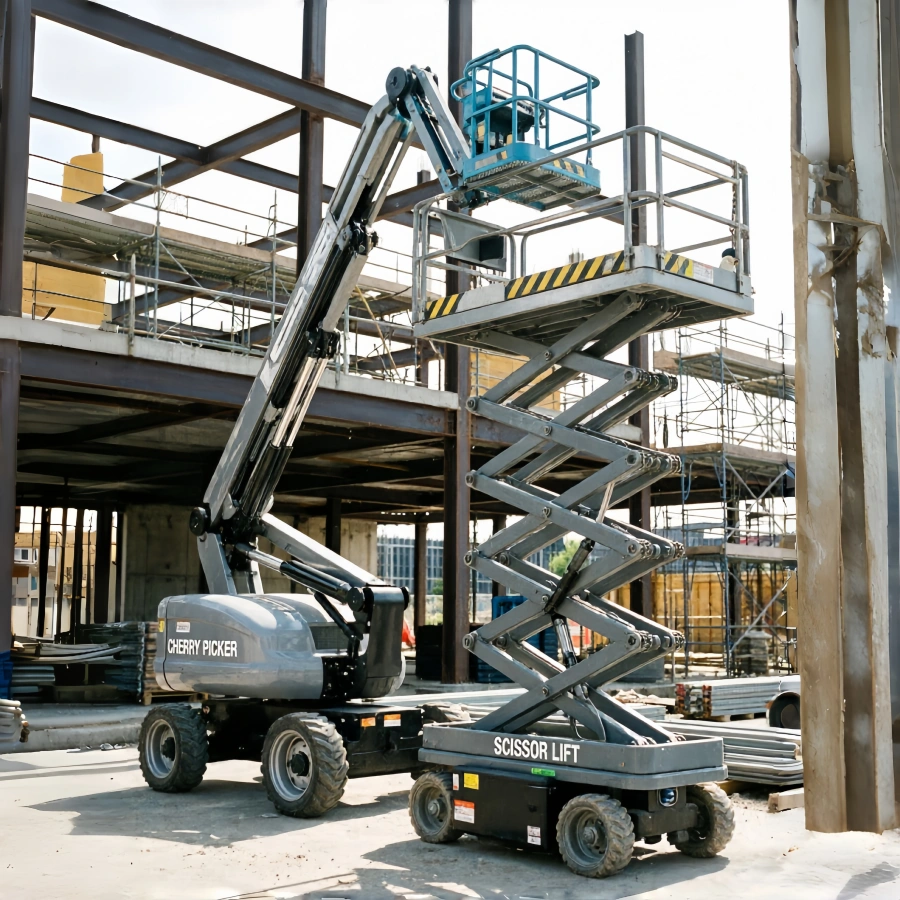
A cherry picker is generally the better choice when workers need horizontal outreach or must reach over and around obstacles. A scissor lift is usually better when the job requires straight vertical access, a larger work platform, and space for workers, tools, and materials.
However, neither machine is universally better. The right choice depends on the required working height, horizontal reach, platform capacity, ground conditions, available space, and frequency of use.
At Huichuang Lift, we believe equipment selection should start with the actual work, not the machine’s advertised specifications. This guide compares cherry pickers and scissor lifts from a practical procurement perspective, helping contractors, construction companies, warehouse operators, equipment rental businesses, and industrial buyers make an informed decision.
What Is a Cherry Picker?
A cherry picker is commonly used to describe a boom lift, a mobile elevating work platform that raises workers in a basket attached to an extendable arm. Depending on the design, the boom can move vertically, horizontally, or around obstacles to position the platform near the work area.
The term originated from equipment used to reach fruit in trees. Today, cherry pickers are widely associated with construction, building maintenance, utilities, telecommunications, signage installation, and industrial inspection.
In this article, cherry picker refers to a boom-type access platform, not a warehouse order-picking truck.
Common Types of Cherry Pickers

Articulating boom lift
An articulating boom has multiple connected sections that allow the arm to bend at different angles. It is particularly useful for reaching over machinery, around building structures, and into areas with limited direct access.

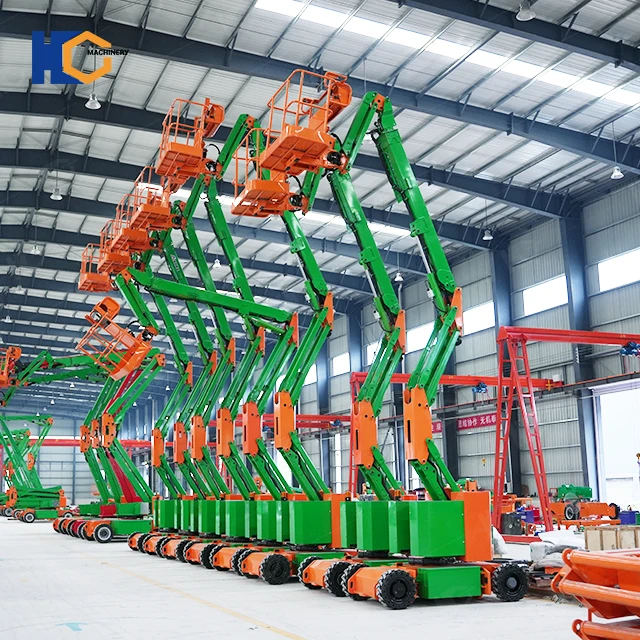
A telescopic boom extends outward in a relatively straight line. It is often selected for jobs requiring substantial horizontal outreach, such as exterior construction, steel installation, and industrial maintenance.
Truck-mounted cherry picker
A boom platform mounted on a vehicle is often used for streetlight maintenance, roadside work, utility services, and tasks distributed across multiple locations. Vehicle access, stabilization, and permitted working configurations must be checked for each model.
The principal advantage of a cherry picker is its ability to position the work basket beyond the machine’s base. Instead of moving directly underneath every task, operators can use the boom’s permitted movement to reach suitable working positions.
Its limitations include the need to assess boom geometry, allowable platform loads, ground support, wind conditions, overhead hazards, and the machine’s operating envelope.
What Is a Scissor Lift?
A scissor lift is a mobile elevating work platform that raises a platform primarily through a crossed-beam mechanism. As the scissor arms extend, the platform rises vertically.
Unlike a boom lift, a conventional scissor lift does not provide independent horizontal outreach through an extending arm. The machine generally needs to be positioned beneath the intended work area.
Scissor lifts are commonly used for warehouse maintenance, factory installations, ceiling work, lighting replacement, indoor construction, and other jobs requiring a reasonably spacious elevated work platform.
Common Types of Scissor Lifts

Electric scissor lift
Electric models are commonly used on suitable indoor floors. They provide quiet operation without exhaust emissions at the point of use and are well suited to many warehouses, shopping centers, factories, and commercial facilities.

Rough-terrain scissor lift
Designed for specified outdoor applications, these machines may feature larger tires, increased ground clearance, four-wheel drive, and other terrain-related features. Suitability depends on the particular model and site conditions.
The main advantage of a scissor lift is its vertically rising platform, which often offers more working space and higher rated platform capacity than a comparable boom-lift basket.
The key limitation is access geometry: when a pipe rack, roof edge, machine, or other obstacle blocks the direct route to the work area, a conventional scissor lift cannot simply extend its platform sideways to reach around it.
Cherry Picker vs Scissor Lift: Key Differences
The most useful comparison is not which machine wins the most categories. It is which machine best meets the working requirements of your project.
| Comparison factor | Cherry picker / boom lift | Scissor lift |
|---|---|---|
| Main movement | Boom can raise, extend, and position the basket | Primarily vertical platform movement |
| Horizontal outreach | Available within the rated operating envelope | No independent boom-style outreach |
| Access around obstacles | Often better for suitable complex access | Requires direct access below the work area |
| Platform workspace | Often a smaller basket | Often a larger platform |
| Load capacity | Model- and configuration-dependent | Often higher on comparable access applications, but model-dependent |
| Working height | Broad range, including high-reach models | Broad range of vertical-access models |
| Indoor applications | Electric models can suit appropriate indoor sites | Electric models are often well suited to indoor maintenance |
| Outdoor applications | Suitable models can serve exterior and rough-terrain work | Rough-terrain variants serve specified outdoor applications |
| Maneuverability | Boom positioning can improve access to complex work points | Can be efficient in suitable aisles and open working areas |
| Typical cost considerations | Boom design, outreach, working height, chassis, and stabilization | Platform dimensions, height, capacity, power, and terrain design |
Important: These comparisons describe typical equipment designs, not guarantees for every machine. For example, some boom lifts are compact and electric, while certain scissor lifts are designed for rough terrain. Always compare the specifications of the exact models you intend to purchase or rent.
1. Working Height vs. Horizontal Outreach
This is the most important distinction between the two machines.
A scissor lift is designed primarily to raise workers vertically. If the task is directly above an accessible working position, that movement is often sufficient.
A boom lift provides a different type of access. It can position a platform above or beyond certain obstacles when the boom’s geometry, operating limits, and site conditions permit.
Consider two examples.
Example A: Replacing lights in a warehouse
The lights are mounted above an open floor, and the machine can be positioned underneath them. A suitable electric scissor lift may provide an efficient working area for the maintenance crew.
Example B: Repairing equipment behind a fixed industrial pipe rack
The target is elevated but cannot be accessed directly from below. An articulating boom lift may be more appropriate because it can position its basket around suitable obstacles.
The practical lesson is simple: determine the required access path before comparing lifting heights.
A machine advertised with a greater working height may still be unsuitable if it cannot reach the required position.
2. Platform Capacity and Working Space
Scissor lifts often offer a larger platform to accommodate multiple workers and their tools. Some models also feature extending decks that increase the usable working area within the manufacturer’s permitted configuration.
Cherry picker baskets are generally more compact, which helps when precise positioning matters more than platform area.
However, a larger platform does not automatically mean a higher permitted load. Check the machine’s rated platform capacity, the number of permitted occupants, and any restrictions for an extended deck or specific operating positions.
A useful procurement exercise is to calculate the total expected platform load.
For example, a maintenance job may involve two workers weighing a combined 170 kg, tools weighing 45 kg, and replacement materials weighing 60 kg.
The selected machine must be rated for at least the calculated load and satisfy all relevant configuration and loading requirements. A nominal capacity above 275 kg alone does not confirm suitability: load distribution, occupant limits, and any extension-platform restrictions must also be checked.
3. Indoor vs. Outdoor Operation
Electric scissor lifts are often practical for indoor tasks because many models operate quietly and produce no exhaust emissions at the point of use. Their dimensions, turning radius, tire type, and floor-loading requirements must still match the facility.
Electric boom lifts can also suit indoor applications, especially when horizontal reach is required. The correct choice depends on access space and the floor’s load-bearing capacity.
For outdoor work, the choice depends more on the specific machine. Rough-terrain scissor lifts and suitable outdoor boom lifts are both available, but they differ in traction, gradeability, ground clearance, and operating limits.
Before choosing equipment, investigate:
Floor or ground strength and condition.
Slopes, potholes, drains, and uneven surfaces.
Required turning space and access routes.
Ambient temperature and dust exposure.
Wind restrictions when the platform is elevated.
Overhead obstructions and electrical hazards.
Whether the equipment is approved for the intended environment.
Outdoor use should never be treated as a simple choice between diesel and electric power. Power source is only one component of site suitability.
Which Is Better for Different Applications?
The right equipment becomes clearer when the comparison is based on the actual task rather than broad industry labels.
| Application | Initial selection to consider | Why |
|---|---|---|
| Warehouse lighting replacement | Electric scissor lift | Straight vertical access and a potentially larger work platform |
| Indoor ceiling installation | Electric scissor lift | Suitable for repetitive tasks directly overhead |
| Exterior building maintenance | Boom lift | May provide access around facade features and other obstacles |
| Installing elevated signs | Articulating or telescopic boom lift | Outreach may be needed to position workers at mounting points |
| Working around pipes and machinery | Articulating boom lift | Can offer more flexible positioning |
| Highway or streetlight maintenance | Suitable truck-mounted or mobile boom lift | Useful for work at distributed outdoor locations |
| Factory maintenance on a flat floor | Scissor lift or electric boom lift | Depends on direct access, platform space, and machine dimensions |
| Construction on uneven ground | Suitable rough-terrain scissor lift or boom lift | Selection depends on the terrain and required movement |
| Work requiring substantial material space | Scissor lift, if suitably rated | Often provides more platform area and load capacity |
Case Study 1: Warehouse Lighting Installation
Imagine a distribution center that needs to replace lighting fixtures across several open warehouse aisles.
The main requirements are sufficient working height, room for a technician and tools, access through the warehouse aisles, and minimal disturbance to ongoing operations.
A suitable electric scissor lift may be the better option because the tasks are directly overhead and do not require horizontal outreach. Non-marking tires may also be desirable if specified for the floor.
However, the final choice still depends on the available aisle width, floor capacity, ceiling clearance, and the combined weight of workers and tools.
If the lights are located behind fixed equipment or over inaccessible obstacles, the recommendation could change.
Case Study 2: Installing Exterior Building Signage
Now imagine an installation team fitting a sign above a building entrance with a canopy and architectural features obstructing direct access.
A scissor lift may not be able to position workers where they need to work without placing the machine directly beneath the target area.
An articulating boom lift may provide a more practical solution, provided the required reach and basket position fall within the machine’s rated working envelope.
For this application, a boom lift’s value is not simply its height. Its ability to reach the correct position may reduce repeated repositioning and improve task efficiency.
These examples show why selection should start with the work area shape and the required access route.
Cherry Picker vs Scissor Lift: Advantages and Disadvantages
Cherry Picker Advantages
Flexible positioning: Boom movement provides vertical and horizontal reach, helping workers access locations beyond the machine’s base.
Access around obstacles: Articulating models can reach around certain structures that prevent direct vertical access.
Versatile outdoor applications: Suitable models are used for building exteriors, utilities, signage, and various industrial jobs.
Potential productivity benefits: When work points are difficult to access, boom positioning can reduce the need to move the machine to every individual task location.
Cherry Picker Disadvantages
More demanding access planning: Consider horizontal outreach, boom angles, platform loads, and ground conditions together.
Potentially higher purchase cost: High-reach or complex boom systems can be more expensive than simpler scissor lifts, although the difference depends on the exact models.
Smaller working basket in many designs: A compact basket may be less convenient when the job requires substantial tools or materials.
Operating and maintenance requirements: Boom sections, joints, hydraulic systems, and other components must be inspected and maintained according to manufacturer instructions.
Scissor Lift Advantages
Larger working platform in many models: Useful for jobs requiring workers and tools to remain together at height.
Efficient vertical access: Well suited to repetitive overhead tasks.
Practical indoor options: Electric models suit warehouses, factories, and commercial buildings with appropriate floors and access routes.
Potentially lower equipment cost: Many standard scissor lifts cost less than boom lifts with comparable access requirements, although price comparisons should use equivalent specifications.
Scissor Lift Disadvantages
Limited horizontal access: A conventional scissor lift cannot extend an independent boom to reach around obstacles.
Requires suitable positioning: The machine typically needs to be placed directly below the intended work area.
Floor and ground limitations: The surface must support the machine and meet its operating requirements, particularly when elevated.
Model-specific access constraints: Platform dimensions, turning radius, machine width, ceiling clearance, and rated capacity can limit suitability.
Is a Cherry Picker Safer Than a Scissor Lift?
Neither type is inherently safer in every situation. Safety depends on the correct machine for the task, the equipment’s condition, the working environment, the operator’s competence, and compliance with the applicable operating instructions and regulations.
The US Occupational Safety and Health Administration distinguishes scissor lifts from boom-supported aerial lifts within its regulatory framework. Its guidance emphasizes equipment capabilities, proper operation, and controls for workplace hazards. This distinction is specific to the relevant US regulatory context and should not be treated as a substitute for local requirements elsewhere. See the OSHA scissor lift guidance and aerial lift safety guidance.
Before operating either machine, check the following:
1. Ground conditions and stability
Verify ground strength, surface level, slopes, and any restrictions on elevated travel or operation.
2. Overhead hazards
Identify power lines, beams, pipes, ceilings, and other potential obstructions. Maintain the required clearance from electrical hazards.
3. Platform capacity
Do not exceed rated capacity or permitted occupant limits. Include workers, tools, and materials in the load calculation.
4. Fall and entrapment hazards
Use guardrails and required personal protective equipment in accordance with the equipment instructions and applicable rules. Identify crushing hazards, particularly around overhead structures.
5. Pre-use inspections
Check controls, emergency stops, lowering systems, tires, structural components, and safety devices before operation, following the manufacturer’s requirements.
6. Operator training and emergency planning
Operators must understand the specific machine, its restrictions, and emergency procedures. A practical rescue and emergency-lowering plan should be established before the work starts.
For broader guidance, ISO 18893:2024 addresses the selection, inspection, training, maintenance, repair, and safe operation of mobile elevating work platforms (MEWPs). The international standard is a useful technical reference, but applicable local legislation and machine-specific instructions remain essential.
Cherry Picker vs Scissor Lift: Which Is More Cost-Effective?
Purchase price is important, but it does not fully represent the cost of using a machine.
A lower-cost lift may require more frequent repositioning or fail to meet the task’s access requirements. A more expensive boom lift may reduce downtime on complex jobs, while a scissor lift may offer better value for repetitive vertical-access work.
Indicative Purchase Price Comparison
The following broad factory-level price bands provide a starting point for budgeting. They are indicative estimates for generic equipment configurations, not independently verified market averages or guaranteed current quotations.
| Equipment category | Indicative factory-level budget |
|---|---|
| Towable cherry picker | $8,000–$25,000 |
| Articulating boom lift | $25,000–$120,000 |
| Telescopic boom lift | $35,000–$180,000 |
| Truck-mounted cherry picker | $40,000–$250,000+ |
| Mini scissor lift | $3,000–$8,000 |
| Standard electric scissor lift | $5,000–$25,000 |
| Hydraulic scissor lift | $8,000–$35,000 |
| Rough-terrain scissor lift | $15,000–$60,000 |
Prices vary considerably by working height, platform capacity, power system, brand, configuration, new or used condition, and delivery terms. The categories overlap and are not direct model-to-model comparisons.
For imported equipment, the final investment may also include freight, insurance, applicable duties and taxes, customs clearance, conformity requirements, inland transport, commissioning, and spare parts.
Calculate the Total Cost of Ownership
A useful comparison should account for the full period you expect to own and operate the machine.
Total cost of ownership = acquisition cost + delivery and setup + energy or fuel + maintenance and repairs + training and inspection costs + downtime costs − resale value.
For rental equipment, compare the total rental charges over the planned use period, along with transport, operator services if required, and any additional contract charges.
This leads to a more useful question than simply asking which machine is cheaper: which machine delivers the required work with the lowest overall cost and acceptable risk?
Should You Buy or Rent?
Buying may suit companies that use the same equipment regularly across many projects. Renting may be preferable for short-term work, irregular demand, or tasks requiring several different access configurations.
Before deciding, estimate the expected annual operating days, rental rates for equivalent machines, maintenance costs, transport costs, downtime risk, and the machine’s expected resale value.
For a contractor handling both interior finishing and exterior construction, a fleet containing both scissor lifts and boom lifts may offer more flexibility than trying to make one type handle every task.
How to Choose the Right Equipment: A Practical Checklist
Before requesting a quotation, complete the following checks. They help suppliers recommend a suitable configuration and reduce the risk of selecting a machine that cannot reach the work area.
Equipment selection checklist
0 of 8
A good supplier should use this information to recommend an appropriate machine, explain its limitations, and identify any additional requirements before an order is confirmed.
For general site-assessment guidance, IPAF identifies factors such as height, reach, up-and-over height, the weight of people and materials, the operating environment, restrictions, setup, and hazards as important in MEWP selection. See IPAF’s Site Assessment guidance.
How to Buy a Cherry Picker or Scissor Lift from a Manufacturer
For B2B buyers, selecting the right machine is only the first step. The supplier should also provide sufficient technical information, a clear quotation, appropriate documentation, and a workable after-sales arrangement.
At Huichuang Lift, we recommend comparing suppliers against the following requirements.
Technical Specifications
Ask for the exact model, working height, platform height, horizontal reach where applicable, rated capacity, platform dimensions, power source, machine weight, and operating limitations.
Do not compare different machines using only a headline height or price.
Customization and Configuration
Depending on the model, requirements may include platform dimensions, tires, battery configuration, control options, or other equipment specifications. Confirm which features are standard, which are optional, and which configurations are technically available.
Quality Documents and Compliance
Request the technical documentation, operating manual, inspection or test records, and applicable conformity documents. For export orders, confirm the requirements for the destination market before shipment.
Warranty and Spare Parts
Review warranty coverage, exclusions, the availability of replacement parts, maintenance recommendations, technical support, and delivery lead times.
These details can significantly affect the machine’s long-term availability.
Delivery and Commercial Terms
The quotation should specify the agreed equipment configuration, order quantity, price basis, delivery destination, lead time, payment terms, and which party is responsible for freight, insurance, customs clearance, and applicable taxes.
For imported purchases, an itemized quotation makes it easier to compare the total investment with a locally supplied machine.
Contact Huichuang Lift to select equipment and request a tailored quotation. Visit JNHCLift.com, email admin@jnhclift.com, or call +86 152 5319 3706. Share your required working height, access conditions, rated load, intended application, and order quantity so our team can assess the appropriate equipment configuration.
Frequently Asked Questions
Is a cherry picker the same as a boom lift?
In common construction and access-equipment terminology, cherry picker often refers to a boom lift with a basket that raises workers to elevated positions. The precise meaning can vary by market and application. In warehouses, the term may also refer to a different type of order-picking machine.
Can a scissor lift replace a cherry picker?
A scissor lift can replace a boom lift when the work requires only suitable vertical access and the platform can be positioned directly below the task. It generally cannot replace a boom lift when independent horizontal outreach or access around obstacles is essential.
Which has a higher platform capacity?
Many scissor lifts offer greater platform capacity than comparable boom lifts because their platforms are designed differently. However, capacity depends on the exact model and configuration. Always check the rated load and permitted occupant count.
Which is better for indoor work?
An electric scissor lift is often a good choice for indoor tasks requiring direct vertical access, a larger platform, and quiet operation. An electric boom lift may be better when workers need to reach around equipment or other obstacles. Floor loading, machine dimensions, and access restrictions should determine the final choice.
Which is better for outdoor construction?
The answer depends on the ground, work height, and access geometry. A suitable boom lift may be better for exterior work requiring horizontal outreach, while a rough-terrain scissor lift may suit work that requires a larger vertical platform. Verify both machines’ terrain and operating limits.
Is a cherry picker more expensive than a scissor lift?
Boom lifts often cost more than standard scissor lifts with comparable access requirements, particularly when they provide greater outreach or higher working heights. However, equipment prices overlap, and the best comparison uses current quotations for machines with equivalent job requirements.
Can a cherry picker reach over a roof or canopy?
Some boom lifts can reach over suitable obstacles, depending on the boom geometry, working envelope, load, and site conditions. Confirm the required up-and-over clearance and working position against the manufacturer’s specifications rather than relying solely on the advertised working height.
What information should I provide when requesting a quotation?
Provide the required working height, horizontal outreach if needed, rated platform load, indoor or outdoor working conditions, ground or floor characteristics, quantity, destination, and any required options or compliance documents. The more accurately the application is described, the easier it is to compare suitable models and quotations.
Conclusion: Cherry Picker vs Scissor Lift
The decision between a cherry picker and a scissor lift comes down to the work that needs to be done.
A cherry picker is generally the better choice for flexible positioning, horizontal outreach, and access around obstacles. A scissor lift is often the better choice for direct vertical access, a larger work platform, and tasks involving workers, tools, and materials on suitable surfaces.
Neither equipment type is universally safer, cheaper, or more productive. Those outcomes depend on the model, working conditions, operating requirements, and total cost of ownership.
Before purchasing, define the required reach, calculate the platform load, examine the access route, evaluate the operating environment, and compare current quotations on an equivalent basis.
At Huichuang Lift, we help customers evaluate lifting equipment according to their applications, specifications, and procurement requirements. Choosing the right configuration from the beginning can improve productivity, support safer operation, and avoid paying for capabilities that the project does not need.

Jnhclift (Huichuang Lift), based in Jinan, China, is a professional manufacturer of scissor lifts, home elevators, and lift platforms. With our own dedicated factory, we deliver high-quality, reliable lifting solutions tailored to meet diverse industrial and residential needs.
 Room 203, Second Floor, Building 8, Phase Ⅱ, Zhizao Town, Jibei Street, Jiyang District, Jinan City, Shandong Province
 +86 152 5319 3706
 admin@jnhclift.com