How Much Does a Scissor Lift Cost?(2026)
Scissor lifts are among the most widely used aerial work platforms in construction, warehousing, facility maintenance, manufacturing, aviation, and logistics industries. They provide a safe and efficient way to lift workers, tools, and materials vertically to working heights that would otherwise require scaffolding or ladders.
One of the most common questions buyers ask is: How much does a scissor lift cost?
The answer depends on several factors, including lift height, load capacity, power source, drive system, manufacturer, country of origin, and customization requirements. A small manual scissor lift may cost only a few thousand dollars, while a large rough-terrain diesel scissor lift can exceed $80,000.
This guide provides a comprehensive breakdown of scissor lift factory, wholesale, market, and ownership costs to help buyers make informed purchasing decisions.
What Is a Scissor Lift?
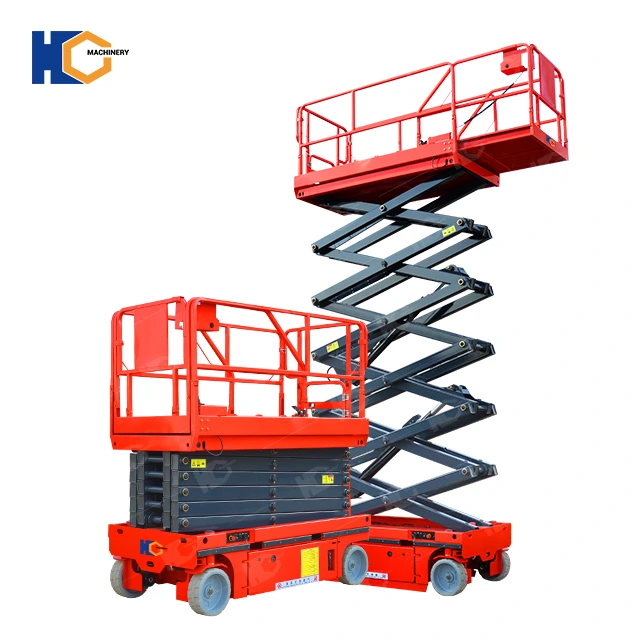
A scissor lift is a type of mobile elevated work platform (MEWP) that uses crisscrossing metal supports to raise a platform vertically.
The lifting mechanism resembles a pair of scissors opening and closing, which is where the machine gets its name.
Scissor lifts are commonly used for:
- Building construction
- Warehouse operations
- Equipment installation
- Electrical maintenance
- Painting projects
- Ceiling work
- Industrial manufacturing
- Aircraft maintenance
- Inventory management
Compared with ladders and scaffolding, scissor lifts provide:
- Greater safety
- Higher efficiency
- Increased productivity
- Better load capacity

Average Scissor Lift Cost in 2026
The average market price of a new scissor lift ranges from $4,000 to $80,000+, depending on specifications.
Typical Price Range
| Scissor Lift Type | Factory Price | Market Price |
|---|---|---|
| Manual Scissor Lift | $1,000-$3,000 | $2,000-$5,000 |
| Semi-Electric Scissor Lift | $2,000-$5,000 | $3,500-$8,000 |
| Electric Scissor Lift | $5,000-$25,000 | $8,000-$35,000 |
| Self-Propelled Scissor Lift | $8,000-$35,000 | $12,000-$50,000 |
| Hydraulic Scissor Lift | $6,000-$20,000 | $10,000-$30,000 |
| Rough Terrain Scissor Lift | $15,000-$60,000 | $25,000-$80,000 |
| Diesel Scissor Lift | $20,000-$70,000 | $30,000-$90,000 |
Factory-direct purchasing can reduce costs by 20% to 50% compared with buying through distributors.
Scissor Lift Prices by Working Height
Working height is the most important factor affecting price.
6m (20ft) Scissor Lift
Specifications:
- Working height: 6m
- Platform height: 4m
- Capacity: 230kg-300kg
Price:
| Purchase Type | Price |
| Factory Price | $4,000-$6,500 |
| Wholesale Price | $5,000-$8,000 |
| Retail Market Price | $6,500-$12,000 |
Suitable for:
- Indoor maintenance
- Warehouses
- Retail facilities
8m (26ft) Scissor Lift
Specifications:
- Working height: 8m
- Capacity: 230kg-450kg
Price:
| Purchase Type | Price |
| Factory Price | $5,000-$8,500 |
| Market Price | $8,000-$15,000 |
Popular for:
- Commercial construction
- Facility management
10m (32ft) Scissor Lift
Specifications:
- Working height: 10m
- Capacity: 320kg-500kg
Price:
| Purchase Type | Price |
| Factory Price | $7,000-$12,000 |
| Market Price | $10,000-$20,000 |
Applications:
- Electrical installation
- HVAC projects
- Manufacturing plants
12m (39ft) Scissor Lift
Price:
| Purchase Type | Price |
| Factory Price | $9,000-$15,000 |
| Market Price | $14,000-$25,000 |
14m (46ft) Scissor Lift
Price:
| Purchase Type | Price |
| Factory Price | $12,000-$20,000 |
| Market Price | $18,000-$35,000 |
16m (52ft) Scissor Lift
Price:
| Purchase Type | Price |
| Factory Price | $15,000-$28,000 |
| Market Price | $25,000-$45,000 |
Electric Scissor Lift Cost
Electric scissor lifts have become the most popular models worldwide because of their low operating costs and environmentally friendly operation.
Advantages include:
- Zero emissions
- Quiet operation
- Lower maintenance
- Suitable for indoor use
Electric Scissor Lift Price List
| Working Height | Factory Price | Market Price |
| 6m | $4,000-$6,500 | $7,000-$12,000 |
| 8m | $5,000-$8,500 | $8,000-$15,000 |
| 10m | $7,000-$12,000 | $10,000-$20,000 |
| 12m | $9,000-$15,000 | $14,000-$25,000 |
| 14m | $12,000-$20,000 | $18,000-$35,000 |
Electric models account for more than 60% of global scissor lift sales.
Self-Propelled Scissor Lift Cost
Self-propelled models allow operators to drive while elevated, significantly improving productivity.
Benefits
- Reduced labor costs
- Faster project completion
- Improved site mobility
- Increased efficiency
Price Range
| Working Height | Factory Price | Market Price |
| 8m | $8,000-$12,000 | $12,000-$20,000 |
| 10m | $10,000-$16,000 | $15,000-$28,000 |
| 12m | $12,000-$20,000 | $18,000-$35,000 |
| 14m | $15,000-$25,000 | $22,000-$45,000 |
Rough Terrain Scissor Lift Cost
Rough-terrain scissor lifts are designed for outdoor construction environments.
Features include:
- Four-wheel drive
- Large tires
- High ground clearance
- Diesel engines
- Automatic leveling systems
Rough Terrain Price List
| Working Height | Factory Price | Market Price |
| 10m | $15,000-$25,000 | $25,000-$40,000 |
| 12m | $18,000-$30,000 | $30,000-$50,000 |
| 14m | $22,000-$40,000 | $35,000-$60,000 |
| 16m | $28,000-$50,000 | $45,000-$80,000 |
New vs Used Scissor Lift Cost
Many buyers compare new and used equipment before purchasing.
New Scissor Lift
Advantages:
- Full warranty
- Latest technology
- Longer lifespan
- Lower repair costs
Price:
$5,000-$80,000+
Used Scissor Lift
Advantages:
- Lower upfront investment
- Immediate availability
Disadvantages:
- Higher maintenance costs
- Unknown service history
- Limited warranty
Price:
$2,000-$40,000
Comparison Table
| Factor | New | Used |
| Purchase Cost | Higher | Lower |
| Warranty | Full | Limited |
| Lifespan | Longer | Shorter |
| Reliability | Higher | Lower |
| Maintenance | Lower | Higher |
For long-term ownership, new equipment often provides better value.
Factory Price vs Market Price
Many buyers are surprised by the large gap between factory prices and retail market prices.
Why Are Market Prices Higher?
Distributors add costs for:
- Inventory storage
- Shipping
- Local certification
- Technical support
- Warranty service
- Dealer profits
Typical markups range from 20% to 100%.
Example
A 10m electric scissor lift may cost:
- Factory Price: $8,500
- Distributor Price: $12,000
- Retail Price: $16,000
Direct factory purchasing can generate substantial savings.
Factors Affecting Scissor Lift Cost
Lift Height
The higher the platform, the higher the cost.
Additional height requires:
- More steel
- Larger hydraulic cylinders
- Enhanced stability systems
Load Capacity
Higher capacity increases:
- Structural requirements
- Hydraulic system size
- Manufacturing costs
Power Source
Power options include:
- Manual
- Electric
- Battery
- Hydraulic
- Diesel
Diesel-powered models generally cost more.
Brand Reputation
Premium brands command higher prices due to reliability and resale value.
Certifications
International certifications increase manufacturing costs:
- ANSI
- CE
- ISO9001
- CSA
- AS/NZS
However, certified equipment improves safety and market acceptance.
Customization
Custom options can increase costs by 10% to 40%.
Examples include:
- Extended platforms
- Larger capacities
- Explosion-proof systems
- Non-marking tires
- Lithium batteries
- Special paint colors
Cost of Owning a Scissor Lift
Purchase price is only part of the total ownership cost.
Annual Maintenance
Typical maintenance expenses:
| Lift Type | Annual Cost |
| Small Electric | $300-$800 |
| Self-Propelled | $500-$1,500 |
| Rough Terrain | $1,000-$3,000 |
Battery Replacement
Lead-acid batteries:
- Lifespan: 3-5 years
- Replacement cost: $800-$3,000
Lithium batteries:
- Lifespan: 8-10 years
- Replacement cost: $2,000-$8,000
Insurance
Commercial equipment insurance:
- $200-$2,000 annually
Operator Training
Training costs:
- $100-$500 per operator
Renting vs Buying a Scissor Lift
Some businesses choose rental instead of ownership.
Rental Rates
| Lift Type | Daily | Weekly | Monthly |
| Electric Scissor Lift | $100-$250 | $400-$800 | $1,000-$2,500 |
| Rough Terrain Lift | $250-$500 | $1,000-$2,500 | $3,000-$7,000 |
When Renting Makes Sense
- Short-term projects
- Seasonal demand
- Limited budgets
When Buying Makes Sense
- Frequent usage
- Long-term projects
- Equipment rental businesses
If a lift will be used more than six months per year, purchasing often yields better financial returns.

How to Reduce Scissor Lift Purchasing Costs
Buy Directly from Manufacturers
Factory-direct purchasing eliminates dealer markups.
Potential savings:
20%-50%
Order Multiple Units
Bulk purchases typically qualify for wholesale pricing.
Purchase During Industry Promotions
Many manufacturers offer:
- End-of-year discounts
- Trade show pricing
- Seasonal promotions
Select Appropriate Specifications
Avoid overspending on unnecessary:
- Lift height
- Capacity
- Features
Matching equipment to project requirements maximizes ROI.
Best Scissor Lift for Different Applications
Warehouse Operations
Recommended:
- 6m-10m electric scissor lift
Indoor Maintenance
Recommended:
- Self-propelled electric lift
Construction Sites
Recommended:
- Rough terrain scissor lift
Industrial Manufacturing
Recommended:
- Hydraulic scissor lift
Equipment Rental Companies
Recommended:
- 8m-12m self-propelled electric models
These units have the highest rental demand globally.
Final Verdict: How Much Should You Expect to Pay for a Scissor Lift?
The cost of a scissor lift varies significantly depending on lift height, power source, capacity, and intended application. In 2026, buyers can expect factory prices to range from approximately $4,000 for small electric models to more than $60,000 for large rough-terrain machines. Retail market prices typically range from $6,500 to $90,000 due to distributor markups, logistics, certifications, and after-sales services.
For most warehouses, maintenance contractors, and industrial facilities, an 8m to 12m electric self-propelled scissor lift offers the best balance between price, performance, and operating costs. Buyers seeking maximum savings should consider purchasing directly from manufacturers, where factory-direct pricing can reduce overall investment by 20% to 50% while maintaining the same equipment specifications and safety standards.
Jnhclift (Huichuang Lift), based in Jinan, China, is a professional manufacturer of scissor lifts, home elevators, and lift platforms. With our own dedicated factory, we deliver high-quality, reliable lifting solutions tailored to meet diverse industrial and residential needs.
 Room 203, Second Floor, Building 8, Phase Ⅱ, Zhizao Town, Jibei Street, Jiyang District, Jinan City, Shandong Province
 +8615628811021
 admin@jnhclift.com