
How Much Does a Cargo Lift Cost?
Cargo lifts have become an essential solution for warehouses, factories, retail stores, logistics centers, restaurants, automotive workshops, and residential buildings that need to move heavy goods safely between floors. Compared with manual handling, forklifts, or ramps, cargo lifts significantly improve efficiency, reduce labor costs, and enhance workplace safety.
One of the most common questions buyers ask is: How much does a cargo lift cost?
The answer depends on many factors, including lift type, lifting height, load capacity, platform size, installation environment, safety features, and customization requirements. A small cargo lift may cost as little as $3,000–$8,000, while a large industrial freight elevator can exceed $100,000.
This comprehensive guide explains cargo lift pricing, specifications, applications, competitor comparisons, installation costs, and how to choose the right cargo lift for your business.
What Is a Cargo Lift?
A cargo lift is a vertical transportation system designed specifically for moving goods, equipment, pallets, tools, and materials between different levels of a building.
Unlike passenger elevators, cargo lifts prioritize load capacity, durability, and operational efficiency.
Common applications include:
- Warehouses
- Manufacturing plants
- Retail stores
- Distribution centers
- Restaurants
- Hotels
- Automotive repair shops
- Construction sites
- Shopping malls
- Residential homes
Cargo lifts can transport loads ranging from a few hundred kilograms to several tons.

Average Cargo Lift Cost in 2026
The following table shows typical cargo lift prices.
| Cargo Lift Type | Capacity | Price Range (USD) |
|---|---|---|
| Small Goods Lift | 100–300 kg | $3,000–$8,000 |
| Dumbwaiter Lift | 50–300 kg | $2,500–$10,000 |
| Hydraulic Cargo Lift | 500–5,000 kg | $8,000–$50,000 |
| Guide Rail Cargo Lift | 500–10,000 kg | $10,000–$80,000 |
| Freight Elevator | 1,000–10,000 kg | $20,000–$150,000+ |
| Scissor Cargo Lift | 500–20,000 kg | $5,000–$40,000 |
| Custom Industrial Cargo Lift | Customized | $30,000–$200,000+ |
Prices vary depending on country, manufacturer, customization, and installation conditions.
Main Factors That Affect Cargo Lift Cost
Load Capacity
Load capacity is one of the biggest factors in pricing.
Typical capacities include:
| Capacity | Typical Cost |
| 100 kg | $2,500–$5,000 |
| 500 kg | $5,000–$12,000 |
| 1 Ton | $8,000–$20,000 |
| 2 Tons | $12,000–$30,000 |
| 5 Tons | $25,000–$60,000 |
| 10 Tons | $50,000–$150,000+ |
Higher capacities require stronger steel structures, larger hydraulic cylinders, and more powerful drive systems.
Lifting Height
The higher the lift travel distance, the more expensive the system becomes.
Typical examples:
| Travel Height | Estimated Cost |
| 3 m | $3,000–$8,000 |
| 6 m | $5,000–$15,000 |
| 9 m | $8,000–$25,000 |
| 12 m | $12,000–$40,000 |
| 18 m+ | $30,000–$100,000+ |
Additional guide rails, hydraulic hoses, electrical wiring, and structural supports increase costs as height increases.
Platform Size
Larger platforms require more materials and stronger support structures.
Common platform dimensions include:
- 1.5 m × 1.5 m
- 2 m × 2 m
- 2.5 m × 2.5 m
- 3 m × 3 m
- Custom sizes
Large pallet-handling platforms are generally more expensive than standard models.
Installation Environment
Installation complexity directly affects project cost.
Factors include:
- Indoor installation
- Outdoor installation
- Pit requirements
- Structural modifications
- Power supply availability
- Building permits
Complex installation projects may increase total investment by 20%–50%.
Hydraulic Cargo Lift Cost
Hydraulic cargo lifts are among the most popular material-handling solutions worldwide.
Features
- Smooth lifting operation
- High load capacity
- Simple maintenance
- Lower purchase cost
Typical Pricing
| Capacity | Price Range |
| 500 kg | $5,000–$10,000 |
| 1 Ton | $8,000–$15,000 |
| 2 Tons | $10,000–$25,000 |
| 5 Tons | $20,000–$50,000 |
Advantages
- Affordable investment
- Reliable performance
- Easy installation
- Suitable for warehouses and factories
Disadvantages
- Slower speed than traction systems
- Hydraulic oil maintenance required
Guide Rail Cargo Lift Cost
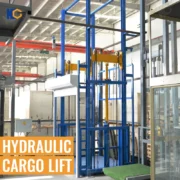
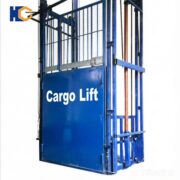
Guide rail cargo lifts are widely used where forklifts cannot efficiently transport goods between floors.
Typical Specifications
| Item | Value |
| Capacity | 500–10,000 kg |
| Travel Height | 3–20 m |
| Speed | 3–12 m/min |
| Drive System | Hydraulic |
Price Range
- Small models: $8,000–$15,000
- Medium models: $15,000–$40,000
- Large models: $40,000–$80,000+
Applications
- Warehouses
- Industrial workshops
- Logistics centers
- Auto repair facilities
Freight Elevator Cost
Freight elevators are designed for heavy-duty commercial and industrial use.
Typical Capacities
- 1 Ton
- 2 Tons
- 3 Tons
- 5 Tons
- 10 Tons
Price Range
| Capacity | Cost |
| 1 Ton | $20,000–$40,000 |
| 2 Tons | $30,000–$60,000 |
| 5 Tons | $50,000–$100,000 |
| 10 Tons | $80,000–$150,000+ |
Freight elevators typically include:
- Fully enclosed cabins
- Automatic doors
- Advanced safety systems
- Multi-floor operation
Scissor Cargo Lift Cost
Scissor lifts are commonly used for loading docks and material positioning.
Specifications
- Capacity: 500–20,000 kg
- Lift height: 1–12 m
- Indoor and outdoor applications
Price Range
| Capacity | Price |
| 500 kg | $3,000–$6,000 |
| 1 Ton | $4,000–$10,000 |
| 5 Tons | $10,000–$25,000 |
| 10 Tons | $20,000–$40,000 |
Advantages
- Compact design
- Easy operation
- High stability
Limitations
- Lower travel heights
- Limited multi-floor applications
Cargo Lift Installation Cost
Many buyers focus on equipment pricing while overlooking installation expenses.
Installation may include:
- Foundation work
- Pit construction
- Steel structure fabrication
- Electrical wiring
- Hydraulic system setup
- Testing and commissioning
Typical installation costs:
| Lift Type | Installation Cost |
| Small Lift | $1,000–$3,000 |
| Medium Lift | $3,000–$10,000 |
| Large Lift | $10,000–$50,000+ |
Installation can represent 15%–40% of total project cost.
New vs Used Cargo Lift Cost
New Cargo Lift
Advantages:
- Manufacturer warranty
- Latest safety technology
- Longer service life
- Lower maintenance
Typical cost:
$3,000–$200,000+
Used Cargo Lift
Advantages:
- Lower purchase price
- Faster return on investment
Typical savings:
20%–60%
Before purchasing used equipment, inspect:
- Hydraulic cylinders
- Pumps
- Control systems
- Guide rails
- Structural welds
- Safety locks
A poorly maintained used lift can become more expensive than a new one due to repairs.
Competitor Comparison: Cargo Lift vs Freight Elevator
Many businesses compare cargo lifts and freight elevators before investing.
| Feature | Cargo Lift | Freight Elevator |
| Cost | Lower | Higher |
| Installation | Easier | More Complex |
| Speed | Moderate | Faster |
| Capacity | Excellent | Excellent |
| Cabin Enclosure | Optional | Standard |
| Maintenance | Lower | Higher |
Cargo lifts are generally more economical for industrial facilities focused solely on goods transportation.
Competitor Comparison: Cargo Lift vs Forklift
Forklift
Advantages:
- Mobile operation
- Flexible movement
Disadvantages:
- Requires trained operators
- Limited vertical transport
- Safety concerns on ramps
Cargo Lift
Advantages:
- Permanent vertical transport solution
- Reduced labor costs
- Improved safety
Disadvantages:
- Fixed installation
For facilities requiring frequent inter-floor transport, cargo lifts are usually more efficient.
Competitor Comparison: Cargo Lift vs Conveyor System
| Feature | Cargo Lift | Conveyor |
| Vertical Movement | Excellent | Limited |
| Installation Cost | Moderate | High |
| Flexibility | High | Low |
| Space Requirement | Small | Large |
Conveyors work best for continuous material flow, while cargo lifts are ideal for vertical transportation.
Operating and Maintenance Costs
Annual operating expenses should be considered before making a purchase.
Electricity Consumption
Hydraulic cargo lifts generally consume:
- 2–15 kW depending on capacity
Electricity costs are relatively low compared with labor savings.
Annual Maintenance
Typical maintenance expenses:
| Lift Type | Annual Cost |
| Small Cargo Lift | $200–$500 |
| Medium Cargo Lift | $500–$1,500 |
| Large Freight Elevator | $2,000–$10,000 |
Routine maintenance includes:
- Hydraulic oil replacement
- Lubrication
- Safety inspections
- Electrical testing
How to Choose the Right Cargo Lift
Before purchasing, consider the following questions:
What Is the Maximum Load?
Always select a lift with at least 20% additional capacity above normal operating requirements.
What Is the Required Travel Height?
Choose a lift designed specifically for your building’s floor-to-floor distance.
Indoor or Outdoor Installation?
Outdoor lifts require:
- Weather-resistant controls
- Corrosion protection
- Waterproof electrical systems
How Frequently Will It Be Used?
High-cycle operations often justify investing in premium components and heavy-duty systems.
What Is Your Budget?
General recommendations:
| Budget | Recommended Lift |
| Under $10,000 | Small Hydraulic Cargo Lift |
| $10,000–$30,000 | Guide Rail Cargo Lift |
| $30,000–$80,000 | Heavy-Duty Cargo Lift |
| $80,000+ | Freight Elevator System |
Future Trends in Cargo Lift Technology
The cargo lift industry continues evolving with new technologies.
Emerging trends include:
- Smart monitoring systems
- IoT connectivity
- Remote diagnostics
- Energy-efficient hydraulic systems
- Variable frequency drives
- Automated loading integration
- Predictive maintenance software
These innovations help reduce operating costs and improve reliability.
Conclusion
So, how much does a cargo lift cost? The answer depends on capacity, lifting height, platform size, installation conditions, and customization requirements. Small cargo lifts may cost as little as $3,000, while heavy-duty industrial freight elevators can exceed $150,000.
For most warehouses, factories, and commercial buildings, hydraulic guide-rail cargo lifts offer the best balance of affordability, reliability, and performance. Businesses requiring high-capacity or multi-floor transportation may benefit from investing in larger freight elevator systems.
By evaluating your load requirements, lifting height, operating environment, and long-term business goals, you can select a cargo lift that delivers maximum productivity, safety, and return on investment for many years.
If you are planning to purchase a cargo lift, consider our cargo lift factory. Our prices are definitely much lower than the market average. Contact us now!

Jnhclift (Huichuang Lift), based in Jinan, China, is a professional manufacturer of scissor lifts, home elevators, and lift platforms. With our own dedicated factory, we deliver high-quality, reliable lifting solutions tailored to meet diverse industrial and residential needs.
 Room 203, Second Floor, Building 8, Phase Ⅱ, Zhizao Town, Jibei Street, Jiyang District, Jinan City, Shandong Province
 +8615628811021
 admin@jnhclift.com