Wheelchair Lifts for Public Buildings
- Lift height: 0-10m
- Load capacity: 250kg-350kg
- Brand: HUICHUANG(JNHC lift)
- Price: $2,400 – $6,500
- Customization: YES
- Manual: YES
 +8615628811021
 admin@jnhclift.com
1. What’s the wheelchair lifts:
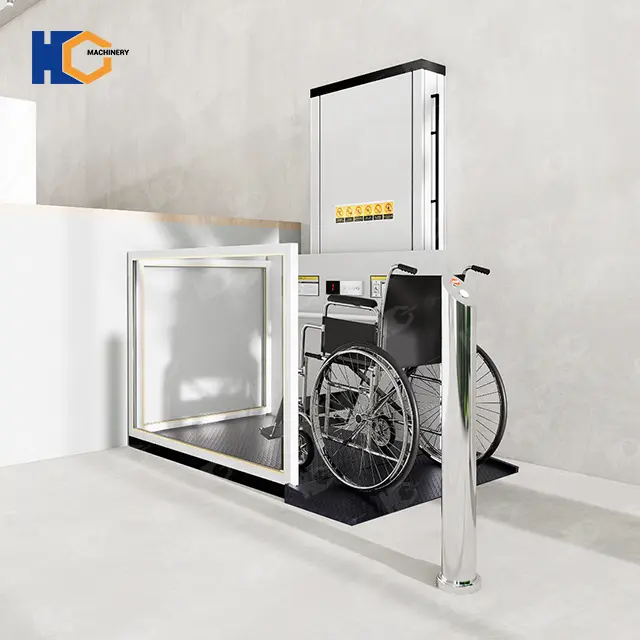
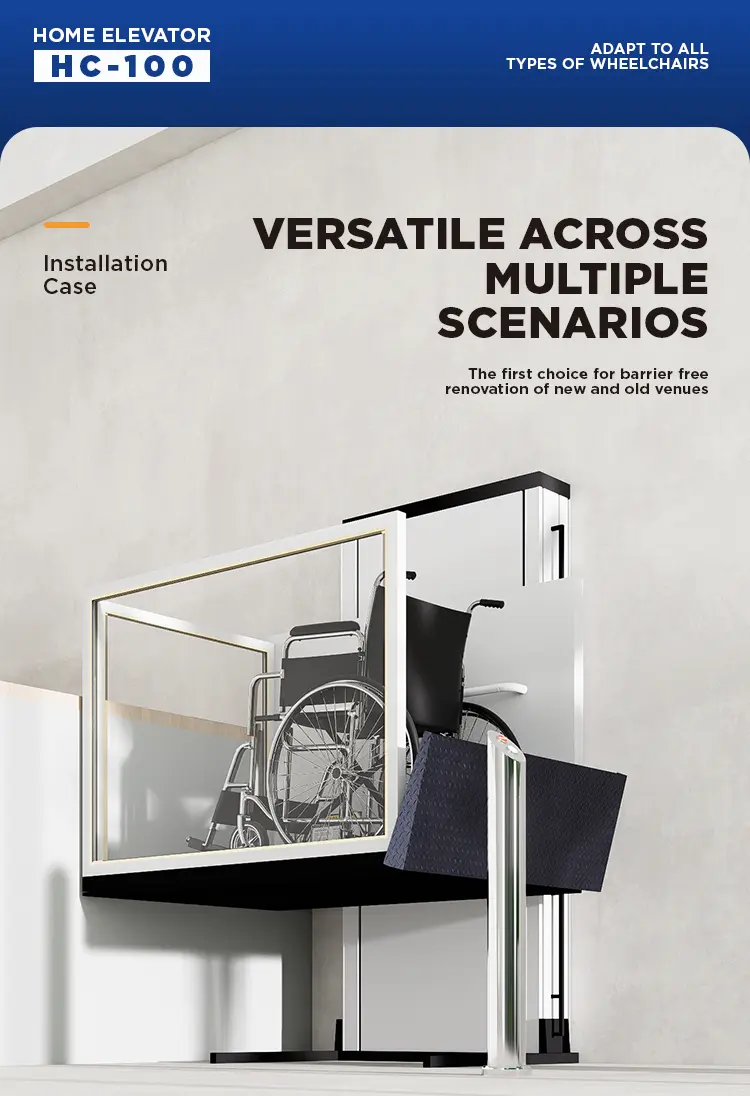
Wheelchair lifts are specially designed and manufactured for disabled people. In order to facilitate the travel and sightseeing of disabled people, it can be used in communities, hospitals, schools, hotels, public places and other places. The wheelchair electric lift is installed next to the escalator in the tourist elevator passage.
The wheelchair lifts for public buildings. People with disabilities or mobility impairments only need to press a button, and the machine will start to work and lift automatically.
By the way, not only wheelchair lifts for public buildings, that can also be used in our own homes.
2. Wheelchair lifts parameter:
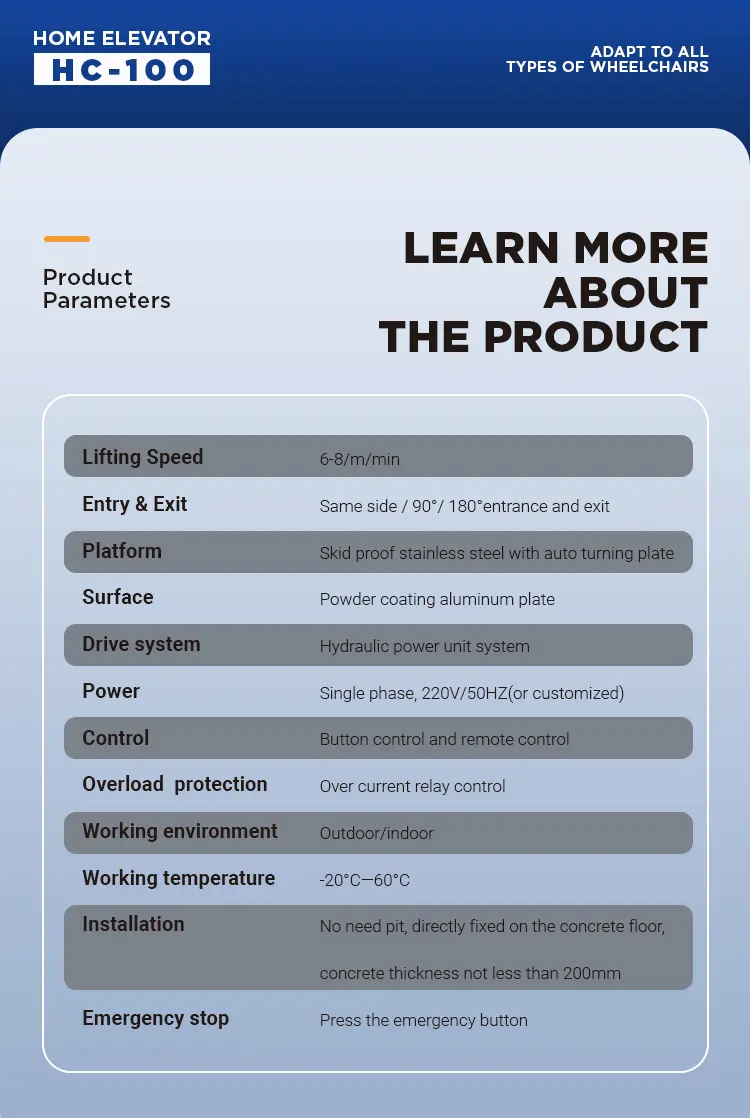
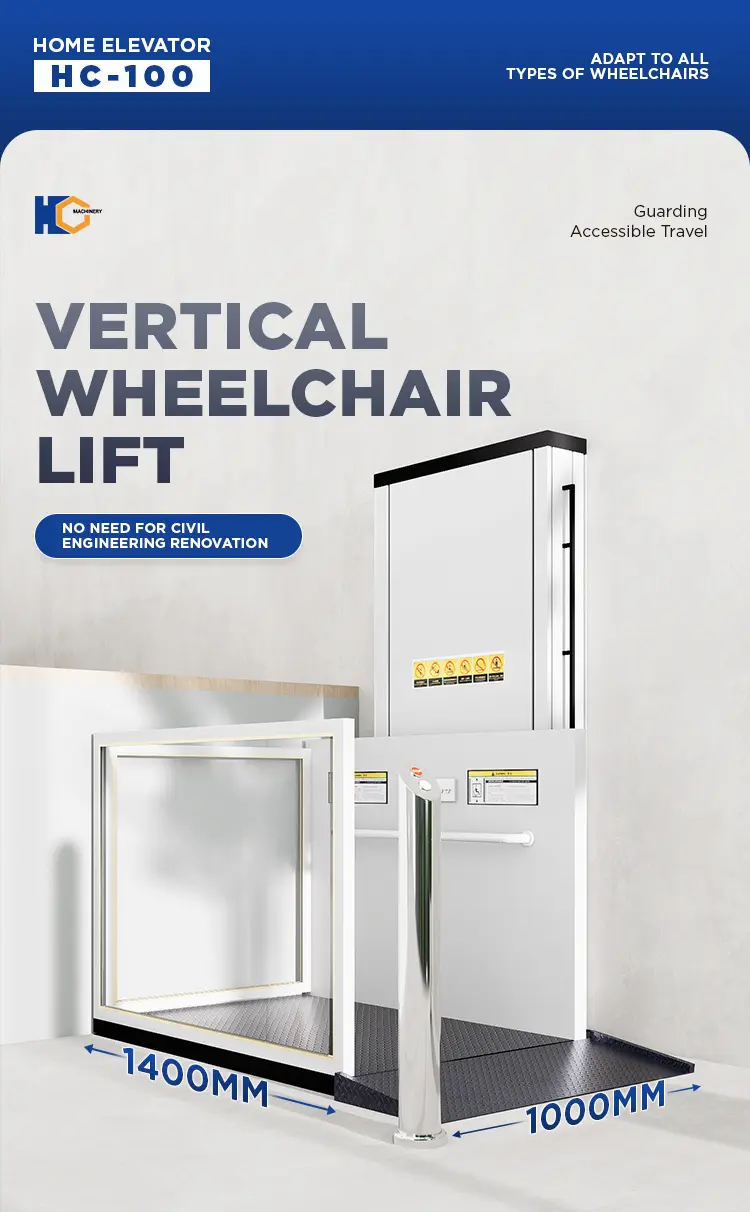
These data are general data for Wheelchair lifts for public buildings. If your target building such as supermarket, shopping mall, restaurant has special design requirements, please give us the specifications, our team will design and manufacture Wheelchair lifts according to the requirements.
3. Wheelchair lifts price range:
Wheelchair lifts is a customized product, please tell me what height that you need, and what’s the size of installation space, then we check the price for you.
Our factory-direct wheelchair lifts range in price from $2,400 to $6,500, eliminating middlemen and guaranteeing quality.
Because each Wheelchair lift has different customized specifications, functions, and accessories, the price will be slightly different. Welcome to contact us.
4. Wheelchair lifts warranty:
(1). One year free warranty, we undertake all charges. Apart from man-made fault.
(2). Free spare parts in 3 years, but after one year customer should undertake freight cost. Apart from man-made fault.
(3). Lifetime technical support.
5. Wheelchair lifts working principle:
The wheelchair lifts work through electricity, and the working principle is hydraulic, after the power supplied to the motor, the motor will stretch the oil cylinder, and the oil cylinder will make the lifting arm by lifting, thereby raising the platform.
Wheelchair lifts for public buildings, if you are interested in this machine, please contact us freely, and we will make the detailed plan for you.
6.Safety Measures for Wheelchair Lifts in Public Buildings
Wheelchair lifts for public buildings must adhere to strict safety standards to ensure accessibility and user protection. Below are the key safety measures and corresponding components commonly implemented:
1. Safety Sensors
Wheelchair lifts are equipped with pressure-sensitive safety sensors to detect obstructions. If an object or person is detected, the lift will automatically stop, preventing accidents. These sensors are typically located on the platform edges and under the lift.
2. Emergency Stop Button
An emergency stop button allows the user or a bystander to halt the lift immediately in case of malfunction or distress. This feature is usually positioned within easy reach on the lift’s control panel.
3. Safety Barrier or Gate
To prevent users from accidentally falling off, wheelchair lifts come with safety barriers or gates that automatically close when the lift is in motion. These barriers secure the wheelchair and its occupant, ensuring safe transport between floors.
4. Non-Slip Platform
The lift’s platform is made from non-slip material to provide traction, reducing the risk of wheelchairs slipping or tipping over during movement.
5. Backup Power System
In case of power outages, many wheelchair lifts include a battery backup system, ensuring that the lift remains operational, allowing users to safely exit the platform.
6. Manual Lowering Mechanism
In the event of a power failure, a manual lowering mechanism allows the lift to be lowered safely, providing an added layer of security.
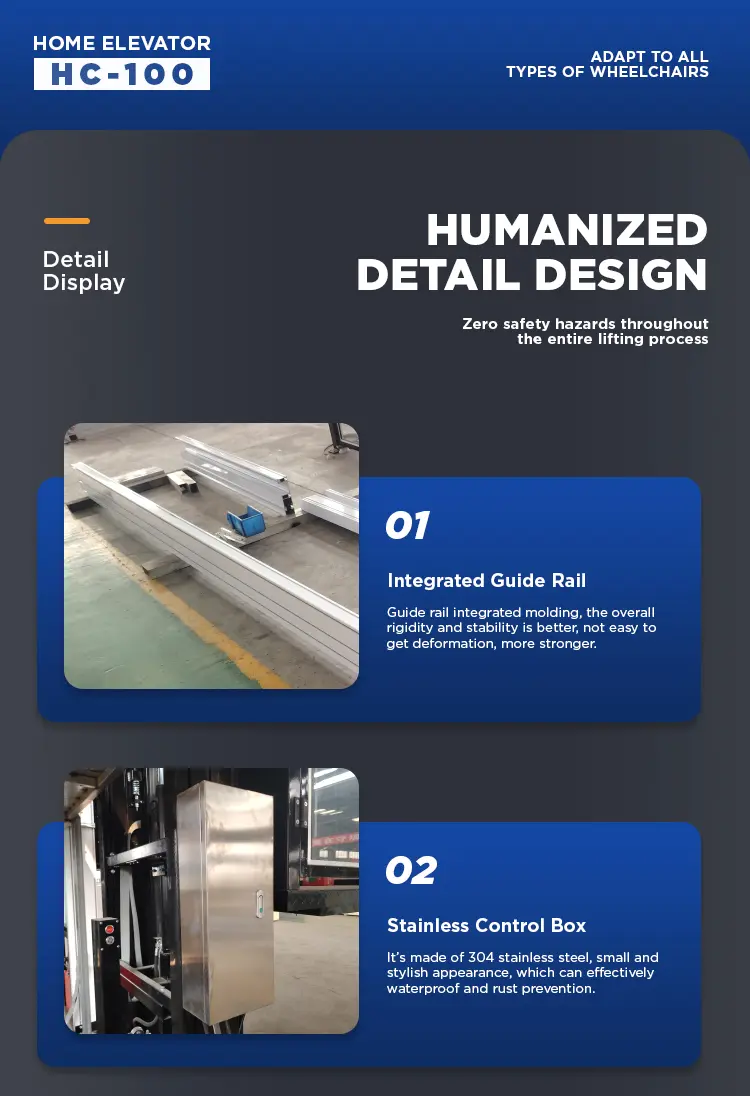
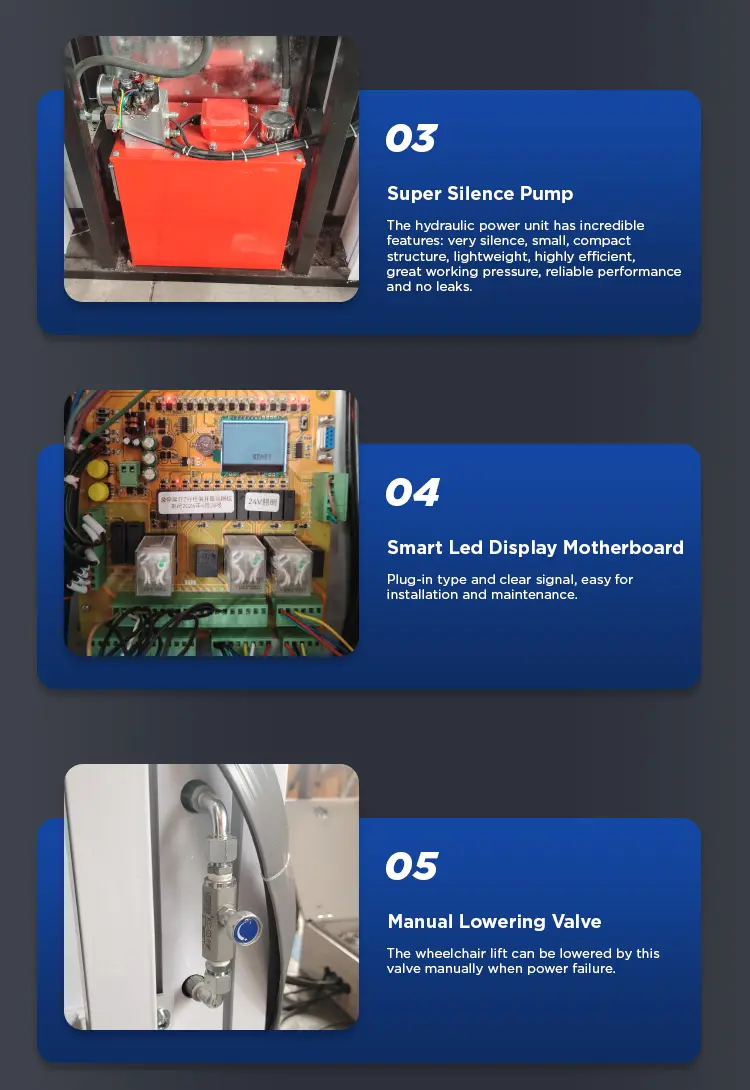
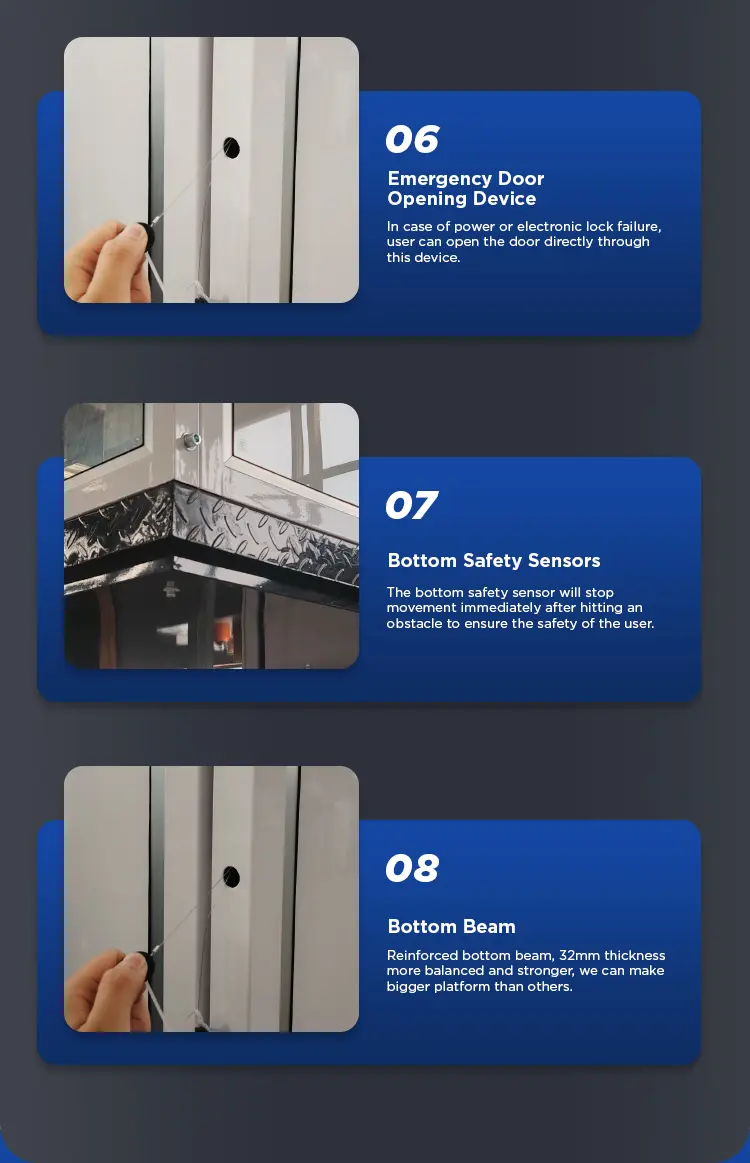
These features ensure that wheelchair lifts in public buildings remain compliant with safety regulations while providing a secure and reliable experience for users.
Detailed Analysis of Installation Process, Site Requirements, and Civil Works Coordination
Pre-Installation Site Survey and Assessment
Before any equipment arrives, a qualified engineering team conducts a thorough site survey. This involves precise measurements of the available installation space, evaluation of structural load capacity, identification of nearby electrical sources, and assessment of environmental factors (e.g., exposure to weather if installed outdoors). The goal is to ensure the selected lift model aligns perfectly with the physical and operational constraints of the location.
Civil Works and Structural Preparations
Successful integration often requires coordinated civil works. Key preparations include:
- Excavating a pit (if required by the lift model) to a specified depth.
- Ensuring adequate overhead clearance—typically the total lifting height plus an additional 1.05 meters to accommodate guide rails and drive mechanisms.
- Reinforcing walls or floors to support dynamic loads during operation.
- Installing anchor bolts or embedded steel plates at precisely marked locations to secure the lift structure.
Step-by-Step Installation and Commissioning
The installation proceeds in a logical sequence:
- Guide Rail Mounting: Vertical rails are fixed and meticulously aligned for smooth travel.
- Platform and Drive Assembly: The platform, hydraulic cylinder (or mechanical actuator), and lifting arms are assembled and connected.
- Electrical Integration: Wiring for the control panel, safety sensors, motor, and emergency systems is completed.
- System Testing and Calibration: The lift undergoes functional tests to verify speed (0.3–0.4 m/s), leveling accuracy, and responsiveness of all safety features.
Final Inspection and Handover
Upon completion, a formal acceptance process is conducted. This includes operational demonstrations, safety protocol validation (e.g., emergency stop, obstruction detection), and documentation review. Only after all criteria are met is the system officially handed over to the client.
Comprehensive Maintenance Plan and Common Troubleshooting
Daily and Weekly User Checks
Facility managers or designated staff should perform routine visual and functional checks:
- Clean the non-slip platform surface to prevent debris buildup.
- Test the emergency stop button to ensure immediate halting.
- Verify that safety edge sensors trigger correctly when obstructed.
- Inspect for unusual noises, oil leaks, or visible damage.
Professional Preventive Maintenance Schedule
To ensure longevity and reliability, schedule professional servicing:
- Every 6 months: Inspect hydraulic fluid levels and condition; check electrical connections for corrosion or wear.
- Annually: Replace hydraulic oil if needed; lubricate all moving joints and bearings; torque-check all structural fasteners; validate alignment of guide rails.
Maximizing Equipment Lifespan
Proper use significantly extends service life. Users should avoid overloading beyond the rated capacity (250–350 kg), refrain from using the lift during power outages unless equipped with a backup system, and report anomalies promptly.
Basic Troubleshooting Guidance
For minor issues:
- Slow or jerky movement: May indicate low hydraulic fluid or insufficient lubrication.
- Failure to start: Check main power supply, circuit breakers, and whether the emergency stop is engaged.
- Unusual noises: Could signal loose components or worn bearings.
Important: Any issue involving hydraulics, electrical control boards, or structural integrity must be addressed exclusively by certified technicians to maintain safety and warranty validity.
Expanded Application Scenarios with Case Studies
Niche Applications Beyond Conventional Settings
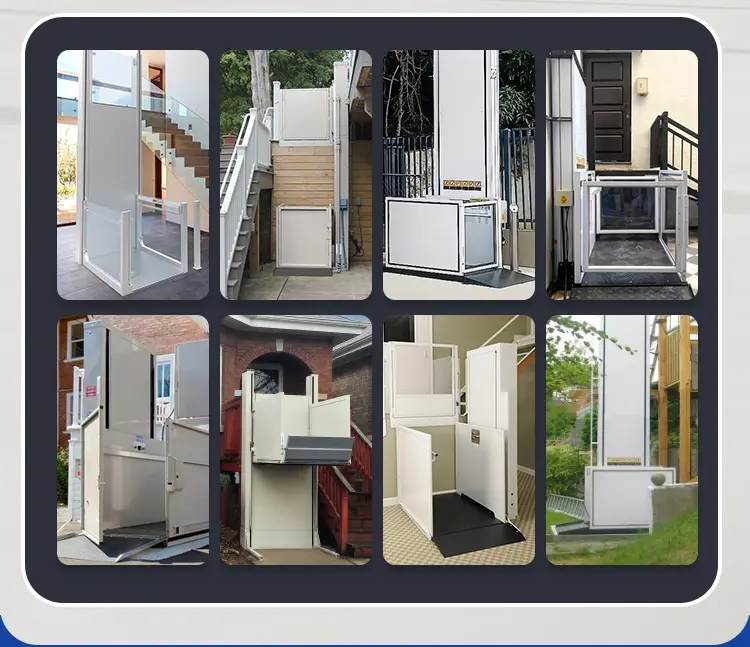
Wheelchair lifts offer elegant solutions in complex environments:
- Historic Preservation Sites: Where installing elevators would damage architectural heritage, compact lifts can be discreetly integrated into stairwells or courtyards.
- Transportation Interchanges: Provide direct vertical links between subway platforms, bus terminals, or airport concourses.
- Hospitality Venues: Enable access to rooftop bars, mezzanine dining areas, or garden terraces in multi-level restaurants and hotels.
- Cultural Institutions: Ensure full accessibility to all galleries in museums or reading rooms in libraries, supporting universal access to knowledge and culture.
In-Depth Comparative Analysis with Other Accessibility Solutions
Wheelchair Lift vs. Access Ramp
- Ramps: Require significant horizontal run (e.g., 12 feet of ramp per 1 foot of rise), consume valuable floor space, and become hazardous when wet, icy, or covered in snow.
- Lifts: Offer a vertical solution with a minimal footprint, operate safely in all indoor conditions, and provide consistent, effortless access regardless of weather.
Wheelchair Lift vs. Traditional Passenger Elevator
- Elevators: Ideal for high-rise buildings but involve high costs ($20,000+), long lead times (3–6 months), and extensive structural modifications (machine room, deep pit, large shaft).
- Lifts: Cost-effective ($2,300–$6,800), installable in days or weeks, and require minimal space—making them perfect for low-rise (<10.5m) retrofits or budget-conscious projects.
Wheelchair Lift vs. Stair Lift
- Stair Lifts: Designed for individual seated users; cannot accommodate wheelchairs, companions, or cargo; limited to fixed stair geometries.
- Platform Lifts: Allow users to remain in their own wheelchairs; support higher payloads (250–350 kg); serve multiple purposes (e.g., moving equipment or luggage); and offer greater flexibility in placement and user experience.
If you are planning to purchase Wheelchair lifts for public buildings and still have concerns and doubts, please contact us.
Frequently Asked Questions (FAQ)
Q1: Are wheelchair lifts suitable for outdoor installation?
Yes, many models—including those from Huichuang Lift—can be installed outdoors. However, they must be specifically designed or customized with weather-resistant materials (e.g., galvanized steel, stainless-steel components, and sealed electrical systems) to withstand rain, snow, UV exposure, and temperature fluctuations. Proper sheltering (e.g., a canopy) is also recommended to enhance longevity and user comfort.
Q2: How long does a typical installation take?
For standard configurations in prepared spaces, installation usually takes 3 to 7 working days. This includes mounting the structure, connecting hydraulic/electrical systems, and performing safety tests. Complex custom installations or sites requiring significant civil work may take longer.
Q3: What is the difference between a vertical platform lift (VPL) and an inclined platform lift?
A Vertical Platform Lift (VPL) moves straight up and down, like a small elevator, and is ideal for level changes at landings or through floor openings. An Inclined Platform Lift travels along a staircase on a rail and is used when space for a vertical shaft isn’t available. VPLs generally offer smoother operation, higher load capacity, and better compliance with accessibility standards like ADA and GB 55019.
Q4: Can the lift operate during a power outage?
Standard models require electricity to function. However, optional emergency backup power systems (e.g., battery packs) can be installed to allow one or more safe descents during outages—critical for user safety in public buildings. Always confirm this feature when specifying your system.
Q5: Is a building permit required for installation?
In most jurisdictions—especially in China, the U.S., and the EU—a building or electrical permit is required for installing permanent accessibility equipment in public or commercial buildings. Local authorities will review plans for compliance with fire codes, structural safety, and accessibility regulations (e.g., GB 55019 in China). Your supplier should assist with technical documentation for permitting.
Q6: How noisy are these lifts during operation?
Modern hydraulic wheelchair lifts operate quietly—typically below 60 decibels, comparable to normal conversation levels. This makes them suitable for noise-sensitive environments like libraries, hospitals, and residential care facilities. Mechanical (screw-driven) models may produce slightly more audible operation but are still generally unobtrusive.
Q7: Can I customize the appearance to match my building’s design?
Absolutely. While white is the standard color, many manufacturers offer custom finishes, including powder-coated colors, wood veneers, glass panels, or stainless-steel cladding. The platform, handrails, and enclosure can often be tailored to blend seamlessly with architectural aesthetics—particularly valuable in high-end retail, hospitality, or heritage settings.
Q8: What happens if someone gets trapped on the lift?
All compliant lifts include multiple safety redundancies:
- An emergency stop button to halt movement instantly.
- A two-way intercom or alarm to contact building staff.
- Manual lowering valves (accessible only to trained personnel) to safely lower the platform during power failure.
Regular maintenance ensures these systems remain fully functional.
 Room 203, Second Floor, Building 8, Phase Ⅱ, Zhizao Town, Jibei Street, Jiyang District, Jinan City, Shandong Province