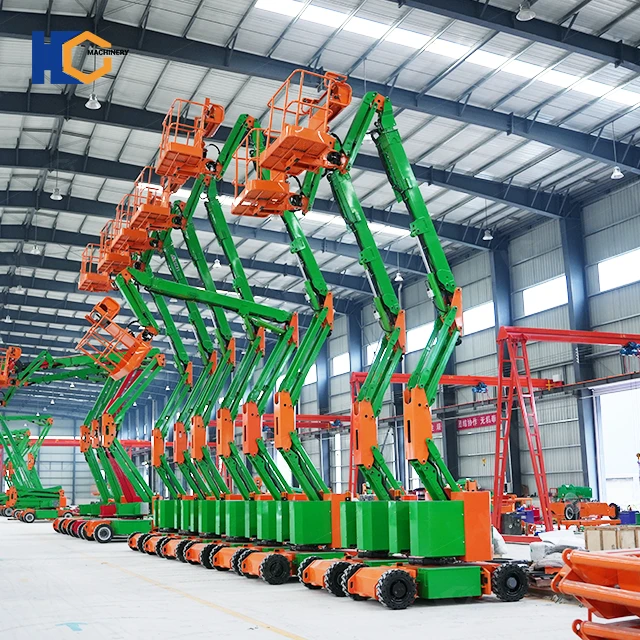
Self-Propelled Cherry Picker Telescopic Boom Lift in Singapore
- Lift height: 8-22m(customizable)
- Brand: HUICHUANG(JNHC lift)
- Price: $20,000 – $69,000
- Customization: YES
- Manual: YES
 +8615628811021
 admin@jnhclift.com
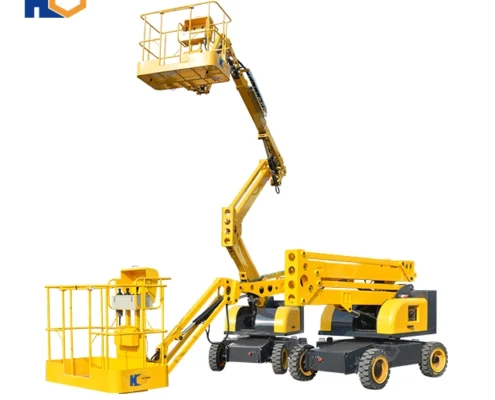
In Singapore’s diverse industrial landscape, the self-propelled cherry picker telescopic boom lift plays a crucial role. This innovative piece of equipment is known for its unique features and numerous benefits.
The self-propelled cherry picker telescopic boom lift is a highly versatile machine. The term “self-propelled” indicates that it is capable of moving on its own, without the need for external pushing or pulling. This feature makes it extremely convenient for use in various industries across Singapore.
Industries in Singapore range from construction to maintenance and even event management. In the construction industry, these lifts are essential for reaching heights safely and efficiently, enabling workers to perform tasks such as installing fixtures, painting, and repairing. In maintenance work, they allow for easy access to hard-to-reach areas of buildings and infrastructure for inspection and repair. Event organizers also find these lifts useful for setting up stages and decorations at heights.
With its advanced design and functionality, the self-propelled cherry picker telescopic boom lift offers several benefits. It provides a stable platform for workers, ensuring their safety while working at heights. Its telescopic boom allows for a wide range of reach, enabling access to different heights and distances. Additionally, the lift is easy to operate, reducing the training time and effort required for workers.
In conclusion, the self-propelled cherry picker telescopic boom lift is an indispensable tool for various industries in Singapore, offering unique features and significant benefits that enhance productivity and safety.
Dimensions
| Model | Power | Platform height (m) | Load capacity (kg) | Platform size (m) | Overall size (m) | Weight (kg) |
| 8-200X | battery | 8 | 200 | 1.53*0.78m | 5.55*1.65*2.22m | 5440 |
| 8-200Q | diesel | 8 | 200 | 1.53*0.78m | 5.55*1.65*2.26m | 5400 |
| 10-200X | battery | 10 | 200 | 1.53*0.78m | 5.8*1.65*2.22m | 5550 |
| 10-200Q | diesel | 10 | 200 | 1.53*0.78m | 5.8*1.65*2.26m | 5500 |
| 12-200X | battery | 12 | 200 | 1.53*0.78m | 6.4*1.78*2.3m | 6100 |
| 12-200Q | diesel | 12 | 200 | 1.53*0.78m | 6.4*1.78*2.3m | 6090 |
| 14-200X | battery | 14 | 200 | 1.53*0.78m | 7.03*1.78*2.3m | 6500 |
| 14-200Q | diesel | 14 | 200 | 1.53*0.78m | 7.03*1.78*2.3m | 6490 |
| 16-200X | battery | 16 | 200 | 1.88*0.78m | 7.4*2.0*2.25m | 7780 |
| 16-200Q | diesel | 16 | 200 | 1.88*0.78m | 7.4*2.0*2.25m | 7720 |
| 18-200X | battery | 18 | 200 | 1.88*0.78m | 8.7*2.2*2.5m | 9850 |
| 18-200Q | diesel | 18 | 200 | 1.88*0.78m | 8.7*2.2*2.5m | 9670 |
| 20-200X | battery | 20 | 200 | 1.88*0.78m | 9.2*2.2*2.5m | 10350 |
| 20-200Q | diesel | 20 | 200 | 1.88*0.78m | 9.2*2.2*2.5m | 10200 |
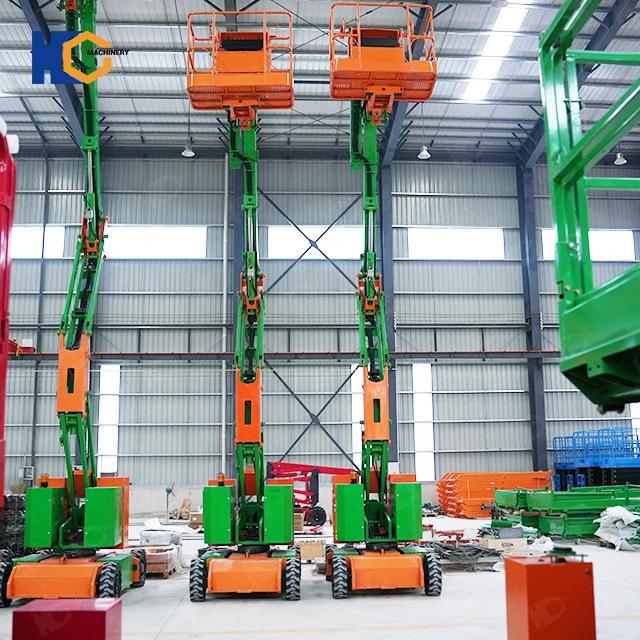
The self-propelled cherry picker telescopic boom lift has specific overall dimensions that contribute to its usability in different settings.
These dimensions affect usability in several ways. The compact length and width make it maneuverable in confined areas, such as construction sites with limited space or indoor facilities. The height is crucial to ensure it can be transported easily on trucks or stored in warehouses without requiring excessive clearance. Overall, these dimensions make the cherry picker a practical choice for a wide range of applications in Singapore.
Boom Dimensions
The telescopic boom of the self-propelled cherry picker is a key feature that determines its working height and range. This significant reach allows workers to access areas at great heights, making it ideal for tasks such as high-rise construction, building maintenance, and event setup.
The boom’s reach determines the equipment’s working height and range. With its extended length, the cherry picker can reach heights that would otherwise be difficult or impossible to access. This enables workers to perform tasks safely and efficiently, without the need for scaffolding or other cumbersome access methods. The ability to adjust the boom length also provides flexibility in different work scenarios, allowing for precise positioning and access to specific areas.
Technical Specifications
| Item | Specification | |||||
| Model | THZB-10-200X | THZB-12-200X | THZB-14-200X | THZB-16-200X | THZB-18-200X | THZB-20-200X |
| Maximum platform height | 10m | 12m | 14m | 16m | 18m | 20m |
| Maximum working height | 12m | 14m | 16m | 18m | 20m | 22m |
| Maximum horizontal working radius | 6m | 6.9m | 7.9m | 8.9m | 10.6m | 11.7m |
| Load capacity | 200kg | |||||
| Diesel power | Diesel engine Yunnei 490 Quadruple cylinder engine, 35kw | |||||
| Battery power | 2V×24/250AH | 2V×24/330AH | ||||
| Charger | Charger: 48V/30A | |||||
| Moving motor | AC4.5kw/48V | AC5.5kw/48V | 6.5kw/DC48V | |||
| Lifting motor | 4kw/DC48v | 4.5kw/DC48v | 5.5kw/DC48V | |||
| Length | 5.76m | 6.4m | 7.02m | 7.38m | 8.35m | 8.86m |
| Width | 1.67m | 1.78m | 1.78m | 2.09m | 2.25m | 2.25m |
| Height | 2.22m | 2.3m | 2.3m | 2.3m | 2.5m | 2.5m |
| Wheelbase | 1.44m | 1.55m | 1.55m | 1.8m | 1.83m | 1.83m |
| Ground clearance | 0.48m | 0.3m | 0.22m | 0.15m | 0.1m | 0.1m |
| Platform size | 1.53*0.78m | 1.88*0.78m | ||||
| Turning radius of inner wheel | 2.25m | 2.25m | 2.25m | 1.85m | 2.2m | 2.2m |
| Turning radius of outer wheel | 4.4m | 4.4m | 4.4m | 4.55m | 5.2m | 5.2m |
| Walking speed in closed state | 4km/h | |||||
| Walking speed in raised state | ≤0.8km/h | |||||
| Arm swing | ≤0.5% | |||||
| Maximum climbing gradient | 25% | |||||
| Turntable rotation | Battery power: 355° Diesel power: 360° | |||||
| Platform rotation(Optional ) | ±80° | ±80° | ±80° | ±80° | ±80° | ±80° |
| Weight | 5300kg | 6100kg | 6600kg | 7200kg | 9200kg | 11000kg |
| System voltage | 24v | |||||
| Drive steering | Rear-wheel drive Front-wheel steering | |||||
Power Source
The self-propelled cherry picker telescopic boom lift in Singapore can be powered by electricity or diesel. Electric-powered models offer several advantages. They are quieter during operation, reducing noise pollution on the worksite. Additionally, they produce zero emissions, making them more environmentally friendly. Electric lifts are also easier to maintain because they have fewer moving parts than diesel-powered lifts. However, electric models may have limited range and require access to a power source.
Diesel-powered cherry pickers, on the other hand, offer greater mobility and can be used in areas where there is no access to electricity. They have a longer operating time without the need for recharging. However, diesel-powered lifts produce emissions and are generally louder, which can be a concern in some work environments.
| Comparison Criteria | Electric Power System | Diesel Power System |
|---|---|---|
| Noise Level | Low (<65 dB); suitable for indoor use and residential areas | High (80–90+ dB); may violate noise regulations at night or in sensitive zones |
| Emissions | Zero tailpipe emissions (no CO₂, NOx, or particulates) | Produces exhaust emissions (CO₂, NOx, particulate matter); not safe for confined spaces |
| Runtime / Operating Time | 4–8 hours per charge (varies by battery type and workload) | 8–12 hours continuous operation; quick refueling |
| Maintenance Cost | Low (no oil changes, fuel filters, or exhaust systems) | Higher (requires regular oil changes, filter replacements, emission checks) |
| Ideal Applications | Indoor (malls, airports, hospitals), city centers, night work, event setups | Outdoor large-scale sites, industrial zones (e.g., Jurong Island), remote or all-day jobs |
| Environmental Compliance | Fully compliant with Singapore’s BCA Green Mark, NEA, and MOM WSH regulations | May face restrictions under carbon tax, air quality rules, or confined-space safety laws |
| Refueling / Recharging | Requires access to charging infrastructure (growing in Singapore) | Easy refueling at gas stations; fast turnaround |
| Initial Purchase Cost | Typically higher (though battery costs are decreasing) | Generally lower upfront cost |
| Total Operating Cost | Lower over time (electricity + minimal maintenance) | Higher (fuel expenses + frequent servicing) |
Lifting Capacity
The self-propelled cherry picker telescopic boom lift in Singapore has a standard lifting capacity, 200kg. Generally, these lifts can handle significant weights, making them suitable for a wide range of tasks.
In construction, it allows workers to lift heavy materials and equipment to high elevations. In maintenance work, it enables the transportation of tools and replacement parts. For event management, it can be used to hoist stage decorations and lighting equipment. Without an adequate lifting capacity, these tasks would be much more difficult and time-consuming, and in some cases, might not be possible at all.
Safety Features
The self-propelled cherry picker telescopic boom lift in Singapore is equipped with several important safety features. These include emergency stops, which can be activated quickly in case of an unexpected situation. Overload protection prevents the lift from being overloaded, ensuring its stability and the safety of the operator. Stability controls are also in place to maintain the lift’s balance, especially when extended to higher heights.
These safety features are of utmost importance in ensuring operator safety. In high-altitude work, even a small malfunction can have serious consequences. The emergency stop function allows for immediate action to prevent accidents. Overload protection ensures that the lift does not exceed its designed capacity, reducing the risk of structural failure. Stability controls help to keep the lift steady, minimizing the chance of tipping over. With these safety features in place, workers can operate the cherry picker with confidence, knowing that they are protected.
In-Depth Analysis of Typical Industry Applications
Self-propelled telescopic boom lifts are essential across key sectors in Singapore, offering safe, efficient access at height in dense urban environments.
Construction
In high-rise projects, these lifts enable precise work where scaffolding is impractical. For curtain wall installation, operators position glass panels accurately at 30+ meters using 360° rotating platforms and fine hydraulic controls. During steel structure welding, boom lifts provide stable access to beams and joints—electric models are used indoors to avoid fumes, while diesel units support outdoor tower work. They’re also vital for MEP (mechanical, electrical, plumbing) installations, allowing technicians to run ducts or cables at ceiling level without damaging finished floors.
Facility Maintenance
With Singapore’s vast building stock, routine upkeep relies heavily on aerial platforms. Air-conditioning servicing—critical in the tropical climate—involves reaching rooftop or ledge-mounted units in HDB estates and commercial towers. High-rise façade cleaning demands extended horizontal reach; telescopic booms can access recessed windows on buildings like CapitaGreen without secondary rigging. For electrical and telecom maintenance, insulated boom lifts help SP Group or telcos repair street-level transformers or fiber nodes in narrow alleys where cranes can’t operate—common in older neighborhoods like Joo Chiat.
Event Setup
Singapore’s world-class events require rapid, quiet, and safe deployment. At the F1 Night Race or concerts at The Float @ Marina Bay, crews use electric boom lifts to install lighting, speakers, and cameras overnight—minimizing noise and emissions near hotels. In venues like Singapore EXPO, compact electric models assemble multi-level exhibition booths within tight footprints during off-hours. During festive seasons, city councils and malls deploy boom lifts to hang Christmas lights, Deepavali banners, or National Day decorations on streets, trees, and atriums—ensuring zero emissions in crowded public zones.
Across all applications, the self-propelled feature—allowing drive-and-elevate operation from the platform—boosts productivity and reduces manual handling. In Singapore’s space-constrained, regulation-intensive environment, telescopic boom lifts deliver not just height access, but operational agility, safety compliance, and minimal public disruption—making them indispensable tools for modern urban operations.
In Singapore’s space-constrained, regulation-driven landscape, self-propelled telescopic boom lifts are not just tools—they are strategic enablers of productivity, safety, and environmental compliance across construction, maintenance, and event industries.
Conclusion
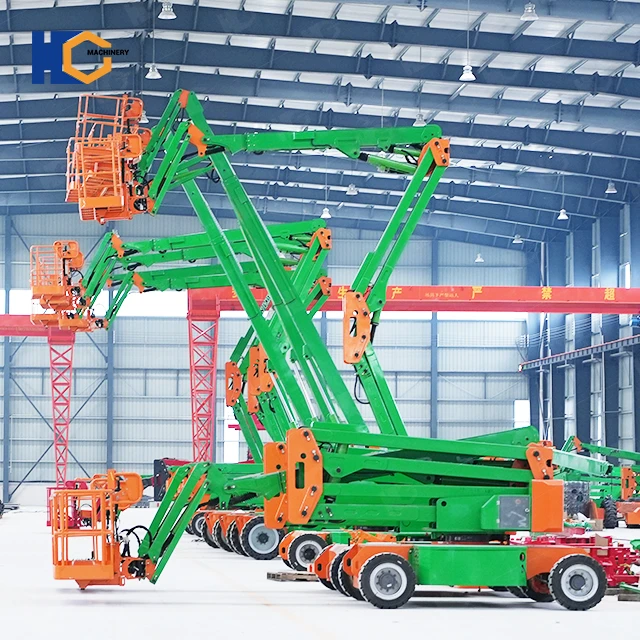
In Singapore’s high-density urban environment, self-propelled telescopic boom lifts are indispensable across construction, facility maintenance, and event production. They enable precise, safe access at height—whether installing curtain walls, servicing rooftop AC units, or rigging concert stages—while navigating tight spaces and minimizing disruption. Strict adherence to WSH regulations, mandatory operator certification, and the shift toward electric, telematics-enabled models further underscore their role as smart, compliant, and sustainable solutions.
Please feel free to contact us anytime if you have any needs.
 Room 203, Second Floor, Building 8, Phase Ⅱ, Zhizao Town, Jibei Street, Jiyang District, Jinan City, Shandong Province