
Aging in Place: Why More Homeowners Are Choosing Home Elevators
Aging in Place: Why More Homeowners Are Choosing Home Elevators
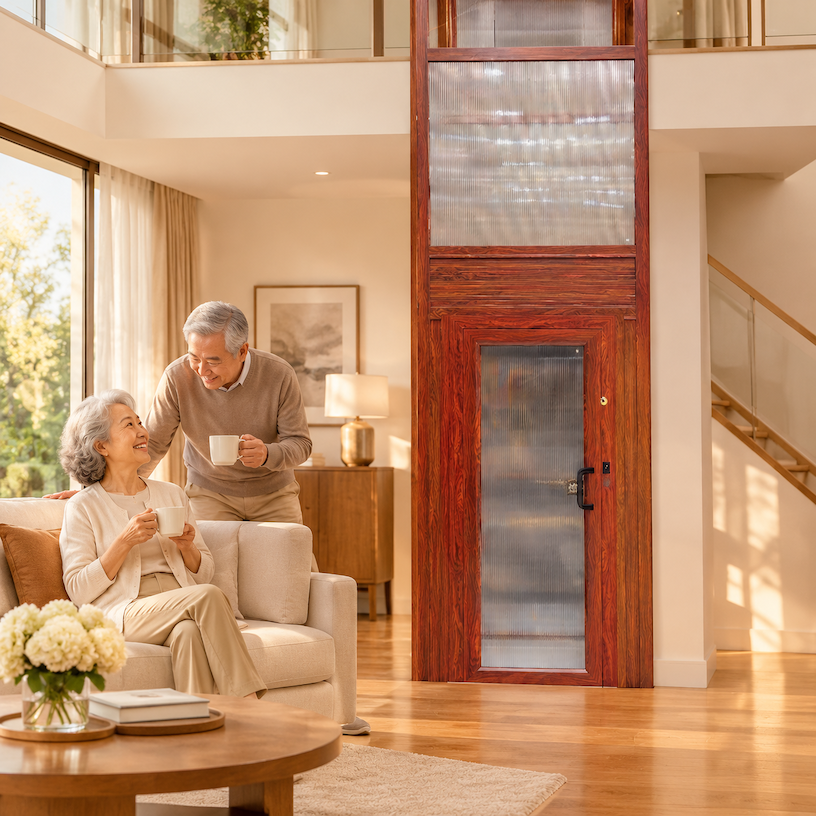
As life expectancies rise, homeowner priorities around home design are shifting. More homeowners are considering how their living spaces can support their needs not only today but also in the years ahead. This growing focus on Aging in Place — the ability to remain safely and comfortably in one’s own home as they get older — is bringing residential accessibility into the spotlight.
For homeowners living in multi-story homes, stairs can gradually become a daily challenge. What once felt like an easy trip between floors can grow more strenuous as mobility declines with age. This is one key reason more families are considering a home elevator as a practical, long-term addition to their residential spaces.
Rather than waiting until mobility becomes a serious concern, many homeowners are planning ahead and choosing home features that support long-term comfort, independence, and convenience.
What Does Aging in Place Mean for Modern Homeowners?
Aging in Place means being able to continue living in a familiar home and community as personal needs change over time. Instead of moving to a different property or making major lifestyle adjustments later, homeowners can prepare their living environments in advance.
According to AARP’s Smart Guide to Aging in Place, most older adults want to remain in their current homes for as long as possible. However, existing homes do not always provide the accessibility needed to support this goal.
Common home modifications include:
- Installing grab bars and improving bathroom accessibility
- Adding handrails and improving stairway safety
- Creating wider doorways and more accessible living spaces
- Improving lighting and reducing potential tripping hazards
- Installing a residential elevator to provide convenient access between floors
For multi-story homes, a home elevator can be a core component of a long-term accessibility plan. It helps reduce dependence on stairs and makes every level of the home easily reachable.
Why Are More Homeowners Considering Home Elevators?
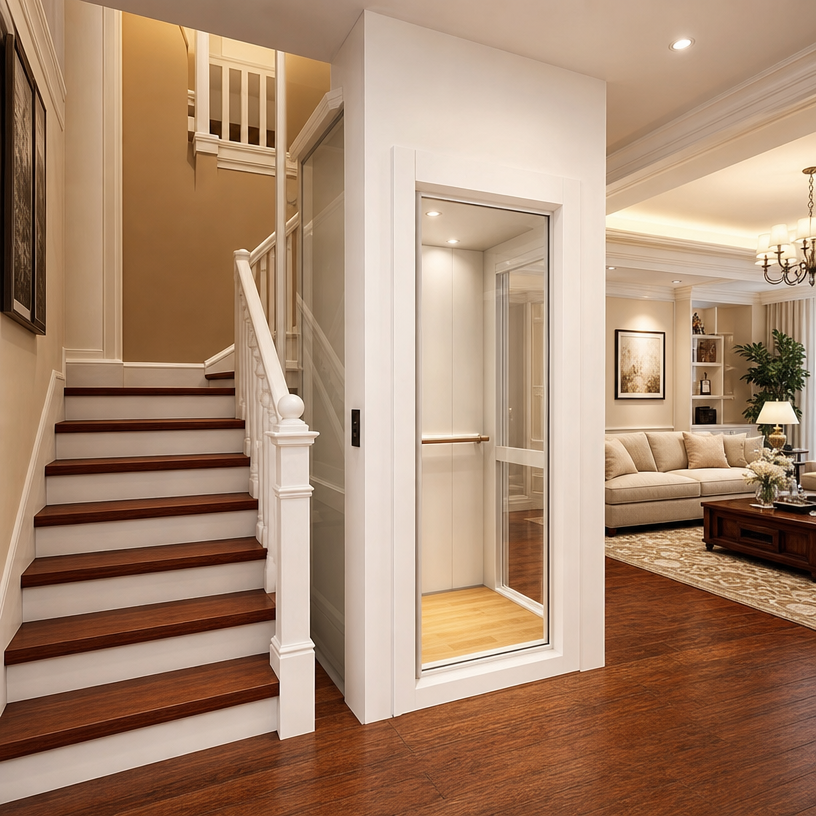
The rising popularity of home elevators isn’t driven solely by aging and mobility needs. Homeowners are also looking for greater everyday convenience, improved accessibility, and more flexible, future-ready home designs.
1. Making Multi-Story Homes More Accessible
Stairs can become difficult to navigate for older adults and people with limited mobility. Carrying groceries, moving household items, or even traveling between bedrooms and common living areas can grow increasingly inconvenient.
A home elevator provides a direct, barrier-free way to travel between floors without relying on stairs. It eases daily movement for older family members while also delivering tangible benefits for every other person in the household.
For families planning to stay in their home long-term, installing an elevator helps a multi-story property adapt seamlessly to changing needs over time.
2. Supporting Independent Living
Maintaining independence is a central pillar of Aging in Place. Many homeowners prefer to keep using their familiar bedrooms, kitchens, bathrooms, and living areas rather than relocating to a single-floor property.
A residential elevator preserves full access to all floors, allowing homeowners to continue enjoying their entire living space as they age.
It also eliminates the need for constant family or caregiver assistance with stair navigation. This added autonomy makes everyday life more comfortable and dignified for both homeowners and their families.
3. Improving Everyday Convenience for the Whole Family
A home elevator is not exclusively designed for older adults. It is equally practical for families with young children, people recovering from injuries or surgery, and anyone who finds frequent stair climbing burdensome.
For example, it simplifies transporting luggage, groceries, laundry, and other heavy household items between floors.
This makes a home elevator a high-value, practical addition for multi-generational households.
4. Preparing a Home for Future Needs
Planning ahead is one of the core principles of Aging in Place. Homeowners do not need to wait until stairs become difficult before investing in accessibility improvements.
Installing a home elevator during a renovation, or incorporating one into a new home’s initial design, helps avoid more invasive and costly structural retrofits down the line.
Early planning also provides far more flexibility when choosing elevator placement, shaft dimensions, door configurations, and cabin design.
What Type of Home Elevator Is Suitable for Aging in Place?
Choosing the right home elevator depends on building structure, available installation space, floor height, expected usage, and individual requirements. Different drive systems offer unique advantages for residential applications.
Hydraulic Home Elevators
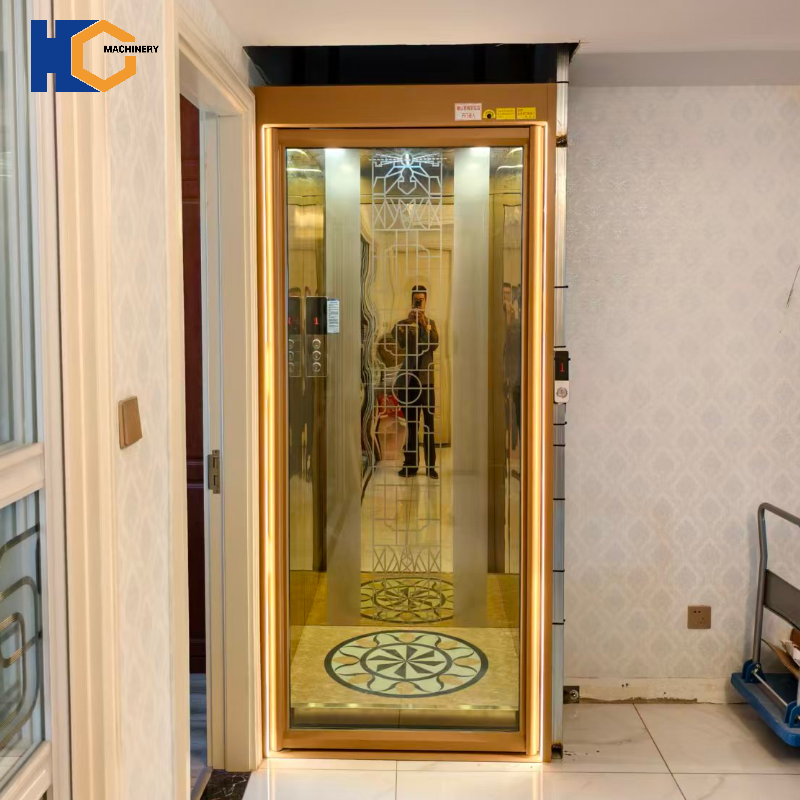
Hydraulic home elevators use a hydraulic system to deliver smooth vertical movement. They are a common and reliable option for private residences with adequate installation space and structural support.
Depending on the design, hydraulic elevators offer:
- Flexible installation configurations
- Customizable cabin dimensions
- Practical performance for low-rise residential buildings
- A range of load capacities and lifting heights
They are an ideal choice for homeowners who want a residential elevator tailored to their building layout and daily mobility needs.
Traction Home Elevators
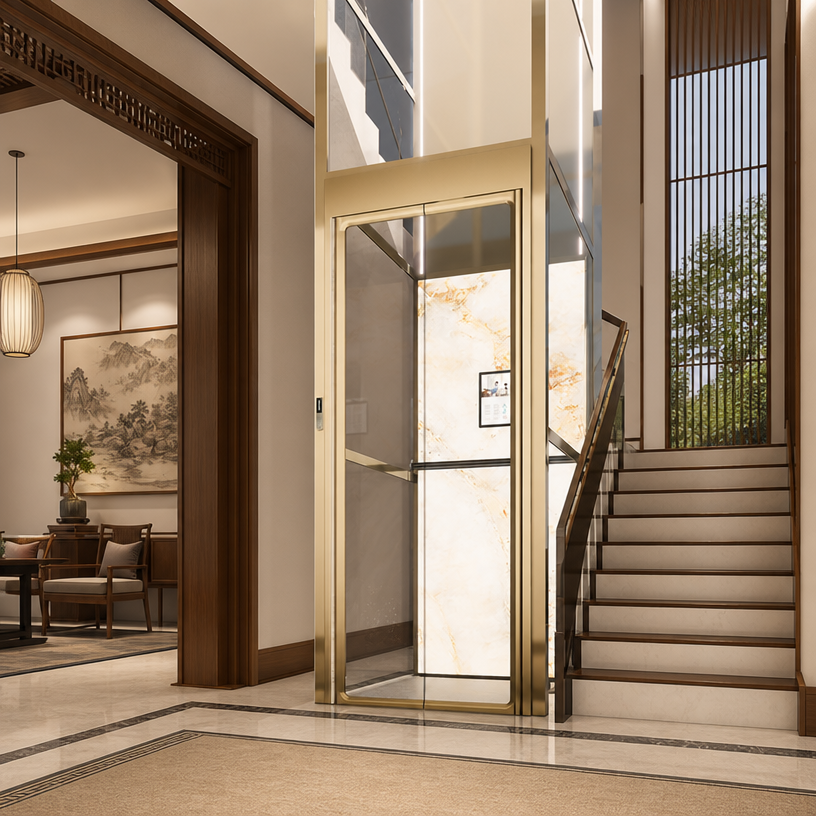
Traction home elevators use a traction machine and suspension system to move the elevator cabin between floors.
Depending on the configuration, they provide:
- Smooth, quiet, and controlled ride quality
- Flexible cabin and interior design options
- Space-saving installation profiles for compatible residential layouts
- A full range of configurations for multi-story houses and luxury residences
The most suitable system should always be selected based on actual building conditions, technical requirements, and local elevator codes and safety standards.
What Should You Consider When Choosing a Home Elevator?

For homeowners planning an elevator installation, selecting the right product involves more than comparing prices or exterior designs. Several key factors should be evaluated to ensure the elevator meets long-term residential needs.
1. Installation Space and Building Structure
Available space is one of the first factors to assess. Before selecting a home elevator, consider shaft dimensions, pit depth, overhead clearance, floor layout, and feasible installation locations.
For existing homes with limited space, a compact home elevator is often a practical solution.
2. Safety Features
Safety should be the top priority when choosing a residential elevator, especially when it will be used by older family members or people with mobility limitations.
Key safety features to look for include:
- Safety gear and speed governor systems
- Door safety sensors or light curtains
- Emergency alarm and emergency lowering functions
- Overload protection
- Emergency stop devices
- Ergonomic interior handrails for stability
- Low-threshold entry to eliminate tripping risks
Specific safety configurations should align with the elevator model and applicable local safety codes.
3. Easy-to-Use Controls
Simple, accessible controls make a home elevator far more user-friendly for daily operation.
Look for clear floor buttons, appropriately positioned control panels, and intuitive operating functions. For Aging in Place use, large, high-contrast buttons with tactile markings and accessible panel heights are particularly valuable. These small details greatly improve the user experience for people of all ages and abilities.
4. Cabin Design and Customization
A home elevator should complement the home’s interior design while providing sufficient space for its intended users.
Homeowners can choose from a variety of cabin materials, lighting arrangements, door styles, and finishes. Glass panoramic designs are also popular in modern custom homes, where an open, visually appealing interior is preferred.
5. Manufacturer Experience and After-Sales Support
A reliable home elevator manufacturer should provide clear product specifications, professional installation guidance, responsive technical support, and readily available spare parts.
Before purchasing, ask about customization capabilities, warranty terms, routine maintenance requirements, and the availability of ongoing technical assistance.
These factors are critical to ensuring reliable performance throughout the elevator’s entire service life.
Why Consider a Customized Home Elevator?
No two homes share the exact same layout, and off-the-shelf elevator dimensions rarely fit every property perfectly.
A customized home elevator allows homeowners, contractors, and distributors to select configurations based on actual project requirements.
Customization options may include:
- Elevator dimensions and cabin size
- Lifting height and floor configuration
- Hydraulic or traction drive systems
- Cabin materials and interior finishes
- Door styles and opening directions
- Control panels and lighting designs
- Safety devices and electrical configurations
For homeowners renovating an existing property, customized designs maximize use of available installation space. For new residential construction, early elevator planning also allows for seamless integration into the building’s overall layout.
Home Elevators: A Practical Part of Future-Ready Home Design
Aging in Place is reshaping how people approach residential design. Homeowners are increasingly prioritizing accessibility, convenience, and long-term usability when planning or renovating their properties.
A home elevator is one of the most impactful upgrades for making multi-story homes more livable long-term. It simplifies movement between floors, elevates everyday convenience, and allows homeowners to get full use of their living space as their needs evolve.

At Huichuang Lift, we manufacture hydraulic and traction home elevators for a wide range of residential applications. With end-to-end in-house manufacturing and full customization capabilities, we deliver tailored elevator solutions for homeowners, distributors, and building contractors worldwide.
Whether you are planning a new luxury home, renovating an existing property, or sourcing residential elevators for your market, the right elevator choice starts with a clear understanding of the building and its intended use.
Contact Huichuang Lift today to request a free product catalog, or schedule a no-obligation consultation to explore the best residential elevator options for your project.

Huichuang Lift, based in Jinan, China, is a professional manufacturer of scissor lifts, home elevators, and lift platforms. With our own dedicated factory, we deliver high-quality, reliable lifting solutions tailored to meet diverse industrial and residential needs.
 Room 203, Second Floor, Building 8, Phase Ⅱ, Zhizao Town, Jibei Street, Jiyang District, Jinan City, Shandong Province
 +86 152 5319 3706
 admin@jnhclift.com
Leave a Reply
Want to join the discussion?Feel free to contribute!