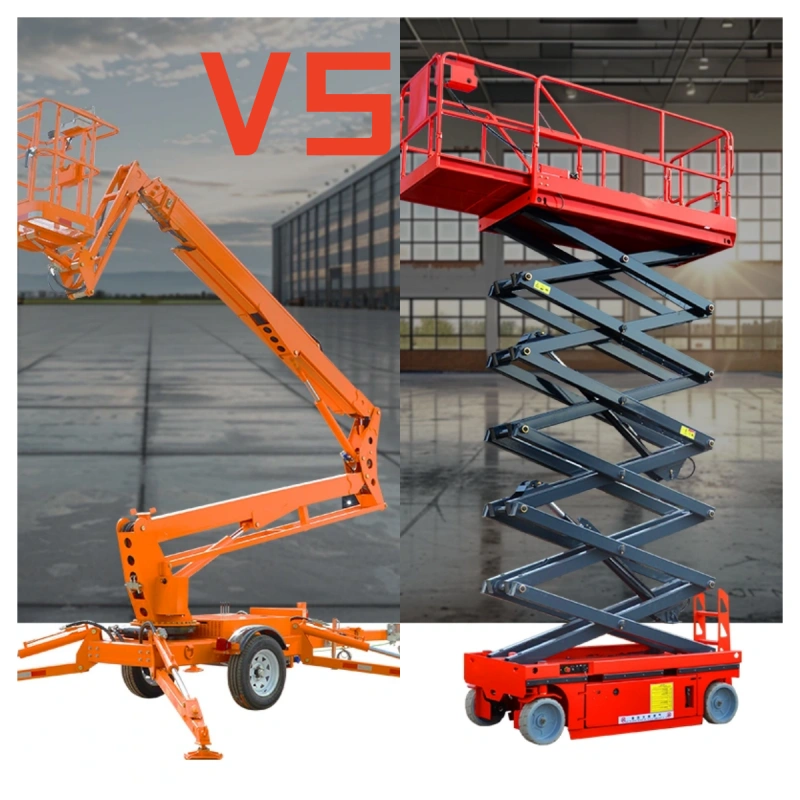
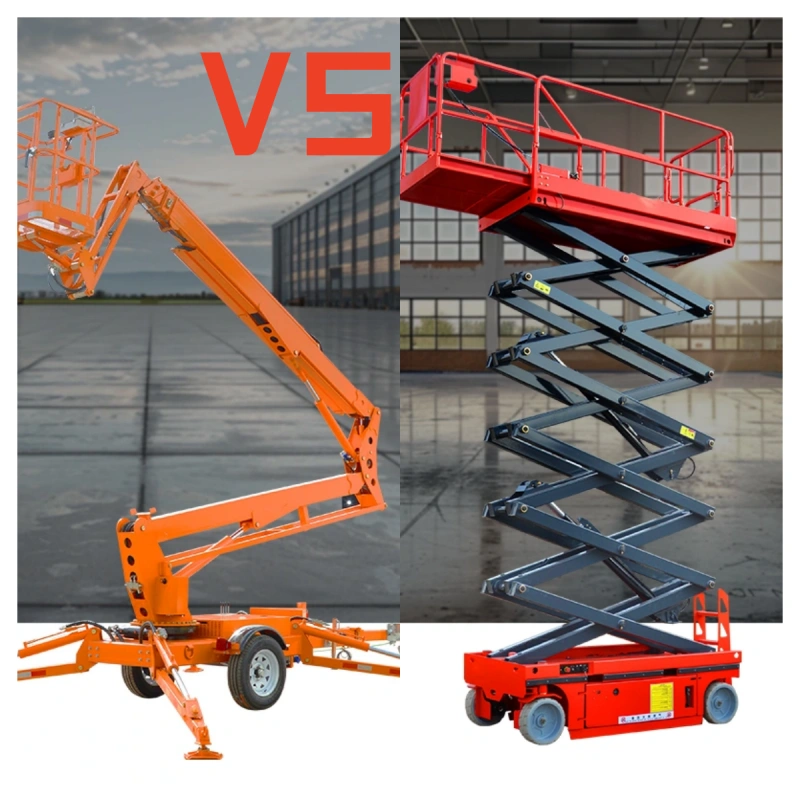
When choosing the right aerial work platform for any construction, maintenance, or industrial project, the comparison between boom lift vs scissor lift becomes unavoidable. These two machines dominate the market for safe, elevated work. However, they serve different purposes, behave differently in real-world environments, and vary greatly in price, reach, mobility, and safety features.
This comprehensive guide compares boom lifts and scissor lifts across specifications, uses, advantages, limitations, and long-term value. By the end, you will clearly understand which lift is the better choice for your needs—and why.
What Is a Boom Lift?
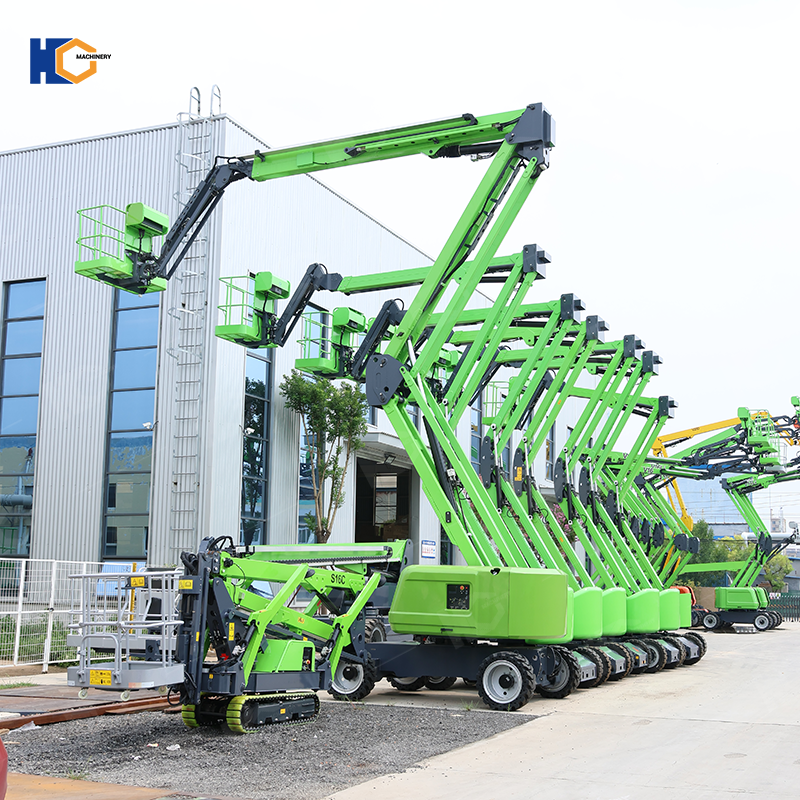
A boom lift is an aerial lift that features a long, extendable arm (“boom”) with a work platform at the end. The boom may be telescopic (straight) or articulating (jointed). This design provides horizontal reach, vertical reach, and flexible maneuvering around obstacles.
Common types include:
Telescopic boom lift (straight boom)
Articulating boom lift (knuckle boom)
Towable boom lift
Boom lifts can reach impressive heights—some over 180 ft—making them ideal for tasks requiring overhead access in complex environments.
What Is a Scissor Lift?
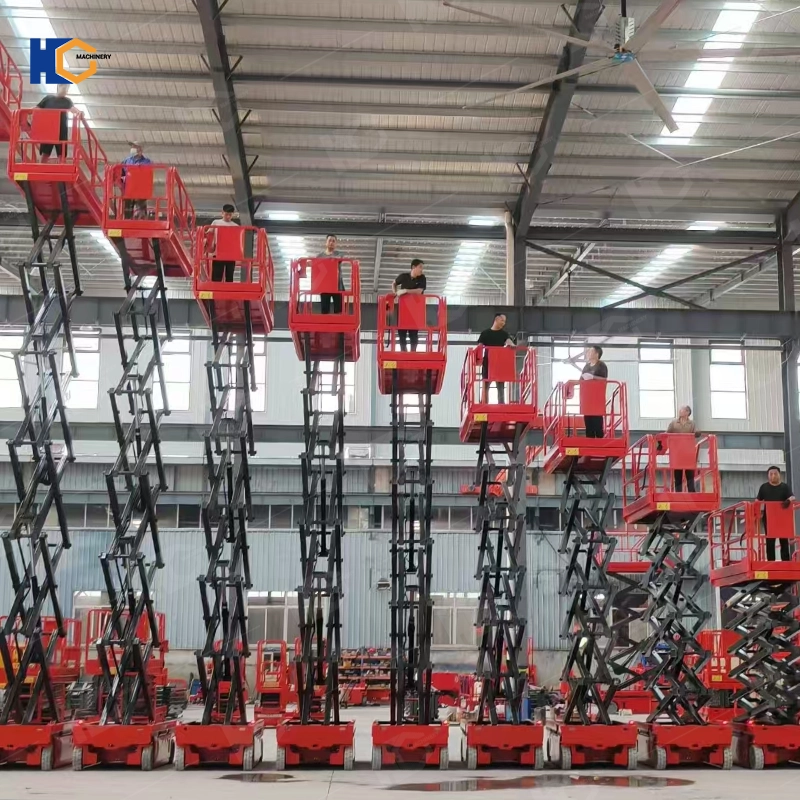
A scissor lift uses a crisscrossing, accordion-like lifting mechanism to move the platform straight up and down. Unlike boom lifts, it cannot extend horizontally. It is known for its stability, large platform size, and strong load capacity.
Common types include:
Electric scissor lift (for indoor use)
Rough-terrain scissor lift (diesel-powered for outdoor jobs)
While scissor lifts cannot reach the extreme heights of boom lifts, they offer excellent vertical access for tasks requiring large workspace platforms.
Boom Lift vs Scissor Lift: Full Comparison
Below is a detailed comparison of the two machines based on the factors that matter most in real-world operations.
1. Reach: Height and Horizontal Extension
Boom Lift
Boom lifts dominate when it comes to reach. A telescopic boom provides unmatched vertical and horizontal extension. Articulating booms can bend around structures, offering access to tight spaces or hard-to-reach areas.
Typical reach:
Vertical: 30 to 180 ft
Horizontal: 20 to 100 ft
Scissor Lift
Scissor lifts travel only vertically. Their height range is generally lower.
Typical reach:
Vertical: 10 to 60 ft
Horizontal: none
Verdict:
If you need to reach sideways, over obstacles, or reach greater heights, a boom lift is absolutely the better choice.
2. Platform Size and Load Capacity
Boom Lift
Boom lifts have smaller platforms, usually accommodating 1–2 workers and tools.
Typical load capacity: 200–500 lbs
Scissor Lift
Scissor lifts excel at platform size and weight capacity. They can carry multiple workers plus heavy equipment.
Typical load capacity: 700–1,500+ lbs
Platform size: significantly larger than boom lifts
Verdict:
If you need space for multiple workers, materials, or equipment, a scissor lift provides better value.
3. Mobility and Maneuverability
Boom Lift
Boom lifts are built for maneuverability. Their extendable arms can navigate:
over rooftops
around corners
above obstacles
into narrow spaces
Articulating booms especially shine in confined or irregular job sites.
Scissor Lift
Scissor lifts offer stable up-to-down movement but limited lateral maneuvering. They are excellent for straight, vertical access—especially in warehouses, factories, and construction interiors with flat ground.
Verdict:
For complex environments requiring mobility and precision, the boom lift wins easily.
4. Indoor vs Outdoor Use
Boom Lift
Best outdoors
Can handle uneven terrain (with rough-terrain models)
Much larger footprint
Some electric boom lifts work indoors, but the height is usually overkill
Scissor Lift
Ideal indoors
Electric models are quiet and emission-free
Rough-terrain scissor lifts are also excellent outdoors
Verdict:
For indoor warehouse tasks, a scissor lift is typically the better, safer, and more economical option.
5. Safety and Stability
Both lifts are designed to meet strict safety standards, but they differ in how stability is achieved.
Boom Lift
Boom lifts rely heavily on counterweights, outriggers (on some models), and advanced load-sensing systems. Their arm extension makes them less stable in high winds.
Scissor Lift
The wide platform and vertical lifting mechanism offer exceptional stability. They perform well on flat or moderately uneven surfaces.
Verdict:
For stability and reduced fall risk, scissor lifts are the safer choice—provided height requirements are modest.
6. Cost: Rental, Operation, and Maintenance
Boom Lift Costs
Boom lifts are significantly more expensive due to complexity.
Higher purchase price
Higher rental cost
More expensive maintenance
Fuel-electric hybrids and diesel models add operating cost
Scissor Lift Costs
Scissor lifts are cost-effective.
Lower purchase cost
Lower rental rates
Lower maintenance requirements
Electric models are extremely economical
Verdict:
If budget is a concern and the job doesn’t require extreme height or reach, a scissor lift is the more economical choice.
7. Applications: Where Each Lift Performs Best
Boom Lift Applications
Boom lifts work best in situations requiring height and flexibility:
Building maintenance and façade work
Tree trimming
Electrical line installation
Bridge or highway inspection
Large construction sites
Window cleaning on high structures
Stadium or arena lighting installation
Their ability to reach up and over makes them indispensable in challenging environments.
Scissor Lift Applications
Scissor lifts excel at tasks that require a large platform and vertical movement:
Indoor maintenance
Warehouse picking
Ceiling work
HVAC and duct installation
Drywall hanging
Retail store setup
Manufacturing plant maintenance
Whenever stability and capacity matter more than reach, the scissor lift outperforms the boom lift.
Boom Lift vs Scissor Lift: Advantages
Boom Lift Advantages
Exceptional height
Horizontal reach capability
Flexibility around obstacles
Great for uneven terrain
Perfect for outdoor or large-scale construction
Scissor Lift Advantages
Large platforms
High weight capacity
Lower cost
Superior stability
Ideal for indoor maintenance and industrial tasks
Boom Lift vs Scissor Lift: Limitations
Boom Lift Limitations
High cost
Requires trained operators
More complex to maintain
Not ideal indoors due to size and height
Scissor Lift Limitations
No horizontal reach
Limited height
Requires relatively even ground
Less mobile in tight spaces
Which One Should You Choose? My Viewpoint
After evaluating all technical and practical factors, the most reasonable approach is:
Choose a boom lift when height, reach, and maneuverability matter more than platform size or budget.
Choose a scissor lift when stability, platform space, and cost efficiency are the priority.
In my view, the boom lift is the superior machine for complex job sites and outdoor projects where versatility is essential. It simply performs tasks that a scissor lift cannot handle—especially those requiring horizontal access or extreme height.
However, for indoor work, warehouse logistics, retail setup, and routine maintenance, a scissor lift offers better value, better stability, and lower operating costs.
The “better” lift always depends on the environment, but when judged purely on capability and versatility, the boom lift clearly takes the lead.
Conclusion: Boom Lift vs Scissor Lift
Choosing between a boom lift and a scissor lift depends entirely on the job:
Need height + horizontal reach → Boom Lift
Need stability + large platform + low cost → Scissor Lift
Outdoor construction → Boom Lift
Indoor maintenance → Scissor Lift
Each machine serves a distinct purpose, and understanding the differences helps teams work more efficiently, safely, and economically. Whether you are renting equipment for a short-term project or planning a long-term investment, making an informed decision ensures smoother operations and better performance.
For anyone running construction projects, warehouse operations, or facility maintenance, mastering the differences between boom lifts and scissor lifts creates a real advantage in planning and budgeting.
390.webp)
892.webp)