When people ask, “How much does a scissor lift cost” they are rarely looking for a single number.
What they really want to know is:
Why prices vary so widely
Whether buying or renting makes more sense
What a “reasonable” price looks like in today’s market
And how to avoid paying for features they don’t actually need
This article provides a clear, data-driven breakdown of scissor lift costs—from factory pricing to market pricing and rental costs—so buyers can make decisions based on use cases, not guesswork.
1. What Is a Scissor Lift and Why Price Transparency Matters
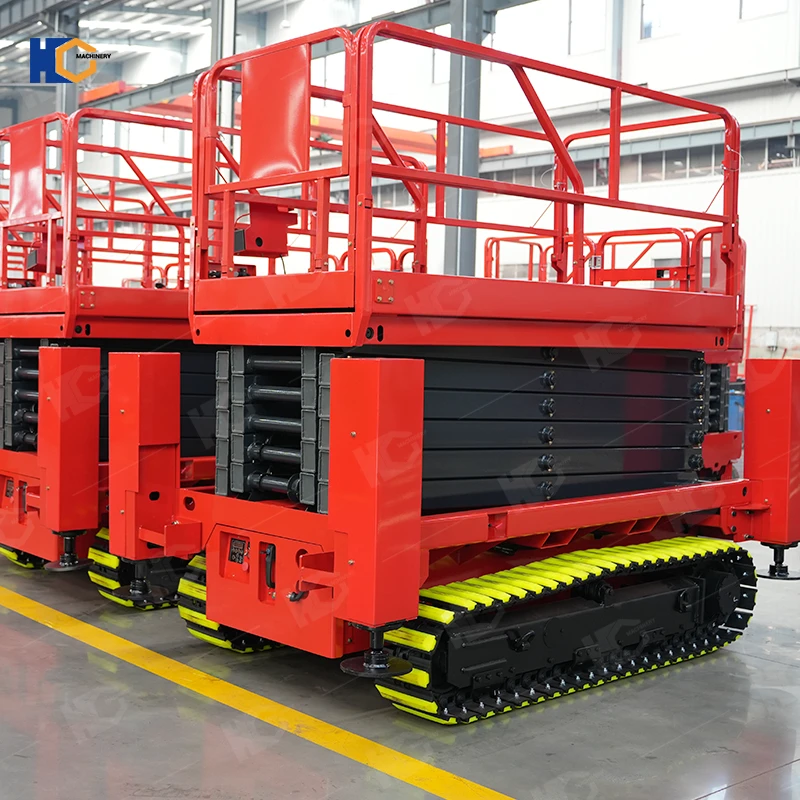
A scissor lift is a mobile elevated work platform (MEWP) designed to lift people and tools vertically. Unlike boom lifts, scissor lifts prioritize stability, load capacity, and vertical reach rather than horizontal outreach.
They are widely used in:
Construction and maintenance
Warehousing and logistics
Manufacturing plants
Shopping malls and airports
Data centers and cleanrooms
Because scissor lifts are used across many industries, pricing is not standardized. The same-looking machine can differ greatly in cost due to height, power system, build quality, and brand markup.
Understanding cost structure is the first step toward buying intelligently.
2. Average Scissor Lift Cost: The Big Picture
Globally, scissor lift pricing generally falls into three tiers:
Factory price (direct from manufacturer)
Market price (through distributors or dealers)
Rental price (short- or long-term use)
For standard electric or hydraulic scissor lifts used in industrial and commercial applications:
Factory price: USD 7,000 – 12,000
Market purchase price: USD 10,000 – 18,000+
Rental cost: USD 800 – 2,500 per month, depending on height and region
These ranges already tell an important story: distribution and usage model matter almost as much as the machine itself.
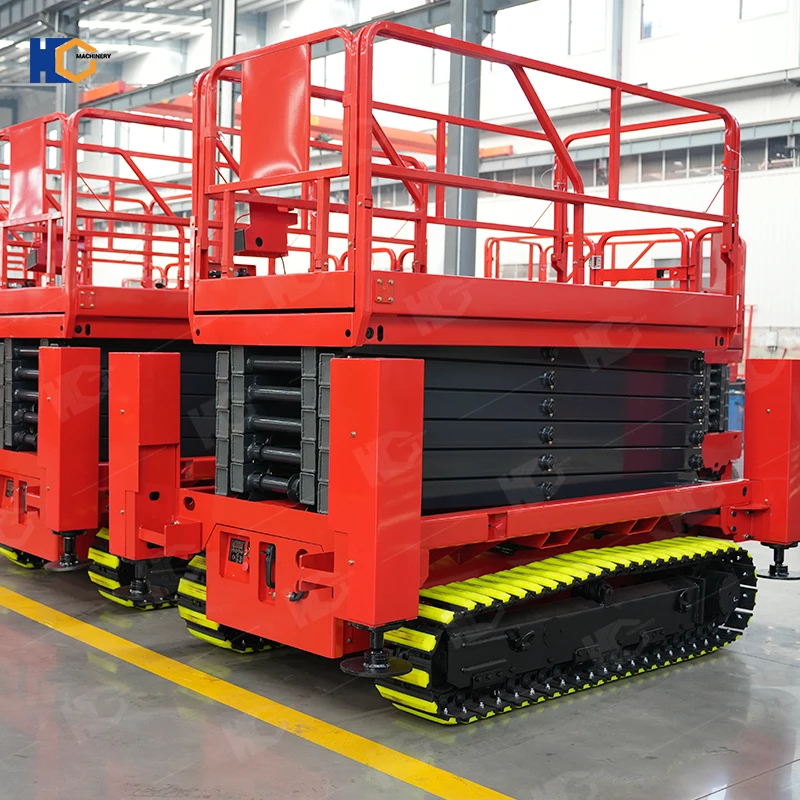
3. Huichuang Factory Scissor Lift Price: USD 7,000–12,000 Explained
Huichuang’s factory price range of USD 7,000–12,000 represents the core of the global scissor lift market, covering the most commonly used models.
This price range typically includes:
Working heights of 6–12 meters
Electric or hydraulic drive systems
Load capacities from 230 kg to 450 kg
CE / ISO-compliant safety systems
Why This Range Is So Common
From a manufacturing perspective, this range hits the best balance between:
Steel usage
Power system cost
Control system complexity
Assembly labor
Above USD 12,000, prices usually rise due to:
Extended height
Specialized terrain capability
Brand premiums rather than functional differences
4. Key Factors That Affect Scissor Lift Cost
4.1 Working Height (The Biggest Price Driver)
Working height has a near-linear relationship with cost.
Typical factory-level pricing trend:
6 m: lower end of the range
8 m: mid-range
10–12 m: upper end of the range
Each additional meter increases:
Structural steel weight
Hydraulic or electric system capacity
Safety redundancy requirements
Buying more height than needed is one of the most common (and expensive) mistakes.
4.2 Electric vs Hydraulic Scissor Lifts
Electric scissor lifts:
Higher upfront cost
Lower operating cost
Quiet, emission-free
Ideal for indoor use
Hydraulic (diesel or hybrid) scissor lifts:
Stronger lifting force
Better for outdoor or rough environments
Higher fuel and maintenance costs
Electric models dominate indoor markets and typically sit comfortably within the USD 7,000–12,000 factory range.
4.3 Load Capacity
Common capacities:
230 kg (2 people + tools)
320 kg (3–4 people)
450 kg (heavy-duty tasks)
Higher capacity requires thicker scissor arms and reinforced platforms, which directly increases cost.
4.4 Build Quality and Safety Components
Two machines may look similar but differ in:
Steel grade
Welding quality
Control system reliability
Sensor accuracy
Higher-quality components reduce downtime and long-term cost, even if the purchase price is slightly higher.
5. Market Price vs Factory Price: Why the Gap Exists
When buyers see the same scissor lift priced at USD 15,000–18,000 locally, they often wonder why.
The difference usually includes:
Distributor margin
Local inventory costs
Sales and service overhead
Warranty handling
Local dealers add value through convenience and service, but that value comes at a price.
For buyers purchasing multiple units or planning long-term use, factory sourcing often provides significantly better cost efficiency.
6. Used Scissor Lift Prices: Are They Really Cheaper?
Used scissor lifts are often priced:
USD 5,000 – 9,000, depending on condition
At first glance, this seems attractive. However, buyers should consider:
Battery degradation
Hydraulic wear
Unknown usage history
Shortened remaining service life
In many cases, the price difference between used equipment and a new factory unit is small, while the risk is much higher.
7. Scissor Lift Rental Cost: Monthly and Daily Rates
Rental is a major part of the scissor lift market.
Typical rental pricing:
Small electric scissor lift: USD 800–1,200 per month
Mid-height models: USD 1,200–1,800 per month
Larger or specialized units: USD 2,000+ per month
Daily rates can range from USD 100–300 depending on region.
8. Buy vs Rent: A Clear Cost Comparison
A simple rule of thumb:
Short-term or occasional use → Rent
Frequent or long-term use → Buy
Break-even point:
6–12 months of regular rental equals the purchase cost of a factory-priced unit
For warehouses, factories, and maintenance teams, ownership almost always wins financially.
Scissor Lift: Buy vs Rent Comparison Table
| Comparison Item | Buy a Scissor Lift | Rent a Scissor Lift |
|---|---|---|
| Initial Cost | High upfront cost (USD 7,000–12,000 factory price) | Low upfront cost |
| Long-Term Cost | Lower over time for frequent use | High if used repeatedly |
| Monthly Expense | None (after purchase) | USD 800–2,500 per month |
| Break-Even Point | 6–12 months of regular use | Not applicable |
| Usage Frequency | Best for daily or weekly use | Best for short-term or occasional use |
| Total Ownership Cost | Predictable and controllable | Accumulates with each rental |
| Availability | Always available on-site | Depends on rental company stock |
| Downtime Risk | Low (machine is dedicated) | Medium–high during peak seasons |
| Maintenance Responsibility | Owner responsibility | Rental company responsibility |
| Maintenance Cost | Low if maintained properly | Included in rental fee |
| Customization Options | Can be customized (battery, platform size, controls) | Limited to available models |
| Operator Familiarity | High (same machine every time) | Lower (different units each rental) |
| Logistics & Transport | One-time delivery cost | Repeated delivery & pickup fees |
| Best Use Scenarios | Warehouses, factories, facility maintenance teams | Construction projects, short-term contracts |
| Asset Value | Retains resale value | No asset value |
| Cost Transparency | Clear total cost over lifecycle | Often unclear long-term cost |
| Financial Planning | Easier to budget long-term | Difficult for ongoing projects |
Practical Buying vs Renting Scenarios
Buying makes more sense when:
9. Hidden Costs Buyers Often Miss
Beyond the sticker price, buyers should consider:
Shipping and import costs
Local certification or inspection
Battery replacement (for electric models)
Preventive maintenance
These costs are predictable and manageable when planned upfront.
10. Regional Price Differences (Why Location Matters)
Scissor lift prices vary by region due to:
Labor cost
Import duties
Market competition
However, factory pricing remains relatively stable globally, which is why direct sourcing has become increasingly popular.
11. How Long Does a Scissor Lift Last?
With proper maintenance:
Typical service life: 8–12 years
Electric models used indoors often last longer
Battery replacement may be required every 3–5 years
Durability is more closely linked to build quality than brand name.
12. Common Pricing Myths
Myth: Higher price always means better performance
Reality: Many price differences are branding and distribution costs
Myth: Renting is cheaper
Reality: Only for short-term use
Myth: Used equipment is safer for budgets
Reality: Risk-adjusted cost is often higher
13. How to Decide What You Should Pay
Ask three practical questions:
What height do I truly need?
How often will the lift be used?
Is downtime expensive for my operation?
If the lift will be used regularly, a USD 7,000–12,000 factory-priced scissor lift is often the most rational choice.
14. Final Summary: How Much Does a Scissor Lift Really Cost?
To summarize clearly:
Factory price: USD 7,000 – 12,000 (most common models)
Market purchase price: USD 10,000 – 18,000+
Rental cost: USD 800 – 2,500 per month
The “right” cost depends on how often you use the lift, not just the number on the invoice.
A scissor lift is not a disposable tool—it’s a productivity asset. Paying the right price means understanding how value, not just cost, is built into the machine.