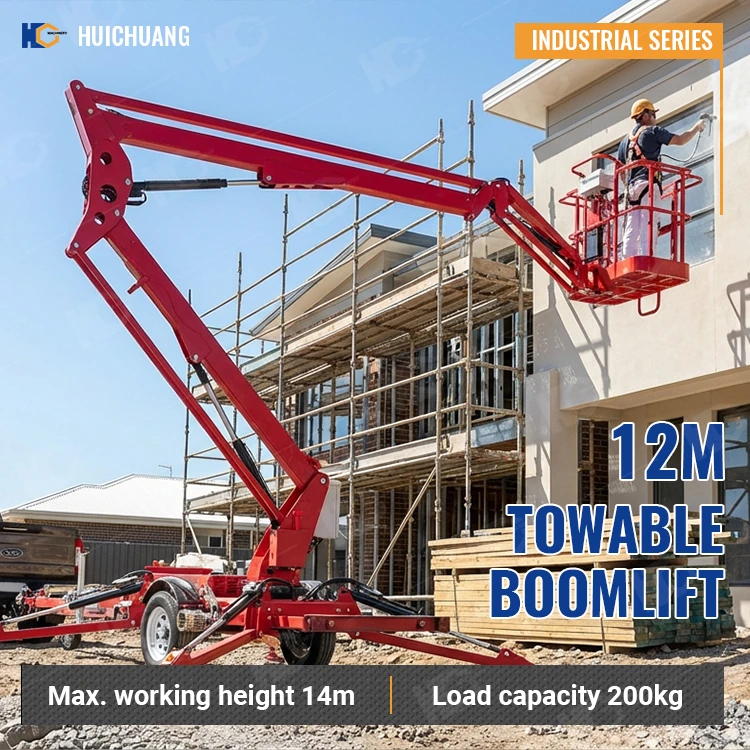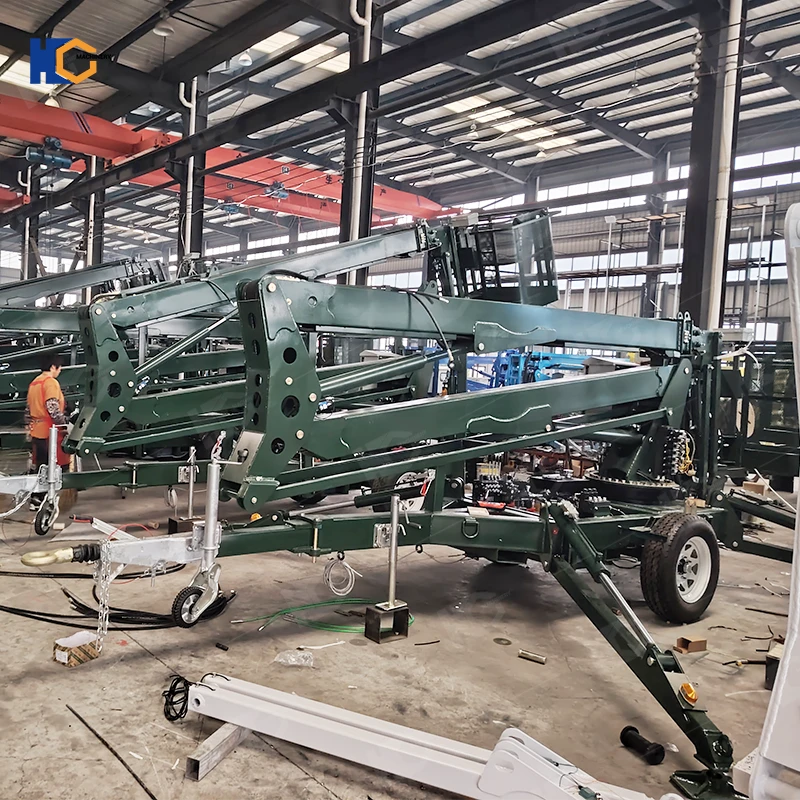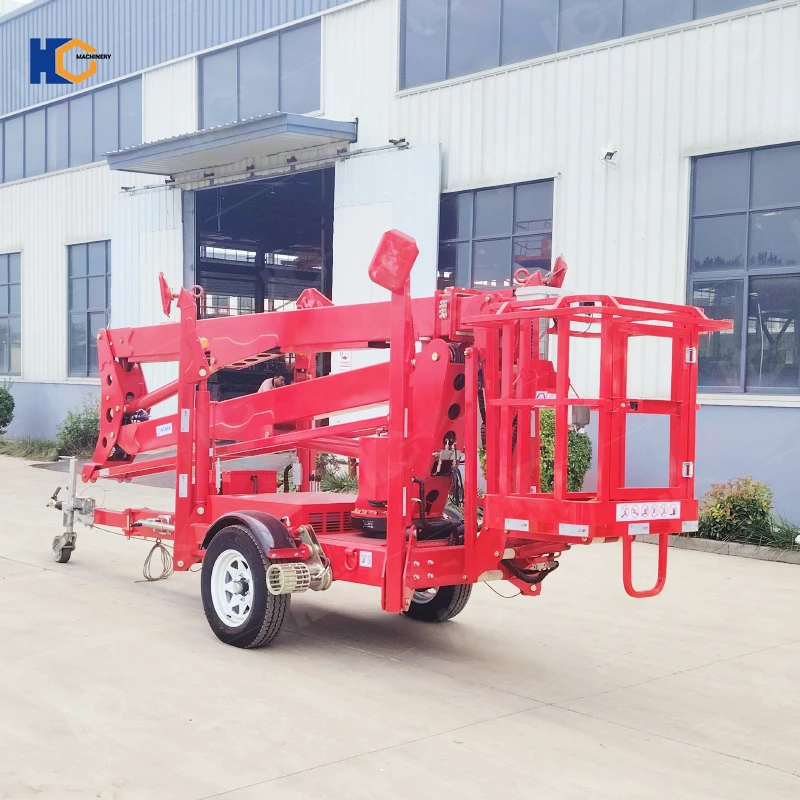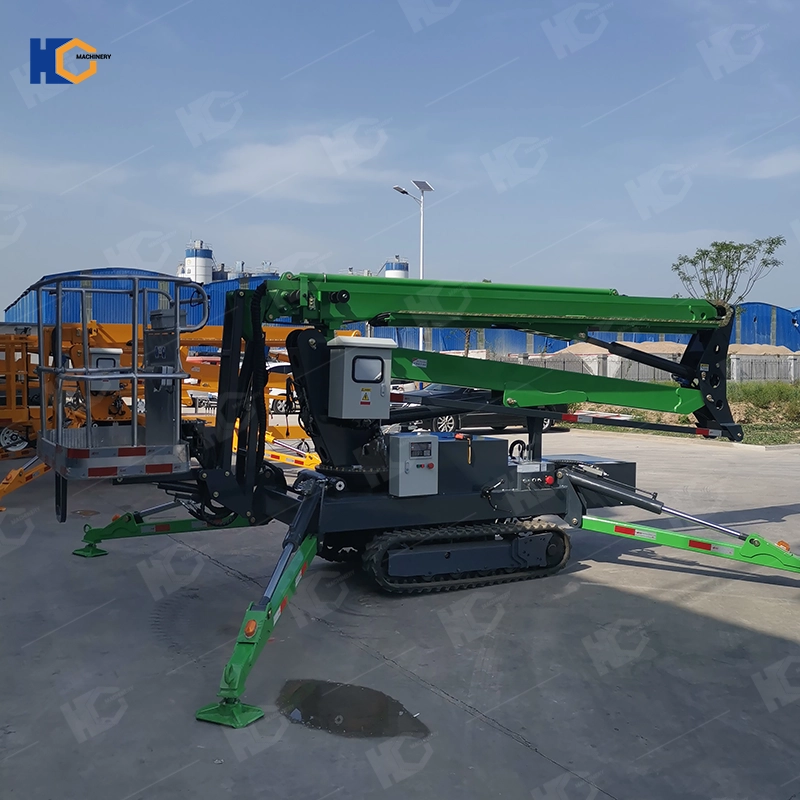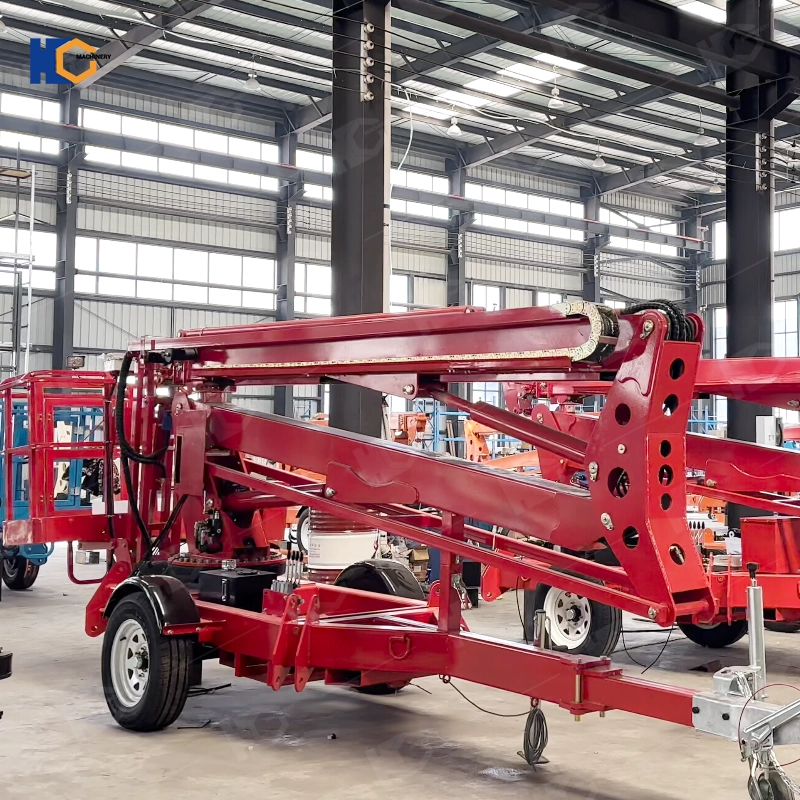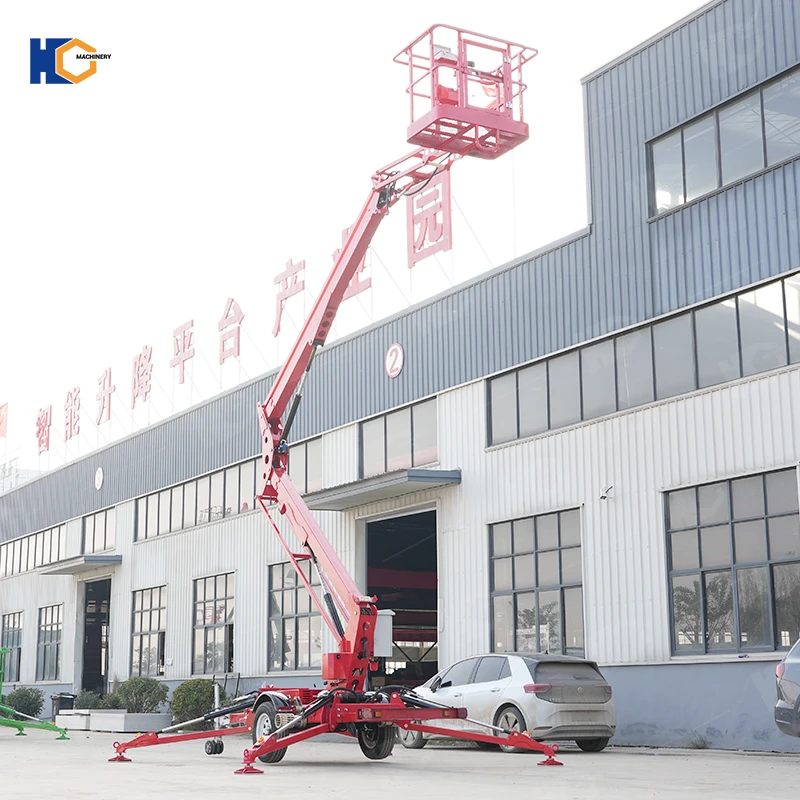
A trailer-mounted boom lift—also known as a towable boom lift, tow-behind man lift, or portable articulated boom lift—is one of the most versatile aerial access machines in the market. It combines compact structure, lightweight towing design, and extended vertical/horizontal outreach to offer safe work-at-height performance in a remarkably portable form. For maintenance teams, contractors, electricians, tree-trimming companies, construction workers, and rental fleets, the trailer-mounted boom lift delivers a highly efficient solution without the high ownership cost of self-propelled booms.
This comprehensive guide explores the full product concept of trailer-mounted boom lifts, including technology, specifications, safety features, industry applications, configuration options, pricing structures, and how to select the right model for your business. Whether you are a distributor sourcing for your market, a rental company expanding your fleet, or an industrial buyer preparing for a 2025–2026 investment, this article will provide the insights you need to make an informed decision.
1. What Is a Trailer-Mounted Boom Lift?
A trailer-mounted boom lift is a lightweight aerial work platform designed to be transported using a standard vehicle equipped with a trailer hitch. Unlike traditional self-propelled boom lifts that rely on large chassis and drive motors, trailer-mounted models focus on portability and cost-efficiency while still offering impressive height capability.
Typical working heights range from 34 ft (10 m) up to 61 ft (18.5 m), and horizontal outreach commonly spans 12 ft to 30 ft, depending on the model and boom style.
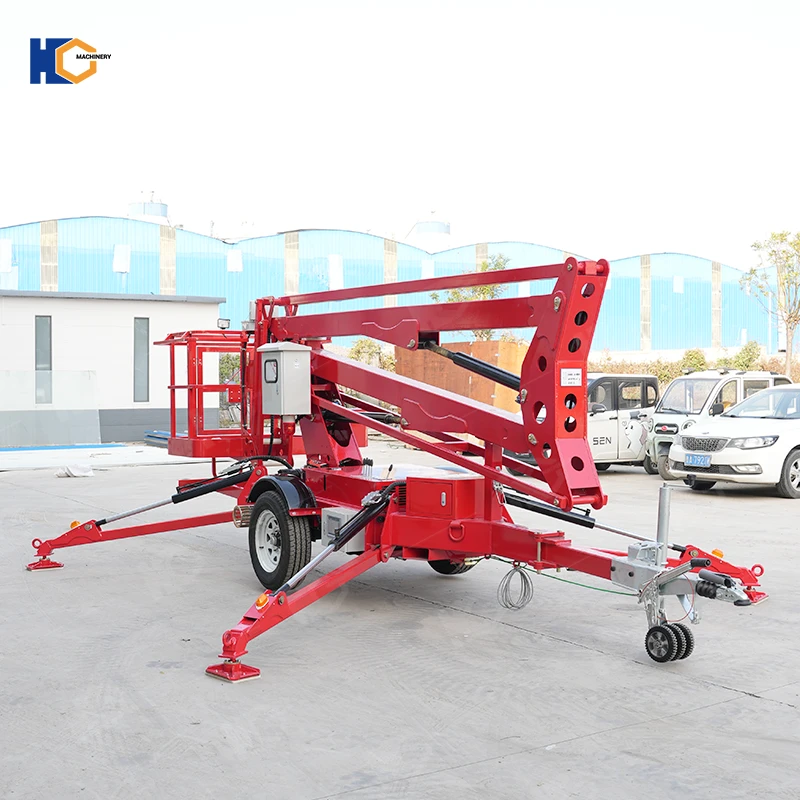
A conventional trailer-mounted boom lift includes:
A trailer chassis with road-towable tires
A hydraulic articulated or telescopic boom
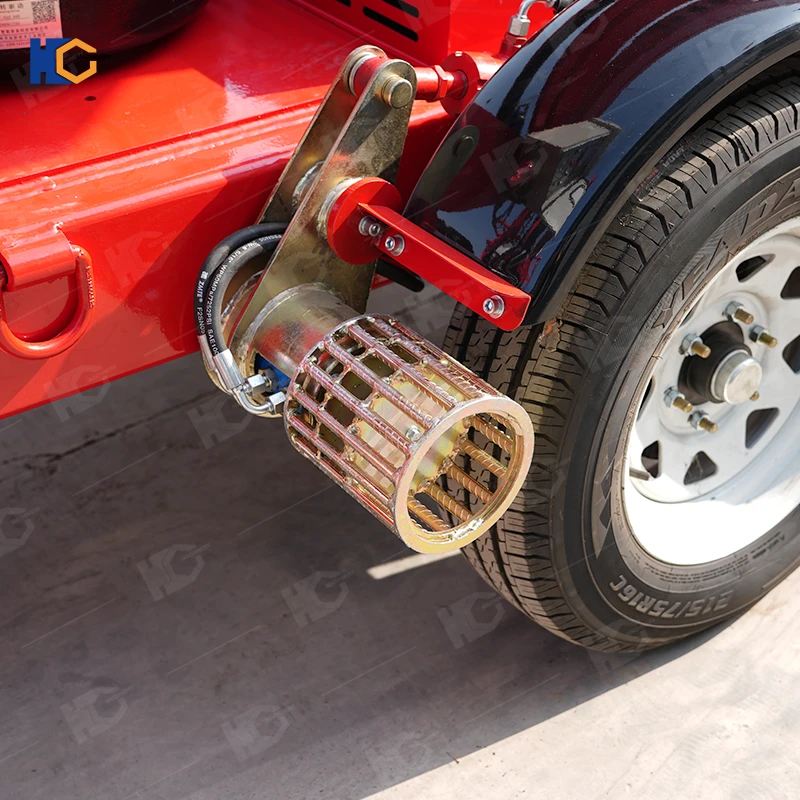
Outriggers for stabilization
A work platform (basket) for 1–2 operators
Hydraulic controls for smooth boom movements
A power system (battery, gasoline, diesel, or hybrid)
The machine is parked, leveled using outriggers, and operated safely with load-sensing and stability systems.
2. Major Advantages of Trailer-Mounted Boom Lifts
2.1 Easy Transportation
The number one advantage is mobility. Users can tow the boom lift with a pickup truck, van, or SUV. It eliminates the need for heavy transport or professional hauling services, which significantly lowers logistics costs.
2.2 Lower Purchase Cost
Compared with self-propelled booms, trailer-mounted units cost:
40%–65% less for similar heights
with lower maintenance and simpler hydraulic systems
This makes them ideal for small and medium-sized businesses, building owners, and rental companies.
2.3 Lightweight Structure
Most models weigh between 1,300–2,000 kg, which reduces:
Tire and ground pressure
Risk of damage on landscaped surfaces
Need for reinforced flooring indoors
Lightweight construction also improves towing efficiency.
2.4 Wide Working Height Options
Modern towable booms go up to 61 ft (18.5 m), making them suitable for:
Tree trimming
Exterior building maintenance
Sign installation and repairs
Higher warehouse lighting and overhead work
2.5 Safe and Stable Design
Hydraulic outriggers provide multi-point leveling and secure the lift during operation. Upgraded safety enhancements include:
Automatic leveling
Overload protection
Emergency lowering
Tilt alarms
Anti-entrapment systems
EN280 / ANSI compliance
2.6 Low Maintenance
There are fewer mechanical parts compared to self-propelled lifts:
No drive motors
No complex transmission
Lower tire wear
Simpler hydraulics
This translates into fewer breakdowns and lower ownership costs.
3. Types of Trailer-Mounted Boom Lifts
While many variations exist, they are generally categorized into two main types.
3.1 Articulating Trailer-Mounted Boom Lifts
These feature multiple boom sections connected by joints (articulations). Advantages include:
Ability to reach over obstacles
Excellent positioning flexibility
Ideal for tree work and building maintenance
They are the most common type worldwide.
3.2 Telescopic Trailer-Mounted Boom Lifts
These use straight-line extending booms.
Advantages include:
Longer horizontal outreach
Faster vertical access
Ideal for roofing, façade repair, and industrial work
Some hybrid models combine both articulating and telescopic functions.
4. Key Components and Technologies
4.1 Boom System
Made of high-strength steel, designed to provide rigid and stable movement. Manufacturers use robotic welding to ensure consistent structural integrity.
4.2 Outriggers
Automatic or semi-automatic outriggers enhance leveling stability. Sensors ensure proper deployment before the boom operates.
4.3 Power Options
Available configurations include:
Battery-powered (most popular for indoor/outdoor)
Gasoline engine
Diesel engine
Hybrid power combining electric with fuel engine
Electric versions offer zero-emission operation.
4.4 Control Systems
Control systems may include:
Proportional hydraulic valves
Electric-over-hydraulic joysticks
Emergency descent systems
Load-sensing management
Auto-return-to-home
Optional wireless remotes and diagnostic screens improve operator convenience.
5. Trailer-Mounted Boom Lift Specifications (General Reference)
Below is a reference-format specification sheet commonly used for 40–60 ft models. Actual data varies depending on manufacturer.
General Specifications Table
| Item | Typical Value / Range |
|---|---|
| Working Height | 34–61 ft (10–18.5 m) |
| Platform Height | 28–55 ft (8.5–16.7 m) |
| Horizontal Outreach | 12–30 ft (3.5–9 m) |
| Platform Capacity | 120–200 kg (1–2 persons) |
| Power Options | Battery / Gasoline / Diesel / Hybrid |
| Outrigger Leveling | Automatic or Manual |
| Transport Speed | Towed behind vehicle |
| Machine Weight | 1300–2000 kg |
| Rotation | 350°–360° non-continuous |
| Platform Size | 0.8 × 1.0 m or 0.8 × 1.2 m |
| Controls | Hydraulic or Electric/Hydraulic |
| Certification | CE, EN280, ANSI/SAIA A92 |
6. Applications of Trailer-Mounted Boom Lifts
6.1 Building and Facility Maintenance
Perfect for:
Exterior wall repair
Painting
Window cleaning
Gutter repair
Roof inspection
Lighting maintenance
Portable design makes it ideal for universities, hotels, hospitals, and large commercial properties.
6.2 Tree Trimming & Landscaping
The compact boom and flexible articulation allow operators to extend over branches safely. Landscapers value:
Light footprint
Easy maneuverability
Ability to work on soft ground
6.3 Electrical & Utility Work
Contractors use trailer-mounted booms for:
Overhead wiring
Streetlight repair
Security camera installation
Outdoor signage work
6.4 Construction & Renovation
Although not as robust as rough-terrain self-propelled booms, they work efficiently for:
Interior atrium work
Finishing tasks
MEP installation
Light fit-out operations
6.5 Rental Industry
This is one of the most profitable categories for rental fleets because:
Units are inexpensive
Transportation is simple
Maintenance costs are low
Utilization rates are high
7. Price Range of Trailer-Mounted Boom Lifts
Prices vary widely depending on brand, country of origin, working height, and power system.
7.1 Standard Market Pricing (Global Reference)
| Working Height | Price Range (USD) |
|---|---|
| 34–40 ft | $10,000–$15,000 |
| 45–50 ft | $15,500–$22,500 |
| 55–61 ft | $22,000–$34,000 |
| Hybrid / Battery | $26,000–$42,000 |
| Premium Western Brands | $35,000–$60,000 |
Factors influencing price include:
Height and outreach
Structural steel grade
Control system technology
Battery type
Brand reputation
8. Factors to Consider When Buying a Trailer-Mounted Boom Lift
8.1 Working Height Requirement
Always choose a model with excess height capacity. For example, if the highest working point is 45 ft, selecting a 50 ft unit is advisable.
8.2 Horizontal Outreach
Outreach is crucial when:
Reaching over awnings
Extending above obstacles
Working around landscaping features
Models with dual articulated booms offer superior positioning.
8.3 Indoor vs Outdoor Use
Indoor use often requires:
Electric power
Non-marking tires
Compact footprint
Outdoor use requires:
Stronger outriggers
Fuel engine options
Weatherproof electrical systems
8.4 Terrain Conditions
Trailer-mounted booms are ideal for:
Concrete
Asphalt
Packed soil
Not suitable for extreme rough terrain; tracked boom lifts outperform them there.
8.5 Power System Choice
Battery-powered lifts suit:
Low-noise environments
Indoor malls
Residential areas
Gasoline or hybrid units offer extended operation for outdoor construction.
8.6 After-Sales Support
Look for:
Factory-trained technician availability
24/7 remote diagnostic service
Readily available spare parts
1–2 year standard warranty
8.7 Certification
Depending on your country or market:
Europe: CE / EN280
USA: ANSI/SAIA A92
Australia: AS 1418
Middle East: Third-party inspection required
Certified machines maintain higher resale value.
9. Trailer-Mounted Boom Lift Manufacturing Process Overview
A well-engineered lift follows these core manufacturing stages:
9.1 Steel Cutting and Robotic Welding
High-strength boom sections are plasma-cut and robot-welded for consistent structural durability.
9.2 Machining & Fabrication
Turntable
Outrigger arms
Brackets
Platform frame
Precision machining ensures accurate assembly.
9.3 Assembly of Hydraulics
Technicians install:
Cylinders
Hoses
Valves
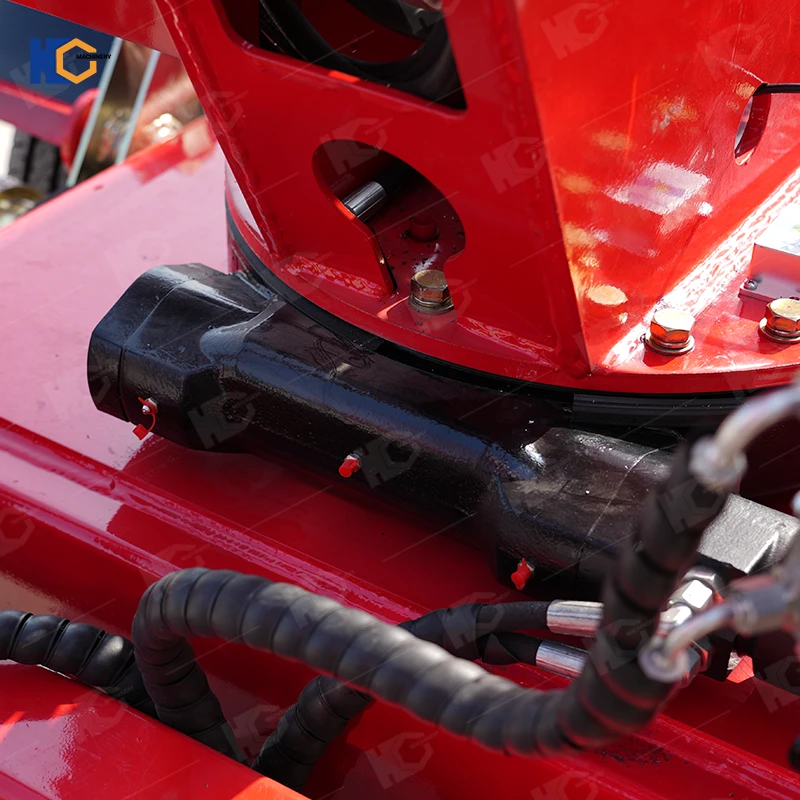
Manifolds
Pump motors
Hydraulic testing ensures leak-free operation.
9.4 Electrical System Installation
Wiring harnesses, safety switches, and controllers are fitted.
9.5 Final Assembly
Boom, chassis, outriggers, and basket are combined.
9.6 Load Testing & Quality Control
Every unit undergoes:
Overload testing
Tilt testing
Stability tests
Function tests
Electrical safety verification
This ensures compliance with international safety standards.
10. Comparison: Trailer-Mounted vs Self-Propelled Boom Lift
Trailer-Mounted Advantages
Lower purchase cost
Easier to transport
Lower maintenance
Lighter weight for soft ground
Better for rental companies
Self-Propelled Advantages
Faster travel on job site
Better rough terrain performance
Higher duty cycle
Greater platform capacity
Trailer-mounted units are more economical, but self-propelled booms dominate heavy construction.
11. Common Accessories and Optional Features
11.1 Platform Accessories
Rotating basket
Tool trays
Platform work lights
Air/water line to platform
11.2 Power and Control Options
Lithium battery packs
Wireless remote control
Automatic home return
11.3 Safety Enhancements
Anti-entrapment system
Emergency descent battery backup
11.4 Custom Paint and Branding
For rental fleets or manufacturers with OEM/ODM programs.
12. Maintenance Requirements
Maintaining a trailer-mounted boom lift is relatively simple.
12.1 Weekly Checks
Hydraulic oil level
Tire pressure
Visual inspection of hoses
12.2 Monthly Maintenance
Grease pivot points
Inspect electrical wiring
Test emergency descent
12.3 Annual Service
Replace hydraulic oil and filters
Inspect boom wear pads
Test load-limiting system
Recalibrate sensors if needed
Proper maintenance extends equipment life and preserves resale value.
13. Trailer-Mounted Boom Lift for Rental Companies
Rental companies love towable booms because they offer:
High demand
Low purchase price
Quick payback (6–12 months)
Easy transport between jobs
Low cost-per-hour maintenance
Typical rental prices:
Daily: USD 120–220
Weekly: USD 450–750
Monthly: USD 1,200–2,000
Towable booms often achieve utilization rates above 60%, making them very profitable.
14. How to Import Trailer-Mounted Boom Lifts from China
China is a global leader in hydraulic aerial equipment production. Importing from a reliable factory requires attention to several steps:
14.1 Review Certifications
CE, EN280, ANSI options should be available.
14.2 Confirm Production Lead Time
Lead time usually ranges:
20–35 days for standard models
45–60 days for customization
14.3 Inspect Quality Control Documents
Request:
Test videos
Inspection reports
Load test certificates
14.4 Shipping
Most units are shipped by:
20 ft container (1–2 units)
40 ft HQ container (3–4 units)
14.5 After-Sales Service
Choose factories offering:
Spare parts package
Technical manual
Online support
Imports typically cost 30–45% less than EU/US-made units.
15. Final Buying Recommendations
A trailer-mounted boom lift is a valuable investment for companies seeking safe, portable, and cost-efficient access equipment. To choose the right model, focus on:
Working height
Outreach
Power system
Stability and safety features
After-sales service
Certification
Price-to-performance ratio
With proper evaluation, buyers can secure a lift that delivers long-term performance and strong return on investment.