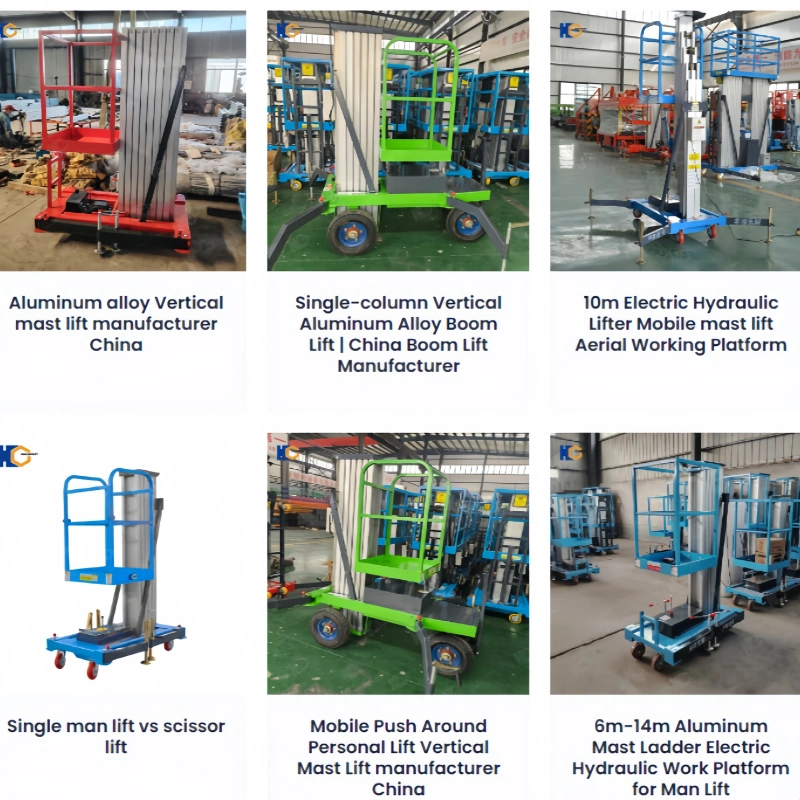
A vertical mast lift is one of the most efficient, compact, and cost-effective aerial work platforms for indoor and light outdoor jobs. As warehouses, retail stores, factories, and maintenance teams push for safer and smarter height-access solutions, vertical mast lifts continue to replace ladders and scaffolding at a rapid pace. This guide explains what a vertical mast lift is, how it works, its major features, price ranges, specifications, advantages, industries that rely on it, and how to choose the best model for your needs.
What Is a Vertical Mast Lift?
A vertical mast lift (sometimes called a single-mast lift, personnel lift, or man lift) is a compact aerial work platform designed to lift 1–2 workers vertically in a straight line. Unlike scissor lifts that use a crisscross mechanism, a vertical mast lift uses a telescoping aluminum mast system that extends upward with exceptional stability.
Key characteristics include:
Straight-up vertical lifting
Small chassis and tight turning radius
Lightweight structure suitable for delicate floors
Single-person or dual-person platforms
Electric or battery-powered drive for indoor use
These features make vertical mast lifts ideal for tasks that require height access in narrow, congested, or high-traffic environments.
How Vertical Mast Lifts Work
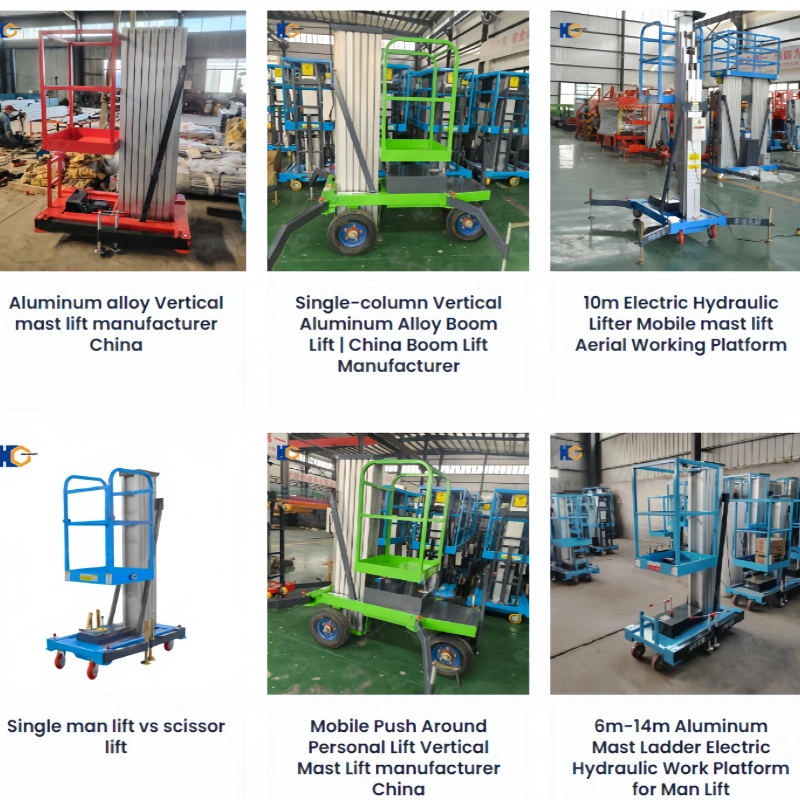
Vertical mast lifts operate using a telescopic mast column constructed from high-strength aluminum. An electric hydraulic system powers the extension and retraction of the mast. Most models include:
Proportional controls for smooth movement
Non-marking wheels for indoor floors
AC or DC electric power (chargers built into the machine)
Guardrails and safety systems to prevent falls
Because of their narrow base and lightweight build, these lifts can easily pass through standard doorways and elevators, making them far more convenient than larger aerial lifts.
Why Vertical Mast Lifts Are Becoming More Popular
Workplace safety regulations worldwide increasingly discourage the use of ladders for professional maintenance and industrial tasks. Vertical mast lifts fill this gap by offering:
Better stability
Reduced risk of falls
Higher productivity
Lower fatigue for workers
Long-term cost savings over scaffolding
The compact size also aligns with modern warehousing trends, where tall racking systems and narrow aisles demand smarter access solutions.
Key Features of a Vertical Mast Lift
1. Extremely Compact Design
Most units can be maneuvered through tight aisles and narrow corridors. A typical width is 0.74–0.78 meters, making it one of the most compact aerial lifts available.
2. Lightweight for Indoor Floors
Weighing far less than scissor lifts, vertical mast lifts are safe on tile, marble, epoxy, and even raised floors. Many weigh only 250–600 kg.
3. Efficient Electric Power System
They run silently and produce no emissions, making them perfect for hospitals, airports, malls, schools, libraries, and museums.
4. Safe and Stable Operations
Safety features commonly include:
Emergency stop button
Automatic pothole protection
Anti-tilt sensor
Overload protection
Non-slip platform flooring
5. Simple to Use
Push-button controls and joystick steering ensure easy learning, even for new operators.
6. Low Maintenance Requirements
Fewer moving parts compared with scissor lifts or boom lifts lead to reduced repair costs and longer service life.
Detailed Specifications (Typical Range)
Although models vary among manufacturers, most vertical mast lifts include the following specifications:
| Specification | Common Range |
|---|---|
| Platform Height | 3–12 m |
| Working Height | 5–14 m |
| Platform Load Capacity | 120–200 kg |
| Machine Width | 0.74–0.80 m |
| Machine Weight | 250–650 kg |
| Power Source | 24V battery or AC electric |
| Drive Method | Push-around or self-propelled |
| Platform Size | 0.60 × 0.60 m to 0.80 × 0.80 m |
| Climbing Ability | 15–25% (self-propelled models) |
Self-propelled vertical mast lifts allow the operator to drive the machine while elevated, saving time during repetitive industrial tasks.
Types of Vertical Mast Lifts
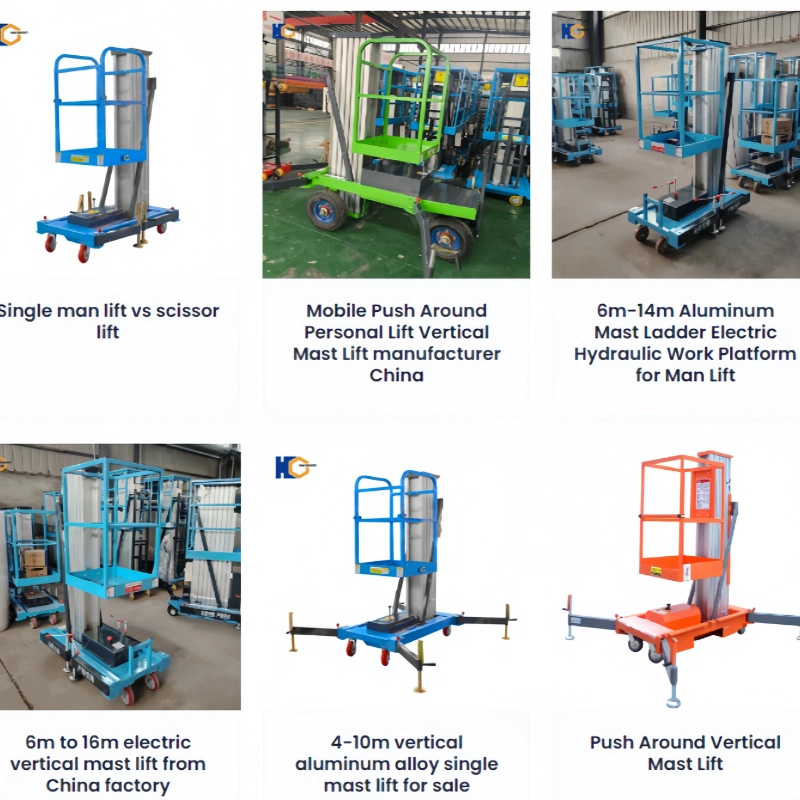
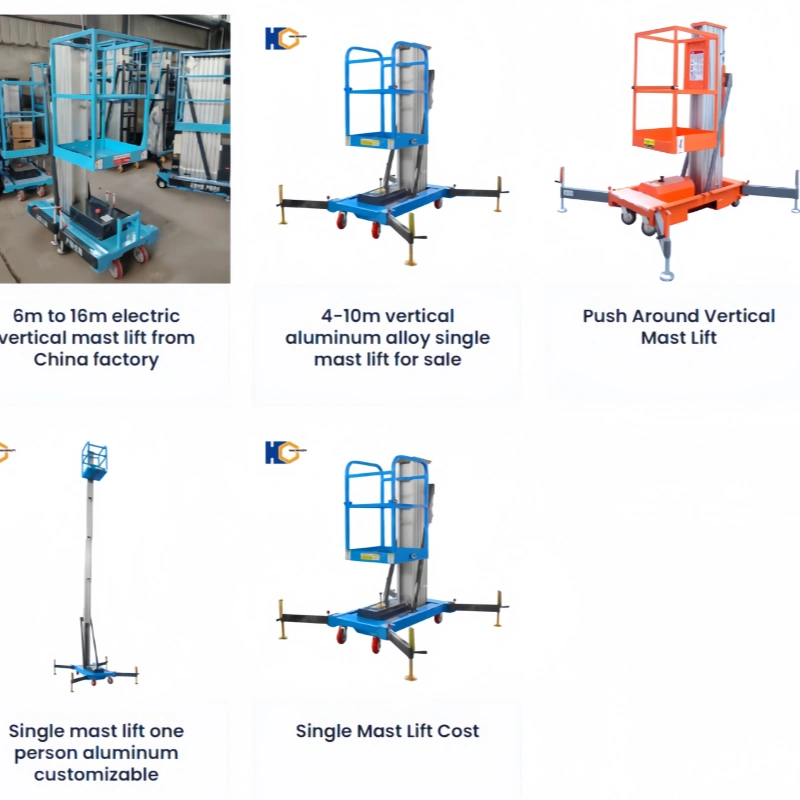
1. Push-Around Vertical Mast Lift
Workers manually push the lift into position, then operate it using the control panel. This model is the most affordable and simplest to maintain.
Best for:
Maintenance, cleaning, light installation work, schools, hotels.
2. Self-Propelled Vertical Mast Lift
Equipped with a drive system, these lifts move independently without manual pushing. Ideal for larger facilities requiring frequent repositioning.
Best for:
Warehouses, logistics centers, manufacturing lines.
3. Dual Mast Vertical Lift
A more advanced design with two masts for increased load capacity and platform size. Suitable for heavier tools or two workers.
Best for:
Electrical installation, HVAC maintenance, high-reach service work.
Applications of Vertical Mast Lifts
Vertical mast lifts excel in environments where space is limited but height access is essential. They are widely used in:
1. Warehouses & Logistics Centers
Picking high-volume inventory
Equipment maintenance
Lighting installation
Their slim profile and high reach make them ideal for tall shelving systems.
2. Shopping Malls & Retail Stores
Ceiling maintenance
Display installation
Decorative work
Non-marking tires protect polished floors.
3. Airports & Railway Stations
Signage maintenance
Security equipment servicing
Cleaning tasks
The quiet operation is essential for public spaces.
4. Hospitals & Medical Centers
Facility maintenance
Sensor and alarm installation
Electric power ensures zero emissions and low noise.
5. Schools, Libraries & Museums
Bookstack access
Lighting maintenance
Exhibit installation
Narrow aisles and delicate floors demand a compact machine.
6. Hotels, Office Buildings & Theaters
Ceiling decoration
Renovation
HVAC servicing
Vertical mast lifts reduce the time and labor required for high-access jobs.
Advantages of Vertical Mast Lifts Compared With Scissor Lifts
More compact
Scissor lifts require wider aisles; vertical mast lifts fit almost anywhere.
Lighter weight
Ideal for delicate floors where scissor lifts might cause damage.
Lower cost
Vertical mast lifts are usually 30–50% cheaper than scissor lifts of similar height.
Better indoor suitability
Smaller wheels, lighter frames, and quiet motors make them safest indoors.
Smoother lifting motion
Telescopic masts eliminate bouncing during elevation.
How Much Does a Vertical Mast Lift Cost?
Prices vary depending on platform height, load capacity, and whether the machine is self-propelled or push-around.
Typical 2025 Price Ranges
| Type | Working Height | Price (USD) |
|---|---|---|
| Push-Around Vertical Mast Lift | 5–8 m | $1,900 – $3,500 |
| Push-Around Vertical Mast Lift | 8–10 m | $2,500 – $4,500 |
| Self-Propelled Vertical Mast Lift | 6–10 m | $4,500 – $7,500 |
| Self-Propelled Vertical Mast Lift | 10–12 m | $6,000 – $9,800 |
| Dual Mast Vertical Lift | 8–14 m | $5,500 – $12,500 |
Accessories such as platform extensions, AGM batteries, smart chargers, or safety sensors may add $100–$500 depending on configuration.
What Affects the Price?
Working height
Load capacity
Battery type
Drive method (push-around vs. self-propelled)
Brand and manufacturing standards
Safety certifications (CE, ANSI, ISO)
Buyers should prioritize reliability and after-sales support over finding the lowest price.
Vertical Mast Lift vs. Ladder: Why Companies Are Switching
Businesses replace ladders with vertical mast lifts for several reasons:
Safety – major cause of injury with ladders is falls.
Stability – lift platforms offer guardrails and secure footing.
Efficiency – workers complete tasks 30–70% faster.
Load capacity – platforms can carry tools, parts, and equipment.
Reach – consistent working heights without balancing issues.
Modern facilities demand a professional solution that reduces downtime and improves safety records.
Key Factors to Consider Before Buying
1. Working Height Requirements
Measure your highest routine task: light fixtures, ceiling vents, racks, or signs.
2. Indoor vs. Outdoor Use
Indoor-only lifts are lighter, cheaper, and quieter.
Outdoor models need slightly larger wheels and stronger masts.
3. Floor Strength
If the building has delicate or raised floors, a lightweight push-around model is ideal.
4. Frequency of Use
High-frequency use favors self-propelled models.
5. Width Restrictions
Check clearance for doorways, elevators, and aisles.
6. Electrical Supply
Most lifts use 24V deep cycle batteries; some offer AC plug-in versions.
Maintenance Guide for Vertical Mast Lifts
Proper maintenance improves safety and ensures long-term efficiency.
Daily checks:
Battery charge
Hydraulic oil level
Emergency stop functions
Wheels and tires
Monthly checks:
Mast alignment
Lubrication
Electrical wiring
Platform sensors
Annual service:
Full hydraulic system inspection
Charger diagnostics
Replacement of worn parts
Lifts from reputable manufacturers typically last 8–12 years with regular maintenance.
Why Vertical Mast Lifts Offer High ROI
Investing in a vertical mast lift delivers strong returns by:
Reducing labor time
Eliminating the need for scaffolding rental
Improving workplace safety
Increasing productivity
Lowering long-term maintenance costs
For facilities operating year-round, the lift often pays for itself within 6–12 months.
Conclusion
A vertical mast lift is a powerful, compact, and highly efficient solution for indoor height-access tasks. With increasing safety regulations and a global shift toward more productive working environments, these machines are becoming a standard tool for warehouses, malls, airports, hospitals, retail stores, and professional maintenance teams. Their lightweight design, electric power, and narrow footprint make them unmatched in tight spaces where ladders and scissor lifts fall short.
Whether you choose a push-around or self-propelled model, the vertical mast lift stands out as one of the most practical and cost-effective access platforms available in 2025.
390.webp)
892.webp)