Guide Rail Cargo Lift with CE
- Lift height: 1-20 m
- Load: 1-100 Ton
- Brand: HUICHUANG(JNHC lift)
- Customization: YES
- Manual: YES
- Price: $1,500 – $20,000
- Payment Methods: TT
- Delivery time: 15 working days
 +8615628811021
 admin@jnhclift.com
A Guide Rail Cargo Lift with CE certification is a heavy-duty industrial vertical lifting system designed to transport goods, pallets, machinery, and materials between different floors safely and efficiently. It is widely used in warehouses, factories, logistics centers, supermarkets, workshops, and industrial buildings where forklifts or manual handling are inefficient or unsafe.
Unlike passenger elevators, guide rail cargo lifts are engineered specifically for freight transportation, with a stronger structure, higher load capacity, and simpler operating system. The CE certification ensures that the equipment complies with European safety, mechanical, and electrical standards, making it suitable for international markets.
In modern logistics environments, guide rail cargo lifts have become a core part of vertical material handling systems because they solve three major problems:
- Slow vertical transportation
- High labor cost
- Safety risks in manual handling
What Is a Guide Rail Cargo Lift?
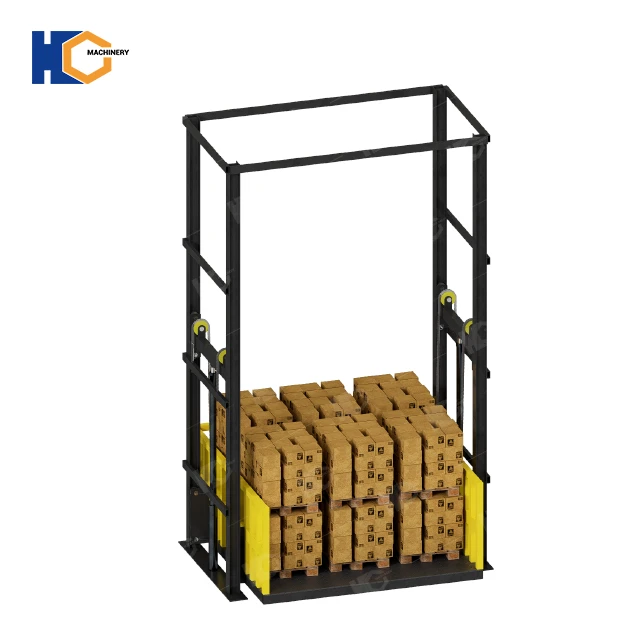
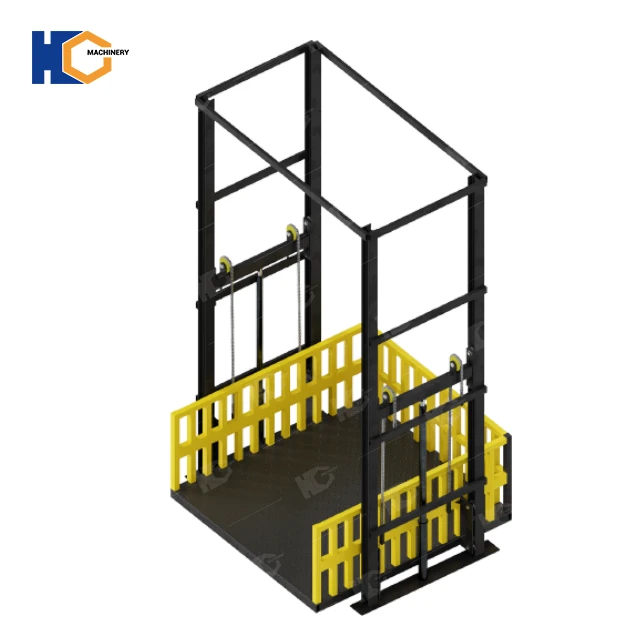
A guide rail cargo lift is a type of hydraulic or electric lifting system that moves goods vertically along fixed guide rails. The platform travels up and down between floors, carrying heavy loads safely and smoothly.
The system typically includes:
- Steel guide rail structure
- Hydraulic cylinder or traction system
- Cargo platform
- Control system
- Safety locking devices
It can be installed:
- Inside buildings
- Outside building walls
- In existing warehouses without major structural changes
The “CE” marking indicates compliance with European Union safety requirements, including mechanical safety, electrical safety, and environmental standards.
Specifications Table for Guide Rail Cargo Lift
| Specification | Description |
|---|---|
| Lifting Capacity | 1ton to 100ton (customizable) |
| Lifting Height | 1m to 20m (customizable) |
| Platform Size | 1m x 1m/2m x 2m (customizable) |
| Drive Type | Hydraulic |
| Power Supply | 220V/380V or custom based on location |
| Guide Rail Type | Dual vertical guide rails for stability |
| Lifting Speed | 4-6 meters per minute |
| Control Method | Control panel with push buttons; remote control option available |
| Safety Features | Overload protection, emergency stop, anti-fall safety brake |
| Installation | Wall-mounted or freestanding, based on site conditions |
| Compliance | CE, ISO 9001, and other international safety standards |
Why CE Certification Matters
CE certification is not just a label—it is proof that the cargo lift meets strict European safety standards.
A CE-certified guide rail cargo lift ensures:
- Structural safety under heavy load
- Electrical system compliance
- Emergency safety protection
- Operator safety assurance
- Reliable long-term performance
For international buyers, CE certification provides:
- Easier customs clearance
- Market acceptance in Europe
- Reduced legal risk
- Higher equipment trust level
In many export markets, CE certification is a mandatory requirement, especially for industrial machinery.
Working Principle of Guide Rail Cargo Lift
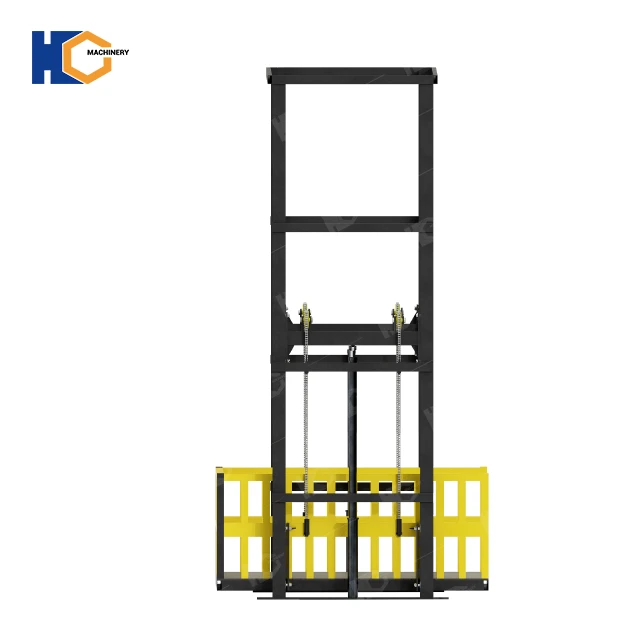
The operation principle is simple but highly efficient:
Step 1: Loading Goods
Cargo is placed on the platform using forklifts, pallet jacks, or manually.
Step 2: Activation
The operator selects the destination floor via control panel.
Step 3: Lifting Process
The hydraulic system pushes oil into cylinders, or a traction motor drives the platform upward along guide rails.
Step 4: Stable Vertical Movement
Guide rails ensure:
- No lateral movement
- Stable lifting
- Accurate positioning
Step 5: Floor Arrival
The system automatically stops at the selected level.
Step 6: Unloading
Goods are removed safely.
Step 7: Return Cycle
The platform returns for the next cycle.
This simple workflow makes it ideal for continuous industrial operations.
Technical Specifications of Guide Rail Cargo Lift with CE
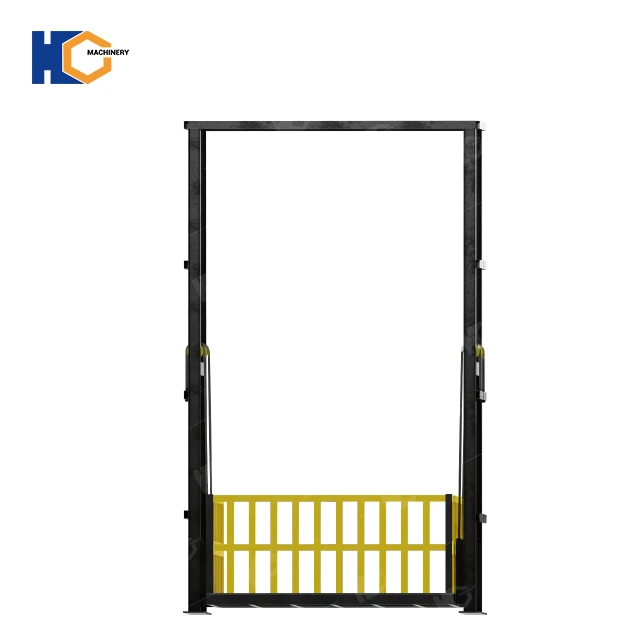
Below are typical industrial-grade specifications:
1. Load Capacity
- 1 – 100 ton
- Common warehouse models: 1T, 2T, 3T, 5T
Heavy-duty models are used in:
- Mining
- Manufacturing
- Logistics centers
2. Lifting Height
- Standard: 1 m – 20 m
- Custom: up to 30 m or more
Height depends on:
- Building structure
- Floor levels
- Application requirements
3. Platform Size
- Small: 1.5 × 1.5 m
- Medium: 2 × 2 m
- Large: 3 × 5 m or custom
Designed to accommodate:
- Euro pallets
- Industrial machinery
- Bulk cargo
4. Drive System
Two main systems:
Hydraulic System
- Smooth operation
- High load capacity
- Lower cost
- Ideal for warehouses
Traction System
- Faster speed
- Suitable for taller buildings
- More complex structure
5. Guide Rail Structure
- High-strength steel rails
- Precision alignment system
- Anti-deformation design
- Multi-point support system
Guide rails ensure:
stable and safe vertical movement
6. Control System
- Manual button control
- PLC intelligent control
- Multi-floor call system
- Optional remote control
Advanced systems include:
- Fault diagnostics
- Automatic leveling
- Load monitoring
7. Safety Systems (CE Requirement)
- Emergency stop system
- Overload protection
- Anti-fall locking device
- Door interlock system
- Limit switches
- Emergency descent valve
- Electrical protection system
Safety is the most critical part of CE compliance.
8. Structural Material
- High-strength carbon steel
- Reinforced platform deck
- Anti-slip surface
- Optional stainless steel for clean environments
9. Installation Type
- Pit installation
- Non-pit surface installation
- Indoor or outdoor installation
Outdoor models require:
- Waterproof coating
- Anti-rust treatment
- Weather protection system
Applications of Guide Rail Cargo Lift
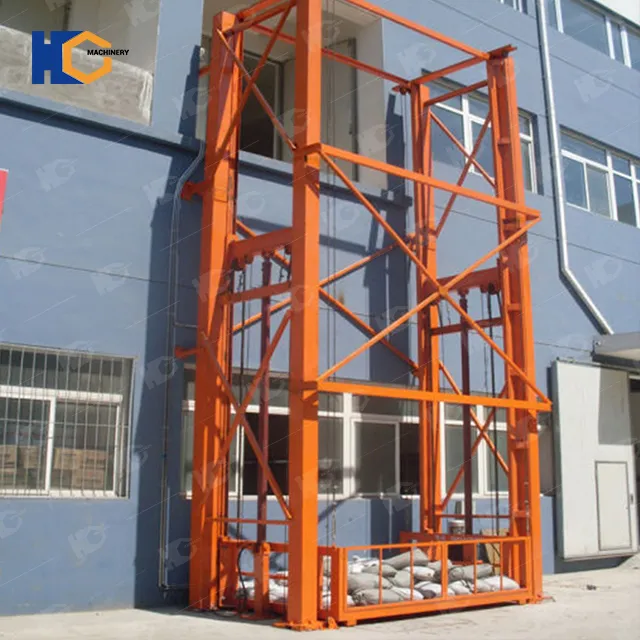
Guide rail cargo lifts are used in almost every industrial sector.
1. Warehouses and Logistics Centers
This is the most common application.
Used for:
- Pallet transportation
- Inventory movement
- Multi-floor logistics flow
Benefits:
- Faster operations
- Reduced forklift dependency
- Improved warehouse efficiency
2. Manufacturing Factories
Used for:
- Raw material lifting
- Semi-finished goods transfer
- Equipment movement
It ensures smooth production flow between floors.
3. Distribution Centers
Helps connect:
- Receiving areas
- Storage floors
- Shipping zones
Improves order fulfillment speed.
4. Retail and Supermarkets
Used for:
- Stockroom replenishment
- Bulk product movement
5. Automotive Industry
Used for:
- Engine lifting
- Spare parts handling
- Workshop material transfer
6. Construction Sites
Used for:
- Building materials
- Tools
- Equipment transport
7. Food and Pharmaceutical Industry
Stainless steel models are used for:
- Hygienic material handling
- Clean environment compliance
Advantages of Guide Rail Cargo Lift with CE
1. High Safety Standard
CE certification ensures:
- Reliable structural design
- Safe electrical system
- Emergency protection
2. Strong Load Capacity
Capable of handling up to 20 tons.
3. Flexible Installation
Can be installed:
- Inside buildings
- Outside structures
- Existing warehouses
4. Cost-Effective Solution
Compared with freight elevators:
- Lower installation cost
- Lower maintenance cost
5. High Efficiency
Reduces:
- Manual labor
- Forklift trips
- Waiting time
6. Easy Maintenance
Simple hydraulic or mechanical structure makes servicing easier.
Competitor Analysis
Guide rail cargo lifts compete with several alternatives:
1. Freight Elevators
Advantages:
- Faster speed
- Suitable for high-rise buildings
Disadvantages:
- Higher cost
- Complex installation
- Requires machine room
2. Scissor Lifts
Advantages:
- Compact design
- Low cost
Disadvantages:
- Limited height
- Lower load capacity
3. Forklift Systems
Advantages:
- Flexible movement
Disadvantages:
- High labor cost
- Safety risks
- Inefficient vertical transport
Why Guide Rail Cargo Lifts Win
They offer the best balance of:
- Cost
- Safety
- Load capacity
- Installation flexibility
Especially in warehouses and factories.
Maintenance and After-Sales Service
Proper maintenance ensures long-term performance.
Routine Maintenance Includes:
- Hydraulic oil inspection
- Guide rail lubrication
- Electrical system check
- Safety device testing
- Structural inspection
Maintenance Frequency:
- Monthly basic inspection
- Quarterly professional servicing
- Annual full system review
Service Life
A high-quality guide rail cargo lift typically lasts:
10–15 years or more
depending on usage and maintenance.
Common Problems and Solutions
1. Slow Lifting
Cause: low hydraulic pressure
Solution: system inspection
2. Platform Jamming
Cause: guide rail misalignment
Solution: rail adjustment
3. Electrical Faults
Cause: control system issue
Solution: PLC diagnostics
How to Choose the Right Guide Rail Cargo Lift
Before purchasing, consider:
1. Load Requirement
Always include future expansion.
2. Lifting Height
Determine number of floors.
3. Platform Size
Match pallet or cargo dimensions.
4. Usage Frequency
High usage requires stronger hydraulic systems.
5. Installation Environment
Indoor or outdoor conditions affect material selection.
Price Range
Price depends on:
- Load capacity
- Height
- Safety configuration
- CE compliance level
Future Trends
Guide rail cargo lift technology is evolving toward:
- Smart PLC automation
- IoT remote monitoring
- Energy-efficient hydraulic systems
- Lightweight high-strength materials
- Predictive maintenance systems
Warehouses are increasingly adopting intelligent logistics systems, making cargo lifts part of automated material flow networks.
Conclusion
A Guide Rail Cargo Lift with CE certification is a reliable, safe, and cost-effective solution for modern industrial vertical transportation.
It is widely used because it offers:
- Strong load capacity
- Flexible installation
- CE-certified safety compliance
- Low maintenance cost
- High operational efficiency
Compared with freight elevators and forklifts, it provides a better balance of:
performance, cost, and practicality.
For warehouses, factories, logistics centers, and industrial facilities, a CE-certified guide rail cargo lift is not just equipment—it is a long-term investment in efficiency, safety, and productivity.
If you are looking to purchase a rail elevator with guaranteed quality and after-sales service, as well as a reasonable price, please contact us right now to get the quotation!
 Room 203, Second Floor, Building 8, Phase Ⅱ, Zhizao Town, Jibei Street, Jiyang District, Jinan City, Shandong Province