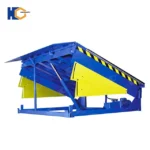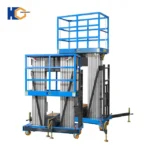
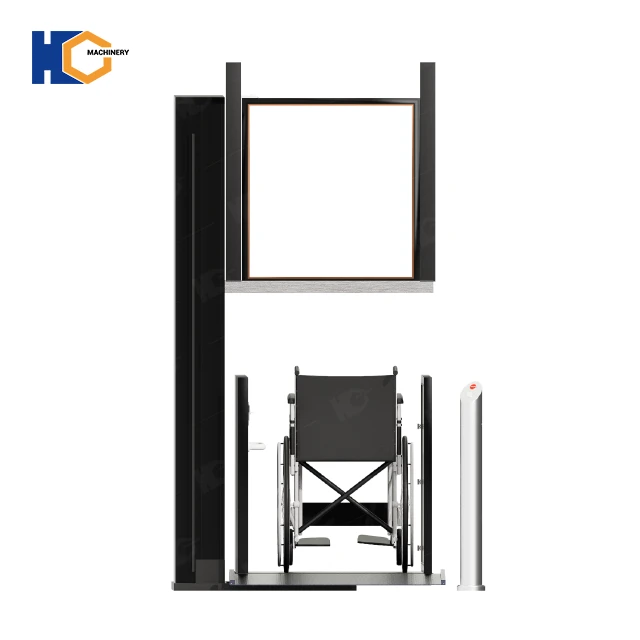
Wheelchair Platform Lift for Stairs
- Brand: HUICHUANG(JNHC lift)
- Customization: YES
- Manual: YES
- Price: $2,400 to $6,500
- Payment Methods: TT
- Delivery time: 15 working days
 +8615628811021
 admin@jnhclift.com
wheelchair platform lift for stairs.pdf
With the continuous development of science and technology, people’s quality of life has been greatly improved, especially in terms of barrier-free facilities. For individuals with mobility impairments, navigating through everyday spaces can be a challenging task. Simple tasks such as accessing a stage or stair, porch, or vehicle can become daunting obstacles. However, with the advancements in assistive technology, solutions such as wheelchair platform lifts have been developed to provide greater accessibility and independence for wheelchair users.As an important auxiliary equipment, wheelchair platform lift provide great convenience for people with limited mobility. Below, we will introduce the wheelchair lift in detail from the aspects of structure, function, installation scenario, features and safety.A wheelchair platform lift, also known as a vertical platform lift or wheelchair lift, is a versatile mobility aid that allows individuals using wheelchairs to easily access elevated areas. These lifts typically consist of a platform that can be raised and lowered vertically, providing a safe and efficient way for wheelchair users to move between different levels.
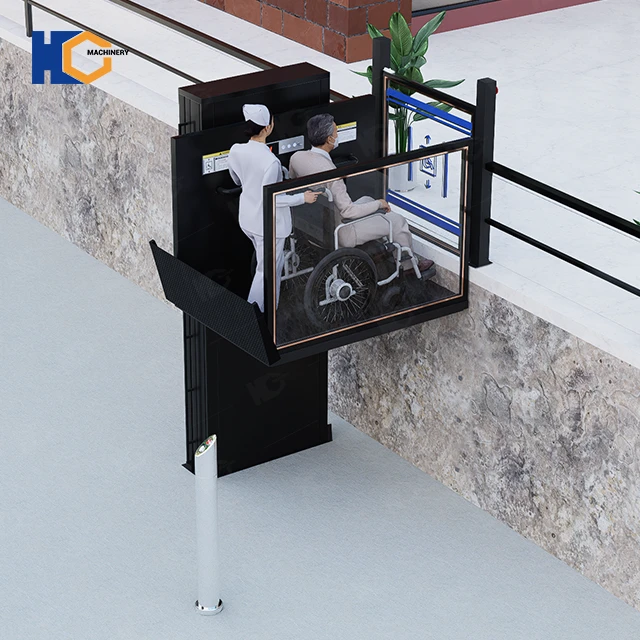
Modern buildings are becoming more accessible, but stairs still remain one of the biggest mobility barriers for wheelchair users, elderly people, and individuals with limited movement. Traditional ramps are not always practical because they require large installation space and specific slope angles. Elevators are effective but often expensive and difficult to install in existing buildings.
This is why the wheelchair platform lift for stairs has become one of the most practical accessibility solutions worldwide.
A wheelchair platform lift allows wheelchair users to safely move between floors or stair levels without leaving their wheelchair. Compared with traditional accessibility solutions, platform lifts are:
- More compact
- Easier to install
- More affordable
- Safer for many residential and commercial applications
Today, these lifts are widely used in:
- Homes
- Schools
- Hospitals
- Shopping malls
- Public transportation stations
- Religious buildings
- Office buildings
This guide explains everything buyers need to know, including:
- What a wheelchair platform lift for stairs is
- Common specifications and sizes
- Main components
- Working principles
- Application scenarios
- Competitive comparison with ramps and elevators
- Installation requirements
- Operating instructions
- Maintenance and after-sales support
- How to choose the right lift system
Everything is explained using clear, practical language instead of confusing engineering terminology.
A wheelchair platform lift for stairs is a mechanical lifting system designed to transport:
- Wheelchair users
- Elderly passengers
- Individuals with mobility limitations
Along staircases or between floor levels safely.
Unlike stair climbing wheelchairs or portable lifting devices, platform lifts provide:
- Stable lifting platforms
- Guardrail protection
- Electric drive systems
- Safety locking mechanisms
The wheelchair remains on the platform during transportation, reducing physical effort and improving safety.
There are two major categories:
- Inclined wheelchair platform lifts
- Vertical wheelchair platform lifts
Both solve accessibility problems, but they work differently and fit different building layouts.
Types of Wheelchair Platform Lifts for Stairs
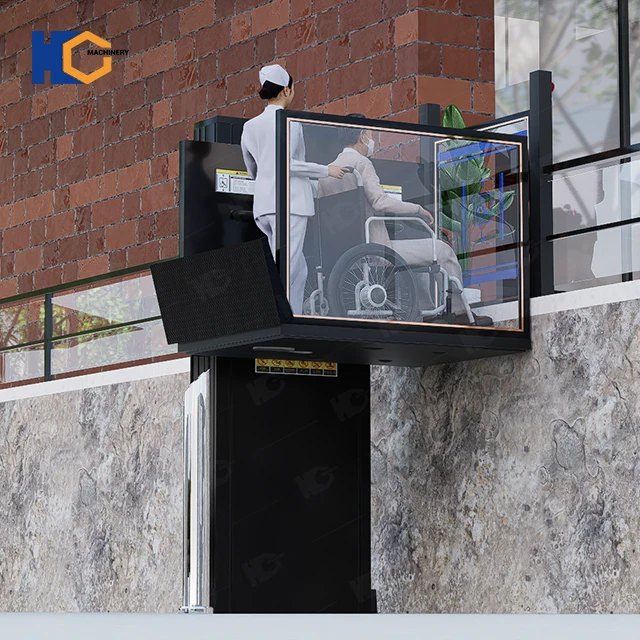
Understanding the different lift types is extremely important before purchasing.
Inclined Wheelchair Platform Lift
This type moves directly along the staircase rail.
The platform folds against the wall when not in use.
Main Features
- Rail mounted on stairs
- Travels along staircase angle
- Space-saving folding design
- Suitable for indoor staircases
Best Applications
- Residential homes
- Schools
- Churches
- Public buildings with existing stairs
Advantages
- No major building reconstruction
- Lower installation cost than elevators
- Good for narrow stairways
Disadvantages
- Slower than elevators
- Limited platform size
- Staircase width requirements
Vertical Wheelchair Platform Lift
This works more like a mini elevator.
The platform moves vertically between levels.
Main Features
- Vertical lifting motion
- Hydraulic or screw drive system
- Enclosed or open platform
Best Applications
- Porches
- Commercial entrances
- Wheelchair access between floors
Advantages
- Higher lifting capacity
- Better for outdoor use
- Easier wheelchair positioning
Disadvantages
- Requires installation space
- Higher cost than inclined lifts
Common Specifications and Technical Parameters

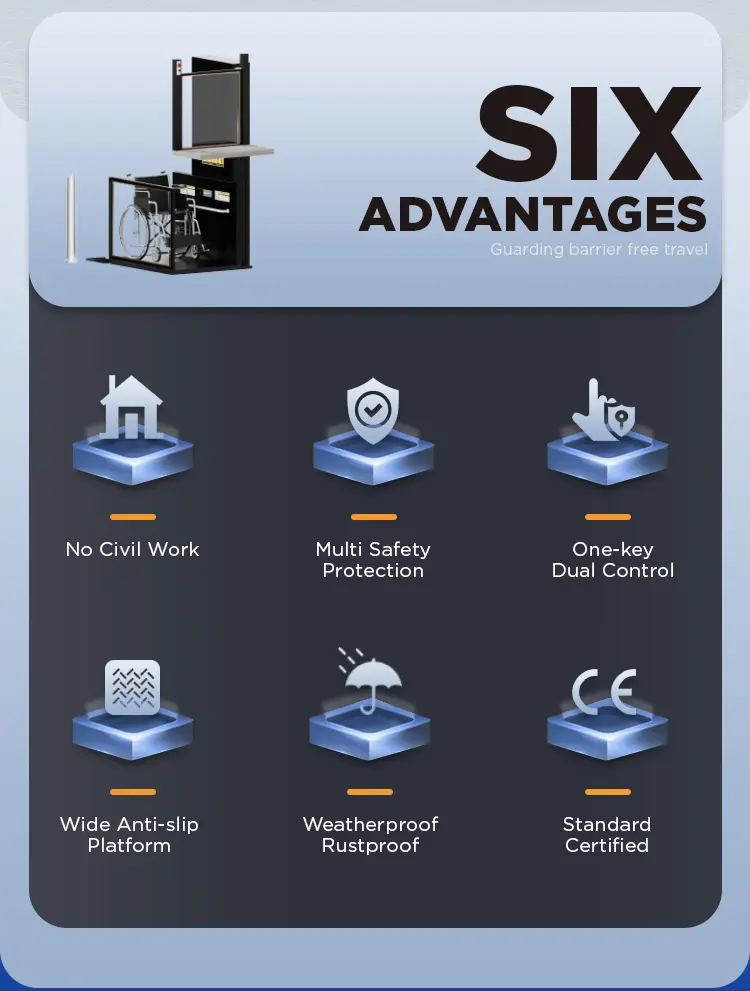
Specifications vary depending on:
- Building structure
- Staircase layout
- User requirements
- Local accessibility standards
Below are common industry specifications.
Platform Size
Typical platform dimensions:
- 700 × 900 mm
- 800 × 1000 mm
- 900 × 1250 mm
Larger platforms accommodate:
- Electric wheelchairs
- Caregivers
- Heavy-duty mobility devices
Load Capacity
Common capacities:
- 250 kg
- 300 kg
- 350 kg
- 500 kg
Commercial models often support higher loads.
Lifting Height
Typical lifting heights:
- 1–15 meters for vertical lifts
- Flexible rail lengths for inclined lifts
Drive System
Most common drive systems:
- Hydraulic drive
- Screw drive
- Rack and pinion drive
Power Supply
Typical power options:
- AC 220V
- AC 110V
- Battery backup systems
Battery backup is critical during power outages.
Operating Speed
Typical speed:
- 0.06–0.15 m/s
Accessibility lifts prioritize safety over speed.
Safety Standards
High-quality wheelchair platform lifts often comply with:
- CE certification
- ISO standards
- EN81 accessibility regulations
- ADA accessibility guidelines
Main Components of a Wheelchair Platform Lift
Understanding the main components helps buyers evaluate lift quality.
Platform
The platform supports:
- Wheelchair
- Passenger
Usually includes:
- Anti-slip surface
- Safety edge sensors
Rail System
Inclined lifts use rail tracks mounted along stairs.
The rail guides platform movement smoothly.
Drive Motor
The motor powers:
- Platform movement
- Lifting operation
Quiet motors improve user comfort.
Control System
Controls:
- Start
- Stop
- Direction movement
- Emergency functions
Can include:
- Remote controls
- Wall-mounted buttons
- Wireless operation
Safety Barriers and Ramps
Prevent wheelchair movement during transport.
Automatically open and close on many models.
Emergency Stop System
Allows immediate stopping during emergencies.
Battery Backup
Enables operation during electrical outages.
Very important in:
- Hospitals
- Residential buildings
Folding Mechanism
Most inclined lifts fold automatically to save staircase space.
Working Principle
The working principle depends on lift type.
Inclined Platform Lift Working Principle
- User enters platform
- Safety barriers lock
- Motor drives platform along rail
- Platform moves smoothly along stairs
- Platform stops at target floor
- Barriers open for exit
Vertical Platform Lift Working Principle
- User enters platform
- Safety gates lock
- Hydraulic or screw drive lifts platform vertically
- Safety sensors monitor operation
- Platform stops at destination level
Main Application Scenarios
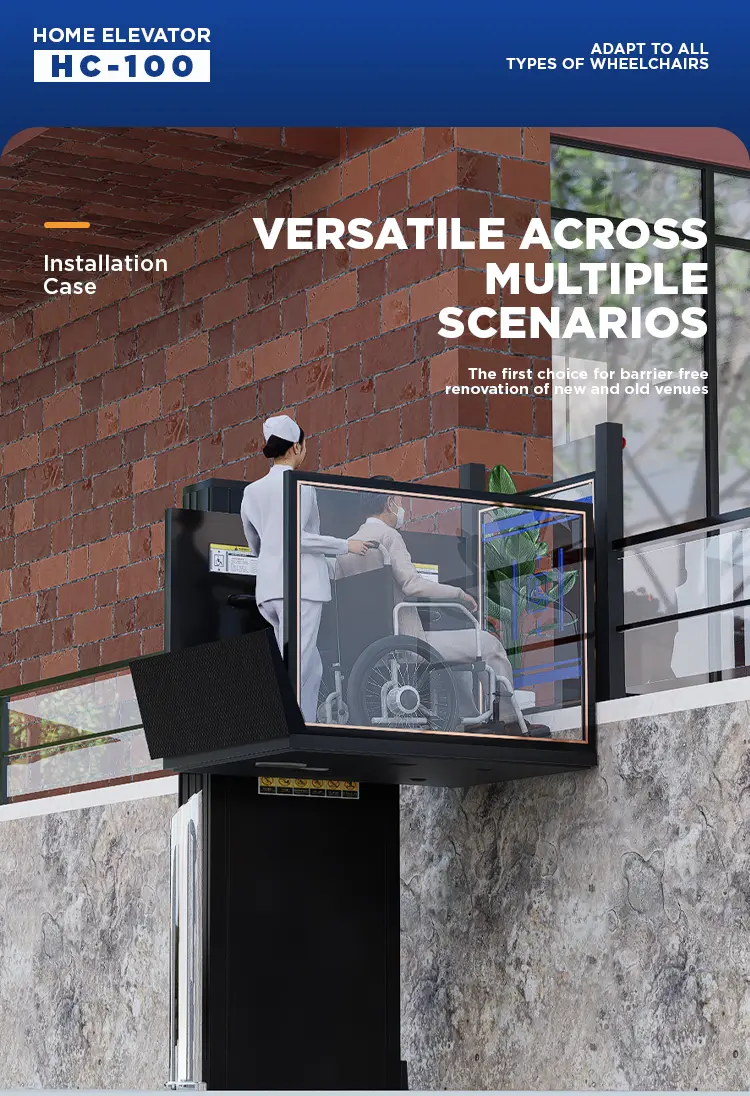
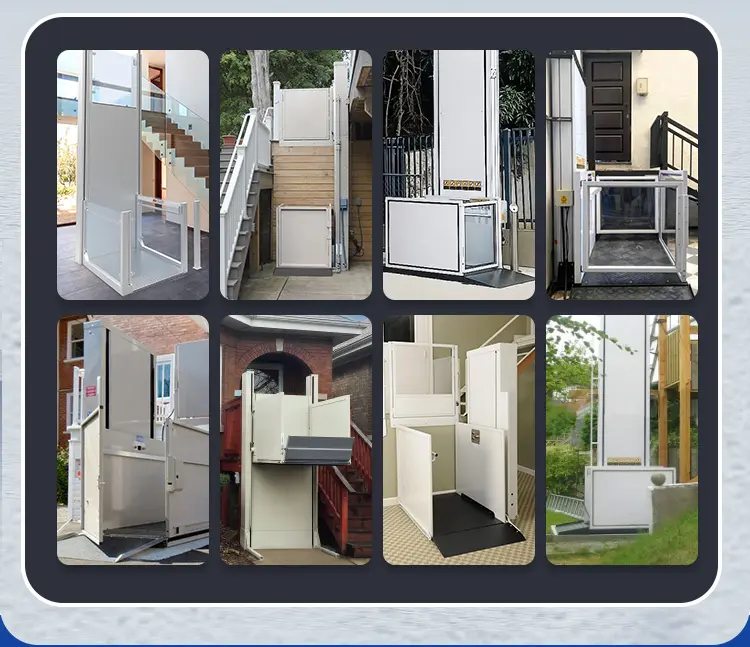
Wheelchair platform lifts are used in many industries.
Residential Homes
One of the largest markets.
Helps:
- Elderly family members
- Disabled users
- Long-term rehabilitation patients
Advantages:
- Lower cost than home elevators
- Easier retrofitting
Schools and Universities
Used for:
- Student accessibility
- ADA compliance
- Inclusive education environments
Hospitals and Clinics
Critical for:
- Patient mobility
- Wheelchair access
- Barrier-free transportation
Shopping Centers
Improves:
- Customer accessibility
- Building compliance
- User convenience
Churches and Historic Buildings
Many historic buildings cannot install elevators easily.
Platform lifts preserve:
- Building structure
- Architectural appearance
Public Transportation Stations
Used in:
- Subway stations
- Railway stations
- Bus terminals
Wheelchair Platform Lift vs Competitors
Understanding alternatives helps buyers make better decisions.
Platform Lift vs Wheelchair Ramp
| Feature | Platform Lift | Ramp |
|---|---|---|
| Space requirement | Small | Large |
| Installation flexibility | High | Moderate |
| Accessibility comfort | Better | Moderate |
| Cost | Higher | Lower |
Why Platform Lifts Often Win
Long ramps require large spaces.
Many buildings simply do not have enough room.
Platform Lift vs Home Elevator
| Feature | Platform Lift | Home Elevator |
|---|---|---|
| Cost | Lower | Higher |
| Installation complexity | Lower | Higher |
| Space requirement | Smaller | Larger |
| Speed | Slower | Faster |
Why Buyers Choose Platform Lifts
Much easier retrofitting in existing buildings.
Platform Lift vs Stairlift Chair
| Feature | Platform Lift | Stair Chair Lift |
|---|---|---|
| Wheelchair compatible | Yes | No |
| User transfer required | No | Yes |
| Accessibility level | Higher | Moderate |
Wheelchair users usually prefer platform lifts because:
- No transfer needed
- More independence
Advantages of Wheelchair Platform Lifts
1. Improved Accessibility
The biggest advantage is barrier-free movement.
2. Space Saving
Especially compared with ramps.
3. Easier Installation
Often installed without major building reconstruction.
4. Lower Cost Than Elevators
Makes accessibility more affordable.
5. Safer Than Manual Assistance
Reduces fall risks dramatically.
6. Suitable for Indoor and Outdoor Use
Outdoor models use:
- Waterproof controls
- Anti-rust materials
Disadvantages of Wheelchair Platform Lifts
No system is perfect.
1. Slower Operation
Platform lifts prioritize safety.
2. Weight Limits
Very heavy wheelchairs may exceed capacity.
3. Stair Width Restrictions
Inclined lifts require minimum staircase width.
4. Power Dependency
Although battery backup helps.
Procurement Guide
Choosing the right supplier matters greatly.
Step 1: Measure the Staircase
Important measurements:
- Stair width
- Stair angle
- Floor height
- Landing dimensions
Step 2: Determine Lift Type
Choose:
- Inclined lift
- Vertical lift
Based on building structure.
Step 3: Confirm Weight Capacity
Consider:
- User weight
- Wheelchair weight
- Caregiver presence
Step 4: Check Local Accessibility Regulations
Some countries require:
- Specific certifications
- Inspection approval
Step 5: Evaluate Manufacturer Experience
Good manufacturers provide:
- Technical drawings
- Installation guidance
- After-sales support
- Spare parts availability
Installation Process
Installation usually involves several steps.
Site Inspection
Engineers evaluate:
- Staircase structure
- Mounting points
- Power supply
Rail or Platform Installation
Rails are fixed securely to:
- Stairs
- Walls
- Supporting structures
Electrical Connection
Power systems and controls are installed.
Safety Testing
Includes:
- Emergency stop test
- Load testing
- Sensor testing
User Training
Operators learn:
- Basic controls
- Emergency operation
- Daily safety inspection
How to Operate a Wheelchair Platform Lift
Operation is generally simple.
Step 1: Open Platform
Fold platform down if necessary.
Step 2: Enter Platform
Position wheelchair properly.
Step 3: Lock Safety Barriers
Ensure platform is secure.
Step 4: Press Direction Button
Lift moves automatically.
Step 5: Exit Safely
Open barriers and leave platform slowly.
Important Safety Rules
Never:
- Exceed weight capacity
- Use damaged equipment
- Operate without safety barriers
Maintenance and Service
Regular maintenance extends lifespan significantly.
Daily Inspection
Check:
- Buttons
- Safety edges
- Platform movement
Monthly Inspection
Inspect:
- Rails
- Fasteners
- Electrical systems
Annual Maintenance
Professional servicing should include:
- Motor inspection
- Battery testing
- Full safety system inspection
Common Problems
Possible issues include:
- Rail obstruction
- Battery failure
- Sensor malfunction
- Motor wear
Regular maintenance reduces these risks.
Typical Lifespan
Most high-quality platform lifts last:
- 10–20 years
Depending on:
- Usage frequency
- Maintenance quality
- Environment
After-Sales Service
Reliable after-sales support is critical.
Good suppliers provide:
- Spare parts supply
- Technical support
- Remote troubleshooting
- Warranty service
Typical Warranty
Usually:
- 12–24 months
Some manufacturers offer longer warranties.
Future Trends
The industry is moving toward:
- Smart control systems
- Quieter motors
- Foldable compact designs
- Remote diagnostics
- Improved energy efficiency
Accessibility regulations worldwide are also increasing demand.
Final Thoughts
Wheelchair platform lifts for stairs have become one of the most practical accessibility solutions for modern buildings.
They provide:
- Safe wheelchair transportation
- Space-saving accessibility
- Easier retrofitting
- Lower installation cost than elevators
For homes, schools, hospitals, and public buildings, they solve one of the biggest mobility barriers safely and efficiently.
Compared with ramps and traditional elevators, platform lifts often offer the best balance between:
- Cost
- Space efficiency
- Accessibility
- Installation flexibility
The key to successful long-term use is:
- Choosing the correct lift type
- Working with experienced manufacturers
- Following proper maintenance procedures
Bottom Line
A wheelchair platform lift for stairs is not just a lifting device.
It is an accessibility solution that improves:
- Independence
- Safety
- Building usability
- Quality of life
For wheelchair users and mobility-limited individuals, the right platform lift can transform a difficult building into a truly accessible environment.
 Room 203, Second Floor, Building 8, Phase Ⅱ, Zhizao Town, Jibei Street, Jiyang District, Jinan City, Shandong Province