Top 20 Home Elevator Companies in the World
Home elevators have evolved from luxury additions to practical, accessibility-enhancing components in modern residences. Whether for multigenerational living, aging-in-place planning, or architectural design, selecting the right home elevator is a long-term investment—both financially and functionally.
This article examines the top 20 home elevator companies in the world, providing company profiles, strengths, weaknesses, real-world application insights, and practical suggestions to help you decide which manufacturer is the best match for your needs.
What Makes a Great Home Elevator Provider?
Before diving into the list, let’s clarify what separates a “good” supplier from an exceptional one. A top-tier home elevator company typically demonstrates:
- Proven safety certifications (CE, ASME A17.1 / CSA B44, EN81-41)
- Diverse product range (shaftless options, panoramic glass elevators, traction and hydraulic systems)
- Strong service network and after-sales support
- Reliable lead times and installation teams
- Innovation in comfort, noise level, and energy efficiency
- Real-world performance and durability
With these criteria in mind, let’s explore the twenty most reputable companies in the home elevator market.
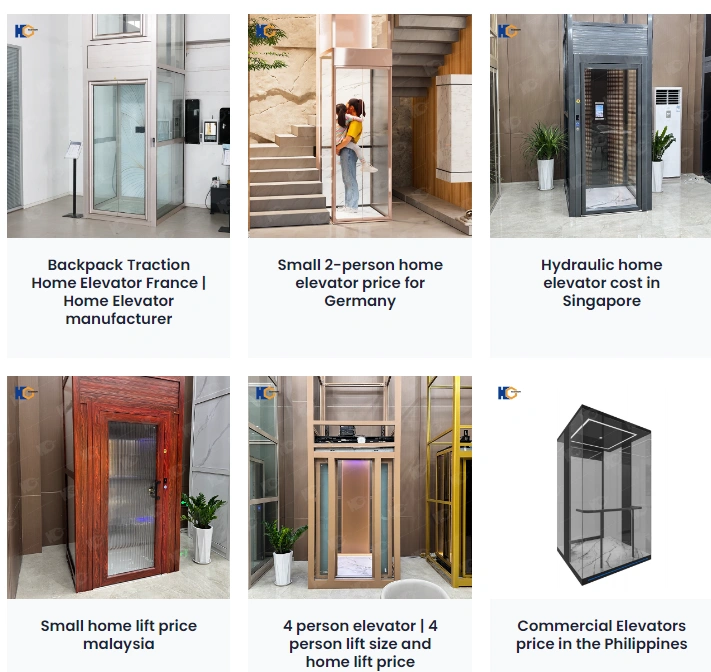
1. Otis Worldwide (USA)
Profile:
Otis is arguably the most famous elevator brand worldwide, with a history spanning over a century. While known for commercial elevators, Otis also offers residential solutions with a focus on reliability and brand trust.

Strengths:
- Unmatched global service network
- Strong safety record
- Advanced control systems
Weaknesses:
- Higher price point
- Less customization than niche residential brands
Practical Suggestion:
Best for buyers who value brand reliability and global support—especially if you plan to stay in your home for 10+ years.
2. KONE (Finland)
Profile:
KONE is a global elevator giant with a strong reputation for innovation and energy-efficient systems. Their home elevators integrate advanced drive technology and smooth ride quality.
Strengths:
- Quiet and energy-efficient systems
- Broad international presence
- Good customization options
Weaknesses:
- Premium pricing structure
- Complex models may require longer lead times
Practical Suggestion:
Excellent choice for contemporary homes with sustainability priorities.
3. Schindler (Switzerland)
Profile:
Schindler is another major European elevator manufacturer with a solid foothold in both commercial and residential markets. Known for precision engineering and durability.
Strengths:
- Robust engineering
- Strong safety credentials
- Global maintenance network
Weaknesses:
- Service may be uneven in remote regions
- Not the most cost-effective option
Practical Suggestion:
Recommended for buyers seeking European quality and solid after-sales coverage.
4. Thyssenkrupp Elevator (Germany)
Profile:
Thyssenkrupp leverages German engineering excellence across its product lines. Its home elevator offerings emphasize smooth operation and advanced safety features.
Strengths:
- German engineering expertise
- High ride comfort
- Integrated digital diagnostics
Weaknesses:
- High upfront cost
- Complex options can overwhelm first-time buyers
Practical Suggestion:
Ideal for tech-savvy homeowners wanting cutting-edge features and digital diagnostics.
5. Mitsubishi Electric (Japan)
Profile:
Mitsubishi Electric delivers home elevators with exceptional reliability and minimal maintenance. Their systems emphasize durability and quiet performance.
Strengths:
- Excellent long-term reliability
- Smooth, quiet operation
- Strong Asia-Pacific presence
Weaknesses:
- Mid-range customization
- Premium pricing
Practical Suggestion:
Best for buyers prioritizing reliability and low maintenance over cutting-edge bells and whistles.
6. TUHE (China)
Profile:
Tuhe Lift is a leading lift manufacturer in China, located in the “Hometown of China’s Lifting Platform Manufacturing—Jiyang”, was co-founded in 2012 by 6 senior engineers, it aims to be the best lift manufacture in China with the world class standard.
Strengths:
- Compact designs for smaller homes
- Smooth ride quality
- Strong safety systems
Weaknesses:
- Less brand recognition outside Asia
- Fewer luxury customization options
Practical Suggestion:
A great fit for smaller homes and buyers who want proven China quality at a manageable price.
7. Stiltz Elevators (UK)
Profile:
Stiltz focuses exclusively on home elevators with shaftless and space-saving designs. Their patented dual rail system is ideal for retrofits.
Strengths:
- Shaftless solutions minimize renovation work
- Easy installs
- Excellent for aging-in-place
Weaknesses:
- Limited to low-to-medium rise
- Higher price per travel height
Practical Suggestion:
Choose Stiltz if your home renovation budget is constrained, but you still want a modern, compact elevator.
8. Harmar (USA)
Profile:
Harmar focuses on accessibility elevators, such as vertical platform lifts and home elevators designed for seniors and people with disabilities.

Strengths:
- ADA-compliant solutions
- Strong focus on accessibility
- Lower cost options available
Weaknesses:
- Limited luxury or high-rise models
- Not ideal for traditional elevator aesthetics
Practical Suggestion:
Best choice for accessibility-first buyers, especially families with mobility challenges.
9. Savaria (Canada)
Profile:
Savaria is a major name in residential mobility solutions, including custom home elevators, wheelchair lifts, and platform lifts.

Strengths:
- Customization and accessibility focus
- Strong North American presence
- Competitive pricing
Weaknesses:
- Aesthetic options may be more functional than luxurious
- Limited global footprint
Practical Suggestion:
Great for North American homes needing accessible and tailored solutions.
10. Huichuang Lift (Australia)
Profile:
Jinan Huichuang Machinery Manufacturing Co., Ltd. (Huichuang lift) is located in Jinan, Shandong, the hometown of hydraulic lifting platforms. We are a well-known Hydraulic elevator, home elevator, and lift platform manufacturer and supplier in China.
Strengths:
- Based in China and targeting the global market, we sell small home elevators.
- Tailored residential solutions
- Good safety systems
Weaknesses:
- Smaller global network
- Limited product variety compared to the parent brand
Practical Suggestion:
Huichuang is best known for serving global distributors, contractors, and private homeowners seeking modern home elevator solutions without luxury-brand price inflation.
11. Orona (Spain)
Profile:
Orona combines European design and technology to deliver home elevators that prioritize reliability and user comfort.
Strengths:
- Durable European design
- Comfortable ride dynamics
- Good mid-range pricing
Weaknesses:
- Less presence outside Europe
- Smaller dealer network
Practical Suggestion:
A strong contender for European buyers wanting balance between cost and quality.
12. WITTUR (France/Germany)
Profile:
Wittur supplies elevator components and turnkey elevator solutions, including residential models.
Strengths:
- Robust engineering and components
- Strong presence in retrofit markets
- Good customization
Weaknesses:
- Primarily components supplier—system integration varies
- Less end-to-end branding
Practical Suggestion:
Good for large-scale builders and retrofits where component quality matters.
13. Inclinator (USA)
Profile:
A family-owned company with long experience in residential elevators. Known for tailored solutions and strong customer service.
Strengths:
- Personalized service
- Flexible customization
- Good build quality
Weaknesses:
- Smaller global reach
- Price can vary with customization
Practical Suggestion:
Ideal for custom homes and unique architectural demands.
14. PVE Elevator(Pacific Vertical, USA)
Profile:
PVE elevator specializes in residential elevators with a focus on durability and ease of installation.
Strengths:
- Simple installation process
- Reliable performance
- Accessible pricing
Weaknesses:
- Less focus on luxury aesthetics
- Mid-tier feature set
Practical Suggestion:
Great for budget-conscious buyers who still want a quality product.
15. Hyundai Elevator (South Korea)
Profile:
A major Asian elevator brand with strong engineering and design capabilities.

Strengths:
- Strong Asian market presence
- Good service infrastructure
- Solid reliability
Weaknesses:
- Limited presence in Western markets
- Fewer home-specific innovations
Practical Suggestion:
Best suited for buyers in Asia-Pacific who want a reputable regional brand.
16. Fujitec (Japan)
Profile:
Fujitec is a global elevator manufacturer with a strong track record in both residential and commercial elevators.

Strengths:
- Excellent reliability
- Quiet operation
- Advanced control systems
Weaknesses:
- Limited home-only product differentiation
- Pricing on the premium side
Practical Suggestion:
Ideal for buyers seeking longevity and low maintenance.
17. Sanyo (Japan)
Profile:
Sanyo has a long heritage in elevator manufacturing, including home elevators tailored to the Japanese market.

Strengths:
- Compact designs
- Smooth ride comfort
- Proven engineering
Weaknesses:
- Overseas support is limited in some regions
- Home elevator portfolios vary by country
Practical Suggestion:
Consider for smaller homes and urban environments with limited space.
18. Hyundai OTIS Shares JV (Korea/USA)
Profile:
A joint operation leveraging Otis technology with regional manufacturing strength.
Strengths:
- Combined global tech and regional execution
- Strong safety and service
Weaknesses:
- Complex global brand structure
- Pricing above local competitors
Practical Suggestion:
Good for buyers who want both global pedigree and local service.
19. Stannah (UK)
Profile:
Stannah is known for stairlifts and home elevators, with an emphasis on accessibility and British engineering.

Strengths:
- Deep accessibility expertise
- Strong service focus
- High safety standards
Weaknesses:
- Less technologically advanced than global elevator giants
- Premium pricing for service
Practical Suggestion:
Perfect for senior mobility applications and retrofit situations.
20. TK Elevator (Global)
Profile:
Formerly ThyssenKrupp Elevator, TK Elevator is a global leader now operating independently with advanced technologies and smart elevator systems.
Strengths:
- Global support
- Advanced diagnostics and IoT integration
- Strong safety credentials
Weaknesses:
- Premium pricing
- Complexity may be overkill for small homes
Practical Suggestion:
Best for large homes with smart integration needs and long-term support expectations.
Comparative Buyer Insights
| Buyer Type | Ideal Brands |
|---|---|
| Luxury residential | KONE, Otis, TK Elevator |
| Aging-in-place / accessibility | Stannah, Savaria, Harmar |
| High customization | Inclinator, Stiltz, PVE |
| Value-driven | Savaria, PVE, Hyundai Elevator |
| Asian markets | Mitsubishi, Fuji, Hyundai |
| European buyers | Orona, Schindler, Lectra |
Key Factors When Choosing a Home Elevator
Safety and Certification:
Ensure compliance with CE (Europe), ASME A17.1 / CSA B44 (North America), EN81-41 (global).
Service Network:
A local authorized service team saves time and money over the lifecycle.
Drive Type:
Hydraulic excels at smooth starts; traction offers energy efficiency and smoother rides.
Shaft vs Shaftless:
Shaftless solutions reduce construction needs—for retrofit or small homes.
Customization:
Doors, finishes, controls, and interior panels matter for long-term satisfaction.
How much does a home elevator typically cost?
The cost of a home elevator usually ranges from USD 20,000 to USD 60,000, depending on:
- Drive system (hydraulic, traction, screw-driven)
- Travel height and number of stops
- Customization level (glass cabins, finishes, automation)
- Installation complexity and local labor costs
Premium European brands and high customization can exceed this range. If you purchase small home elevators from China, you can get an even lower price by buying directly from the Huichuang factory.
Practical Suggestions for Buyers
- Define Your Needs Before Choosing a Brand
Don’t start with a brand name; start with:- Travel height
- Location constraints
- Load capacity
- Aesthetics
- Budget
- Visit Installed References if Possible
Seeing performance in real homes reveals more than brochures. - Check Local Regulations and Compliance
Some countries have specific registration or inspection requirements. - Evaluate Service Contracts
A cheaper machine with poor service ends up costing more over time. - Consider Total Cost of Ownership (TCO)
Think beyond the upfront price—maintenance, electricity, and downtime matter.
levator Comparison Table (Key Brands)
| Brand | Elevator Type | Max Travel Height | Customization | Price Range (USD) | Best For |
|---|---|---|---|---|---|
| Otis | Hydraulic / Traction | 15 m | Medium | 40,000–70,000 | Long-term reliability |
| KONE | Traction | 20 m | High | 45,000–75,000 | Energy efficiency |
| Schindler | Hydraulic / Traction | 18 m | Medium | 40,000–65,000 | European quality |
| Stiltz | Shaftless | 7 m | Medium | 25,000–45,000 | Retrofit homes |
| Savaria | Hydraulic / Platform | 12 m | High | 22,000–50,000 | Accessibility |
| Mitsubishi | Traction | 20 m | Medium | 45,000–70,000 | Quiet operation |
| Inclinator | Hydraulic | 15 m | Very High | 30,000–60,000 | Custom homes |
| TK Elevator | Traction | 20 m | High | 45,000–80,000 | Smart systems |
Prices are indicative and vary by region, configuration, and installation.
Regional Selection Guides for Home Elevators
North America (USA & Canada)
Market Characteristics
- Strong emphasis on ASME certification
- High demand for aging-in-place solutions
- Detached homes with retrofit installations
Recommended Brands
- Savaria
- Inclinator
- Harmar
- Otis
- PVE
Buyer Advice
Focus on after-sales service coverage and long-term maintenance contracts. Accessibility compliance often matters more than aesthetics.
Europe (EU & UK)
Market Characteristics
- Strict CE and EN 81 standards
- High design and architectural integration expectations
- Smaller homes and tighter shafts
Recommended Brands
- KONE
- Schindler
- Orona
- Stannah
- TK Elevator
Buyer Advice
Choose manufacturers with local installation partners. European buyers should prioritize noise control, energy efficiency, and minimalist design.
Asia-Pacific (APAC)
Market Characteristics
- Rapid urbanization
- Strong demand in villas and multi-generational homes
- Price sensitivity varies by country
Recommended Brands
- Mitsubishi Electric
- Fuji Elevator
- Hyundai Elevator
- Otis (regional manufacturing)
- Fujitec
Buyer Advice
Ensure local service teams exist. Imported systems without regional support often create long-term maintenance problems.
Final Thoughts
The home elevator market is broad, ranging from global giants with deep engineering resources to specialists focused on accessibility or space-saving designs. There is no single “best” company—only the one that fits your budget, application, installation constraints, and service expectations.
By focusing on real performance data, certification standards, and service capabilities, you can choose an elevator partner that keeps your home safe, comfortable, and future-ready.
Jnhclift (Huichuang Lift), based in Jinan, China, is a professional manufacturer of scissor lifts, home elevators, and lift platforms. With our own dedicated factory, we deliver high-quality, reliable lifting solutions tailored to meet diverse industrial and residential needs.

 Room 203, Second Floor, Building 8, Phase Ⅱ, Zhizao Town, Jibei Street, Jiyang District, Jinan City, Shandong Province
 +8615628811021
 admin@jnhclift.com