
What Is a Self Propelled Mobile Scissor Lift Table?
/in blog /by jnhcliftWhat Is a self-propelled mobile scissor lift table? Complete Guide to Features, Specifications, Applications, Benefits, and Buying Tips
The demand for safer, more efficient, and flexible aerial work equipment has grown rapidly across construction, warehousing, facility maintenance, manufacturing, and industrial maintenance. Among the most popular aerial work platforms available today is the Self-Propelled Mobile Scissor Lift Table. Unlike traditional manually pushed scissor lifts, self-propelled models are equipped with electric or hydraulic drive systems that allow operators to move the platform while elevated, significantly improving productivity and reducing labor costs.
Whether you need equipment for indoor warehouse maintenance, outdoor construction projects, or industrial installation work, a self-propelled scissor lift provides a stable working platform, excellent maneuverability, and enhanced operator safety.
This guide explains what a self-propelled mobile scissor lift table is, how it works, its technical specifications, applications, advantages, pain points it solves, competitive comparisons, and answers the most frequently asked questions.
What Is a self-propelled mobile scissor lift table?
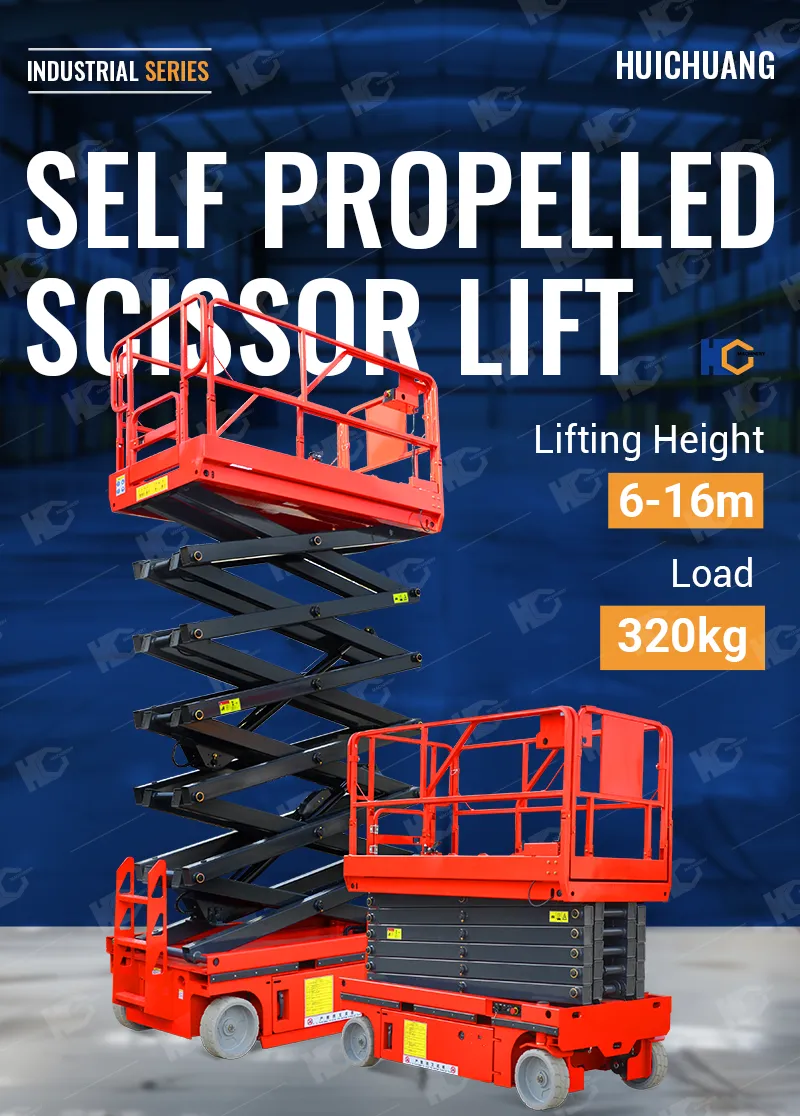
A self-propelled mobile scissor lift table is a powered aerial work platform designed to lift workers, tools, and materials vertically while allowing the machine to drive independently without being pushed or towed.
The lifting platform is supported by a crisscross “scissor” mechanism that expands and contracts through hydraulic cylinders. Unlike manual mobile scissor lifts, self-propelled models are equipped with:
- Electric drive motors
- Hydraulic lifting system
- Battery or diesel power source
- Steering system
- Electronic control system
- Emergency safety devices
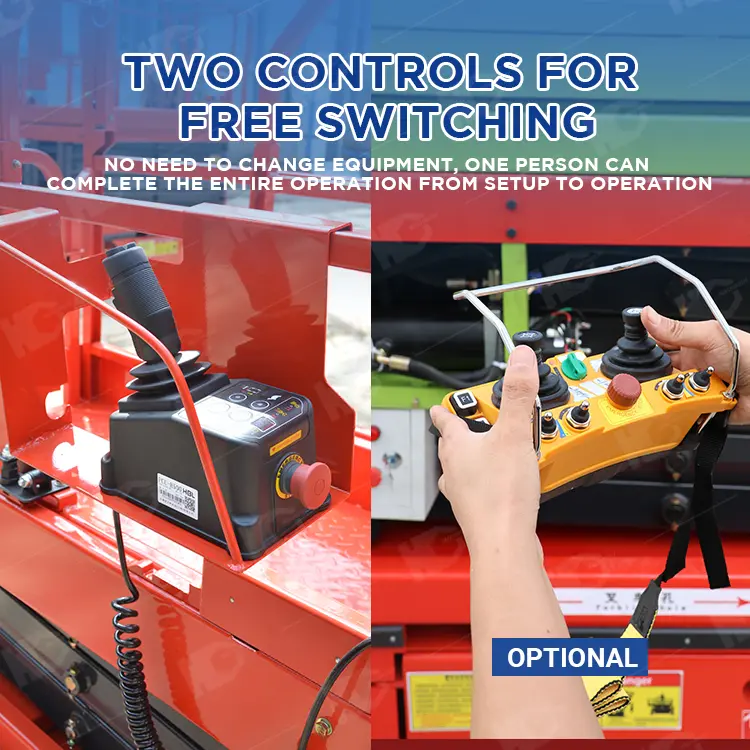
The operator can raise, lower, and drive the platform directly from the platform controls, making it ideal for jobs that require frequent repositioning.
How Does a Self Propelled Scissor Lift Work?
The operating process is relatively simple but highly efficient.
Step 1: Power Supply
Depending on the model, power comes from:
- Lithium battery
- Lead-acid battery
- Diesel engine
- Hybrid power system
Electric models are most common for indoor applications.
Step 2: Hydraulic Lifting
The hydraulic pump sends pressurized oil into hydraulic cylinders.
The cylinders expand the crossed scissor arms, lifting the platform vertically while maintaining excellent stability.
Step 3: Self-Propelled Driving
Drive motors power the wheels, allowing the operator to move the lift without lowering the platform.
Most modern models feature:
- Proportional drive control
- Zero turning radius (electric models)
- Variable speed control
- Automatic braking
Step 4: Intelligent Safety Monitoring
The onboard controller continuously monitors:
- Platform height
- Load capacity
- Tilt angle
- Battery level
- Emergency stop system
- Hydraulic pressure
If unsafe conditions are detected, the control system automatically limits operation.
Main Components
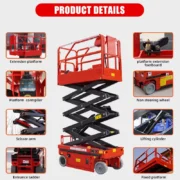
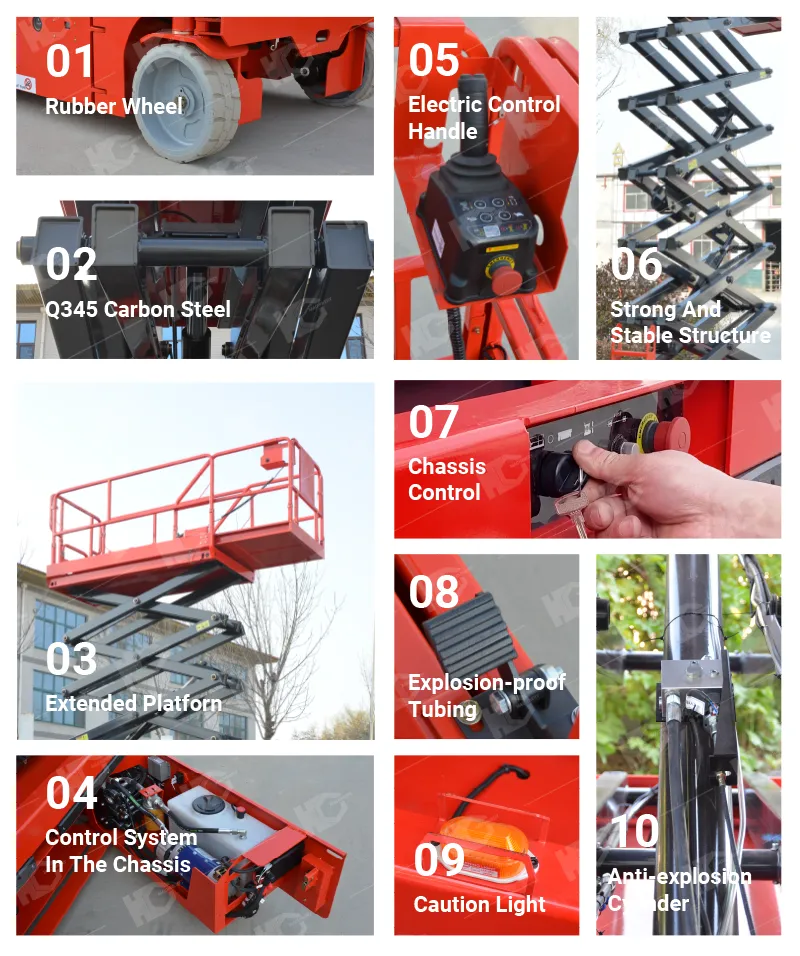
A self-propelled scissor lift typically consists of:
- Working platform
- Extension deck
- Scissor arm assembly
- Hydraulic cylinders
- Drive motors
- Hydraulic pump
- Battery or diesel engine
- Steering system
- Controller
- Guardrails
- Emergency lowering valve
- Outriggers (on selected models)
- Non-marking tires (indoor models)
Typical Technical Specifications
Although specifications vary by manufacturer, most models fall within the following ranges:
| Specification | Typical Value |
|---|---|
| Working Height | 6–18 m (20–59 ft) |
| Platform Height | 4–16 m |
| Platform Capacity | 230–680 kg |
| Extension Deck | 0.9–1.5 m |
| Lift Time | 30–70 seconds |
| Travel Speed (Lowered) | 3–5 km/h |
| Travel Speed (Raised) | 0.5–1 km/h |
| Turning Radius | 0–2.5 m |
| Gradeability | 25–40% |
| Power Source | Electric, Diesel, Hybrid |
| Battery Voltage | 24V–48V |
| Hydraulic System | Electro-hydraulic |
| Tire Type | Solid Non-marking / Pneumatic |
| Control System | Proportional Joystick |
| Safety Standard | CE, ANSI, ISO compliant (model dependent) |
Types of Self Propelled Scissor Lift Tables
Electric Self-Propelled Scissor Lift
Ideal for indoor work.
Advantages include:
- Quiet operation
- Zero emissions
- Low maintenance
- Excellent maneuverability
Common applications:
- Warehouses
- Shopping malls
- Airports
- Hospitals
- Factories
Diesel Self-Propelled Scissor Lift
Designed for outdoor construction environments.
Advantages:
- Higher power output
- Excellent climbing ability
- Suitable for rough terrain
- Longer operating time
Applications include:
- Construction sites
- Infrastructure projects
- Mining facilities
- Bridge maintenance
Rough Terrain Self-Propelled Scissor Lift
Built for uneven surfaces.
Features include:
- Four-wheel drive
- Oscillating axle
- Large pneumatic tires
- Higher ground clearance
Suitable for demanding outdoor conditions.
Lithium Battery Scissor Lift
The latest generation of aerial work platforms.
Advantages:
- Fast charging
- Maintenance-free batteries
- Longer service life
- Lower operating costs
- Improved energy efficiency
Common Working Heights
Manufacturers typically offer:
| Working Height | Typical Applications |
|---|---|
| 6 m | Retail maintenance |
| 8 m | Warehouses |
| 10 m | Facility management |
| 12 m | Industrial maintenance |
| 14 m | Construction |
| 16 m | Building installation |
| 18 m | Exterior maintenance |
Selecting the correct working height improves efficiency and reduces unnecessary equipment costs.
Typical Applications
Warehouse Operations
Self-propelled scissor lifts simplify:
- Rack maintenance
- Inventory access
- Lighting replacement
- HVAC servicing
Electric models are especially popular for their compact size and non-marking tires.
Manufacturing Plants
Factories use scissor lifts for:
- Production line maintenance
- Equipment installation
- Machine repair
- Overhead piping work
The stable platform allows technicians to work safely with tools and spare parts.
Commercial Buildings
Applications include:
- Ceiling repairs
- Fire sprinkler maintenance
- Electrical installation
- Interior decoration
- Cleaning high windows
Construction Sites
Outdoor models support:
- Steel structure installation
- Curtain wall construction
- Mechanical installation
- Painting
- Welding
Airports
Used for:
- Terminal maintenance
- Lighting systems
- Signage installation
- Security equipment servicing
Shopping Centers
Maintenance teams use self-propelled lifts for:
- Advertising installation
- Ceiling maintenance
- Lighting replacement
- Air conditioning service
Hotels and Convention Centers
Applications include:
- Chandelier installation
- Decorative maintenance
- Cleaning
- Facility upgrades
Pain Points Solved
Reduces Manual Labor
Traditional manually pushed lifts require multiple workers to reposition equipment.
Self-propelled models allow a single operator to:
- Lift
- Drive
- Position
- Complete the task
This significantly improves labor efficiency.
Improves Productivity
Since the platform can move while elevated, workers avoid repeatedly lowering and repositioning the machine.
This reduces downtime and speeds up project completion.
Enhances Workplace Safety
Modern scissor lifts include:
- Emergency stop buttons
- Tilt protection
- Overload sensors
- Automatic braking
- Pothole protection
- Emergency lowering systems
These features help reduce workplace accidents.
Lowers Operating Costs
Electric self-propelled lifts require:
- Less maintenance
- No fuel
- Lower energy consumption
- Fewer operators
This reduces the total cost of ownership over the equipment’s lifespan.
Provides Better Access
Compact designs allow operators to work in:
- Narrow aisles
- Tight indoor spaces
- Congested construction sites
- Warehouse racking systems

Competitive Analysis
Self-Propelled vs Manual Mobile Scissor Lift
| Feature | Self Propelled | Manual Mobile |
|---|---|---|
| Movement | Powered | Manually pushed |
| Productivity | Excellent | Moderate |
| Labor Requirement | One operator | Two or more workers often required |
| Working Efficiency | High | Lower |
| Purchase Price | Higher | Lower |
For frequent aerial work, self-propelled lifts deliver better long-term value through increased productivity.
Scissor Lift vs Boom Lift
| Feature | Scissor Lift | Boom Lift |
|---|---|---|
| Vertical Reach | Excellent | Excellent |
| Horizontal Outreach | Limited | Outstanding |
| Platform Capacity | Higher | Lower |
| Stability | Excellent | Good |
| Indoor Use | Excellent | Good |
| Narrow Aisles | Excellent | Moderate |
Scissor lifts are the preferred choice when vertical lifting and larger platform capacity are more important than horizontal reach.
Electric vs Diesel Self Propelled Scissor Lift
| Feature | Electric | Diesel |
|---|---|---|
| Indoor Use | Excellent | Not Recommended |
| Outdoor Use | Moderate | Excellent |
| Emissions | Zero | Higher |
| Noise | Very Low | Higher |
| Maintenance | Lower | Higher |
| Operating Cost | Lower | Higher |
Electric models dominate warehouses and factories, while diesel units are better suited to rugged outdoor environments.
Scissor Lift vs Mast Lift
| Feature | Scissor Lift | Vertical Mast Lift |
|---|---|---|
| Platform Size | Larger | Smaller |
| Capacity | Higher | Lower |
| Stability | Excellent | Very Good |
| Maneuverability | Good | Excellent |
| Heavy Tools | Better | Limited |
Choose a mast lift for extremely confined spaces and a scissor lift when greater working space and payload are required.
How to Choose the Right Self Propelled Scissor Lift
When selecting equipment, consider:
- Maximum working height
- Platform capacity
- Indoor or outdoor use
- Ground conditions
- Power source
- Battery runtime or fuel efficiency
- Platform dimensions
- Doorway clearance
- Turning radius
- Local safety regulations
- Availability of spare parts and after-sales support
Matching the machine to your work environment can improve efficiency and reduce operating costs.

Frequently Asked Questions (FAQ)
1. What is a self-propelled mobile scissor lift table?
It is a powered aerial work platform that lifts workers vertically and can drive independently without manual pushing.
2. What is the typical working height?
Most models offer working heights from 6 to 18 meters (20–59 feet), with specialized units available outside this range.
3. How much weight can it carry?
Typical platform capacities range from 230 kg to 680 kg, depending on the model.
4. Can the lift be driven while elevated?
Yes. Most self-propelled models are designed to travel at reduced speed while the platform is raised, improving productivity.
5. What is the difference between electric and diesel models?
Electric lifts are ideal for indoor, emission-free operation, while diesel lifts provide higher power and better performance on rough outdoor terrain.
6. Is operator training required?
Yes. Operators should receive appropriate training and follow local workplace safety regulations before using aerial work platforms.
7. How long does the battery last?
Battery runtime typically ranges from 6 to 10 hours of normal operation, depending on battery type, load, and working conditions.
8. What industries use self-propelled scissor lifts?
They are widely used in construction, warehousing, manufacturing, logistics, facility management, retail, airports, and public infrastructure maintenance.
9. Are self-propelled scissor lifts safe?
Yes. When operated correctly and maintained according to the manufacturer’s recommendations, they provide a stable platform with multiple built-in safety systems.
10. How do I choose the right model?
Consider the required working height, platform capacity, operating environment, floor conditions, power source, machine dimensions, maintenance support, and total cost of ownership rather than purchase price alone.
Conclusion
A self-propelled mobile scissor lift table is one of the most versatile and efficient aerial work platforms available for modern industries. Combining a hydraulic lifting mechanism with an integrated drive system, it enables operators to elevate, reposition, and complete tasks safely with minimal downtime. Available in electric, diesel, rough-terrain, and lithium-powered configurations, these machines support working heights from 6 to 18 meters, payload capacities up to 680 kg, and a wide range of indoor and outdoor applications.
Compared with manual scissor lifts, boom lifts, and vertical mast lifts, a self-propelled scissor lift offers an excellent balance of stability, productivity, maneuverability, and cost-effectiveness. Whether used in warehouses, factories, commercial buildings, or construction sites, it helps businesses reduce labor requirements, improve safety, accelerate maintenance tasks, and maximize operational efficiency. For organizations seeking reliable vertical access equipment, a self-propelled mobile scissor lift remains one of the most practical and valuable long-term investments.

Jnhclift (Huichuang Lift), based in Jinan, China, is a professional manufacturer of scissor lifts, home elevators, and lift platforms. With our own dedicated factory, we deliver high-quality, reliable lifting solutions tailored to meet diverse industrial and residential needs.
 Room 203, Second Floor, Building 8, Phase Ⅱ, Zhizao Town, Jibei Street, Jiyang District, Jinan City, Shandong Province
 +86 152 5319 3706
 admin@jnhclift.com