
Wheelchair Lift Cabin Dimensions and Door Choices
Wheelchair lifts have become an essential accessibility solution for residential buildings, commercial facilities, healthcare centers, schools, public institutions, and multi-story properties. As populations age and accessibility regulations become more stringent worldwide, property owners are increasingly investing in wheelchair lifts to provide safe, comfortable, and independent mobility for wheelchair users, elderly individuals, and people with limited mobility.
While lift drive systems, load capacities, and lifting heights often receive the most attention, two equally important factors are frequently overlooked during the planning stage: cabin dimensions and door configurations. The size of the wheelchair lift cabin directly impacts user comfort, maneuverability, and compliance with accessibility standards, while the choice of doors affects safety, traffic flow, installation requirements, and overall user experience.
Choosing the wrong cabin size or door arrangement can result in difficulty maneuvering wheelchairs, reduced accessibility, building code compliance issues, and user dissatisfaction. Understanding the relationship between cabin dimensions and door options is therefore critical when selecting a wheelchair lift.
This comprehensive guide explains wheelchair lift cabin dimensions, accessibility requirements, common cabin layouts, door choices, design considerations, and how to select the best configuration for different applications.
What Is a Wheelchair Lift?
A wheelchair lift is a vertical transportation device specifically designed to help wheelchair users and individuals with mobility challenges travel between different floor levels safely and independently.
Unlike conventional passenger elevators, wheelchair lifts are optimized for accessibility and ease of use. They are commonly installed in:
- Private homes
- Residential villas
- Schools
- Hospitals
- Nursing homes
- Government buildings
- Shopping centers
- Religious facilities
- Hotels
- Public transportation stations
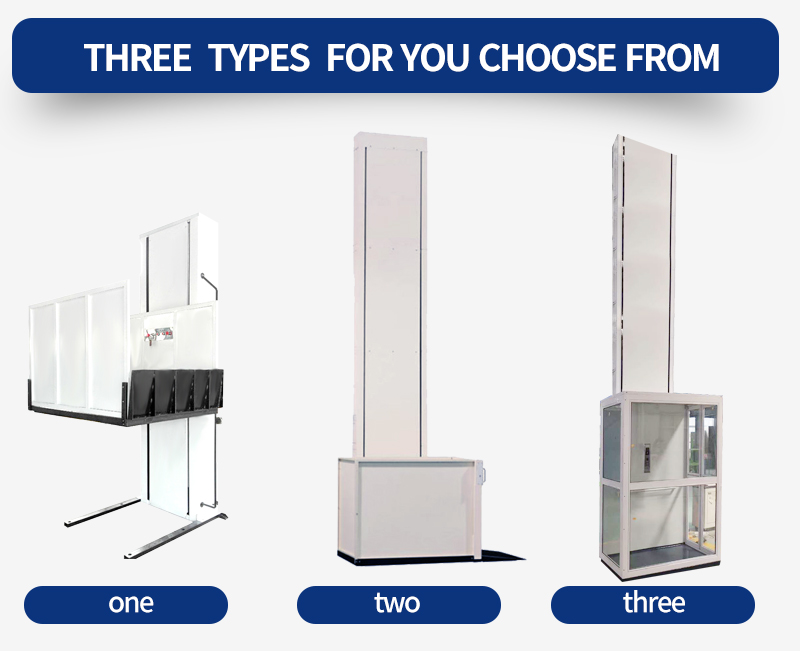
Modern wheelchair lifts can be installed both indoors and outdoors and are available in hydraulic, screw-driven, traction, and platform lift configurations.
Why Cabin Dimensions Matter
The cabin is the space where users travel during lift operation.
A properly sized cabin ensures:
- Easy wheelchair entry and exit
- Comfortable turning and positioning
- Safe operation
- Caregiver accommodation
- Compliance with accessibility regulations
If the cabin is too small, users may struggle to enter, exit, or reposition their wheelchairs safely.
Therefore, cabin dimensions should be one of the first considerations during project planning.
Standard Wheelchair Dimensions
Before selecting a lift cabin size, it is important to understand typical wheelchair dimensions.
Manual Wheelchairs
Average dimensions:
- Width: 24–28 inches (610–710 mm)
- Length: 40–48 inches (1015–1220 mm)
Electric Wheelchairs
Average dimensions:
- Width: 24–32 inches (610–815 mm)
- Length: 42–52 inches (1065–1320 mm)
Mobility Scooters
Average dimensions:
- Width: 24–30 inches (610–760 mm)
- Length: 45–60 inches (1140–1525 mm)
The lift cabin must provide additional clearance beyond wheelchair dimensions to ensure comfortable use.
Recommended Minimum Cabin Dimensions
The minimum cabin size depends on the intended user and accessibility requirements.
Compact Residential Wheelchair Lift
Typical cabin dimensions:
- Width: 900 mm
- Depth: 1200 mm
Suitable for:
- Single wheelchair user
- Space-limited homes
- Private residences
Advantages:
- Lower installation costs
- Smaller shaft requirements
Limitations:
- Limited maneuvering space
- Difficult for caregivers to accompany users
Standard Residential Wheelchair Lift
Typical cabin dimensions:
- Width: 1000 mm
- Depth: 1250 mm
Suitable for:
- Most residential applications
- Standard wheelchair users
Advantages:
- Improved comfort
- Better accessibility
This size is among the most commonly installed configurations for residential wheelchair lifts.
Large Residential Wheelchair Lift
Typical dimensions:
- Width: 1100 mm
- Depth: 1400 mm
Suitable for:
- Power wheelchairs
- Mobility scooters
- Caregiver assistance
Advantages:
- Easier entry and exit
- Enhanced user comfort
Commercial Wheelchair Lift
Typical dimensions:
- Width: 1100–1400 mm
- Depth: 1400–1600 mm
Suitable for:
- Public buildings
- Healthcare facilities
- Schools
- Commercial properties
Advantages:
- Accessibility compliance
- High traffic capacity
Wheelchair Lift Cabin Size Comparison
| Cabin Width | Cabin Depth | Application |
|---|---|---|
| 900 mm | 1200 mm | Compact residential |
| 1000 mm | 1250 mm | Standard residential |
| 1100 mm | 1400 mm | Large residential |
| 1400 mm | 1400 mm | Commercial use |
| 1400 mm | 1600 mm | Healthcare facilities |
The larger the cabin, the greater the comfort and accessibility.
Wheelchair Turning Requirements
One of the most important design considerations is wheelchair turning space.
Many accessibility standards recommend:
- Turning diameter: 1500 mm
This allows wheelchair users to rotate safely within the lift or adjacent landing area.
When space permits, larger cabins significantly improve usability.
Weight Capacity and Cabin Size
Cabin dimensions often correlate with lift capacity.
Residential Models
Common capacities:
- 250 kg
- 300 kg
- 350 kg
Suitable for:
- Single wheelchair users
Enhanced Accessibility Models
Common capacities:
- 400 kg
- 500 kg
Suitable for:
- Wheelchair plus caregiver
Commercial Models
Common capacities:
- 630 kg
- 1000 kg
Suitable for:
- Multiple passengers
- Healthcare environments
Selecting adequate capacity is just as important as selecting cabin size.
Understanding Wheelchair Lift Door Options
Door selection impacts:
- Accessibility
- Safety
- Traffic flow
- Space requirements
- User convenience
The most common wheelchair lift door types are discussed below.
Single Swing Door
A single swing door is one of the simplest and most economical solutions.
Features:
- Hinged opening
- Manual or automatic operation
Advantages:
- Cost-effective
- Reliable
- Easy maintenance
Applications:
- Residential wheelchair lifts
- Private homes
Limitations:
- Requires door swing clearance
Center Opening Automatic Door
The door panels open from the center toward both sides.
Advantages:
- Elegant appearance
- Wide clear opening
- Easy wheelchair access
Applications:
- Luxury residential lifts
- Commercial buildings
Benefits include:
- Smooth traffic flow
- Improved accessibility
Side-Opening Automatic Door
Panels slide horizontally to one side.
Advantages:
- Space-efficient
- Modern appearance
- User-friendly operation
Applications:
- Residential elevators
- Public buildings
This is among the most popular automatic door configurations.
Telescopic Sliding Door
Multiple door panels slide together.
Advantages:
- Wide opening width
- Compact operation
- Attractive appearance
Applications:
- Commercial wheelchair lifts
- Premium installations
Glass Automatic Doors
Glass doors are increasingly popular in modern architectural projects.
Advantages:
- Contemporary appearance
- Enhanced visibility
- Luxurious design
Applications:
- Villas
- Hotels
- Shopping centers
Manual Doors vs Automatic Doors
Choosing between manual and automatic operation depends on user needs.
Manual Doors
Advantages:
- Lower cost
- Simple design
- Easy maintenance
Disadvantages:
- Less convenient
- Difficult for some wheelchair users
Automatic Doors
Advantages:
- Improved accessibility
- Greater convenience
- Enhanced safety
Disadvantages:
- Higher initial investment
For accessibility-focused projects, automatic doors are generally preferred.
Door Width Requirements
Door width is critical for wheelchair access.
Minimum Recommended Width
Most accessibility guidelines recommend:
- Clear opening: 800 mm
Preferred Width
For improved comfort:
- 900 mm
Commercial Accessibility
Common recommendation:
- 900–1000 mm
Wider door openings simplify entry and exit for larger power wheelchairs.
Single Entry vs Through-Car Configuration
Single Entry Lift
Entry and exit occur through the same door.
Advantages:
- Lower cost
- Simpler installation
Applications:
- Most residential projects
Through-Car Lift
Doors are located on opposite sides.
Advantages:
- Easier wheelchair movement
- Reduced turning requirements
- Improved traffic flow
Applications:
- Public buildings
- Healthcare facilities
Through-car designs are particularly beneficial for users with limited maneuvering ability.
Accessibility Standards and Compliance
Many countries have accessibility regulations governing lift dimensions.
Typical requirements include:
Cabin Dimensions
Minimum internal dimensions based on wheelchair size.
Door Width
Accessible opening width requirements.
Control Panel Height
Reachable from seated positions.
Handrails
Additional user support.
Emergency Communication
Accessible alarm systems.
Property owners should always verify local regulations before installation.
Residential Wheelchair Lift Design Recommendations
For most homes, the following configuration offers excellent usability:
Cabin Size
- 1000 mm × 1250 mm
Door Width
- 900 mm
Door Type
- Automatic side-opening door
Capacity
- 300–400 kg
This combination balances comfort, cost, and installation flexibility.
Commercial Wheelchair Lift Design Recommendations
Commercial buildings typically require larger dimensions.
Cabin Size
- 1400 mm × 1400 mm
Door Width
- 900–1000 mm
Door Type
- Center-opening automatic door
Capacity
- 630 kg or higher
This configuration supports greater accessibility and higher passenger volumes.
Comparing Small and Large Wheelchair Lift Cabins
| Feature | Small Cabin | Large Cabin |
| Installation Cost | Lower | Higher |
| Shaft Size | Smaller | Larger |
| Wheelchair Comfort | Moderate | Excellent |
| Caregiver Accommodation | Limited | Excellent |
| Future Accessibility | Limited | Better |
| Property Value | Good | Higher |
Larger cabins often provide greater long-term value despite higher initial costs.
Future Trends in Wheelchair Lift Design
The accessibility industry continues to evolve rapidly.
Larger Cabins
Manufacturers are increasingly offering spacious designs.
Smart Controls
Features include:
- Smartphone operation
- Voice commands
- Remote diagnostics
Touchless Access
Reduces physical contact and improves hygiene.
Panoramic Glass Cabins
Growing popularity in luxury residential projects.
Energy-Efficient Systems
Modern drives reduce power consumption and operating costs.
How to Choose the Right Cabin and Door Combination
Consider the following factors:
User Requirements
Manual wheelchair, power wheelchair, or mobility scooter?
Building Space
Available shaft dimensions and landing space.
Traffic Volume
Residential or commercial usage.
Accessibility Goals
Current and future mobility requirements.
Budget
Balance installation costs with long-term usability.
Local Regulations
Ensure compliance with applicable accessibility standards.
The best wheelchair lift is not necessarily the largest or most expensive model. Instead, it is the system that provides safe, comfortable, and efficient accessibility while meeting the specific needs of users and the building environment.
Conclusion
Wheelchair lift cabin dimensions and door choices play a critical role in determining accessibility, safety, comfort, and long-term user satisfaction. While compact cabins may be suitable for smaller residential installations, larger cabins offer improved maneuverability, greater comfort, and better accommodations for caregivers and power wheelchair users.
Similarly, door selection significantly impacts accessibility. Automatic side-opening and center-opening doors generally offer the most convenient and user-friendly experience, while wider door openings help ensure effortless wheelchair entry and exit. For commercial buildings and healthcare facilities, through-car configurations and larger cabins often provide the highest level of accessibility.
By carefully evaluating cabin dimensions, door types, wheelchair sizes, user needs, and building requirements, property owners can select a wheelchair lift solution that delivers reliable accessibility, regulatory compliance, and enhanced quality of life for years to come.

Jnhclift (Huichuang Lift), based in Jinan, China, is a professional manufacturer of scissor lifts, home elevators, and lift platforms. With our own dedicated factory, we deliver high-quality, reliable lifting solutions tailored to meet diverse industrial and residential needs.
 Room 203, Second Floor, Building 8, Phase Ⅱ, Zhizao Town, Jibei Street, Jiyang District, Jinan City, Shandong Province
 +8615628811021
 admin@jnhclift.com