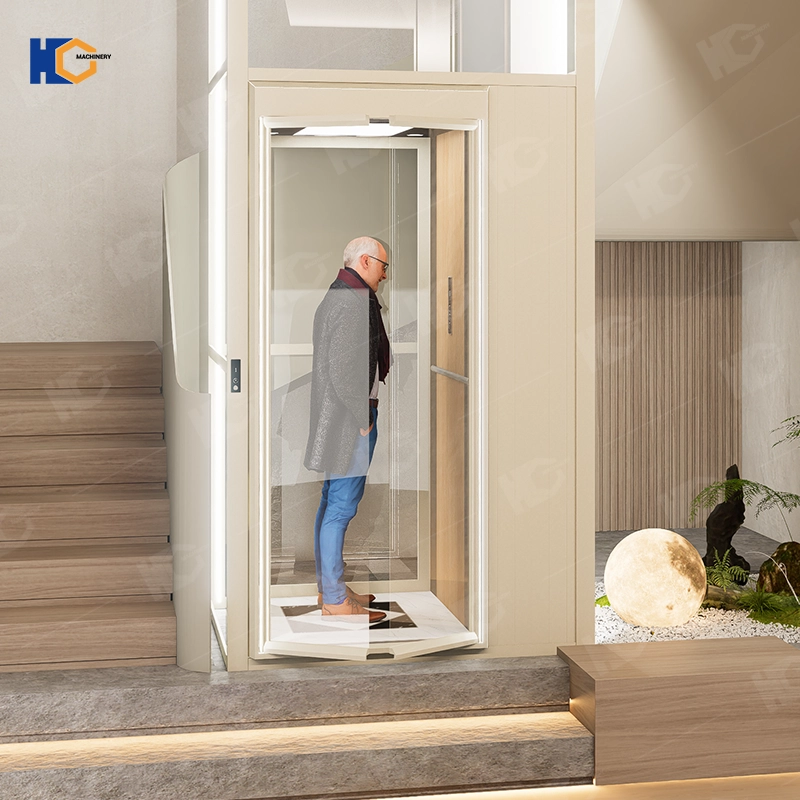
Small Shaftless Residential Elevator 3 floors
- Model: Small Shaftless Residential Elevator 3 floors
- Lift height: 3 floor
- Brand: HUICHUANG(JNHC lift)
- Customization: YES
- Manual: YES
- Price: $4,000 – $20,000
- Payment Methods: TT
- Delivery time: 15 working days
 +8615628811021
 admin@jnhclift.com
As modern homes become more compact, multi-story residential buildings are increasingly common in urban and suburban environments. At the same time, homeowners are looking for solutions that improve accessibility, comfort, and property value without requiring complex civil construction work. One of the most practical innovations in this space is the Small Shaftless Residential Elevator for 3 Floors.
Unlike traditional home elevators that require a dedicated shaft, machine room, and extensive civil engineering, shaftless residential elevators are designed to be compact, flexible, and installation-friendly. They are especially suitable for villas, duplex homes, townhouses, and small apartment buildings where space is limited but convenience and mobility are essential.
This article provides a complete guide to small, shaftless residential elevators for 3 floors, covering operating principles, technical structure, advantages, pain points addressed, a comparison of old vs. new technology, competitive analysis, and buying considerations.
Shaftless home elevator is one elevator type which be installed in a personal house or villa building.To know more about the Shaftless home elevator 3 floors performance and configuration, specifications, contact us to get the latest factory price
Small shaftless home elevator 2, 3, 4, 5 floors.pdf
What Is a Small Shaftless Residential Elevator for 3 Floors?
A small shaftless residential elevator is a vertical lifting system designed for home use that does not require a traditional enclosed elevator shaft. Instead, it uses a self-supporting structure or a minimal civil modification system to move between floors.
These elevators are typically installed in:
- Private villas
- Duplex houses
- Multi-level townhomes
- Small residential buildings (2–4 floors)
- Renovation projects where space is limited
The “3 floors” configuration means the system is designed to serve the ground floor and two upper levels, or similar vertical layouts.
Unlike conventional elevators, shaftless designs prioritize:
- Minimal construction work
- Compact footprint
- Easy installation
- Aesthetic integration into living spaces

Here’s a sample table in English detailing the dimensions and technical specifications for a Shaftless Home Elevator designed for three floors:
| Specification | Details |
|---|---|
| Model | Shaftless Home Elevator – 3 Floors |
| Number of Floors | 3 |
| Load Capacity | 250-400 kg (550-880 lbs) |
| Cabin Dimensions (L x W x H) | Customizable, e.g., 1000mm x 1000mm x 2100mm (3.3ft x 3.3ft x 6.9ft) |
| Shaft Size (L x W) | Customizable, e.g., 1500mm x 1500mm (4.9ft x 4.9ft) |
| Platform Size | Customizable to fit within cabin dimensions |
| Travel Height | Up to 10 meters (32.8 feet) |
| Speed | 0.15 – 0.3 m/s (0.5 – 1 ft/s) |
| Drive System | Electric Screw Drive / Hydraulic |
| Power Supply | 220V / 50-60Hz (single-phase) |
| Control System | Microprocessor-based control panel with safety features |
| Safety Features | Emergency Stop, Safety Sensor, Battery Backup, Overload Protection |
| Installation Type | Shaftless, self-supporting structure |
| Door Type | Automatic / Manual, Glass or Solid Panels |
| Compliant Standards | CE, ISO, ASME A17.1 |
| Noise Level | <60 dB |
| Operation | Remote control or wall-mounted panel |
| Lighting | LED, energy-efficient |
| Warranty | 2 years on major components |
This table outlines general specifications; specific details may vary based on manufacturer options and customization.
How a Shaftless Residential Elevator Works
A shaftless residential elevator typically operates using one of the following systems:
1. Hydraulic Drive System
A hydraulic piston lifts and lowers the cabin.
- Smooth movement
- High load stability
- Quiet operation
- Ideal for low-rise homes
2. Screw Drive System
A motor-driven screw mechanism moves the cabin vertically.
- No counterweight system required
- Compact design
- High safety
- Low maintenance
3. Traction System (less common for shaftless)
Uses cables and motor pulleys.
- Faster speed
- Suitable for taller residential buildings
For 3-floor residential use, screw drive and hydraulic systems are the most popular due to stability and space efficiency.
Key Technical Characteristics
While specifications vary by manufacturer, typical configurations include:
- Load capacity: 250–400 kg (2–4 persons)
- Speed: 0.15–0.3 m/s
- Travel height: up to 10–12 meters
- Power supply: 220V / 380V residential standard
- Door system: manual or automatic folding doors
- Safety system: emergency stop, overload protection, fall protection
- Installation type: shaftless or semi-shaft structure
The compact engineering allows the elevator to fit into corners, stairwells, or open wall spaces.

Pain Points Solved by Shaftless Residential Elevators
1. Lack of Space for Traditional Elevators
Conventional home elevators require:
- Full concrete shaft
- Machine room
- Large structural modification
Shaftless elevators eliminate these requirements, making installation possible in existing homes.
2. High Construction Cost
Traditional elevators often require:
- Civil engineering work
- Structural reinforcement
- Long installation cycles
Shaftless systems significantly reduce construction costs.
3. Accessibility Challenges
For elderly people or individuals with mobility issues:
- Stairs become a barrier
- Risk of falls increases
- Daily movement becomes difficult
A residential elevator restores independence and safety.
4. Home Renovation Limitations
Many older homes cannot support full elevator shafts.
Shaftless elevators offer a retrofit-friendly solution.
5. Property Value Enhancement
Homes without vertical mobility options may lose market competitiveness.
Installing a compact elevator increases resale value and luxury appeal.

Advantages of Small Shaftless Residential Elevator (3 Floors)
1. Compact Design
Requires minimal installation space, often with a footprint of less than 1 m².
2. Easy Installation
Compared to traditional elevators, installation time is significantly reduced.
3. Lower Civil Engineering Cost
No full shaft construction required.
4. Energy Efficient
Residential voltage systems make operation cost-effective.
5. Flexible Installation Locations
Can be installed:
- Beside stairs
- Inside corners
- Through floor cut-outs
- Against glass walls (design-dependent)
6. Modern Aesthetic Integration
Many models include:
- Glass panels
- Minimalist cabins
- LED lighting
- Silent operation design
Huichuang Lift Factory

Small Shaftless Elevator vs Traditional Home Elevator
Structural Comparison
| Feature | Shaftless Elevator | Traditional Elevator |
|---|---|---|
| Shaft Required | No | Yes |
| Machine Room | Not required | Required |
| Civil Work | Minimal | Heavy |
| Installation Time | Short | Long |
Cost Comparison
| Feature | Shaftless | Traditional |
|---|---|---|
| Installation Cost | Lower | Higher |
| Maintenance Cost | Moderate | Higher |
| Total Ownership Cost | More affordable | Expensive |
Space Utilization
| Feature | Shaftless | Traditional |
|---|---|---|
| Space Requirement | Minimal | Large |
| Flexibility | High | Limited |
Shaftless Elevator vs Stairlift
Stairlift
- Moves along staircase rail
- Suitable for single users
- Limited mobility experience
Shaftless Elevator
- Full cabin system
- Multi-person capacity
- Wheelchair-friendly (in some models)
- Higher comfort level
Shaftless elevators are a more advanced solution for long-term residential use.
Shaftless Elevator vs Platform Lift
| Feature | Shaftless Elevator | Platform Lift |
|---|---|---|
| Comfort | High | Moderate |
| Speed | Faster | Slower |
| Enclosure | Fully enclosed | Semi-open |
| Safety | Higher | Moderate |
Competitive Market Analysis
Shaftless Elevator vs European Brands
European manufacturers often offer:
- Premium design
- High safety certifications
- Advanced control systems
However:
- Cost is significantly higher
- Lead times are longer
Shaftless systems from Asian manufacturers often provide:
- Better cost efficiency
- Faster delivery
- Flexible customization
Shaftless Elevator vs Chinese OEM Systems
Chinese OEM suppliers dominate this segment due to:
- Strong manufacturing capability
- Flexible customization
- Competitive pricing
- Rapid innovation cycles
Most global shaftless elevator systems are sourced or inspired by Chinese engineering.

Price
Here’s a breakdown of the market price and factory price for a Shaftless Home Elevator designed for three floors:
| Category | Price Range |
|---|---|
| Market Price | $15,000 – $25,000 USD |
| Factory Price | $8,000 – $14,800 USD |
Note:
- The Market Price reflects the price a customer might pay when purchasing the elevator through a distributor or retailer. It includes shipping, installation, and possibly additional customization fees.
- The Factory Price is the price directly from the manufacturer, often lower due to the absence of intermediary costs. This price may not include shipping, installation, and additional services.
Prices can vary based on the specific features, customization options, and the buyer’s location.
Shaftless Elevator vs Hydraulic Home Lifts
| Feature | Shaftless | Hydraulic Lift |
|---|---|---|
| Space Requirement | Lower | Moderate |
| Maintenance | Lower | Higher |
| Installation Complexity | Simple | Moderate |
| Comfort | High | High |
Shaftless screw-driven systems are increasingly replacing hydraulic home lifts in modern residential projects.
Installation Considerations
Before installing a 3-floor shaftless residential elevator, homeowners should evaluate:
1. Structural Load Capacity
Floor reinforcement may be required depending on building type.
2. Power Supply
Most systems require standard residential electricity (220V).
3. Floor Opening Design
Proper alignment between floors is essential.
4. Safety Clearance
Ensure adequate headroom and emergency space.
5. Interior Design Integration
Modern elevators can be customized with:
- Glass walls
- Aluminum frames
- Wooden finishes
Maintenance and Lifespan
Shaftless residential elevators are designed for long-term use with minimal maintenance.
Typical maintenance includes:
- Lubrication (for screw systems)
- Door system inspection
- Electrical system check
- Safety sensor calibration
Expected lifespan:
- 15–25 years depending on usage and maintenance
Who Should Choose a Shaftless Residential Elevator?
This system is ideal for:
- Homeowners building luxury villas
- Elderly households needing mobility assistance
- Families with multi-level homes
- Renovation projects with limited space
- Smart home developers
Future Trends in Shaftless Residential Elevators
The residential elevator market is evolving toward:
Smart Home Integration
- App control
- Voice activation
- Remote diagnostics
Energy Efficiency Improvements
- Lower power consumption motors
- Regenerative braking systems
Compact Modular Design
- Faster installation
- Plug-and-play systems
Glass and Minimalist Architecture
- Transparent cabins
- Luxury interior integration
Buying Guide: How to Choose the Right Model
When selecting a 3-floor shaftless residential elevator, consider:
1. Drive System Type
- Screw drive = low maintenance
- Hydraulic = smoother ride
- Traction = higher speed
2. Load Capacity
Choose based on:
- Number of users
- Wheelchair requirement
- Furniture transport needs
3. Safety Features
Must include:
- Emergency stop
- Battery backup
- Anti-fall protection
4. Manufacturer Experience
Reliable suppliers ensure:
- Better installation support
- Spare parts availability
- Long-term maintenance service
Conclusion
The Small Shaftless Residential Elevator for 3 Floors represents a modern, space-saving, and cost-efficient solution for vertical mobility in residential environments. Eliminating the need for traditional shafts and heavy civil engineering opens new possibilities for homeowners seeking comfort, accessibility, and luxury without major construction disruption.
Compared to traditional elevators, stairlifts, and platform lifts, shaftless residential elevators offer a balanced combination of safety, convenience, aesthetics, and affordability. As urban living spaces continue to shrink and multi-story homes become more common, this technology is expected to become a standard feature in modern residential design.
For homeowners planning long-term upgrades, a shaftless residential elevator is not just a convenience—it is an investment in accessibility, lifestyle quality, and property value. If you’re looking for an affordable and reliable home elevator, contact us today. We’re ready to provide you with expert advice, customized solutions, and detailed quotes.
 Room 203, Second Floor, Building 8, Phase Ⅱ, Zhizao Town, Jibei Street, Jiyang District, Jinan City, Shandong Province