
How Much Does It Cost to Install an Elevator in a Home?
If you are considering adding an elevator to your house, one of the first questions is usually simple: how much does it cost to install an elevator in a home?
For a typical residential project, a complete home elevator installation often falls between $20,000 and $60,000+, but this is only an indicative range. The final price can be significantly different depending on the elevator type, number of floors, lifting capacity, shaft requirements, structural modifications, local labor rates, electrical work, permits, customization, and installation conditions.
More importantly, the price of the elevator itself is not necessarily the total project cost.
A useful way to think about residential elevator pricing is:
Total Home Elevator Cost = Elevator Equipment + Installation + Construction + Electrical Work + Permits + Other Project Costs
This guide explains what you are actually paying for, how different home elevator systems compare, why existing-home installations can cost more, and what information you should prepare before requesting a quotation from a manufacturer or installer.
How Much Does a Home Elevator Cost?
A home elevator can range from a relatively straightforward residential lifting system to a highly customized passenger elevator with architectural finishes.
As a general planning guide:
| Residential Solution | Relative Cost | Typical Use |
|---|---|---|
| Small residential lift | $$ | Compact homes and short travel |
| Wheelchair/platform lift | $$ | Accessibility |
| Hydraulic home elevator | $$$ | Multi-floor residential use |
| Traction home elevator | $$$ | Residential passenger transportation |
| MRL home elevator | $$$ | Space-conscious homes |
| Premium customized elevator | $$$$ | Luxury residential projects |
These categories are intentionally broad because the same elevator type can have very different project costs in different countries and buildings.
For example, a factory quotation for elevator equipment may exclude local installation, construction, shipping, taxes, electrical work, permits, and commissioning.
Therefore, when comparing two quotations, always ask:
Is this the equipment price, installed price, or complete turnkey project price?
That single question can explain a surprisingly large difference between supplier quotations.
What Is Included in the Total Installation Cost?
Installing a residential elevator is not simply a matter of delivering an elevator and connecting it to electricity.
A complete project may involve several cost categories.
Elevator Equipment
This normally includes the main elevator system, such as:
- Elevator cabin
- Controller
- Drive or hydraulic system
- Guide rails
- Doors
- Landing equipment
- Safety devices
- Control panels
- Electrical components
The exact configuration depends on the elevator technology.
Installation Labor
Professional installation may include:
- Mechanical installation
- Rail installation
- Cabin assembly
- Door installation
- Electrical connections
- Controller setup
- Testing
- Commissioning
Local labor rates can have a substantial effect on the final project price.
Shaft or Enclosure
If the home does not already have a suitable elevator shaft, a new shaft or enclosure may need to be constructed.
Depending on the design, this could involve:
- Steel structure
- Concrete structure
- Glass enclosure
- Drywall
- Architectural finishes
Structural Modification
Existing houses may require:
- Floor openings
- Structural reinforcement
- Wall modification
- Door openings
- Relocation of utilities
- Ceiling modifications
This is one reason why installing an elevator in an existing home can be more complicated than incorporating one during new construction.
Electrical Work
The elevator may require dedicated electrical circuits and specific power characteristics.
Electrical requirements depend on the selected equipment, motor or drive system, local electrical code, and building configuration.
Permits and Inspection
Permit and inspection requirements vary significantly by location.
Some projects may require building permits, electrical inspections, elevator inspections, or other approvals.
Always check local requirements before ordering equipment.
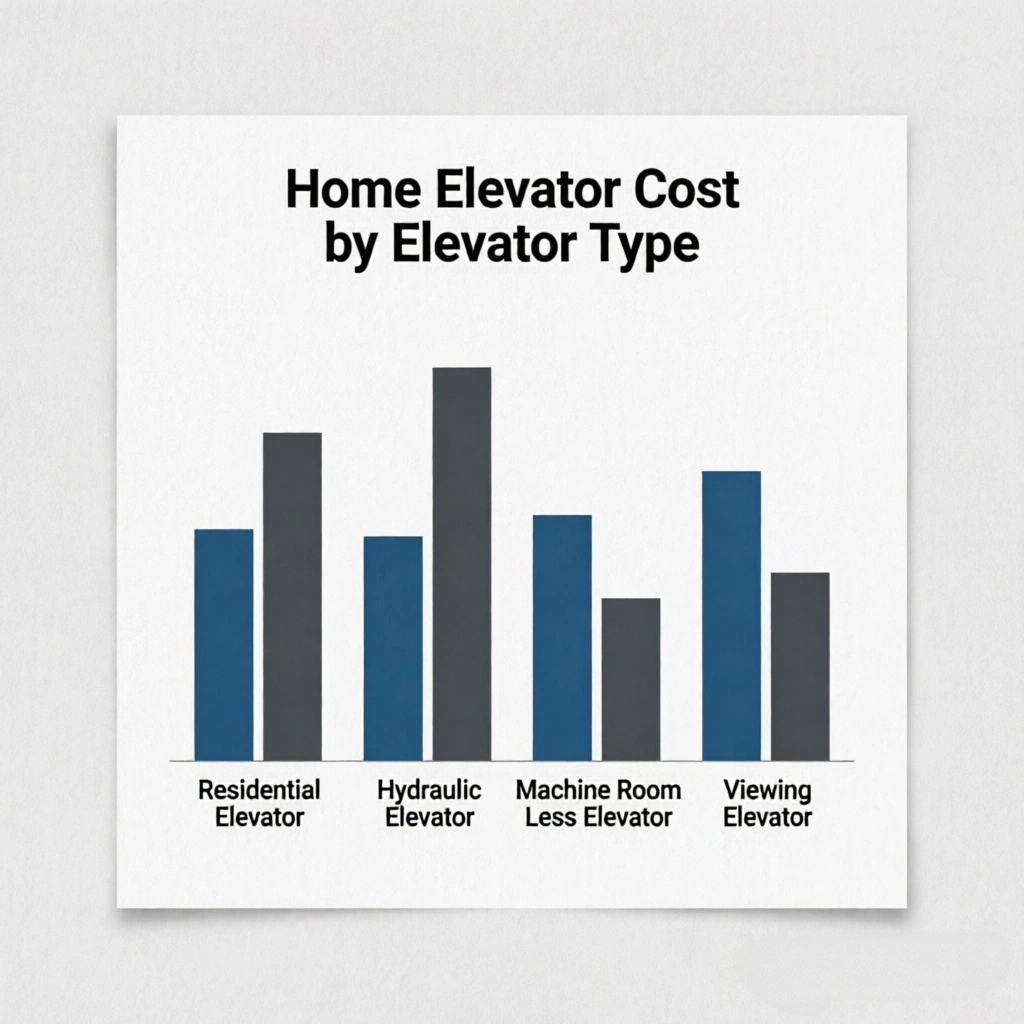
Home Elevator Cost by Elevator Type
The type of elevator is one of the most important factors affecting cost.
Hydraulic Home Elevator
A hydraulic home elevator uses a hydraulic power system to move the elevator cabin.
The basic operating principle involves a pump, hydraulic fluid, control valves, and a cylinder.
Hydraulic systems have been widely used for vertical transportation because they can provide substantial lifting force and controlled movement.
Potential advantages include:
- Strong lifting capability
- Smooth movement
- Proven technology
- Suitable for many residential configurations
Depending on the design, hydraulic systems may require specific space for hydraulic equipment and may have particular pit or structural requirements.
The actual cost depends on capacity, travel height, cabin size, number of stops, door configuration, and installation conditions.
Traction Home Elevator
A traction elevator uses a motor and traction system to move the cabin, typically with ropes or belts and a counterweight arrangement.
Traction technology can be attractive for homes with multiple floors or for those with longer travel requirements.
Potential advantages include:
- Efficient operation
- Suitable for multi-floor transportation
- Good travel performance
- Flexible residential configurations
The system may require dedicated equipment space depending on the configuration.
Machine-Room-Less Home Elevator
A machine-room-less, or MRL, elevator is designed to reduce the need for a conventional separate machine room.
This can be valuable when architectural space is limited.
However, MRL does not mean “no equipment space.”
The elevator still needs appropriate areas for its machinery, controller, maintenance access, electrical systems, and other components.
Removing a traditional machine room also does not automatically make the total project cheaper. Structural conditions, equipment specifications, and installation requirements still determine the final cost.
Wheelchair Lift and Vertical Platform Lift
Not every homeowner who searches for a home elevator actually needs a traditional passenger elevator.
If the primary requirement is accessibility between two levels, a vertical platform lift or wheelchair lift may provide a more economical solution in some buildings.
A platform lift can be particularly useful for:
- Wheelchair users
- Mobility-impaired users
- Short vertical travel
- Porches
- Split-level homes
- Accessibility projects
However, a platform lift and a residential passenger elevator are different products.
If the goal is comfortable transportation for several passengers between multiple floors, a home elevator may be more appropriate.
How Much Does a 2-Story Home Elevator Cost?
A two-story home is one of the most common applications for residential elevators.
Typical Price:
$13,000–26,000
A relatively simple two-story installation may require:
- Two landing doors
- One elevator cabin
- A vertical shaft or enclosure
- Appropriate lifting equipment
- Electrical connection
- Safety system
- Installation and commissioning
The final price depends heavily on whether the home is under construction or already occupied.
For a new house, the architect can incorporate the elevator shaft and structural openings into the original design.
For an existing home, additional construction may be necessary.
Therefore, two-story does not automatically mean a fixed price.
The available shaft dimensions, floor-to-floor height, elevator capacity, equipment type, and construction conditions may be just as important as the number of floors.
How Much Does a 3-Story Home Elevator Cost?
A three-story elevator generally involves more travel than a two-story installation.
Typical Price:
$16,000–31,000
Potential additional requirements include:
- Greater travel height
- Additional landing
- Additional landing door
- More guide rail
- Increased installation work
- More complex structural coordination
However, cost does not necessarily increase in a simple “one floor equals X dollars” formula.
A compact three-story residential elevator with standard finishes could potentially cost less than a highly customized two-story elevator with premium materials and extensive structural modifications.
This is why a professional quotation should be based on actual project specifications rather than floor count alone.
How Much Does a 4-Story Home Elevator Cost?
Four-story residential projects introduce greater travel requirements and may require more careful engineering.
Typical Price:
$20,000–39,000
Important factors include:
- Total travel distance
- Number of stops
- Rated capacity
- Shaft height
- Door configuration
- Structural requirements
- Safety systems
- Installation access
For taller residential projects, traction-based systems may become particularly relevant, although the correct technology depends on the specific project.
The manufacturer should evaluate the building’s floor plan and vertical dimensions before recommending the equipment.
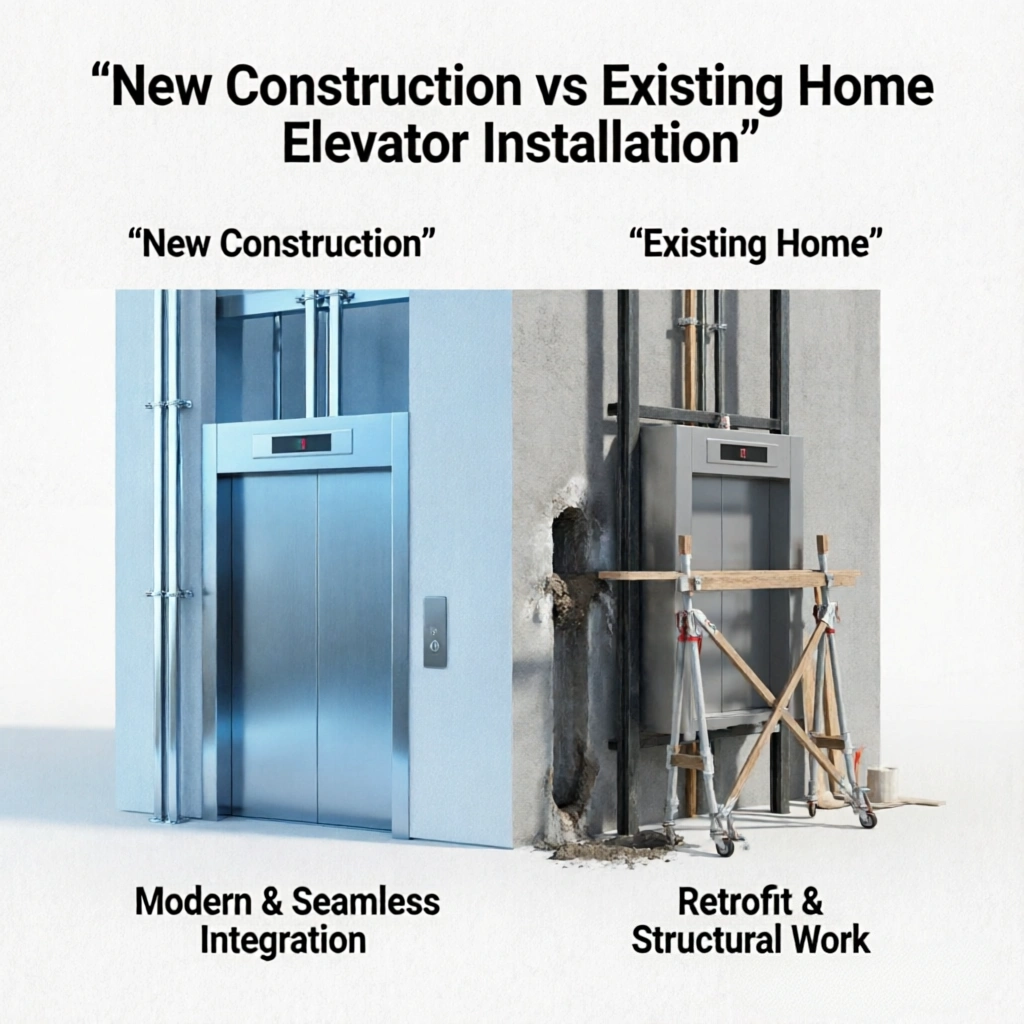
New Construction vs Existing Home Elevator Installation
One of the biggest differences in residential elevator installation is whether the house is being built from scratch or already exists.
Elevator in a New Home
New construction offers a major planning advantage.
The architect and elevator manufacturer can coordinate:
- Shaft dimensions
- Pit requirements
- Door openings
- Structural supports
- Electrical supply
- Landing locations
- Machine/equipment space
The elevator can therefore be integrated into the building design from the beginning.
Elevator in an Existing Home
Retrofitting an elevator into an existing house can be more complicated.
Potential work includes:
- Cutting floor openings
- Building a new shaft
- Reinforcing structural elements
- Moving electrical wiring
- Relocating plumbing
- Modifying walls
- Creating landing entrances
- Repairing floors and ceilings
The elevator equipment itself may not be the largest source of cost differences.
Sometimes the building work around the elevator is what significantly increases the total project price.
Does a Home Elevator Need a Pit?
Not always.
Traditional elevator designs may require a pit below the lowest landing, but some residential lifting solutions are designed for:
- Shallow pits
- Reduced-pit configurations
- Pitless installation
- Alternative access arrangements
This can be especially important for existing houses where deep excavation is difficult or undesirable.
However:
Pitless does not mean installation-free.
A pitless system still needs proper structural support, safety clearances, landing access, doors, electrical connections, and compliance with applicable local requirements.
When comparing elevators, ask the manufacturer:
What pit depth is required for this exact model?
That question is much more useful than simply asking whether the elevator is “pitless.”
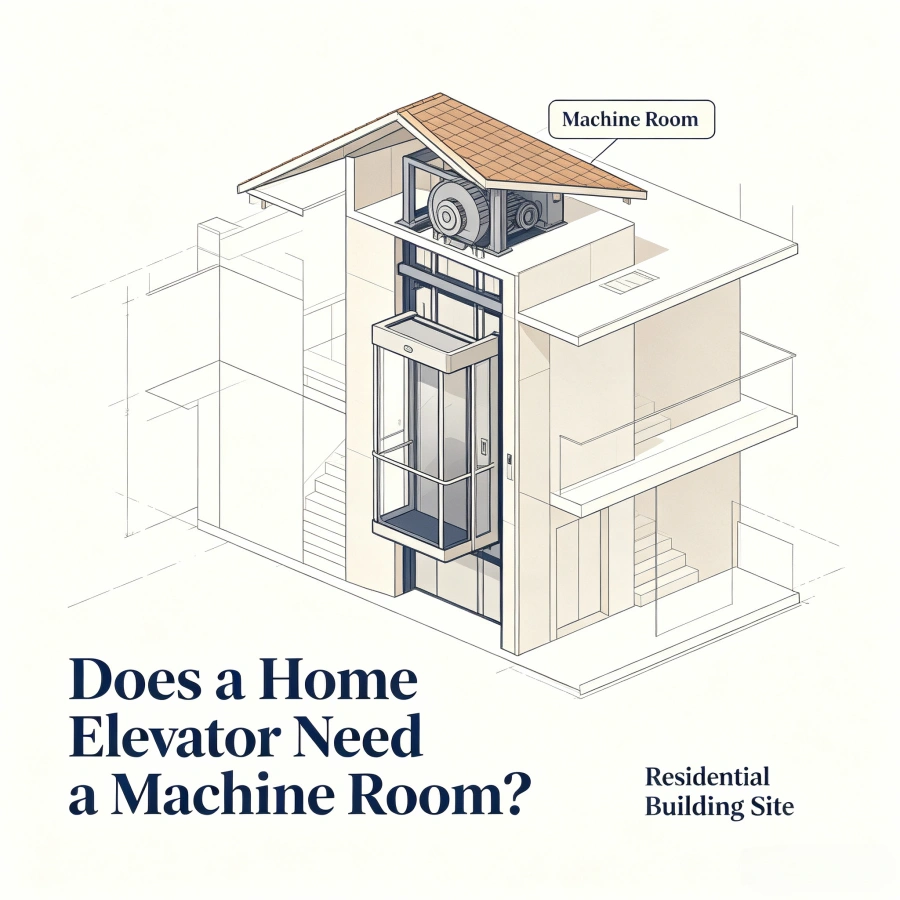
Does a Home Elevator Need a Machine Room?
It depends on the elevator design.
Some traditional configurations require dedicated machinery space, while certain MRL and residential elevator designs can reduce or eliminate the need for a conventional separate machine room.
Nevertheless, every elevator requires equipment and maintenance access.
The manufacturer should provide information about:
- Controller location
- Drive/motor location
- Hydraulic equipment location
- Required maintenance clearance
- Electrical equipment
- Emergency access
For a space-limited house, these details should be considered before construction begins.
What Factors Affect the Cost of Home Elevator Installation?
Two homes can install similar elevators and receive very different quotations.
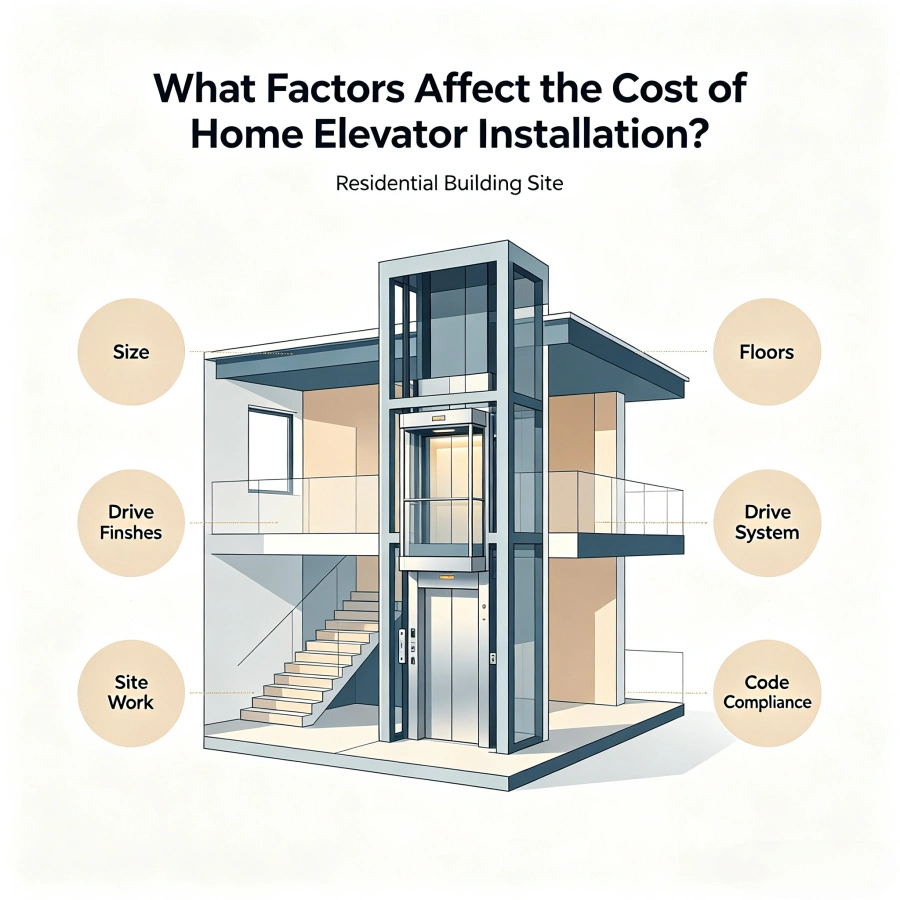
Here are the major price factors.
1. Elevator Type
Hydraulic, traction, MRL, platform lift, and other configurations have different equipment and installation requirements.
2. Number of Floors
More stops can increase:
- Travel distance
- Guide rail requirements
- Number of doors
- Installation time
- Structural work
3. Travel Height
Floor-to-floor height matters.
A house with unusually high ceilings may require different equipment specifications from a standard residential building.
4. Rated Capacity
A two-person compact lift and a larger passenger elevator do not require the same system.
5. Cabin Size
Larger cabins require additional space and may affect the overall equipment configuration.
6. Door Configuration
Possible options include:
- Manual doors
- Automatic doors
- Single entrance
- Opposite entrances
- Adjacent entrances
Custom door arrangements can affect both equipment and construction.
7. Shaft Design
The shaft may be:
- Existing
- New
- Steel
- Concrete
- Glass
- Architecturally finished
8. Pit Requirements
Full pit, shallow pit, and pitless configurations can create different construction requirements.
9. Interior Finishes
A standard residential cabin and a luxury cabin with customized stainless steel, glass, lighting, ceiling, and flooring can have very different prices.
10. Local Labor
Installation labor varies significantly between cities and countries.
11. Building Accessibility
If the installation site is difficult to access, transportation, lifting, and installation can become more complicated.
Hidden Costs You Should Consider
A low equipment quotation does not necessarily mean a low total project cost.
Ask about:
- Shipping
- Customs duties
- Local transportation
- Installation
- Electrical work
- Structural modification
- Shaft construction
- Landing doors
- Permits
- Inspection
- Testing
- Commissioning
- Building finishes
- Maintenance
- Spare parts
- Emergency service
For international purchases, also ask whether the supplier’s quotation is:
EXW, FOB, CIF, DAP, or another commercial term.
The delivery term can significantly affect what is included in the quoted price.
Factory Price vs Installed Price vs Turnkey Price
This distinction is particularly important when purchasing directly from an elevator manufacturer.
Factory Price
The factory price generally refers to the equipment supplied by the manufacturer.
Depending on the quotation, it may exclude:
- International shipping
- Import duties
- Local installation
- Building construction
- Electrical work
- Local inspection
Installed Price
An installed quotation may include:
Equipment + installation
but still exclude some building-related work.
Turnkey Price
A turnkey project aims to provide a more complete solution, potentially including:
- Elevator equipment
- Shaft/enclosure
- Installation
- Electrical work
- Testing
- Commissioning
- Documentation
However, the exact scope must always be confirmed in writing.
The safest approach is to ask the supplier for an itemized quotation rather than comparing one final number against another.
Can You Buy a Home Elevator Directly From a Manufacturer?
Yes. Buying directly from a manufacturer can be an option for homeowners, builders, developers, distributors, and contractors, particularly when a customized configuration is required.
A manufacturer may be able to provide:
- OEM service
- ODM service
- Custom cabin dimensions
- Custom door configurations
- Customized finishes
- Hydraulic or traction configurations
- Different voltage requirements
- Shaft solutions
- Packaging for export
- Technical documentation
However, buying directly from a factory requires more attention to installation and local compliance.
Before placing an order, confirm:
- Applicable local standards
- Certification requirements
- Installation responsibility
- Warranty
- Spare parts
- Technical support
- Commissioning
- Local service availability
A low factory price is not necessarily a low total cost if local installation and service are difficult to arrange.
How to Get an Accurate Home Elevator Quote
Instead of simply sending:
“How much is a home elevator?”
provide the manufacturer with enough information to calculate the project.
Step 1: Confirm the Number of Floors
State how many floors the elevator will serve.
For example:
Ground floor + 2 upper floors = 3 stops, depending on the actual layout.
Step 2: Measure Floor-to-Floor Height
Provide the distance between each landing.
Step 3: Confirm Capacity
For example:
- 2-person
- 4-person
- 6-person
- Wheelchair-accessible configuration
The final selection should follow the manufacturer’s rated capacity and applicable requirements.
Step 4: Measure Available Space
Provide:
- Shaft width
- Shaft depth
- Overhead height
- Available pit depth
- Door opening
If possible, provide architectural drawings.
Step 5: Confirm Door Position
Tell the manufacturer whether entrances are:
- Front
- Rear
- Adjacent
- Through-car
Step 6: Identify the Installation Environment
Is the elevator going into:
- New construction?
- Existing home?
- Villa?
- Duplex?
- Multi-story residence?
- Indoor shaft?
- Outdoor shaft?
Step 7: Confirm the Destination Country
This helps the manufacturer understand:
- Voltage
- Standards
- Certification
- Documentation
- Shipping requirements
Step 8: Request an Itemized Quotation
Ask the manufacturer to separate:
Equipment / Shipping / Installation / Construction / Electrical / Other costs
This makes supplier comparisons much easier.
Is a Home Elevator Worth the Cost?
For the right house, a home elevator can provide benefits beyond convenience.
It can improve:
- Accessibility
- Long-term mobility
- Transportation between floors
- Convenience for older residents
- Movement of luggage and household items
- Multi-floor home usability
It can also be useful when planning for long-term accessibility rather than waiting until mobility becomes difficult.
However, the return on investment depends on the property, local housing market, installation quality, and buyer expectations.
A homeowner should therefore consider both immediate usability and long-term value.
Home Elevator Cost FAQ
How much does it cost to install an elevator in a home?
A complete residential elevator project typically ranges from $20,000 to $60,000+, but actual costs vary significantly depending on elevator type, number of floors, shaft construction, installation, local labor, and customization.
Is a home elevator cheaper than a commercial elevator?
Residential elevators are generally designed for different duty requirements and configurations from commercial passenger elevators. Comparing price solely by elevator type can therefore be misleading.
How much does a 2-story home elevator cost?
A two-story home elevator can potentially be less expensive than a multi-story installation, but the final cost depends on equipment type, shaft conditions, capacity, doors, construction, and installation.
Is a wheelchair lift cheaper than a home elevator?
A vertical platform or wheelchair lift can be less expensive when the primary requirement is accessibility over a relatively short vertical distance. It is not a direct substitute for every passenger elevator application.
Does a home elevator increase property value?
It can improve accessibility and appeal to certain buyers, but the effect on property value depends on location, property type, elevator quality, and local market conditions.
Can I install an elevator in an existing house?
Yes, many residential elevator systems can be designed for retrofit projects. However, existing buildings may require structural modifications and additional construction.
Does a home elevator need a pit?
Not necessarily. Some residential elevator and platform lift configurations are designed for shallow-pit or pitless applications. The requirements depend on the exact model.
How long does home elevator installation take?
Installation time varies according to the elevator type and whether shaft construction or structural modifications are required. A simple installation can be much faster than a major retrofit project.
What is the cheapest type of home elevator?
There is no single cheapest solution for every house. A vertical platform lift may be more economical for accessibility, while a compact residential elevator may be more appropriate when passenger transportation between multiple floors is required.
Can I buy a home elevator directly from a Chinese manufacturer?
Yes. Chinese elevator manufacturers can provide OEM and customized residential elevator solutions for international buyers. However, buyers should evaluate certification, installation, warranty, spare parts, technical support, and total landed cost—not just the factory quotation.
Final Thoughts: What Should You Budget for a Home Elevator?
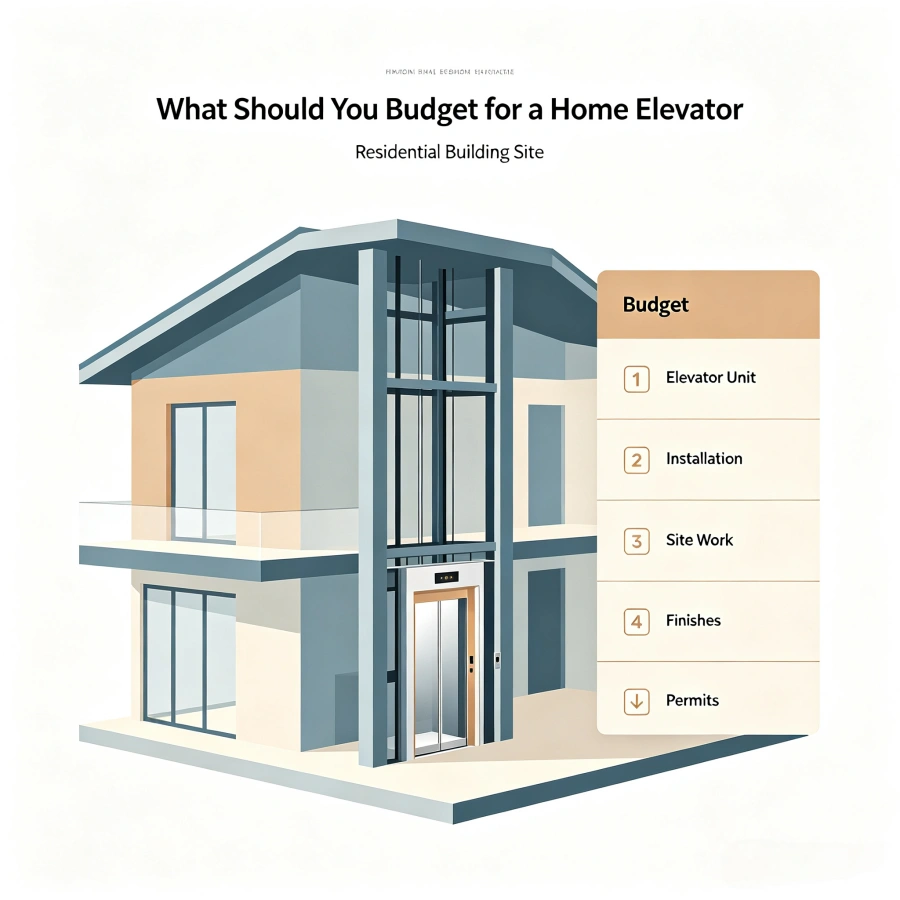
The answer to “How much does it cost to install an elevator in a home?” is more complicated than one price tag.
A reasonable initial planning range for a complete residential project can be around $20,000 to $60,000+, but the actual quotation depends on the elevator technology, number of floors, travel height, capacity, cabin size, shaft, pit, doors, structural work, electrical requirements, installation, local labor, and customization.
The most important distinction is between equipment price and total installed project cost.
If you are building a new house, planning the elevator during the architectural design stage can simplify shaft, structural, electrical, and landing requirements. If you are upgrading an existing house, carefully evaluate the construction work required around the elevator.
For homeowners comparing suppliers, the best approach is not simply to ask for the lowest price. Instead, request a detailed quotation that clearly identifies equipment, installation, construction, transportation, certification, warranty, and after-sales service.
In other words:
The right home elevator is not necessarily the cheapest elevator. It is the system that fits your house, accessibility requirements, working conditions, safety requirements, and long-term budget.
That is the number that matters—not just the number printed at the top of a supplier’s quotation.

Jnhclift (Huichuang Lift), based in Jinan, China, is a professional manufacturer of scissor lifts, home elevators, and lift platforms. With our own dedicated factory, we deliver high-quality, reliable lifting solutions tailored to meet diverse industrial and residential needs.
 Room 203, Second Floor, Building 8, Phase Ⅱ, Zhizao Town, Jibei Street, Jiyang District, Jinan City, Shandong Province
 +8615628811021
 admin@jnhclift.com
Leave a Reply
Want to join the discussion?Feel free to contribute!