
Custom Stationary Loading Dock Ramps
- Lift height: 20 ft, 25 ft, 30 ft, 35 ft, 40 ft
- Work height: 20 ft, 25 ft, 30 ft, 35 ft, 40 ft
- Brand: HUICHUANG(JNHC lift)
- Customization: YES
- Manual: YES
- Payment Methods: TT
- Delivery time: 15 working days
 +8615628811021
 admin@jnhclift.com
In modern logistics, warehousing, and manufacturing, efficiency at the loading dock can make or break operational performance. One of the most important—but often underestimated—pieces of equipment in this system is the stationary loading dock ramp.
Stationary loading dock ramps are an essential component in the logistics and warehousing industry, providing a safe and efficient way to load and unload goods from trucks or containers. These ramps are permanently fixed to a specific location, usually at a loading dock, to facilitate the smooth transfer of materials between different levels. This guide will explore the importance, types, benefits, and considerations when selecting stationary loading dock ramps for your facility
What Is a Custom Stationary Loading Dock Ramp?
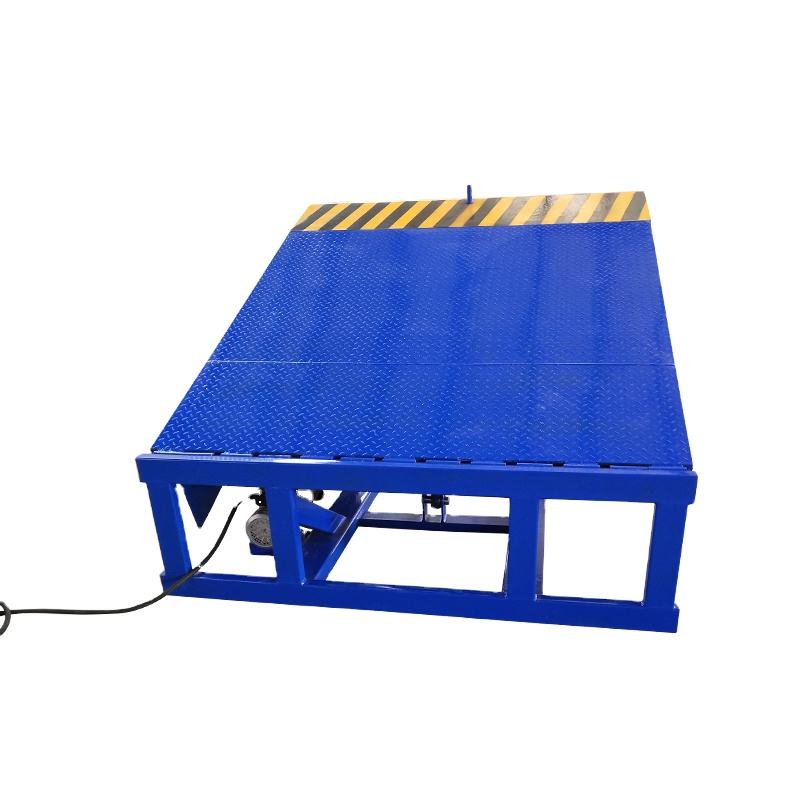 A stationary loading dock ramp is a fixed industrial ramp designed to connect ground level to a loading platform or warehouse dock. It is typically made of high-strength steel, engineered for heavy-duty operations, and permanently installed at a facility.
Unlike portable ramps, stationary ramps:
- Are fixed in position
- Support continuous high-frequency loading operations
- Are customized based on warehouse height and vehicle types
Key Characteristics:
- Permanent installation
- High load capacity (5–30+ tons)
- Anti-slip steel surface
- Hydraulic or fixed height design
- Forklift and pallet jack compatible
Why Customization Matters
No two warehouses are identical.
A custom stationary loading dock ramp allows you to adjust:
- Length and slope angle
- Load capacity
- Dock height compatibility
- Surface material (anti-slip steel, diamond plate, etc.)
- Side safety rails
- Integration with dock levelers
Customization ensures safety, efficiency, and long-term cost savings.
How Stationary Loading Dock Ramps Work
The concept is simple but powerful.
- Trucks park near the loading dock
- Ramp bridges ground level and dock height
- Forklifts drive up/down safely
- Goods are loaded/unloaded efficiently
The ramp eliminates the vertical gap that would otherwise slow or block operations.
Key Components of a Stationary Loading Dock Ramp
1. Main Ramp Body
- Made of heavy-duty steel
- Supports forklifts and cargo
2. Support Structure
- Reinforced steel beams
- Ensures stability under load
3. Anti-Slip Surface
- Steel grating or patterned plate
- Prevents wheel slipping
4. Side Safety Rails
- Prevent forklifts from falling
- Improve operator safety
5. Base Foundation System
- Anchored into concrete
- Ensures permanent stability
Types of Stationary Loading Dock Ramps
1. Fixed Steel Ramp
- Most common type
- No hydraulic movement
- Simple, durable, cost-effective
2. Hydraulic Stationary Ramp
- Adjustable height
- Used for variable dock levels
- More expensive but flexible
3. Heavy-Duty Industrial Ramp
- Designed for 20–50 ton loads
- Used in ports and factories
How to Use a Loading Dock Ramp (Step-by-Step)
Although simple, proper usage is critical for safety.
Step 1: Pre-Operation Inspection
- Check surface condition
- Ensure no oil or debris
- Inspect safety rails
Step 2: Position Vehicles
- Align truck with ramp
- Ensure brakes are engaged
Step 3: Load/Unload Operation
- Drive forklift slowly onto ramp
- Maintain steady speed
- Avoid sudden turns
Step 4: Traffic Control
- Only one vehicle on ramp at a time
- Maintain communication between operators
Step 5: Completion
- Clear ramp area
- Inspect for damage or wear
Key Advantages of Stationary Loading Dock Ramps
1. High Efficiency
They significantly reduce loading time by allowing:
- Continuous forklift access
- Smooth cargo transfer
Warehouses can increase throughput by 30–60%.
2. Improved Safety
- Stable structure reduces accidents
- Anti-slip surfaces prevent wheel slippage
- Side rails improve operator protection
3. Heavy Load Capacity
Custom ramps can handle:
- Forklifts
- Trucks
- Industrial machinery
4. Long-Term Cost Savings
Unlike portable ramps:
- No daily setup cost
- Minimal maintenance
- Long service life (10–20 years)
5. Custom Engineering
Facilities can tailor:
- Height
- Width
- Load capacity
- Material type
Limitations
Even the best system has limitations:
- Requires permanent installation
- Not easily relocated
- High upfront cost
- Requires foundation preparation
Competitive Analysis
Stationary Ramp vs Portable Loading Ramp
| Feature | Stationary Ramp | Portable Ramp |
|---|---|---|
| Mobility | Fixed | Movable |
| Load Capacity | Higher | Lower |
| Cost | Higher upfront | Lower upfront |
| Durability | Long-term | Medium |
Stationary ramps are better for permanent warehouses.
Stationary Ramp vs Dock Leveler
| Feature | Ramp | Dock Leveler |
|---|---|---|
| Flexibility | Medium | High |
| Cost | Lower | Higher |
| Maintenance | Low | Moderate |
Dock levelers are more advanced but more expensive.
Stationary Ramp vs Hydraulic Dock Ramp
| Feature | Fixed Ramp | Hydraulic Ramp |
|---|---|---|
| Adjustability | None | High |
| Cost | Lower | Higher |
| Complexity | Simple | Complex |
Hydraulic ramps are ideal for multi-height operations.
Materials Used in Manufacturing
1. Carbon Steel
- Most common
- Strong and cost-effective
2. Alloy Steel
- Higher durability
- Better corrosion resistance
3. Galvanized Steel
- Rust-resistant
- Suitable for outdoor use
Load Capacity Options
| Type | Capacity |
|---|---|
| Light Duty | 5–10 tons |
| Medium Duty | 10–20 tons |
| Heavy Duty | 20–50+ tons |
Choosing the right capacity is critical for safety.
Real Application Scenarios
1. Warehouses
- Daily pallet loading/unloading
2. Manufacturing Plants
- Raw material handling
3. Logistics Centers
- High-frequency truck operations
4. Ports and Freight Yards
- Heavy cargo transfer
How to Choose the Right Ramp
1. Dock Height Compatibility
Measure:
- Truck height
- Warehouse dock level
2. Load Requirements
Include:
- Forklift weight
- Cargo weight
3. Frequency of Use
- High frequency → reinforced structure
4. Surface Conditions
- Wet environments → anti-slip design
- Outdoor use → galvanized steel
5. Safety Features
- Guard rails
- Anti-slip surface
- Load warning labels
Maintenance Guide
Weekly:
- Clean surface
- Check for debris
Monthly:
- Inspect welds
- Check structural integrity
Yearly:
- Full structural inspection
- Repaint or anti-rust treatment
Common Mistakes Buyers Make
- Choosing wrong load capacity
- Ignoring slope angle
- Poor foundation installation
- Not considering forklift size
Future Trends
- Smart dock monitoring systems
- Anti-slip nano coatings
- Modular ramp systems
- Automated loading integration
Final Verdict
A custom stationary loading dock ramp is not just a piece of steel equipment—it is a core logistics efficiency tool.
Best for:
- Warehouses
- Factories
- Logistics hubs
- Industrial facilities
Not ideal for:
- Temporary job sites
- Mobile operations
Conclusion
In today’s fast-paced supply chain environment, efficiency at the loading dock directly impacts profitability. A well-designed stationary loading dock ramp ensures:
- Faster operations
- Safer handling
- Lower long-term costs
- Higher workflow efficiency
When properly customized and installed, it becomes one of the most reliable infrastructure investments a facility can make.
Sometimes, the simplest steel structure quietly does the hardest job in the whole building—and keeps everything moving without drama.
About JNHC Lift factory
Huichuang Lift is a leading stationary loading dock ramp factory, specializing in the customization of stationary loading dock ramps to meet the unique needs of our clients. We offer a comprehensive range of after-sales services, ensuring that our products not only meet but exceed your expectations in terms of performance and durability. Our team is dedicated to providing tailored solutions, from design to installation, ensuring a seamless and efficient loading and unloading process for your business. We invite you to partner with us for reliable, high-quality loading dock ramps that are built to last.
 Room 203, Second Floor, Building 8, Phase Ⅱ, Zhizao Town, Jibei Street, Jiyang District, Jinan City, Shandong Province