How Much Does a Self Propelled Scissor Lift Cost?
/in blog /by jnhcliftSelf-propelled scissor lifts have become one of the most popular aerial work platforms in construction, warehousing, manufacturing, facility maintenance, airports, shopping malls, and logistics centers. Unlike manually moved scissor lifts, self-propelled models can drive themselves while elevated (depending on the model and safety regulations), significantly improving productivity and reducing labor costs.
One of the most frequently asked questions from contractors, rental companies, distributors, and importers is “How much does a scissor lift cost?” The answer depends on multiple factors, including working height, load capacity, power source, battery type, safety features, certifications, and the country of manufacture.
Chinese manufacturers have become major global suppliers of self-propelled scissor lifts thanks to competitive pricing, improving engineering quality, and flexible OEM/ODM services. Meanwhile, premium European and North American brands continue to dominate the high-end market with advanced technology and extensive dealer networks.
This guide provides a detailed analysis of global market prices, China factory prices, the factors influencing cost, and practical purchasing advice to help buyers choose the right self-propelled scissor lift.
What Is a self-propelled scissor lift?
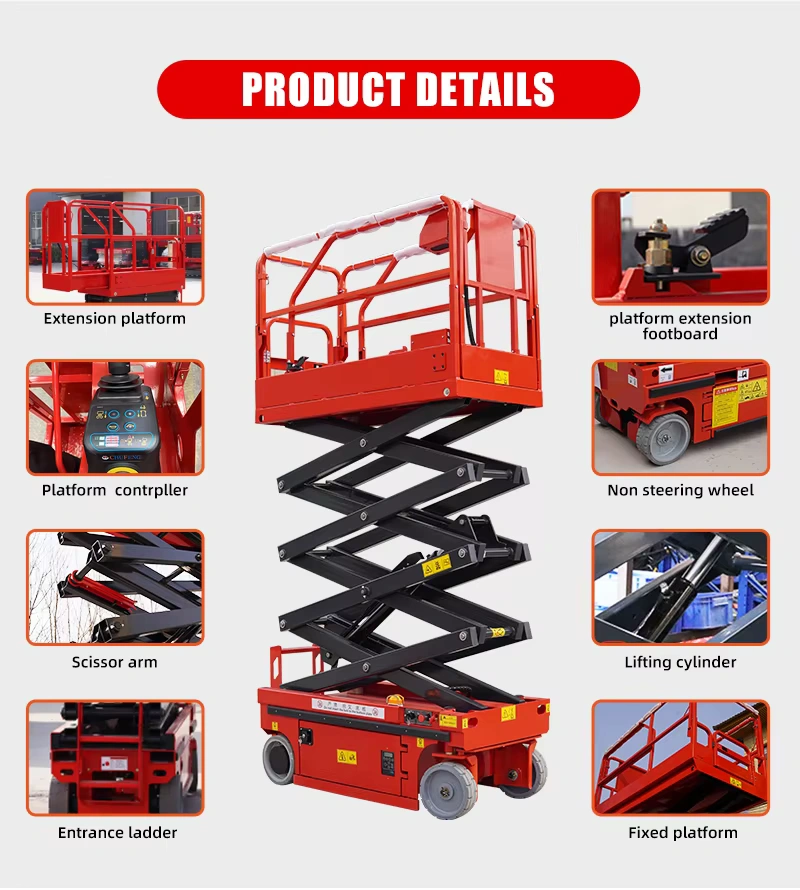
A self-propelled scissor lift is a mobile aerial work platform equipped with an electric or hydraulic drive system that allows operators to move the machine without lowering the platform or manually pushing it.
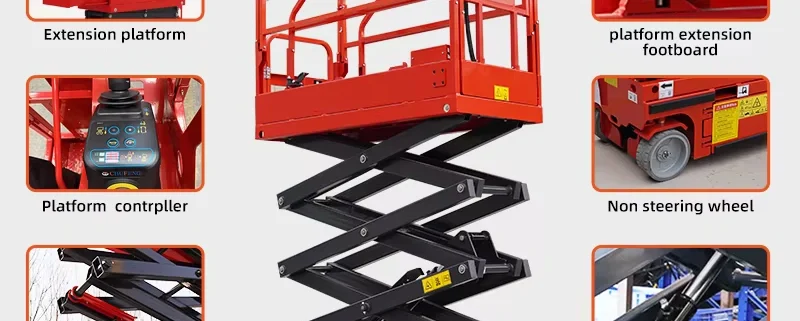
The lifting mechanism consists of crisscrossing steel supports powered by hydraulic cylinders, providing stable vertical lifting while maintaining a spacious work platform.
Typical applications include:
- Building maintenance
- Warehouse inventory management
- Electrical installation
- HVAC servicing
- Airport maintenance
- Factory equipment maintenance
- Shopping mall decoration
- Exhibition center construction
- Indoor renovation
- Industrial manufacturing
Compared with manual mobile lifts, self-propelled models increase efficiency by reducing setup time and minimizing operator fatigue.
Average Self-Propelled Scissor Lift Prices in 2026
Prices vary depending on platform height, capacity, drive system, and manufacturer.
| Working Height | China Factory Price (USD) | International Market Price (USD) |
|---|---|---|
| 6 m (20 ft) | $6,000–$8,000 | $9,000–$13,000 |
| 8 m (26 ft) | $7,000–$9,500 | $10,000–$15,000 |
| 10 m (32 ft) | $8,500–$11,500 | $12,000–$18,000 |
| 12 m (39 ft) | $10,000–$14,000 | $14,000–$22,000 |
| 14 m (46 ft) | $12,000–$17,000 | $17,000–$26,000 |
| 16 m (52 ft) | $15,000–$20,000 | $20,000–$30,000 |
These are typical FOB China prices and may vary depending on configuration, certifications, and order quantity.
Price by Lift Type
Electric Self-Propelled Scissor Lift
Factory Price:
$6,000–$16,000
Ideal for:
- Warehouses
- Shopping malls
- Hospitals
- Airports
- Manufacturing facilities
- Indoor maintenance
Advantages:
- Zero emissions
- Quiet operation
- Low maintenance
- Lower energy consumption
Hydraulic Self-Propelled Scissor Lift
Factory Price:
$7,000–$18,000
Suitable for both indoor and light outdoor applications.
Features include:
- Stable lifting
- High reliability
- Smooth platform movement
- Lower maintenance costs
Rough Terrain Self-Propelled Scissor Lift
Factory Price:
$15,000–$28,000
Typical features:
- Four-wheel drive
- Diesel engine or high-capacity electric drive
- Large foam-filled tires
- Oscillating axle
- High ground clearance
Ideal for:
- Construction sites
- Mining
- Bridge projects
- Outdoor industrial maintenance
Lithium Battery Self-Propelled Lift
Factory Price:
$9,000–$18,000
Lithium-powered models are becoming increasingly popular because they offer:
- Faster charging
- Longer battery life
- Maintenance-free batteries
- Improved energy efficiency
- Lower total operating costs
China Factory Prices by Platform Height
| Platform Height | Factory Price |
|---|---|
| 5.8 m | $6,000–$7,000 |
| 7.8 m | $7,000–$8,500 |
| 9.8 m | $8,500–$10,500 |
| 11.8 m | $10,000–$13,000 |
| 13.8 m | $12,000–$16,000 |
| 15.8 m | $15,000–$20,000 |
Actual prices depend on platform capacity, battery brand, controller, hydraulic system, and optional features.
What Affects the Price?
Several factors determine the final cost of a self-propelled scissor lift.
1. Working Height
Higher working heights require:
- More structural steel
- Longer hydraulic cylinders
- Larger batteries
- Stronger drive motors
- Enhanced stability systems
As a result, taller lifts generally cost more.
2. Platform Capacity
Typical load capacities include:
- 230 kg
- 320 kg
- 450 kg
- 500 kg
- 680 kg
Higher capacities require reinforced structures and upgraded hydraulic components, increasing manufacturing costs.
3. Battery Type
Battery selection has a significant impact on pricing.
Lead-acid batteries
- Lower purchase price
- Proven technology
- Periodic maintenance required
Lithium batteries
- Higher upfront cost
- Faster charging
- Longer service life
- Lower maintenance
- Better cold-weather performance
4. Hydraulic System
Premium hydraulic systems offer:
- Smoother lifting
- Faster response
- Longer service life
- Lower leakage risk
Higher-quality components typically increase the purchase price but reduce long-term maintenance costs.
5. Electric Drive System
Modern self-propelled lifts often feature:
- AC drive motors
- Brushless motors
- Intelligent controllers
- Regenerative braking
These technologies improve efficiency but also affect pricing.
6. Safety Features
Optional safety equipment may include:
- Automatic pothole protection
- Tilt alarm
- Overload detection
- Emergency descent system
- Proportional controls
- Fault diagnostics
- Automatic braking
- Platform extension deck
Machines equipped with advanced safety features generally command higher prices.
Why Are Chinese Self Propelled Scissor Lifts More Affordable?
China has become one of the world’s largest producers of aerial work platforms due to several competitive advantages.
Economies of Scale
Large production volumes reduce manufacturing costs.
Mature Supply Chain
Most key components—including steel structures, hydraulic cylinders, electric motors, controllers, and batteries—are sourced locally, improving efficiency and lowering costs.
OEM & ODM Manufacturing
Chinese factories commonly offer:
- Private labeling
- Custom colors
- Customized platform sizes
- Voltage customization
- Logo printing
- Packaging customization
These services are especially attractive to distributors and rental companies.
Competitive Labor Costs
While labor costs have increased over time, China still offers competitive manufacturing economics compared with many developed markets.
China Factory vs International Brands
| Feature | China Factory | International Brands |
|---|---|---|
| Purchase Price | Lower | Higher |
| Customization | Excellent | Limited |
| OEM Service | Excellent | Moderate |
| Spare Parts Cost | Lower | Higher |
| Delivery Time | 20–45 Days | Often Available from Dealer Stock |
| Warranty | Typically 1–2 Years | Often 2–5 Years |
| Global Dealer Network | Growing | Extensive |
For many buyers, Chinese manufacturers offer an excellent balance between cost, quality, and customization.
Additional Costs Beyond the Purchase Price
When importing a self propelled scissor lift, buyers should also budget for:
- Ocean freight
- Marine insurance
- Import duties
- Customs clearance
- Inland transportation
- Operator training
- Scheduled maintenance
- Replacement batteries
- Spare parts inventory
Evaluating the total cost of ownership (TCO) is more useful than comparing purchase prices alone.
Should You Buy a New or Used Self-Propelled Scissor Lift?
New Equipment
Advantages:
- Full manufacturer warranty
- Latest safety systems
- Longer service life
- Lower maintenance during the first years
- Custom specifications available
Used Equipment
Advantages:
- Lower initial investment
- Faster availability
- Suitable for occasional use or tight budgets
Potential drawbacks include uncertain maintenance history, higher repair costs, and possible non-compliance with current safety standards.
How to Choose the Right Self-Propelled Scissor Lift
Before placing an order, consider the following questions:
- What working height is required?
- Will the lift be used indoors, outdoors, or both?
- What platform capacity is needed?
- How often will the equipment be used?
- Is a compact model required for narrow aisles?
- Do you need non-marking tires for indoor floors?
- Which certifications are required in your market (such as CE or ANSI)?
- Would a lithium battery reduce your long-term operating costs?
Answering these questions will help you select a machine that matches your operational needs without paying for unnecessary features.
Future Trends in Self-Propelled Scissor Lifts
Technological innovation is reshaping the aerial work platform industry. Key trends include:
- Lithium-ion battery systems with faster charging and longer service life.
- Telematics and IoT connectivity for remote diagnostics and fleet management.
- Electric rough-terrain models that combine zero-emission operation with off-road capability.
- Predictive maintenance powered by onboard sensors and cloud analytics.
- Lightweight high-strength materials that improve efficiency while maintaining structural integrity.
- Enhanced operator assistance systems for improved safety and productivity.
These developments are expected to reduce operating costs, improve equipment uptime, and support sustainability goals across construction and industrial sectors.
Conclusion
The price of a self-propelled scissor lift in 2026 generally ranges from $6,000 to $20,000 for standard electric models manufactured in China, while comparable international brands often range from $9,000 to $30,000 depending on specifications and brand reputation. Rough-terrain and heavy-duty models may exceed these ranges due to more powerful drive systems and reinforced construction.
Chinese manufacturers have become a leading source for scissor lifts thanks to their competitive factory pricing, extensive customization capabilities, and increasingly mature manufacturing standards. For distributors, rental companies, contractors, and industrial users, purchasing directly from a reputable Chinese factory can deliver substantial cost savings without sacrificing essential performance.
When evaluating suppliers, look beyond the initial purchase price. Consider certifications, warranty coverage, component quality, spare parts availability, after-sales support, shipping expenses, and total lifecycle costs. By selecting the right lift for your working environment and partnering with a reliable manufacturer, you can achieve a strong return on investment while improving workplace safety, efficiency, and productivity.
Jnhclift (Huichuang Lift), based in Jinan, China, is a professional manufacturer of scissor lifts, home elevators, and lift platforms. With our own dedicated factory, we deliver high-quality, reliable lifting solutions tailored to meet diverse industrial and residential needs.
 Room 203, Second Floor, Building 8, Phase Ⅱ, Zhizao Town, Jibei Street, Jiyang District, Jinan City, Shandong Province
 +86 152 5319 3706
 admin@jnhclift.com