
Home Elevator Price Philippines
Home Elevator Price Philippines: Complete Guide to Small Home Elevator Cost, Types, and China Factory Prices
The demand for home elevators in the Philippines has increased rapidly in recent years as more homeowners build multi-story houses, luxury villas, and modern residential properties. A small home elevator offers a convenient solution for families seeking better mobility, improved accessibility, and increased property value without installing a traditional commercial elevator.
Many Filipino homeowners are now searching for “home elevator price Philippines” because residential elevators have become more affordable compared with traditional elevator systems. Depending on the elevator type, capacity, installation requirements, and supplier origin, the price can range from around $10,000 to more than $50,000 (₱580,000 to ₱2.9 million PHP).
Compared with European, Japanese, or American elevator brands, home elevators manufactured in China offer competitive pricing, flexible customization, and reliable technology. Many Philippine buyers import small residential elevators directly from Chinese factories to reduce costs while maintaining quality.
What Is a Small Home Elevator?
A small home elevator is a compact vertical transportation system designed specifically for private residences. Unlike commercial elevators installed in shopping malls, hotels, and office buildings, home elevators are designed for lower usage frequency, smaller spaces, and simpler installation requirements.
A typical small home elevator serves 2 to 6 persons and is usually installed in:
- Private houses
- Luxury villas
- Townhouses
- Duplex homes
- Retirement residences
- Multi-floor apartments
- Buildings requiring wheelchair accessibility
The main purpose of a residential home elevator is to connect different floors safely and comfortably. For elderly people, disabled family members, and homeowners carrying heavy items between floors, a small elevator can significantly improve daily convenience.
Most home elevators serve 2 to 5 floors, with lift heights typically ranging from 3 to 15 meters.
Common specifications include:
| Specification | Typical Range |
|---|---|
| Capacity | 250kg – 500kg |
| Passengers | 2-6 persons |
| Floors | 2-5 floors |
| Speed | 0.15-0.4 m/s |
| Drive System | Hydraulic, traction, screw, or vacuum |
| Installation Space | 1-2 square meters |
| Power Supply | Single-phase 220V |
Unlike traditional elevators, many small home elevators do not require a deep elevator pit or a large machine room, making them suitable for existing Philippine houses.
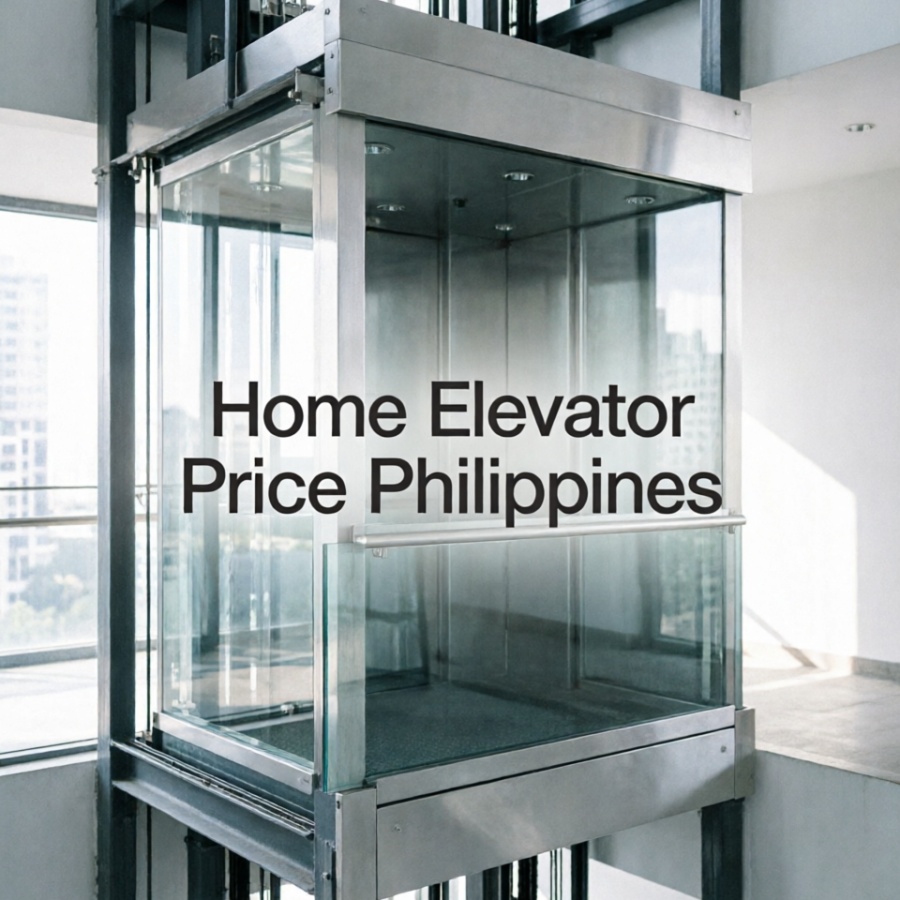
Why Are Home Elevators Becoming Popular in the Philippines?
The Philippine residential market has several factors driving the growth of home elevators.
1. Aging Population and Accessibility Needs
Many Filipino families live in multi-generational homes. Elderly family members often experience difficulty climbing stairs, especially in two-story or three-story houses.
A residential elevator provides:
- Safer movement between floors
- Wheelchair accessibility
- Reduced risk of stair accidents
- Better independence for seniors
For families planning long-term living solutions, installing a home elevator is becoming a practical investment.
2. Increasing Luxury Home Construction
Modern Filipino homeowners are building larger houses with multiple floors, rooftop gardens, and premium interior designs.
A small home elevator has become a symbol of:
- Modern lifestyle
- Architectural value
- Luxury home design
- Future-proof property planning
3. Limited Space in Urban Areas
In cities such as Manila, land prices are rising, prompting homeowners to build vertically rather than horizontally.
Compact home elevators can be installed in smaller spaces than traditional passenger elevators.
Popular Types of Home Elevators in the Philippines
Different residential elevator technologies are available in the Philippine market. The best choice depends on budget, house structure, installation space, and design requirements.
1. Hydraulic Home Elevator
Hydraulic home elevators are one of the most popular choices worldwide because of their strong lifting capacity and smooth operation.
A hydraulic elevator uses a pump-and-cylinder system to move the elevator cabin vertically.
Advantages:
- High load capacity
- Smooth movement
- Reliable performance
- Suitable for 2-5 floors
- Lower construction requirements
Disadvantages:
- Requires hydraulic oil maintenance
- Slightly higher energy consumption
- Requires space for hydraulic components
Hydraulic Home Elevator Price Philippines:
Local market price:
- Basic models: $15,000-$25,000 (₱870,000-₱1.45 million PHP)
- Premium models: $30,000-$50,000 (₱1.74 million-₱2.9 million PHP)
China factory price:
- Standard models: $8,000-$15,000
- Customized luxury models: $15,000-$25,000
Hydraulic elevators are often selected for villas and high-end residential projects.
2. Screw Drive Home Elevator
Screw drive elevators are becoming increasingly popular because they do not require a traditional elevator shaft.
The system uses a motor-driven screw mechanism to raise and lower the cabin.
Advantages:
- No machine room required
- Easy installation
- Compact design
- Suitable for existing homes
Disadvantages:
- Lower speed
- Limited lifting height
- Higher mechanical noise compared with hydraulic systems
Price:
Philippines market:
- $20,000-$40,000 (₱1.16 million-₱2.32 million PHP)
China factory price:
- $10,000-$20,000
This type is suitable for homeowners who want a simple installation without major house modification.
3. Traction Home Elevator
Traction elevators use a motor, pulley, and counterweight system similar to commercial elevators but in a smaller residential design.
They provide comfortable operation and energy efficiency.
Advantages:
- Energy saving
- Quiet operation
- High travel efficiency
- Modern technology
Disadvantages:
- Requires more installation planning
- Usually needs shaft construction
Price:
Philippines market:
- $25,000-$60,000 (₱1.45 million-₱3.48 million PHP)
China factory price:
- $12,000-$30,000
Traction elevators are commonly installed in luxury houses and premium residential projects.
4. Vacuum Home Elevator
Vacuum elevators use air pressure differences to move the cabin.
They are known for their futuristic transparent tube design.
Advantages:
- Beautiful appearance
- Minimal construction work
- Space-saving
Disadvantages:
- Higher price
- Lower capacity
- Limited supplier availability
Price:
Philippines market:
- $35,000-$70,000 (₱2.03 million-₱4.06 million PHP)
China factory price:
- $18,000-$35,000
Vacuum elevators are mainly used in luxury villas.
5. Shaftless Home Elevator
Shaftless elevators are among the fastest-growing residential elevator solutions in the Philippines.
They are designed for homes where building a traditional elevator shaft is difficult.
Features:
- Compact footprint
- Low construction cost
- Fast installation
- Suitable for 2-3 floors
Price:
Philippines market:
- $12,000-$30,000 (₱696,000-₱1.74 million PHP)
China factory price:
- $7,000-$15,000
For many Filipino homeowners, shaftless elevators provide the best balance between price and convenience.
Home Elevator Price Philippines: Market Comparison
The final price depends on brand, installation method, customization, and import costs.
| Elevator Type | Philippines Market Price | China Factory Price |
|---|---|---|
| Shaftless Home Elevator | $12,000-$30,000 | $7,000-$15,000 |
| Hydraulic Home Elevator | $15,000-$50,000 | $8,000-$25,000 |
| Screw Drive Elevator | $20,000-$40,000 | $10,000-$20,000 |
| Traction Home Elevator | $25,000-$60,000 | $12,000-$30,000 |
| Vacuum Elevator | $35,000-$70,000 | $18,000-$35,000 |
(Exchange rate reference: $1 ≈ ₱58 PHP. Actual exchange rates may change.)
Why Buy Home Elevators from China?
China has become one of the largest manufacturers of residential elevators worldwide. Many Philippine buyers choose Chinese suppliers because of cost advantages and customization options.
1. Lower Manufacturing Cost
Chinese factories have mature supply chains for:
- Elevator motors
- Control systems
- Steel structures
- Cabin decoration
- Hydraulic components
- Safety devices
This allows manufacturers to provide competitive prices.
A home elevator purchased directly from a Chinese factory can often save 30%-50% compared with imported European brands.
2. Customization Options
Chinese manufacturers can customize:
- Cabin size
- Door design
- Glass cabin
- Stainless steel decoration
- Floor numbers
- Loading capacity
- Color and interior style
This is important because Philippine houses have different architectural designs.
3. Complete Export Support
Professional Chinese elevator suppliers usually provide:
- Technical drawings
- Installation manuals
- Remote installation guidance
- Spare parts supply
- OEM services
Some suppliers also cooperate with local installers in Southeast Asia.
Additional Costs When Installing a Home Elevator in the Philippines
The elevator equipment price is not the only cost. Buyers should consider additional expenses.
1. Shipping Cost
For imported elevators from China:
- Small elevator shipping: approximately $1,000-$3,000
The final cost depends on:
- Elevator size
- Packaging
- Shipping method
- Destination port
2. Import Taxes and Customs
Philippine import duties, VAT, and customs fees may apply depending on the product classification and import arrangement.
3. Installation Cost
Installation usually costs:
- $3,000-$10,000 (₱174,000-₱580,000)
Factors include:
- Building structure
- Number of floors
- Electrical work
- Shaft preparation
4. Maintenance Cost
Annual maintenance typically ranges from:
- $300-$1,000 per year
Regular maintenance helps extend elevator service life.
How to Choose the Right Home Elevator in the Philippines?
Before purchasing, homeowners should evaluate several factors.
1. Number of Floors
For a 2-3 floor house:
- Shaftless elevator
- Hydraulic elevator
- Screw elevator
are usually suitable.
For 4-5 floors:
- Hydraulic or traction elevators are recommended.
2. Available Space
If your home has limited space:
Choose:
- Shaftless elevator
- Vacuum elevator
- Compact hydraulic elevator
3. Budget
Budget-friendly solution:
- Chinese shaftless home elevator
Mid-range solution:
- Hydraulic residential elevator
Luxury solution:
- Customized traction or vacuum elevator
4. Safety Features
A quality home elevator should include:
- Emergency lowering system
- Door interlock protection
- Overload protection
- Battery backup
- Emergency alarm
- Safety brake system
China Factory vs Philippines Local Supplier: Which Is Better?
| Comparison | China Factory | Local Supplier |
|---|---|---|
| Price | Lower | Higher |
| Customization | Excellent | Limited |
| Delivery Time | Longer | Faster |
| Installation Support | Remote/local partner | Local service |
| Spare Parts | Direct factory supply | Depends on supplier |
For homeowners who want the lowest equipment cost, buying directly from a Chinese manufacturer is attractive. For customers who prefer local installation and after-sales service, Philippine suppliers may be more convenient.
Final Thoughts: Is a Home Elevator Worth Buying in the Philippines?
A small home elevator is no longer only a luxury product. With more affordable residential elevator technologies, it has become a practical solution for Filipino homeowners who need comfort, accessibility, and future property value.
The average home elevator price in the Philippines ranges from $12,000 to $50,000 (₱696,000 to ₱2.9 million PHP) depending on the type and features. Chinese factory prices are usually much lower, starting from around $7,000, making direct import an attractive option for many buyers.
For most Philippine homes, a shaftless home elevator or hydraulic home elevator offers the best combination of price, safety, and installation convenience. Choosing a reliable manufacturer with proper certification, technical support, and spare parts availability is the key to a successful residential elevator project.

Jnhclift (Huichuang Lift), based in Jinan, China, is a professional manufacturer of scissor lifts, home elevators, and lift platforms. With our own dedicated factory, we deliver high-quality, reliable lifting solutions tailored to meet diverse industrial and residential needs.
 Room 203, Second Floor, Building 8, Phase Ⅱ, Zhizao Town, Jibei Street, Jiyang District, Jinan City, Shandong Province
 +86 152 5319 3706
 admin@jnhclift.com