

6m (19 ft) Scissor Lift: A Complete Guide to Safety, Efficiency and Real-World Applications
Aerial work remains a core part of modern construction, facility maintenance, warehousing and commercial fit-out projects. While large high-reach lifting equipment draws attention for tall-building projects, industry data shows that over 70% of daily aerial tasks take place at 6 meters or less. For these low-to-medium elevation jobs, bulky boom lifts or time-consuming scaffolding often deliver poor cost efficiency, while basic ladders carry well-documented fall risks. In this landscape, the 6m (19 ft) scissor lift has become the most balanced and widely adopted access solution across industries.
Manufactured by Jinan Huichuang (JNHC), the 6m (19 ft) scissor lift is a compact and highly practical piece of aerial work equipment widely used in construction, maintenance, warehousing, and indoor installation projects. Although it is relatively small compared to larger models, it plays an important role in improving work efficiency, ensuring safety, and providing stable access to elevated areas. As workplaces tighten safety standards and pursue higher operational efficiency, this mid-size scissor lift has evolved from an optional tool to a core asset for teams that regularly work at low and medium heights.
This guide breaks down the 6m scissor lift’s structural design, performance advantages, safety configurations, real-world use cases and long-term value for businesses, to help contractors, facility managers and rental operators understand why this 19-foot model delivers the strongest return on investment for low-level aerial work.
Why 6m (19 ft) Is the Go-To Height for Most Aerial Tasks
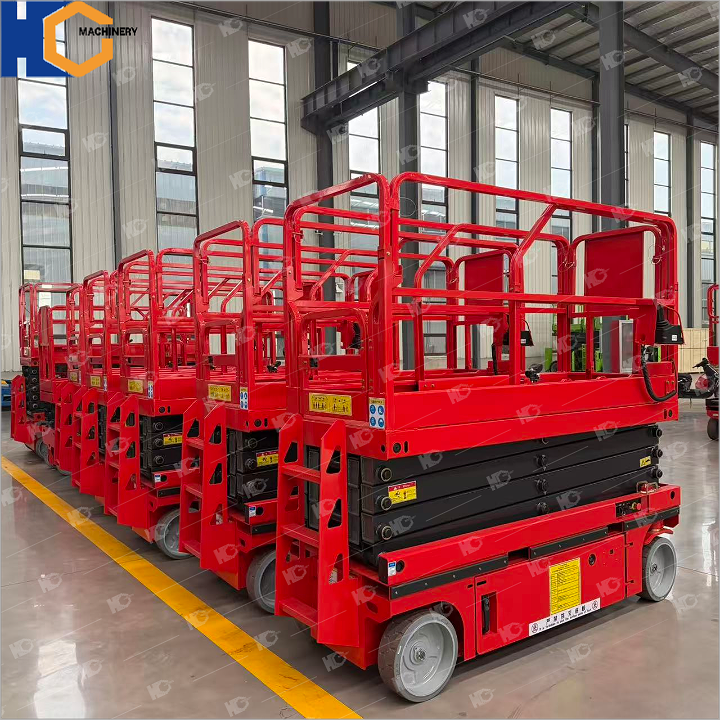
When selecting aerial work equipment, there is a common misconception that “higher is always better.” In practice, choosing a lift with excess working height leads to unnecessary costs, larger footprints and reduced maneuverability in tight spaces. For the vast majority of daily indoor and outdoor low-rise tasks, a 6-meter working height is fully sufficient, while offering far better flexibility and cost efficiency than larger units.
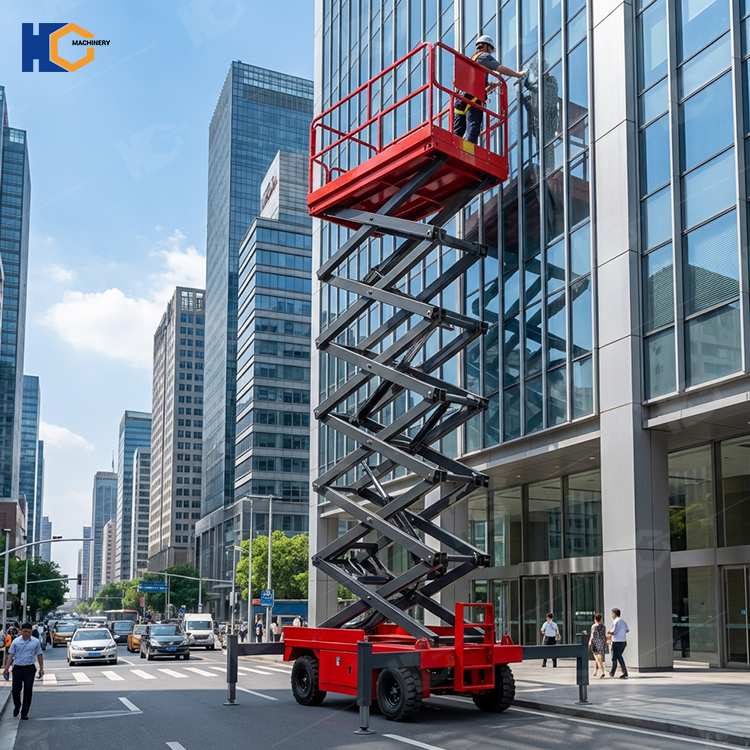
One of the main advantages of a 6m scissor lift is its suitability for indoor and low-height outdoor tasks. With a maximum working height of around 6 meters (approximately 19 feet), it is ideal for ceiling installation, lighting maintenance, painting, signage installation, and HVAC system repairs. In warehouses and logistics centers, it is commonly used for stock picking, shelving, and equipment maintenance. Because of its compact size, it can easily pass through standard doorways and narrow aisles, making it especially useful in confined working environments.
Unlike large aerial work platforms that require wide operating aisles and open outdoor space, the 6m scissor lift is built to work where bigger machines cannot access. It fits through standard commercial doorways, can be moved between building floors with ease, and navigates narrow warehouse aisles without disrupting normal operations. For retail fit-outs, office renovations and factory maintenance, this small footprint means work can proceed without shutting down large areas of a facility, greatly reducing overall project downtime.
Core Structural Design: Manganese Steel Scissor Mechanism
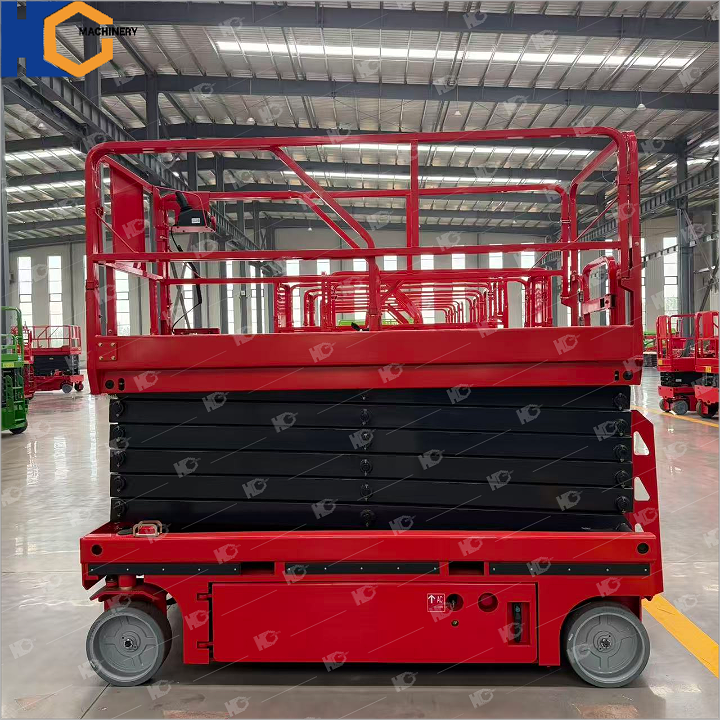
The scissor arm structure is the foundation of a lift’s performance, directly determining load capacity, lifting stability and service life. The JNHC 6m scissor lift adopts a manganese steel scissor structure, engineered for high strength, fatigue resistance and long-term durability under repeated daily use.
The structure of a scissor lift is simple but highly efficient. It uses a crisscross scissor mechanism that expands and contracts to raise or lower the platform. This design allows for strong lifting capacity while maintaining stability. The manganese steel construction ensures no lag during the lifting process and enables precise positioning, so operators can stop at any height with accuracy — a critical feature for precision work such as aligning ceiling panels, connecting electrical fixtures or installing signage.
Each scissor arm is precision-cut and welded, with reinforced pivot points and wear-resistant bushings at every joint. High-strength pin shafts connect the intersecting arms, ensuring smooth, jolt-free extension and retraction even under full load. Wear-resistant buffer blocks are installed at each folding position to absorb impact when the arms retract, reducing mechanical shock and extending structural service life. Compared with ordinary steel alternatives, manganese steel models maintain structural rigidity after years of heavy use, with minimal deformation or joint loosening.
All-Terrain Chassis: Flexible for Indoor and Outdoor Job Sites
A common limitation of small electric scissor lifts is that they only perform reliably on smooth, hard indoor floors. The JNHC 6m scissor lift overcomes this barrier with an all-terrain chassis design that performs consistently both indoors and on rough outdoor work sites.
The unit is fitted with inflatable rubber wheels that are wear resistant and durable, suitable for both indoor and outdoor use without crossing roads. These thick, treaded tires absorb vibration on gravel, dirt and uneven pavement, providing stable travel on typical construction sites, courtyard landscapes and unpaved warehouse yards. For users who work primarily on smooth indoor floors and prefer even lower rolling resistance, solid tire options are also available.
This all-terrain capability greatly expands the use range of the 6m model. A single unit can handle indoor ceiling installation in the morning, move outdoors for exterior trim work in the afternoon, and travel across gravel construction yards without difficulty. For small and medium construction teams, this eliminates the need to own separate indoor and outdoor access equipment, significantly reducing equipment investment costs.
Battery-Powered System: Clean, Quiet and Low-Maintenance Operation
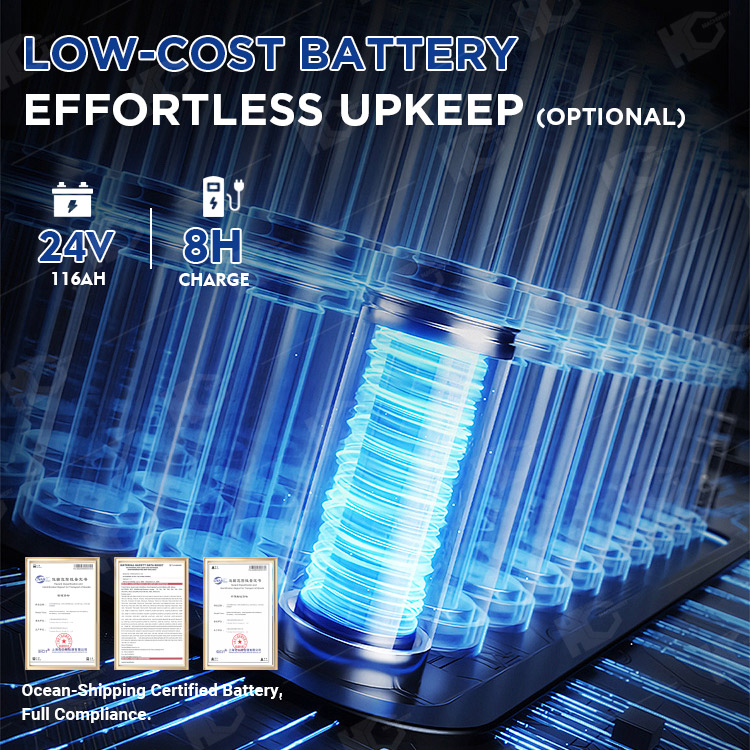
The 6m (19 ft) scissor lift is usually powered by electric batteries, which makes it environmentally friendly, quiet, and suitable for indoor use. Electric scissor lifts produce no emissions and require minimal maintenance, which is why they are widely preferred in modern workplaces. Unlike diesel-powered lifts, they release no exhaust fumes, so they can operate inside enclosed buildings, hospitals, schools and office spaces without ventilation concerns.
For users needing extended runtime, an upgraded low-cost battery option is available: a 24V 116Ah battery pack that delivers a full workday of operation on a single 8-hour charge. This battery is ocean-shipping certified and fully compliant with international transport regulations, making import and export safe and hassle-free. The battery system features effortless upkeep, with no regular refueling, no engine oil changes and far fewer wearable parts than internal combustion alternatives.
Quiet electric operation is another major benefit. Most indoor work environments — offices, retail spaces, hospitals and hotels — enforce strict noise limits. An electric scissor lift operates at a low sound level that will not disturb building occupants or violate site noise rules. This allows maintenance and installation work to be performed during normal business hours in occupied buildings, eliminating the need for premium-cost after-hours shifts.
Dual Control System: Streamlined Operation for Higher Productivity
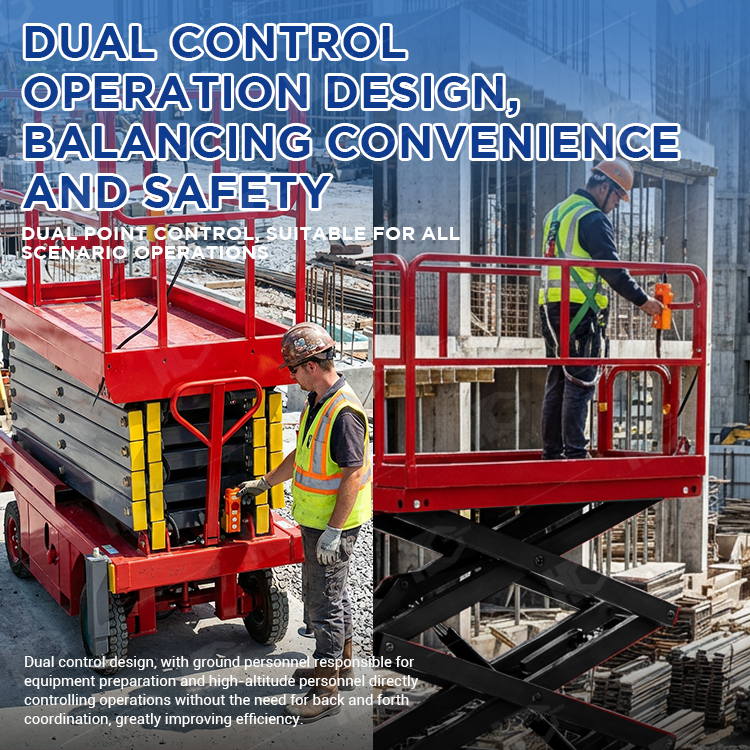
Ease of operation is a key driver of the 6m scissor lift’s growing popularity. Most 6m scissor lifts are designed with user-friendly control panels, allowing operators to lift, lower, and drive the machine with minimal training. The JNHC model takes usability a step further with a dual control operation design that balances convenience and safety across all work scenarios.
Under this system, ground personnel handle equipment preparation and basic maneuvering, while personnel working at height can control all functions directly from the platform, with no need for back-and-forth coordination. This greatly improves efficiency. For example, during ceiling installation, the platform operator can fine-tune lifting height inch by inch without signaling to a ground worker, eliminating communication delays and positioning errors. For solo operators, the dual control system allows them to drive and position the machine from ground level, then step onto the platform and continue controlling lift functions from above.
The control interface uses clearly labeled, intuitive buttons for lifting, lowering, forward and reverse travel, with large, glove-friendly controls. Many models also feature self-propelled systems, meaning the operator can move the lift while elevated, improving productivity and reducing downtime. For new operators, basic proficiency is achieved after only a short safety briefing, reducing training costs and making the lift accessible to teams of all experience levels.
Comprehensive Safety Features for Zero-Risk Aerial Work
Safety is another key benefit of the scissor lift design, and the primary reason businesses are replacing ladders and scaffolding with powered access equipment. Unlike ladders or scaffolding, a scissor lift provides a stable and enclosed platform for workers. The platform is surrounded by guardrails, reducing the risk of falls and improving operator confidence when working at height.
The JNHC 6m scissor lift is built with security configuration for comprehensive protection, including multiple safety locking mechanisms to prevent accidental falls. The platform is equipped with high-strength guardrails and anti-slip bottom plates to prevent personnel and materials from slipping. Every entry point has a self-locking safety gate that stays closed during operation, eliminating fall risks through the platform opening.
In addition, the lift is equipped with a strong hydraulic or electric lifting system that ensures smooth vertical movement. Many models also include emergency stop functions, tilt sensors, and overload protection, further enhancing safety during operation. If the platform tilts beyond a safe angle due to uneven ground or off-center loading, the tilt sensor automatically locks the lifting function and alerts the operator. Overload protection prevents ascent if the platform load exceeds the rated capacity, avoiding structural stress and instability.
Additional standard safety features include descent speed limiting valves that control lowering speed even if a hydraulic line fails, emergency lowering valves for manual descent during power loss, and audible alarms for travel and lifting operations. Together, these systems create a multi-dimensional safety net that reduces human error and mechanical risk, making scissor lifts far safer than any non-mechanical access method.
Key Industry Applications
The versatility of the 6m scissor lift makes it a workhorse across dozens of industries. The most common high-value use cases include:
- Construction & Renovation: Used for interior painting, drywall installation, window fitting and electrical work on low-rise sites, replacing slow-to-assemble scaffolding.
- Facility Maintenance: Supports routine lighting replacement, ceiling repairs, HVAC filter changes and fire alarm testing, cutting task time by 50% or more compared with ladder-based workflows.
- Warehousing & Logistics: Enables safe inventory picking, racking installation and overhead conveyor maintenance in narrow warehouse aisles.
- Retail & Public Space Fit-Outs: Used for seasonal decor, signage updates and high-window cleaning in malls, hotels and airports, with zero disruption to visitors.
- Signage & AV Installation: Provides a stable platform for mounting signs, light fixtures and audiovisual equipment, with precise positioning for accurate alignment.
6m Scissor Lift vs. Common Access Alternatives
To fully appreciate the 6m scissor lift’s value, it is useful to compare it with the three most common alternatives:
- Vs. ladders: Ladders are low-cost but carry high fall risk, limit workers to one-handed operation and slow down multi-location jobs. Scissor lifts provide a secure, full-size work platform and cut task times dramatically.
- Vs. scaffolding: Scaffolding offers a large work area but requires hours of assembly, is fixed in place and needs regular safety inspections. A scissor lift is ready to work immediately and can be repositioned in seconds.
- Vs. boom lifts: Boom lifts reach greater heights and extend over obstacles, but they cost far more, have larger footprints and require skilled operation. For work at 6m or less, they are unnecessary and inefficient.
Operational Best Practices
Even the safest equipment depends on proper use. Following these best practices maximizes productivity, extends equipment life and protects operators:
- Complete pre-shift inspections of scissor arms, hydraulic lines, tires, guardrails and controls, and verify emergency stop and lowering functions.
- Confirm site conditions including floor load capacity, ceiling clearance and ground slope before operation, and never exceed the manufacturer’s slope rating.
- Never exceed the rated load capacity, including the weight of operators, tools and materials.
- Keep platform gates closed and latched during lifting and travel; never climb over guardrails or lean out of the platform.
- Use the lift on firm, level ground whenever possible, and deploy outriggers for uneven outdoor terrain.
- Provide basic operator training for all users, covering control functions, safety features and emergency procedures.
Key Market Trends in Low-Level Access Equipment
The low-level aerial work market is evolving rapidly, driven by tighter safety regulations, rising labor costs and growing demand for zero-emission indoor equipment. Four key trends stand out:
First, full electrification is becoming the standard for 6m-class scissor lifts, as indoor workplaces ban combustion equipment and carbon reduction targets tighten.
Second, stricter occupational safety rules are pushing more small contractors to replace ladders with mechanized access equipment, driving steady demand growth.
Third, compact, lightweight designs are increasingly preferred, as users seek equipment that fits through standard doors and operates on finished floors without damage.
Fourth, intelligent features such as onboard diagnostics and digital load weighing are entering the segment, reducing downtime and simplifying maintenance for fleets and end users.
Final Thoughts
In conclusion, the 6m (19 ft) scissor lift is a reliable and efficient solution for low-level aerial work. Its compact design, strong safety features, and easy operation make it an essential tool across many industries. Whether used in construction sites, commercial buildings, or industrial warehouses, it significantly improves both safety and productivity while reducing the risks associated with working at height.
For businesses that regularly perform work at 2 to 6 meters, the return on investment is clear. Replacing ladders and scaffolding with a scissor lift reduces fall injury risk, cuts task completion times, lowers labor costs and improves safety compliance. For rental companies, 6m scissor lifts are among the highest-utilization fleet assets, with consistent demand across construction, maintenance and fit-out sectors.
Overall, JNHC 6m (19 ft) scissor lift from Jinan Huichuang lift company is an essential tool for short-height aerial tasks. It combines safety, convenience, and efficiency, making it a practical choice for both commercial and industrial applications. Backed by a robust manganese steel scissor structure, all-terrain chassis, optional long-life battery system, dual control operation and comprehensive safety features, it is engineered for reliable daily performance in real working conditions.
For any team still relying on ladders for low-height work, upgrading to a 6m electric scissor lift is one of the most impactful investments possible in safety, productivity and long-term operational value.
 Room 203, Second Floor, Building 8, Phase Ⅱ, Zhizao Town, Jibei Street, Jiyang District, Jinan City, Shandong Province
 +8615628811021
 admin@jnhclift.com