How Much Does a Small Home Elevator Cost? Complete 2026
How Much Does a Small Home Elevator Cost? A Complete 2026 Pricing Guide for Homeowners
Installing a small home elevator is no longer reserved for luxury mansions. Rising labor costs, aging populations, multi-story townhouses, and improvements in compact lift technology have made residential elevators far more accessible than they were ten years ago.
As someone who has worked with Chinese home elevator manufacturers and international buyers for years, I’ve noticed one common misconception: many homeowners believe the elevator itself is the biggest expense. In reality, the equipment often represents only 45%–60% of the total project cost. Installation, civil work, electrical upgrades, permits, and customization can easily account for the remaining budget.
If you’re planning to install a residential elevator, understanding all cost components before requesting quotations can save you thousands of dollars and prevent expensive surprises later.
This guide explains exactly how much a small home elevator costs, what affects pricing, which elevator type offers the best value, and how to buy directly from manufacturers without compromising quality.
What Is a Small Home Elevator?
A small home elevator is a compact passenger lift designed for private residential buildings, typically serving 2–5 floors.
Unlike commercial elevators, residential models prioritize:
- Quiet operation
- Energy efficiency
- Compact footprint
- Simple maintenance
- Attractive interior finishes
- Lower installation requirements
Modern home elevators generally accommodate:
| Specification | Typical Value |
|---|---|
| Capacity | 250–400 kg |
| Passengers | 2–5 people |
| Travel Height | 3–15 meters |
| Floors Served | 2–5 |
| Speed | 0.15–0.4 m/s |
| Power Supply | Single-phase or three-phase |
Today’s compact elevators can fit into spaces as small as 900 × 900 mm, making them practical for both renovations and new construction.
Average Small Home Elevator Cost in 2026
Pricing varies considerably depending on technology, customization, country, and installation conditions.
Here is a realistic global price range.
| Elevator Type | Equipment Price | Installed Cost |
|---|---|---|
| Hydraulic | $8,000–18,000 | $15,000–35,000 |
| Traction | $12,000–28,000 | $20,000–45,000 |
| Shaftless | $10,000–25,000 | $18,000–40,000 |
| Vacuum Elevator | $28,000–60,000 | $35,000–70,000 |
| Platform Lift | $6,000–15,000 | $10,000–25,000 |
Most homeowners eventually spend between $18,000 and $35,000 for a complete installed residential elevator.
Equipment Cost vs Total Project Cost
Many online articles mention only elevator prices, which can be misleading.
A complete project usually includes:
| Cost Item | Typical Share |
|---|---|
| Elevator equipment | 45–60% |
| Installation | 15–25% |
| Civil construction | 10–20% |
| Electrical work | 3–8% |
| Transportation | 2–5% |
| Inspection & permits | 2–5% |
| Maintenance package | Optional |
For example:
Elevator purchased from manufacturer:
$12,000
Additional expenses:
Installation: $4,000
Concrete shaft: $3,500
Electrical modifications: $1,000
Freight: $1,500
Permit: $800
Final project cost:
Approximately $22,800
Home Elevator Prices by Number of Floors
Floor count directly influences equipment size, guide rails, motor capacity, and installation time.
Two Floors
Typical Price:
$15,000–25,000
Most economical option.
Suitable for:
- Villas
- Duplex houses
- Elderly accessibility
Three Floors
Typical Price:
$18,000–30,000
The most popular residential configuration worldwide.
Four Floors
Typical Price:
$22,000–38,000
Requires stronger lifting systems and longer rails.
Five Floors
Typical Price:
$28,000–45,000
Generally uses higher-end traction technology.
Cost by Elevator Technology
Choosing the right drive system affects not only the purchase price but also long-term maintenance and energy consumption.
Hydraulic Home Elevator
Equipment Price:
$8,000–18,000
Advantages:
- Smooth ride
- Lower initial investment
- Reliable technology
- Good lifting power
Disadvantages:
- The machine room often requires
- Oil maintenance
- Higher energy consumption
Best for:
Luxury villas and low-rise homes.
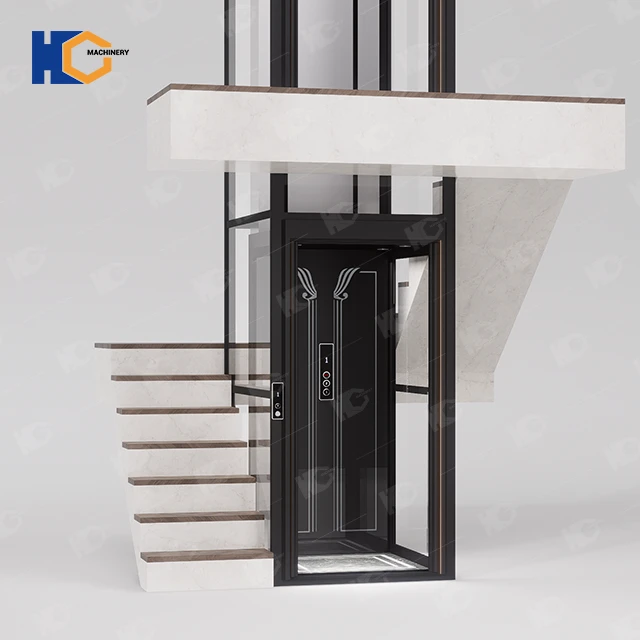
Traction Home Elevator
Equipment Price:
$12,000–28,000
Advantages:
- Energy efficient
- Quiet operation
- No hydraulic oil
- Faster travel speed
- Longer service life
Disadvantages:
Higher equipment cost.
Best for:
Modern homes.

Shaftless Home Elevator
Equipment Price:
$10,000–25,000
Advantages:
- Minimal construction
- Fast installation
- Small footprint
Perfect for renovations.
Vacuum Elevator
Equipment Price:
$28,000–60,000
Advantages:
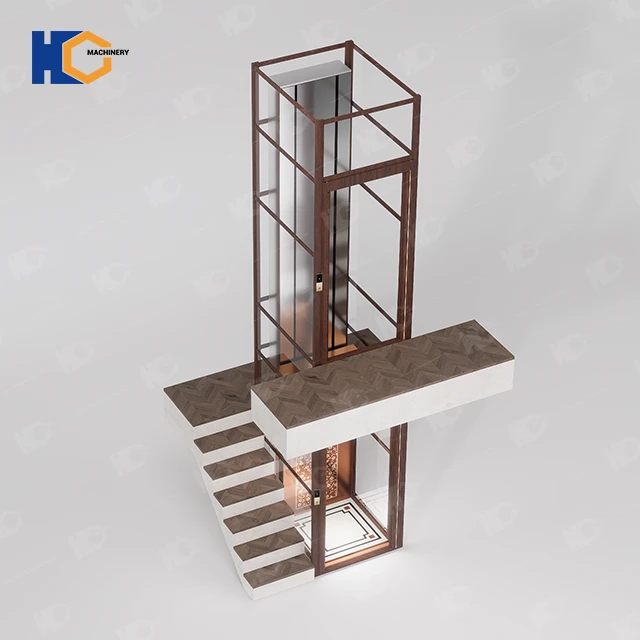
- Futuristic appearance
- Minimal maintenance
- Transparent design
Disadvantages:
Premium price.
Usually installed in luxury homes.
Chinese Factory Price vs Local Dealer Price
This is where buyers can save significant money.
Based on projects I’ve reviewed, many elevators sold by local distributors are manufactured in China and rebranded before reaching the end customer.
Typical comparison:
| Source | Equipment Price |
|---|---|
| Chinese manufacturer | $8,000–18,000 |
| Local distributor | $15,000–30,000 |
| Luxury dealer | $25,000–50,000 |
The difference mainly comes from:
- Dealer markup
- Warehousing
- Local sales commissions
- Marketing expenses
Buying directly from an experienced manufacturer can reduce equipment costs by 20%–40%, especially for overseas projects.
However, buyers should also factor in shipping, customs duties, local installation, and after-sales support when comparing quotations.
Factors That Affect Home Elevator Pricing
No two residential elevators are priced exactly the same.
Here are the biggest cost drivers.
Travel Height
Longer travel requires:
- More guide rails
- Longer cables
- Larger motors
- Additional safety devices
Every additional floor increases equipment costs.
Cabin Size
Typical cabin dimensions include:
- 900 × 900 mm
- 1000 × 1000 mm
- 1100 × 1400 mm
- Custom sizes
Larger cabins increase steel consumption and motor requirements.
Weight Capacity
Common capacities:
- 250 kg
- 320 kg
- 400 kg
Higher capacities increase structural requirements.
Door Configuration
Options include:
- Automatic sliding doors
- Center opening doors
- Swing doors
- Glass panoramic doors
Automatic doors cost more than manual swing doors.
Interior Decoration
Standard cabin finishes include:
- Powder-coated steel
- Stainless steel
- Hairline stainless
- Mirror stainless
- Aluminum alloy
Luxury upgrades include:
- Marble flooring
- Wooden panels
- LED ceiling lighting
- Touch-screen control panels
Customization can add several thousand dollars.
Installation Cost
Installation prices depend heavily on local labor rates.
Typical installation costs:
| Country | Installation Cost |
|---|---|
| China | $1,500–3,500 |
| Southeast Asia | $2,000–5,000 |
| Europe | $6,000–12,000 |
| United States | $8,000–15,000 |
| Australia | $6,000–10,000 |
Labor costs often outpace equipment price increases.
Maintenance Costs
Residential elevators require regular inspections.
Typical annual maintenance:
| Elevator Type | Annual Cost |
|---|---|
| Hydraulic | $300–700 |
| Traction | $250–600 |
| Shaftless | $200–500 |
| Vacuum | $400–800 |
Routine servicing usually includes:
- Lubrication
- Safety inspection
- Door adjustment
- Electrical testing
- Brake inspection
Preventive maintenance significantly extends equipment lifespan.
How Long Does a Home Elevator Last?
Average service life:
- Hydraulic: 20–25 years
- Traction: 25–30 years
- Vacuum: 20–25 years
- Shaftless: 20+ years
Most manufacturers provide:
- 2–5 years warranty
- 15–20 years spare parts availability
With proper maintenance, many residential elevators continue operating reliably for more than 30 years.
Is Buying Directly From China Worth It?
From my experience working with international buyers, the answer depends on project size and your ability to manage installation locally.
For a single home, buying locally may provide faster installation and easier warranty support.
For developers, builders, distributors, or homeowners constructing multiple properties, sourcing directly from a qualified Chinese factory can deliver substantial savings. Factory-direct pricing often offsets shipping costs, especially when purchasing two or more elevators.
The key is selecting a manufacturer that can supply detailed installation drawings, remote technical support, spare parts, and compliance with your country’s electrical and safety standards. A lower purchase price is only valuable if the supplier can also support the project after delivery.
Common Hidden Costs
Many buyers overlook these expenses during budgeting:
- Building permits
- Structural engineering
- Freight insurance
- Customs clearance
- Import duties
- Crane rental
- Backup power systems
- Waterproof elevator pit
- Fire safety modifications
- Interior finishing after installation
Adding a contingency budget of 10%–15% helps avoid unexpected financial pressure during the project.
Tips for Reducing Home Elevator Costs
There are several practical ways to control your investment without sacrificing safety.
- Choose standard cabin dimensions instead of custom sizes.
- Limit decorative upgrades unless they add real value.
- Plan the elevator shaft during new construction to reduce civil work.
- Compare quotations from at least three qualified suppliers.
- Ask for complete project pricing rather than equipment-only quotes.
- Confirm what is included, such as freight, installation guidance, warranty, and spare parts.
- Select an energy-efficient traction system if long-term operating costs are a priority.
- Purchase directly from experienced manufacturers when importing is practical.
Frequently Asked Questions
What is the cheapest type of home elevator?
Platform lifts and hydraulic elevators generally have the lowest initial purchase price, while shaftless elevators can minimize installation costs for existing homes.
Does a home elevator increase property value?
In many markets, especially where aging-in-place is important, a professionally installed home elevator can increase a property’s appeal and resale value. The exact return depends on local demand and the quality of the installation.
Can a home elevator run on single-phase electricity?
Yes. Many compact residential elevators designed for two or three floors are available with single-phase power, making them suitable for standard household electrical systems.
How long does installation take?
Equipment installation typically takes 5–10 working days, while the overall project—including shaft preparation, electrical work, inspections, and finishing—usually requires 2–6 weeks, depending on site conditions.
Should I buy from a local dealer or import directly?
Local dealers offer convenience, local warranties, and installation services. Importing directly from a manufacturer often reduces equipment costs by 20–40%, but requires careful planning for logistics, customs, and local installation support.
How Much Does a Small Home Elevator Cost in Huichuang Lift?
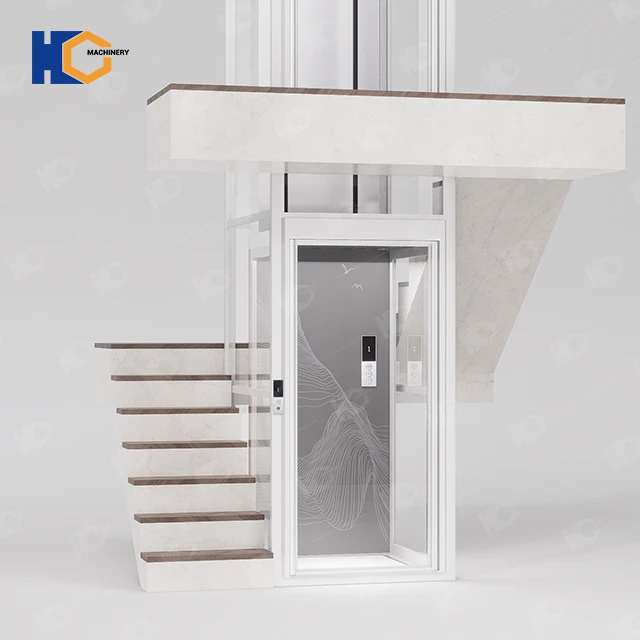
If you’re planning to install a residential elevator, one of the first questions you’ll ask is, “How much does a small home elevator cost?” The answer depends on the elevator type, lifting height, cabin size, customization, and optional features. When purchasing directly from Huichuang Lift, a professional home elevator manufacturer in China, the FOB factory price typically ranges from USD $6,000 to $30,000, excluding installation, shipping, import duties, and local service costs.
For a standard hydraulic home elevator serving 2–4 floors, the FOB price generally falls between $6,000 and $12,000. Mid-range models with automatic doors, premium cabin finishes, and larger capacities usually cost $12,000 to $20,000. Luxury panoramic home elevators with customized glass cabins, intelligent control systems, and high-end decorative materials can range from $20,000 to $30,000 FOB.
Several factors influence the final price. The travel height and number of floors are major considerations, as taller lifts require longer guide rails and larger hydraulic systems. Cabin size and load capacity also affect manufacturing costs. Customers can choose from stainless steel, aluminum alloy, tempered glass, or customized interior finishes to match their home’s design. Additional options such as automatic sliding doors, remote monitoring, emergency rescue systems, and smart touch controls will further increase the overall price.
Buying directly from Huichuang Lift offers significant advantages over purchasing through local distributors. Factory-direct pricing eliminates intermediary markups while providing OEM and ODM customization, professional engineering support, strict quality control, and flexible design solutions tailored to your building dimensions. Every elevator undergoes comprehensive factory testing before shipment to ensure safety and reliable performance.
Please note that the quoted FOB price includes the complete elevator equipment only. Installation services, freight, customs clearance, local taxes, and on-site commissioning are not included. Huichuang Lift provides detailed installation drawings, operation manuals, video guidance, remote technical support, and lifetime after-sales assistance to help customers complete their projects successfully.
For homeowners seeking an affordable, safe, and customizable residential elevator, purchasing directly from Huichuang Lift provides an excellent balance of quality, competitive pricing, and long-term value. With FOB prices ranging from $6,000 to $30,000, customers can select a solution that fits both their home and budget while benefiting from the expertise of an experienced Chinese home elevator manufacturer.
Stay in regular contact with our factory to get the latest pricing and secure the most competitive rates. Why not send an inquiry now?

Jnhclift (Huichuang Lift), based in Jinan, China, is a professional manufacturer of scissor lifts, home elevators, and lift platforms. With our own dedicated factory, we deliver high-quality, reliable lifting solutions tailored to meet diverse industrial and residential needs.
 Room 203, Second Floor, Building 8, Phase Ⅱ, Zhizao Town, Jibei Street, Jiyang District, Jinan City, Shandong Province
 +86 152 5319 3706
 admin@jnhclift.com