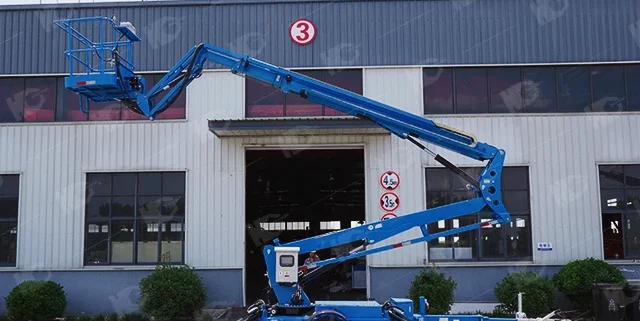
Towable Trailer Boom Lift Technology: Core Components and Systems of High-End Cherry Pickers

Towable Trailer Boom Lift Technology: Core Components and Systems of High-End Cherry Pickers

Explore the core technology inside high-end towable trailer boom lifts, including HydraForce proportional valves, CAN bus control, AL-KO towing systems and comprehensive safety technology.
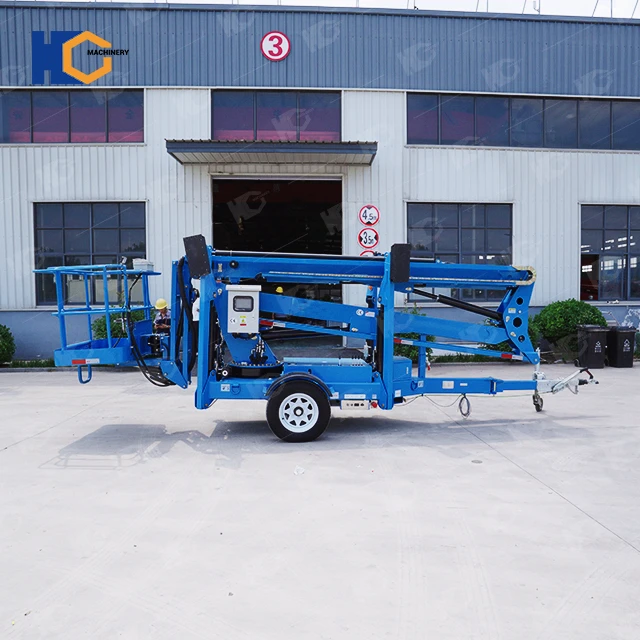

When buyers compare towable trailer boom lift models, they often focus on visible specifications such as working height, platform size and price. However, the real difference between an entry-level cherry picker and a professional high-end unit lies beneath the surface — in the quality of core hydraulic components, the sophistication of the control system, the engineering of the towing chassis and the depth of integrated safety technology. These hidden systems determine long-term reliability, operational precision, maintenance cost and, most importantly, on-site safety.
As a professional manufacturer of towable trailer boom lifts, HUICHUANG designs its HCZB series around international-grade core components and mature automotive-derived control architecture. In this technical guide, we break down the four major technology systems inside a high-end towable trailer boom lift — hydraulic, control, towing and safety — explaining what each component does, why it matters, and how to recognize quality when evaluating equipment.

1. Hydraulic System Technology: The Muscle of the Machine
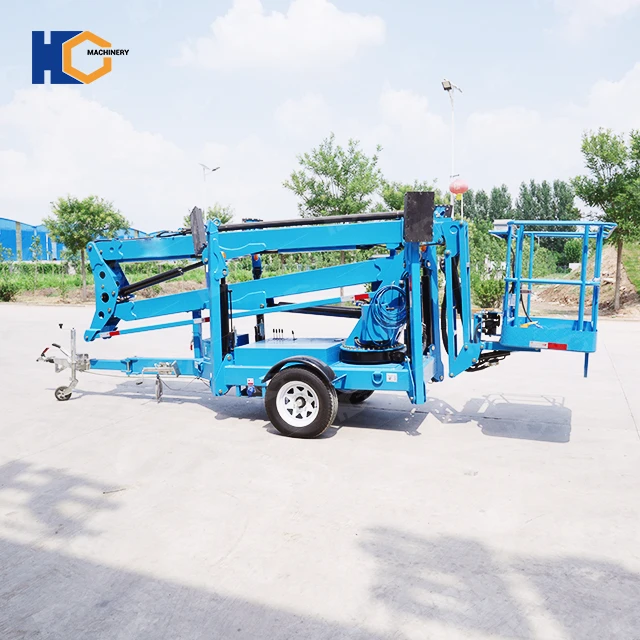

The hydraulic system is the primary power delivery system of any towable trailer boom lift. It controls every boom movement — lifting, lowering, telescoping, rotating and outrigger deployment. The quality of hydraulic components directly determines movement smoothness, positioning precision, energy efficiency and long-term maintenance cost.

American HydraForce Proportional Valve Technology

At the heart of a premium hydraulic system is the proportional valve. Lower-cost cherry pickers typically use simple on/off solenoid valves that only provide two states — fully open or fully closed. This results in jerky, abrupt movements that make precise positioning difficult and increase mechanical stress on the structure.
As a defining feature of professional-grade towable boom lifts, proportional flow control enables smooth, infinitely adjustable movement. The HUICHUANG HCZB series achieves this level of precision with American HydraForce proportional valves, which deliver high-precision oil flow regulation. Instead of simple on/off operation, the valves continuously adjust oil flow rate based on operator input. The farther the operator pushes the control lever, the faster the boom moves — and the gentler the input, the slower and more accurate the positioning. This variable speed control gives operators fine-tuned maneuverability, which is especially critical when working near building facades, fragile structures or other obstacles.

Hydraulic Monitoring and Balance Valves

Premium towable trailer boom lifts include a hydraulic oil filtration alarm system that actively monitors both oil temperature and fluid condition. When oil becomes contaminated or overheats, the system triggers an alert before damage can occur, reducing premature wear on pumps, valves and cylinders.
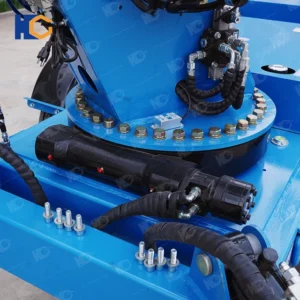
High-end units also integrate hydraulic balance valves on critical circuits such as outrigger and boom lift lines. These valves maintain stable pressure even if a hose is damaged or a leak develops, preventing sudden uncontrolled descent. The outrigger hydraulic circuit uses an interlocking system that hydraulically and electrically locks out all boom functions if the outriggers are not fully deployed and grounded.

2. Control System Technology: The Brain of the Machine
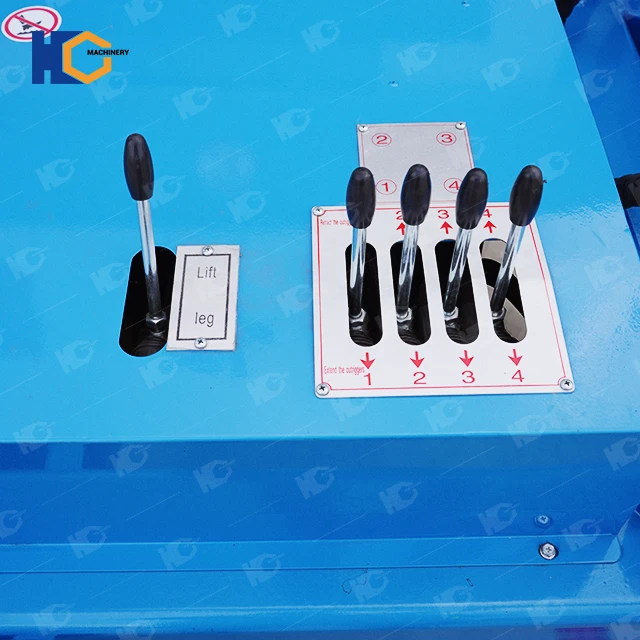

The control system is the brain of a modern towable trailer boom lift. It processes operator input, monitors machine status, coordinates all hydraulic and electrical functions, and provides feedback and diagnostics. The sophistication of the control system is one of the biggest differentiators between budget and professional-grade equipment.

Automotive-Grade CAN Bus Control Architecture

Top-tier towable trailer boom lifts adopt a CAN (Controller Area Network) control architecture — the same bus system widely used in passenger cars and commercial vehicles across Europe and North America. Proven over decades in the automotive industry, CAN bus technology delivers exceptional stability, reliability and resistance to electrical interference.
In a CAN bus system, all components — the main controller, remote control receiver, platform controls, tilt sensor, outrigger sensors and display — communicate over a single shared digital network. This reduces wiring complexity, improves long-term system reliability and enables far richer data exchange between components compared with older relay-based control systems.
Self-Diagnosis and Multilingual Display
One of the key advantages of a CAN-based control system is its built-in self-diagnosis and event logging function. The controller continuously monitors all system parameters and automatically records fault events with timestamps and detailed operational context. When a fault occurs, the system does not just show a generic numeric error code — it stores full background data from the moment the fault triggered, making troubleshooting faster and more accurate.
Premium CAN control systems can display error messages directly in multiple languages, including English, Spanish, German and Russian, rather than only showing cryptic error codes. This is especially valuable for rental companies and equipment operators serving international markets. The intelligent display screen also presents real-time machine status and operational data in a clear, easy-to-read format.

High-End Wireless Remote Control

Premium towable trailer boom lifts are equipped with high-performance wireless remote controls that operate both lifting functions and the optional automatic travel system. The proportional remote delivers the same infinitely variable speed control as the platform control panel, with an effective wireless range of up to 120 meters. The remote unit features an integrated intelligent display for clear visibility of machine status and operational data.
For job sites with heavy radio signal interference, high-end units also support a wired control cable option — if wireless signal is unreliable, operators can simply plug in a physical cable for uninterrupted control. The main electrical control enclosure is constructed from high-grade stainless steel, delivering superior waterproof, dustproof and corrosion resistance for reliable long-term operation in harsh outdoor environments.

3. Towing & Mobility Technology: Built for the Road
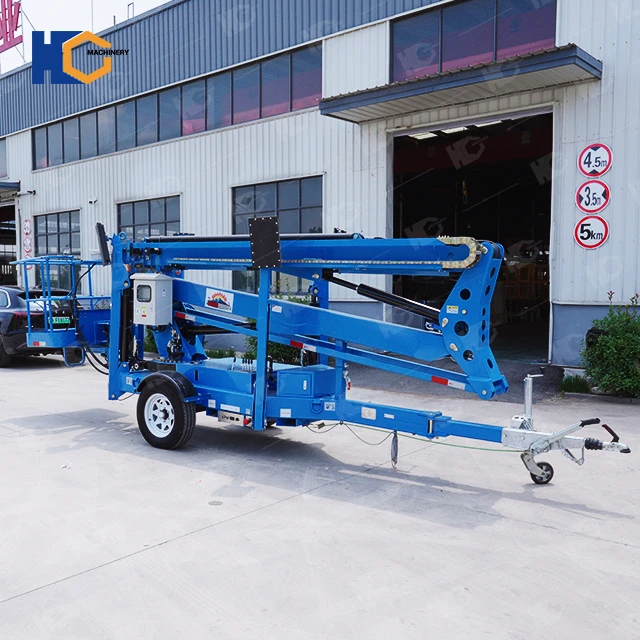
Unlike self-propelled aerial work platforms that stay on a single site, towable trailer boom lifts are designed to be towed frequently between job sites. The quality of the towing chassis and running gear directly affects road safety, equipment protection during transport and long-term maintenance cost.

German AL-KO Tow Bar and Torsion Shaft Suspension

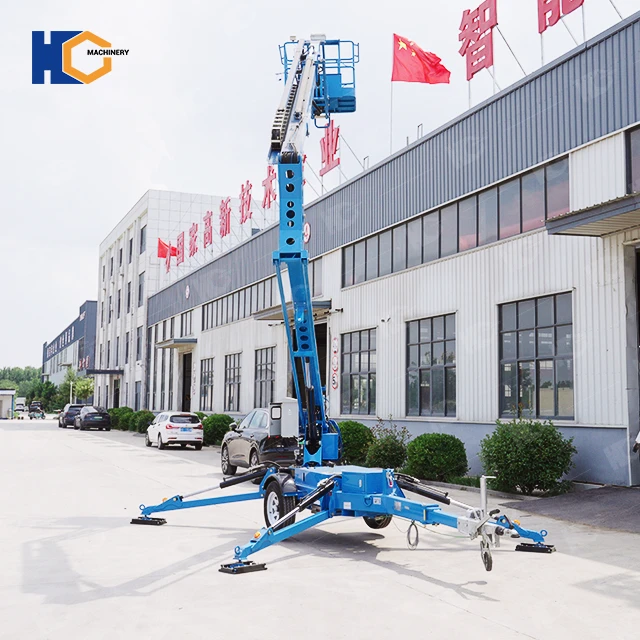
High-end towable trailer boom lifts are fitted with a German AL-KO tow bar built to international standards. AL-KO is a globally recognized leader in trailer towing technology, and its towing systems comply with strict European and international trailer safety standards. The tow system is rated for a maximum towing speed of 110 km/h under approved conditions and in compliance with local traffic regulations, allowing efficient travel between job sites via public highways.
Premium units use a torsion shaft (torsion axle) design instead of traditional leaf spring suspension. Torsion axles provide independent wheel shock absorption, delivering a smoother towing ride and better vibration isolation that protects hydraulic and electrical components from road-induced vibration during transport. The torsion axle design also has fewer exposed moving parts, reducing long-term maintenance requirements.

Dual Braking and Traffic Light Systems

High-end towable trailer boom lifts are equipped with both mechanical and electromagnetic brakes, providing dual-redundant braking performance. The electric brake harness connects directly to the tow vehicle’s brake control system, ensuring synchronized braking. This dual braking system meets North American and European road safety standards.
The trailer is fitted with road-legal lighting assemblies built to European and North American standards, including turn signals, brake lights and running lights. On site, high-end units offer an optional automatic friction wheel travel system that allows operators to reposition the machine short distances via remote control, without needing to re-hitch to a tow vehicle.

4. Safety Technology Systems: Multi-Layer Protection

Safety is the highest priority for any aerial work platform. High-end towable trailer boom lifts integrate multiple layers of safety technology that work together to mitigate accident risks proactively, rather than relying solely on operator vigilance.

Interlocking Outriggers and Tilt Sensor
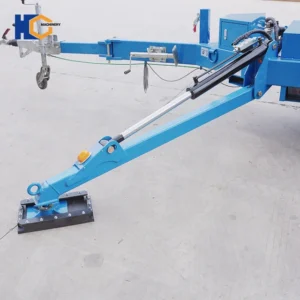
                                                                                                                           

The interlocking outrigger system is one of the most fundamental safety features on a professional towable trailer boom lift. The system uses both hydraulic balance valves and electrical interlocks to ensure that boom functions are fully locked out until all outriggers are fully deployed and properly grounded. This significantly reduces the risk of operating the boom with partially extended or undeployed supports — one of the most common causes of tip-over incidents on entry-level equipment.

Premium units also feature one-touch outrigger leveling, which quickly stabilizes the machine on uneven terrain and shortens on-site setup time. An electric tilt sensor continuously monitors chassis leveling in real time. If the machine tilts beyond the safe operating angle, the system automatically triggers a safety lockout and stops all boom movement, mitigating tipping hazards before they reach a dangerous threshold.

Self-Leveling Platform and Emergency Systems

The automatic self-leveling work basket maintains a consistently horizontal position during all boom movements, including lifting, lowering, telescoping and rotating. Manual trim adjustment is also available to fine-tune leveling under complex working conditions. The self-leveling system includes anti-pinch design features to protect operators from pinch points.
High-end units are fitted with emergency stop buttons at both the platform and ground control stations, and a manual emergency lowering system enables controlled descent even in the event of a main power failure. A foot-operated safety switch on the platform floor requires the operator to actively depress it before the control panel becomes active, preventing unintended operation.

Additional Safety and Convenience Features

The control system monitors platform load and locks out lifting functions if the load exceeds the rated capacity. During transport, a dedicated basket and boom lock system secures all moving parts in place, preventing structural swaying and component vibration during road transit. The work basket includes an AC power outlet and tool storage, allowing operators to power electric tools directly from the platform, and built-in work lights extend usable working hours into low-light or night-time conditions.

5. Build Quality and Durability Technology

The technology inside a high-end towable trailer boom lift is only as reliable as the structure that protects it. Premium units incorporate several build-quality features that extend service life and reduce long-term maintenance costs.
The entire machine structure undergoes electrophoretic coating treatment, which forms a dense, uniform protective layer on all metal surfaces — including interior cavities and hard-to-reach areas that conventional spray paint cannot fully cover. Electrophoretic coating provides superior resistance to rain, humidity, UV exposure and corrosion compared with standard paint finishes.
High-end towable trailer boom lifts feature IP65-rated waterproof and dustproof remote controls and electrical control enclosures, making them suitable for both indoor and outdoor work in variable weather conditions. The work basket is constructed from aluminum rather than steel, offering lighter weight, higher corrosion resistance and improved long-term durability.

Conclusion


A high-end towable trailer boom lift is much more than just a boom mounted on a trailer. It is a carefully engineered system of hydraulic, control, towing and safety technologies that work in tandem to deliver precise, reliable and safe aerial work performance. From the American HydraForce proportional valves that enable smooth, infinitely variable speed control, to the automotive-grade CAN bus system with multilingual self-diagnostic capabilities, to the German AL-KO tow bar and torsion axle suspension engineered for highway travel, every core component contributes to overall equipment quality and lower total cost of ownership.

When evaluating towable trailer boom lift options, buyers should look beyond basic height and load specifications and examine the quality of these hidden core systems. Investing in equipment with premium hydraulic, control and safety technology delivers long-term value through lower maintenance costs, fewer unplanned breakdowns, higher resale value and, most importantly, safer operation for everyone on site.
At HUICHUANG, our HCZB series high-configuration towable trailer boom lifts integrate all of the premium core technologies outlined in this guide. If you are seeking a reliable, professional-grade towable trailer boom lift for rental fleets, construction projects or facility maintenance operations, our technical team is available to provide detailed configuration information and customization support tailored to your requirements.
0 replies

Leave a Reply

Want to join the discussion?
Feel free to contribute!

Leave a Reply

Your email address will not be published. Required fields are marked *