Hydraulic and traction elevators for Home in USA
- Model: Hydraulic and traction elevator
- Brand: HUICHUANG(JNHC lift)
- Customization: YES
- Manual: YES
- Speed: 0.3/0.4 meters/second
 +8615628811021
 admin@jnhclift.com
As people’s living standards improve, their pursuit of home quality is also increasing. Among home facilities, the importance of home elevators is becoming more and more prominent, especially in the USA. Home elevators are mainly divided into hydraulic elevators and traction elevators. These two types have their own advantages and provide diverse solutions for the needs of different families in the USA.
As an elevator manufacturer from China, we have accumulated many years of experience in elevator manufacturing. In this long development process, we continue to study technology, optimize processes, and build each elevator with strict quality standards. Today, with mature technology and high-quality products, we are determined to enter the US market and bring comfort and convenience to American families.
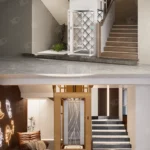
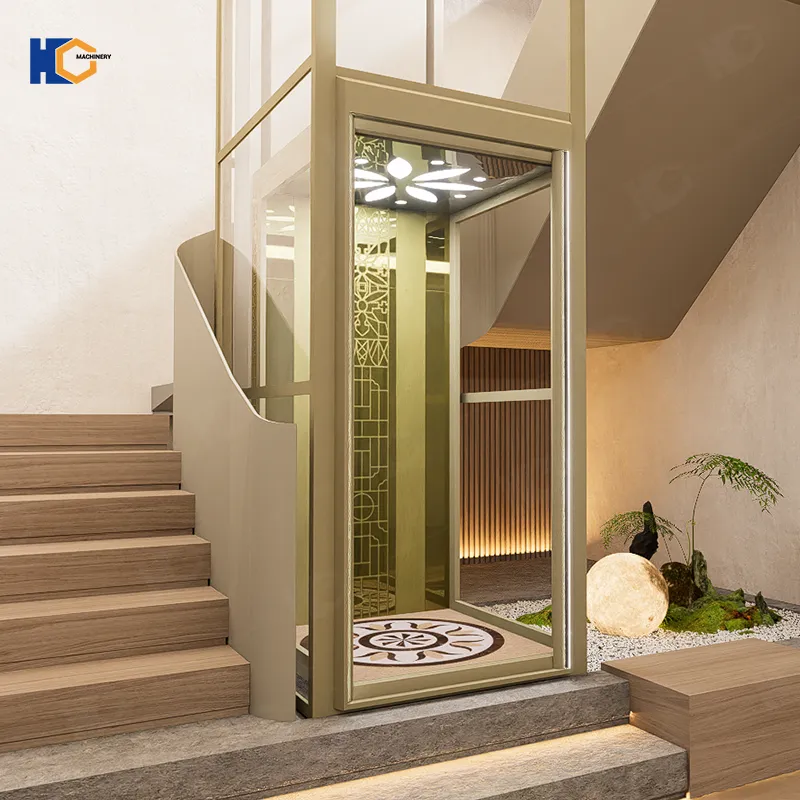
Below are our real pictures of hydraulic elevators and traction elevators respectively.

Why Home Elevators Are Becoming Popular in the USA
Several factors are driving the growth of the residential elevator market.
Aging in Place
Many Americans prefer to remain in their homes as they age rather than relocate to assisted living facilities. Home elevators allow homeowners to safely access upper floors without using stairs.
Multi-Story Home Designs
Modern American homes often feature:
- Two-story layouts
- Three-story townhouses
- Luxury villas
- Split-level homes
Elevators improve daily mobility within these structures.
Accessibility Requirements
Home elevators help individuals with:
- Mobility limitations
- Disabilities
- Temporary injuries
- Wheelchair requirements
maintain independence.
Property Value Enhancement
A professionally installed elevator can increase the attractiveness and resale value of a property.
Luxury Lifestyle
Many homeowners install elevators simply for convenience and luxury, especially in high-end residential developments.
What Is a Hydraulic Home Elevator?
A hydraulic elevator uses pressurized hydraulic fluid to move a piston inside a cylinder. The piston pushes the elevator cab upward, while controlled fluid release allows the cab to descend smoothly.
Hydraulic elevators have been widely used in residential and commercial buildings for decades because of their simplicity and reliability.
How Hydraulic Elevators Work
The system consists of:
- Hydraulic cylinder
- Hydraulic piston
- Hydraulic pump
- Oil reservoir
- Control system
- Elevator cabin
When the pump forces oil into the cylinder, the piston rises and lifts the cab.
To descend, the system gradually releases hydraulic pressure.
Key Features
- Smooth ride quality
- Strong lifting capacity
- Proven technology
- Quiet operation
- Reliable performance
Hydraulic systems remain one of the most economical solutions for residential applications.
What Is a Traction Home Elevator?
A traction elevator uses steel ropes or belts connected to a counterweight. An electric motor drives the ropes, moving the elevator cab up and down.
Modern residential traction elevators often use machine-room-less (MRL) technology and permanent magnet motors.
How Traction Elevators Work
Main components include:
- Electric motor
- Drive sheave
- Steel ropes or belts
- Counterweight
- Control system
- Elevator cabin
The motor rotates the drive sheave, which moves the ropes and lifts the cabin.
The counterweight balances the load, reducing energy consumption.
Key Features
- Energy efficiency
- Higher travel speeds
- Smooth acceleration
- Advanced technology
- Reduced operating costs
Traction elevators are increasingly popular in premium residential projects.
Hydraulic Elevator Specifications
| Item | Typical Specification |
|---|---|
| Capacity | 250–500 kg |
| Passenger Capacity | 2–6 persons |
| Speed | 0.15–0.4 m/s |
| Travel Height | Up to 15 m |
| Floors | 2–5 floors |
| Power Requirement | Single or three-phase |
| Machine Room | Usually required |
| Noise Level | Low |
Hydraulic elevators are particularly suitable for low-rise residential buildings.
Traction Elevator Specifications
| Item | Typical Specification |
| Capacity | 250–630 kg |
| Passenger Capacity | 2–8 persons |
| Speed | 0.3–1.0 m/s |
| Travel Height | Up to 30 m or more |
| Floors | 2–10+ floors |
| Power Requirement | Single or three-phase |
| Machine Room | Often not required |
| Noise Level | Very low |
Traction systems provide greater flexibility for taller homes.
Advantages of Hydraulic Elevators for Homes in the USA
Hydraulic elevators hold an important position in the field of home elevators, owing to their unique operating principles and performance advantages. It operates on a hydraulic drive system, which makes the elevator extremely smooth during lifting and produces minimal noise. Even in a quiet home environment, it will not cause the slightest disruption to daily life. Based on the parameters, the load-bearing capacity of hydraulic elevators is quite high, typically 400 kilograms, which can fully meet the needs of family members for daily riding and transporting small furniture, heavy objects, etc. In terms of operating speed, it is maintained at approximately 0.3 meters/second. This speed can not only ensure efficient travel but also the safety and comfort of the elevator ride. In addition, a significant advantage of hydraulic elevators is their small footprint and low requirements for shaft space. This feature makes it particularly suitable for those American homes with various house types and different spatial layouts. Whether it is a compact villa or a townhouse with relatively limited space, it can be easily adapted. Moreover, its installation process is relatively simple, which can effectively shorten the construction period and reduce the impact on the family’s daily life.

Advantages of Traction Elevators for Homes in the USA
Traction elevators show another excellent performance. They use advanced traction drive technology and offer a high lifting height, making them especially suitable for multi-story residential buildings. Compared with hydraulic elevators, traction elevators are faster, up to 0.4 meters per second, which greatly improves the efficiency of vertical travel. In terms of safety, it is equipped with a range of advanced safety devices, such as safety clamps and speed limiters. These devices are like loyal guards, always ensuring the safety of passengers, enabling them to brake quickly in emergencies, and protecting people’s lives. During operation, the traction elevator offers excellent stability and minimal shaking, providing users with a smooth and comfortable riding experience. At the same time, traction elevators perform well in terms of energy consumption. Low energy consumption aligns with American society’s pursuit of energy conservation and environmental protection, helping families reduce daily energy costs and practice green living.
Hydraulic vs Traction Elevator Comparison
| Feature | Hydraulic Elevator | Traction Elevator |
| Initial Cost | Lower | Higher |
| Energy Efficiency | Moderate | Excellent |
| Ride Comfort | Excellent | Excellent |
| Travel Speed | Moderate | Faster |
| Maintenance | Moderate | Moderate |
| Machine Room | Often Required | Usually Not Required |
| Travel Height | Lower | Higher |
| Long-Term Cost | Moderate | Lower |
| Installation Complexity | Lower | Higher |
| Luxury Appeal | Good | Excellent |
Both technologies offer excellent residential performance but target slightly different homeowner priorities.
Price Comparison in the USA
Several factors affect elevator pricing:
- Number of floors
- Cabin size
- Interior finishes
- Installation complexity
- Building modifications
Hydraulic Home Elevator Pricing
| Configuration | Typical Price |
| Basic 2-Stop System | $20,000–$35,000 |
| Standard Residential Lift | $35,000–$50,000 |
| Luxury Configuration | $50,000–$70,000+ |
Traction Home Elevator Pricing
| Configuration | Typical Price |
| Basic System | $25,000–$40,000 |
| Mid-Range Installation | $40,000–$60,000 |
| Premium Luxury System | $60,000–$100,000+ |
Traction elevators generally command higher prices due to their advanced technology.
Competitor Comparison: Hydraulic and Traction vs Other Home Lift Technologies
Hydraulic Elevator vs Screw Drive Elevator
Screw Drive Advantages
- No machine room
- Compact footprint
- Easier retrofit installation
Hydraulic Advantages
- Lower cost
- Smoother ride
- Larger capacity
Winner
Hydraulic elevators usually provide better value for new construction projects.
Traction Elevator vs Screw Drive Elevator
Traction Advantages
- Faster speed
- Better efficiency
- Higher travel capability
Screw Drive Advantages
- Simpler installation
- Reduced construction requirements
Winner
Traction elevators dominate premium residential applications.
Hydraulic and Traction vs Vacuum Elevator
Vacuum elevators have become increasingly visible in luxury homes.
Vacuum Elevator Advantages
- Eye-catching design
- Minimal structural modifications
- Compact footprint
Vacuum Elevator Disadvantages
- Higher cost
- Smaller cabin
- Limited capacity
Winner
Hydraulic and traction elevators provide better practicality for daily family use.
Hydraulic and Traction vs Platform Lift
Platform lifts focus primarily on accessibility.
Platform Lift Advantages
- Lower cost
- Wheelchair accessibility
- Easy installation
Platform Lift Disadvantages
- Slower operation
- Basic appearance
- Lower property value enhancement
Winner
Residential elevators provide greater comfort, aesthetics, and long-term value.
How to Choose Between Hydraulic and Traction Elevators
Choose Hydraulic Elevators If:
- Budget is a primary concern
- Home has 2–4 floors
- Installation space is available
- Smooth ride quality is important
- Simplicity is preferred
Hydraulic elevators remain one of the best-value solutions for many American homeowners.
Choose Traction Elevators If:
- Long-term energy efficiency matters
- Home has multiple floors
- Luxury features are desired
- Machine-room-less installation is preferred
- Faster operation is important
Traction systems are increasingly favored in premium residential projects.
Best Applications for Hydraulic Elevators
Hydraulic elevators work particularly well in:
- Single-family homes
- Duplex houses
- Multi-generation residences
- Accessibility projects
- Retirement-friendly homes
Their affordability and reliability make them highly attractive.
Best Applications for Traction Elevators
Traction elevators excel in:
- Luxury villas
- Smart homes
- High-end custom residences
- Multi-story townhouses
- Modern architectural projects
Their advanced technology complements premium residential environments.
High-Quality vs Low-Quality Residential Elevators
High-Quality Systems
Characteristics include:
- Precision engineering
- Advanced safety systems
- Quiet operation
- Smooth leveling
- Reliable components
Benefits include:
- Longer service life
- Better user experience
- Lower maintenance costs
Low-Quality Systems
Common issues include:
- Frequent breakdowns
- Noisy operation
- Poor ride comfort
- Limited spare parts support
A residential elevator should be viewed as a long-term investment rather than a short-term purchase.
Future Trends in the USA Home Elevator Market
Several trends are shaping the industry.
Smart Home Integration
Modern elevators increasingly support:
- Mobile app control
- Remote monitoring
- Voice commands
Energy Efficiency
Manufacturers are focusing on:
- Permanent magnet motors
- Regenerative drives
- Low-power standby modes
Aging Population Demand
Accessibility-related elevator installations continue growing nationwide.
Compact Designs
Space-saving elevators are becoming increasingly popular in urban housing.
Hydraulic and traction elevators are the two leading residential elevator technologies in the United States, each offering distinct advantages for homeowners.
Hydraulic elevators provide excellent value through lower installation costs, proven reliability, and smooth operation. They are ideal for low-rise homes, accessibility projects, and homeowners seeking an economical solution.
Traction elevators offer superior energy efficiency, faster travel speeds, machine-room-less configurations, and premium performance. They are particularly attractive for luxury homes and multi-story residential projects.
When choosing between hydraulic and traction elevators, homeowners should consider budget, available space, number of floors, long-term operating costs, and desired features. Both technologies can dramatically improve accessibility, convenience, safety, and property value when professionally installed and properly maintained.
For most American homeowners, the decision ultimately comes down to balancing initial investment against long-term performance. Hydraulic elevators remain the most cost-effective solution for many households, while traction elevators represent the premium choice for modern residential living.
Contact Us Today!
Ready to elevate your home with Huichuang Lift’s premium hydraulic and traction elevators? Don’t wait any longer! Our team is here to provide you with customized, high-quality solutions tailored to your specific needs. Whether you’re looking for a compact hydraulic elevator for a cozy townhouse or a sleek traction elevator for a modern villa, we’ve got you covered. With over 200 skilled professionals, state-of-the-art manufacturing facilities, and a commitment to excellence, we ensure a hassle-free experience from consultation to installation.
Our products are designed to enhance accessibility, safety, and comfort, making your home more barrier-free and convenient. Plus, with our competitive pricing, exceptional customer support, and OEM services, you’re guaranteed the best value for your investment. Join our growing network of satisfied customers across North America and beyond. Contact us today to discover how we can transform your home with our innovative lifting solutions. Let’s build a better future together—reach out now!
 Room 203, Second Floor, Building 8, Phase Ⅱ, Zhizao Town, Jibei Street, Jiyang District, Jinan City, Shandong Province