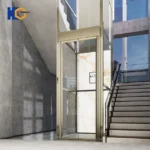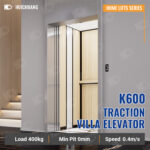
2,3,4-Person Traction Backpack Elevator
- Model: 2,3,4-Person Traction Backpack Elevator
- Load capacity: 400 kg (2–4 persons)
- Brand: HUICHUANG(JNHC lift)
- Customization: YES
- Manual: YES
- Price: $5,200 – $6,000
- Speed: 0.4 m/s
- Payment Methods: TT
- Delivery time: 15 working days
 +8615628811021
 admin@jnhclift.com
If you’ve ever dreamed of having an elevator at home but thought it was too expensive or needed too much space, it’s time to meet the Traction Backpack Elevator — a modern, space-saving, and quiet lift that’s changing the way homeowners think about vertical mobility.
Compact, stylish, and smooth-running, this elevator is designed for two to four people and fits perfectly into modern homes, duplexes, and villas. Whether you’re planning for future accessibility or simply want that luxury upgrade, a Traction Backpack Elevator makes life more comfortable and convenient — without breaking your floor plan or your budget.
What Is a Traction Backpack Elevator?
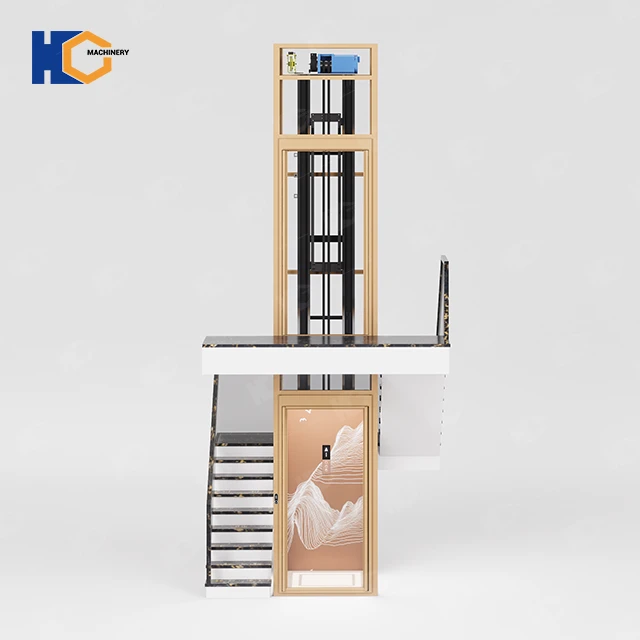
The Traction Backpack Elevator is a type of machine-room-less (MRL) home lift that uses a traction drive system — similar to those found in commercial elevators but optimized for residential use.
“Backpack” refers to the rear-mounted drive system — the traction motor, controller, and counterweight are installed behind the elevator shaft, just like a backpack on your back. This design saves space, simplifies installation, and offers a sleek look without a bulky overhead machine room.
In simple terms:
It’s a small, efficient elevator that runs quietly, uses less power, and fits even in tight homes — no pit, no machine room, no fuss.
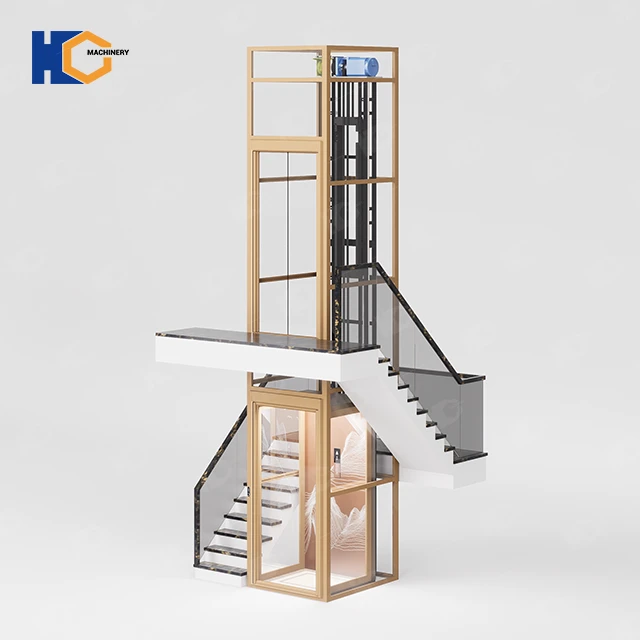
This is also our previous article about Backpack Traction Home Elevator. You can click here to view it: Backpack Traction Home Elevator France | Home Elevator manufacturer
Core Differences Between 2, 3, and 4-Person Models
| Model | Capacity | Typical Load | Cabin Size | Typical Users |
|---|---|---|---|---|
| 2-Person | 160–250kg | 2 adults | Compact | Small homes |
| 3-Person | 250–320kg | 3 adults | Medium | Standard families |
| 4-Person | 320–450kg | 4 adults | Larger cabin | Luxury homes |
The primary differences involve:
- Cabin dimensions
- Load capacity
- Shaft size
- Motor power
- Installation space
- Price
2-Person Traction Backpack Elevator Analysis
Main Features
- Ultra-compact design
- Minimal shaft requirement
- Lower power consumption
- Suitable for limited spaces
Typical Specifications
| Item | Specification |
| Load Capacity | 160–250kg |
| Cabin Size | 800×800mm to 900×900mm |
| Shaft Size | Approx. 1200×1200mm |
| Speed | 0.3–0.4 m/s |
| Floors | 2–4 floors |
Advantages
- Lowest installation cost
- Minimal construction work
- Good for old house renovation
- Lower electricity usage
Disadvantages
- Limited passenger space
- Difficult for wheelchair access
- Reduced luxury feeling
Best Applications
- Small townhouses
- Compact villas
- Elderly accessibility
- Low-traffic homes
Market Position
The 2-person model mainly targets:
- Budget-conscious homeowners
- Compact urban housing
- Space-restricted renovation projects
3-Person Traction Backpack Elevator Analysis
The 3-person model is considered the “balanced configuration” in the residential elevator market.
Main Features
- Moderate cabin size
- Better comfort
- Improved practicality
- More versatile applications
Typical Specifications
| Item | Specification |
| Load Capacity | 250–320kg |
| Cabin Size | 950×950mm to 1100×1100mm |
| Shaft Size | Approx. 1400×1400mm |
| Speed | 0.3–0.6 m/s |
| Floors | 2–5 floors |
Advantages
- Comfortable daily use
- Better resale value impact
- Suitable for small families
- Easier furniture transportation
Disadvantages
- Higher installation cost
- Slightly larger shaft needed
Best Applications
- Family homes
- Duplex residences
- Modern villas
- Multi-generation households
Market Position
The 3-person model dominates the mid-range residential elevator segment because it balances:
- Space efficiency
- Comfort
- Affordability
For most homeowners, this configuration provides the best overall value.
4-Person Traction Backpack Elevator Analysis
The 4-person model targets luxury residential projects and higher comfort expectations.
Main Features
- Spacious cabin
- Premium ride experience
- Higher load capacity
- Wheelchair accessibility
Typical Specifications
| Item | Specification |
| Load Capacity | 320–450kg |
| Cabin Size | 1200×1200mm to 1400×1400mm |
| Shaft Size | Approx. 1600×1600mm |
| Speed | 0.4–0.6 m/s |
| Floors | 2–6 floors |
Advantages
- Luxury appearance
- Wheelchair-friendly
- Better accessibility
- Improved comfort
- Higher property value enhancement
Disadvantages
- Highest installation cost
- Larger structural requirements
- Higher construction expense
Best Applications
- Luxury villas
- Large family homes
- Accessibility-focused residences
- High-end real estate projects
Market Position
The 4-person category targets premium homeowners prioritizing:
- Comfort
- Accessibility
- Luxury aesthetics
- Long-term usability
Price Comparison
| Model | Typical Price Range |
| 2-Person | USD 18,000–35,000 |
| 3-Person | USD 28,000–50,000 |
| 4-Person | USD 40,000–80,000+ |
Pricing varies based on:
- Number of floors
- Cabin materials
- Glass customization
- Smart control systems
- Imported vs local components
Space Requirement Comparison
| Model | Shaft Requirement | Installation Difficulty |
| 2-Person | Smallest | Lowest |
| 3-Person | Moderate | Medium |
| 4-Person | Largest | Higher |
Compact urban homes often prefer smaller models due to construction limitations.
Ride Comfort Comparison
2-Person Elevator
- Functional but compact
- Limited movement space
3-Person Elevator
- Comfortable daily use
- Good balance of cabin space
4-Person Elevator
- Luxury ride quality
- Better airflow and openness
Larger cabins generally provide smoother perceived comfort.
Energy Consumption Comparison
| Model | Typical Energy Consumption |
| 2-Person | Lowest |
| 3-Person | Moderate |
| 4-Person | Higher |
Traction systems remain more energy efficient than many hydraulic alternatives.
Accessibility Comparison
| Feature | 2-Person | 3-Person | 4-Person |
| Wheelchair Access | Limited | Partial | Excellent |
| Elderly Friendly | Good | Very Good | Excellent |
| Furniture Transport | Limited | Moderate | Excellent |
The 4-person model clearly performs best in accessibility scenarios.
How It Works
The Traction Backpack Elevator operates with a steel rope traction system driven by a gearless or geared motor. When you press the call button, the traction motor moves the rope to lift or lower the cabin smoothly, while the counterweight balances the load for maximum energy efficiency.
Unlike hydraulic systems that rely on oil pressure, traction lifts use electrical traction, which means:
- Smoother acceleration and deceleration
- Lower noise and vibration
- Reduced maintenance over time
This makes it ideal for residential spaces where comfort and silence matter.To learn about how a Traction Elevator works, you can read our article: How Does a Traction Elevator Work?
Key Features of the Traction Backpack Elevator
| Feature | Description |
|---|---|
| Drive Type | Traction drive (gearless or geared) |
| Rated Capacity | 250–400 kg (2–4 persons) |
| Speed | 0.3 – 0.4 m/s |
| Power Supply | Single phase 220V or three phase 380V |
| Machine Room | No machine room required |
| Pit Depth | 100–150 mm only |
| Travel Height | Up to 12 meters (typically 2–5 floors) |
| Cabin Size | 900 × 1000 mm (customizable) |
| Door Type | Manual or automatic sliding doors |
| Control System | Microcomputer or intelligent VVVF inverter system |
| Backup Power | Optional UPS for power failure emergencies |
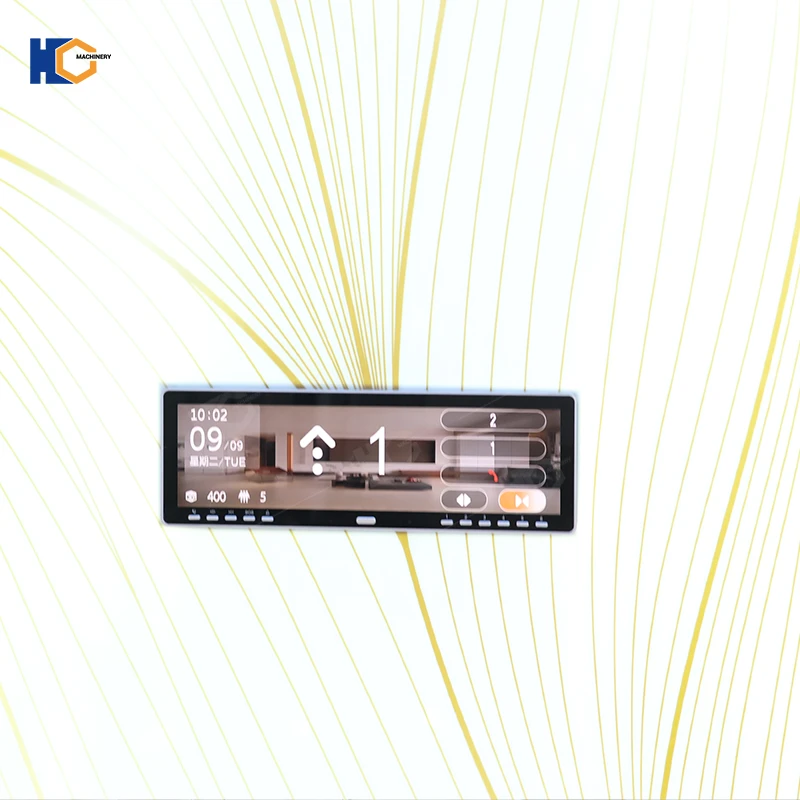
Traction Backpack Elevator touch screen button
Advantages of a Traction Backpack Elevator
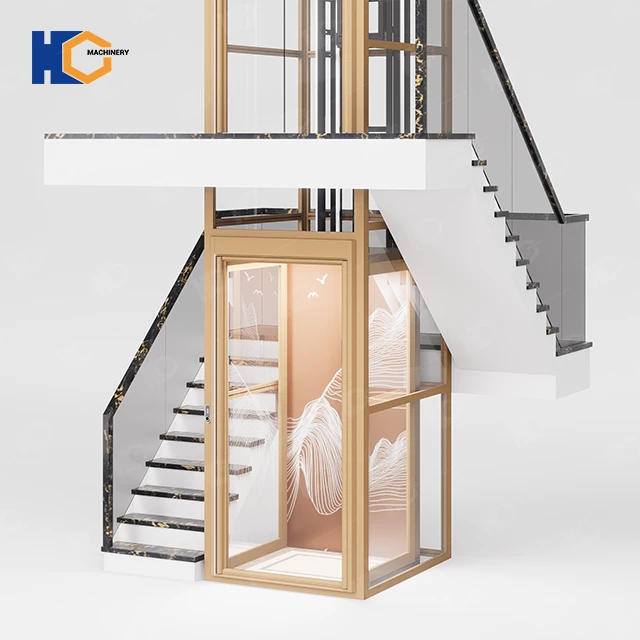
Let’s get into the reasons why homeowners — especially in the U.S., Europe, and Asia — are switching to Traction Backpack Elevators:
1. Space-Saving Design
Because the drive system is installed behind the shaft, there’s no need for a separate machine room. The slim design makes it perfect for villas, duplexes, or even retrofitting in older houses.
2. Smooth and Silent Operation
With its gearless traction motor, this elevator runs almost whisper-quiet. You can ride from the first to third floor without hearing much more than a soft hum.
3. Energy Efficient
The counterweight design reduces the power needed to lift the cabin, cutting energy consumption by up to 30–40% compared to hydraulic lifts. It’s environmentally friendly and budget-friendly over time.
4. Safe and Reliable
Safety features include:
- Over-speed governor
- Emergency stop and alarm
- Door interlock system
- Backup battery for descent during power outages
All systems comply with EN81-20/50 and ASME A17.1 home elevator standards.
5. Modern Aesthetics
The Traction Backpack Elevator comes with elegant cabin finishes — stainless steel, glass, or woodgrain options — that blend beautifully with any interior design style. Add LED lighting, mirrors, or touch panels for a high-end look.
6. Low Maintenance
With fewer moving parts and no oil-based system, maintenance is simple. Just routine safety checks and cleaning keep it running smoothly for years.
Most Popular Sizes
The most popular sizes of Traction Backpack Elevator are designed to fit common residential needs:
| Model | Capacity | Cabin Size (mm) | Door Width (mm) | Recommended Use |
|---|---|---|---|---|
| 2-Person | 250 kg | 900×900 | 700 | Small duplex or townhouse |
| 3-Person | 320 kg | 1000×1000 | 750 | Medium-size family home |
| 4-Person | 400 kg | 1100×1200 | 800 | Luxury villa or senior home |
These models are the most requested by homeowners because they balance comfort, space, and price perfectly.
Price Range (2025 Estimate)
The cost of a Traction Backpack Elevator varies based on travel height, cabin finish, and customization options. Below is a general price guide (factory-direct pricing from China):
| Model | Stops | Approx. Price (USD) |
|---|---|---|
| 2-Person Basic | 3 stops | $8,000 – $10,000 |
| 3-Person Standard | 4 stops | $10,000 – $12,500 |
| 4-Person Luxury | 5 stops | $13,000 – $16,000 |
Optional features like automatic doors, glass shafts, and smart control panels may increase cost slightly — but they significantly enhance user experience and property value. If you would like to learn more about the prices of our various types of elevators, you can click here: How Much Does an Elevator Cost for a 2, 3, 4, 5, and 6-Story Building?
Applications
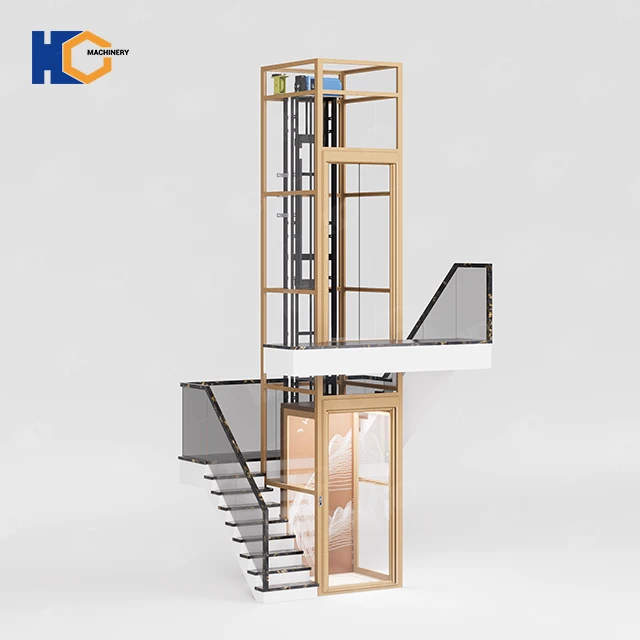 The Traction Backpack Elevator is widely used in:
- Private homes and villas
- Duplex and townhouse buildings
- Senior residences (for accessibility)
- Small commercial spaces or offices
- Showrooms or boutique hotels
It’s the ideal choice for homeowners who want modern convenience with minimal construction.
Why Choose a Traction Elevator Over Hydraulic or Screw Lifts?
| Feature | Traction Backpack | Hydraulic | Screw Type |
|---|---|---|---|
| Space Requirement | Compact, no machine room | Requires oil tank | Bulky screw column |
| Noise Level | Very quiet | Medium | Quiet but slower |
| Energy Efficiency | High | Medium | Low |
| Speed | Fast (0.4 m/s) | Moderate | Slow |
| Maintenance | Low | Requires oil change | Higher parts cost |
| Eco-Friendliness | Oil-free | Uses hydraulic oil | Oil-free |
| Ride Comfort | Smooth | Slight vibration | Slight vibration |
Simply put: Traction Backpack Elevators give you the best balance of comfort, style, and efficiency for modern homes.We’ve written an article comparing traction elevators and hydraulic lifts for your reference. You can click here: Traction Elevator vs Hydraulic Elevator: What’s the Difference and How to Choose?
Customization Options
Manufacturers offer flexible customization to match your home’s design and structure:
- Cabin materials: stainless steel, glass, acrylic panels
- Door styles: swing or automatic sliding doors
- Color finishes: silver, champagne, black, or woodgrain
- Control panel: digital touchscreen or button panel
- Lighting: soft LED or decorative ceiling lights
Customizing your Traction Backpack Elevator makes it not just a lift — but a statement piece in your home.
Competitor Technology Comparison
Traction Backpack Elevator vs Hydraulic Home Elevator
Traction Advantages
- Lower energy consumption
- Faster speed
- Cleaner operation
- No hydraulic oil
Hydraulic Advantages
- Lower initial cost
- Smooth low-rise performance
- Simpler mechanics
Winner
Traction elevators dominate premium residential markets due to:
- Better efficiency
- Modern technology
- Improved ride quality
Traction Backpack Elevator vs Vacuum Elevator
Vacuum Elevator Advantages
- Futuristic appearance
- Minimal shaft construction
- Panoramic design
Traction Elevator Advantages
- Larger cabin size
- Higher load capacity
- Better comfort
- Lower operating noise
Winner
Traction systems are generally more practical for daily residential use.
Traction Backpack Elevator vs Screw Drive Elevator
Screw Drive Advantages
- Compact installation
- No machine room
- Simple maintenance
Traction Advantages
- Faster operation
- Smoother ride
- Better long-term comfort
Winner
Traction elevators usually provide better premium user experience.
High-Quality vs Low-Quality Traction Backpack Elevators
Low-Quality Systems
Common problems include:
- Noisy motors
- Poor leveling accuracy
- Weak door systems
- Limited safety functions
- Shorter lifespan
Cheap residential elevators often create:
- Frequent repairs
- Passenger discomfort
- Higher maintenance costs
A suspiciously cheap elevator sometimes turns daily transportation into a suspense film.
High-Quality Systems
Premium systems feature:
- Permanent magnet motors
- Intelligent control systems
- Quiet operation
- Precise leveling
- Enhanced safety protection
Advantages include:
- Longer lifespan
- Better ride quality
- Lower downtime
- Improved reliability
Smart Features Comparison
Modern traction backpack elevators increasingly include:
- Touchscreen controls
- Smartphone app integration
- Voice commands
- AI diagnostics
- Smart lighting
- Automatic rescue systems
Premium 4-person models typically include more advanced smart features.
Installation Complexity Comparison
| Model | Installation Complexity |
| 2-Person | Low |
| 3-Person | Medium |
| 4-Person | Higher |
Larger cabins require:
- More structural support
- Larger shafts
- Stronger motors
Best Buyer Recommendations
Choose 2-Person Models If:
- Space is extremely limited
- Budget is tight
- Primary use is elderly mobility
- Home traffic is low
Choose 3-Person Models If:
- You want balanced value
- The home has standard family usage
- Moderate accessibility is needed
- Future resale value matters
Choose 4-Person Models If:
- Luxury experience is important
- Wheelchair accessibility is required
- The property is high-end
- Long-term comfort is the priority
Market Trends
Several trends are influencing the residential traction elevator market:
- Aging populations
- Smart home integration
- Barrier-free housing demand
- Compact urban living
- Luxury residential upgrades
Traction backpack elevators are expected to remain one of the fastest-growing residential lift categories worldwide.
Final Thoughts
2-person, 3-person, and 4-person traction backpack elevators each serve different residential market needs. Smaller models prioritize affordability and compact installation, while larger models focus on comfort, accessibility, and luxury performance.
For most homeowners, the 3-person traction backpack elevator provides the best balance between:
- Space utilization
- Cost
- Comfort
- Daily practicality
However, luxury homes and accessibility-focused projects increasingly prefer 4-person models due to their superior comfort and wheelchair compatibility.
Compared with hydraulic, vacuum, and screw-drive competitors, traction backpack elevators offer strong advantages in:
- Energy efficiency
- Ride quality
- Long-term reliability
- Modern residential integration
As residential architecture continues evolving toward smarter, more accessible, and vertically designed homes, traction backpack elevators are expected to play an increasingly important role in the future of luxury and practical residential mobility.
If you’re looking for a home elevator manufacturer that’s quiet, elegant, and space-efficient, the Traction Backpack Elevator is the way to go. It combines commercial-level technology with residential-friendly design — no machine room, minimal pit, and low power use.
Whether you’re upgrading your home for convenience or future accessibility, this elevator delivers comfort and confidence every time you ride.
From villas to townhouses, it’s the perfect modern lift solution that fits your lifestyle — and your space.
 Room 203, Second Floor, Building 8, Phase Ⅱ, Zhizao Town, Jibei Street, Jiyang District, Jinan City, Shandong Province