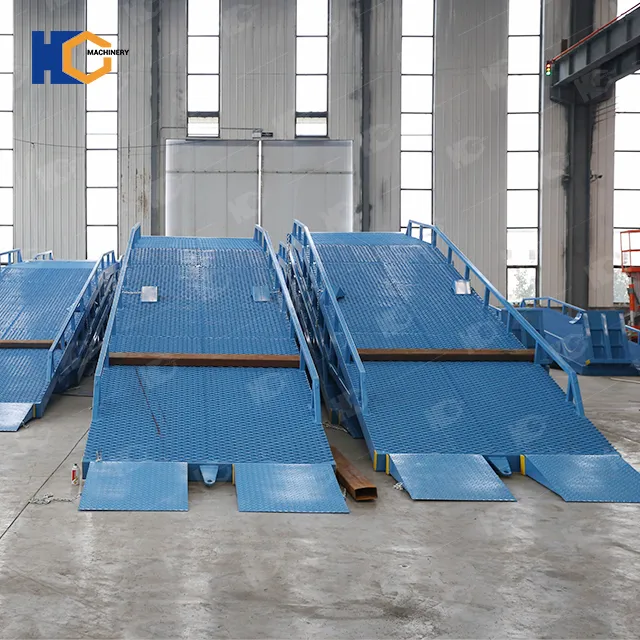
6-20 Tons Heavy Duty Truck Loading Ramps
- Load capacity: 6tons
- Platform size: 11100*2100*1100mm
- Brand: HUICHUANG(JNHC lift)
- Customization: YES
- Manual: YES
 +8615628811021
 admin@jnhclift.com
Efficient loading and unloading operations are critical in modern logistics, warehousing, manufacturing, construction, and transportation industries. When forklifts, pallet trucks, and other material handling equipment need to move cargo between ground level and truck beds, a reliable loading ramp becomes an essential piece of equipment.
Among the various loading solutions available, 6-20 Tons Heavy Duty Truck Loading Ramps are widely used for handling medium to heavy loads safely and efficiently. These ramps are specifically designed to bridge the height difference between loading areas and trucks, allowing forklifts to drive directly into containers, trailers, and cargo vehicles.
This guide provides a comprehensive overview of heavy-duty truck loading ramps, including specifications, working principles, applications, advantages, customization options, and comparisons with alternative loading solutions.
What Are 6-20-ton heavy-duty truck loading ramps?
A heavy-duty truck loading ramp is a mobile or stationary platform that allows forklifts and other material-handling equipment to move safely between ground level and truck beds.
The “6-20 tons” rating refers to the maximum load capacity the ramp can safely support.
These ramps are commonly used for:
- Forklift loading operations
- Container loading
- Warehouse logistics
- Distribution centers
- Manufacturing plants
- Construction material handling
Unlike manual loading methods, heavy-duty loading ramps significantly improve efficiency and workplace safety.
6-20tons heavy duty truck loading ramps.pdf
The heavy duty truck loading ramps are an efficient and convenient logistics equipment, mainly used to solve the problem of transporting goods between platforms of different heights. This equipment is widely used in warehouses, factories, docks, stations and other places, greatly improving the efficiency and safety of cargo loading and unloading.
What parts do the heavy-duty truck loading ramps consist of?
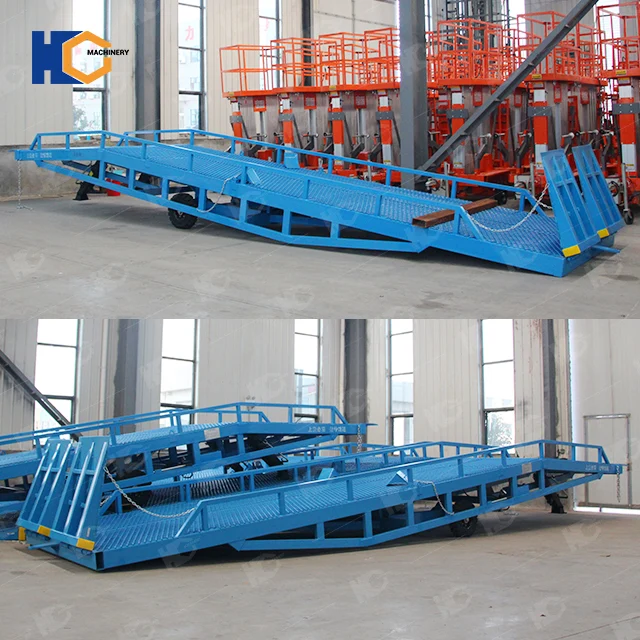
The heavy-duty truck loading ramps are mainly composed of the bridge body, lifting mechanism, traveling mechanism, control system, and other parts. The load ramp body is usually made of high-strength steel, which has high load-bearing capacity and stability. The lifting mechanism realizes the height adjustment of the load ramp body through hydraulic cylinders or pneumatic cylinders to adapt to vehicles or platforms of different heights. The traveling mechanism enables the heavy duty truck loading ramps to move freely on flat ground, making it convenient for operations in different locations.
What is the specifications of heavy duty truck loading ramps?
| Load | Overall size | Main beam | Tyre | Cylinder | Adjust range |
| 6tons | 11100*2100*1100mm | 160*80*4pcs | 600-9 | Φ80*Φ50 | 1100*1800mm |
| 8tons | 11100*2100*1100mm | 160*80*4pcs | 600-9 | Φ80*Φ50 | 1100*1800mm |
| 10tons | 11100*2100*1100mm | 160*80*5pcs | 600-9 | Φ80*Φ50 | 1100*1800mm |
| 12tons | 11100*2200*1100mm | 200*100*5pcs | 700-9 | Φ80*Φ50 | 1100*1800mm |
| 15tons | 11100*2400*1100mm | 200*100*5pcs | 700-9 | Φ80*Φ50 | 1100*1800mm |
| 20tons | 11100*2400*1100mm | 200*100*5pcs | 700-9 | Φ80*Φ50 | 1100*1800mm |
What is the function of the heavy duty truck loading ramps?
In practical applications, the heavy duty truck loading ramps can easily transport goods from the ground to high places such as trucks, containers or warehouse platforms, or from high places to the ground. This equipment not only improves the efficiency of cargo loading and unloading, but also reduces labor intensity and reduces the risk of cargo damage. At the same time, the mobile boarding bridge also has the advantages of simple operation, safety, reliability, and convenient maintenance, and is deeply loved by users.
Why Businesses Use Heavy Duty Loading Ramps
Many facilities lack permanent loading docks.
Without a loading ramp, operators often face:
- Slow loading speeds
- High labor costs
- Increased accident risks
- Equipment limitations
Heavy-duty truck loading ramps solve these challenges by providing a stable transition between the ground and vehicle platform.
Key Benefits
- Faster loading and unloading
- Reduced labor requirements
- Improved warehouse efficiency
- Enhanced safety
- Increased forklift accessibility
Common Load Capacities
Heavy-duty loading ramps are available in several capacities.
| Capacity | Typical Application |
|---|---|
| 6 Tons | Light industrial operations |
| 8 Tons | Warehouse logistics |
| 10 Tons | Standard forklift loading |
| 12 Tons | Manufacturing facilities |
| 15 Tons | Heavy cargo handling |
| 20 Tons | Industrial and container loading |
The appropriate capacity depends on:
- Forklift weight
- Cargo weight
- Safety requirements
Technical Specifications
Typical specifications for 6-20 ton truck loading ramps include:
| Item | Specification |
| Capacity | 6-20 Tons |
| Ramp Length | 8m-15m |
| Ramp Width | 2m-2.5m |
| Adjustable Height | 900mm-1800mm |
| Deck Material | Anti-slip Steel Plate |
| Surface Treatment | Powder Coating or Galvanized |
| Mobility | Towable Design |
| Safety Rails | Optional |
| Hydraulic System | Manual or Electric |
Custom sizes are available based on project requirements.
How Heavy Duty Truck Loading Ramps Work
The operating principle is simple.
Step 1: Position the Ramp
The ramp is placed at the rear of the truck or container.
Step 2: Adjust Height
The hydraulic system raises or lowers the ramp to match vehicle height.
Step 3: Secure Connection
Safety chains are attached to prevent movement during operation.
Step 4: Begin Loading
Forklifts can drive directly onto the truck through the ramp.
Step 5: Complete Operations
After loading or unloading, the ramp is disconnected and moved to the next location.
This process significantly reduces handling time.
Main Components of a Heavy-Duty Loading Ramp
Main Steel Structure
Constructed from high-strength steel to support heavy loads.
Hydraulic System
Used to adjust ramp height efficiently.
Anti-Slip Deck Surface
Provides excellent traction for forklifts.
Safety Side Rails
Prevent accidental forklift deviation.
Mobile Wheels
Allow easy transportation around the facility.
Safety Chains
Secure the ramp to trucks during operation.
Applications of 6-20 Tons Heavy Duty Truck Loading Ramps
Warehouses
Warehouses frequently use loading ramps to improve cargo flow.
Typical cargo includes:
- Palletized goods
- Consumer products
- Industrial supplies
Logistics Centers
Distribution hubs rely on rapid loading operations to maximize efficiency.
Manufacturing Facilities
Factories use ramps to load:
- Raw materials
- Finished products
- Machinery
Construction Industry
Used for handling:
- Building materials
- Equipment
- Heavy tools
Agricultural Operations
Ideal for:
- Fertilizer loading
- Feed transportation
- Agricultural equipment handling
Ports and Container Yards
Heavy-duty ramps facilitate container loading and unloading operations.
Problems Solved by Heavy Duty Loading Ramps
Lack of Loading Dock Infrastructure
Many facilities do not have permanent loading docks.
A mobile loading ramp provides a cost-effective alternative.
Slow Loading Operations
Manual handling significantly increases loading time.
Forklift-accessible ramps improve productivity.
High Labor Costs
Heavy-duty ramps reduce the need for manual labor.
Safety Concerns
A properly designed ramp minimizes loading accidents.
Limited Equipment Access
Ramps allow forklifts to access truck interiors directly.
Mobile Loading Ramp vs Fixed Loading Dock
| Feature | Mobile Ramp | Fixed Dock |
| Mobility | Excellent | None |
| Initial Cost | Lower | Higher |
| Installation | Minimal | Complex |
| Flexibility | High | Limited |
| Maintenance | Low | Moderate |
| Suitable for Multiple Locations | Yes | No |
Mobile ramps are often preferred for facilities requiring flexibility.
Mobile Loading Ramp vs Dock Leveler
| Feature | Loading Ramp | Dock Leveler |
| Mobility | Yes | No |
| Cost | Lower | Higher |
| Installation | Simple | Permanent |
| Site Requirements | Minimal | Dedicated Dock |
| Flexibility | High | Moderate |
For companies without permanent docks, loading ramps are often the best solution.
Advantages of 6-20 Tons Heavy Duty Truck Loading Ramps
High Load Capacity
Suitable for heavy forklifts and cargo.
Cost-Effective
Less expensive than constructing permanent loading docks.
Easy Operation
Hydraulic adjustment simplifies setup.
Durable Construction
Heavy-duty steel structures provide long service life.
Flexible Deployment
Can be used across multiple loading areas.
Reduced Downtime
Quick setup enables continuous operations.
Customization Options
Leading manufacturers offer customized loading ramps.
Capacity Customization
Available capacities include:
- 6 Tons
- 8 Tons
- 10 Tons
- 12 Tons
- 15 Tons
- 20 Tons
Platform Dimensions
Custom length and width configurations.
Surface Treatment
Options include:
- Painted finish
- Powder coating
- Hot-dip galvanizing
Hydraulic Systems
Available choices:
- Manual hydraulic
- Electric hydraulic
Safety Features
Optional additions:
- Side guardrails
- Wheel stops
- Safety locks
- Reflective markings
How to Choose the Right Truck Loading Ramp
Determine Total Load
Calculate:
Forklift weight + Cargo weight
Always include a safety margin.
Consider Truck Height Range
Ensure the ramp’s adjustable range matches vehicle heights.
Evaluate Working Environment
Outdoor environments may require galvanized surfaces.
Assess Daily Usage
High-frequency operations require more robust designs.
Choose a Reliable Manufacturer
Look for:
- ISO-certified production
- Quality testing
- Warranty support
- Spare parts availability
Maintenance Tips
Proper maintenance extends equipment lifespan.
Regular Inspection
Check:
- Welds
- Hydraulic hoses
- Safety chains
Lubrication
Lubricate moving components periodically.
Surface Cleaning
Remove dirt and debris from the deck surface.
Hydraulic Maintenance
Inspect fluid levels and seals regularly.
Structural Inspection
Monitor for corrosion or mechanical damage.
Future Market Trends
Demand for heavy-duty loading ramps continues to grow due to:
E-Commerce Expansion
Warehouses require faster cargo handling solutions.
Logistics Industry Growth
Increased freight volume drives equipment demand.
Industrial Automation
Loading ramps integrate effectively with modern material handling systems.
Infrastructure Development
Emerging markets continue to invest in logistics facilities.
Conclusion
6-20 Tons Heavy Duty Truck Loading Ramps are essential tools for modern logistics, warehousing, manufacturing, and transportation operations. They provide a safe, efficient, and cost-effective method for loading and unloading cargo with forklifts and other material-handling equipment.
Compared with permanent loading docks and dock levelers, heavy-duty loading ramps offer greater flexibility, lower installation costs, and the ability to serve multiple locations. Their robust construction, high load capacity, and customizable design make them ideal for businesses seeking to improve productivity while maintaining workplace safety.
For companies handling heavy cargo and frequent truck loading operations, investing in a high-quality 6-20 ton heavy-duty truck loading ramp can significantly reduce labor costs, accelerate logistics processes, and enhance overall operational efficiency.
Frequently Asked Questions (FAQs)
Q1: Is this ramp rated for use with fully loaded 20-ton trucks?
A: The 20-ton model is designed and tested for static loads up to 20 metric tons (44,000 lbs). It features reinforced steel beams and a safety margin built into its structural design. However, always ensure the total weight—including vehicle, cargo, and dynamic forces during movement—does not exceed the stated capacity. Never use the ramp if the truck bed or ground surface is unstable.
Q2: Can one person operate it safely?
A: Yes, under normal conditions. The hydraulic system reduces manual effort significantly, allowing one trained operator to position, raise, and lower the ramp. For initial setup on uneven terrain or in high-wind environments, two people are recommended for safety.
Q3: Is the surface slip-resistant in wet or oily conditions?
A: The ramp uses standard checkered steel plate, which provides improved traction compared to smooth surfaces. However, no metal surface is completely slip-proof—especially on ice or heavy oil spills. We recommend additional precautions in adverse weather, such as using anti-slip mats, grit tape, or limiting operations during extreme conditions.
Q4: How does the ramp stay secure on the truck?
A: Each unit includes steel safety lips that rest against the edge of the truck bed or trailer. For vehicles without a raised lip (e.g., flatbeds), proper alignment and the use of wheel chocks on both the ramp and the truck tires are essential. Always verify stability before loading.
Q5: Can I customize dimensions like length, width, or height?
A: Yes. While standard models suit most logistics applications, we offer custom configurations for special requirements (e.g., extra-wide platforms for machinery, extended slopes for low-clearance trailers). Lead times and pricing may vary.
Q6: What maintenance is required?
A: Routine checks include:
- Inspecting hydraulic hoses and connections for leaks
- Checking welds and structural integrity monthly
- Lubricating pivot points and wheel axles every 3 months
- Storing under cover when not in regular use to prevent corrosion
A full maintenance checklist is provided with each unit.
Q7: Can I use it on dirt, gravel, or uneven ground?
A: The ramp performs best on firm, level surfaces like concrete or asphalt. On soft or uneven terrain, sinking or tilting may occur. If unavoidable, place steel plates or timber mats under the base supports to distribute weight evenly. Never use on slopes exceeding 2° without engineering review.
Q8: Does this product carry CE or other international certifications?
A: Our ramps are designed in accordance with general mechanical safety principles found in standards such as EN 1398 (for dock levellers) and ISO 12100 (risk assessment). However, mobile portable ramps are often considered “non-machinery” under EU Directive 2006/42/EC, and may not require CE marking unless equipped with powered controls. Full compliance documentation is available upon request for specific markets.
Q9: What warranty do you provide?
A: We offer a 1-year warranty on hydraulic components and a 2-year warranty on structural parts, covering defects in materials and workmanship under normal industrial use. The warranty excludes damage from misuse, overloading, or lack of maintenance.
Q10: Do you support international shipping and technical assistance?
A: Yes. We ship globally and provide English-language manuals, installation videos, and email-based technical support. For large orders, remote setup guidance via video call is available.
 Room 203, Second Floor, Building 8, Phase Ⅱ, Zhizao Town, Jibei Street, Jiyang District, Jinan City, Shandong Province