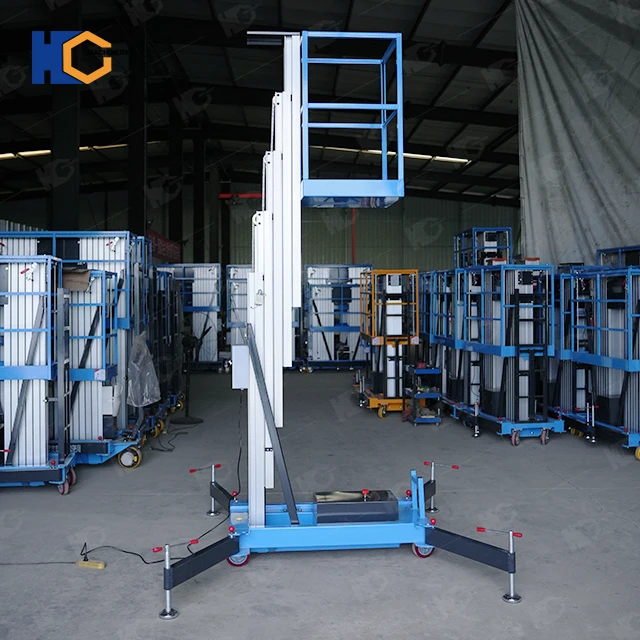
Aluminum Mast Lift and Parts
- Lift height: customization
- Work height: customization
- Load capacity: customization
- Platform size: customization
- Brand: HUICHUANG
- Customization: YES
- Manual: YES
- Price: $950 – $1,300
- Payment Methods: TT
- Delivery time: 15 working days
 +8615628811021
 admin@jnhclift.com
Aluminum alloy configuration sheet.pdf
Aluminum mast lifts have become one of the most efficient and widely used vertical access solutions in modern industry. Designed with lightweight aluminum alloy structures, these lifts combine portability, safety, and durability—making them ideal for maintenance, installation, warehousing, and commercial applications.
This comprehensive guide explores everything you need to know about aluminum mast lifts and their parts, including detailed specifications, structural components, accessories list, working principles, advantages, and comparisons with competing lifting equipment.
What Is an Aluminum Mast Lift?
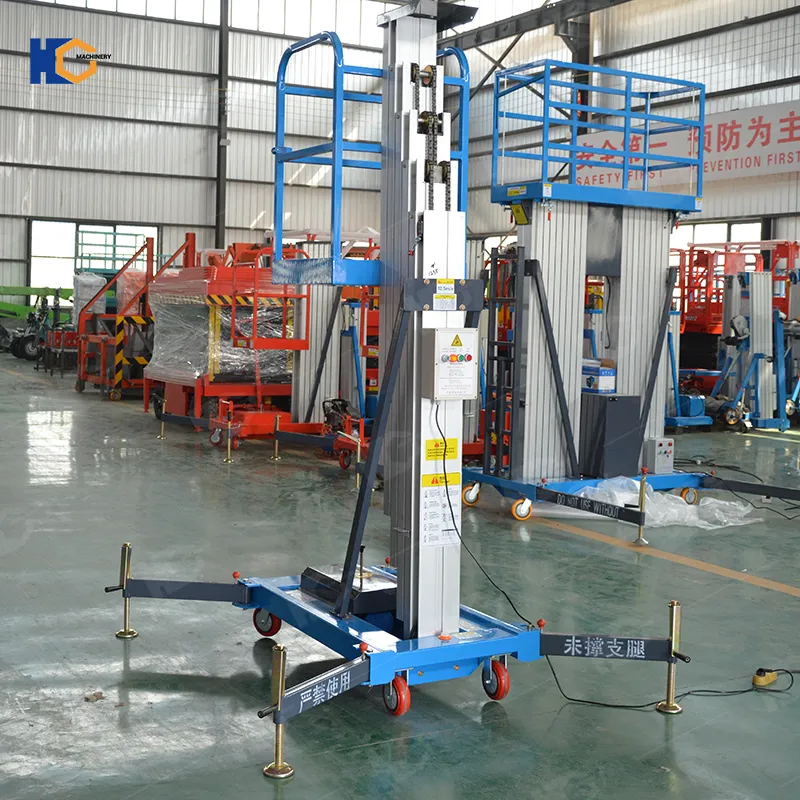
An aluminum mast lift is a vertical lifting platform constructed primarily from high-strength aluminum alloy. It uses a single or multiple mast system to raise a working platform to a specified height safely and efficiently.
Key Features:
- Lightweight but strong aluminum structure
- Compact design for tight spaces
- Vertical lifting (no horizontal outreach)
- Easy mobility and operation
These lifts are widely used in:
- Indoor maintenance
- Electrical installations
- Warehouse operations
- Commercial facilities
Typical Models and Technical Specifications
Different models of aluminum mast lifts are designed to meet varying height and load requirements.
Example Model: HCWY4-100
| Parameter | Specification |
|---|---|
| Working Height | 5.7 meters |
| Load Capacity | 100 kg |
| Platform Size | 600 × 600 mm |
| Total Weight | 250 kg |
| Overall Dimensions | 1280 × 800 × 1750 mm |
Higher Models Comparison
| Model | Working Height | Load Capacity | Platform Size | Weight |
|---|---|---|---|---|
| HCWY4-100 | 5.7 m | 100 kg | 600×600 mm | 250 kg |
| HCWY6-100 | 7.7 m | 100 kg | 600×600 mm | 280 kg |
| HCWY8-100 | 9.7 m | 100 kg | 600×600 mm | 320 kg |
As the working height increases:
- Structural reinforcement improves
- Weight increases slightly
- Stability systems become more critical
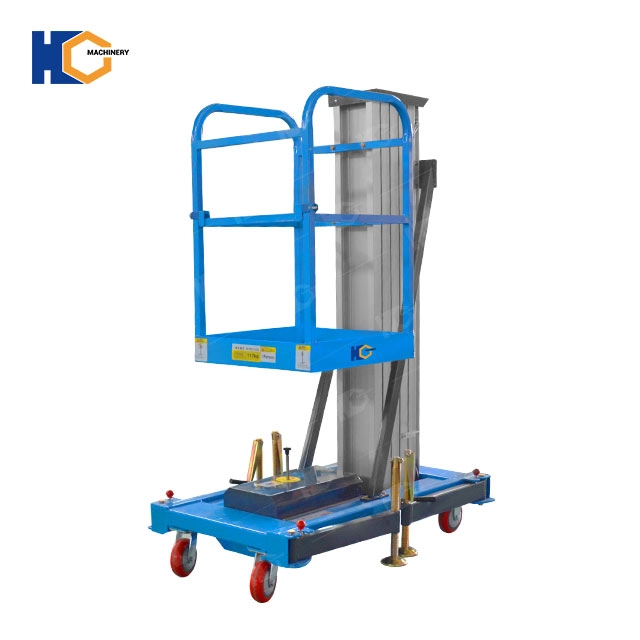
Core Components of Aluminum Mast Lift
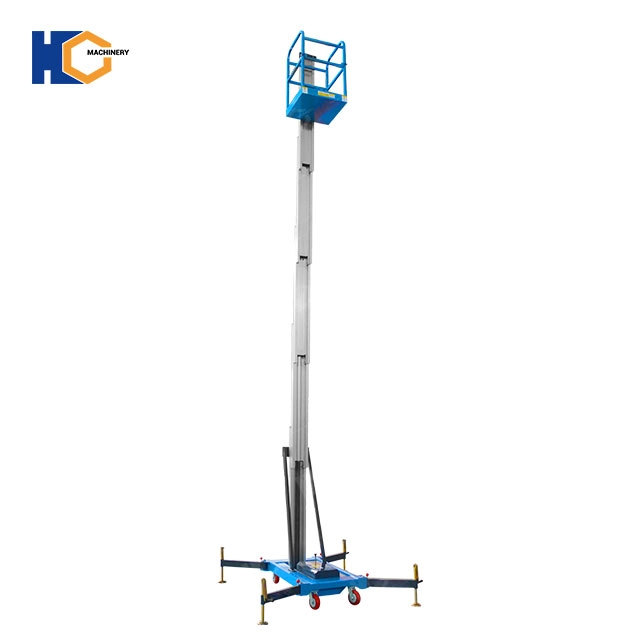 Understanding the parts of an aluminum mast lift is essential for both buyers and operators.
1. Base System
Function:
Acts as the foundation of the lift, ensuring stability and load distribution.
Key Features:
- Heavy-duty steel or reinforced aluminum base
- Equipped with wheels for mobility
- Outriggers (in some models) for additional stability
Importance:
A stable base directly affects safety and lifting performance.
2. Telescopic Platform (Working Platform)
Function:
Provides the workspace for operators or tools.
Structure:
- Single-layer or double-layer design
- Guardrails for safety
- Entry door (usually on upper level)
Platform Design Features:
- Anti-slip surface
- Compact size for narrow environments
- Lightweight but strong
Telescopic Functionality:
- Extends vertically via mast system
- Adapts to different working heights
3. Aluminum Mast (Core Structure)
Function:
The mast is the primary lifting structure that enables vertical movement.
Features:
- Made of high-strength aluminum alloy
- Multi-section telescopic design
- Lightweight yet rigid
Advantages:
- Corrosion resistance
- Smooth lifting performance
- Long lifespan
4. Lifting Mechanism
Function:
Provides power to raise and lower the platform.
Components:
- Electric motor
- Hydraulic pump
- Hydraulic cylinders
- Transmission system
Working Principle:
- Motor drives hydraulic pump
- Hydraulic oil pushes cylinder
- Mast extends vertically
5. Control System (Control Handle)
Function:
Allows the operator to control lift movements.
Features:
- Up/down control buttons
- Emergency stop
- Simple interface
Location:
- Usually mounted at base or side
- Some models include platform controls
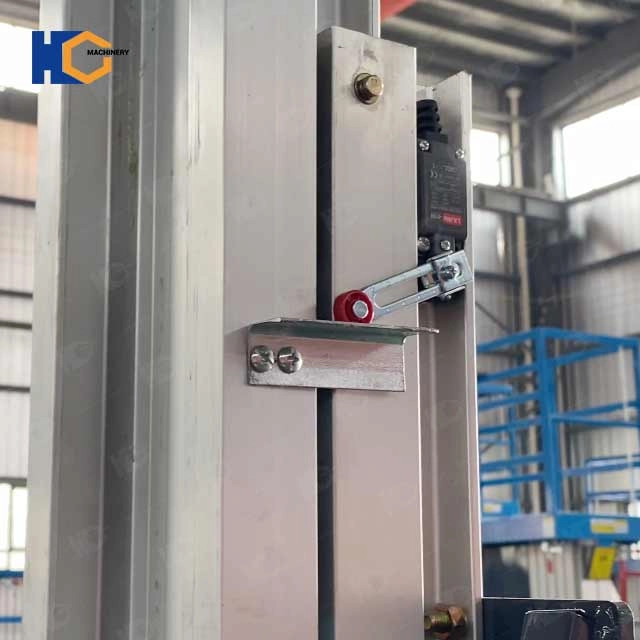
6. Safety Devices
Safety is a critical aspect of aluminum mast lift design.
Main Safety Features:
- Guardrails
- Emergency stop button
- Anti-fall device
- Overload protection
- Tilt protection system
Purpose:
- Prevent accidents
- Ensure operator safety
- Maintain compliance with safety standards
Accessories List (Complete Breakdown)
A high-quality aluminum mast lift typically includes the following accessories:
Standard Accessories:
- Control handle
- Power cable
- Battery (for DC models)
- Wheels with locking system
- Guardrails
- Emergency stop switch
Optional Accessories:
- Tool tray or toolbox
- LED working lights
- Platform extension
- Outriggers for stability
- Remote control system
- Non-marking wheels (for indoor floors)
Advanced Add-ons:
- Automatic leveling system
- Smart control panel (digital display)
- GPS tracking (for fleet management)
- Anti-collision sensors
Key Advantages of Aluminum Mast Lifts
1. Lightweight and Portable
Compared to steel-based lifts:
- Easier to transport
- Suitable for indoor use
- Lower floor load impact
2. Compact Design
- Fits through standard doorways
- Ideal for tight spaces
- Easy storage
3. High Safety Standards
- Multiple safety devices
- Stable lifting mechanism
- Low risk of tipping
4. Low Maintenance Cost
- Fewer moving parts
- Corrosion-resistant materials
- Simple servicing
5. Energy Efficient
- Electric-powered systems
- Low energy consumption
Disadvantages of Aluminum Mast Lifts
1. Limited Load Capacity
Typically:
- 100–200 kg
Not suitable for heavy-duty applications.
2. Limited Platform Space
- Small working area
- Designed for 1 person
3. Vertical Movement Only
- No horizontal outreach
- Less flexible than boom lifts
4. Height Limitations
- Usually under 12 meters
Aluminum Mast Lift vs Competitors
1. Aluminum Mast Lift vs Scissor Lift
| Feature | Aluminum Mast Lift | Scissor Lift |
|---|---|---|
| Weight | Lightweight | Heavy |
| Platform Size | Small | Large |
| Mobility | High | Medium |
| Load Capacity | Low | High |
Best choice:
- Mast lift → tight indoor spaces
- Scissor lift → heavy-duty work
2. Aluminum Mast Lift vs Boom Lift
| Feature | Mast Lift | Boom Lift |
|---|---|---|
| Movement | Vertical only | Multi-directional |
| Cost | Lower | Higher |
| Complexity | Simple | Complex |
Boom lifts are more flexible but expensive.
3. Aluminum Mast Lift vs Ladder
| Feature | Mast Lift | Ladder |
|---|---|---|
| Safety | High | Low |
| Efficiency | High | Low |
| Stability | Excellent | Poor |
Mast lifts are safer and more professional.
Application Scenarios
1. Warehouse Maintenance
- Inventory checks
- Lighting repair
2. Commercial Buildings
- Cleaning
- Electrical installation
3. Airports and Stations
- Equipment maintenance
- Sign installation
4. Industrial Factories
- Machine inspection
- Overhead maintenance
How to Choose the Right Aluminum Mast Lift
Key Factors:
- Working Height
- Choose based on ceiling height
- Load Capacity
- Consider tools + operator weight
- Power Type
- AC for indoor
- DC for mobile use
- Mobility Needs
- Check wheel design and weight
- Safety Features
- Ensure compliance with standards
Maintenance Guide
Daily Inspection:
- Check hydraulic system
- Inspect safety devices
- Test controls
Periodic Maintenance:
- Lubricate moving parts
- Replace worn components
- Check electrical system
Future Trends in Aluminum Mast Lifts
- Smart control systems
- Lightweight composite materials
- Improved battery technology
- IoT-based monitoring
Conclusion
The Aluminum mast lift is a highly efficient and practical vertical lifting solution designed for modern industries. Its lightweight structure, compact size, and strong safety features make it an ideal choice for indoor and confined-space applications.
While it has limitations in load capacity and reach, its advantages in portability, cost-efficiency, and ease of use make it one of the most popular lifting platforms in the market.
For businesses focuased on safe, efficient, and low-cost vertical access, investing in a high-quality aluminum mast lift—with the right configuration and accessories—is a smart and strategic decision.
 Room 203, Second Floor, Building 8, Phase Ⅱ, Zhizao Town, Jibei Street, Jiyang District, Jinan City, Shandong Province