
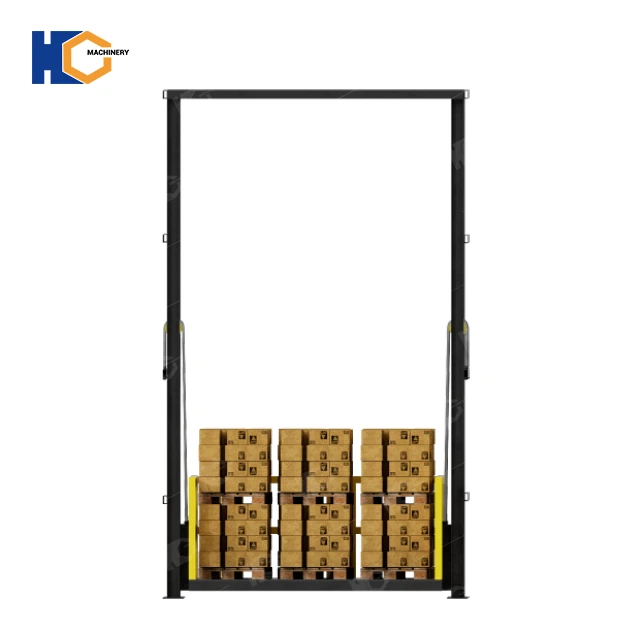
Hydraulic cargo lift specifications
- Load capacity: 1 to 100Ton
Lifting height: 1 to 20m
Brand: HUICHUANG(JNHC lift)
Customization: YES
Manual: YES
Price: $1,500 – $20,000
Payment Methods: TT
Delivery time: 15 working days
 +8615628811021
 admin@jnhclift.com
Hydraulic cargo lift specifications
Hydraulic cargo lifts have become one of the most widely used vertical transportation solutions in warehouses, factories, logistics centers, construction sites, shopping malls, garages, and industrial facilities. As industries continue demanding safer and more efficient material handling systems, hydraulic cargo lifts are increasingly replacing traditional manual transportation methods.
Searches for keywords such as:
- Hydraulic cargo lift specifications
- Hydraulic freight lift
- Cargo lift platform
- Warehouse cargo lift
- Industrial hydraulic elevator
- Hydraulic goods lift
continue growing because businesses need reliable lifting systems for heavy cargo movement between floors.
Understanding hydraulic cargo lift specifications is essential when selecting the right equipment. Choosing the wrong lifting capacity, platform size, or lifting height can directly affect:
- Operational efficiency
- Workplace safety
- Installation costs
- Long-term maintenance
- Equipment lifespan
In this comprehensive guide, we will explain:
- What a hydraulic cargo lift is
- How hydraulic lifts work
- Main technical specifications
- Standard sizes and capacities
- Hydraulic system parameters
- Safety features
- Industrial applications
- Competitive comparison with other lifting systems
- How to choose the correct hydraulic cargo lift
By the end of this article, readers will have a complete understanding of hydraulic cargo lift specifications and how to select the best system for their operational needs.
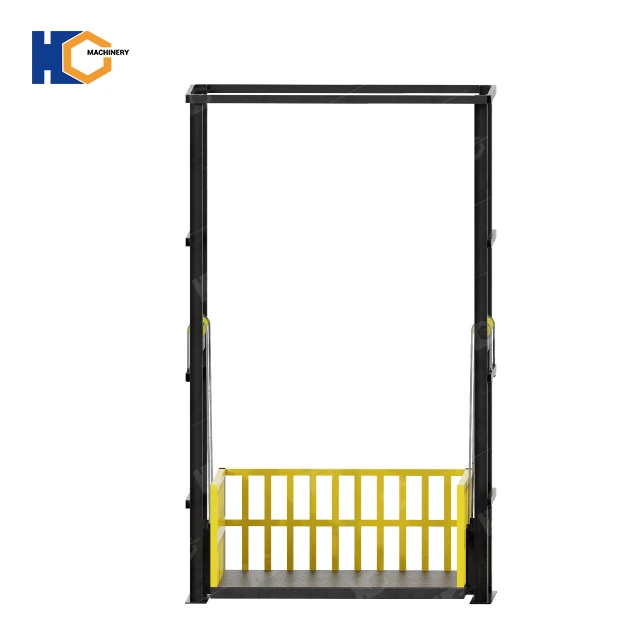
What Is a Hydraulic Cargo Lift?
A hydraulic cargo lift is a vertical lifting platform or enclosed lift system powered by hydraulic pressure and designed for transporting heavy goods between different floors or working levels.
Unlike passenger elevators, hydraulic cargo lifts are engineered primarily for:
- Material transportation
- Industrial lifting
- Heavy cargo handling
- Warehouse operations
Hydraulic cargo lifts are widely used because they provide:
- Strong lifting capacity
- Stable vertical movement
- Simple mechanical structure
- High safety performance
These lifts can transport:
- Pallets
- Machinery
- Industrial equipment
- Construction materials
- Warehouse inventory
- Vehicles
- Heavy goods
Modern hydraulic lifts are available in:
- Indoor models
- Outdoor models
- Scissor lift platforms
- Guide rail cargo lifts
- Freight elevators
- Vehicle cargo lifts
How Does a Hydraulic Cargo Lift Work?
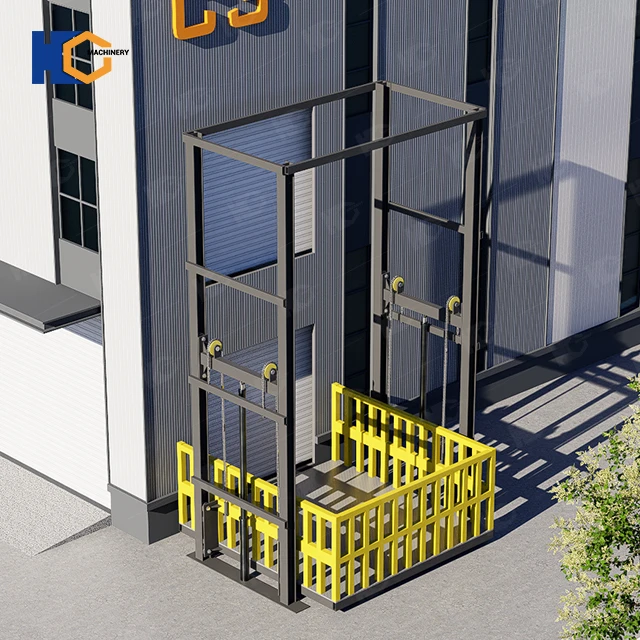
Hydraulic cargo lifts operate using hydraulic fluid pressure generated by a hydraulic pump system.
The basic working process includes:
- The electric motor powers the hydraulic pump
- Hydraulic oil enters the cylinder
- Pressure pushes the piston upward
- The platform or lift cabin rises vertically
- Hydraulic valves control lifting speed and lowering
When lowering:
- Hydraulic oil flows back into the oil tank
- Gravity assists downward movement
- Control valves regulate descent speed
Hydraulic systems are highly popular because they provide:
- Smooth lifting
- Stable operation
- Strong load capacity
- Precise control
The technology is relatively simple compared with traction elevator systems, which helps reduce maintenance complexity.
Main Types of Hydraulic Cargo Lifts
Different industrial environments require different hydraulic lift configurations.
Guide Rail Hydraulic Cargo Lift
Guide rail lifts use:
- Vertical rails
- Hydraulic cylinders
- Steel platforms
Advantages include:
- Strong stability
- High lifting height
- Large load capacity
- Space efficiency
These are commonly used in:
- Warehouses
- Factories
- Industrial buildings
Hydraulic Scissor Cargo Lift
Scissor lifts use crossed steel supports that expand vertically.
Advantages include:
- Compact design
- Stable lifting platform
- Heavy-duty capability
They are widely used for:
- Loading docks
- Production lines
- Vehicle maintenance
Hydraulic Freight Elevator
Freight elevators are enclosed lifting systems designed for large cargo transportation.
Common applications include:
- Shopping malls
- Warehouses
- Distribution centers
Vehicle Hydraulic Cargo Lift
Vehicle lifts are designed for:
- Car transportation
- Parking garages
- Automobile workshops
They typically require:
- Reinforced structures
- High-capacity hydraulic systems
Standard Hydraulic Cargo Lift Specifications
Hydraulic cargo lift specifications vary depending on:
- Application
- Industry
- Load requirements
- Installation environment
Below are common specification ranges used in industrial projects.
Load Capacity Specifications
Load capacity is one of the most important specifications.
Typical hydraulic cargo lift capacities include:
| Lift Type | Capacity Range |
|---|---|
| Small Cargo Lift | 100–500 kg |
| Standard Industrial Lift | 500–3000 kg |
| Heavy-Duty Cargo Lift | 3000–10000 kg |
| Ultra Heavy Industrial Lift | 10–50 tons |
Choosing insufficient capacity may cause:
- Hydraulic overload
- Structural stress
- Safety risks
Overestimating capacity may unnecessarily increase costs.

Platform Size Specifications
Platform dimensions vary according to cargo type.
Common platform sizes include:
| Platform Size | Common Applications |
| 1000 × 1000 mm | Small goods |
| 1500 × 1500 mm | Warehouse cargo |
| 2000 × 2000 mm | Industrial pallets |
| 3000 × 3000 mm | Machinery transport |
| Customized Sizes | Special projects |
Larger platforms require:
- Stronger support structures
- Larger hydraulic cylinders
- More powerful motors
Lifting Height Specifications
Hydraulic cargo lifts support different lifting heights depending on building structure.
Typical lifting heights include:
| Lifting Height | Common Use |
| 1–3 meters | Loading docks |
| 3–6 meters | Warehouse floors |
| 6–12 meters | Multi-floor factories |
| 12–20 meters | Industrial freight elevators |
Higher lifting heights require:
- Reinforced guide rails
- Stronger hydraulic systems
- Advanced safety stabilization
Lifting Speed Specifications
Hydraulic lifts generally prioritize stability over speed.
Typical lifting speeds include:
| Lift Type | Speed Range |
| Small Cargo Lift | 0.05–0.1 m/s |
| Standard Freight Lift | 0.1–0.2 m/s |
| Industrial Freight Elevator | 0.2–0.3 m/s |
Faster speeds may increase:
- Hydraulic system complexity
- Energy consumption
- Equipment cost
Hydraulic System Specifications
The hydraulic system is the core component of the lift.
Important hydraulic parameters include:
- Hydraulic pressure
- Oil tank capacity
- Cylinder size
- Pump power
Hydraulic Pressure
Typical hydraulic system pressure ranges:
| Lift Type | Pressure Range |
| Small Lift | 10–16 MPa |
| Medium Industrial Lift | 16–21 MPa |
| Heavy-Duty Lift | 21–31.5 MPa |
Higher pressure systems support:
- Greater lifting force
- Larger cargo capacity
Hydraulic Cylinder Specifications
Cylinder size directly affects lifting power.
Common cylinder types include:
- Single-acting cylinders
- Double-acting cylinders
- Telescopic cylinders
Important parameters:
- Cylinder diameter
- Stroke length
- Material strength
Motor Power Specifications
Electric motor power depends on:
- Load capacity
- Lifting height
- Speed requirements
Typical motor ranges include:
| Capacity | Motor Power |
| 500 kg | 2.2–4 kW |
| 1000 kg | 4–5.5 kW |
| 3000 kg | 7.5–11 kW |
| 5000 kg+ | 15–30 kW |
Energy-efficient motors reduce long-term operating costs.
Structural Material Specifications
Most hydraulic cargo lifts use:
- High-strength steel
- Q235 steel
- Q345 steel
- Stainless steel (special environments)
Industrial lifts require:
- Corrosion resistance
- Fatigue resistance
- High load-bearing strength
Outdoor lifts often include:
- Galvanized surfaces
- Anti-rust coatings
- Weather-resistant components

Safety Specifications and Features
Safety is one of the most important aspects of hydraulic cargo lifts.
Modern systems include multiple safety protections.
Overload Protection
Prevents operation when cargo exceeds rated capacity.
This reduces:
- Structural stress
- Hydraulic damage
- Accident risk
Emergency Stop System
Emergency stop buttons allow immediate shutdown during abnormal conditions.
Anti-Fall Safety Device
Prevents sudden platform drops if hydraulic pressure fails.
This is one of the most critical safety mechanisms.
Safety Interlock Doors
Lift doors remain locked during operation to prevent accidental falls.
Limit Switches
Limit switches control:
- Maximum lifting height
- Platform positioning
- Automatic stopping
Explosion-Proof Hydraulic Systems
Special industrial environments may require:
- Explosion-proof motors
- Flame-resistant hydraulic systems
These are common in:
- Chemical factories
- Oil facilities
- Hazardous environments
Common Industrial Applications
Hydraulic cargo lifts are widely used across industries.
Warehouses and Logistics Centers
Hydraulic lifts help transport:
- Pallets
- Inventory
- Shipping goods
They improve:
- Efficiency
- Labor productivity
- Material handling safety
Manufacturing Factories
Factories use cargo lifts for:
- Production line supply
- Raw material transport
- Heavy machinery movement
Shopping Malls and Retail Centers
Freight elevators move:
- Merchandise
- Inventory
- Retail supplies
Without disturbing customer traffic.
Residential Applications
Some hydraulic lifts are used in:
- Villas
- Garages
- Residential warehouses
Homeowners often use them for:
- Furniture transport
- Wheelchair accessibility
- Heavy household items
Construction Industry
Construction sites use hydraulic lifts for:
- Building materials
- Equipment transportation
- Tool lifting
Hydraulic Cargo Lift vs Traction Freight Elevator
Many buyers compare hydraulic lifts with traction systems.
| Feature | Hydraulic Cargo Lift | Traction Elevator |
| Installation Cost | Lower | Higher |
| Lifting Capacity | Strong | Moderate |
| Speed | Slower | Faster |
| Maintenance | Simpler | More complex |
| Best Use | Heavy cargo | Passenger transport |
Hydraulic systems are preferred for heavy industrial applications.
Hydraulic Cargo Lift vs Scissor Lift
| Feature | Guide Rail Lift | Scissor Lift |
| Lifting Height | Higher | Lower |
| Space Efficiency | Better | Moderate |
| Stability | Excellent | Excellent |
| Installation Complexity | Higher | Lower |
Each system serves different operational needs.
Factors Affecting Hydraulic Cargo Lift Prices
Pricing depends on:
- Load capacity
- Lifting height
- Platform size
- Drive system
- Customization
- Safety requirements
Additional factors include:
- Installation location
- Indoor vs outdoor use
- Automation level
- Surface treatment
Custom industrial projects may require:
- Non-standard designs
- Explosion-proof systems
- Stainless steel structures
How to Choose the Right Hydraulic Cargo Lift
Selecting the correct lift requires evaluating:
- Maximum cargo weight
- Platform dimensions
- Required lifting height
- Installation environment
- Electrical power supply
- Daily operation frequency
Important questions include:
- How many lifting cycles occur daily?
- Will forklifts enter the platform?
- Is outdoor installation required?
- Is corrosion resistance necessary?
Choosing the wrong specifications can lead to:
- Premature wear
- Safety risks
- Higher maintenance costs
Future Trends in Hydraulic Cargo Lifts
The cargo lift industry continues evolving rapidly.
Emerging trends include:
- Smart monitoring systems
- IoT integration
- Energy-saving hydraulic technology
- Remote diagnostics
- Automated cargo handling
- AI predictive maintenance
Manufacturers are also improving:
- Hydraulic efficiency
- Noise reduction
- Compact designs
- Eco-friendly systems
Future hydraulic lifts will likely become smarter, safer, and more energy efficient.
Conclusion
Hydraulic cargo lift specifications play a critical role in determining operational efficiency, safety, and long-term performance.
Modern hydraulic cargo lifts offer:
- Strong lifting capacity
- Stable vertical transportation
- Flexible customization
- Reliable industrial performance
They are widely used in:
- Warehouses
- Factories
- Logistics centers
- Shopping malls
- Residential properties
- Construction sites
Understanding specifications such as:
- Load capacity
- Platform size
- Lifting height
- Hydraulic pressure
- Motor power
- Safety systems
helps buyers select the most suitable lifting solution for their application.
As industries continue emphasizing automation, safety, and material handling efficiency, hydraulic cargo lifts remain one of the most reliable and cost-effective vertical transportation systems available in the global market today.
 Room 203, Second Floor, Building 8, Phase Ⅱ, Zhizao Town, Jibei Street, Jiyang District, Jinan City, Shandong Province