Hydraulic Home Elevator in Nigeria
- Brand: HUICHUANG (JNHC lift)
- Customization: YES
- Manual: YES
- Price: $4,200–$15,000
 +8615628811021
 admin@jnhclift.com
Hydraulic elevator configuration sheet.pdf
Key parts of Hydraulic Home Elevators.pdf
1. What’s the hydraulic home elevator:
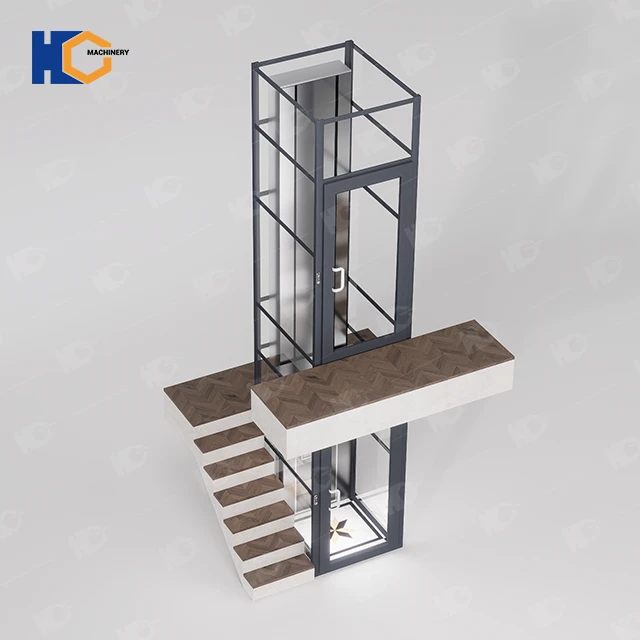
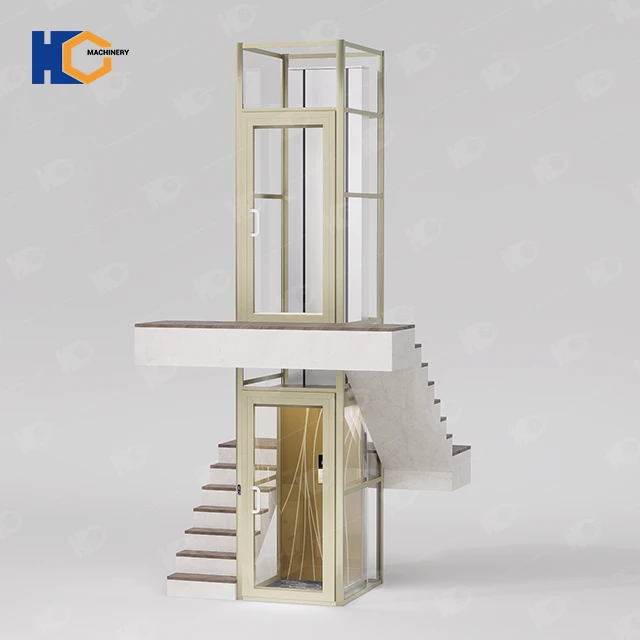
Hydraulic home elevator is an elevator that is driven by hydraulic pressure. The hydraulic power source presses oil into the cylinder to make the plunger move linearly, and the elevator moves the cabin directly or indirectly through a wire rope.
Hydraulic home elevators are a popular choice for residential buildings due to their smooth operation, reliability, and suitability for low-rise applications. They utilize a hydraulic piston to raise and lower the elevator car, offering a safe and efficient vertical transportation solution for homes.
Hydraulic home elevators in Nigeria offer 2–5 stops, a maximum height of 12 meters.
Specifications:
The following specifications can be customized.
| Specification | Details |
|---|---|
| Speed | Up to 40 feet per minute (0.2 m/s) |
| Travel Distance | Up to 50 feet (15 meters), typically 2-4 floors |
| Load Capacity | Typically up to 1,000 lbs (450 kg) |
| Cab Size | Standard sizes range from 36″x48″ to 40″x54″ |
| Power Requirement | 220V or 240V single-phase power |
| Installation Time | Approximately 2-3 weeks |
| Maintenance Cost | Lower to moderate; hydraulic systems need regular checks |
| Pit Depth | Typically 8 inches to 12 inches |
| Machine Room | Required at the bottom of the shaft or nearby |
2. Hydraulic home elevator application:
Due to the advantages of hydraulic elevators such as stable operation, comfort, low noise, and high shaft utilization, they have been widely used in public places such as villas, shopping malls, office buildings, parking lots, stations and airports in recent years.
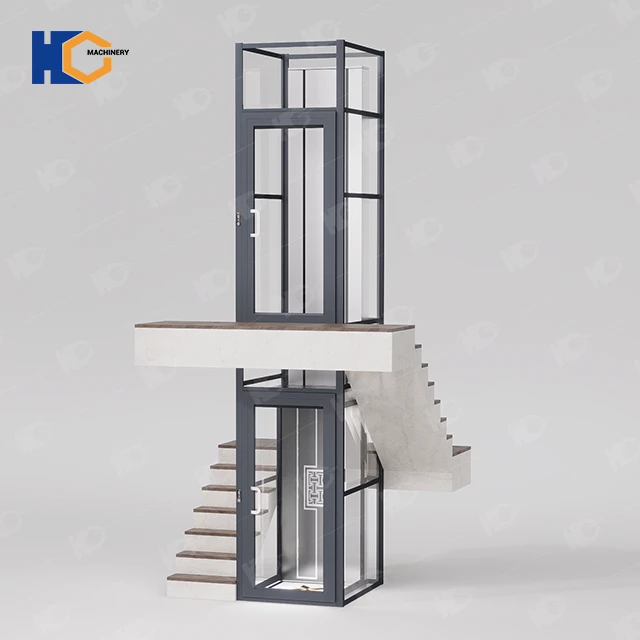
Home elevators are mainly used in low-rise buildings, such as villas, townhouses, old house renovations, etc. There is also a good market potential in Nigeria. When you choose a manufacturer, you can consider our lift factory.
3. The price of hydraulic home elevator:
Generally, it is recommended to choose the hydraulic home elevator for 2-4 stops. If you need, we can also make 5 stops hydraulic home elevator for you, but the lifting height should not exceed 12 meters. And the hydraulic home elevator price range is about 4200-15000 USD
By the way, the hydraulic home elevators are 100% customized products. The number of floors, the height of each floor, the size of the installation space, whether have shaft, etc, will affect the machine price.
| Specification | Details |
|---|---|
| Recommended Stops | 2–4 Stops |
| Maximum Stops | 5 Stops |
| Maximum Lifting Height | 12 Meters |
| Price Range by Stops | 2 Stops: $4,200 – $7,500 USD |
| 3 Stops: $7,500 – $12,000 USD | |
| 4 Stops: $12,000 – $15,000 USD | |
| Customization Options | 100% Customized |
| Factors Affecting Price | – Number of Floors |
| – Height of Each Floor | |
| – Size of Installation Space | |
| – Presence of Shaft |
4. Comparison: Hydraulic vs. Screw-Driven vs. Traction Home Elevators
When choosing a home elevator, it’s important to understand how different drive systems perform in real-world residential settings—especially in markets like Nigeria where space, power stability, and climate play key roles. Below is a detailed comparison of the three most common home elevator technologies:
| Feature | Hydraulic | Screw-Driven | Traction (Geared/ Gearless) |
|---|---|---|---|
| Pit Requirement | Yes (8–12 inches / 20–30 cm) | Minimal or none | Typically required (6–12 inches) |
| Machine Room Needed? | Yes (located at base of shaft) | No – compact drive integrated in cab | Usually yes (often overhead) |
| Noise Level | Low (quiet pump operation) | Moderate (mechanical rotation noise) | Low to very low |
| Energy Consumption | Only uses power when ascending; descends by gravity | Uses power for both up and down travel | Efficient; regenerative options available |
| Max. Floors Recommended | Up to 5 stops (≤12–15 meters) | Best for 2–4 floors | Suitable for 2–6+ floors |
| Maintenance Complexity | Moderate (requires periodic hydraulic fluid checks and seal inspections) | Low (few moving parts) | Moderate to high (ropes, sheaves, counterweights) |
| Installation Flexibility | Requires space for cylinder & pump unit | Highly flexible; ideal for retrofits | Needs precise shaft alignment |
| Climate Resilience | Excellent with sealed, galvanized components | Sensitive to dust/moisture in open designs | Sensitive to humidity if not properly enclosed |
5. Advantages of JNHC hydraulic home elevator:
(1). Limit switch: it’s electromagnetic induction type, it will be more durable and more sensitive.
(2). Progressive safety gear: Even if all the steel wire rope and cylinder broke, the progressive type safety gear will lock the home lift on the rail to protect it from falling.
(3). Energy saving: Elevators consume electricity only when they are rising. They descend by their own weight, so they consume almost no electricity. Elevators consume only 1-2 kWh of electricity per day.
(4). Galvanized rail bracket: waterproof and rust-proof, more durable.
(5). UPS:JNHC home lift with UPS (it’s a small power supply), this is the emergency lowering device of the machine, with its own voltage stabilization function. If there is a sudden power failure at home, the cabin will also use this function to slowly descend to the ground floor, so home owners don’t get stuck in the elevators
As a professional manufacturer of residential hydraulic elevators, we are dedicated to delivering safe, premium home lift solutions for all customers. Whether you are a homeowner, property developer, contractor or distributor, we provide full support covering manufacturing, global shipping and after-sales service.
6. Hydraulic home elevator Guarantee:
①.Spare parts with the machine.
②.One-year free warranty, we undertake all charges. Apart from man-made fault.
③.Free spare parts in 3 years, but after one year customer should undertake freight cost. Apart from man-made fault.
④. Life time technical support.
7. How to get the hydraulic home elevator quote:
As hydraulic home elevators are fully customized solutions, every quotation is formulated based on specific project parameters. To receive a detailed tailored quote and a dedicated installation layout plan, please provide us with your required number of stops, per-floor lifting height and available installation dimensions. You are welcome to contact our team at any time, and we will prepare a comprehensive, project-specific proposal for you.
8. Key Components of Hydraulic Home Elevators
Hydraulic home elevators consist of various critical components that ensure smooth and safe operation. Here is an overview of the main parts:
1. Hydraulic Pump Unit:
- Description: The hydraulic pump unit is the heart of the elevator’s hydraulic system. It includes a motor, pump, and a hydraulic fluid reservoir.
- Function: Pumps hydraulic fluid into the cylinder to move the piston and lift the elevator car. It also controls the descent by allowing the fluid to return to the reservoir.
2. Hydraulic Cylinder and Piston:
- Description: A cylinder containing a piston that moves up and down within the cylinder.
- Function: The piston moves the elevator car by displacing hydraulic fluid. When fluid is pumped into the cylinder, the piston rises, lifting the elevator car.
3. Control Valve:
- Description: A valve that regulates the flow of hydraulic fluid.
- Function: Controls the direction and pressure of the hydraulic fluid, allowing for smooth acceleration and deceleration of the elevator car.
4. Elevator Car (Cab):
- Description: The compartment in which passengers or goods are transported.
- Function: Provides a safe and comfortable space for passengers. It includes safety features like handrails, emergency alarms, and lighting.
5. Guide Rails:
- Description: Vertical rails installed in the elevator shaft.
- Function: Ensure the elevator car moves straight up and down without swaying or tilting.
6. Machine Room:
- Description: A dedicated room, usually located at the bottom of the elevator shaft, housing the hydraulic pump unit and control system.
- Function: Provides a safe and secure location for the elevator’s mechanical components.
7. Control Panel:
- Description: A panel that houses the electrical and control systems of the elevator.
- Function: Allows for operation control, including floor selection, emergency stop, and diagnostic tools.
8. Door System:
- Description: Consists of car doors and landing doors at each floor.
- Function: Ensures safe entry and exit for passengers. Typically includes automatic door operators to synchronize door opening and closing with the car’s arrival.
9. Emergency Battery Backup:
- Description: A battery system that provides power in case of a power outage.
- Function: Ensures that the elevator can safely lower to the nearest floor and open its doors during a power failure.
10. Safety Features:
- Emergency Alarm: Allows passengers to alert others in case of an emergency.
- Handrails: Provides support and stability for passengers.
- Emergency Lighting: Ensures visibility in the car during a power outage.
- Overspeed Governor: Detects if the elevator car is moving too quickly and activates the brake system.
- Buffers: Installed at the bottom of the shaft to cushion the car in case of an over-travel.
Hydraulic home elevators are composed of several key components that work together to provide a safe and efficient vertical transportation solution. Understanding these components helps in maintaining the elevator and ensuring its reliable operation. Here’s a summary of the main parts:
| Component | Function |
|---|---|
| Hydraulic Pump Unit | Pumps hydraulic fluid to move the piston and lift the car. |
| Cylinder and Piston | Displaces fluid to move the elevator car up and down. |
| Control Valve | Regulates fluid flow for smooth acceleration and deceleration. |
| Elevator Car (Cab) | Provides a safe and comfortable passenger space. |
| Guide Rails | Ensure straight movement of the elevator car. |
| Machine Room | Houses the hydraulic pump unit and control system. |
| Control Panel | Operates the elevator, including floor selection and emergency controls. |
| Door System | Ensures safe entry and exit, with automatic synchronization. |
| Emergency Battery Backup | Provides power to lower the elevator during a power failure. |
| Safety Features | Includes alarms, handrails, emergency lighting, overspeed governor, and buffers. |
These components collectively ensure the safe, smooth, and efficient operation of hydraulic home elevators.
Investing in a Hydraulic Home Elevator is a practical and stylish solution for Nigerian homeowners looking to enhance their living experience. Our elevators combine cutting-edge technology, elegant design, and durability to deliver unparalleled performance and value. With competitive pricing, tailored solutions, and expert support, we are your trusted partner for home elevators in Nigeria.
Contact us today to get a personalized quote or to learn more about our hydraulic home elevators designed for the Nigerian market. Together, we’ll elevate your home to the next level of comfort and convenience!
 Room 203, Second Floor, Building 8, Phase Ⅱ, Zhizao Town, Jibei Street, Jiyang District, Jinan City, Shandong Province