Wheelchair Accessible Home Elevator Canada
- Model: Wheelchair Accessible Elevator
- Power supply: 220V/110V
- Brand: HUICHUANG(JNHC lift)
- Customization: YES
- Manual: YES
- Price: 18,000–70,000 CAD
- Speed: 0.06–0.08 m/s
 +8615628811021
 admin@jnhclift.com
According to the Canadian Association for Retired Persons (CARP), more than 22% of seniors over 65 want to remain in multi-level homes, but nearly 40% face difficulties due to mobility issues or wheelchair use.
Installing a wheelchair-accessible home elevator not only enhances quality of life but also increases property value. Data from the Canadian Real Estate Association (CREA) show that homes with elevators see an average 8%–12% increase in resale value.
This article provides a detailed overview of Wheelchair Accessible Home Elevator Canada, including their functions, common accessories, costs, and selection tips, to help you make an informed decision.
What Is a Wheelchair Accessible Home Elevator Canada?
1. Definition
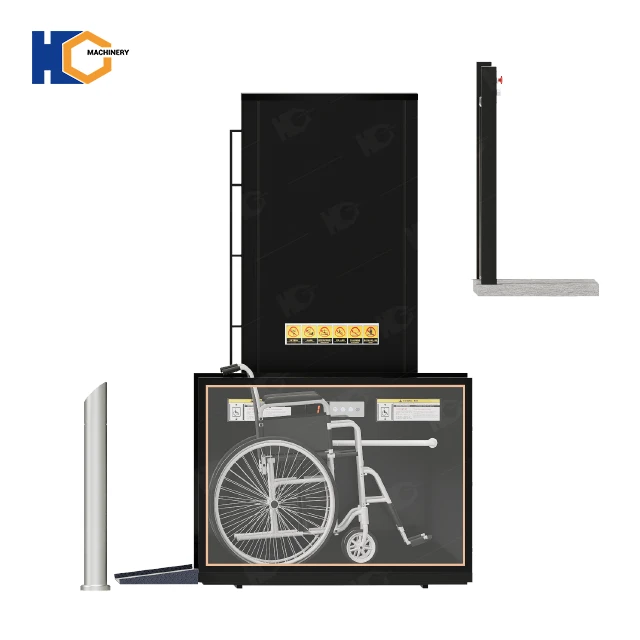
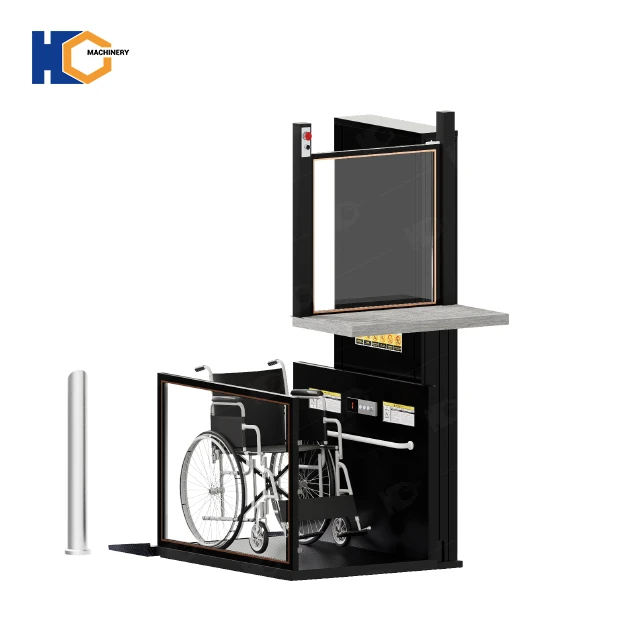
A Wheelchair Accessible Home Elevator Canada refers to a residential elevator system designed specifically for wheelchair users and people with limited mobility. Compared with traditional lifts, these elevators prioritize space, ease of use, and safety.
2. Key Differences from Conventional Elevators
- Larger size: Cabin dimensions typically at least 1,000×1,250mm to fit wheelchairs.
- Simplified controls: Large push buttons, wireless remotes, or voice operation.
- Flexible installation: Many models require no machine room or deep pit, making them suitable for home retrofits.
- Enhanced safety: Equipped with emergency lowering, obstruction sensors, and backup batteries.
Main Features
Canadian Wheelchair Accessible Home Elevators come with a wide range of functions tailored for accessibility:
1. Accessible Entry and Exit
- Low gradient or automatic ramps for easy wheelchair access.
- Wide doors: Standard width ranges 900–1,200mm.
- Thru-Car options: Doors on both sides allow easier layouts in small homes.
2. Safety Features
- Emergency lowering: Automatically descends to the nearest floor during power outages.
- Emergency call button: Connects directly to landline or smart home system.
- Infrared sensors: Prevent door from closing on passengers.
3. Ease of Operation
- Large control buttons (≥ 50mm diameter).
- Remote operation: Allows control from within the wheelchair.
- Smart technology: Some brands integrate with mobile apps and voice assistants.
4. Energy Efficiency and Quiet Operation
- Vacuum and chain-drive models consume little to no power while descending.
- Noise levels remain under 50 decibels, comparable to a normal conversation.
Common Accessories & Upgrades
Beyond standard functions, homeowners in Canada can customize their Wheelchair Accessible Home Elevator with optional accessories:
| Accessory | Function | Price Range (CAD) |
|---|---|---|
| Automatic door system | Hands-free entry/exit | 2,500–4,000 |
| Remote control | Wireless floor calling | 500–1,200 |
| Backup battery pack | 3–5 trips during blackout | 1,000–2,500 |
| LED lighting kit | Energy-efficient, stylish | 300–800 |
| Foldable seat | For non-wheelchair users | 500–1,000 |
| Smart home integration | Alexa / Google Home | 1,500–3,000 |
The most popular accessory combination in Canada is automatic doors + backup battery pack, ensuring both convenience and safety.
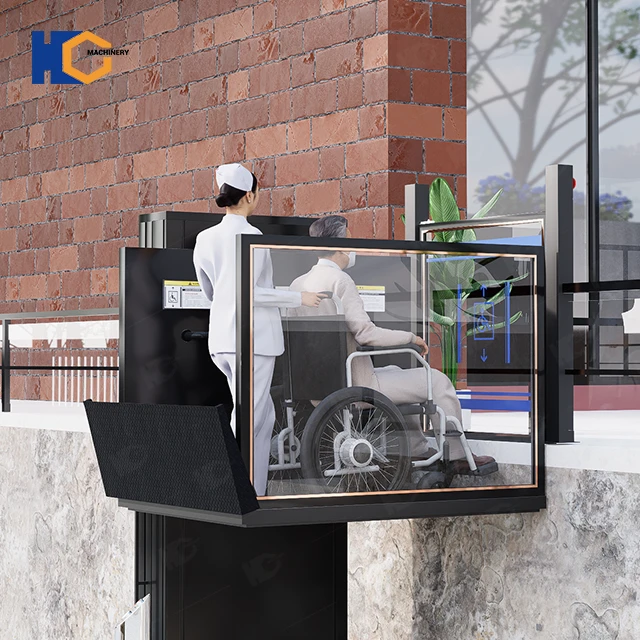
Common Specifications of Wheelchair Accessible Home Elevator Canada

1. Cabin Size
- Standard wheelchair use: 1,000mm × 1,250mm (approx. 39″ × 49″)
- Large wheelchair/with companion: 1,100mm × 1,400mm
- Door width: 900–1,200mm (for smooth wheelchair entry/exit)
2. Weight Capacity
- Entry-level Vertical Platform Lift (VPL): 200–250kg
- Mid-range home elevators (Stiltz, Cambridge): 230–250kg (1 person + wheelchair)
- Premium hydraulic or pneumatic elevators: 250–400kg (wheelchair + caregiver)
3. Operating Speed
- Platform lift (VPL): 0.06–0.08 m/s
- Hydraulic/traction drive: 0.10–0.15 m/s
- Pneumatic vacuum elevator: around 0.15 m/s
(Compared to commercial elevators at 1.0–1.5 m/s, home elevators are slower and safer.)
4. Travel Height
- Platform lifts: up to 4–5m (2 floors)
- Home elevators (hydraulic/vacuum): up to 12–15m (4–5 floors)
5. Number of Stops
- Standard: 2–3 stops
- Premium models: up to 5 stops
6. Drive Systems
- Hydraulic: stable, ideal for higher lifts, requires a machine room/pump station
- Traction (cable/chain): energy-efficient, requires top clearance
- Vacuum (PVE): panoramic, no shaft/machine room, space-saving
- Screw drive: compact, suitable for retrofits
7. Power Supply
- Single-phase 220V / 30–40A (most home models)
- Some heavy-duty hydraulic elevators require three-phase 380V
- Energy consumption: average 1.5–3.0 kWh/hour
8. Noise Level
- Modern home elevators: ≤ 50 dB (similar to a normal conversation)
9. Safety Features
- Emergency braking & anti-fall protection
- Emergency lowering system (battery backup allows 3–5 trips during blackout)
- Light curtain or infrared sensors (to prevent door closure accidents)
- Overload alarm
- Emergency phone/intercom
10. Lifespan
- Average: 15–20 years
- With regular maintenance: up to 25 years or more
Summary Table:
| Specification | Range |
|---|---|
| Cabin Size | 1000×1250mm – 1100×1400mm |
| Door Width | 900–1200mm |
| Weight Capacity | 200–400kg |
| Speed | 0.06–0.15 m/s |
| Travel Height | 4–15m |
| Stops | 2–5 |
| Drive Type | Hydraulic / Traction / Vacuum / Screw drive |
| Power Supply | 220V (some require 380V) |
| Noise Level | ≤ 50 dB |
| Lifespan | 15–20 years |
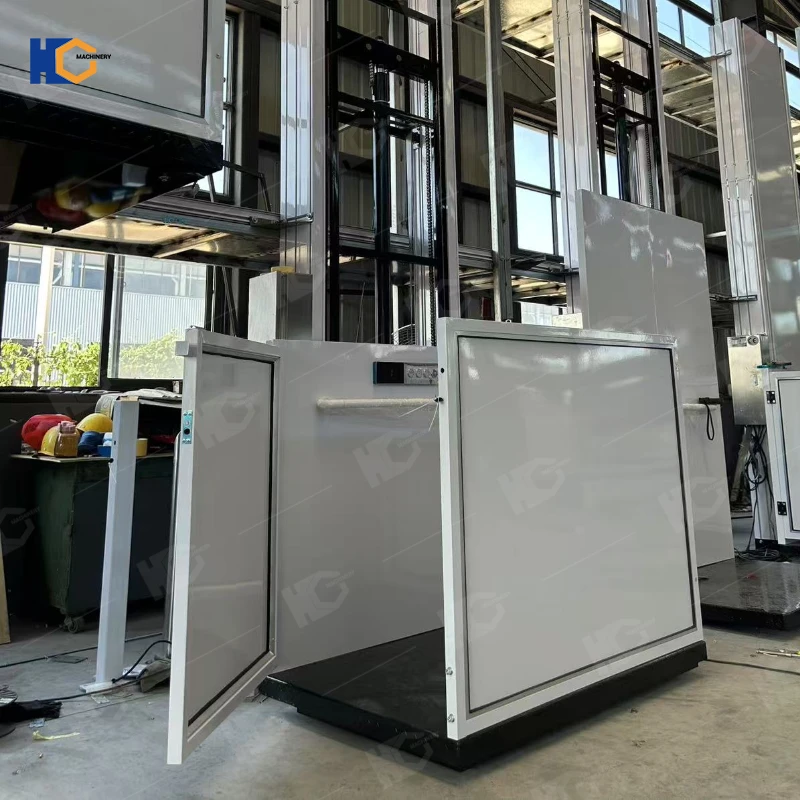
Popular Models in Canada
Here are some well-known Wheelchair Accessible Home Elevator Canada options:
1. PVE52 Pneumatic Vacuum Elevator
- Capacity: 238kg (wheelchair + companion).
- Travel height: Up to 15m / 5 stops.
- Installation time: 2–3 days.
- Price: 48,000–68,500 CAD.
- Highlight: Space-saving, panoramic design, no machine room.
2. Stiltz Trio Alta
- Footprint: Less than 1.5m².
- Capacity: 250kg.
- Installation time: 1–2 days.
- Price: 20,550–60,000 CAD.
- Highlight: Plug-and-play, eco-friendly, minimal construction.
3. Cambridge Homelift (Wheelchair Edition)
- Cabin size: 850×1,250mm.
- Capacity: 230kg.
- Speed: 0.08m/s.
- Starting price: 42,000 CAD.
- Highlight: Canadian brand, highly customizable.
Cost & Budget Breakdown
Based on 2025 Canadian market data, here’s the typical cost range for Wheelchair Accessible Home Elevators:
1. Overall Installation Cost
- Entry-level (VPL – Vertical Platform Lift): 18,000–25,000 CAD.
- Mid-range (Stiltz, Cambridge): 30,000–50,000 CAD.
- Premium (vacuum, glass design): 48,000–70,000 CAD.
2. Cost Distribution
- Equipment: ~65%
- Installation: ~20%
- Accessories & customization: ~10%
- Maintenance & warranty: ~5%
Example: A Stiltz Trio Alta unit costs about 35,000 CAD. With automatic doors (3,000 CAD), backup battery (2,000 CAD), and installation (6,000 CAD), the total reaches around 46,000 CAD.
3. Long-Term Maintenance
- Annual service: 300–600 CAD.
- Major servicing every 5 years: 2,000–3,000 CAD.
- Lifespan: 15–20 years.
How to Choose the Right Wheelchair Accessible Home Elevator Canada
1. Identify Your Needs
- Is the user fully dependent on a wheelchair?
- How many floors need access?
- Will companions ride together?
2. Budget Consideration
- ≤ 25,000 CAD → Vertical Platform Lift.
- 30,000–50,000 CAD → Stiltz or Cambridge models.
- ≥ 50,000 CAD → Premium vacuum elevators.
3. Installation Environment
- For retrofits: self-supporting or vacuum elevators.
- For new builds: hydraulic or cable-driven lifts.
4. After-Sales Service
- Choose brands with service centers in Canada.
- Check warranty terms (usually 1–3 years).
Conclusion
In Canada, Wheelchair Accessible Home Elevator Canada is not just an accessibility solution—it is an investment in quality of life and property value.
Key takeaways:
- Functions include accessibility, safety, convenience, and energy efficiency.
- Accessories and upgrades can greatly enhance usability.
- Total costs range 18,000–70,000 CAD, depending on model and customization.
- Federal and provincial programs help reduce financial burden.
Whether for senior aging-in-place or daily wheelchair mobility, a Wheelchair Accessible Home Elevator Canada provides safety, independence, and dignity at home.
Choosing the right system means investing in both comfort and the future value of your property.
FAQS
1. How much does a wheelchair accessible home elevator cost in Canada?
The price typically ranges from 18,000 CAD to 70,000 CAD, depending on the model, number of floors, and customization. A vertical platform lift (VPL) is the most affordable option, while premium vacuum elevators are on the higher end.
2. What is the size of a wheelchair accessible home elevator?
Most elevators have a cabin size of at least 1,000mm × 1,250mm, allowing enough space for a standard wheelchair. Door widths usually range from 900–1,200mm for easy entry and exit.
3. Do I need a machine room or pit to install one?
Not always. Many modern models like Stiltz Trio Alta or PVE vacuum elevators are self-supporting and require no machine room or deep pit, making them ideal for retrofits in Canadian homes.
4. How long does installation take?
Installation usually takes 1–5 days, depending on the type of elevator and home modifications required. Self-contained models are faster, while hydraulic elevators may require additional construction.
5. Are wheelchair home elevators safe during power outages?
Yes. Most come with emergency battery backups that allow 3–5 trips during blackouts. They also feature emergency lowering systems to safely descend to the nearest floor.
6. Do home elevators increase property value in Canada?
Yes. According to the Canadian Real Estate Association (CREA), homes with elevators see an average resale value increase of 8%–12%, especially in multi-level urban properties.
7. What are the maintenance costs?
Annual servicing costs around 300–600 CAD. Major servicing every 5 years may cost 2,000–3,000 CAD. With proper maintenance, a wheelchair accessible home elevator lasts 15–20 years.
8. Are there government grants or tax credits available?
Yes. Canadians can apply for the Home Accessibility Tax Credit (HATC), which refunds up to 20% of eligible expenses (up to 10,000 CAD per year). Some provinces also offer additional subsidies.
9. Can more than one person ride in a wheelchair elevator?
Yes. Most models support 230–250kg, which accommodates a wheelchair user plus a caregiver or family member. Larger models like PVE52 can carry both comfortably.
10. Which brands are most popular in Canada?
Some leading brands include:
- Stiltz Trio Alta (compact, affordable)
- Cambridge Homelift (customizable, Canadian-made)
- PVE Vacuum Elevators (panoramic design, space-saving)
 Room 203, Second Floor, Building 8, Phase Ⅱ, Zhizao Town, Jibei Street, Jiyang District, Jinan City, Shandong Province