
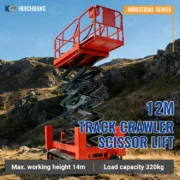
How Does a Scissor Lift Work?
How Does a Scissor Lift Work? Complete Guide to Types, Components, Working Principle, Operation Steps, and Maintenance
A scissor lift is one of the most widely used aerial work platforms in construction, warehousing, logistics, manufacturing, and building maintenance. It provides a safe and stable elevated working platform for workers and tools, allowing vertical access to heights that would otherwise be difficult or dangerous to reach.
Whether used indoors in a warehouse or outdoors on a construction site, scissor lifts are valued for their stability, lifting capacity, and efficiency. But many users still ask a simple question: How does a scissor lift actually work?
This article explains everything in detail, including what a scissor lift is, its classifications, main components, working principle, operating steps, and maintenance methods.
What Is a Scissor Lift?
A scissor lift is a type of mechanical lifting platform that raises and lowers a working platform using a set of linked, folding supports arranged in a crisscross “X” pattern, resembling scissors.
When hydraulic pressure or electric power is applied, the “scissor arms” extend upward, pushing the platform vertically. When the pressure is released, the arms collapse, and the platform descends smoothly.
Scissor lifts are designed to provide:
- Stable vertical lifting
- Large working platforms
- High load capacity
- Safe operation at height
They are commonly used for tasks such as:
- Building maintenance
- Warehouse stocking
- Electrical installation
- HVAC system repair
- Painting and decoration
- Industrial equipment servicing
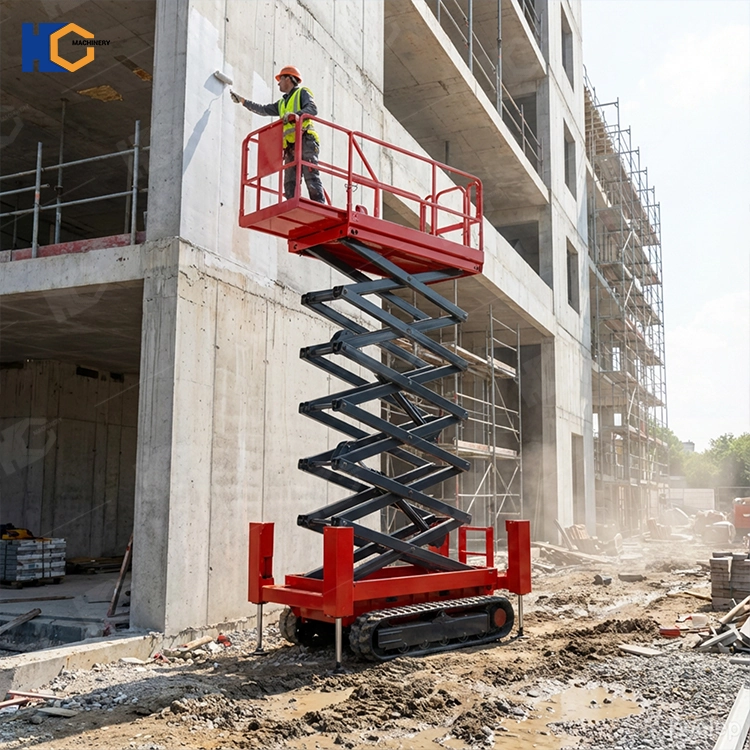
Types of Scissor Lifts
Scissor lifts come in different designs depending on power source, mobility, and working environment.
1. Mobile Scissor Lift
- Manually moved or towable
- Suitable for light-duty indoor work
- Lower cost and simple structure
2. Self-Propelled Scissor Lift
- Electric drive system allows movement while elevated (depending on the model)
- High efficiency and productivity
- Common in warehouses and factories
3. Hydraulic Scissor Lift
- Uses hydraulic cylinders for lifting
- Smooth and stable motion
- Widely used in industrial applications
4. Electric Scissor Lift
- Battery-powered
- Zero emissions and low noise
- Ideal for indoor environments
5. Diesel Scissor Lift
- Powered by diesel engine
- Suitable for outdoor rough terrain
- High lifting capacity
6. Rough Terrain Scissor Lift
- Equipped with 4WD, large tires, and a strong chassis
- Used in construction sites and on uneven ground
7. Stationary Scissor Lift Table
- Fixed installation
- Used for material handling in factories and logistics centers
Main Components of a Scissor Lift
A scissor lift consists of several key systems that work together to ensure safe and stable operation.
1. Scissor Mechanism (Arm Structure)
The core structure consists of steel cross arms arranged in an X-shape.
- Made of high-strength steel
- Provides vertical lifting motion
- Ensures stability under heavy load
2. Hydraulic System
This is the “power source” of most scissor lifts.
Includes:
- Hydraulic pump
- Hydraulic cylinder
- Oil tank
- Control valves
- Hydraulic hoses
The hydraulic system controls lifting and lowering.
3. Platform (Work Deck)
The upper surface where workers stand.
Features:
- Anti-slip surface
- Safety guardrails
- Extension deck (on some models)
- Load capacity markings
4. Power System
Depending on model:
- Battery (electric lifts)
- Diesel engine (outdoor lifts)
- AC electric power (stationary lifts)
5. Control System
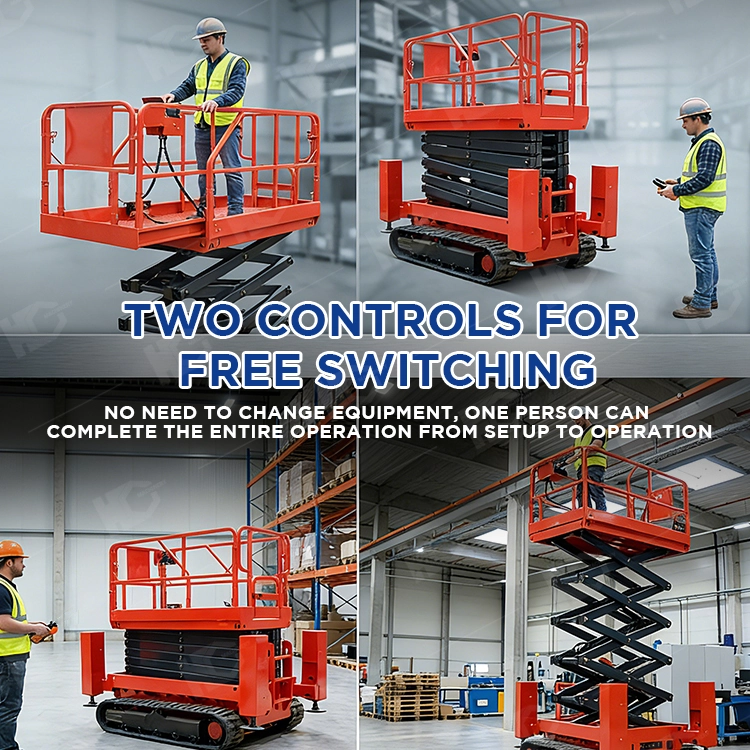
Operators control the lift using:
- Ground control panel
- Platform control box
- Joystick or buttons
- Emergency stop switch
6. Chassis and Wheels
Provides mobility and stability.
- Heavy-duty steel frame
- Solid or foam-filled tires
- Steering system (on self-propelled models)
7. Safety Systems
Important safety components include:
- Overload protection sensor
- Tilt sensor
- Emergency lowering system
- Safety locking valves
- Pothole protection system
How Does a Scissor Lift Work? (Working Principle)
The working principle of a scissor lift is based on hydraulic force and mechanical leverage.
When the hydraulic system is activated, pressure pushes a cylinder piston upward. This motion forces the scissor arms to unfold, lifting the platform vertically.
Step-by-Step Working Process
Step 1: Power Activation
The operator turns on the system using the control panel.
- Battery supplies electricity (electric model)
- Engine starts (diesel model)
Step 2: Hydraulic Pump Activation
The hydraulic pump begins to pressurize hydraulic oil.
This creates force inside the system.
Step 3: Hydraulic Cylinder Extension
Pressurized oil enters the hydraulic cylinder.
The piston inside the cylinder extends outward.
Step 4: Scissor Arm Expansion
The extended cylinder pushes the lower scissor arms outward.
The “X-shaped” structure begins to unfold.
Step 5: Vertical Lifting
As the arms expand:
- The platform rises vertically
- The structure remains balanced
- Load is evenly distributed
Step 6: Height Locking
At the desired height:
- Hydraulic valves lock pressure
- Platform remains stable
- Safety system activates
Step 7: Lowering Process
To descend:
- Hydraulic valve opens
- Oil flows back into reservoir
- Scissor arms fold slowly
- Platform lowers safely
Simple Physics Behind Scissor Lift Operation
The scissor lift works mainly on:
- Hydraulic pressure (Pascal’s Law)
- Mechanical leverage (scissor arms)
In simple terms:
- Small force from hydraulic pump
- Translates into large lifting force
- Distributed through scissor structure
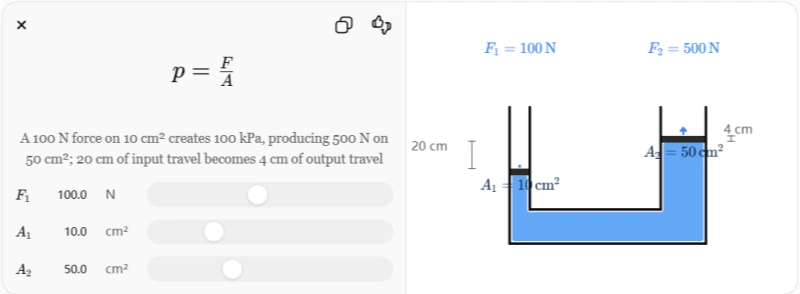
This principle allows heavy loads to be lifted smoothly with relatively small input force.
Operating Steps of a Scissor Lift
1. Pre-Operation Inspection
Before use:
- Check hydraulic oil level
- Inspect tires and wheels
- Test emergency stop
- Ensure platform guardrails are secure
- Check for oil leaks
2. Start the Machine
- Turn on power switch
- Activate control panel
- Ensure no warning indicators
3. Position the Lift
- Move lift to stable ground
- Engage brakes or stabilizers
- Ensure area is level
4. Raise the Platform
- Operate lift control lever
- Increase height gradually
- Avoid sudden movements
5. Work at Height
- Maintain weight limits
- Avoid overloading platform
- Keep body inside guardrails
6. Lower the Platform
- Slowly release control valve
- Ensure smooth descent
- Avoid rapid lowering
7. Shutdown
- Turn off power
- Park in designated area
- Recharge battery (electric models)
Maintenance Methods for Scissor Lifts
Proper maintenance ensures safety, performance, and long service life.
1. Daily Maintenance
- Check hydraulic oil level
- Inspect for leaks
- Clean platform surface
- Test control buttons
2. Weekly Maintenance
- Lubricate scissor arms
- Check tire pressure or condition
- Inspect bolts and fasteners
3. Monthly Maintenance
- Check hydraulic cylinder performance
- Inspect battery condition
- Test safety sensors
4. Hydraulic System Maintenance
- Replace hydraulic oil periodically
- Clean hydraulic filters
- Check valve operation
- Prevent oil contamination
5. Electrical System Maintenance
- Inspect wiring connections
- Check battery health
- Ensure controller is functioning properly
6. Structural Maintenance
- Inspect scissor arms for cracks
- Check weld points
- Tighten loose bolts
7. Safety System Maintenance
- Test emergency stop system
- Check overload sensors
- Verify tilt alarm system
Common Problems and Solutions
1. Lift Not Raising
Possible causes:
- Low hydraulic oil
- Pump failure
- Electrical issue
Solution:
- Check oil level
- Inspect pump system
- Test power supply
2. Slow Lifting Speed
- Air in hydraulic system
- Worn seals
- Low battery voltage
3. Platform Not Stable
- Uneven ground
- Overload condition
- Loose mechanical parts
4. Hydraulic Leakage
- Damaged seals
- Cracked hoses
- Loose fittings
Advantages of Scissor Lifts
- High stability at height
- Large working platform
- High load capacity
- Simple operation
- Suitable for indoor and outdoor use
- Cost-effective maintenance
Conclusion
A scissor lift is a highly efficient and safe aerial work platform that operates using a combination of hydraulic pressure and a scissor-type mechanical structure. By extending and folding its X-shaped arms, it provides smooth vertical lifting for workers and equipment.
Understanding how a scissor lift works—including its types, components, working principle, operation steps, and maintenance methods—helps operators use the machine safely and efficiently while extending its service life.
From warehouse maintenance to construction projects, scissor lifts remain one of the most reliable and widely used lifting solutions in modern industry.

Jnhclift (Huichuang Lift), based in Jinan, China, is a professional manufacturer of scissor lifts, home elevators, and lift platforms. With our own dedicated factory, we deliver high-quality, reliable lifting solutions tailored to meet diverse industrial and residential needs.
 Room 203, Second Floor, Building 8, Phase Ⅱ, Zhizao Town, Jibei Street, Jiyang District, Jinan City, Shandong Province
 +86 152 5319 3706
 admin@jnhclift.com