
What Is a Lay-down Mast Lift?
/in blog /by jnhcliftA Lay-down Mast Lift is a lightweight, portable aerial work platform designed for safe and efficient vertical access in indoor and outdoor maintenance tasks. Unlike traditional vertical mast lifts, a lay-down mast lift features a unique folding or reclining mast that can be lowered horizontally, making transportation, storage, and maintenance significantly easier.
These compact lifting platforms are widely used by contractors, facility maintenance teams, warehouses, airports, shopping malls, schools, hospitals, and industrial plants where mobility and space-saving are essential.
In this comprehensive guide, you’ll learn everything about lay-down mast lifts, including their working principles, specifications, key components, advantages, applications, accessories, and how they compare with other aerial work platforms.
What Is a Lay-down Mast Lift?
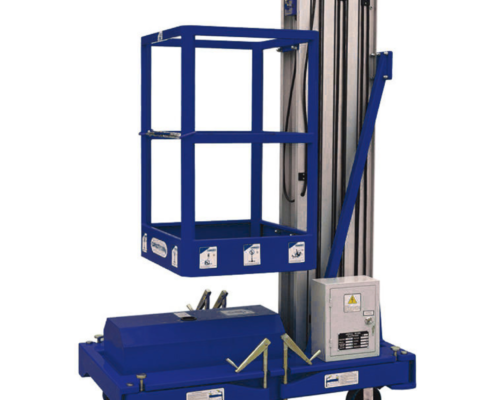
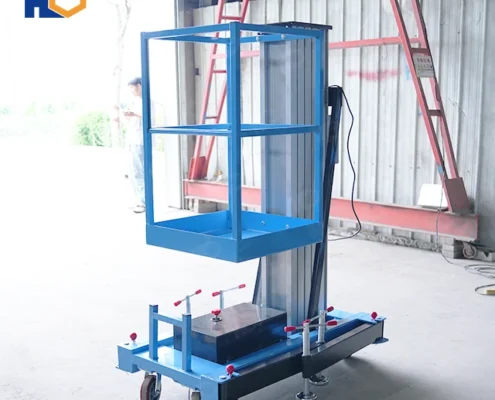
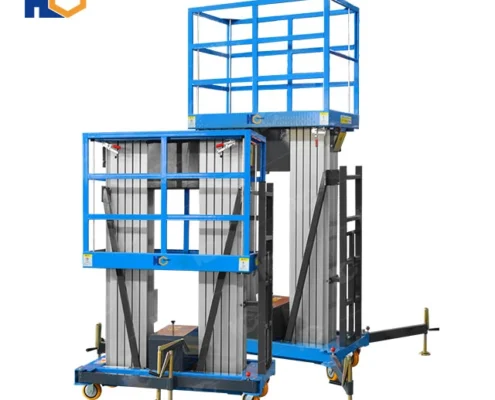
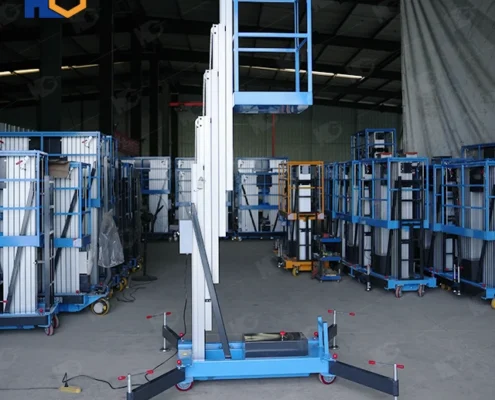
A lay-down mast lift is a manually movable hydraulic lifting platform equipped with a telescopic aluminum alloy mast that can be folded or laid down horizontally during transportation or storage.
When working, the mast stands upright and smoothly raises the platform using an electric-hydraulic lifting system. After finishing the job, operators can lower the mast into a horizontal position, allowing the entire machine to pass through narrow doors, elevators, and cargo vehicles.
Because of its lightweight construction, one person can usually transport and position the machine without the need for heavy equipment.
Typical working heights include:
- 6m (20 ft)
- 8m (26 ft)
- 9m (30 ft)
- 10m (33 ft)
- 12m (40 ft)
Most models are designed for one operator plus tools.
How Does a Lay-down Mast Lift Work?
A lay-down mast lift combines mechanical stability with hydraulic lifting technology.
The working process consists of several steps:
Step 1: Positioning
The lift is pushed manually into the work area.
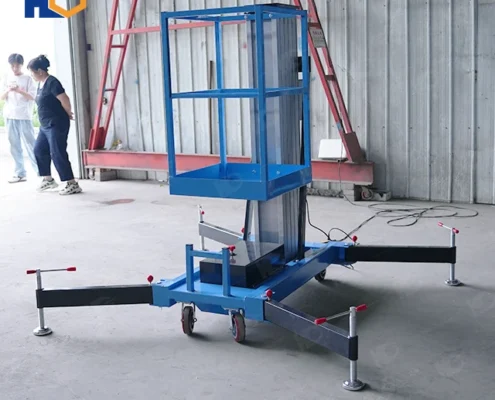
Levelling outriggers are deployed to stabilize the machine.
Step 2: Mast Raising
The mast is raised from the horizontal transport position into the vertical working position.
Safety locking mechanisms automatically secure the mast.
Step 3: Platform Elevation
The hydraulic cylinder pushes the aluminum mast upward.
Guide rollers inside the mast sections ensure smooth movement.
The platform ascends steadily without excessive vibration.
Step 4: Working
The operator performs installation, inspection, cleaning, lighting replacement, or maintenance work.
Step 5: Lowering
After completion, the platform lowers automatically.
The mast is folded into the horizontal position for easy transport.
Main Components of a Lay-down Mast Lift
A typical lay-down mast lift consists of the following systems:
Aluminum Alloy Mast
High-strength aerospace-grade aluminum provides:
- Lightweight construction
- Excellent rigidity
- Corrosion resistance
- Long service life
Hydraulic Power Unit
The hydraulic station includes:
- Hydraulic pump
- Hydraulic cylinder
- Oil tank
- Solenoid valves
- Pressure relief valve
The hydraulic system delivers smooth and stable lifting performance.
Electric Control System
Modern lifts typically include:
- Upper and lower control panels
- Emergency stop button
- Emergency lowering system
- Battery indicator
- Overload alarm
- Fault diagnosis display
Platform
The working platform usually features:
- Anti-slip flooring
- Guardrails
- Safety gate
- Tool tray
- Toe boards
Outriggers
Retractable outriggers improve stability.
Many models include:
- Interlock system
- Level indicators
- Automatic locking
Wheels
Most machines use:
- Non-marking polyurethane wheels
- Heavy-duty caster wheels
- Lockable swivel wheels
These allow smooth movement without damaging indoor flooring.
Standard Specifications
The following table shows common specifications available from manufacturers.
| Item | Typical Specification |
|---|---|
| Working Height | 6–12 m |
| Platform Height | 4–10 m |
| Platform Capacity | 125–150 kg |
| Occupants | 1 Person |
| Platform Size | 600 × 550 mm |
| Machine Width | 750–850 mm |
| Machine Length | 1.3–1.6 m |
| Transport Height | 1.8–2.2 m |
| Mast Material | High-strength aluminum alloy |
| Power Supply | AC, DC, or Battery |
| Drive Type | Manual push |
| Lifting Speed | 25–40 sec |
| Weight | 280–480 kg |
Different manufacturers may offer customized specifications.
Optional Accessories
Numerous accessories improve productivity and safety.
Common options include:
Maintenance Tool Tray
Convenient storage for hand tools and spare parts.
Forklift Slots
Simplify loading and unloading.
Battery Power System
Suitable for locations without external electricity.
Automatic Charger
Provides intelligent battery charging.
Non-Marking Tires
Ideal for shopping malls, hospitals, and airports.
Explosion-Proof Electrical Components
Designed for chemical plants and hazardous environments.
Anti-Collision Protection
Protects walls, shelves, and equipment.
Emergency Descent Device
Allows safe lowering during power failure.
Key Features
Lay-down mast lifts are popular because they combine compact dimensions with practical functionality.
Major features include:
- Foldable mast design
- Lightweight construction
- Easy transportation
- Simple operation
- Low maintenance
- Indoor and outdoor use
- Quiet electric operation
- Narrow body for tight spaces
- Fast setup
- Excellent stability
Advantages of a Lay-down Mast Lift
Easy Transportation
The foldable mast dramatically reduces transport size.
It easily fits inside:
- Delivery vans
- Pickup trucks
- Cargo elevators
- Warehouse elevators
Space Saving
Traditional vertical mast lifts require significant storage height.
A lay-down mast occupies much less space when stored.
Lightweight Design
Aluminum construction reduces overall weight while maintaining structural strength.
Cost Effective
Compared with self-propelled aerial work platforms, lay-down mast lifts have:
- Lower purchase price
- Lower maintenance costs
- Lower operating costs
Easy Maintenance
Technicians can inspect the mast, hydraulic cylinder, wiring, and rollers while the mast is in the horizontal position.
Maintenance becomes quicker and safer.
High Safety
Safety features often include:
- Emergency stop
- Emergency lowering
- Overload protection
- Outrigger interlock
- Tilt protection
- Hydraulic hose burst valve
- Safety locking system
Long Service Life
With fewer moving parts than scissor lifts or boom lifts, maintenance requirements remain relatively low.
Typical Applications
Lay-down mast lifts are suitable for numerous industries.
Building Maintenance
Ideal for:
- Painting
- Ceiling repair
- Lighting replacement
- Window cleaning
Warehouses
Perfect for:
- Inventory inspection
- Rack maintenance
- Barcode scanner installation
- CCTV installation
Airports
Used for:
- Sign installation
- Lighting maintenance
- Security equipment servicing
Shopping Malls
Suitable for:
- Decoration
- Banner installation
- Advertising replacement
- Cleaning
Hospitals
Ideal for:
- Electrical maintenance
- HVAC servicing
- Ceiling repairs
Hotels
Frequently used for:
- Chandelier installation
- Interior decoration
- Fire alarm inspection
Schools and Universities
Applications include:
- Classroom lighting
- Auditorium maintenance
- Network cable installation
Manufacturing Plants
Used for:
- Equipment maintenance
- Production line servicing
- Mechanical repairs
Safety Guidelines
Operators should always:
- Inspect the lift before use.
- Confirm outriggers are fully deployed.
- Verify level ground conditions.
- Never exceed the rated capacity.
- Wear appropriate PPE.
- Avoid strong winds outdoors.
- Keep clear of overhead obstacles.
- Lower the platform before moving the machine.
Routine inspections improve safety and equipment longevity.
Maintenance Requirements
Regular maintenance should include:
Daily:
- Visual inspection
- Hydraulic leak check
- Battery inspection
Weekly:
- Lubricate moving components
- Check bolts
- Test emergency stop
Monthly:
- Hydraulic oil inspection
- Roller inspection
- Wire inspection
- Safety switch testing
Annually:
- Full structural inspection
- Hydraulic oil replacement
- Load testing
- Electrical system inspection
Lay-down Mast Lift vs Traditional Vertical Mast Lift
| Feature | Lay-down Mast Lift | Traditional Vertical Mast Lift |
|---|---|---|
| Transport | Excellent | Moderate |
| Storage | Compact | Requires more height |
| Maintenance | Easy | More difficult |
| Weight | Lighter | Heavier |
| Setup | Faster | Standard |
| Purchase Cost | Lower | Slightly higher |
| Mobility | Better | Good |
| Indoor Access | Excellent | Good |
Lay-down Mast Lift vs Scissor Lift
| Feature | Lay-down Mast Lift | Scissor Lift |
|---|---|---|
| Working Width | Very Narrow | Wider |
| Weight | Light | Heavy |
| Capacity | 125–150 kg | 300–500 kg |
| Working Area | One Person | Multiple People |
| Transportation | Easy | More difficult |
| Purchase Cost | Lower | Higher |
| Storage | Compact | Larger footprint |
A scissor lift is better suited for tasks requiring higher platform capacity or multiple operators, while a lay-down mast lift excels in confined spaces and quick maintenance jobs.
Lay-down Mast Lift vs Self-Propelled Vertical Mast Lift
| Feature | Lay-down Mast Lift | Self-Propelled Mast Lift |
|---|---|---|
| Mobility | Manual Push | Self-Driving |
| Battery Consumption | Low | Higher |
| Purchase Cost | Lower | Higher |
| Maintenance | Simple | More Complex |
| Indoor Performance | Excellent | Excellent |
| Best For | Occasional Maintenance | Frequent Daily Use |
Organizations with frequent access work may benefit from self-propelled models, while contractors, rental companies, and facilities teams often choose lay-down mast lifts for their simplicity and lower ownership costs.
How to Choose the Right Lay-down Mast Lift
When selecting a model, consider:
- Required working height
- Platform capacity
- Indoor or outdoor use
- Doorway and elevator dimensions
- Available power source
- Frequency of use
- Transport vehicle capacity
- After-sales service and spare parts availability
If you plan to use the lift in multiple locations, prioritize lightweight construction and a compact folded size. For continuous daily operation, look for high-quality hydraulic components, durable aluminum mast sections, and comprehensive safety systems.
Conclusion
A Lay-down Mast Lift is one of the most practical and economical aerial work platforms for single-operator maintenance and installation tasks. Its innovative foldable mast design makes transportation, storage, and servicing far easier than conventional vertical mast lifts, while its lightweight aluminum construction, compact footprint, and reliable hydraulic system deliver safe and efficient performance.
Whether you’re maintaining warehouses, shopping malls, hotels, airports, schools, hospitals, or industrial facilities, a lay-down mast lift provides a cost-effective solution that balances portability, safety, and productivity. By choosing the right working height, safety features, and optional accessories, businesses can reduce downtime, improve operator efficiency, and achieve a lower total cost of ownership compared with many larger aerial work platforms.

Jnhclift (Huichuang Lift), based in Jinan, China, is a professional manufacturer of scissor lifts, home elevators, and lift platforms. With our own dedicated factory, we deliver high-quality, reliable lifting solutions tailored to meet diverse industrial and residential needs.
 Room 203, Second Floor, Building 8, Phase Ⅱ, Zhizao Town, Jibei Street, Jiyang District, Jinan City, Shandong Province
 +86 152 5319 3706
 admin@jnhclift.com