Custom 20 ft to 40 ft Towable Mobile Scissor Lift manufacturer
- Model: Towable Mobile Scissor Lift
- Brand: HUICHUANG(JNHC lift)
- Customization: YES
- Manual: YES
- Price: $1,200–$5,000
- Payment Methods: TT
- Delivery time: 15 working days
 +8615628811021
 admin@jnhclift.com
A custom 20- to 40-ft towable mobile scissor lift is one of the most overlooked workhorses in modern access equipment. It is not as flashy as a boom lift, not as compact as a mast lift, and not as heavy as a self-propelled scissor lift—but on real job sites, it often delivers the best balance of height, stability, mobility, and cost.
What Is a 20 ft to 40 ft Towable Mobile Scissor Lift?
A towable mobile scissor lift is a trailer-mounted aerial work platform that provides vertical access using a scissor mechanism. Unlike self-propelled scissor lifts, towable models are:
- Transported by towing (pickup or light truck)
- Stabilized by outriggers during operation
- Not designed to move while elevated
The 20 ft to 40 ft range (approximately 6 m to 12 m platform height, 8 m to 14 m working height) covers the most common access needs in light industrial, commercial, and maintenance applications.
These lifts are widely used because they are:
- Easier to transport
- Cheaper to purchase and maintain
- Simple to operate
- Highly adaptable through customization
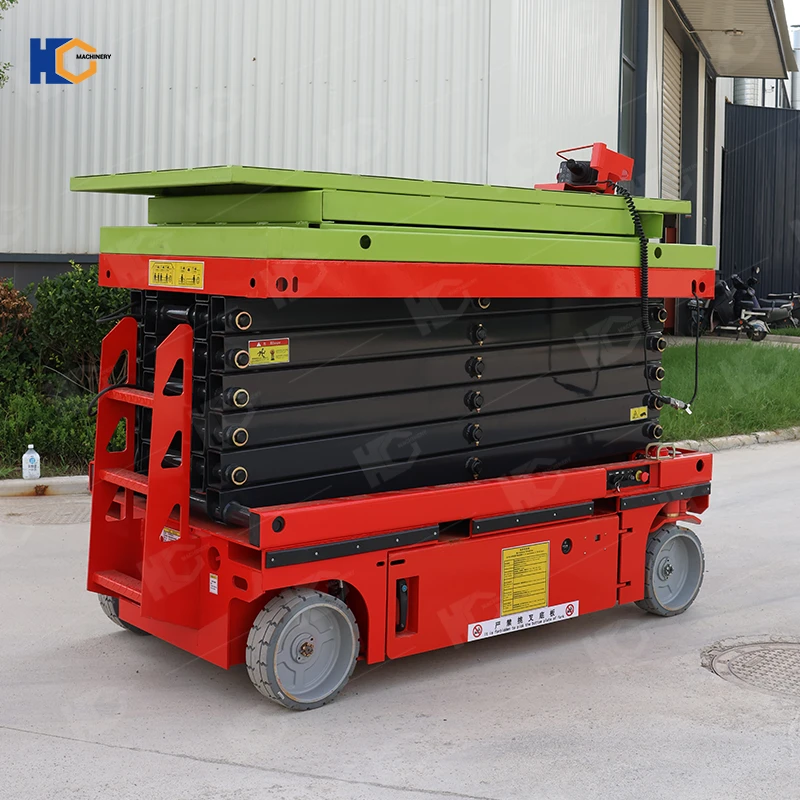
Towable mobile scissor lifts have a working height range of 20 to 40 feet (approximately 6-12 meters) and a load capacity typically of 500-750 pounds. They feature a robust steel scissor structure, are hydraulically driven, and provide smooth lifting. Equipped with solid tires and a towing device, they can be quickly moved by vehicle. The striking yellow paint and black safety railings meet industry standards, making them suitable for a wide range of high-altitude work scenarios, including warehouse maintenance and equipment installation, offering both flexibility and a large working range.
Why the 20–40 ft Range Is So Popular
Based on real-world usage data from rental fleets and contractors, most vertical access work occurs below 40 ft.
Typical tasks include:
- Building maintenance and inspections
- Lighting installation and replacement
- HVAC service
- Warehouse racking access
- Exterior signage work
- Facility repairs
Above 40 ft, boom lifts often become necessary. Below 20 ft, ladders or compact lifts compete. The 20–40 ft window is the efficiency zone, where productivity gains are clear, and costs remain controlled.
Towable vs Self-Propelled Scissor Lifts: A Practical Comparison
Understanding why buyers choose towable models helps define what manufacturers should optimize.
Transport and Logistics
Towable scissor lifts:
- Can be moved with standard vehicles
- Do not require flatbed trucks
- Are easier to store
Self-propelled lifts:
- Require dedicated transport
- Increase logistics costs
- Take more storage space
For distributed job sites, towable lifts save real money.

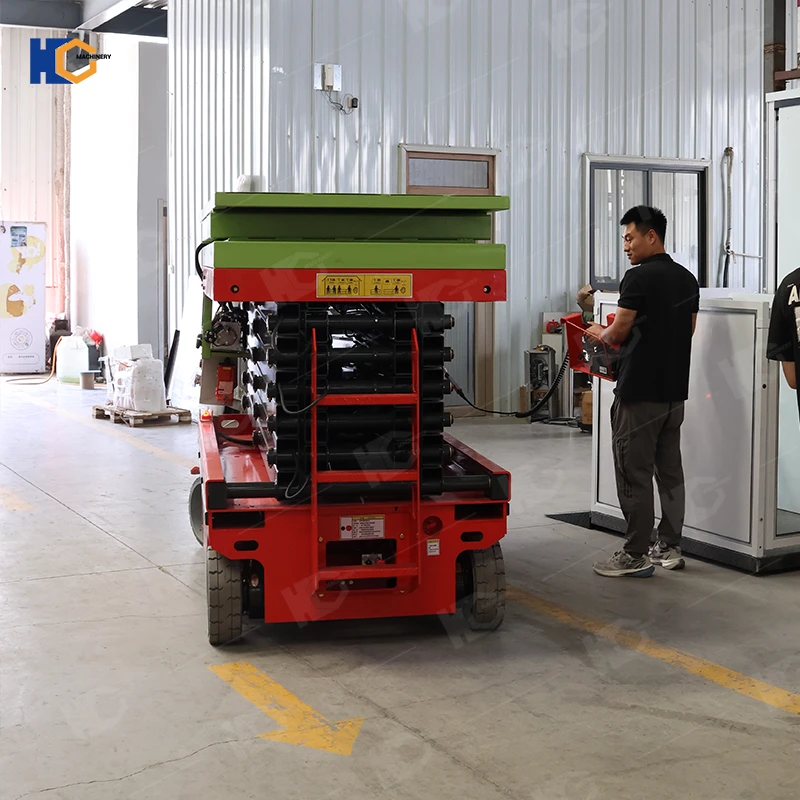
This image clearly demonstrates a typical application scenario for 20-40 ft towable mobile scissor lifts. The HC series unit shown features a striking orange-and-black color scheme and a robust structure, and it can safely and efficiently lift multiple workers to working heights of 6 to 12 meters. The unit is equipped with a tow hook at the bottom for easy vehicle towing. In the image, multiple workers are using it collaboratively for high-altitude installation or maintenance work within a large industrial plant, highlighting its practicality and flexibility in large spaces and high-headroom environments.
Operating Environment
Towable lifts:
- Excel in outdoor and semi-outdoor environments
- Works well on flat, prepared ground
- Are ideal for temporary jobs
Self-propelled lifts:
- Better for large indoor facilities
- Designed for continuous movement
Different tools for different workflows.
Typical Technical Data (Realistic Industry Ranges)
While exact specifications vary by manufacturer, most 20–40 ft towable mobile scissor lifts fall within these data ranges:
Height and Capacity
- Working Height: 20–40 ft (6–12 m)
- Platform Height: 18–38 ft (5.5–11.5 m)
- Platform Capacity: 200–450 kg (440–990 lbs)
Lower heights often support higher loads. As height increases, capacity decreases slightly due to stability physics.
Platform Dimensions
- Typical Platform Size:
- Length: 1.2–2.5 m
- Width: 0.7–1.2 m
Custom platforms are common for specific tools or materials.
Power Systems
Most towable scissor lifts use one of the following:
- Battery electric (24V / 48V systems)
- AC electric (site power)
- Hybrid electric + manual backup
Electric systems dominate due to low noise and low maintenance.
What “Custom” Really Means in Manufacturing
Many manufacturers claim customization. Fewer deliver meaningful customization.
Structural Customization
Real customization includes:
- Platform size and railing height
- Outrigger span and configuration
- Trailer axle and suspension design
These affect stability, transport legality, and usability.
Electrical and Control Customization
Custom options may include:
- Control voltage standards
- Emergency lowering systems
- Remote or dual-control layouts
Rental fleets often request simplified controls to reduce misuse.
Safety and Certification Customization
Depending on target markets, manufacturers may customize for:
- CE (Europe)
- ANSI (North America)
- AS/NZS (Australia)
This affects component selection and documentation.
Real Applications by Height Category
20–25 ft Towable Scissor Lifts
Common uses:
- Retail maintenance
- Interior lighting
- Low exterior signage
Advantages:
- Compact size
- Easy towing
- High load capacity
Often chosen by small contractors.
26–30 ft Towable Scissor Lifts
Common uses:
- Warehouse racking
- Commercial buildings
- HVAC maintenance
This range is popular in rental fleets due to its versatility.
31–40 ft Towable Scissor Lifts
Common uses:
- Industrial facilities
- Exterior building work
- Light construction tasks
At this height, stability engineering becomes critical.
Stability, Outriggers, and Physics (Why Design Matters)
Towable scissor lifts rely on outriggers, not weight, for stability.
Key factors:
- Outrigger length
- Ground contact area
- Chassis rigidity
A well-designed 40-ft towable lift can feel more stable than a poorly designed 30-ft model. Buyers should always ask manufacturers about stability calculations and testing standards, not just height numbers.
Safety Systems That Actually Matter
According to accident analysis data, most incidents are caused by setup errors rather than mechanical failure.
Critical safety features include:
- Interlocked outrigger systems
- Tilt sensors
- Emergency stop circuits
- Manual lowering valves
Manufacturers who focus on operator behavior—not just compliance—produce safer machines.

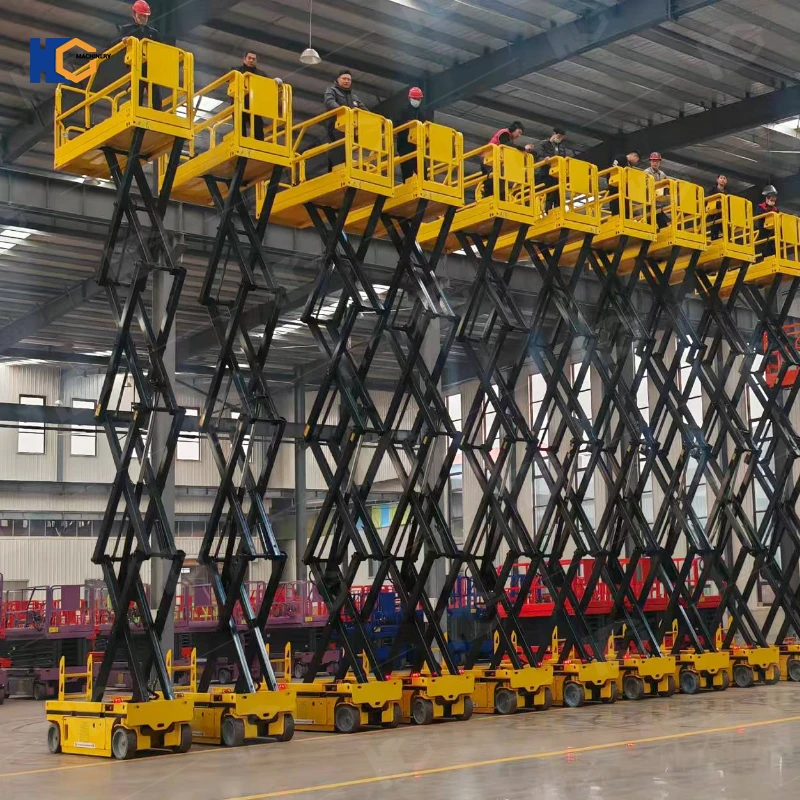
This image clearly shows a row of typical 20-40 foot towed mobile scissor lifts. The main body of the equipment is a striking yellow, with a robust structure and a top-mounted operating platform with guardrails. Its scissor arms are fully retracted for easy storage and towing, and it can be quickly moved by vehicle. Standard working heights range from 6-12 meters, and the platform typically has a load capacity of 250 kg, making it an efficient and flexible solution for high-altitude maintenance work in large spaces such as industrial plants and warehouses.
Maintenance and Lifecycle Cost Data
One reason towable scissor lifts remain popular is lifecycle cost.
Typical Maintenance Profile
- Hydraulic oil change: every 12–24 months
- Battery replacement: 3–5 years
- Hose inspection: annual
- Structural inspection: annual
Compared to boom lifts, maintenance costs are typically 30–50% lower over five years.
Why Buyers Choose Manufacturers, Not Just Machines
When sourcing a custom 20- to 40-ft towable mobile scissor lift manufacturer, buyers look beyond specs.
Key decision factors include:
- Engineering capability
- Custom response time
- Spare parts availability
- Technical documentation quality
- After-sales support
Price matters, but downtime costs more.
OEM and Private Label Opportunities
Many buyers are distributors or rental brands.
A capable manufacturer should support:
- Private labeling
- Custom paint schemes
- Branded manuals
- Market-specific compliance
OEM flexibility is a strong indicator of factory maturity.
Data-Driven Buying Advice
From aggregated rental fleet data:
- 20–30 ft models have the highest utilization rates
- 30–40 ft models generate higher per-day rental income
- Custom options reduce misuse and damage rates
Smart buyers match height range to actual job demand, not theoretical maximums.
Common Buyer Mistakes to Avoid
- Buying maximum height “just in case.”
- Ignoring transport regulations
- Overloading platforms
- Underestimating training needs
A well-matched lift outperforms an oversized one every time.
Final Thoughts: Practical Machines Win Markets
A custom 20- to 40-ft towable mobile scissor lift succeeds not because it is complex, but because it is adaptable, predictable, and cost-efficient.
For manufacturers, success lies in:
- Honest engineering
- Real customization
- Reliable support
For buyers, the smartest choice is rarely the tallest or cheapest lift—but the one that fits actual daily work.
In access equipment, practicality scales better than ambition.

Detailed Steps to a Custom Towable Mobile Scissor Lift from a Chinese Factory
Customizing a 20ft – to 40-ft Towable Mobile Scissor Lift from a Chinese manufacturer is straightforward when you follow the correct steps. A professional factory can design and produce a lift that matches your working height, platform size, safety requirements, and local certification standards.
Step 1: Define Your Requirements
Provide the factory with your basic specifications, including:
- Working height (20 ft, 26 ft, 32 ft, or 40 ft)
- Platform capacity (300 kg, 500 kg, or customized)
- Platform size
- Power source (AC, DC battery, diesel, or hybrid)
- Indoor or outdoor application
- Local voltage requirements
- Destination country
Step 2: Submit Application Details
Tell the manufacturer how the towable scissor lift will be used, such as:
- Building maintenance
- Warehouse operations
- Advertising installation
- Municipal projects
- Construction sites
This helps engineers recommend the most suitable configuration.
Step 3: Receive Technical Proposal
The factory will provide:
- Technical drawings
- Specification sheet
- Hydraulic system details
- Safety features
- Production lead time
- Quotation
Review all details carefully before approval.
Step 4: Confirm Custom Options
Choose optional features such as:
- Hydraulic outriggers
- Non-marking tires
- Self-leveling system
- Foldable guardrails
- Extension platform
- Remote control operation
- Anti-overload protection
- Emergency lowering system
Step 5: Sign Contract and Pay Deposit
Most Chinese factories require a 30%-50% deposit before production begins. The remaining balance is paid before shipment or in accordance with the agreed payment terms.
Step 6: Production and Quality Inspection
Manufacturing usually takes 15-30 working days. During production, the factory conducts inspections on:
- Steel structure welding
- Hydraulic system performance
- Electrical components
- Safety devices
- Load testing
Step 7: Packaging and Shipping
The lift is packed using:
- Steel-frame packaging
- Protective film wrapping
- Export-standard containers
A 20 ft container can typically load one or more units, depending on the model.
Step 8: Installation and After-Sales Support
After delivery, the manufacturer provides:
- User manuals
- Wiring diagrams
- Operation videos
- Spare parts support
- Online technical assistance
- Warranty service
By working directly with a Chinese factory, buyers can obtain a customized 20 ft – 40 ft Towable Mobile Scissor Lift at factory-direct pricing while ensuring the equipment meets local safety and operational requirements.
FAQ: Purchasing 20 ft to 40 ft Towable Mobile Scissor Lifts
1. What is the most common height range buyers choose?
The 20- to 30-ft range is the most popular among contractors and rental companies. These models cover most maintenance, lighting, and facility work while offering higher load capacity and easier transport. 30- to 40-ft models are usually chosen for industrial or exterior building applications that require additional height.
2. How much load capacity should I expect?
Most towable mobile scissor lifts in this range support 200 to 450 kg (440–990 lbs). Load capacity typically decreases slightly as working height increases. Buyers should always select capacity based on the tools and materials, not just the operator’s weight.
3. Can towable scissor lifts be customized for my market?
Yes. Reliable manufacturers can customize:
- Platform size and guardrails
- Outrigger configuration
- Electrical standards and control systems
- Paint color and private labeling
- Safety certifications such as CE or ANSI
Customization is especially common for distributors and rental fleets.
4. What power system is best: battery or AC electric?
Battery electric systems are the most common choice because they offer:
- Low noise
- Zero emissions
- Easy outdoor and indoor use
AC-powered models are typically selected for fixed-site or indoor-only environments with stable power access.
5. What vehicles are required to tow these lifts?
Most 20 ft to 40 ft towable scissor lifts can be towed by:
- Pickup trucks
- Light-duty commercial vehicles
Exact towing requirements depend on gross trailer weight, which should always be confirmed with the manufacturer.
6. How long does setup usually take on-site?
With proper training, setup usually takes 10 to 15 minutes, including outrigger deployment, leveling, and safety checks. Setup time is a key advantage over larger self-propelled equipment.
7. Are towable scissor lifts safe for outdoor use?
Yes, when used correctly. Safety depends on:
- Proper outrigger deployment
- Ground stability
- Wind speed limits
Manufacturers should provide clear wind ratings and safety interlocks to prevent operation without stabilization.
8. What certifications should I look for when importing?
This depends on your target market:
- CE for Europe
- ANSI for North America
- AS/NZS for Australia
Always confirm certification before ordering to avoid compliance issues.
9. What is the typical lead time for custom orders?
Standard models usually ship within 3–6 weeks.
Custom configurations may require 6–10 weeks, depending on design complexity and certification requirements.
10. Is it better to buy or rent towable scissor lifts?
For frequent or multi-site use, purchasing is often more cost-effective due to:
- Lower daily operating costs
- Minimal maintenance
- High resale value
Rental makes sense for short-term or occasional projects.
If you are looking for a cost-effective and high-quality towable mobile scissor lift with guaranteed quality, contact us today.
 Room 203, Second Floor, Building 8, Phase Ⅱ, Zhizao Town, Jibei Street, Jiyang District, Jinan City, Shandong Province