Cherry Picker vs Scissor Lift: Which is better?
When working at height, choosing the right aerial work platform can significantly impact productivity, safety, and operating costs. Two of the most popular elevated access machines are the cherry picker and the scissor lift. While both are designed to lift workers and materials above ground level, they serve different purposes and perform best in different environments.
For contractors, facility managers, warehouse operators, construction companies, and industrial maintenance teams, understanding the differences between a cherry picker and a scissor lift is essential before investing in equipment or renting a machine.
This comprehensive guide compares cherry pickers and scissor lifts in terms of design, working principles, lifting height, reach, stability, applications, safety, operating costs, and overall advantages to help you determine which machine is best for your project.
What Is a Cherry Picker?
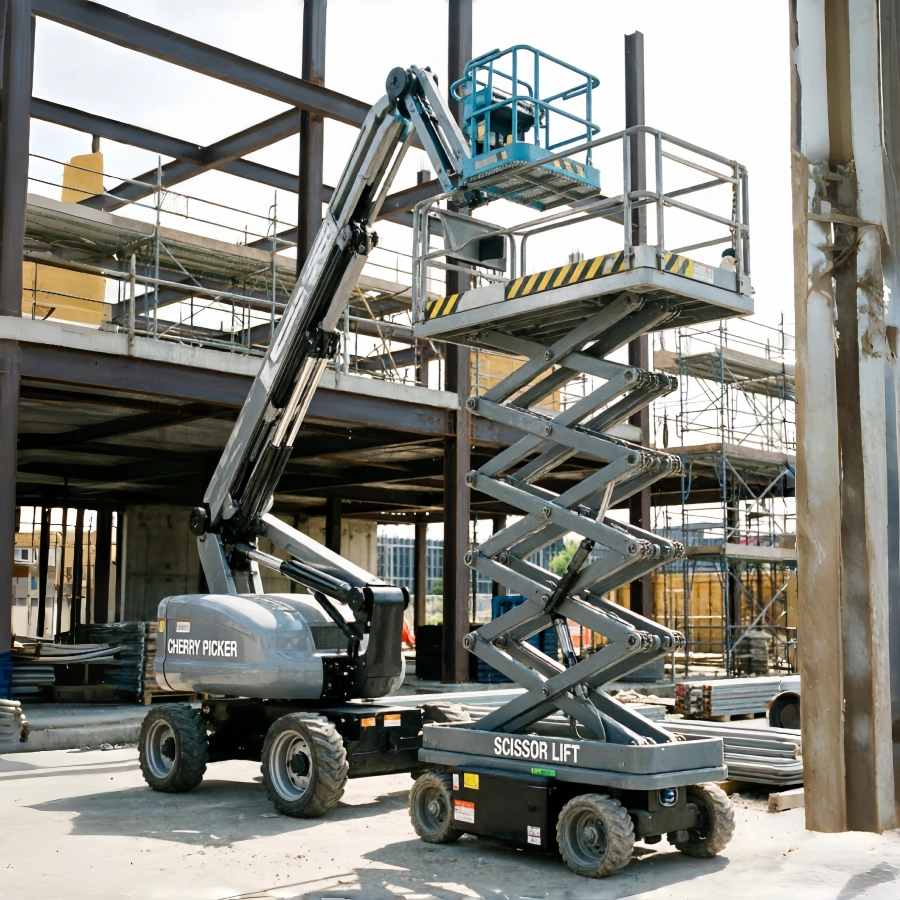
A cherry picker is an aerial work platform equipped with a hydraulic boom that extends vertically and horizontally. The machine gets its name from its original use in harvesting fruit from orchards.
Modern cherry pickers are widely used in construction, utility maintenance, telecommunications, tree care, and industrial inspections.
A typical cherry picker consists of:
- Chassis or base
- Rotating turntable
- Hydraulic boom arm
- Work platform or basket
- Control system
- Stabilization system
Unlike a scissor lift, a cherry picker can move around obstacles and access hard-to-reach areas.
Common Types of Cherry Pickers
Articulating Boom Lift
Features multiple joints that allow the boom to bend around obstacles.
Applications:
- Building maintenance
- Tree trimming
- Industrial plants
- Electrical installations
Telescopic Boom Lift
Uses a straight boom that extends outward.
Applications:
- High-rise construction
- Bridge maintenance
- Utility work
- Long-reach operations
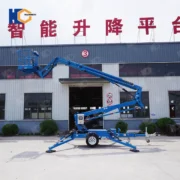
Towable Cherry Picker
Portable and economical.
Applications:
- Residential projects
- Landscaping
- Sign installation
Truck-Mounted Cherry Picker
Mounted on a commercial vehicle.
Applications:
- Streetlight maintenance
- Utility line repair
- Municipal projects
What Is a Scissor Lift?
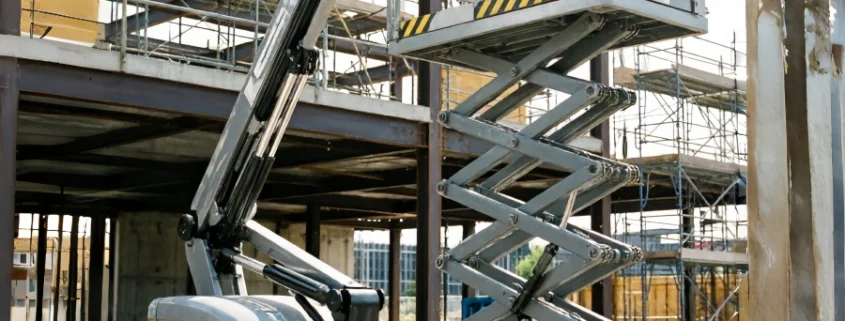
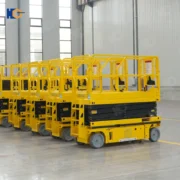
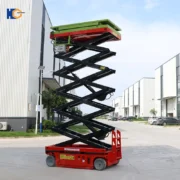
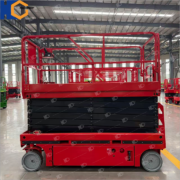
A scissor lift is a vertical lifting platform that raises workers and equipment using a crisscross support structure resembling a pair of scissors.
Unlike a cherry picker, a scissor lift only moves vertically and cannot provide horizontal outreach.
The machine consists of:
- Base frame
- Scissor mechanism
- Hydraulic or electric lifting system
- Platform deck
- Safety rails
- Control system
Scissor lifts are widely used for jobs requiring a large working platform and higher load capacity.
Common Types of Scissor Lifts
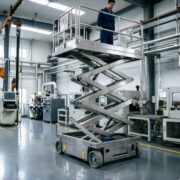
Electric Scissor Lift
Ideal for indoor use.
Benefits:
- Zero emissions
- Low noise
- Compact design
- Minimal maintenance
Applications:
- Warehouses
- Shopping malls
- Airports
- Factories
Hydraulic Scissor Lift
Uses hydraulic cylinders for lifting.
Applications:
- Industrial facilities
- Loading docks
- Maintenance operations
Rough Terrain Scissor Lift
Designed for outdoor environments.
Features:
- Four-wheel drive
- Large tires
- Enhanced stability
Applications:
- Construction sites
- Infrastructure projects
- Mining operations
Towable Mobile Scissor Lift
Portable and easy to transport.
Applications:
- Temporary projects
- Rental fleets
- Small contractors

Cherry Picker vs Scissor Lift: Key Differences
1. Working Range
The biggest difference between the two machines is their reach capability.
Cherry Picker
Provides:
- Vertical reach
- Horizontal outreach
- Over-obstacle access
- Multi-directional positioning
Workers can reach areas above roofs, around structures, and behind obstacles.
Scissor Lift
Provides:
- Vertical movement only
- No side outreach
- Straight-up access
Suitable when work is directly above the machine.
Winner
Cherry Picker
2. Platform Capacity
Load capacity is another major factor.
Cherry Picker
Typical platform capacity:
- 200–450 kg (440–990 lbs)
Usually accommodates:
- 1–2 workers
- Small tools
- Light materials
Scissor Lift
Typical platform capacity:
- 230–1,500 kg (500–3,300 lbs)
Can accommodate:
- Multiple workers
- Heavy tools
- Building materials
Winner
Scissor Lift
3. Working Height
Both machines offer significant elevation capabilities.
Cherry Picker Heights
Typical range:
- 10–58 meters
- 33–190 feet
Specialized models can exceed:
- 70 meters
- 230 feet
Scissor Lift Heights
Typical range:
- 6–18 meters
- 20–60 feet
Large rough terrain models:
- Up to 28 meters
- Around 92 feet
Winner
Cherry Picker
4. Stability
Scissor Lift
Scissor lifts have:
- Wide base
- Large platform
- Lower center of gravity
This provides excellent stability.
Cherry Picker
Boom extension shifts the center of gravity.
Advanced systems compensate through:
- Counterweights
- Stabilizers
- Load sensors
Winner
Scissor Lift
5. Maneuverability
Cherry Picker
Advantages:
- Reach over obstacles
- Navigate complex structures
- Access confined work areas
Articulating booms can bend around walls, pipes, and machinery.
Scissor Lift
Limited to vertical movement.
The machine must be positioned directly beneath the work area.
Winner
Cherry Picker
6. Workspace Size
Cherry Picker
Platform sizes are relatively small.
Usually designed for:
- One operator
- One assistant
Scissor Lift
Platforms are significantly larger.
Many models feature:
- Extendable decks
- Additional workspace
- Multiple operator capacity
Winner
Scissor Lift
7. Indoor Applications
Electric Scissor Lift
Excellent for:
- Warehouses
- Distribution centers
- Retail facilities
- Manufacturing plants
Advantages:
- Quiet operation
- Compact dimensions
- Zero emissions
Electric Cherry Picker
Can also be used indoors but generally requires more space.
Winner
Scissor Lift
8. Outdoor Applications
Cherry Picker
Ideal for:
- Utility maintenance
- Building exteriors
- Tree trimming
- Sign installation
Rough Terrain Scissor Lift
Suitable for:
- Construction
- Structural work
- Material handling
Winner
Cherry Picker
Cherry Picker Advantages
Exceptional Reach
The greatest advantage of a cherry picker is its ability to reach difficult locations.
Operators can work:
- Over rooftops
- Around machinery
- Across obstacles
- Along building facades
Greater Height Capacity
Boom lifts generally offer much higher working heights than scissor lifts.
Increased Flexibility
A single machine can perform a wide variety of access tasks.
Ideal for Complex Structures
Perfect for:
- Industrial plants
- Refineries
- Stadiums
- Utility networks
Cherry Picker Disadvantages
Higher Purchase Cost
Cherry pickers typically cost more than equivalent scissor lifts.
Lower Platform Capacity
Not suitable for transporting large quantities of materials.
More Complex Operation
Requires additional operator training.
Increased Maintenance
Boom mechanisms involve more hydraulic and mechanical components.
Scissor Lift Advantages
Higher Load Capacity
Can safely lift:
- Multiple workers
- Equipment
- Construction materials
Large Working Platform
Provides ample space for productivity.
Superior Stability
Ideal for precision work.
Lower Cost
Generally cheaper to purchase and maintain.
Easy Operation
Controls are straightforward and user-friendly.
Scissor Lift Disadvantages
No Horizontal Reach
Cannot access areas beyond the platform footprint.
Limited Height
Most models cannot match the working height of boom lifts.
Obstacle Restrictions
The machine must be positioned directly below the work area.

Typical Applications for Cherry Pickers
Telecommunications
Used for:
- Cell tower maintenance
- Antenna installation
- Communication infrastructure
Utility Services
Applications include:
- Power line repair
- Streetlight maintenance
- Electrical inspections
Tree Care
Ideal for:
- Pruning
- Tree removal
- Orchard maintenance
Construction
Common uses:
- Steel erection
- Exterior finishing
- High-rise work
Industrial Maintenance
Suitable for:
- Equipment inspection
- Plant maintenance
- Pipe installation
Typical Applications for Scissor Lifts
Warehousing
Used for:
- Inventory management
- Rack maintenance
- Facility upgrades
Manufacturing
Applications include:
- Production line maintenance
- Equipment servicing
- Lighting replacement
Commercial Buildings
Used for:
- HVAC maintenance
- Ceiling repairs
- Painting projects
Construction
Ideal for:
- Drywall installation
- Interior finishing
- Material lifting
Cost Comparison
Cherry Picker Price Range
Approximate factory prices:
| Type | Price Range |
|---|---|
| Towable Cherry Picker | $8,000–$25,000 |
| Articulating Boom Lift | $25,000–$120,000 |
| Telescopic Boom Lift | $35,000–$180,000 |
| Truck Mounted Cherry Picker | $40,000–$250,000+ |
Scissor Lift Price Range
Approximate factory prices:
| Type | Price Range |
|---|---|
| Mini Scissor Lift | $3,000–$8,000 |
| Electric Scissor Lift | $5,000–$25,000 |
| Hydraulic Scissor Lift | $8,000–$35,000 |
| Rough Terrain Scissor Lift | $15,000–$60,000 |
Scissor lifts generally offer a lower total ownership cost.
Safety Comparison
Both machines are safe when operated correctly.
Cherry Picker Safety Features
- Tilt sensors
- Load monitoring systems
- Emergency lowering
- Anti-entrapment devices
- Fall protection anchor points
Scissor Lift Safety Features
- Guardrails
- Emergency stop buttons
- Overload protection
- Pothole protection systems
- Automatic braking
Which Is Safer?
Neither machine is inherently safer.
Safety depends on:
- Operator training
- Proper maintenance
- Site conditions
- Compliance with regulations
How to Choose Between a Cherry Picker and a Scissor Lift
Choose a Cherry Picker if you need:
- Horizontal outreach
- Access around obstacles
- Extreme working heights
- Exterior building maintenance
- Utility and telecommunications work
Choose a Scissor Lift if you need:
- Large platform space
- High load capacity
- Indoor operation
- Stable working conditions
- Lower equipment costs
Cherry Picker vs Scissor Lift: Which One Wins?
There is no universal winner because each machine is designed for different working environments.
If your project requires reaching over obstacles, accessing difficult locations, or working at extreme heights, a cherry picker is the superior choice. Its flexibility and outreach capabilities make it indispensable for utility work, exterior construction, and industrial maintenance.
If your project involves lifting multiple workers, tools, and materials straight upward in a stable environment, a scissor lift is often the better investment. It offers greater platform capacity, lower operating costs, and improved productivity for indoor and vertical-access tasks.
For many contractors and equipment rental companies, maintaining both cherry pickers and scissor lifts provides the flexibility to handle a wide variety of projects efficiently, safely, and cost-effectively.
Productivity Comparison: Cherry Picker vs Scissor Lift
Productivity is one of the most important factors when selecting aerial access equipment. While both machines improve workplace efficiency compared to ladders and scaffolding, they do so in different ways.
Cherry Picker Productivity
A cherry picker increases productivity by reducing the time required to access difficult locations. Operators can quickly reposition the boom to reach multiple work points without moving the machine repeatedly.
Advantages include:
- Faster access to elevated areas
- Ability to work around obstacles
- Reduced setup time
- Increased flexibility on complex projects
For example, when installing signage on a commercial building, an articulating boom lift can move around architectural features and reach several installation points from a single position.
Scissor Lift Productivity
A scissor lift excels when workers need a large, stable workspace.
Advantages include:
- Larger platform for multiple workers
- Ability to carry tools and materials simultaneously
- Reduced trips up and down
- Improved efficiency for repetitive tasks
For warehouse maintenance, ceiling installation, or indoor construction, scissor lifts often outperform cherry pickers because workers have more room to operate.
Environmental Impact
As sustainability becomes increasingly important, many companies consider environmental performance when purchasing equipment.
Electric Cherry Pickers
Benefits include:
- Zero emissions
- Quiet operation
- Lower energy costs
- Reduced maintenance requirements
These models are commonly used in:
- Airports
- Shopping centers
- Hospitals
- Data centers
Electric Scissor Lifts
Electric scissor lifts are among the most environmentally friendly aerial work platforms available.
Benefits include:
- Battery-powered operation
- No exhaust emissions
- Low noise levels
- Reduced carbon footprint
They are ideal for indoor facilities where air quality is a priority.
Maintenance Requirements
Equipment maintenance directly affects uptime and long-term ownership costs.
Cherry Picker Maintenance
Cherry pickers typically require more frequent inspections because they contain:
- Boom sections
- Hydraulic hoses
- Articulating joints
- Rotation systems
- Stabilizers
Regular inspections should include:
- Hydraulic fluid levels
- Structural components
- Safety devices
- Platform controls
- Boom wear points
Scissor Lift Maintenance
Scissor lifts generally have fewer moving parts.
Routine maintenance includes:
- Lubricating scissor arms
- Battery inspections
- Hydraulic system checks
- Tire inspections
- Safety system testing
Because of their simpler structure, maintenance costs are usually lower than those of boom lifts.
Training Requirements
Proper operator training is essential for workplace safety.
Cherry Picker Training
Operators must understand:
- Load limits
- Boom positioning
- Stability calculations
- Wind limitations
- Emergency procedures
The learning curve is typically higher because the machine can move in multiple directions.
Scissor Lift Training
Training focuses on:
- Platform capacity
- Safe elevation procedures
- Surface conditions
- Emergency controls
Most operators can learn basic scissor lift operation more quickly than boom lift operation.
Industry-Specific Recommendations
Construction Industry
Best Choice: Combination of Both
Construction projects often require:
- Cherry pickers for exterior work
- Scissor lifts for interior finishing
Many contractors use both machines throughout different project phases.
Warehouse Industry
Best Choice: Scissor Lift
Reasons:
- Large platform
- High load capacity
- Indoor compatibility
- Excellent maneuverability in aisles
Telecommunications Industry
Best Choice: Cherry Picker
Reasons:
- Superior outreach
- High working height
- Access to towers and poles
- Ability to reach equipment above obstacles
Facility Maintenance
Best Choice: Depends on the Task
For ceiling repairs and lighting maintenance:
- Scissor lift
For exterior facade work:
- Cherry picker
Tree Care Industry
Best Choice: Cherry Picker
Reasons:
- Ability to move around branches
- Adjustable working angles
- Better access to elevated tree canopies
Return on Investment (ROI)
When purchasing aerial equipment, return on investment is a critical consideration.
Cherry Picker ROI
A cherry picker often delivers better ROI when:
- Projects require complex access
- High-reach applications are common
- Labor costs are high
- Frequent repositioning would otherwise be necessary
Although the initial investment is higher, productivity gains can justify the cost.
Scissor Lift ROI
A scissor lift often provides excellent ROI because of:
- Lower purchase price
- Reduced maintenance costs
- Lower training requirements
- Higher worker productivity on vertical-access tasks
For warehouses, factories, and indoor construction, scissor lifts typically offer the fastest payback period.
Future Trends in Aerial Work Platforms
The aerial lift industry is evolving rapidly.
Emerging technologies include:
- Lithium-ion battery systems
- Smart fleet management
- Remote diagnostics
- Telematics tracking
- Autonomous positioning assistance
- Advanced safety sensors
Both cherry pickers and scissor lifts are becoming more energy-efficient and connected through digital monitoring systems.
Manufacturers are also focusing on:
- Reduced emissions
- Lightweight designs
- Enhanced operator comfort
- Improved safety features
Frequently Asked Questions (FAQ)
Is a cherry picker safer than a scissor lift?
Neither is inherently safer. Safety depends on operator training, site conditions, maintenance quality, and adherence to safety regulations.
Can a scissor lift replace a cherry picker?
Only for applications requiring straight vertical access. If horizontal outreach or obstacle clearance is necessary, a cherry picker is the better option.
Which machine has a higher lifting capacity?
Scissor lifts generally have much higher platform capacities than cherry pickers.
Which is cheaper to buy?
Scissor lifts are typically less expensive to purchase and maintain.
Which is better for indoor work?
Electric scissor lifts are usually the preferred solution for indoor applications because of their compact design and large platform space.
Which is better for outdoor construction?
Cherry pickers are often preferred for outdoor construction because of their superior reach and versatility.
Final Verdict: Cherry Picker vs Scissor Lift
The choice between a cherry picker and a scissor lift ultimately depends on your work environment, height requirements, platform capacity needs, and budget.
A cherry picker is the best solution for projects requiring maximum reach, flexibility, and access around obstacles. It is the preferred machine for utility work, telecommunications, tree care, exterior construction, and industrial maintenance.
A scissor lift is the best solution for projects requiring a large work platform, high lifting capacity, superior stability, and lower operating costs. It is widely used in warehouses, manufacturing plants, commercial buildings, and indoor construction projects.
For rental companies, contractors, and industrial operators, owning both types of aerial work platforms often provides the greatest flexibility, allowing businesses to tackle a wider range of projects efficiently and safely. By understanding the strengths and limitations of each machine, buyers can make a more informed investment decision and maximize productivity while maintaining the highest safety standards.

Jnhclift (Huichuang Lift), based in Jinan, China, is a professional manufacturer of scissor lifts, home elevators, and lift platforms. With our own dedicated factory, we deliver high-quality, reliable lifting solutions tailored to meet diverse industrial and residential needs.


 Room 203, Second Floor, Building 8, Phase Ⅱ, Zhizao Town, Jibei Street, Jiyang District, Jinan City, Shandong Province
 +8615628811021
 admin@jnhclift.com