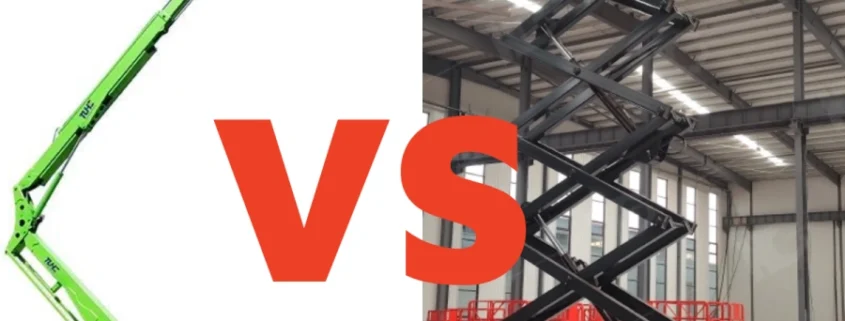
Scissor Lift vs Boom Lift: Which One Is Better for Your Job?
/in blog /by jnhcliftWhen you need to lift workers to an elevated position, choosing between a scissor lift vs boom lift is not simply a question of which machine can reach higher. The better choice depends on where you need to work, how you need to reach the work area, how much platform space you need, the required capacity, working environment, and project budget.
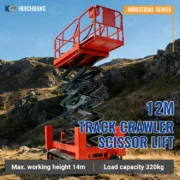
A scissor lift is primarily designed for vertical access. It raises a work platform directly upward and is particularly useful when workers need to operate above the machine.
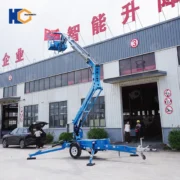
A boom lift provides a more flexible working envelope. Its boom can move the platform upward and, depending on the model, outward or over obstacles. This makes it valuable for building façades, construction sites, bridges, trees, industrial structures, and other locations where simply moving straight upward is not enough.
The simplest way to understand the difference is:
Need to go straight up? A scissor lift may be the better choice. Need to go up, out, or over an obstacle? A boom lift may be the better solution.
Scissor Lift vs Boom Lift at a Glance
| Feature | Scissor Lift | Boom Lift |
|---|---|---|
| Primary movement | Vertical | Vertical + horizontal outreach |
| Platform | Usually larger | Usually smaller |
| Horizontal reach | Limited/none | Available |
| Up-and-over access | No | Yes, depending on model |
| Indoor applications | Excellent for suitable models | Possible with suitable models |
| Outdoor construction | Suitable models available | Excellent |
| Workspace | Generally larger | Generally more compact |
| Typical strength | Vertical productivity | Flexible access |
| Best for | Direct overhead work | Hard-to-reach locations |
Neither machine is universally better. The right choice depends on the working envelope required by the job.
What Is a Scissor Lift?
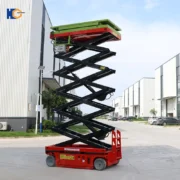
A scissor lift is a mobile elevating work platform that uses interconnected folding arms to raise a platform vertically.
The crossed arms open and close like a pair of scissors. A hydraulic cylinder or other lifting mechanism controls this movement.
The basic structure normally includes:
- Chassis
- Scissor arms
- Hydraulic or electric lifting system
- Work platform
- Guardrails
- Wheels or tracks
- Control system
- Safety devices
Because the platform generally stays above the machine’s base while it rises, a scissor lift is particularly useful when the work area is directly overhead.
Common applications include:
- Warehouse lighting
- Ceiling installation
- Electrical maintenance
- HVAC work
- Factory maintenance
- Shopping mall maintenance
- Construction finishing
- Indoor facility management
Electric scissor lifts are especially popular for suitable indoor applications because battery-powered models produce no direct exhaust emissions during operation.

What Is a Boom Lift?
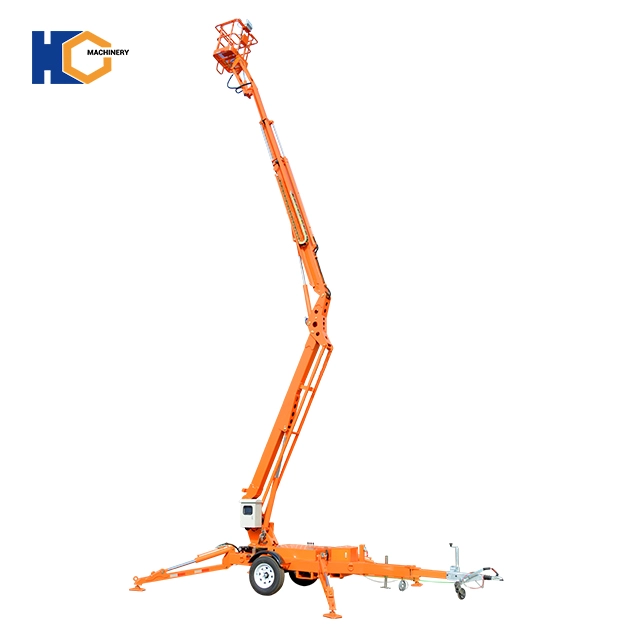
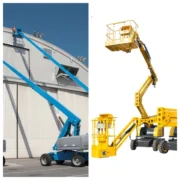
A boom lift is an aerial work platform equipped with an extending or articulating boom.
Instead of simply raising the platform vertically, the boom allows the operator to reach areas that may be horizontally offset from the machine.
Two common configurations are:
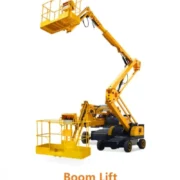
Articulating Boom Lift
An articulating boom has multiple hinged sections.
Its joints allow the platform to move around obstacles and reach elevated positions that are difficult to access from directly underneath.
It can be useful for:
- Building maintenance
- Industrial facilities
- Tree work
- Construction
- Structural maintenance
- Work around pipes and machinery
Telescopic Boom Lift
A telescopic boom extends outward in a relatively straight line.
It is commonly selected when long horizontal reach and high working height are more important than maneuvering around obstacles.
This makes it popular for:
- Large construction sites
- Steel structures
- Industrial projects
- Outdoor maintenance
- Long-reach applications
Scissor Lift vs Boom Lift: The Biggest Difference
The most important difference is how the platform reaches the work area.
A scissor lift primarily moves:
UP ↕ DOWN
A boom lift can move:
UP ↕ + OUT ↔
This distinction sounds simple, but it determines which machine is appropriate for many real-world applications.
Imagine a warehouse ceiling light directly above the machine.
A scissor lift can raise the platform directly to the light.
Now imagine an exterior building wall where the work location is 8 meters above the ground and several meters away from where the machine can safely position itself.
A boom lift can extend toward the wall.
This is why choosing equipment based only on maximum height can lead to the wrong purchase.
The better question is:
Where does the worker need to be when the work starts?
1. Vertical Movement vs Horizontal Outreach
Scissor Lift
A scissor lift is optimized for vertical movement.
The machine moves the platform upward while maintaining a relatively compact working envelope.
This makes it suitable for work directly above the machine.
Boom Lift
A boom lift offers a larger working envelope.
Depending on its design, the platform can:
- Move upward
- Extend outward
- Articulate around obstacles
- Reach over structures
Therefore, boom lifts have a major advantage when the work location cannot be reached by moving vertically alone.
2. Scissor Lift vs Boom Lift Height
Maximum height is an important specification, but it should not be considered by itself.
Buyers should compare:
- Platform height
- Working height
- Horizontal outreach
- Up-and-over reach
A scissor lift may provide substantial vertical working height but little or no horizontal outreach.
A boom lift may provide a similar vertical height while also offering significant horizontal reach.
For example, if the job requires workers to reach a high ceiling directly above the equipment, a scissor lift can be very effective.
If the job requires workers to reach a high façade from several meters away, the boom lift becomes much more attractive.
Also remember:
Platform height is not the same as working height.
Manufacturers may use different definitions in product specifications, so buyers should ask for both measurements when comparing equipment.
3. Platform Size
Platform size is another major difference.
Scissor lifts commonly provide a relatively large rectangular work platform.
This can be useful when workers need:
- Multiple operators
- Hand tools
- Electrical equipment
- Installation components
- Maintenance equipment
within the permitted rated load.
A boom lift usually places greater emphasis on reach and maneuverability than platform area.
Therefore:
Choose a scissor lift when workspace on the platform is a priority.
Choose a boom lift when reaching the work location is the priority.
The rated platform capacity must always be considered when determining how many people and how much equipment can be carried.
4. Load Capacity
Scissor lifts often have an advantage for applications requiring a relatively large working platform and substantial permitted platform load.
However, it would be inaccurate to say that every scissor lift has a higher capacity than every boom lift.
Specifications vary considerably between models.
The correct calculation is:
Required capacity = operators + tools + permitted equipment/materials
Buyers should compare the manufacturer’s rated platform capacity rather than relying on assumptions based on equipment type.
If a project requires two workers, tools, and installation materials, the total weight must remain within the rated capacity of the selected machine.
5. Maneuverability
The two machines have different kinds of maneuverability.
A scissor lift generally has a simpler working envelope because its platform primarily moves vertically.
This can make it convenient in:
- Warehouses
- Factories
- Shopping malls
- Exhibition halls
- Large indoor rooms
A boom lift offers more movement options but also requires greater awareness of:
- Boom position
- Swing radius
- Horizontal outreach
- Overhead obstacles
- Nearby structures
In other words, a boom lift provides more reach flexibility, while a scissor lift often provides simpler positioning for straight-up work.
6. Indoor vs Outdoor Use
For suitable indoor applications, an electric scissor lift is often a strong option.
Its advantages can include:
- Low operating noise
- No direct exhaust emissions during operation
- Compact dimensions
- Large platform
- Good vertical access
Typical applications include:
- Warehouse maintenance
- Factory lighting
- Shopping mall maintenance
- Hotel facilities
- Indoor electrical work
- Exhibition center maintenance
Boom lifts can also be used indoors, but the machine must be appropriate for the available space.
Important considerations include:
- Overall machine width
- Turning radius
- Floor loading
- Platform dimensions
- Ceiling clearance
- Boom movement
- Indoor ventilation requirements where applicable
For outdoor construction, boom lifts often become more attractive because the job may require horizontal outreach or up-and-over access.
7. Stability and Working Envelope
It is tempting to ask:
Which is more stable, a scissor lift or a boom lift?
There is no universal answer.
Both machines are engineered around specific stability requirements, but their working envelopes are different.
A scissor lift generally keeps the platform relatively close to the vertical centerline of the machine.
A boom lift can extend the platform outward, changing the machine’s load distribution and working geometry.
This means boom lift operation requires careful consideration of:
- Machine position
- Boom angle
- Outreach
- Load
- Ground conditions
- Wind
- Manufacturer limitations
A scissor lift also has significant hazards if improperly operated.
Potential problems include:
- Overloading
- Uneven ground
- Excessive wind
- Driving where prohibited
- Improper stabilization
- Collision
- Unauthorized modifications
The machine type alone does not determine safety. Correct selection, inspection, training, setup, and operation are equally important.
8. Scissor Lift vs Boom Lift Cost
Purchase price is only one part of equipment cost.
A proper comparison should consider:
Initial Purchase
Scissor lifts are often available at a lower purchase price than comparable boom equipment, although this depends heavily on specifications.
Rental
For short-term projects, rental can make more economic sense than purchasing.
Transportation
Larger boom lifts can require specialized transportation.
Energy
Electric scissor lifts may have attractive operating costs for suitable indoor applications, while diesel equipment is commonly selected for demanding outdoor work.
Maintenance
Both types require scheduled inspection and maintenance.
Productivity
This is often overlooked.
A more expensive boom lift may save labor time if it allows workers to reach difficult locations without repeatedly repositioning the machine.
Therefore:
The cheapest machine to purchase is not always the cheapest machine to complete the job.
9. Productivity: Which One Gets the Job Done Faster?
Productivity depends heavily on the work itself.
A scissor lift can be highly productive when workers need to cover a broad overhead area.
For example, installing lighting across a large warehouse ceiling may be efficient because the platform provides workspace for operators and tools.
A boom lift can be more productive when the work locations are scattered vertically and horizontally.
For example, maintaining several sections of an industrial structure may be faster with an articulating boom lift because the operator can reach around structures rather than constantly repositioning the chassis.
The best machine is therefore the one that minimizes unnecessary:
- Repositioning
- Setup
- Travel
- Manual material handling
- Access time
10. Maintenance Requirements
Both machine categories require regular inspection and maintenance.
Scissor Lift Maintenance
Typical inspection points include:
- Hydraulic cylinders
- Hydraulic hoses
- Scissor-arm pivots
- Batteries
- Wheels
- Brakes
- Platform controls
- Safety switches
Boom Lift Maintenance
Additional attention may be required for:
- Boom sections
- Pivot points
- Hydraulic cylinders
- Rotation systems
- Platform controls
- Drive system
- Tires
- Hydraulic hoses
Because boom lifts contain more complex articulated or telescopic structures, their maintenance requirements can be more involved depending on the model.
Scissor Lift vs Articulating Boom Lift
This is one of the most useful comparisons for buyers.
An articulating boom lift is designed to reach up and over.
It is useful when:
- Buildings block direct access
- Machinery creates obstacles
- The work area is behind a structure
- The platform must move around pipes or equipment
A scissor lift cannot normally provide the same up-and-over capability.
Therefore:
Straight vertical access → Scissor Lift
Up-and-over access → Articulating Boom Lift
Scissor Lift vs Telescopic Boom Lift
A telescopic boom lift is particularly useful when long, relatively straight outreach is required.
It can be suitable for:
- High construction work
- Large structures
- Industrial facilities
- Outdoor projects
- Long-reach applications
A scissor lift is more appropriate when the work area is directly above the machine and a larger platform is valuable.
This makes the comparison less about “which machine is better” and more about which working envelope matches the project.
Which Is Better for Indoor Work?
For many indoor maintenance tasks, a suitable electric scissor lift is an excellent choice.
It can provide:
- Compact vertical access
- Large platform space
- Low noise
- No direct exhaust emissions during operation
- Efficient movement around suitable indoor areas
However, if the indoor job requires reaching around a large structure or machinery, a compact boom lift may still be preferable.
Always consider the building’s:
- Door dimensions
- Floor capacity
- Ceiling height
- Aisle width
- Turning space
before selecting equipment.
Which Is Better for Construction?
Construction sites often benefit from boom lifts when the work requires:
- Exterior access
- Horizontal outreach
- Up-and-over reach
- High façades
- Obstacles
- Large outdoor working areas
Scissor lifts remain useful for:
- Interior construction
- Ceiling work
- Electrical installation
- Drywall installation
- HVAC work
- Finishing
A large construction project may actually require both types rather than choosing one.
Scissor Lift vs Boom Lift Safety
Neither equipment type should be considered automatically safe simply because it is designed for professional use.
Operators should be trained and follow the manufacturer’s instructions and applicable local requirements.
Common hazards include:
Scissor Lift
- Falls
- Tip-over
- Overloading
- Uneven surfaces
- Overhead hazards
- Electrical contact
Boom Lift
- Falls
- Tip-over
- Crushing
- Collision
- Swing-radius hazards
- Overhead hazards
- Electrical contact
- Wind exposure
In the United States, OSHA provides safety requirements and guidance relevant to elevated work platforms, while the ANSI A92 series covers important requirements for mobile elevating work platforms, including design and safe-use considerations. Requirements can vary according to equipment and application.
Safety should therefore be part of equipment selection—not something considered after the machine arrives at the job site.
Which One Should You Use?
A simple decision guide can make the choice easier.
Choose a Scissor Lift If:
- You mainly need vertical access.
- The work is directly above the machine.
- You need a relatively large platform.
- Several workers need platform space where permitted.
- You are performing indoor maintenance.
- You need to carry tools and permitted equipment.
- Horizontal outreach is not necessary.
Choose a Boom Lift If:
- You need horizontal outreach.
- You need to work around obstacles.
- The work location is offset from the machine.
- You need up-and-over access.
- You are working on building façades.
- You need flexible positioning at height.
- The project is primarily outdoor construction.
Choose an Articulating Boom Lift If:
The key requirement is getting around obstacles.
Choose a Telescopic Boom Lift If:
The key requirement is long, relatively straight horizontal reach.
Scissor Lift vs Boom Lift for Different Applications
| Application | Recommended Equipment |
|---|---|
| Warehouse lighting | Scissor lift |
| Indoor ceiling installation | Scissor lift |
| Shopping mall maintenance | Electric scissor lift |
| Factory overhead maintenance | Scissor lift |
| Large indoor work area | Scissor lift |
| Building façade maintenance | Boom lift |
| Tree trimming | Boom lift |
| Bridge maintenance | Boom lift |
| Work around obstacles | Articulating boom lift |
| Long outdoor reach | Telescopic boom lift |
| Straight vertical access | Scissor lift |
| Up-and-over access | Boom lift |
These are general recommendations. The actual choice should be based on the machine’s specifications, worksite conditions, and manufacturer’s operating limitations.
Should You Rent or Buy a Scissor Lift or Boom Lift?
Rental can make sense when:
- The project is short-term.
- Equipment usage is occasional.
- You want to avoid long-term maintenance.
- Different projects require different machines.
Purchasing can make more sense when:
- The equipment is used frequently.
- You operate a rental fleet.
- You have regular maintenance requirements.
- The equipment will be used for several years.
- You need customized specifications.
For contractors, fleet owners, and equipment distributors, OEM purchasing can provide another option: customizing the machine around the actual application instead of adapting the project to an off-the-shelf configuration.
How to Choose the Right Lift
Before requesting a quotation, prepare these specifications:
- Required working height
- Required platform height
- Horizontal outreach, if any
- Rated platform capacity
- Platform dimensions
- Indoor or outdoor application
- Ground conditions
- Overall machine dimensions
- Power source
- Mobility requirements
- Required safety features
- Destination-market requirements
This information allows a manufacturer to recommend a more appropriate configuration.

Final Verdict: Scissor Lift or Boom Lift?
So, which is better: a scissor lift or a boom lift?
The answer depends on the job.
A scissor lift is generally the stronger choice when you need a large working platform and primarily vertical access. It is especially useful for warehouses, factories, shopping malls, indoor construction, lighting, electrical work, and maintenance.
A boom lift becomes the better choice when you need horizontal outreach, up-and-over access, or the ability to position workers around obstacles. Articulating boom lifts are particularly useful for complex access, while telescopic boom lifts are valuable when long, relatively straight reach is required.
The best decision is therefore not:
“Which machine is better?”
It is:
“Which machine provides the working envelope my job actually requires?”
If the answer is straight up, start with a scissor lift.
If the answer is up, out, or over, start with a boom lift.
And if a project involves both types of work, using the two machines strategically may deliver better productivity than forcing one machine to do a job it was never designed to do.

Jnhclift (Huichuang Lift), based in Jinan, China, is a professional manufacturer of scissor lifts, home elevators, and lift platforms. With our own dedicated factory, we deliver high-quality, reliable lifting solutions tailored to meet diverse industrial and residential needs.
 Room 203, Second Floor, Building 8, Phase Ⅱ, Zhizao Town, Jibei Street, Jiyang District, Jinan City, Shandong Province
 +86 152 5319 3706
 admin@jnhclift.com