Posts

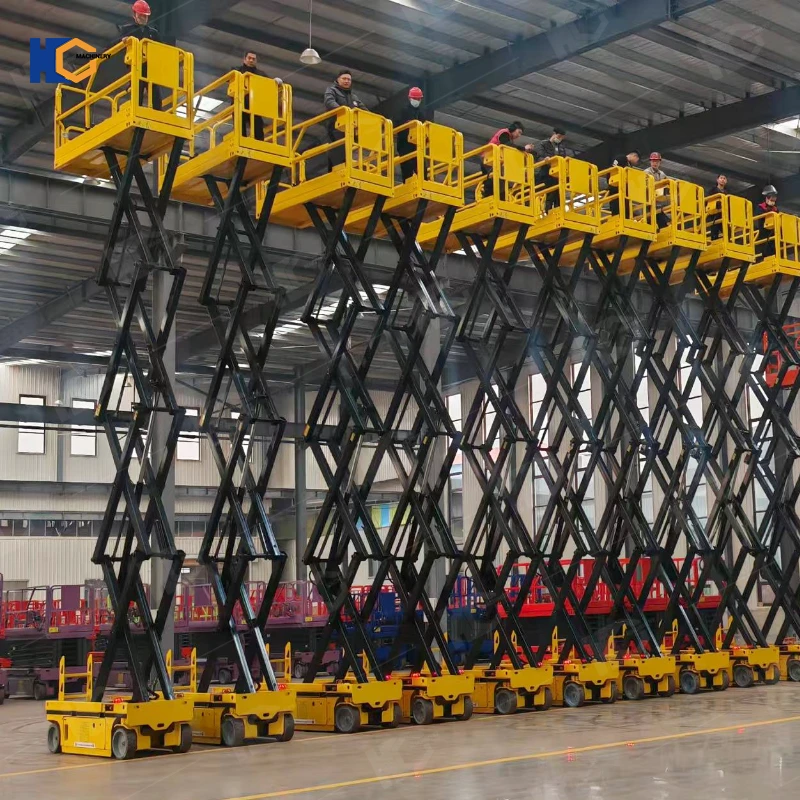
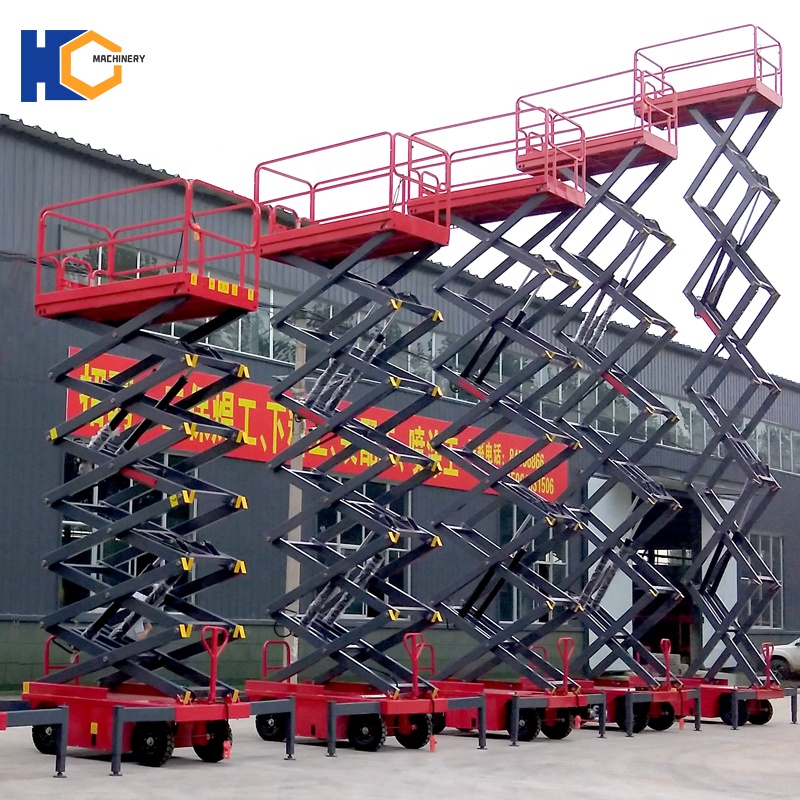
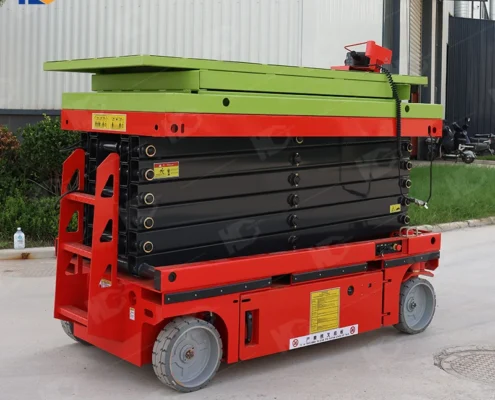
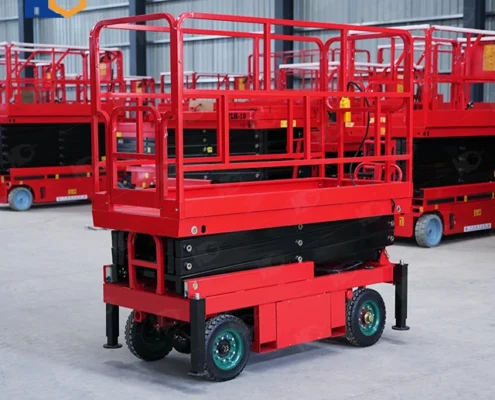
12m Rough Terrain Crawler Scissor Lift

How Does a Scissor Lift Work?

How Does a Scissor Lift Work? Complete Guide to Types, Components, Working Principle, Operation Steps, and Maintenance

A scissor lift is one of the most widely used aerial work platforms in construction, warehousing, logistics, manufacturing, and building maintenance. It provides a safe and stable elevated working platform for workers and tools, allowing vertical access to heights that would otherwise be difficult or dangerous to reach.

Whether used indoors in a warehouse or outdoors on a construction site, scissor lifts are valued for their stability, lifting capacity, and efficiency. But many users still ask a simple question: How does a scissor lift actually work?

This article explains everything in detail, including what a scissor lift is, its classifications, main components, working principle, operating steps, and maintenance methods.
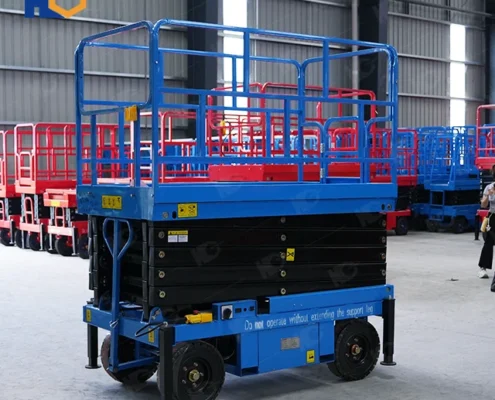

What Is a Scissor Lift?

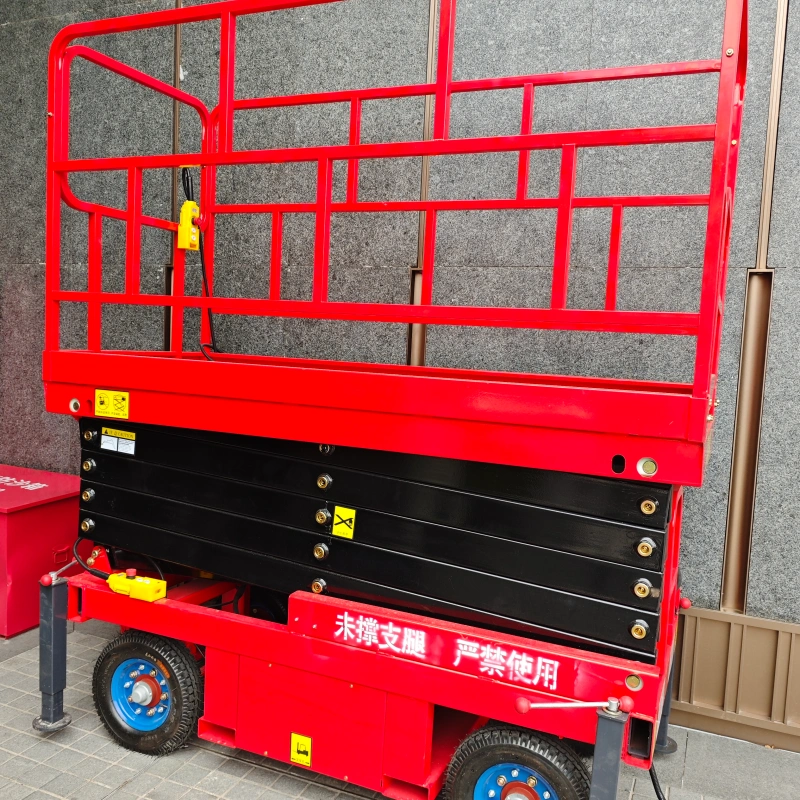
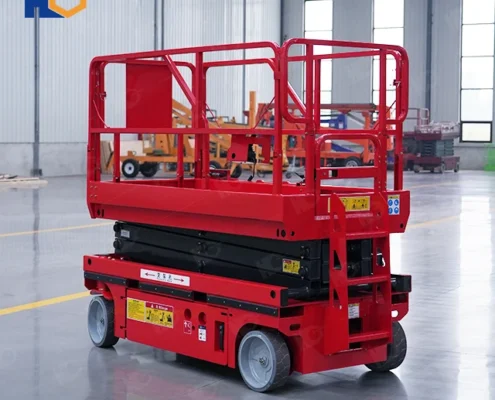
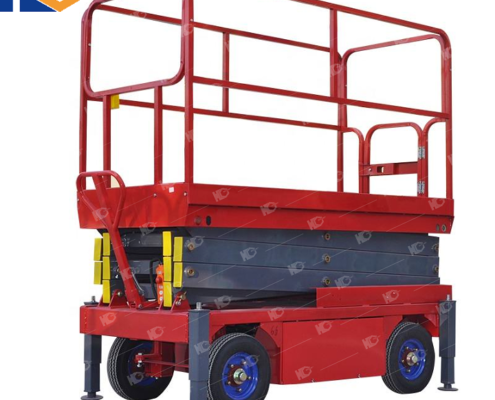
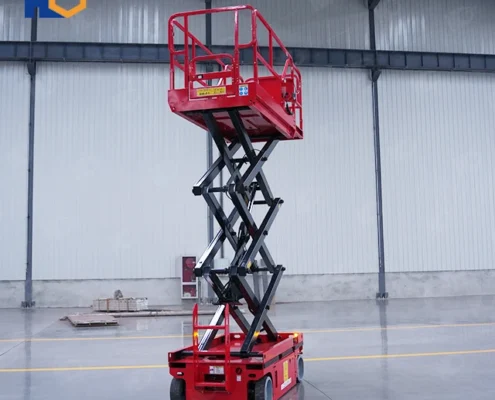
A scissor lift is a type of mechanical lifting platform that raises and lowers a working platform using a set of linked, folding supports arranged in a crisscross “X” pattern, resembling scissors.
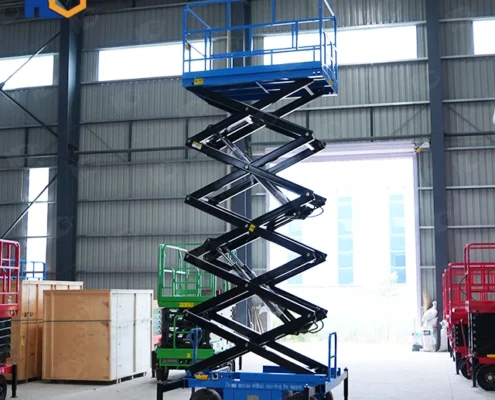
When hydraulic pressure or electric power is applied, the “scissor arms” extend upward, pushing the platform vertically. When the pressure is released, the arms collapse, and the platform descends smoothly.
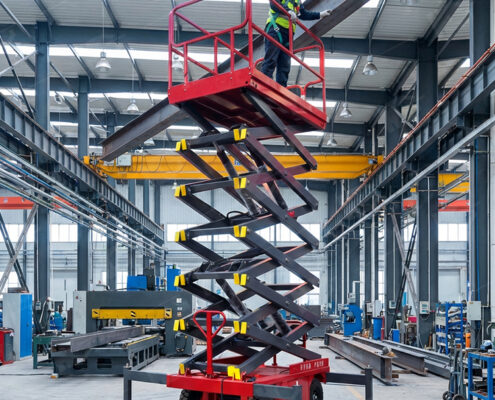
Scissor lifts are designed to provide:

  • Stable vertical lifting
  • Large working platforms
  • High load capacity
  • Safe operation at height

They are commonly used for tasks such as:

  • Building maintenance
  • Warehouse stocking
  • Electrical installation
  • HVAC system repair
  • Painting and decoration
  • Industrial equipment servicing


Types of Scissor Lifts

Scissor lifts come in different designs depending on power source, mobility, and working environment.

1. Mobile Scissor Lift

  • Manually moved or towable
  • Suitable for light-duty indoor work
  • Lower cost and simple structure

2. Self-Propelled Scissor Lift

  • Electric drive system allows movement while elevated (depending on the model)
  • High efficiency and productivity
  • Common in warehouses and factories

3. Hydraulic Scissor Lift

  • Uses hydraulic cylinders for lifting
  • Smooth and stable motion
  • Widely used in industrial applications

4. Electric Scissor Lift

  • Battery-powered
  • Zero emissions and low noise
  • Ideal for indoor environments

5. Diesel Scissor Lift

  • Powered by diesel engine
  • Suitable for outdoor rough terrain
  • High lifting capacity

6. Rough Terrain Scissor Lift

  • Equipped with 4WD, large tires, and a strong chassis
  • Used in construction sites and on uneven ground

7. Stationary Scissor Lift Table

  • Fixed installation
  • Used for material handling in factories and logistics centers

Main Components of a Scissor Lift

A scissor lift consists of several key systems that work together to ensure safe and stable operation.

1. Scissor Mechanism (Arm Structure)

The core structure consists of steel cross arms arranged in an X-shape.

  • Made of high-strength steel
  • Provides vertical lifting motion
  • Ensures stability under heavy load

2. Hydraulic System

This is the “power source” of most scissor lifts.

Includes:

  • Hydraulic pump
  • Hydraulic cylinder
  • Oil tank
  • Control valves
  • Hydraulic hoses

The hydraulic system controls lifting and lowering.


3. Platform (Work Deck)

The upper surface where workers stand.

Features:

  • Anti-slip surface
  • Safety guardrails
  • Extension deck (on some models)
  • Load capacity markings

4. Power System

Depending on model:

  • Battery (electric lifts)
  • Diesel engine (outdoor lifts)
  • AC electric power (stationary lifts)

5. Control System

Operators control the lift using:

  • Ground control panel
  • Platform control box
  • Joystick or buttons
  • Emergency stop switch

6. Chassis and Wheels

Provides mobility and stability.

  • Heavy-duty steel frame
  • Solid or foam-filled tires
  • Steering system (on self-propelled models)

7. Safety Systems

Important safety components include:

  • Overload protection sensor
  • Tilt sensor
  • Emergency lowering system
  • Safety locking valves
  • Pothole protection system


How Does a Scissor Lift Work? (Working Principle)

The working principle of a scissor lift is based on hydraulic force and mechanical leverage.

When the hydraulic system is activated, pressure pushes a cylinder piston upward. This motion forces the scissor arms to unfold, lifting the platform vertically.

Step-by-Step Working Process

Step 1: Power Activation

The operator turns on the system using the control panel.

  • Battery supplies electricity (electric model)
  • Engine starts (diesel model)

Step 2: Hydraulic Pump Activation

The hydraulic pump begins to pressurize hydraulic oil.

This creates force inside the system.


Step 3: Hydraulic Cylinder Extension

Pressurized oil enters the hydraulic cylinder.

The piston inside the cylinder extends outward.


Step 4: Scissor Arm Expansion

The extended cylinder pushes the lower scissor arms outward.

The “X-shaped” structure begins to unfold.


Step 5: Vertical Lifting

As the arms expand:

  • The platform rises vertically
  • The structure remains balanced
  • Load is evenly distributed

Step 6: Height Locking

At the desired height:

  • Hydraulic valves lock pressure
  • Platform remains stable
  • Safety system activates

Step 7: Lowering Process

To descend:

  • Hydraulic valve opens
  • Oil flows back into reservoir
  • Scissor arms fold slowly
  • Platform lowers safely

Simple Physics Behind Scissor Lift Operation

The scissor lift works mainly on:

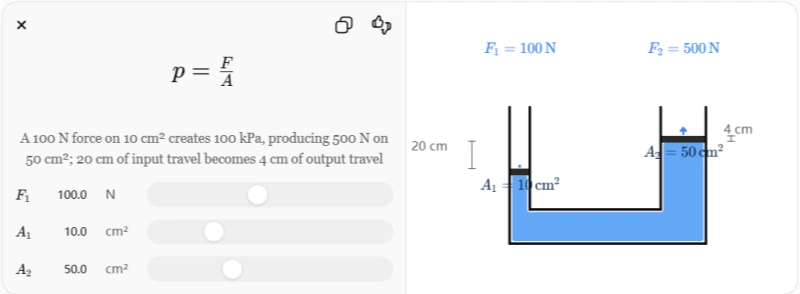
  • Hydraulic pressure (Pascal’s Law)
  • Mechanical leverage (scissor arms)

In simple terms:

  • Small force from hydraulic pump
  • Translates into large lifting force
  • Distributed through scissor structure

This principle allows heavy loads to be lifted smoothly with relatively small input force.

Operating Steps of a Scissor Lift

1. Pre-Operation Inspection

Before use:

  • Check hydraulic oil level
  • Inspect tires and wheels
  • Test emergency stop
  • Ensure platform guardrails are secure
  • Check for oil leaks

2. Start the Machine

  • Turn on power switch
  • Activate control panel
  • Ensure no warning indicators

3. Position the Lift

  • Move lift to stable ground
  • Engage brakes or stabilizers
  • Ensure area is level

4. Raise the Platform

  • Operate lift control lever
  • Increase height gradually
  • Avoid sudden movements

5. Work at Height

  • Maintain weight limits
  • Avoid overloading platform
  • Keep body inside guardrails

6. Lower the Platform

  • Slowly release control valve
  • Ensure smooth descent
  • Avoid rapid lowering

7. Shutdown

  • Turn off power
  • Park in designated area
  • Recharge battery (electric models)

Maintenance Methods for Scissor Lifts

Proper maintenance ensures safety, performance, and long service life.


1. Daily Maintenance

  • Check hydraulic oil level
  • Inspect for leaks
  • Clean platform surface
  • Test control buttons

2. Weekly Maintenance

  • Lubricate scissor arms
  • Check tire pressure or condition
  • Inspect bolts and fasteners

3. Monthly Maintenance

  • Check hydraulic cylinder performance
  • Inspect battery condition
  • Test safety sensors

4. Hydraulic System Maintenance

  • Replace hydraulic oil periodically
  • Clean hydraulic filters
  • Check valve operation
  • Prevent oil contamination

5. Electrical System Maintenance

  • Inspect wiring connections
  • Check battery health
  • Ensure controller is functioning properly

6. Structural Maintenance

  • Inspect scissor arms for cracks
  • Check weld points
  • Tighten loose bolts

7. Safety System Maintenance

  • Test emergency stop system
  • Check overload sensors
  • Verify tilt alarm system

Common Problems and Solutions

1. Lift Not Raising

Possible causes:

  • Low hydraulic oil
  • Pump failure
  • Electrical issue

Solution:

  • Check oil level
  • Inspect pump system
  • Test power supply

2. Slow Lifting Speed

  • Air in hydraulic system
  • Worn seals
  • Low battery voltage

3. Platform Not Stable

  • Uneven ground
  • Overload condition
  • Loose mechanical parts

4. Hydraulic Leakage

  • Damaged seals
  • Cracked hoses
  • Loose fittings

Advantages of Scissor Lifts

  • High stability at height
  • Large working platform
  • High load capacity
  • Simple operation
  • Suitable for indoor and outdoor use
  • Cost-effective maintenance

Conclusion

A scissor lift is a highly efficient and safe aerial work platform that operates using a combination of hydraulic pressure and a scissor-type mechanical structure. By extending and folding its X-shaped arms, it provides smooth vertical lifting for workers and equipment.

Understanding how a scissor lift works—including its types, components, working principle, operation steps, and maintenance methods—helps operators use the machine safely and efficiently while extending its service life.

From warehouse maintenance to construction projects, scissor lifts remain one of the most reliable and widely used lifting solutions in modern industry.

How Much Does a Scissor Lift Weigh?

Scissor lifts are among the most widely used aerial work platforms in construction, warehousing, manufacturing, facility maintenance, and logistics. They provide a stable vertical lifting solution for workers and equipment while offering higher platform capacities than most boom lifts.

One of the most common questions buyers, renters, and transportation companies ask is: How much does a scissor lift weigh?

The answer depends on the type, platform height, lifting capacity, power source, and intended application. Compact indoor scissor lifts may weigh less than 2,000 pounds, while large rough terrain models can exceed 20,000 pounds.

Understanding scissor lift weight is important for transportation planning, jobsite safety, floor loading calculations, and equipment selection.

In this guide, we will explore the weight ranges of different scissor lift types, compare their applications, and explain how to choose the right machine for your project.

Why Scissor Lift Weight Matters

The weight of a scissor lift affects several important factors:

Transportation Requirements

Heavier lifts require:

  • Larger trailers
  • Higher towing capacity
  • Special transportation permits in some regions

Floor Load Capacity

Indoor projects often have floor loading restrictions.

Examples include:

  • Shopping malls
  • Warehouses
  • Data centers
  • Aircraft hangars
  • Manufacturing facilities

Jobsite Accessibility

Lightweight machines can be moved into elevators and transported between floors more easily.

Ground Pressure

Heavy rough-terrain lifts exert greater pressure on soft ground, requiring stable surfaces.

Average Scissor Lift Weight by Platform Height

The following chart provides general weight ranges for common scissor lift heights.

Working HeightPlatform HeightAverage Weight
19 ft13 ft2,000–3,000 lbs
26 ft20 ft4,000–5,500 lbs
32 ft26 ft5,500–7,000 lbs
40 ft34 ft7,000–10,000 lbs
50 ft44 ft10,000–15,000 lbs
60 ft54 ft15,000–20,000 lbs

As platform height increases, machine weight rises significantly because larger structures require stronger frames, hydraulic systems, and stabilization components.

Main Types of Scissor Lifts and Their Weight Ranges

Scissor lifts are available in several categories, each designed for specific environments and lifting requirements.

1. Electric Scissor Lift

Electric scissor lifts are the most common indoor aerial work platforms.

They are powered by rechargeable batteries and produce zero emissions.

Typical Weight Range

Platform HeightWeight
13 ft2,000–3,000 lbs
20 ft4,000–5,000 lbs
26 ft5,000–7,000 lbs
32 ft6,000–8,000 lbs

Advantages

  • Zero emissions
  • Quiet operation
  • Compact design
  • Low maintenance costs

Applications

  • Warehouses
  • Retail stores
  • Airports
  • Factories
  • Office buildings

Most Popular Sizes

  • 19 ft electric scissor lift
  • 26 ft electric scissor lift
  • 32 ft electric scissor lift

These machines are often chosen for indoor maintenance and facility management.

2. Rough Terrain Scissor Lift

Rough terrain scissor lifts are built for outdoor environments and uneven ground conditions.

They feature:

  • Four-wheel drive
  • Large off-road tires
  • High ground clearance
  • Powerful diesel engines

Typical Weight Range

Platform HeightWeight
26 ft6,000–8,000 lbs
33 ft8,000–10,000 lbs
40 ft10,000–14,000 lbs
50 ft14,000–18,000 lbs

Advantages

  • Excellent stability
  • High lifting capacity
  • Outdoor performance
  • Strong traction

Applications

  • Construction sites
  • Infrastructure projects
  • Industrial plants
  • Wind farms

Compared with electric scissor lifts, rough terrain models typically weigh 30%–80% more.

3. Hydraulic Scissor Lift

Hydraulic scissor lifts use hydraulic cylinders as their primary lifting mechanism.

Most modern scissor lifts utilize hydraulic systems, but stationary hydraulic lift tables are often categorized separately.

Typical Weight Range

Platform HeightWeight
10 ft1,500–3,000 lbs
20 ft3,000–6,000 lbs
40 ft7,000–12,000 lbs

Advantages

  • Smooth lifting motion
  • High reliability
  • Cost-effective operation

Applications

  • Warehouses
  • Manufacturing facilities
  • Loading docks
  • Distribution centers

4. Diesel Scissor Lift

Diesel-powered scissor lifts are designed for heavy-duty outdoor work.

Typical Weight Range

Platform HeightWeight
33 ft8,000–10,000 lbs
40 ft10,000–14,000 lbs
53 ft14,000–18,000 lbs
66 ft18,000–24,000 lbs

Advantages

  • Long operating hours
  • Powerful performance
  • Suitable for harsh environments

Applications

  • Bridge construction
  • Highway maintenance
  • Large infrastructure projects

Weight Comparison

Diesel-powered lifts are generally heavier than electric models because of:

  • Engine weight
  • Fuel systems
  • Reinforced chassis

5. Compact Scissor Lift

Compact scissor lifts are designed for confined spaces.

Typical Weight Range

Platform HeightWeight
12 ft1,500–2,500 lbs
19 ft2,000–3,500 lbs
26 ft3,500–5,000 lbs

Advantages

  • Lightweight
  • Easy transportation
  • Small turning radius

Applications

  • Hotels
  • Hospitals
  • Schools
  • Office renovations

These are often the lightest scissor lifts available.

6. Self-Propelled Scissor Lift

Self-propelled scissor lifts can drive while elevated or lowered, improving productivity.

Typical Weight Range

Platform HeightWeight
19 ft2,500–4,000 lbs
26 ft4,500–6,500 lbs
40 ft8,000–10,000 lbs

Advantages

  • Faster repositioning
  • Reduced labor requirements
  • Higher efficiency

Applications

  • Maintenance work
  • Warehousing
  • Industrial facilities

Most rental fleets today consist primarily of self-propelled models.

7. Mini Scissor Lift

Mini scissor lifts have become increasingly popular for indoor work.

Typical Weight Range

Platform HeightWeight
10 ft900–1,500 lbs
13 ft1,200–2,000 lbs
15 ft1,500–2,500 lbs

Advantages

  • Extremely compact
  • Lightweight
  • Easy transport

Applications

  • Ceiling maintenance
  • Lighting installation
  • Inventory management

Mini scissor lifts often fit through standard doorways and passenger elevators.

8. Mobile Scissor Lift

Mobile scissor lifts include both electric and diesel-powered machines designed for flexible jobsite movement.

Typical Weight Range

Platform HeightWeight
20 ft3,000–5,000 lbs
32 ft5,000–8,000 lbs
50 ft10,000–15,000 lbs

Applications

  • Facility management
  • Construction projects
  • Equipment installation

They represent the largest segment of the global aerial work platform market.

Which Scissor Lift Is the Heaviest?

Among common scissor lift categories, rough terrain diesel models are typically the heaviest.

Examples:

Lift TypeApproximate Weight
Mini Scissor Lift900–2,500 lbs
Electric Scissor Lift2,000–8,000 lbs
Compact Scissor Lift1,500–5,000 lbs
Self-Propelled Scissor Lift2,500–10,000 lbs
Rough Terrain Scissor Lift6,000–24,000 lbs

Large rough-terrain models can weigh more than 10 times as much as compact indoor lifts.

Factors That Affect Scissor Lift Weight

Several design factors influence machine weight.

Platform Height

The taller the lift, the heavier the machine.

Additional height requires:

  • More steel
  • Larger hydraulic cylinders
  • Reinforced structures

Platform Capacity

Higher load capacities require stronger components.

Common capacities include:

  • 500 lbs
  • 700 lbs
  • 1,000 lbs
  • 1,500 lbs

Power Source

Diesel models weigh more than battery-powered machines.

Tire Type

Rough terrain tires are significantly heavier than non-marking indoor tires.

Chassis Design

Heavy-duty industrial machines require reinforced frames, increasing overall weight.

How to Transport a Scissor Lift

Weight directly impacts transportation requirements.

Under 3,500 lbs

Often transported on:

  • Utility trailers
  • Small equipment trailers

4,000–10,000 lbs

Typically requires:

  • Tandem axle trailers
  • Medium-duty trucks

Over 10,000 lbs

May require:

  • Heavy-duty trailers
  • Commercial transport vehicles

Transportation costs increase significantly with machine weight.

Scissor Lift Weight vs Boom Lift Weight

Many buyers compare scissor lifts and boom lifts.

Weight Comparison

Equipment TypeAverage Weight
Mini Scissor Lift1,000–2,500 lbs
Electric Scissor Lift2,000–8,000 lbs
Articulating Boom Lift10,000–35,000 lbs
Telescopic Boom Lift12,000–50,000 lbs

Boom lifts generally weigh more because of their complex boom structures and extended outreach capabilities.

How to Choose the Right Scissor Lift Weight

For Indoor Work

Choose:

  • Electric models
  • Compact models
  • Lightweight machines

Benefits:

  • Reduced floor loading
  • Easier transportation
  • Lower operating costs

For Outdoor Construction

Choose:

  • Rough terrain models
  • Diesel-powered units

Benefits:

  • Better stability
  • Higher capacities
  • Improved terrain performance

For Warehouses

The most common choice is a 19 ft to 32 ft electric self-propelled scissor lift weighing between 3,000 and 7,000 pounds.

Future Trends in Scissor Lift Design

Manufacturers continue developing lighter and more efficient equipment.

Emerging technologies include:

  • Lithium battery systems
  • Lightweight steel alloys
  • Advanced hydraulic systems
  • Smart fleet management
  • Energy-efficient electric drives

Future scissor lifts are expected to deliver higher capacities while reducing overall machine weight.

Conclusion

The weight of a scissor lift can range from less than 1,000 pounds for a compact mini scissor lift to more than 24,000 pounds for a large rough terrain diesel model. Understanding these weight differences is essential for transportation planning, floor load calculations, jobsite safety, and equipment selection.

The main scissor lift types include electric scissor lifts, rough terrain scissor lifts, hydraulic scissor lifts, diesel scissor lifts, compact scissor lifts, self-propelled scissor lifts, mini scissor lifts, and mobile scissor lifts. Each category offers unique advantages and weight characteristics suited to different applications.

Before purchasing or renting a scissor lift, always consider platform height, load capacity, terrain conditions, transportation requirements, and work environment to ensure the best balance of performance, safety, and efficiency.

Scissor Lift Supplier Malaysia Price | Complete Buyer’s Guide

Looking for a scissor lift supplier in Malaysia? Discover 2025 scissor lift prices in USD 12,800 – 16,000, rental costs, and why Huichuang Lift is a trusted supplier.

Malaysia is experiencing rapid growth in the construction, warehousing, logistics, and facility management industries. As these sectors expand, the demand for scissor lifts has increased dramatically. Whether it is a construction site in Kuala Lumpur, a logistics hub in Selangor, or a mall maintenance project in Penang, scissor lifts are becoming essential equipment for safe and efficient aerial work.

If you are looking for a scissor lift supplier in Malaysia and want to understand the price range in MYR (Ringgit Malaysia) and USD, this blog is designed for you. We will explain:

  • What scissor lifts are and their types
  • Applications across industries in Malaysia
  • Price ranges for different scissor lift models
  • Cost comparisons: Malaysia vs. importing from China
  • Why Huichuang Lift is a reliable supplier for Malaysia
  • Maintenance, after-sales service, and rental options
  • Tips for buyers to ensure quality and value

By the end of this article, you will have a complete understanding of scissor lift prices in Malaysia and how to make the best purchase decision.


What is a Scissor Lift?

A scissor lift is an aerial work platform used to lift workers and materials vertically. It is designed with crisscrossing supports (like a pair of scissors) that extend and contract to provide stable upward movement.

Key Features of Scissor Lifts

  • Vertical lifting height: Ranges from 6m to 18m, depending on the model.
  • Platform size: Large enough to hold multiple workers and tools.
  • Load capacity: Typically 300–700 kg.
  • Mobility: Available as self-propelled, towable, or stationary models.
  • Safety systems: Guardrails, overload sensors, and emergency stop buttons.

Types of Scissor Lifts

  1. Electric Scissor Lifts – Ideal for indoor maintenance, quiet, and zero emissions.
  2. Diesel Scissor Lifts – Suitable for outdoor use, powerful and rugged.
  3. Rough-Terrain Scissor Lifts – Equipped with 4×4 drive and designed for construction sites.
  4. Stationary/Fixed Scissor Lifts – Used in factories for loading and lifting operations.


Applications of Scissor Lifts in Malaysia

In Malaysia, scissor lifts are used in a wide variety of industries:

  1. Construction & Infrastructure
    • High-rise projects in Kuala Lumpur and Johor Bahru.
    • Road and bridge works in Sabah and Sarawak.
  2. Warehousing & Logistics
    • Distribution centers for Shopee, Lazada, and Amazon in Selangor.
    • Port operations in Klang and Penang.
  3. Facility Management
    • Shopping malls such as Mid Valley Megamall, Pavilion KL.
    • Airports like KLIA and Penang International Airport.
  4. Manufacturing
    • Automotive factories in Shah Alam and Johor.
    • Electronics and semiconductor plants in Penang.
  5. Event Management
    • Concert halls, stadiums, and exhibition centers.

Scissor lifts are replacing traditional scaffolding in Malaysia due to better safety, speed, and efficiency.


Scissor Lift Price in Malaysia

The price of scissor lifts in Malaysia depends on several factors: type, height, power source, and brand. Below is an approximate price range in Malaysian Ringgit (MYR) and US Dollars (USD) (based on 2025 market data).

1. Electric Scissor Lifts (Indoor Use)

  • 6m – 8m electric scissor lift
    • MYR 60,000 – 75,000
    • USD 12,800 – 16,000
  • 10m – 12m electric scissor lift
    • MYR 80,000 – 110,000
    • USD 17,000 – 23,500

2. Diesel / Rough Terrain Scissor Lifts (Outdoor Use)

  • 12m – 14m diesel scissor lift
    • MYR 120,000 – 160,000
    • USD 25,000 – 33,000
  • 16m – 18m diesel scissor lift
    • MYR 180,000 – 230,000
    • USD 37,500 – 48,000

3. Stationary Hydraulic Scissor Lifts (Factory Use)

  • Standard 1-ton capacity
    • MYR 40,000 – 60,000
    • USD 8,500 – 12,800
  • Heavy-duty (5-ton capacity)
    • MYR 80,000 – 120,000
    • USD 17,000 – 25,000


Factors Influencing Scissor Lift Prices in Malaysia

  1. Height Capacity – Higher lifts cost significantly more.
  2. Load Capacity – Heavy-duty models are more expensive.
  3. Power Type – Diesel and hybrid models cost more than electric.
  4. Mobility – Self-propelled lifts are more expensive than towable lifts.
  5. Brand & Origin – Local distributors price higher; importing directly is cheaper.
  6. After-Sales Service – Products with extended warranties and service contracts cost more upfront.

Importing Scissor Lifts vs. Buying Locally in Malaysia

Buying from Local Distributors

  • Pros: Faster delivery, after-sales service, and local warranty.
  • Cons: Prices are often 20–40% higher due to middlemen margins.

Importing from China (Huichuang Lift)

  • Pros: Lower factory-direct prices, customizable options, proven quality.
  • Cons: Import duties (5–10%) and shipping time (30–40 days).

Example Price Comparison (12m Electric Scissor Lift)

  • Malaysia Distributor Price: MYR 95,000 – 110,000 (USD 20,000 – 23,500).
  • Huichuang Factory Price (China): USD 14,000 – 18,000 (MYR 66,000 – 85,000).

Even after accounting for shipping and import taxes, importing from Huichuang can save 15–25%.


Huichuang Lift: Reliable Scissor Lift Supplier for Malaysia

Huichuang Lift is a leading scissor lift manufacturer in China, supplying equipment to Southeast Asia, including Malaysia.

Why Choose Huichuang Lift?

  1. Competitive Pricing – Factory-direct prices lower than local dealers.
  2. Wide Range of Models – 6m to 18m lifts, electric/diesel options.
  3. International Certifications – CE, ISO9001, and safety compliance.
  4. Customization Options – Logo printing, platform size adjustments, power type.
  5. Strong Export Experience – Regular shipments to Malaysia, Singapore, and Indonesia.
  6. After-Sales Support – Spare parts supply, online guidance, and technical training.

By choosing Huichuang Lift as your scissor lift supplier in Malaysia, you ensure both affordability and quality.


Scissor Lift Rental Prices in Malaysia

Not every company wants to buy scissor lifts outright. Rentals are popular for short-term projects.

  • Daily rental (8m – 10m electric lift): MYR 500 – 800 (USD 105 – 170).
  • Monthly rental (12m electric lift): MYR 8,000 – 12,000 (USD 1,700 – 2,500).
  • Monthly rental (14m – 16m diesel lift): MYR 12,000 – 18,000 (USD 2,500 – 3,800).

Renting is cost-effective for short-term use, but for long-term projects, purchasing offers better ROI.


Maintenance and After-Sales Service in Malaysia

Proper maintenance extends the lifespan of scissor lifts. Key maintenance includes:

  1. Hydraulic System – Regular oil checks and replacements.
  2. Battery Maintenance – For electric models, check charging cycles.
  3. Tire and Wheel Checks – Essential for rough terrain models.
  4. Safety Inspections – Guardrails, emergency systems, and overload sensors.

Huichuang provides spare parts supply and online technical support for Malaysian buyers.


Tips for Buying Scissor Lifts in Malaysia

  1. Compare Prices (MYR vs USD) – Always check direct import vs local dealer.
  2. Check Certifications – CE and ISO9001 are essential for safety compliance.
  3. Ask About Warranty – Minimum 12-month warranty recommended.
  4. Calculate Total Cost of Ownership – Factor in maintenance and spare parts.
  5. Inspect Supplier Credibility – Choose proven suppliers like Huichuang Lift.


Conclusion

The demand for scissor lifts in Malaysia is growing rapidly across industries. Prices vary depending on model, height, and power source:

  • Electric scissor lifts: MYR 60,000 – 110,000 (USD 12,800 – 23,500).
  • Diesel scissor lifts: MYR 120,000 – 230,000 (USD 25,000 – 48,000).
  • Stationary scissor lifts: MYR 40,000 – 120,000 (USD 8,500 – 25,000).

For buyers in Malaysia, Huichuang Lift provides a cost-effective alternative, with factory-direct prices that can save 15–25% compared to local distributors. Whether you are buying for construction, warehousing, or facility maintenance, choosing a reliable scissor lift supplier ensures both safety and long-term value.

In summary, if you want high-quality, affordable scissor lifts in Malaysia, Huichuang Lift is your trusted partner.

Scissor Lift Price Philippines: Complete Guide 2026

The Philippines is experiencing rapid growth in construction, warehousing, manufacturing, logistics, aviation, and infrastructure development. As businesses increasingly prioritize workplace safety and efficiency, scissor lifts have become one of the most sought-after aerial work platforms across Metro Manila, Cebu, Davao, Clark, and other industrial regions.

One of the most common questions buyers ask is: How much does a scissor lift cost in the Philippines?

The answer depends on several factors, including lift height, load capacity, power source, mobility features, country of manufacture, certifications, and whether the equipment is purchased from a local distributor or directly from a factory.

This comprehensive guide examines scissor lift prices in the Philippines, in both US Dollars (USD) and Philippine Pesos (PHP), to help contractors, warehouse operators, rental companies, and facility managers make informed purchasing decisions.

For pricing reference in this article, an exchange rate of 1 USD ≈ PHP 58 is used. Actual exchange rates may vary.

What Is a Scissor Lift?

A scissor lift is an aerial work platform that raises workers, tools, and materials vertically using a crisscrossing scissor-like mechanism.

Scissor lifts are commonly used for:

  • Building construction
  • Warehouse maintenance
  • Inventory management
  • Electrical installation
  • HVAC servicing
  • Airport maintenance
  • Shopping mall maintenance
  • Factory operations
  • Solar panel installation

Compared with ladders and scaffolding, scissor lifts offer:

  • Improved worker safety
  • Higher productivity
  • Faster project completion
  • Greater load capacity
  • Reduced labor costs

Average Scissor Lift Price in the Philippines

The average purchase price of a new scissor lift in the Philippines ranges from:

USD $4,000 – $80,000+

or

PHP 232,000 – PHP 4,640,000+

Depending on specifications and brand.

General Price Overview

Lift TypeUSD PricePHP Price
Manual Scissor Lift$1,500-$4,000₱87,000-₱232,000
Semi-Electric Scissor Lift$2,500-$6,000₱145,000-₱348,000
Electric Scissor Lift$5,000-$25,000₱290,000-₱1,450,000
Self-Propelled Scissor Lift$8,000-$40,000₱464,000-₱2,320,000
Hydraulic Scissor Lift$6,000-$20,000₱348,000-₱1,160,000
Rough Terrain Scissor Lift$15,000-$70,000₱870,000-₱4,060,000

Electric Scissor Lift Price Philippines

Electric scissor lifts are the most popular models for indoor applications.

Advantages include:

  • Zero emissions
  • Quiet operation
  • Low maintenance
  • Energy efficiency
  • Suitable for warehouses and malls

Electric Scissor Lift Price List

Working HeightUSD PricePHP Price
6m (20ft)$5,000-$7,500₱290,000-₱435,000
8m (26ft)$6,000-$9,000₱348,000-₱522,000
10m (32ft)$8,000-$12,000₱464,000-₱696,000
12m (39ft)$10,000-$15,000₱580,000-₱870,000
14m (46ft)$13,000-$20,000₱754,000-₱1,160,000

These lifts are widely used in:

  • Shopping centers
  • Logistics facilities
  • Warehouses
  • Manufacturing plants
  • Airports

Self-Propelled Scissor Lift Price Philippines

Self-propelled scissor lifts allow operators to drive the machine while elevated.

Benefits include:

  • Increased efficiency
  • Reduced labor costs
  • Faster project completion
  • Enhanced mobility

Self-Propelled Scissor Lift Cost

Working HeightUSD PricePHP Price
8m$8,000-$12,000₱464,000-₱696,000
10m$10,000-$16,000₱580,000-₱928,000
12m$12,000-$20,000₱696,000-₱1,160,000
14m$15,000-$28,000₱870,000-₱1,624,000
16m$20,000-$35,000₱1,160,000-₱2,030,000

These are increasingly popular among construction contractors in Metro Manila and Cebu.

Hydraulic Scissor Lift Price Philippines

Hydraulic scissor lifts are often used for:

  • Warehouse loading
  • Industrial production lines
  • Maintenance operations
  • Material handling

Hydraulic Lift Pricing

Platform HeightUSD PricePHP Price
4m$4,000-$6,000₱232,000-₱348,000
6m$5,000-$8,000₱290,000-₱464,000
8m$7,000-$10,000₱406,000-₱580,000
10m$8,000-$13,000₱464,000-₱754,000

Hydraulic models remain a cost-effective option for facilities requiring vertical access rather than frequent movement.

Rough Terrain Scissor Lift Price Philippines

Outdoor construction projects often require rough-terrain scissor lifts.

Features include:

  • Four-wheel drive
  • Heavy-duty tires
  • High ground clearance
  • Large platform capacities

Rough Terrain Price Guide

Working HeightUSD PricePHP Price
10m$15,000-$25,000₱870,000-₱1,450,000
12m$20,000-$35,000₱1,160,000-₱2,030,000
14m$25,000-$45,000₱1,450,000-₱2,610,000
18m$35,000-$70,000₱2,030,000-₱4,060,000

These lifts are common on infrastructure and industrial projects.

New vs Used Scissor Lift Prices

Many Philippine buyers compare used equipment with new machines.

New Scissor Lift

Advantages:

  • Full warranty
  • Latest technology
  • Longer service life
  • Better safety compliance

Price Range:

USD $5,000-$80,000+

PHP ₱290,000-₱4,640,000+

Used Scissor Lift

Advantages:

  • Lower upfront cost
  • Faster availability

Price Range:

USD $2,500-$40,000

PHP ₱145,000-₱2,320,000

Comparison Table

FactorNewUsed
Initial CostHigherLower
WarrantyYesLimited
Maintenance CostLowerHigher
ReliabilityBetterVariable
LifespanLongerShorter

For long-term operation, new equipment often provides better value.

Factory Price vs Local Distributor Price

One reason scissor lift prices vary significantly in the Philippines is the difference between factory-direct purchases and local distributor pricing.

Factory Direct Pricing

Advantages:

  • Lower purchase cost
  • Customization options
  • Bulk discounts

Typical Savings:

20%-50%

Local Distributor Pricing

Advantages:

  • Faster delivery
  • Local service support
  • Easier financing

However, distributor markups may increase prices substantially.

Example

A 10m electric scissor lift may cost:

Purchase MethodUSD PricePHP Price
Factory Direct$8,500₱493,000
Distributor$12,000₱696,000
Retail Market$15,000₱870,000

Factors Affecting Scissor Lift Prices in the Philippines

Working Height

The higher the platform, the more steel, hydraulics, and engineering are required.

Price increases significantly with height.

Load Capacity

Higher capacities require:

  • Stronger structures
  • Larger hydraulic systems
  • More powerful drive motors

Power Source

Options include:

  • Manual
  • Electric
  • Battery-powered
  • Hydraulic
  • Diesel

Electric lifts are generally preferred indoors.

Imported vs Local Supply

Imported equipment often incurs:

  • Shipping charges
  • Customs duties
  • VAT
  • Port handling fees

These costs impact final pricing.

Certifications

International certifications increase manufacturing costs but improve safety.

Examples include:

  • CE
  • ISO9001
  • ANSI
  • AS/NZS

Optional Features

Additional features may increase cost:

  • Platform extensions
  • Lithium batteries
  • Non-marking tires
  • Automatic leveling systems
  • Telematics monitoring

Scissor Lift Rental Prices in the Philippines

Some companies choose to rent rather than buy.

Average Rental Rates

Lift TypeDailyWeeklyMonthly
Electric Scissor Lift$80-$180$350-$700$1,000-$2,000
Self-Propelled Lift$120-$250$500-$1,000$1,500-$3,500
Rough Terrain Lift$200-$450$800-$2,000$3,000-$6,000

Equivalent PHP rates:

Lift TypeDaily PHPMonthly PHP
Electric Lift₱4,640-₱10,440₱58,000-₱116,000
Self-Propelled Lift₱6,960-₱14,500₱87,000-₱203,000
Rough Terrain Lift₱11,600-₱26,100₱174,000-₱348,000

Cost of Ownership

Beyond the purchase price, buyers should consider ownership costs.

Maintenance

Annual maintenance costs:

USD $300-$2,500

PHP ₱17,400-₱145,000

Battery Replacement

Lead-acid batteries:

USD $800-$3,000

PHP ₱46,400-₱174,000

Insurance

Commercial insurance may cost:

USD $200-$1,500 annually

PHP ₱11,600-₱87,000

Operator Training

Training programs typically cost:

USD $100-$500

PHP ₱5,800-₱29,000

Best Scissor Lift for Different Industries in the Philippines

Warehouses

Recommended:

8m–12m electric scissor lifts

Shopping Malls

Recommended:

Electric self-propelled lifts with non-marking tires

Construction Companies

Recommended:

12m–18m rough terrain models

Manufacturing Plants

Recommended:

Electric hydraulic scissor lifts

Equipment Rental Businesses

Recommended:

8m–12m self-propelled electric lifts

These have the highest rental demand nationwide.

How to Reduce Scissor Lift Purchasing Costs

Buy Directly from Manufacturers

Factory-direct sourcing can reduce costs by 20%-50%.

Order Multiple Units

Bulk purchases usually qualify for wholesale pricing.

Select Appropriate Specifications

Avoid paying for unnecessary:

  • Excessive lift height
  • Oversized capacities
  • Premium features

Compare Multiple Suppliers

Obtaining several quotations helps identify the best value.

Future Market Trends in the Philippines

Several trends are influencing scissor lift pricing:

  • Growth in warehouse construction
  • Expansion of logistics hubs
  • Increased infrastructure investment
  • Rising adoption of electric equipment
  • Greater emphasis on workplace safety

Demand for electric and self-propelled models is expected to grow significantly over the next five years.

Conclusion

Scissor lift prices in the Philippines vary widely depending on working height, load capacity, power source, and mobility features. Buyers can expect to pay between USD $5,000 and $80,000+ (PHP ₱290,000 to ₱4.64 million+) for new equipment, while used machines are available at lower prices.

For most warehouses, maintenance contractors, manufacturing facilities, and logistics operations, an 8m to 12m electric or self-propelled scissor lift provides the best balance between affordability, performance, and operating costs. Construction companies often benefit from rough-terrain models, while rental businesses typically achieve the highest return on investment with mid-height self-propelled units.

By comparing factory-direct pricing with local distributor quotes, evaluating ownership costs, and selecting equipment that matches actual job requirements, Philippine buyers can maximize productivity while minimizing long-term investment costs.

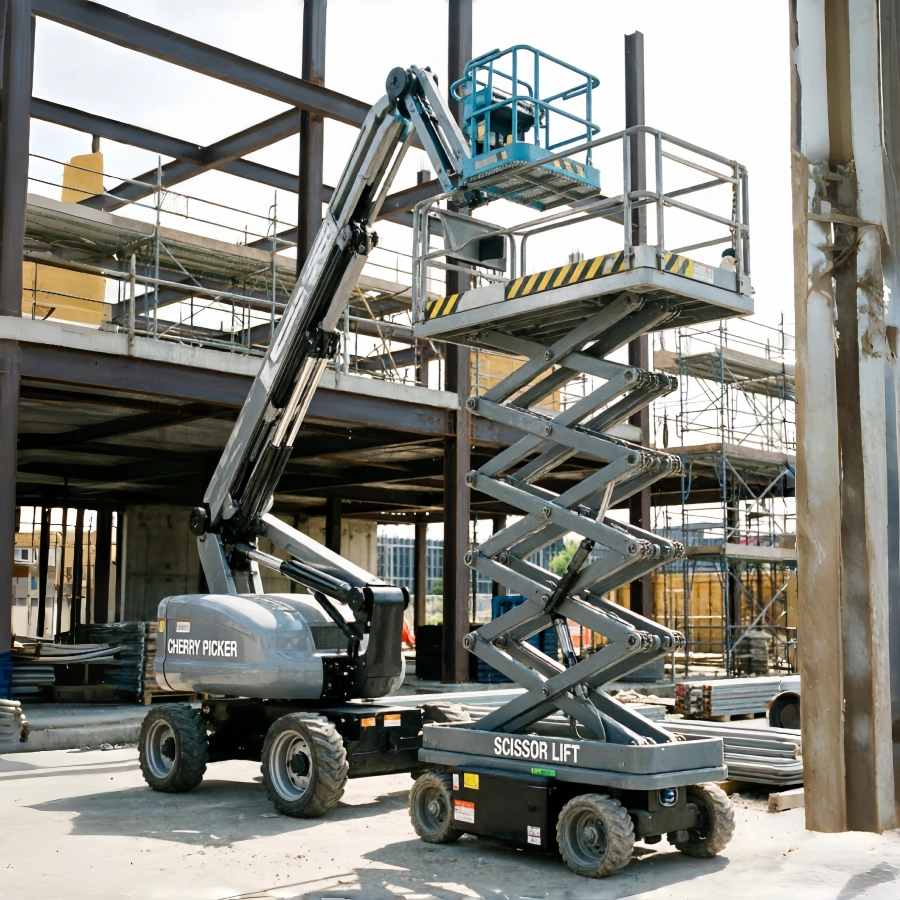
Cherry Picker vs Scissor Lift: Which is better?

When working at height, choosing the right aerial work platform can significantly impact productivity, safety, and operating costs. Two of the most popular elevated access machines are the cherry picker and the scissor lift. While both are designed to lift workers and materials above ground level, they serve different purposes and perform best in different environments.

For contractors, facility managers, warehouse operators, construction companies, and industrial maintenance teams, understanding the differences between a cherry picker and a scissor lift is essential before investing in equipment or renting a machine.

This comprehensive guide compares cherry pickers and scissor lifts in terms of design, working principles, lifting height, reach, stability, applications, safety, operating costs, and overall advantages to help you determine which machine is best for your project.

What Is a Cherry Picker?

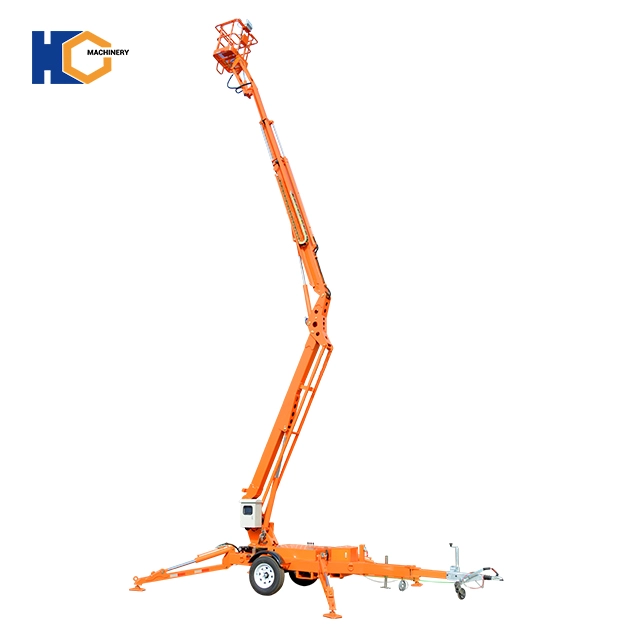
A cherry picker is an aerial work platform equipped with a hydraulic boom that extends vertically and horizontally. The machine gets its name from its original use in harvesting fruit from orchards.

Modern cherry pickers are widely used in construction, utility maintenance, telecommunications, tree care, and industrial inspections.

A typical cherry picker consists of:

  • Chassis or base
  • Rotating turntable
  • Hydraulic boom arm
  • Work platform or basket
  • Control system
  • Stabilization system

Unlike a scissor lift, a cherry picker can move around obstacles and access hard-to-reach areas.

Common Types of Cherry Pickers

Articulating Boom Lift

Features multiple joints that allow the boom to bend around obstacles.

Applications:

  • Building maintenance
  • Tree trimming
  • Industrial plants
  • Electrical installations

Telescopic Boom Lift

Uses a straight boom that extends outward.

Applications:

  • High-rise construction
  • Bridge maintenance
  • Utility work
  • Long-reach operations

Towable Cherry Picker

Portable and economical.

Applications:

  • Residential projects
  • Landscaping
  • Sign installation

Truck-Mounted Cherry Picker

Mounted on a commercial vehicle.

Applications:

  • Streetlight maintenance
  • Utility line repair
  • Municipal projects

What Is a Scissor Lift?

A scissor lift is a vertical lifting platform that raises workers and equipment using a crisscross support structure resembling a pair of scissors.

Unlike a cherry picker, a scissor lift only moves vertically and cannot provide horizontal outreach.

The machine consists of:

  • Base frame
  • Scissor mechanism
  • Hydraulic or electric lifting system
  • Platform deck
  • Safety rails
  • Control system

Scissor lifts are widely used for jobs requiring a large working platform and higher load capacity.

Common Types of Scissor Lifts

Electric Scissor Lift

Ideal for indoor use.

Benefits:

  • Zero emissions
  • Low noise
  • Compact design
  • Minimal maintenance

Applications:

  • Warehouses
  • Shopping malls
  • Airports
  • Factories

Hydraulic Scissor Lift

Uses hydraulic cylinders for lifting.

Applications:

  • Industrial facilities
  • Loading docks
  • Maintenance operations

Rough Terrain Scissor Lift

Designed for outdoor environments.

Features:

  • Four-wheel drive
  • Large tires
  • Enhanced stability

Applications:

  • Construction sites
  • Infrastructure projects
  • Mining operations

Towable Mobile Scissor Lift

Portable and easy to transport.

Applications:

  • Temporary projects
  • Rental fleets
  • Small contractors

Cherry Picker vs Scissor Lift: Key Differences

1. Working Range

The biggest difference between the two machines is their reach capability.

Cherry Picker

Provides:

  • Vertical reach
  • Horizontal outreach
  • Over-obstacle access
  • Multi-directional positioning

Workers can reach areas above roofs, around structures, and behind obstacles.

Scissor Lift

Provides:

  • Vertical movement only
  • No side outreach
  • Straight-up access

Suitable when work is directly above the machine.

Winner

Cherry Picker

2. Platform Capacity

Load capacity is another major factor.

Cherry Picker

Typical platform capacity:

  • 200–450 kg (440–990 lbs)

Usually accommodates:

  • 1–2 workers
  • Small tools
  • Light materials

Scissor Lift

Typical platform capacity:

  • 230–1,500 kg (500–3,300 lbs)

Can accommodate:

  • Multiple workers
  • Heavy tools
  • Building materials

Winner

Scissor Lift

3. Working Height

Both machines offer significant elevation capabilities.

Cherry Picker Heights

Typical range:

  • 10–58 meters
  • 33–190 feet

Specialized models can exceed:

  • 70 meters
  • 230 feet

Scissor Lift Heights

Typical range:

  • 6–18 meters
  • 20–60 feet

Large rough terrain models:

  • Up to 28 meters
  • Around 92 feet

Winner

Cherry Picker

4. Stability

Scissor Lift

Scissor lifts have:

  • Wide base
  • Large platform
  • Lower center of gravity

This provides excellent stability.

Cherry Picker

Boom extension shifts the center of gravity.

Advanced systems compensate through:

  • Counterweights
  • Stabilizers
  • Load sensors

Winner

Scissor Lift

5. Maneuverability

Cherry Picker

Advantages:

  • Reach over obstacles
  • Navigate complex structures
  • Access confined work areas

Articulating booms can bend around walls, pipes, and machinery.

Scissor Lift

Limited to vertical movement.

The machine must be positioned directly beneath the work area.

Winner

Cherry Picker

6. Workspace Size

Cherry Picker

Platform sizes are relatively small.

Usually designed for:

  • One operator
  • One assistant

Scissor Lift

Platforms are significantly larger.

Many models feature:

  • Extendable decks
  • Additional workspace
  • Multiple operator capacity

Winner

Scissor Lift

7. Indoor Applications

Electric Scissor Lift

Excellent for:

  • Warehouses
  • Distribution centers
  • Retail facilities
  • Manufacturing plants

Advantages:

  • Quiet operation
  • Compact dimensions
  • Zero emissions

Electric Cherry Picker

Can also be used indoors but generally requires more space.

Winner

Scissor Lift

8. Outdoor Applications

Cherry Picker

Ideal for:

  • Utility maintenance
  • Building exteriors
  • Tree trimming
  • Sign installation

Rough Terrain Scissor Lift

Suitable for:

  • Construction
  • Structural work
  • Material handling

Winner

Cherry Picker

Cherry Picker Advantages

Exceptional Reach

The greatest advantage of a cherry picker is its ability to reach difficult locations.

Operators can work:

  • Over rooftops
  • Around machinery
  • Across obstacles
  • Along building facades

Greater Height Capacity

Boom lifts generally offer much higher working heights than scissor lifts.

Increased Flexibility

A single machine can perform a wide variety of access tasks.

Ideal for Complex Structures

Perfect for:

  • Industrial plants
  • Refineries
  • Stadiums
  • Utility networks

Cherry Picker Disadvantages

Higher Purchase Cost

Cherry pickers typically cost more than equivalent scissor lifts.

Lower Platform Capacity

Not suitable for transporting large quantities of materials.

More Complex Operation

Requires additional operator training.

Increased Maintenance

Boom mechanisms involve more hydraulic and mechanical components.

Scissor Lift Advantages

Higher Load Capacity

Can safely lift:

  • Multiple workers
  • Equipment
  • Construction materials

Large Working Platform

Provides ample space for productivity.

Superior Stability

Ideal for precision work.

Lower Cost

Generally cheaper to purchase and maintain.

Easy Operation

Controls are straightforward and user-friendly.

Scissor Lift Disadvantages

No Horizontal Reach

Cannot access areas beyond the platform footprint.

Limited Height

Most models cannot match the working height of boom lifts.

Obstacle Restrictions

The machine must be positioned directly below the work area.

Typical Applications for Cherry Pickers

Telecommunications

Used for:

  • Cell tower maintenance
  • Antenna installation
  • Communication infrastructure

Utility Services

Applications include:

  • Power line repair
  • Streetlight maintenance
  • Electrical inspections

Tree Care

Ideal for:

  • Pruning
  • Tree removal
  • Orchard maintenance

Construction

Common uses:

  • Steel erection
  • Exterior finishing
  • High-rise work

Industrial Maintenance

Suitable for:

  • Equipment inspection
  • Plant maintenance
  • Pipe installation

Typical Applications for Scissor Lifts

Warehousing

Used for:

  • Inventory management
  • Rack maintenance
  • Facility upgrades

Manufacturing

Applications include:

  • Production line maintenance
  • Equipment servicing
  • Lighting replacement

Commercial Buildings

Used for:

  • HVAC maintenance
  • Ceiling repairs
  • Painting projects

Construction

Ideal for:

  • Drywall installation
  • Interior finishing
  • Material lifting

Cost Comparison

Cherry Picker Price Range

Approximate factory prices:

TypePrice Range
Towable Cherry Picker$8,000–$25,000
Articulating Boom Lift$25,000–$120,000
Telescopic Boom Lift$35,000–$180,000
Truck Mounted Cherry Picker$40,000–$250,000+

Scissor Lift Price Range

Approximate factory prices:

TypePrice Range
Mini Scissor Lift$3,000–$8,000
Electric Scissor Lift$5,000–$25,000
Hydraulic Scissor Lift$8,000–$35,000
Rough Terrain Scissor Lift$15,000–$60,000

Scissor lifts generally offer a lower total ownership cost.

Safety Comparison

Both machines are safe when operated correctly.

Cherry Picker Safety Features

  • Tilt sensors
  • Load monitoring systems
  • Emergency lowering
  • Anti-entrapment devices
  • Fall protection anchor points

Scissor Lift Safety Features

  • Guardrails
  • Emergency stop buttons
  • Overload protection
  • Pothole protection systems
  • Automatic braking

Which Is Safer?

Neither machine is inherently safer.

Safety depends on:

  • Operator training
  • Proper maintenance
  • Site conditions
  • Compliance with regulations

How to Choose Between a Cherry Picker and a Scissor Lift

Choose a Cherry Picker if you need:

  • Horizontal outreach
  • Access around obstacles
  • Extreme working heights
  • Exterior building maintenance
  • Utility and telecommunications work

Choose a Scissor Lift if you need:

  • Large platform space
  • High load capacity
  • Indoor operation
  • Stable working conditions
  • Lower equipment costs

Cherry Picker vs Scissor Lift: Which One Wins?

There is no universal winner because each machine is designed for different working environments.

If your project requires reaching over obstacles, accessing difficult locations, or working at extreme heights, a cherry picker is the superior choice. Its flexibility and outreach capabilities make it indispensable for utility work, exterior construction, and industrial maintenance.

If your project involves lifting multiple workers, tools, and materials straight upward in a stable environment, a scissor lift is often the better investment. It offers greater platform capacity, lower operating costs, and improved productivity for indoor and vertical-access tasks.

For many contractors and equipment rental companies, maintaining both cherry pickers and scissor lifts provides the flexibility to handle a wide variety of projects efficiently, safely, and cost-effectively.

Productivity Comparison: Cherry Picker vs Scissor Lift

Productivity is one of the most important factors when selecting aerial access equipment. While both machines improve workplace efficiency compared to ladders and scaffolding, they do so in different ways.

Cherry Picker Productivity

A cherry picker increases productivity by reducing the time required to access difficult locations. Operators can quickly reposition the boom to reach multiple work points without moving the machine repeatedly.

Advantages include:

  • Faster access to elevated areas
  • Ability to work around obstacles
  • Reduced setup time
  • Increased flexibility on complex projects

For example, when installing signage on a commercial building, an articulating boom lift can move around architectural features and reach several installation points from a single position.

Scissor Lift Productivity

A scissor lift excels when workers need a large, stable workspace.

Advantages include:

  • Larger platform for multiple workers
  • Ability to carry tools and materials simultaneously
  • Reduced trips up and down
  • Improved efficiency for repetitive tasks

For warehouse maintenance, ceiling installation, or indoor construction, scissor lifts often outperform cherry pickers because workers have more room to operate.

Environmental Impact

As sustainability becomes increasingly important, many companies consider environmental performance when purchasing equipment.

Electric Cherry Pickers

Benefits include:

  • Zero emissions
  • Quiet operation
  • Lower energy costs
  • Reduced maintenance requirements

These models are commonly used in:

  • Airports
  • Shopping centers
  • Hospitals
  • Data centers

Electric Scissor Lifts

Electric scissor lifts are among the most environmentally friendly aerial work platforms available.

Benefits include:

  • Battery-powered operation
  • No exhaust emissions
  • Low noise levels
  • Reduced carbon footprint

They are ideal for indoor facilities where air quality is a priority.

Maintenance Requirements

Equipment maintenance directly affects uptime and long-term ownership costs.

Cherry Picker Maintenance

Cherry pickers typically require more frequent inspections because they contain:

  • Boom sections
  • Hydraulic hoses
  • Articulating joints
  • Rotation systems
  • Stabilizers

Regular inspections should include:

  • Hydraulic fluid levels
  • Structural components
  • Safety devices
  • Platform controls
  • Boom wear points

Scissor Lift Maintenance

Scissor lifts generally have fewer moving parts.

Routine maintenance includes:

  • Lubricating scissor arms
  • Battery inspections
  • Hydraulic system checks
  • Tire inspections
  • Safety system testing

Because of their simpler structure, maintenance costs are usually lower than those of boom lifts.

Training Requirements

Proper operator training is essential for workplace safety.

Cherry Picker Training

Operators must understand:

  • Load limits
  • Boom positioning
  • Stability calculations
  • Wind limitations
  • Emergency procedures

The learning curve is typically higher because the machine can move in multiple directions.

Scissor Lift Training

Training focuses on:

  • Platform capacity
  • Safe elevation procedures
  • Surface conditions
  • Emergency controls

Most operators can learn basic scissor lift operation more quickly than boom lift operation.

Industry-Specific Recommendations

Construction Industry

Best Choice: Combination of Both

Construction projects often require:

  • Cherry pickers for exterior work
  • Scissor lifts for interior finishing

Many contractors use both machines throughout different project phases.

Warehouse Industry

Best Choice: Scissor Lift

Reasons:

  • Large platform
  • High load capacity
  • Indoor compatibility
  • Excellent maneuverability in aisles

Telecommunications Industry

Best Choice: Cherry Picker

Reasons:

  • Superior outreach
  • High working height
  • Access to towers and poles
  • Ability to reach equipment above obstacles

Facility Maintenance

Best Choice: Depends on the Task

For ceiling repairs and lighting maintenance:

  • Scissor lift

For exterior facade work:

  • Cherry picker

Tree Care Industry

Best Choice: Cherry Picker

Reasons:

  • Ability to move around branches
  • Adjustable working angles
  • Better access to elevated tree canopies

Return on Investment (ROI)

When purchasing aerial equipment, return on investment is a critical consideration.

Cherry Picker ROI

A cherry picker often delivers better ROI when:

  • Projects require complex access
  • High-reach applications are common
  • Labor costs are high
  • Frequent repositioning would otherwise be necessary

Although the initial investment is higher, productivity gains can justify the cost.

Scissor Lift ROI

A scissor lift often provides excellent ROI because of:

  • Lower purchase price
  • Reduced maintenance costs
  • Lower training requirements
  • Higher worker productivity on vertical-access tasks

For warehouses, factories, and indoor construction, scissor lifts typically offer the fastest payback period.

Future Trends in Aerial Work Platforms

The aerial lift industry is evolving rapidly.

Emerging technologies include:

  • Lithium-ion battery systems
  • Smart fleet management
  • Remote diagnostics
  • Telematics tracking
  • Autonomous positioning assistance
  • Advanced safety sensors

Both cherry pickers and scissor lifts are becoming more energy-efficient and connected through digital monitoring systems.

Manufacturers are also focusing on:

  • Reduced emissions
  • Lightweight designs
  • Enhanced operator comfort
  • Improved safety features

Frequently Asked Questions (FAQ)

Is a cherry picker safer than a scissor lift?

Neither is inherently safer. Safety depends on operator training, site conditions, maintenance quality, and adherence to safety regulations.

Can a scissor lift replace a cherry picker?

Only for applications requiring straight vertical access. If horizontal outreach or obstacle clearance is necessary, a cherry picker is the better option.

Which machine has a higher lifting capacity?

Scissor lifts generally have much higher platform capacities than cherry pickers.

Which is cheaper to buy?

Scissor lifts are typically less expensive to purchase and maintain.

Which is better for indoor work?

Electric scissor lifts are usually the preferred solution for indoor applications because of their compact design and large platform space.

Which is better for outdoor construction?

Cherry pickers are often preferred for outdoor construction because of their superior reach and versatility.

Final Verdict: Cherry Picker vs Scissor Lift

The choice between a cherry picker and a scissor lift ultimately depends on your work environment, height requirements, platform capacity needs, and budget.

A cherry picker is the best solution for projects requiring maximum reach, flexibility, and access around obstacles. It is the preferred machine for utility work, telecommunications, tree care, exterior construction, and industrial maintenance.

A scissor lift is the best solution for projects requiring a large work platform, high lifting capacity, superior stability, and lower operating costs. It is widely used in warehouses, manufacturing plants, commercial buildings, and indoor construction projects.

For rental companies, contractors, and industrial operators, owning both types of aerial work platforms often provides the greatest flexibility, allowing businesses to tackle a wider range of projects efficiently and safely. By understanding the strengths and limitations of each machine, buyers can make a more informed investment decision and maximize productivity while maintaining the highest safety standards.

Scissor lift vs boom lift pros and cons

When working at height, choosing the right aerial work platform can directly affect safety, productivity, operating costs, and project efficiency. Two of the most popular lifting solutions in construction, warehousing, maintenance, and industrial operations are the scissor lift and the boom lift. Although both machines are designed to elevate workers and materials, they serve very different purposes.

Understanding the difference between a scissor lift vs boom lift is essential for contractors, warehouse operators, facility managers, and rental companies. Some projects require vertical lifting capacity and large platform space, while others demand horizontal outreach and flexible maneuverability around obstacles.

This comprehensive guide explains the pros and cons of scissor lifts and boom lifts, compares their features, applications, costs, safety considerations, and performance, and helps you determine which machine is best for your specific job site.

What Is a Scissor Lift?

A scissor lift is a type of aerial work platform that moves vertically using crisscrossing metal supports known as a pantograph or scissor mechanism. Hydraulic, electric, or pneumatic systems extend the platform upward in a straight vertical direction.

Scissor lifts are commonly used for:

  • Indoor maintenance
  • Warehouse operations
  • Ceiling installation
  • Electrical work
  • Painting
  • Inventory management
  • Factory maintenance
  • Retail store setup

These machines provide stable vertical elevation with large working platforms capable of carrying multiple workers and tools simultaneously.

Main Features of a Scissor Lift

  • Vertical lifting only
  • Large platform capacity
  • Stable working surface
  • Compact design
  • Suitable for indoor and outdoor use
  • Available in electric and diesel models

What Is a Boom Lift?

A boom lift is an aerial platform equipped with a hydraulic arm that can extend both vertically and horizontally. Unlike scissor lifts, boom lifts can reach over obstacles and access difficult working areas.

Boom lifts are widely used for:

  • Construction projects
  • High-rise building maintenance
  • Tree trimming
  • Outdoor repairs
  • Bridge inspection
  • Telecommunications
  • Utility work
  • Sign installation

Boom lifts are available in two primary types:

Articulating Boom Lift

An articulating boom lift features multiple hinged sections that allow the arm to bend around obstacles.

Telescopic Boom Lift

A telescopic boom lift uses a straight extendable arm for maximum horizontal outreach and height.

Scissor Lift vs Boom Lift: Core Differences

The biggest difference between a scissor lift vs boom lift lies in movement and reach capability.

FeatureScissor LiftBoom Lift
MovementVertical onlyVertical + horizontal
Platform SizeLargeSmaller
Working HeightModerateHigher
Horizontal ReachNoneExcellent
StabilityVery stableLess stable than scissor lifts
ManeuverabilityGood in tight indoor spacesBetter around obstacles
Lift CapacityHigherLower
Best UseVertical accessDifficult access areas
Indoor ApplicationsExcellentGood
Outdoor ApplicationsModerateExcellent
Purchase CostLowerHigher

Pros of Scissor Lifts

Scissor lifts remain one of the most cost-effective and widely used aerial work platforms in the world.

1. Excellent Stability

One major advantage of scissor lifts is platform stability. Because the lifting structure moves directly upward, the center of gravity remains balanced during operation.

This stability makes scissor lifts ideal for:

  • Long-duration tasks
  • Precision work
  • Indoor construction
  • Maintenance operations

Workers often feel more comfortable on scissor lifts because there is less sway compared to boom lifts.

2. Larger Platform Space

Scissor lifts typically provide larger working platforms than boom lifts.

Benefits include:

  • Space for multiple workers
  • Room for tools and materials
  • Increased productivity
  • Reduced trips up and down

This makes them ideal for warehouse shelving installation, ceiling repairs, and electrical projects.

3. Higher Load Capacity

Scissor lifts generally support heavier loads than boom lifts.

Some heavy-duty scissor lifts can handle:

  • Multiple operators
  • Construction materials
  • HVAC equipment
  • Large toolkits

This lifting power improves workflow efficiency on industrial projects.

4. Lower Equipment Cost

Compared to boom lifts, scissor lifts are more affordable to:

  • Purchase
  • Rent
  • Maintain
  • Transport

Businesses with limited budgets often choose scissor lifts for routine elevated work.

5. Ideal for Indoor Use

Electric scissor lifts produce:

  • Low noise
  • Zero emissions
  • Smooth operation

This makes them perfect for:

  • Warehouses
  • Shopping malls
  • Factories
  • Airports
  • Hospitals

6. Easier Operation

Scissor lifts are generally simpler to operate and require less advanced maneuvering skills than boom lifts.

New operators can often learn controls more quickly.

Cons of Scissor Lifts

Despite their advantages, scissor lifts also have several limitations.

1. No Horizontal Reach

The biggest disadvantage of a scissor lift is the inability to extend sideways.

If obstacles block vertical access, the machine must be repositioned.

This can reduce efficiency on complex job sites.

2. Limited Outdoor Capability

Many electric scissor lifts are designed mainly for indoor use.

Outdoor challenges include:

  • Rough terrain
  • Uneven surfaces
  • Wind exposure
  • Muddy ground

Diesel rough-terrain scissor lifts improve outdoor performance but still lack the flexibility of boom lifts.

3. Lower Maximum Height

Although modern scissor lifts can reach impressive heights, they generally cannot match the vertical reach of boom lifts.

Typical working heights:

  • Scissor lifts: 20–50 feet
  • Boom lifts: up to 180+ feet

4. Restricted Access Around Obstacles

Scissor lifts cannot reach over:

  • Machinery
  • Pipes
  • Roofing structures
  • Utility lines

This limits their use in crowded environments.

Pros of Boom Lifts

Boom lifts offer exceptional versatility and access capabilities.

1. Horizontal Outreach

The greatest advantage of a boom lift is its ability to reach horizontally.

This feature allows operators to:

  • Reach over obstacles
  • Access difficult areas
  • Reduce machine repositioning
  • Improve efficiency on large sites

2. Superior Height Capability

Boom lifts can achieve significantly greater working heights than scissor lifts.

Some telescopic boom lifts exceed 180 feet, making them ideal for:

  • High-rise construction
  • Stadium maintenance
  • Bridge inspection
  • Industrial facilities

3. Better Outdoor Performance

Many boom lifts are designed specifically for rugged outdoor environments.

Features may include:

  • Four-wheel drive
  • Rough terrain tires
  • High ground clearance
  • Diesel engines

These machines handle uneven construction sites more effectively.

4. Flexible Positioning

Articulating boom lifts can bend around structures and obstacles.

This flexibility is extremely valuable for:

  • Tree trimming
  • Building maintenance
  • Utility repairs
  • Industrial inspection

5. Reduced Repositioning Time

Because boom lifts can extend horizontally, operators spend less time moving equipment.

This improves productivity on complex projects.

Cons of Boom Lifts

Boom lifts also have disadvantages that should be considered carefully.

1. Higher Cost

Boom lifts are significantly more expensive than scissor lifts.

Costs include:

  • Higher purchase price
  • Increased rental fees
  • More maintenance
  • Greater fuel consumption

For small businesses, this can be a major factor.

2. Smaller Platform Capacity

Boom lifts usually accommodate fewer workers and less material.

Smaller baskets limit:

  • Tool storage
  • Worker capacity
  • Material transportation

3. More Complex Operation

Operating a boom lift requires more advanced training due to:

  • Horizontal movement
  • Height management
  • Balance considerations
  • Obstacle navigation

Improper operation can increase accident risks.

4. Less Stability at Maximum Reach

As the boom extends outward, platform movement may increase.

Operators may experience:

  • More sway
  • Wind sensitivity
  • Reduced comfort

This is especially noticeable at high elevations.

5. Larger Turning Radius

Boom lifts often require more operating space, making them less suitable for tight indoor environments.

Scissor Lift vs Boom Lift for Indoor Applications

For indoor work, scissor lifts are often the preferred choice.

Why Scissor Lifts Excel Indoors

  • Compact dimensions
  • Non-marking tires
  • Quiet electric operation
  • Stable platforms
  • Better load capacity

Common indoor applications include:

  • Warehouse inventory work
  • Lighting installation
  • HVAC maintenance
  • Retail renovations

When Boom Lifts Work Better Indoors

Boom lifts are useful indoors when workers need to:

  • Reach over obstacles
  • Access complex ceiling structures
  • Navigate around machinery

Articulating electric boom lifts are especially popular in factories and industrial facilities.

Scissor Lift vs Boom Lift for Outdoor Applications

Outdoor job sites often favor boom lifts because of their flexibility and terrain capability.

Best Outdoor Uses for Boom Lifts

  • Steel structure construction
  • Telecommunications
  • Exterior painting
  • Utility maintenance
  • Wind turbine inspection

Outdoor Advantages of Rough Terrain Scissor Lifts

Rough terrain scissor lifts still perform well for:

  • Large outdoor installations
  • Solar panel projects
  • Stadium maintenance
  • Industrial shutdowns

Their larger platforms remain valuable for team-based work.

Safety Comparison

Safety is one of the most important considerations when choosing aerial equipment.

Scissor Lift Safety Advantages

Scissor lifts generally offer:

  • Better platform stability
  • Simpler controls
  • Lower tipping risk
  • Safer vertical lifting

These factors make them popular for beginner operators.

Boom Lift Safety Challenges

Boom lifts require greater caution because of:

  • Extended outreach
  • Wind sensitivity
  • Dynamic movement
  • Obstacle navigation

Proper operator certification and training are essential.

Maintenance Comparison

Maintenance costs vary significantly between these machines.

Scissor Lift Maintenance

Scissor lifts usually have:

  • Simpler hydraulic systems
  • Fewer moving joints
  • Lower maintenance costs

Routine servicing includes:

  • Hydraulic inspection
  • Battery maintenance
  • Platform checks
  • Safety testing

Boom Lift Maintenance

Boom lifts involve more complex systems, including:

  • Articulating joints
  • Extended hydraulic arms
  • Advanced control systems

Maintenance requirements are generally higher and more expensive.

Fuel and Power Options

Both scissor lifts and boom lifts are available in different power configurations.

Electric Models

Advantages include:

  • Zero emissions
  • Quiet operation
  • Indoor suitability
  • Lower operating cost

Diesel Models

Benefits include:

  • Greater power
  • Outdoor capability
  • Rough terrain performance
  • Longer operation time

Hybrid and lithium battery models are also becoming increasingly popular.

Rental Cost Comparison

Rental pricing depends on:

  • Lift height
  • Power type
  • Terrain capability
  • Brand
  • Region

However, boom lifts usually cost more than scissor lifts.

Typical Daily Rental Range

Equipment TypeDaily Rental Cost
Electric Scissor Lift$100–$250
Rough Terrain Scissor Lift$250–$500
Articulating Boom Lift$300–$800
Telescopic Boom Lift$500–$1,500

Long-term rentals often reduce daily rates significantly.

Industries That Prefer Scissor Lifts

Scissor lifts are widely used in:

  • Warehousing
  • Retail
  • Manufacturing
  • Aviation maintenance
  • Facility management
  • Logistics centers

Their combination of affordability and efficiency makes them highly versatile.

Industries That Prefer Boom Lifts

Boom lifts dominate industries requiring difficult access, including:

  • Construction
  • Telecommunications
  • Utility maintenance
  • Oil and gas
  • Infrastructure inspection
  • Arboriculture

Their outreach capabilities provide access impossible for scissor lifts.

Which Lift Is Better for Construction?

The answer depends on the project type.

Choose a Scissor Lift If You Need:

  • Straight vertical access
  • Large platform capacity
  • Indoor operation
  • Lower operating costs
  • Multiple workers on the platform

Choose a Boom Lift If You Need:

  • Horizontal outreach
  • Obstacle navigation
  • Extreme working heights
  • Outdoor rough terrain capability
  • Flexible access angles

Environmental Considerations

Electric aerial platforms are becoming more important because of sustainability goals.

Electric Scissor Lift Benefits

  • Lower emissions
  • Reduced noise pollution
  • Lower energy consumption

Electric Boom Lift Benefits

  • Cleaner operation on indoor/outdoor mixed sites
  • Improved urban project compliance

Many cities now encourage low-emission construction equipment.

Future Trends in Aerial Work Platforms

The aerial lift industry is evolving rapidly.

Emerging Trends Include:

  • Lithium battery systems
  • Smart telematics
  • Autonomous safety features
  • Remote diagnostics
  • AI-assisted operation
  • Lightweight materials

Manufacturers are also focusing on improved energy efficiency and operator safety.

How to Choose Between a Scissor Lift and Boom Lift

Before selecting equipment, ask these questions:

1. Do You Need Horizontal Reach?

If yes, choose a boom lift.

2. Is Platform Capacity Important?

If yes, a scissor lift may be better.

3. Will You Work Indoors or Outdoors?

Indoor projects often favor electric scissor lifts.

Outdoor rugged environments usually favor boom lifts.

4. Are There Obstacles?

Boom lifts excel when obstacles block direct access.

5. What Is Your Budget?

Scissor lifts are generally more economical.

Final Verdict: Scissor Lift vs Boom Lift

The debate between scissor lift vs boom lift ultimately comes down to job requirements.

Scissor lifts are cost-effective, stable, and ideal for vertical access tasks involving multiple workers and materials. They perform exceptionally well indoors and on projects where horizontal outreach is unnecessary.

Boom lifts provide unmatched flexibility, superior height, and horizontal reach. They are the preferred solution for outdoor construction, obstacle navigation, and high-access maintenance projects.

Neither machine is universally better. The best choice depends on:

  • Working height
  • Access complexity
  • Terrain conditions
  • Budget
  • Platform capacity needs
  • Safety requirements

For many contractors and industrial operators, having access to both types of aerial lifts provides maximum operational flexibility.

As construction technology continues to evolve, modern scissor lifts and boom lifts are becoming safer, smarter, and more energy efficient. Choosing the right equipment today can dramatically improve productivity, reduce labor costs, and enhance workplace safety for years to come.

Scissor Lift Price in Saudi Arabia

The price of a scissor lift in Saudi Arabia typically ranges from $4,500 to over $45,000 USD (approximately SAR 16,900 to SAR 168,800), depending on lift height, platform capacity, power source, brand, automation features, and whether the machine is new or used. Small electric scissor lifts designed for indoor warehouse work are generally priced between $4,500–$12,000 USD (SAR 16,900–45,000), while heavy-duty diesel rough terrain scissor lifts for construction projects can exceed $35,000 USD (SAR 131,000+).

Saudi Arabia’s rapid growth in infrastructure, logistics, smart cities, oil & gas projects, aviation, warehousing, and commercial construction has significantly increased demand for scissor lifts. Large projects connected to Vision 2030, including NEOM, Red Sea Global, Riyadh Metro expansion, logistics parks, and industrial zones, are driving equipment purchases across the country.

However, many buyers searching online encounter massive price differences between suppliers. Some Chinese manufacturers advertise extremely low prices, while European and American brands often cost two or three times more. The reason is that scissor lift pricing depends on much more than platform height alone.

This article provides a complete analysis of scissor lift prices in Saudi Arabia, including competitor pricing, cost structure, electric vs diesel lift comparison, rental economics, local market conditions, import costs, and purchasing strategies.

What Is a Scissor Lift?

scissor lift is a mobile elevated work platform (MEWP) designed to lift workers, tools, and materials vertically using a crisscrossing support mechanism that resembles scissors.

Scissor lifts are widely used in:

  • Construction projects
  • Warehouses
  • Shopping malls
  • Airport maintenance
  • Industrial factories
  • Oil & gas facilities
  • Equipment installation
  • Facility management
  • Logistics centers

Compared with ladders or scaffolding, scissor lifts provide:

  • Better safety
  • Higher working efficiency
  • Larger platform space
  • Greater lifting capacity
  • Improved worker productivity

Saudi Arabia’s expanding industrial and construction sectors have made scissor lifts essential equipment across multiple industries.


Scissor Lift Price Table (Huichuang Lift Factory Reference)

Platform HeightLoad CapacityPower TypePrice (USD)Price (SAR)
6–8 m230–320 kgElectric$6,899≈ 25,870 SAR
8–10 m320 kgElectric / Hydraulic$8,200≈ 30,750 SAR
10–12 m320–450 kgHydraulic$9,800≈ 36,750 SAR
12–14 m450 kgHeavy Duty$11,999≈ 44,996 SAR

Prices are factory reference prices. Shipping, customs duties, and local certification costs are not included.


Average Scissor Lift Price in Saudi Arabia

Below is the realistic market price range for common scissor lift categories in Saudi Arabia.

Scissor Lift TypeUSD Price RangeSaudi Riyal (SAR)
Mini electric scissor lift$4,500 – $8,000SAR 16,900 – 30,000
Standard electric scissor lift$7,000 – $18,000SAR 26,200 – 67,500
Rough terrain diesel scissor lift$15,000 – $35,000SAR 56,200 – 131,000
High-reach heavy-duty lift$30,000 – $45,000+SAR 112,500 – 168,800+
Used scissor lift$3,000 – $20,000SAR 11,200 – 75,000

Prices vary depending on:

  • Lift height
  • Platform size
  • Weight capacity
  • Battery system
  • Hydraulic system
  • Brand reputation
  • Safety certifications
  • Import taxes and shipping

Why Scissor Lift Prices in Saudi Arabia Are Increasing

Several major factors are influencing equipment prices in Saudi Arabia.

1. Vision 2030 Infrastructure Projects

Saudi Arabia is investing hundreds of billions of dollars into:

  • NEOM
  • Riyadh development
  • Airports
  • Logistics hubs
  • Smart city projects
  • Industrial parks

Large-scale construction creates massive demand for aerial work platforms.

2. Growing Warehouse and Logistics Industry

E-commerce growth has increased demand for:

  • Warehouse maintenance
  • High-rack installation
  • Facility management

Electric scissor lifts are widely used in logistics facilities because they produce zero emissions indoors.

3. Oil & Gas Industry Demand

Saudi Arabia’s oil and gas sector frequently uses rough terrain diesel scissor lifts for:

  • Refinery maintenance
  • Pipeline projects
  • Industrial inspection
  • Equipment installation

Heavy-duty industrial lifts naturally cost more.

Electric Scissor Lift Price in Saudi Arabia

Electric scissor lifts are the most common category for indoor applications.

Typical price range:

  • $7,000–$18,000 USD
  • SAR 26,200–67,500

Common platform heights include:

Platform HeightUSD PriceSAR Price
6m electric lift$4,500 – $7,500SAR 16,900 – 28,100
8m electric lift$6,000 – $9,000SAR 22,500 – 33,700
10m electric lift$7,500 – $12,000SAR 28,100 – 45,000
12m electric lift$9,000 – $16,000SAR 33,700 – 60,000
14m electric lift$12,000 – $18,000SAR 45,000 – 67,500


Advantages of Electric Scissor Lifts

  • Zero emissions
  • Quiet operation
  • Lower maintenance cost
  • Suitable for indoor environments
  • Lower operating cost

Disadvantages

  • Limited rough terrain capability
  • Battery charging required
  • Lower outdoor performance

Electric lifts are especially popular in:

  • Airports
  • Shopping malls
  • Warehouses
  • Factories
  • Commercial buildings

Diesel Rough Terrain Scissor Lift Price in Saudi Arabia

Rough terrain diesel lifts are designed for outdoor and construction applications.

Typical price range:

  • $15,000–$35,000+ USD
  • SAR 56,200–131,000+

These lifts include:

  • Four-wheel drive
  • Large tires
  • High ground clearance
  • Stronger chassis
  • Larger platform capacities

Advantages

  • Excellent outdoor performance
  • Suitable for sand and rough surfaces
  • Higher lifting capacities
  • Better climbing ability

Disadvantages

  • Higher fuel cost
  • More maintenance
  • Noise and emissions
  • Higher purchase price

These machines are widely used in:

  • Construction projects
  • Oil fields
  • Infrastructure development
  • Industrial sites

Chinese vs European vs American Scissor Lift Prices

Brand origin significantly affects pricing.

Chinese Scissor Lifts

Typical price range:

  • $5,000–$20,000 USD
  • SAR 18,700–75,000

Advantages:

  • Competitive pricing
  • Fast delivery
  • Good customization
  • Lower spare parts cost

Disadvantages:

  • Quality varies between suppliers
  • Some brands have weaker service networks

Chinese manufacturers currently dominate Saudi Arabia’s mid-range scissor lift market because they provide strong value for money.

European Scissor Lifts

Typical price range:

  • $20,000–$45,000+ USD
  • SAR 75,000–168,800+

Popular brands include:

  • Haulotte
  • JLG
  • Genie

Advantages:

  • Excellent engineering
  • Advanced safety systems
  • Long-term reliability

Disadvantages:

  • Higher initial cost
  • Expensive spare parts

Competitor Price Comparison

Brand CategoryTypical Price RangeBest For
Chinese entry-level$5,000 – $12,000Budget buyers
Chinese mid-range$10,000 – $20,000Most contractors
European premium$20,000 – $45,000Large industrial projects
American premium$22,000 – $50,000Oil & gas sector

Factors Affecting Scissor Lift Prices

1. Platform Height

Higher lifts cost significantly more.

Example:

HeightAverage Price
6m$5,000
10m$10,000
14m$18,000
18m$30,000+

Higher lifts require:

  • Stronger hydraulic systems
  • Larger chassis
  • Better stabilization systems

2. Load Capacity

Higher platform capacity increases price.

Common capacities include:

  • 230 kg
  • 320 kg
  • 450 kg
  • 680 kg
  • 1000 kg+

Industrial applications often require larger capacities.

3. Battery System

Battery quality strongly influences electric lift pricing.

Common battery types:

  • Lead-acid batteries
  • AGM batteries
  • Lithium batteries

Lithium battery systems cost more but provide:

  • Longer lifespan
  • Faster charging
  • Lower maintenance

4. Safety Features

Modern lifts may include:

  • Tilt sensors
  • Overload protection
  • Automatic braking
  • Emergency lowering systems
  • Pothole protection

Additional safety systems increase cost but improve compliance with Saudi regulations.

5. Tire Type

Different tires affect pricing.

Options include:

  • Non-marking tires
  • Pneumatic tires
  • Solid tires
  • Rough terrain tires

Hidden Costs Buyers Often Ignore

The machine price is not the total investment.

Shipping and Import Cost

Imported lifts include:

  • Ocean freight
  • Customs clearance
  • Port handling
  • Insurance

Large diesel lifts are expensive to transport.

VAT in Saudi Arabia

Saudi Arabia applies VAT on equipment purchases.

Buyers must account for:

  • VAT
  • Registration fees
  • Inspection costs

Spare Parts and Maintenance

Annual maintenance costs may include:

  • Hydraulic oil
  • Battery replacement
  • Tire replacement
  • Electrical repairs
  • Service labor

Premium European parts are usually more expensive than Chinese alternatives.

Operator Training

Many companies also pay for:

  • Operator certification
  • Safety training
  • Equipment inspection

Used Scissor Lift Prices in Saudi Arabia

Used lifts are increasingly popular among smaller contractors.

Typical used lift prices:

Used Lift TypeUSD PriceSAR Price
Used 6m electric lift$3,000 – $5,500SAR 11,200 – 20,600
Used 10m electric lift$5,000 – $9,000SAR 18,700 – 33,700
Used rough terrain lift$10,000 – $22,000SAR 37,500 – 82,500

Advantages of Used Equipment

  • Lower investment cost
  • Faster ROI
  • Suitable for short-term projects

Risks

  • Battery degradation
  • Hydraulic wear
  • Unknown maintenance history
  • Limited warranty

Buying a used scissor lift without inspection is a little like buying a camel online from a blurry photo. Sometimes it works out beautifully. Sometimes you discover the “low mileage” camel has crossed three deserts already.


Scissor Lift vs Other Aerial Work Platforms

Compared to boom lifts, scissor lifts:

  • Offer higher vertical load capacity
  • Provide a larger working platform
  • Cost less to purchase and maintain
  • Are easier to operate and transport

If your work requires vertical lifting rather than horizontal outreach, a scissor lift is usually the smarter investment.


Buying Advice: How to Choose the Right Scissor Lift in Saudi Arabia

First, define your working height, not just platform height. Always include operator reach.

Second, check load requirements. Two workers plus tools can exceed 300 kg easily.

Third, consider the environment. Indoor projects favor electric lifts; outdoor sites need stronger hydraulics and wind resistance.

Fourth, ask for certification readiness. Even factory equipment should support CE or equivalent safety standards.

Finally, compare lifecycle cost, not just purchase price. A well-built lift reduces downtime, repairs, and replacement frequency.


Rental vs Buying Economics

Many Saudi companies compare renting versus purchasing.

Rental Advantages

  • Lower upfront cost
  • No maintenance responsibility
  • Flexible equipment selection

Buying Advantages

  • Lower long-term cost
  • Full equipment availability
  • Asset ownership

For long-term daily use, purchasing is usually more economical.

For short-term projects, rental often makes more financial sense.

Why Chinese Scissor Lifts Are Popular in Saudi Arabia

Chinese manufacturers have rapidly expanded in Saudi Arabia because they provide:

  • Competitive pricing
  • Acceptable quality
  • Faster delivery
  • OEM customization
  • Lower spare parts cost

Many Saudi contractors now prefer Chinese mid-range machines because they balance affordability and functionality.

How to Choose the Right Scissor Lift

Before purchasing, buyers should evaluate:

  1. Indoor or outdoor use
  2. Required working height
  3. Platform capacity
  4. Ground conditions
  5. Daily operating hours
  6. Maintenance availability
  7. Spare parts supply
  8. Budget

Choosing the wrong lift can increase operating cost and reduce efficiency.

Future Market Trends in Saudi Arabia

Several trends are shaping the Saudi scissor lift market.

Lithium Battery Technology

Lithium systems are becoming more popular because they:

  • Reduce charging time
  • Improve lifespan
  • Lower maintenance

Smart Fleet Management

Modern lifts increasingly include:

  • GPS tracking
  • Telematics
  • Remote diagnostics

Growing Demand from Mega Projects

Projects such as:

  • NEOM
  • Red Sea Global

will continue driving equipment demand.

Final Thoughts

Scissor lift prices in Saudi Arabia vary widely depending on lift height, power system, automation level, and brand reputation. Electric scissor lifts generally range from $4,500–$18,000 USD (SAR 16,900–67,500), while heavy-duty diesel rough terrain lifts can exceed $35,000 USD (SAR 131,000+).

Chinese manufacturers currently dominate the mid-range market because they offer competitive pricing and good functionality, while European and American brands continue leading the premium industrial sector.

For buyers, understanding the total ownership cost — including maintenance, spare parts, batteries, VAT, and transportation — is far more important than focusing only on the initial purchase price.

As Saudi Arabia continues investing heavily in infrastructure, logistics, and industrial development, demand for scissor lifts is expected to remain strong for many years ahead.

How Much Does a Platform Lift Cost?

Platform lifts have become one of the most practical solutions for improving accessibility in homes, commercial buildings, warehouses, factories, schools, and public facilities. Whether you need a wheelchair platform lift for accessibility compliance or a heavy-duty cargo platform lift for industrial transport, understanding the real cost of a platform lift is essential before making a purchase.

The challenge is that platform lift prices vary significantly depending on lift type, lifting height, load capacity, installation environment, safety features, and country of manufacture. A simple vertical wheelchair lift for a home may cost only a few thousand dollars, while a large hydraulic cargo platform lift for industrial use can cost tens of thousands.

This guide explains everything buyers need to know about platform lift pricing, including average costs, specifications, installation fees, customization expenses, operating costs, and how to choose the right supplier.

What Is a Platform Lift?

A platform lift is a lifting device designed to transport people, wheelchairs, goods, or equipment vertically between different levels. Unlike traditional elevators, platform lifts usually have simpler structures, lower installation costs, and reduced space requirements.

Common platform lift types include:

  • Vertical platform lifts (VPL)
  • Wheelchair lifts
  • Hydraulic platform lifts
  • Scissor platform lifts
  • Cargo platform lifts
  • Inclined platform lifts
  • Outdoor platform lifts
  • Low-rise accessibility lifts

Platform lifts are widely used because they provide an economical alternative to conventional elevators while meeting accessibility and material-handling requirements.

Average Platform Lift Cost in 2026

The average price of a platform lift typically ranges from $3,000 to $35,000 depending on specifications and application scenarios.

Here is a general price overview:

Platform Lift TypeTypical Price Range
Small residential wheelchair lift$3,000–$8,000
Vertical platform lift$5,000–$15,000
Inclined platform lift$8,000–$20,000
Hydraulic cargo platform lift$10,000–$30,000
Scissor platform lift$6,000–$25,000
Outdoor platform lift$7,000–$18,000
Custom industrial platform lift$15,000–$35,000+

These prices usually refer to factory or equipment-only costs. Installation, shipping, permits, and taxes are generally additional expenses.

Factors That Affect Platform Lift Prices

1. Lift Type

The biggest factor influencing platform lift cost is the type of lift.

A wheelchair platform lift designed for residential use is much less expensive than a large hydraulic cargo lift used in factories. Scissor lifts and inclined lifts also require different engineering systems, which changes pricing significantly.

For example:

  • Vertical lifts are generally simpler and more affordable
  • Inclined lifts require rail systems and advanced controls
  • Hydraulic lifts offer stronger lifting capacity but cost more
  • Scissor lifts are ideal for industrial lifting applications

Choosing the right type prevents overspending on unnecessary features.

2. Lifting Height

Higher lifting heights require:

  • Longer guide rails
  • More powerful motors
  • Stronger hydraulic systems
  • Additional safety systems

A lift traveling only 1–2 meters costs far less than one designed for 6–10 meters.

Typical cost increases based on travel height:

Travel HeightEstimated Additional Cost
1–2 metersBase price
3–5 meters+20%–40%
6–10 meters+50%–80%
Above 10 metersCustom pricing

The higher the lift travels, the more structural engineering is required.

3. Load Capacity

Platform lifts come with different weight capacities.

Common capacities include:

  • 250 kg
  • 300 kg
  • 500 kg
  • 1000 kg
  • 2000 kg+
  • 5000 kg industrial systems

Higher load capacities require:

  • Larger hydraulic cylinders
  • Reinforced platforms
  • Stronger steel structures
  • Heavy-duty motors

A 250 kg wheelchair platform lift may cost under $6,000, while a 3000 kg cargo platform lift can exceed $25,000.

4. Indoor vs Outdoor Installation

Outdoor platform lifts usually cost more because they require weather-resistant materials and protection systems.

Outdoor lift upgrades may include:

  • Galvanized steel
  • Anti-rust coatings
  • Waterproof electrical systems
  • UV-resistant paint
  • Drainage systems
  • Weatherproof control panels

Outdoor installations may add 10%–30% to the total project cost.

Rain, snow, heat, and dust can quickly damage low-quality outdoor lifts. Nobody enjoys discovering their “waterproof” lift becomes an expensive bird perch after one rainy season.

5. Drive System

Platform lifts mainly use hydraulic, screw-driven, or traction systems.

Hydraulic Platform Lifts

Advantages:

  • Smooth operation
  • High lifting capacity
  • Lower initial cost

Disadvantages:

  • Hydraulic oil maintenance
  • Higher energy consumption

Average price:
$5,000–$30,000

Screw-Driven Platform Lifts

Advantages:

  • Quiet operation
  • Compact design
  • Lower maintenance

Disadvantages:

  • Slower speed
  • Limited lifting height

Average price:
$6,000–$18,000

Traction Platform Lifts

Advantages:

  • Energy efficient
  • Smooth ride
  • Suitable for frequent use

Disadvantages:

  • Higher installation cost

Average price:
$10,000–$35,000

6. Safety Features

Safety systems also influence the final price.

Common platform lift safety features include:

  • Emergency stop buttons
  • Overload protection
  • Emergency lowering system
  • Safety sensors
  • Anti-fall devices
  • Automatic brakes
  • Battery backup
  • Door interlocks

Basic lifts include standard protection systems, while premium models offer advanced smart monitoring and remote diagnostics.

More safety features generally mean higher reliability and compliance with international regulations.

Residential Platform Lift Costs

Residential platform lifts are primarily used for:

  • Elderly accessibility
  • Wheelchair access
  • Multi-story homes
  • Porch access
  • Garage entry

Typical residential lift pricing:

Residential Lift TypeAverage Cost
Porch wheelchair lift$3,000–$6,000
Indoor platform lift$5,000–$10,000
Luxury home platform lift$10,000–$20,000
Inclined stair platform lift$8,000–$18,000

Installation costs may range from $1,500 to $5,000 depending on site preparation requirements.

Commercial Platform Lift Costs

Commercial platform lifts must handle heavier usage and stricter safety regulations.

Common applications include:

  • Shopping malls
  • Schools
  • Hospitals
  • Restaurants
  • Hotels
  • Office buildings

Commercial lift prices usually range from:

$8,000 to $30,000

Factors affecting commercial pricing include:

  • Passenger traffic volume
  • ADA compliance
  • Fire safety systems
  • Custom finishes
  • Glass enclosures
  • Automatic doors

Commercial lifts are generally more durable and designed for continuous daily operation.

Cargo Platform Lift Prices

Cargo platform lifts are widely used in warehouses and industrial facilities.

These lifts transport:

  • Pallets
  • Equipment
  • Raw materials
  • Machinery
  • Industrial goods

Typical cargo platform lift pricing:

CapacityPrice Range
500 kg$5,000–$10,000
1000 kg$8,000–$15,000
2000 kg$12,000–$22,000
5000 kg$20,000–$40,000+

Industrial lifts may also require:

  • Explosion-proof systems
  • Custom platform sizes
  • PLC control systems
  • Automatic loading integration

Platform Lift Installation Cost

Installation is a major part of the total project budget.

Typical installation expenses include:

  • Site inspection
  • Foundation work
  • Electrical wiring
  • Structural modifications
  • Permit applications
  • Testing and certification

Average installation costs:

Installation TypeTypical Cost
Simple residential installation$1,500–$3,000
Commercial installation$3,000–$8,000
Industrial installation$5,000–$15,000

Difficult installations may require crane access or custom steel structures, increasing costs further.

Maintenance and Operating Costs

Platform lifts require regular maintenance to ensure safety and long service life.

Typical annual maintenance costs:

Lift TypeAnnual Maintenance Cost
Residential lift$300–$800
Commercial lift$800–$2,000
Industrial lift$2,000–$5,000

Maintenance usually includes:

  • Hydraulic oil inspection
  • Electrical testing
  • Safety system checks
  • Lubrication
  • Motor inspection
  • Emergency system testing

High-quality lifts from reliable manufacturers generally reduce long-term maintenance expenses.

How Much Does a Custom Platform Lift Cost?

Custom platform lifts are more expensive because they are designed around specific project requirements.

Customization options include:

  • Platform size
  • Stainless steel finishes
  • Glass panels
  • Smart control systems
  • Special colors
  • Remote controls
  • Automatic gates
  • Non-standard lifting heights

Custom lift prices usually start around:

$12,000–$15,000

Large industrial custom lifts can exceed:

$50,000+

However, customization often improves operational efficiency and building integration.

China vs Europe vs USA Platform Lift Prices

Manufacturing region strongly affects pricing.

China Platform Lift Suppliers

Advantages:

  • Lower manufacturing cost
  • Competitive pricing
  • OEM customization
  • Large production capacity

Typical price range:
$3,000–$25,000

European Platform Lift Brands

Advantages:

  • Premium quality
  • Advanced engineering
  • Strong certifications

Typical price range:
$15,000–$40,000

USA Platform Lift Manufacturers

Advantages:

  • Local support
  • Faster installation
  • Easier compliance

Typical price range:
$10,000–$35,000

Many buyers choose Chinese suppliers because they can reduce procurement costs by 30%–50% compared with European brands.

How to Choose the Right Platform Lift

When comparing platform lifts, buyers should focus on more than just price.

Important considerations include:

  • Load capacity
  • Safety certification
  • Warranty terms
  • After-sales support
  • Installation requirements
  • Maintenance availability
  • Energy efficiency
  • Customization capability

A cheaper lift may result in higher repair costs later.

Before purchasing, ask suppliers for:

  • Technical drawings
  • Certification documents
  • Customer references
  • Installation videos
  • Warranty policy
  • Spare parts availability

A good supplier should clearly explain all project costs before production begins.

Hidden Costs Buyers Often Ignore

Many first-time buyers only consider the equipment price and forget additional expenses.

Potential hidden costs include:

  • Shipping fees
  • Customs duties
  • Local permits
  • Building modifications
  • Concrete foundation work
  • Electrical upgrades
  • Inspection fees
  • Maintenance contracts

These costs can add 20%–50% to the original equipment price.

Understanding the complete budget helps avoid expensive surprises during installation.

Is a Platform Lift Worth the Cost?

For most homes and businesses, platform lifts provide excellent long-term value.

Benefits include:

  • Improved accessibility
  • Increased property value
  • Reduced labor costs
  • Better operational efficiency
  • Compliance with accessibility regulations
  • Safer transportation of goods and passengers

Compared with traditional elevators, platform lifts are often more affordable, easier to install, and less space-intensive.

For residential users, platform lifts can significantly improve independence and mobility. For businesses, they improve workflow efficiency and workplace safety.

Final Thoughts

So, how much does a platform lift cost? The answer depends on lift type, lifting height, load capacity, installation environment, and customization requirements.

In general:

  • Basic residential platform lifts start around $3,000
  • Commercial platform lifts range from $8,000–$30,000
  • Heavy-duty industrial lifts can exceed $40,000

Buyers should evaluate total ownership cost rather than focusing only on the initial purchase price. A reliable, well-designed platform lift can operate safely for many years with proper maintenance.

Before purchasing, compare multiple suppliers, review certifications carefully, and request detailed quotations that include equipment, shipping, installation, and maintenance costs. A well-informed decision can save thousands of dollars while ensuring safety, reliability, and long-term performance.

Portfolio Items