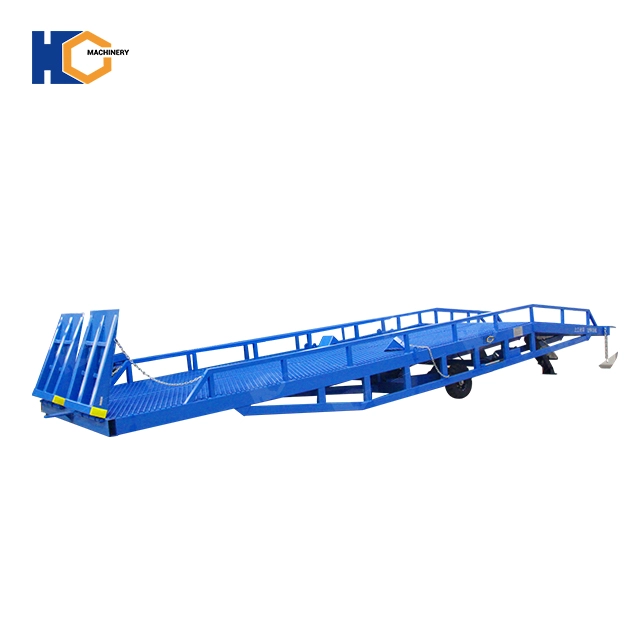
Loading Ramp for Truck
- Brand: HUICHUANG(JNHC lift)
- Customization: YES
- Manual: YES
- Price: $1,000 and $5,000
 +8615628811021
 admin@jnhclift.com
1. What is loading ramp?
A loading ramp is a sloped surface or platform used to facilitate the loading and unloading of goods or vehicles onto or off of a truck, trailer, or other transport vehicle. Loading ramps are commonly used in warehouses, distribution centers, and other industrial settings to make the process of moving goods more efficient and safe. They can be made of various materials such as steel, aluminum, or wood, and may be portable or permanently installed.
Typical Applications:
Mobile loading ramps are widely deployed in food & beverage distribution centers (where hygiene and quick turnaround are critical), e-commerce fulfillment warehouses handling high SKU volumes, cold chain logistics requiring seamless refrigerated truck access, and temporary sites such as construction zones or agricultural product collection points.
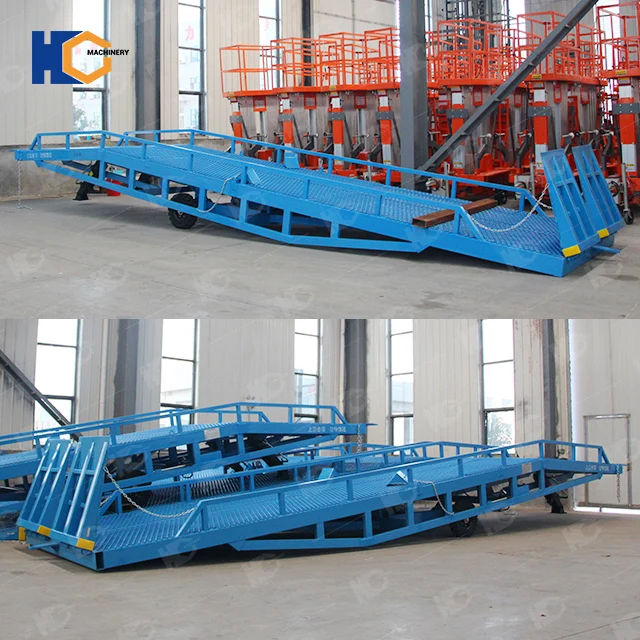
Actual pictures
2. The advantage of loading ramp?
Loading ramps offer several advantages in industrial and commercial settings where the efficient movement of goods is critical:
- Efficiency: Loading ramps streamline the process of loading and unloading goods onto trucks or trailers. They provide a smooth transition between different levels (e.g., ground to truck bed), reducing the time needed for these operations.
- Safety: Ramps enhance safety by providing a stable surface for workers and equipment during loading and unloading. This minimizes the risk of accidents such as slips, trips, and falls, which can occur when handling heavy or bulky items.
- Accessibility: Ramps improve accessibility to trucks and trailers, allowing forklifts, pallet jacks, and other handling equipment to move freely between the loading area and the vehicle. This accessibility increases operational flexibility and efficiency.
- Versatility: Loading ramps can be used in various environments and with different types of trucks or trailers. They can be portable or permanently installed, adapting to the specific needs of the facility or operation.
- Cost-effectiveness: Using loading ramps can reduce labor costs associated with loading and unloading activities. They enable faster turnaround times for trucks, optimizing the use of resources and improving overall logistics efficiency.
- Durability: Depending on the material (e.g., steel, aluminum, or wood), loading ramps can be durable and withstand heavy use over time. This durability ensures long-term reliability and minimizes maintenance requirements.
- Operational Impact: Facilities using properly sized mobile loading ramps typically report a 30–50% reduction in truck turnaround time, based on industry case studies and customer feedback. For example, a warehouse processing 20 trucks per day could save approximately 4–6 labor hours daily—significantly improving dock utilization and helping reduce demurrage or detention fees.
Overall, loading ramps play a crucial role in enhancing operational efficiency, safety, and cost-effectiveness in logistics and distribution operations, making them indispensable in many industrial and commercial settings.
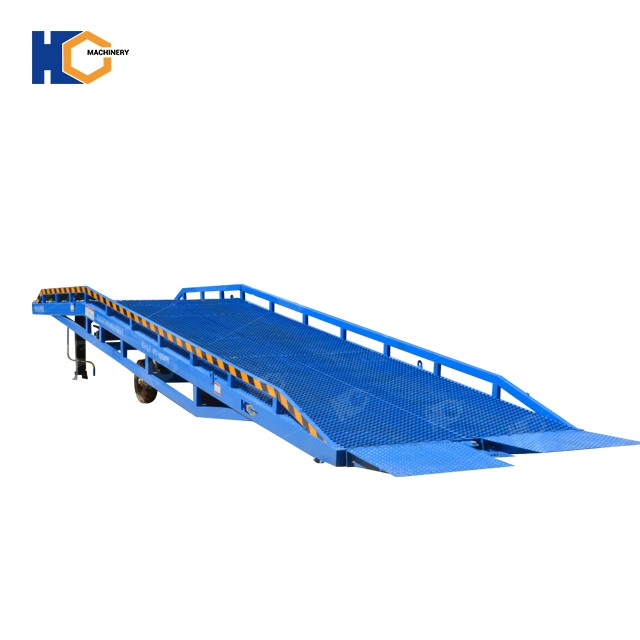
Technical Specifications & Installation Dimensions
| Tongue plate(mm) | Lifting range(mm) | Descent range(mm) | Power | Pit (mm) |
| 400 | 400 | 300 | 1.1kw/380V/50HZ | 2030*2000*610 |
| 400 | 2030*2500*610 | |||
| 400 | 2030*3000*610 | |||
| 400 | 2030*2000*610 | |||
| 400 | 2030*2500*610 | |||
| 400 | 2030*3000*610 | |||
| 400 | 2030*2000*610 | |||
| 400 | 2030*2500*610 | |||
| 400 | 2030*3000*610 | |||
| 400 | 2030*2000*610 | |||
| 400 | 2030*2500*610 | |||
| 400 | 2030*3000*610 |
3. The loading ramp features
Loading ramps for trucks are designed to provide an efficient and safe means of loading and unloading goods from vehicles. These ramps offer portability, flexibility, and durability to meet the needs of various shipping and receiving operations. Below are some key features of truck loading ramps:
(1)Non-slip surface: The loading ramp is designed with a non-slip surface to provide traction for both people and equipment, reducing the risk of slips and falls.
(2)Adjustable height: Some loading ramps have adjustable height settings to accommodate different loading heights and make it easier to load and unload items.
(3)Safety rails: Many loading ramps are equipped with safety rails on the sides to prevent items or people from falling off the ramp during loading and unloading.
(4)Weight capacity: Loading ramps are designed to support a certain weight capacity, so it is important to ensure that the ramp can safely handle the weight of the items being loaded.
(5)Foldable design: Some loading ramps have a foldable design for easy storage and transportation when not in use.
(6)Weather-resistant materials: Loading ramps are often made from weather-resistant materials such as aluminum or steel to withstand outdoor elements and provide long-lasting durability.
(7) Easy assembly: Many loading ramps are designed for easy assembly, making it quick and simple to set up and start using the ramp.
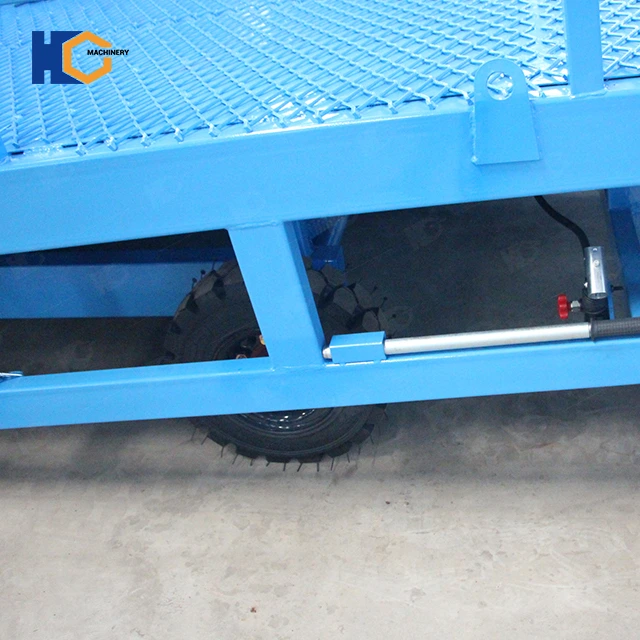
(8) Precision Hydraulic System: Equipped with a dual-cylinder hydraulic lifting mechanism and flow control valve, our ramps ensure smooth, vibration-free elevation—even under full load. The descent speed is adjustable to prevent cargo shifting during lowering.
(9) Reinforced Structural Design: Main beams are fabricated from high-strength Q345B steel, with full-penetration welding at stress points. Load tests are conducted at 125% of rated capacity before shipment to guarantee safety margins.
Loading ramps offer a range of features that make them an essential tool for shipping and receiving operations that rely on trucks for transporting goods. By choosing a ramp that meets your specific needs and is from a trusted manufacturer, you can ensure that your loading and unloading process is as efficient and safe as possible.
4. Why I choose your mobile loading ramp?
(1)We are a professional loading ramp manufacturer, our mobile loading ramp can support customization.
(2)Our price is cheaper for loading ramp with the same configuration and specifications in the market.
(3)We provide after-sales service:
One-year free warranty, apart from man made fault.
Free spare parts during warranty.
Lifetime technical support.
(4)Our ramps have CE and ISO certification, and we have very rich experience in exit ramps.
(5)We have forwarder and can arrange it delivery to your port.
(6) Global Reach, Trusted Quality
Since its establishment, Huichuang Lift has delivered hydraulic lifting solutions—including mobile loading ramps, aerial work platforms, and home elevators—to customers across North America, South America, Europe, and Southeast Asia. Our products are trusted by logistics operators, construction firms, and accessibility-focused businesses who value safety, reliability, and cost-effectiveness. Backed by CE, ISO, and ASME A17.1 certifications, we ensure every unit meets rigorous international standards.
(7) Transparent & Rigorous Quality Assurance
Every ramp undergoes a comprehensive inspection process—from raw material verification to final load testing—aligned with our ISO-certified quality management system. Upon request, we provide detailed inspection reports, including photos or videos, so you can verify quality before shipment.
5. How to maintain the loading ramp?
A loading ramp is a vital piece of equipment in industrial and commercial settings, facilitating the efficient movement of goods onto trucks and trailers. To ensure its functionality, safety, and longevity, regular maintenance is crucial. Here’s a comprehensive guide on how to effectively maintain your loading ramp:
1. Regular Inspections
Regularly inspect your loading ramp for signs of wear and tear. Check for cracks, rust, or any loose bolts that may compromise its structural integrity. Address any issues promptly by repairing or replacing damaged parts. This proactive approach helps prevent accidents and ensures continuous operation without interruptions.
2. Cleaning
Maintain cleanliness by regularly sweeping or washing the loading ramp. Remove dirt, debris, and other contaminants that can accumulate over time. Cleaning not only enhances the ramp’s appearance but also prevents potential damage to its surface and reduces safety hazards during use.
3. Lubrication of Moving Parts
Apply lubricants to moving parts such as hinges, latches, and pivot points. Lubrication ensures smooth operation and prevents friction-induced wear. Use appropriate lubricants as recommended by the ramp’s manufacturer to prolong the lifespan of mechanical components and minimize the risk of rust or corrosion.
4. Stability Checks
Ensure the loading ramp is stable and securely anchored to the ground. Inspect all support legs, braces, and structural components regularly to verify their condition. Proper anchoring and stability are essential for safe loading and unloading operations, preventing accidents caused by structural instability.
5. Maintenance of Mechanical Systems
If your loading ramp includes hydraulic systems or other mechanical components, conduct regular checks on their functionality. Test for leaks, proper operation, and smooth movement. Perform routine maintenance tasks such as fluid checks and filter replacements to keep these systems in optimal working condition.
6. Safety Assessments
Periodically assess the safety features of the loading ramp, including handrails, safety chains, and non-slip surfaces. Ensure all safety mechanisms are functional and compliant with relevant safety standards. Address any deficiencies promptly to maintain a safe working environment for personnel and equipment.
7. Documentation and Training
Maintain records of maintenance activities, inspections, and repairs performed on the loading ramp. This documentation helps track its maintenance history and aids in scheduling future inspections. Additionally, provide training to personnel involved in using the loading ramp to ensure they understand safety protocols and operational procedures.
8. Seasonal Maintenance Tips:
- Winter: Use low-temperature hydraulic oil (e.g., ISO VG32) and clear snow/ice promptly to prevent platform deformation.
- Humid Coastal Areas: Apply anti-corrosion wax on unpainted metal parts every 6 months.
- High-Dust Environments: Install protective covers on hydraulic valves to avoid contamination.
Proper maintenance of your loading ramp is essential for maximizing its efficiency, ensuring safety, and prolonging its operational lifespan. By following these maintenance guidelines, you can mitigate risks, minimize downtime, and optimize the performance of this critical equipment in your facility.
Implementing a proactive maintenance routine not only protects your investment but also contributes to a safer and more productive workplace environment. Regular inspections, cleaning, lubrication, and checks of mechanical systems are key to maintaining a reliable and efficient loading ramp.
6. How can I get the quote?
About JNCH Lift
Huichuang Lift is a leading manufacturer based in China, specializing in the production of loading ramps for truck and other industrial lifting equipment. With a commitment to quality and innovation, JNCH Lift designs and manufactures a wide range of loading ramps, including mobile ramps, dock ramps, and custom solutions tailored to various industrial needs. Established on principles of reliability and customer satisfaction, Huichuang Lift serves global markets by delivering robust, safe, and efficient loading solutions that enhance productivity and safety in logistics and warehouse operations.
Our Mission:
At Huichuang Lift, we don’t just sell ramps—we deliver loading efficiency. By combining robust engineering, responsive service, and deep industry insight, we help logistics teams move goods faster, safer, and smarter. Your success on the dock is our benchmark for excellence.
Frequently Asked Questions (FAQ)
Q1: What is the maximum weight capacity?
A: Our standard hydraulic mobile loading platforms support 6–12 tons, depending on model (e.g., HCM-3B series). Heavy-duty custom units up to 15 tons are available—subject to structural validation.
Q2: Compatible with which trucks/trailers?
A: Designed for standard trailers with bed heights of 1.0–1.4 m (39–55 in). The adjustable lip plate ensures secure contact with truck floors. Note: Not intended for container doors (which require fixed dock levelers).
Q3: Is the surface slip-resistant?
A: Yes. Standard diamond-plate steel surface meets anti-slip requirements for dry/wet conditions per industry practice. For enhanced safety in icy/oily environments, optional rubber non-slip strips are available.
Q4: Customization options?
A: Yes—we offer customization of platform dimensions, lip extension, hydraulic power unit voltage (220V/380V), color, and safety rails—based on your operational layout.
Q5: Installation time?
A:
- Portable models: Ready to use immediately—no installation needed.
- Pit-mounted variants: Require a pre-built foundation. Installation by local technicians typically takes 4–6 hours after concrete curing (foundation specs provided per model).
Q6: Certifications?
A:
- ✅ CE Marked per Machinery Directive (EN ISO 12100:2010 + EN 60204-1:2018) for hydraulic lifting platforms (e.g., HCM-3B).
- ✅ ISO 9001:2015 certified quality management system.
- ✅ Special Equipment Production License (TS2237121-2028) issued by Shandong Market Supervision Bureau, covering mobile hydraulic loading platforms.
Q7: Operating temperature range?
A: Standard models operate reliably from –20°C to +60°C when equipped with appropriate hydraulic fluid (e.g., ISO VG32 for cold climates).
Q8: Warranty?
A: 12-month warranty against manufacturing defects (mechanical/electrical components). Damage from misuse, overload, or accidents is excluded. Lifetime technical support is provided.
Q9: Maintenance?
A: Recommended:
- Monthly: Inspect bolts, welds, hoses
- Quarterly: Lubricate pivot points
- After each use: Clear debris
A maintenance manual is included with every unit.
Q10: International shipping?
A: Yes. We ship FOB Qingdao or CIF to major global ports. Lead time: 15–30 days for standard models after order confirmation.
Q11: On-site support?
A: For large orders or complex installations, we provide remote video guidance. On-site engineer dispatch is available upon request (travel fees apply).
Q12: Spare parts availability?
A: Core spare parts (hydraulic pumps, seals, control boxes) are stocked in Jinan. Shipping within 3–7 business days globally.
 Room 203, Second Floor, Building 8, Phase Ⅱ, Zhizao Town, Jibei Street, Jiyang District, Jinan City, Shandong Province