
Safety Lock Wheelchair Accessible Elevator for Home & Hotel
Load Capacity: 250 kg / 350 kg (configurable)
Platform Dimensions: (W x D) : 1430 mm x 1000 mm (standard); custom sizes available
Lifting Height Range: 0 to 10 m
Drive System: Hydraulic drive for smooth, quiet operation
Lifting Speed: 6-8 m/min (optimized for comfort and safety)
Power: Single phase, 220V/50HZ(or customized)
Control: Button control and remote control
Compliance: CE, ISO
Price: $2,400 – $6,500
 +8615628811021
 admin@jnhclift.com
As populations age and accessibility regulations become increasingly important, wheelchair accessible elevators are becoming essential in both residential and commercial buildings. Homeowners want to ensure family members with limited mobility can move safely between floors, while hotels seek to provide inclusive accommodations for all guests.
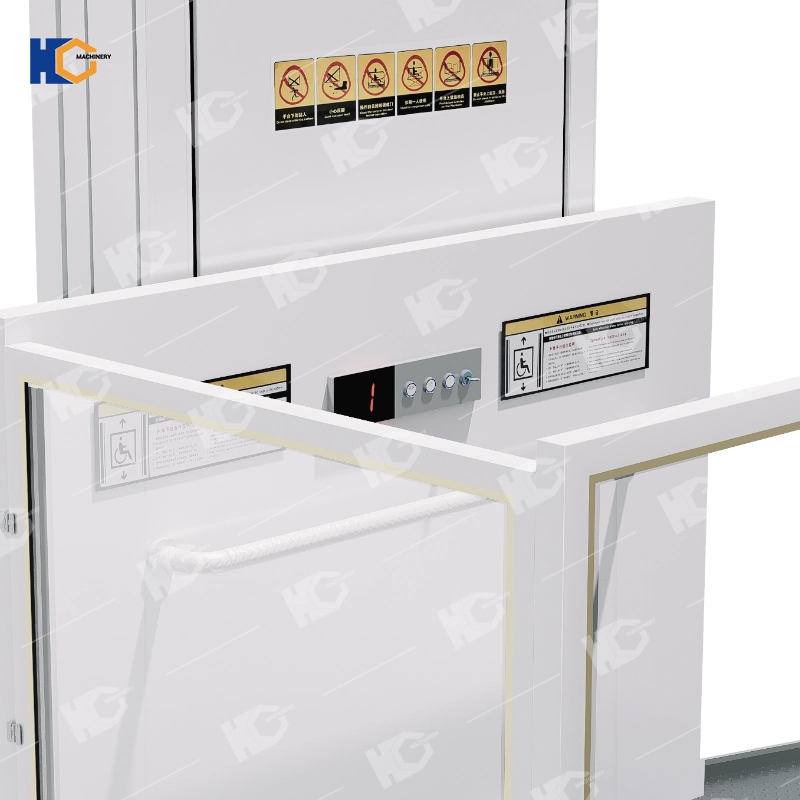
Among the latest innovations in accessibility solutions, the Safety Lock Wheelchair Accessible Elevator for Home & Hotel has emerged as a reliable, user-friendly, and secure vertical transportation system. Equipped with advanced safety lock technology, emergency protection systems, and wheelchair-friendly cabin designs, these elevators provide convenient access while enhancing safety and independence.
This comprehensive guide explains what a Safety Lock Wheelchair Accessible Elevator is, its key features and functions, advantages in home and hotel applications, competitive comparisons, installation considerations, and after-sales service requirements.
What Is a Safety Lock Wheelchair Accessible Elevator?
A Safety Lock Wheelchair Accessible Elevator is a specially designed lift system that enables wheelchair users, elderly individuals, and people with mobility challenges to travel safely between floors.
Unlike conventional passenger elevators, wheelchair accessible elevators prioritize:
- Easy entry and exit
- Barrier-free operation
- Enhanced safety systems
- Smooth riding comfort
- Emergency protection mechanisms
- Compact installation requirements
The “Safety Lock” feature refers to an integrated safety system that automatically secures the platform or cabin during operation, preventing accidental movement, tilting, or uncontrolled descent.
These elevators are widely installed in:
- Private homes
- Villas
- Duplex residences
- Hotels
- Resorts
- Senior living facilities
- Rehabilitation centers
- Public buildings
They provide an ideal mobility solution where accessibility and safety are top priorities.

How Does a Safety Lock Wheelchair Accessible Elevator Work?
The elevator operates through a hydraulic, screw-drive, traction, or platform lift system, depending on the model.
The basic working process includes:
- User enters the platform or cabin.
- Automatic doors or gates close securely.
- Safety lock system activates.
- Lift travels smoothly to the selected floor.
- Emergency monitoring systems continuously inspect the operation.
- The platform unlocks only when the elevator reaches the correct floor.
The safety lock mechanism ensures passengers remain secure throughout the journey.
Main Components of a Safety Lock Wheelchair Elevator

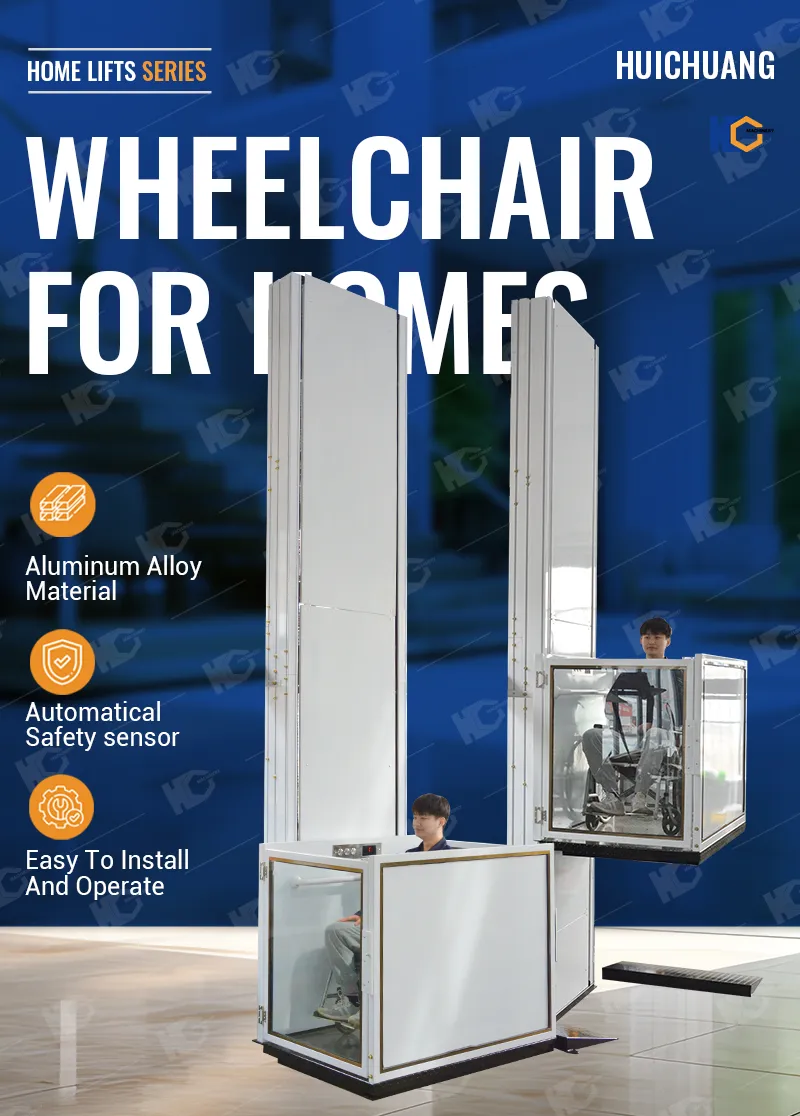
Elevator Cabin or Platform
Designed to accommodate:
- Wheelchairs
- Mobility scooters
- Walkers
- Caregivers accompanying passengers
Drive System
- Hydraulic drive
Safety Lock System
Prevents:
- Sudden drops
- Uncontrolled movement
- Platform shifting
Control Panel
Features:
- Large buttons
- Braille markings
- Easy-touch operation
- Emergency call function
Emergency Backup Power
Ensures operation during power outages.
Automatic Door System
Provides safe and convenient access for wheelchair users.
Technical Specifications
| Item | Specification |
|---|---|
| Load Capacity | 250/350kg |
| Travel Height | 0 – 10m |
| Number of Floors | 2 – 8 Floors |
| Speed | 6 – 8 m/min |
| Drive Type | Hydraulic |
| Entry & Exit | Same side /90%/180°entrance and exit |
| Platform Size | Customizable |
| Power | Single phase, 220V/50HZ(or customized) |
| Safety Lock | Standard |
| Emergency Lowering | Standard |
| Backup Battery | Optional |
| Certification | CE, ISO, ANSI |
Key Functions of Safety Lock Wheelchair Accessible Elevators
Safe Vertical Transportation
The primary function is to provide secure transportation between floors for users with mobility limitations.
Wheelchair Accessibility
Wide entrances and spacious cabins allow easy wheelchair maneuverability.
Emergency Protection
Built-in systems include:
- Emergency stop button
- Backup battery
- Alarm system
- Manual lowering device
Anti-Fall Protection
Safety lock mechanisms prevent sudden descent in the event of system failure.
Automatic Door Control
Doors remain locked while the elevator is moving.
Smooth Ride Comfort
Advanced drive systems minimize:
- Vibration
- Noise
- Sudden starts
- Abrupt stops

Advantages for Home Applications
Improved Independence
Wheelchair users can move between floors without assistance.
This promotes:
- Privacy
- Freedom
- Self-confidence
Aging-in-Place Solution
Many homeowners wish to remain in their homes as they age.
A wheelchair accessible elevator allows seniors to continue living comfortably without relocating.
Increased Home Value
Accessibility improvements often increase property value.
Potential buyers appreciate:
- Future-proof design
- Accessibility features
- Luxury convenience
Reduced Risk of Falls
Stairs remain one of the leading causes of injury among seniors.
Elevators eliminate stair-related risks.
Space-Saving Design
Modern home elevators require significantly less space than traditional commercial elevators.
Some models can be installed without:
- Machine rooms
- Deep pits
- Extensive structural modifications
Suitable Residential Applications
- Villas
- Townhouses
- Duplex homes
- Luxury residences
- Senior living homes
Advantages for Hotel Applications
Hotels increasingly recognize accessibility as both a legal requirement and a competitive advantage.
Better Guest Experience
Wheelchair users enjoy seamless access to:
- Guest rooms
- Restaurants
- Conference facilities
- Recreation areas
Compliance with Accessibility Standards
Many countries require hotels to provide accessible facilities.
Installing wheelchair elevators helps meet:
- ADA requirements
- Accessibility regulations
- International hospitality standards
Increased Market Reach
Accessible hotels attract:
- Elderly travelers
- Disabled guests
- Medical tourism visitors
- Families with mobility challenges
Enhanced Brand Reputation
Accessibility demonstrates commitment to inclusivity and customer care.
Higher Occupancy Rates
Accessible facilities can increase bookings and customer satisfaction.
Ideal Hotel Applications
- Boutique hotels
- Luxury resorts
- Business hotels
- Conference centers
- Vacation villas
- Wellness retreats
Safety Features That Make the Difference
Automatic Safety Lock System
The safety lock automatically engages during operation.
Benefits include:
- Prevents uncontrolled movement
- Enhances passenger security
- Meets safety standards
Overload Protection
Prevents operation when weight limits are exceeded.
Emergency Lowering Function
Allows safe descent during power failure.
Anti-Pinch Door Sensors
Stops doors from closing on passengers or wheelchairs.
Obstacle Detection
Detects objects blocking platform movement.
Emergency Communication System
Provides immediate contact with support personnel.
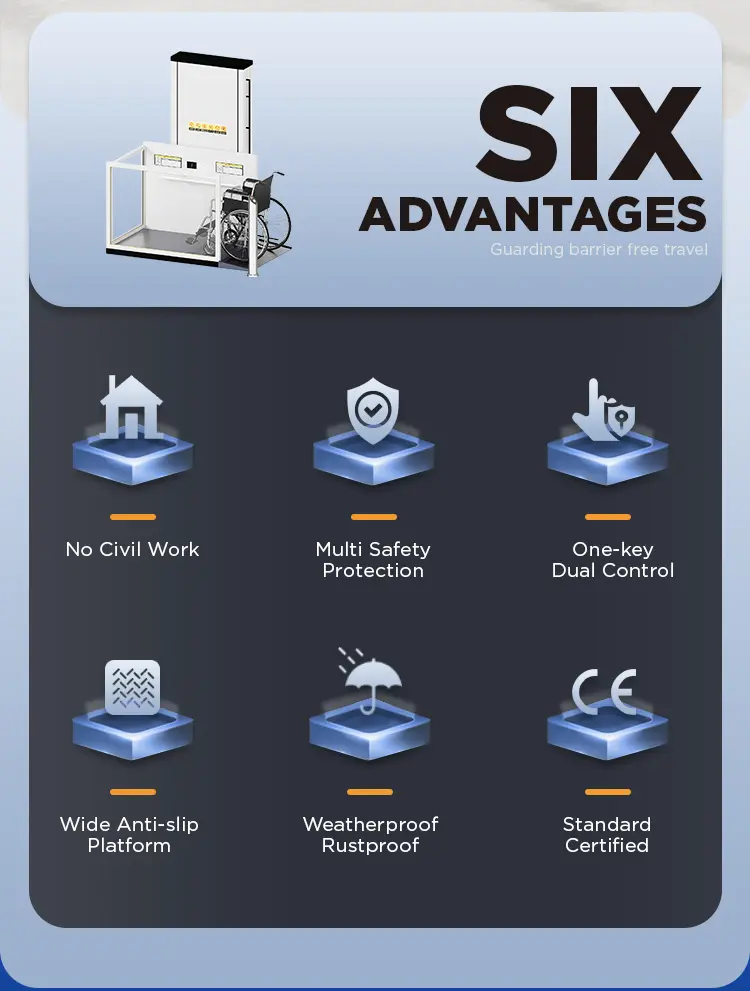
Safety Lock Wheelchair Elevator vs Traditional Stair Lift
| Feature | Wheelchair Elevator | Stair Lift |
| Wheelchair Access | Direct | Requires Transfer |
| Passenger Comfort | Excellent | Moderate |
| Capacity | High | Low |
| Caregiver Access | Yes | No |
| Property Value | Higher | Limited |
| Commercial Use | Suitable | Unsuitable |
| Accessibility Compliance | Better | Limited |
Winner: Wheelchair Elevator
Safety Lock Wheelchair Elevator vs Platform Lift
| Feature | Wheelchair Elevator | Platform Lift |
| Travel Height | Higher | |
| Ride Comfort | Better | |
| Appearance | Premium | |
| Noise Level | Lower | |
| Safety Features | More Advanced | |
| Installation Cost | Higher |
Platform lifts are often suitable for shorter travel distances, while elevators provide superior performance for multi-floor buildings.
Safety Lock Wheelchair Elevator vs Conventional Passenger Elevator
| Feature | Wheelchair Elevator | Passenger Elevator |
| Installation Cost | Lower | |
| Space Requirement | Smaller | |
| Accessibility Focus | Higher | |
| Residential Suitability | Excellent | |
| Energy Consumption | Lower | |
| Customization | Greater |
For homes and small hotels, wheelchair elevators often provide better value.
Choosing the Right Wheelchair Accessible Elevator
Consider Capacity Requirements
Common capacities:
| Capacity | Recommended Use |
| 250kg | Single User |
| 400kg | Wheelchair User |
| 630kg | Wheelchair + Caregiver |
| 1000kg | Commercial Hotel Use |
Evaluate Travel Height
Choose a system appropriate for:
- Number of floors
- Building design
- Future expansion
Select the Appropriate Drive System
Hydraulic Drive
Advantages:
- Strong lifting power
- Smooth operation
- Cost-effective
Screw Drive
Advantages:
- Compact design
- Low maintenance
Traction Drive
Advantages:
- Higher speed
- Energy efficiency
Focus on Safety Certifications
Look for:
- CE Certification
- ISO Certification
- ANSI Compliance
- Local safety approvals
Installation Process
Site Assessment
Engineers evaluate:
- Available space
- Structural conditions
- Electrical requirements
Custom Design
The elevator is tailored to:
- Building dimensions
- User needs
- Accessibility requirements
Manufacturing
Customized production ensures precise fit and performance.
Installation
Professional technicians complete:
- Mechanical assembly
- Electrical wiring
- Safety testing
Final Inspection
Comprehensive testing ensures safe operation before delivery.
Maintenance Requirements
Routine maintenance ensures long-term reliability.
Recommended inspections include:
- Safety lock verification
- Hydraulic system inspection
- Door operation checks
- Electrical testing
- Emergency system testing
Most manufacturers recommend maintenance every 3 to 6 months.
After-Sales Service and Support
Reliable after-sales support is crucial for accessibility equipment.
Technical Consultation
Professional assistance for:
- Product selection
- Installation planning
- Customization requirements
Installation Guidance
Manufacturers often provide:
- On-site supervision
- Remote technical support
- Installation training
Warranty Coverage
Typical warranties include:
- 12-24 months for complete units
- Extended component warranties
- Structural frame guarantees
Spare Parts Supply
Fast access to:
- Safety locks
- Controllers
- Hydraulic components
- Sensors
- Door systems
Remote Troubleshooting
Modern elevators support:
- Online diagnostics
- Video support
- Technical assistance
Lifetime Service Support
Many leading manufacturers provide long-term maintenance assistance and availability of replacement parts.
Future Trends in Accessible Elevators
The accessibility industry continues evolving with:
- Smart elevator controls
- IoT monitoring systems
- Touchless operation
- Energy-efficient drives
- AI-assisted diagnostics
- Enhanced emergency communication systems
These innovations further improve safety, reliability, and user experience.
Conclusion
A Safety Lock Wheelchair Accessible Elevator for Home & Hotel is far more than a vertical transportation device—it is an investment in accessibility, safety, independence, and quality of life. Its advanced safety lock mechanism, user-friendly operation, and barrier-free design make it an ideal solution for residential and hospitality applications.
For homeowners, it creates a safer and more comfortable living environment while increasing property value. For hotels, it improves accessibility compliance, enhances guest satisfaction, and expands market opportunities. Compared with stair lifts, platform lifts, and conventional elevators, safety lock wheelchair elevators offer an outstanding combination of safety, comfort, flexibility, and long-term value.
When supported by professional installation, comprehensive warranties, readily available spare parts, and responsive after-sales service, these elevators become a reliable mobility solution that serves users safely for many years while meeting the growing global demand for accessible living and hospitality environments.
 Room 203, Second Floor, Building 8, Phase Ⅱ, Zhizao Town, Jibei Street, Jiyang District, Jinan City, Shandong Province